Brand Identity Design Agency
Brand Identity Design That Behaves Like an Asset
A logo won’t grow your firm. A brand identity system — designed against your positioning, priced as a fixed scope, and built to survive an AI-filtered market — will. We design brand identities for professional services firms in the UK and US that need to look like the fees they charge.
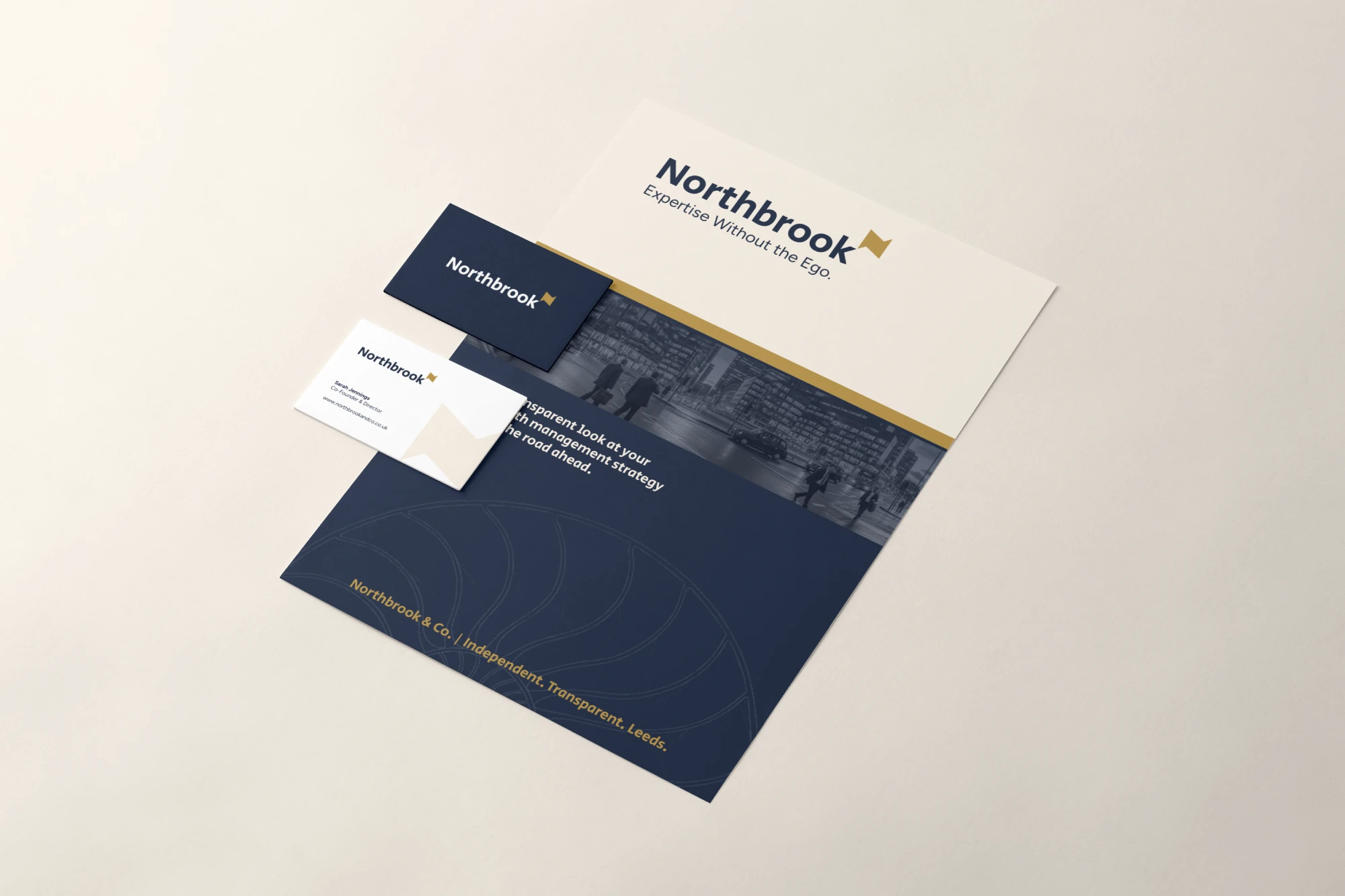
Strategic Branding Agency
Why Brand Identity Is Now a Balance-Sheet Question
Your identity no longer lives on a business card. It lives in the minds of your clients and — increasingly — in the training data of the AI agents they ask for recommendations. A firm whose brand is inconsistent, generic, or unverifiable doesn’t get cited. It gets skipped.
That’s why we treat brand identity as infrastructure, not decoration. The Brand Equity Blueprint™ is our fixed-scope identity engagement: £7,500, defined deliverables, no discovery-call theatre. For firms that need ongoing stewardship, the Brand Equity Partnership™ runs at £3,000/month. Both start the same way — a free Brand Equity Audit™, delivered in writing within 48 hours. No sales call. Ever.





Stop treating your brand as an expense. Start leveraging it as your engine for growth. We transform your vision into a high-performance identity—aligning your business goals with a scalable system built for global impact and lasting market authority.
Build Your Strategic Blueprint →The Inkbot Advantage
What Makes Our Brand Identity Services Different
With all the AI-generated content we see, your identity must be more than a visual mark—it must be a Strategic Business Asset. We provide the high-level architecture required to transform a company into a category-defining brand.
Foundation
Positioning Before Pixels
We don’t open a design tool until the strategy holds. Every engagement starts with The Inkbot Method™ — market analysis, competitor mapping, and a written positioning argument for why your firm, specifically. If we can’t articulate what only you can claim, no typeface will.
Connection
Designed for How Trust Actually Forms
Professional services are bought on perceived competence, and perceived competence is decided in seconds. We design identity systems around the signals that produce it — restraint, coherence, evidence — not around what wins design awards. Seventeen years and 300+ brands have made us unsentimental about which is which.
Scale
Built for Screens, Print and Machines
Your identity has three audiences now: clients, staff, and algorithms. We engineer visual systems that hold up from a pitch deck to a 40ft hoarding — and structure the underlying brand data so AI search engines can verify, categorise and recommend you. Most agencies design for two audiences. The third is where the next decade’s visibility lives.
The Strategic Architecture
What’s Inside a Brand Identity System
A brand is a living ecosystem. We provide the specialised architectural layers required to ensure your identity remains cohesive, scalable, and authoritative across every physical and digital frontier.
Brand Architecture & Hierarchy
As firms grow, offers multiply and the brand fragments. We define the logical relationship between your services, sub-brands and any acquired names — so clients understand what you sell, and search engines file you under the right category.
Visual Identity System
Not a logo — a design language. Typography, colour, layout logic and motion rules built as a modular system, so the identity behaves identically whether it’s rendered by your team, a printer in Leeds, or a template in Canva at 4:55pm on a Friday.
Brand Collateral That Earns Its Keep
Pitch decks, proposals, tender documents, signage, stationery — the touchpoints where professional services firms actually win or lose work. We design the ones that carry revenue first.
Brand Guidelines Your Team Will Actually Use
A living, digital-first source of truth — not a 90-page PDF nobody opens. Rules, files and rationale in one place, so the identity survives contact with new hires, new suppliers and new channels.
Start With the Audit, Not a Call
Every engagement begins with the free Brand Equity Audit™: a written assessment of your current identity, positioning and market visibility, in your inbox within 48 hours. No discovery call. No pitch deck.
If the audit doesn’t tell you something useful about your brand, don’t hire us — you’ll still have the audit.
Inkbot Design architected a critical brand identity system for Eureka! with impressive precision. They excel at translating a complex brief into a cohesive visual strategy, genuinely listening to our needs while providing expert guidance throughout the process.
The results resonated across our entire organisation. They are more than a design partner; they are a pleasure to collaborate with and deliver a level of strategic impact rarely found. I would work with them again in a heartbeat.

Blueprint for Authority
The Inkbot Method™: How a Brand Identity Gets Built
Strategic design isn’t an accident of talent — it’s a sequence. Every Brand Equity Blueprint™ runs through the same six steps, in the same order, for a fixed £7,500. Here’s exactly what happens.
Discovery & Audit
Before anyone opens a design tool, we take the market apart: your position, your competitors’ weaknesses, your commercial goals.
Result: a written, evidence-based foundation — identity as a business decision, not a taste decision.
Positioning & Architecture
We fix the argument for why your firm, and structure how your services and sub-brands relate.
Result: a positioning competitors can’t copy without becoming you.
Core Identity Design
Logo, typography, colour — designed against the strategy, tested against the sector.
Result: a visual system that signals competence in under a second, because that’s all the time it gets.
System Development
The core identity expands into a modular design language: patterns, layouts, motion, digital-first components.
Result: an identity that behaves identically at every size, on every surface.
Activation
Applied to the touchpoints that carry revenue first: proposals, decks, site, signage.
Result: consistency across the entire client journey from first search to signed engagement.
Governance & Handover
Living digital guidelines, full asset library, complete IP transfer.
Result: your team runs the brand without us — until you’d rather they didn’t, which is what the £3,000/month Partnership™ is for.
Our Strategy
A Fragmented Brand Is a Leak in the Balance Sheet
Every inconsistent proposal, off-brand deck and improvised logo lockup quietly reprices your firm downward. Fixing it isn’t a mystery and it isn’t open-ended: it’s a Blueprint, it costs £7,500, and it starts with a free written audit this week.
Where We Stand
By the Numbers
- 17+ Years of Industry Expertise
designing brand identities since 2009, from print-first to AI-filtered markets.
- £110M+
client revenue our identity systems have supported.
- 300+ brands, 21 countries
most of them professional services firms who’d never hired an agency before and haven’t needed another since.
- 4.9/5 across 160+ reviews
independently verifiable, and we’d prefer you verified it. Top 30 UK agency — and the top-ranked branding firm in Belfast, Northern Ireland.
Insight
What Brand Identity Is Worth — The Four Levers
01. Valuation — Intangible assets, brand among them, now account for the majority of enterprise value in acquisitions of services firms. When a buyer prices your firm, brand coherence is part of the multiple. Ours have supported over £110M in client revenue; the identity’s job is making that figure legible.
02. Trust Speed — Professional services are bought before the first meeting: on your site, your proposal, your search results. A coherent identity compresses the time between “found you” and “shortlisted you.” An incoherent one adds a competitor to every shortlist — usually the one that looks the part.
03. Pricing Power — Consistent brand presentation is associated with revenue uplifts of around 23% (Marq/Lucidpress brand consistency research). The practical version: firms that look like a system charge like one. Firms that look improvised negotiate.
04. Machine Visibility — AI search now filters who gets recommended before a human sees a list. Engines cite entities they can verify: consistent names, facts, structured data, coherent identity across every source. We build brands to pass that check — it’s the same discipline as visual consistency, applied to data.
Your brand is your promise, your reputation, and your most resilient asset in a borderless, intelligence-driven marketplace. Don’t leave its performance to chance.
Frequently Asked Questions (FAQ)
Frequently Asked Strategic Questions
Straight answers, in writing — the same way we run engagements. If yours isn’t here, email us; you’ll get a personal reply within 24 hours.
How much does brand identity design cost?
£7,500, fixed. That’s the Brand Equity Blueprint™ — the complete six-step engagement, defined deliverables, no scope creep, no surprise invoices. Ongoing brand stewardship runs as the Brand Equity Partnership™ at £3,000/month (six-month minimum). We publish our prices because our clients are professionals who bill for their time and don’t enjoy three calls to learn a number.
How do we start?
Request the free Brand Equity Audit™. You’ll receive a written assessment of your brand within 48 hours — no sales call, no pitch, no obligation. If it’s useful, the Blueprint is the next step. If it isn’t, you’ve lost nothing and gained an audit.
Where are you based?
Belfast, Northern Ireland, working with firms across the UK, Ireland and the US. Engagements run async and email-first — built for clients in any timezone who’d rather have documented decisions than diarised calls.
How long does the Strategic Identity process take?
Quality architecture can’t be rushed, but we value momentum. Typically, a complete Strategic Brand Identity takes 6 to 12 weeks, depending on the complexity of your portfolio. This isn’t just “design time”—it’s the time required for deep-market audits, psychological archetyping, and building a scalable visual language that will last you for the next decade.
We already have a logo. Can you just “clean it up”?
We certainly can, but we’ll start by asking why. If your current identity isn’t driving “Trust Signals” or helping you command a premium price, a “clean up” is just a fresh coat of paint on a shaky foundation. We specialise in The Authority Pivot—taking existing brands and re-engineering them to reflect their accurate market weight.
What exactly is “Brand Architecture” and why do I need it?
Think of it as the organisational map of your business. If you have multiple products or sub-brands, Brand Architecture ensures they all pull in the same direction. It prevents “Brand Dilution” and ensures that the equity you build in one area of your business automatically strengthens the others.
You mention “AI Search Visibility”—how does design affect that?
It’s the technical side of modern branding. Search engines and AI discovery tools now look for Semantic Consistency and “Verified Entities.” By structuring your visual and verbal identity to be “machine-readable,” we ensure your brand is prioritised by the algorithms that now drive the majority of consumer intent.
Does Inkbot Design work with international clients?
Absolutely. While we are UK-based, our framework is designed for global impact. We’ve architected identities for firms from London to New York and beyond. In a borderless, digital-first economy, your brand needs to resonate across cultures while maintaining a singular, authoritative voice.
How much involvement is required from my team?
We view this as a partnership. We need your “Business Intelligence” in Step 1 (Discovery) to understand your goals. After that, we take the heavy lifting off your plate. We provide the “Source of Truth” guidelines, so your team can execute with total confidence, without you micromanaging every social post or pitch deck.
What is the “ROI” of a Strategic Identity?
It shows up in three places: Pricing Power (you can charge more), Sales Velocity (trust is built faster, so deals close quicker), and Asset Valuation (your business is worth more to investors). As we noted in the Economics of Identity, consistent branding can increase revenue by up to 23%.
Will I own all the rights to the final designs?
100%. Once the final investment is settled, the intellectual property is yours. We provide you with a full suite of high-fidelity assets and the “Brand Bible” (Guidelines), so you have total control over your most valuable business asset.
Do you handle the implementation (Web, Social, Print) as well?
Yes. Through our Ecosystem Activation phase, we ensure your identity is flawlessly applied to your most critical touchpoints. We don’t just give you a “logo file” and wish you luck; we make sure your brand is ready to perform in the real world.
My business is preparing for an “Exit”—is this for us?
Actually, this is our speciality. If you’re looking to be acquired or go public, your Brand Equity is a significant factor in your valuation. We help you present a “Verified Reputation” that signals stability, authority, and scale to potential buyers.