Endorsed Brands Explained: The “Marriott” Model
Structuring your brand portfolio is a strategic operational approach, not just a design exercise.
Get it wrong, and you end up with a “Frankenstein” portfolio—a confusing mess of products that neither share equity nor stand on their own.
You waste money marketing six different names that nobody recognises, or worse, you attach a toxic failure to your pristine master brand.
The Endorsed Brand architecture is the middle ground. It is the sophisticated compromise between the total control of a Branded House (like Virgin or FedEx) and the total anarchy of a House of Brands (like P&G).
The gold standard for this is Marriott. They manage 30 distinct brands, from the Ritz-Carlton to a roadside Courtyard, all tied together by a single endorsement.
It allows them to capture the budget traveller and the luxury elite without the two ever awkwardly meeting in the lobby.
If you plan to expand your service offering or launch a new product that falls slightly outside your current niche, you need to understand how this works.
Why does this matter? Because confusion is the silent killer of conversion.
If a customer cannot understand the relationship between your new software tool and your established consultancy firm, they will not buy either.
Endorsement bridges that gap. It says, “This is new, but we vouch for it.”
- Endorsed brands balance independence and validation: sub-brands keep unique identities while the parent provides credibility and trust.
- Marriott’s model segments tiers via subtle to heavy endorsement, using loyalty (Bonvoy) to unify diverse offerings without diluting prestige.
- Risks include contagion and cannibalisation; visual hierarchy, clear semantic distance and strict governance are essential to avoid brand chaos.
What is an Endorsed Brand?

An endorsed brand is a sub-brand that possesses its own distinct identity, market positioning, and personality, yet relies on the “Master Brand” (or Parent Brand) for quality assurance and credibility.
Unlike a monolithic structure where the parent name is the hero (e.g., FedEx Express, FedEx Ground), the endorsed brand is the hero. The parent takes a backseat, usually appearing as a visual “stamp” or a verbal tagline, such as “Brought to you by…” or “A division of…”
The Three Pillars of Endorsement
- Independence: The sub-brand has its own name, logo, and colour palette. It can speak to a specific audience (e.g., teenagers) without alienating the parent brand’s audience (e.g., corporate bankers).
- Validation: The parent brand provides a “trust seal.” It signals to the buyer that, although this product is new or different, it adheres to the operational standards of the parent.
- Separation: There is sufficient distance that, if the sub-brand fails or causes a scandal, the potential damage is contained. The parent might take a hit, but it won’t be fatal.
The Consultant’s View: Think of it like a university degree. You (the sub-brand) are the individual with unique skills and personality. The University (the endorser) stamps your degree. The University’s reputation gets you the interview, but you have to do the job.
The Spectrum of Brand Architecture
To understand where endorsed brands stand, we must examine the alternatives. At Inkbot Design, when we consult on brand architecture, we usually map a client’s needs against the “Brand Relationship Spectrum.”
1. The Branded House (Monolithic)
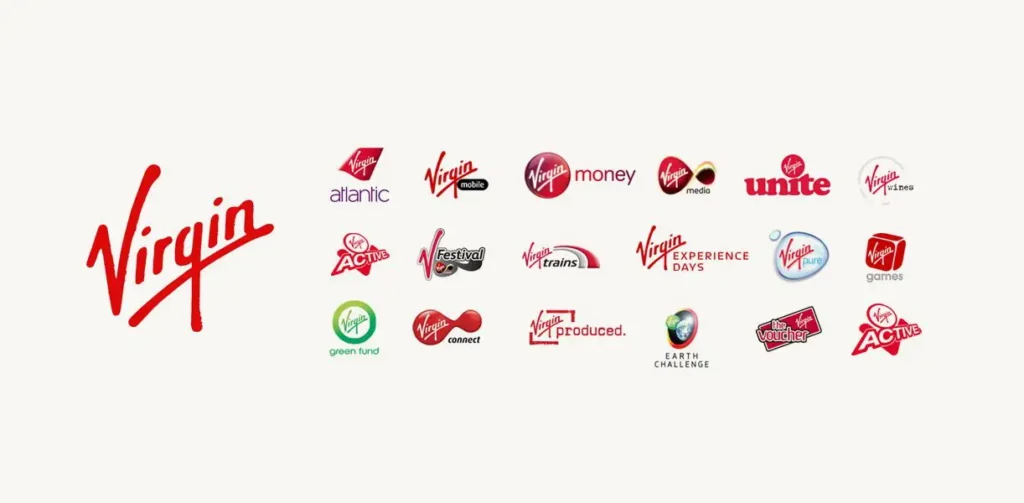
- Example: FedEx, Virgin, Google (mostly).
- Logic: One master brand rules them all. Every product is an extension.
- Pros: extremely efficient marketing spend. Every dollar builds the master brand.
- Cons: High risk of dilution. If Virgin Cola fails (and it did), it looks embarrassing for Virgin Atlantic.
2. The House of Brands (Pluralistic)
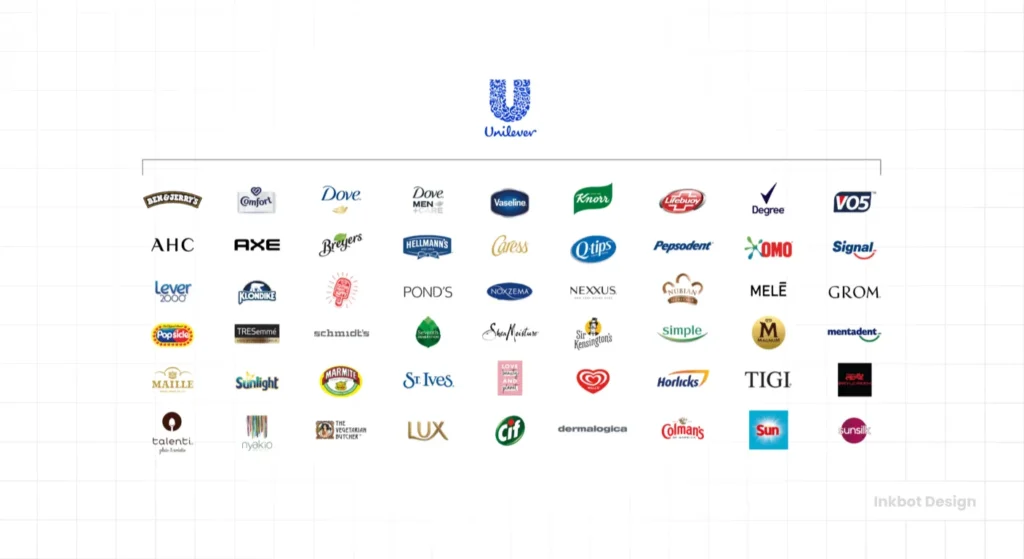
- Example: P&G (Tide, Pampers, Gillette), Unilever.
- Logic: The parent company is invisible to the consumer.
- Pros: Total market coverage. You can sell vegan soap to hippies and chemical cleaners to hospitals without conflict.
- Cons: incredibly expensive. You have to build equity from zero for every single product.
3. The Endorsed Brand (Hybrid)
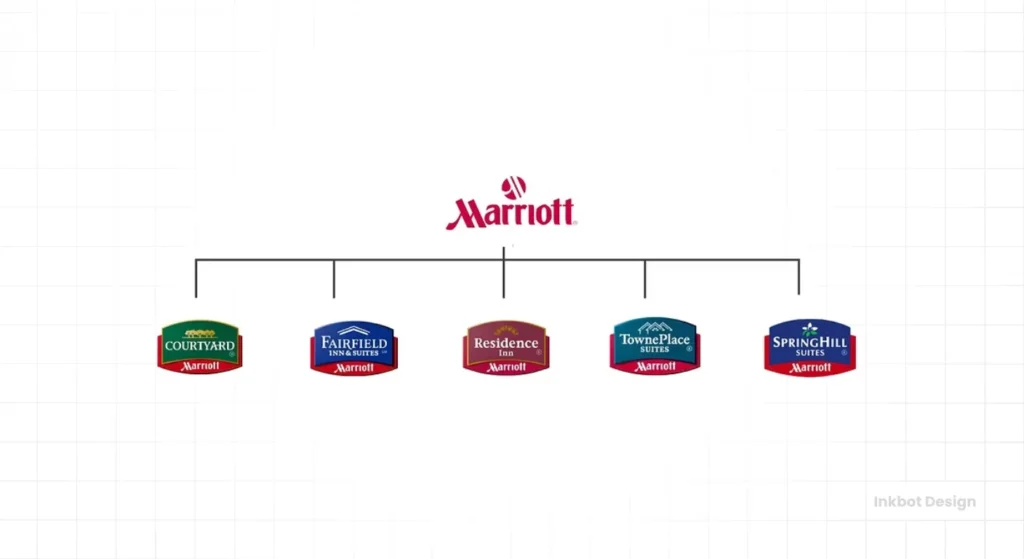
- Example: Marriott, Nestlé (KitKat), Sony (PlayStation).
- Logic: The best of both worlds.
- The Sweet Spot: This is where most scaling SMBs should be looking. You have enough reputation to launch something new, but the new thing is too different to just wear your old logo.
| Feature | Branded House (Monolithic) | Endorsed Brand (Hybrid) | House of Brands (Pluralistic) |
| Brand Focus | Master Brand is Hero | Sub-Brand is Hero, Parent is Validator | Individual Brand is Hero |
| Marketing Cost | Low (Economies of Scale) | Medium (Shared Halo Effect) | High (Distinct campaigns needed) |
| Risk of Contagion | High | Moderate | Low |
| Target Audience | Unified | Segmented but related | Distinct/Unrelated |
| Visual Identity | Identical | Linked/Harmonised | Completely Unique |
The “Marriott” Model: A Masterclass in Segmentation
Marriott International is the textbook definition of endorsed branding done right. They do not just slap a “Marriott” logo on every building. That would be disastrous. You cannot charge £800 a night for a St. Regis if the guy down the street is paying £80 for a Marriott Courtyard, and they both look the same.
Instead, Marriott uses endorsement to create tiers.
The “Bonvoy” Glue
The brilliance of the Marriott model lies in its loyalty program, Marriott Bonvoy. This acts as the operational “endorser.”
- Luxury: The Ritz-Carlton, St. Regis. (Endorsement is subtle, often just the rewards points.)
- Premium: Sheraton, Marriott Hotels. (Explicit endorsement).
- Select: Courtyard by Marriott, Fairfield by Marriott. (Heavy endorsement—these brands rely entirely on the Marriott name for trust).
Why This Works
According to data from their website, Marriott International operates over 30 brands and more than 8,000 properties. If they forced every hotel to adhere to the strict “Marriott” visual identity, they would kill the boutique vibe of their “Autograph Collection.
By using an endorsed strategy, they tell the consumer: “This hotel is unique and artsy (Sub-Brand promise), but the sheets will be clean, and your points will count (Endorser promise).”
The Lesson for SMBs
You do not need to own hotels to apply this.
- Scenario: You run a serious B2B financial consultancy.
- Opportunity: You want to launch a fun, gamified finance app for Gen Z.
- The Fix: Do not call it “Smith & Associates Finance App.” Call it “CoinFlip” and add “Powered by Smith & Associates” in the footer. You borrow the trust for the backend security (which Gen Z cares about) without killing the vibe with a corporate logo (which Gen Z hates).
Types of Endorsement
Not all endorsements are created equal. The “volume” of the endorsement can be dialled up or down depending on how much help the sub-brand needs.
1. Token Endorsement
The master brand is clearly visible, often part of the primary logo lockup.
- Example: Courtyard by Marriott.
- When to use: When the sub-brand has zero equity and needs the parent to do the heavy lifting. This is a common occurrence during the launch phase.
2. Linked Name Endorsement
The name creates a verbal link, but the visual identity might differ.
- Example: Nescafé (Nestlé + Café). McMuffin (McDonald’s).
- When to use: When you want to assert ownership and dominate a category shelf.
3. Shadow Endorsement (The “Ghost” Endorser)
The parent brand is not in the logo. It is not in the headline. It is found on the back of the packaging or in the footer of the website.
- Example: Touchstone Pictures (owned by Disney).
- Why: Disney wanted to release R-rated movies. Putting “Disney” on the poster would have destroyed their family-friendly brand equity. Touchstone allowed them to take risks.
- The Technical Detail: This is often a legal distinction rather than a marketing one. The consumer may not even be aware of the endorsement until they check the company’s registration.
The Risks: When Endorsement Fails
It would be irresponsible of me to suggest this strategy is risk-free. It is expensive and complex to manage.
The “Toxic Spillover” Effect
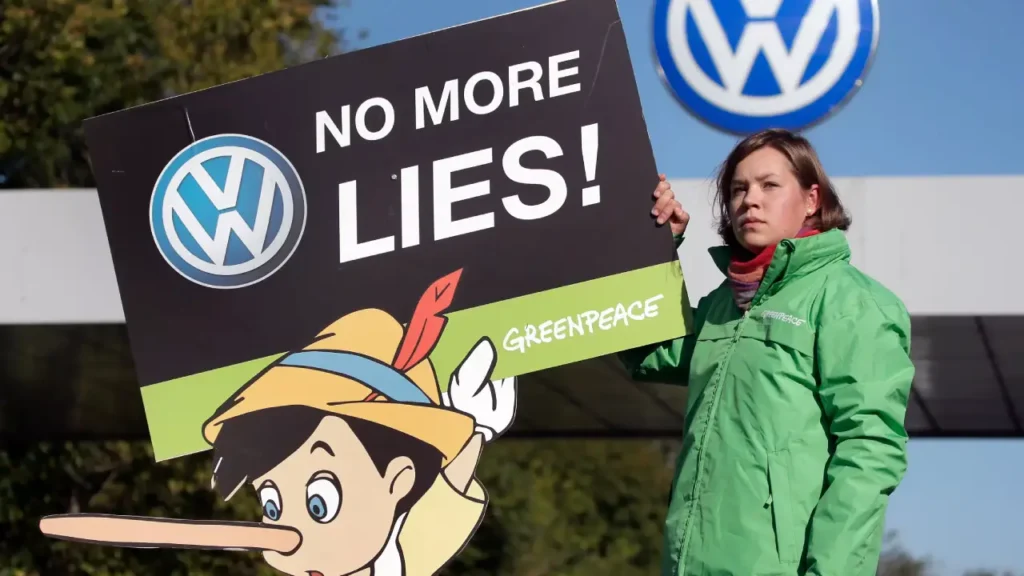
While endorsed brands offer some separation, they are not blast-proof. If a sub-brand is involved in a massive ethical scandal, the mud will stick to the parent.
- Real-World Example: Consider the automotive industry. When the “Dieselgate” scandal hit Volkswagen, it rippled through their endorsed hierarchy (Audi, Skoda, Seat) because the endorsement (shared engineering) was the source of the problem.
The Cannibalisation Trap
If the distinction between the Endorser and the Endorsed is too weak, customers will trade down.
- The Scenario: If a “Lite” version of your software is endorsed too heavily by your “Pro” brand, enterprise clients might think, “Why am I paying £5,000 for the Pro version when the Lite version is ‘Powered by’ the same team for £50?”
- The Fix: Ensure the Visual Semantic Distance is correct. The “Lite” version should appear more affordable. It needs different typography, different colours, and a less premium finish.
7. Visual Design: How to Construct the Lockup
This is where the rubber meets the road. How do you actually design this? At Inkbot Design, we follow strict protocols for endorsement hierarchies.
The “Driver” vs. The “Endorser”
In any visual composition, you must decide who is driving the car.
- The Driver: The sub-brand logo. This should occupy roughly 70-80% of the visual weight.
- The Endorser: The parent logo. This should occupy 20-30% of the weight.
Positioning Rules
- The Descriptor Line: Use phrases like “A Division of [Parent],” “Part of the [Parent] Family,” or “Powered by [Parent].”
- The Clear Space: The endorser must never touch the sub-brand logo. We usually mandate a clear space equal to 2x the height of the letter ‘X’ in the parent logo.
- Colour Strategy:
- Approach A (Harmonised): The sub-brand uses a colour from the parent’s secondary palette.
- Approach B (Contrasting): The sub-brand utilises a completely new colour to signal innovation, while the parent logo remains in neutral black or grey to serve as a grounding anchor.
Typography Matters
Do not mix the typefaces. If your parent brand uses Helvetica, and your sub-brand uses a custom hand-drawn script, the endorsement line (“Brought to you by…”) should usually be in a neutral font (like the Parent’s font) to link them back together.
When Should You Use an Endorsed Strategy? (The Checklist)
Do not guess. Use this checklist. If you answer “Yes” to at least three, an endorsed structure is likely your best move.
- Is the new product targeting a radically different audience? (e.g., B2B vs B2C).
- Does the new product require a different price point? (e.g., Luxury vs Budget).
- Does the parent brand have strong trust but “boring” associations? (e.g., An accounting firm launching a creative agency).
- Do you plan to sell this sub-brand in the future? (It is easier to sell a distinct endorsed brand than a division of a monolithic brand.)
- Is there a risk that the new product could fail? (You want to protect the mothership.)
A Consultant’s Reality Check
I once audited a mid-sized technology firm that had created six different sub-brands. They had “CloudTech,” “DataTech,” “SecureTech,” and so on. They were all endorsed by the parent group.
The problem? They were all selling to the same person (the IT Director) at the same company.
The endorsement strategy was actively hurting them. The customer was confused: “Do I need to sign six different contracts?” “Why are there six different account managers?”
In this case, we collapsed the structure back into a Branded House (Monolithic). We eliminated the sub-brands and reclassified them as product descriptors (e.g., “Parent Brand Cloud,” “Parent Brand Security”). Sales increased by 20% in the following quarter, largely due to the proposition being easier to understand.
The Lesson: Use endorsements only when the market requires it, not because your product managers want their own logos. Ego is expensive.
Conclusion: The Verdict
Endorsed branding is the strategic use of reputation transfer. It allows you to say, “This is new and exciting,” while whispering, “But it is also safe and reliable.”
The “Marriott” model proves that you can scale a massive portfolio without diluting your core identity—provided you are disciplined. You must maintain strict visual hierarchies, ensure the sub-brand delivers on its unique promise, and be willing to sever ties if the sub-brand becomes toxic.
If you are struggling to untangle your current brand mess, or you are about to launch a product that doesn’t quite fit your current mould, pause. Do not just design a logo. Design the relationship.
Next Steps:
Is your brand architecture a strategic asset or a confusing liability? Contact Inkbot Design today for a brand audit. We will tell you exactly which structure will save you money and help you scale.
Frequently Asked Questions (FAQ)
What is the main difference between a House of Brands and Endorsed Brands?
In a House of Brands (e.g., P&G), the parent company is largely invisible to the consumer; products stand entirely on their own. In an Endorsed Brand structure (e.g., Marriott), the parent brand is visible and provides a “seal of approval” to validate the sub-brand’s quality.
When should a startup use an endorsed brand strategy?
Startups should generally avoid this initially. Focus on building one strong master brand first. Endorsement is useful only when you need to launch a second product that targets a conflicting audience or price point (e.g., a budget version of a premium tool).
Does an endorsed brand need its own marketing budget?
Yes. This is the main drawback. Unlike a monolithic brand where one ad promotes everything, an endorsed brand requires its own distinct marketing campaigns, voice, and strategy. The parent brand helps with trust, but it won’t drive awareness alone.
Can an endorsed brand eventually become a master brand?
Absolutely. PlayStation started as a product endorsed by Sony. Today, PlayStation has such immense equity that it acts as a master brand itself, potentially endorsing its own sub-products (like PS VR) with less reliance on the Sony name.
What is a “Shadow Endorser”?
A shadow endorser is when the parent company backs the product but remains virtually invisible to the consumer, typically with only a small mention on the back of the packaging. This is used to minimise risk when the sub-brand’s image conflicts with the parent’s (e.g., Disney and Touchstone Pictures).
Is endorsed branding more expensive than a branded house?
Yes. It increases operational costs. You need separate legal trademarks, distinct domain names, unique visual assets, and often separate marketing teams. However, it is cheaper than a “House of Brands” approach because you can still leverage some of the parent’s equity.
How do I design an endorsed brand logo?
Follow the 80/20 rule. The sub-brand’s unique logo should take up 80% of the visual space. The endorsement (e.g., “by [Parent]”) should occupy 20% of the space, ensuring it validates the brand without overpowering it.
What is the “Marriott Model” in branding?
It refers to Marriott International’s strategy of managing over 30 hotel brands under one loyalty program umbrella (Bonvoy). It allows them to serve every demographic—from budget to ultra-luxury—without diluting the prestige of their top-tier properties.
Can endorsement help with SEO?
It can, but it is tricky. If you use a subdomain (https://www.google.com/search?q=product.parent.com), the “link juice” flows from the parent. However, if you use a separate domain (product.com) with a footer link to the parent, it takes longer to rank but offers more protection if the product fails.
What is “Token Endorsement”?
Token endorsement is when the parent brand appears prominently in the logo lockup, such as “Courtyard by Marriott.” It is used when the sub-brand has weak recognition and relies almost entirely on the parent’s reputation to convert customers.