Designers Beware: Spotting Email Scams & Protecting Your Business
You’re knee-deep in a client project, juggling deadlines and revisions. Your inbox pings. It’s a potential new client with a massive budget and an urgent project. Exciting, right?
Not so fast.
I’ve been there, mate. That shiny opportunity might be a wolf in sheep’s clothing.
In 2023, email scams cost UK businesses a whopping £3.2 billion. Designers, with our blend of creativity and tech-savvy, are prime targets. We’re often freelancers or small business owners, making us vulnerable to sophisticated cons.
But here’s the kicker: You don’t have to be a victim.
I learned this the hard way. A few years back, I nearly fell for a “client” who needed an “emergency rebrand” for their “non-profit.” They even had a slick website. Long story short, I was this close to sending them access to my design files before I spotted the red flags.
That close call lit a fire under me. I dug deep into the world of email and Facebook scams, specifically those targeting creatives like us. What I discovered was eye-opening – and sometimes downright terrifying.
But knowledge is power, friends. And I’m here to share that power with you.
In this post, we’ll dive into:
- The most common email scams targeting designers
- Real-world examples that’ll make your skin crawl
- Practical tips to spot scams before they spot you
- How to protect your business (and sanity) from digital predators
Ready to become scam-proof? Let’s dive in.
- Email scams cost UK businesses £3.2 billion in 2023, targeting designers due to their freelance nature and access to valuable assets.
- Understanding common scams and their red flags is crucial for protecting your business against digital predators.
- Always verify identities and trust your instincts; weak security practices make creatives a prime target for scams.
The Scammer’s Playbook: Common Cons Targeting Designers
Scammers are like chameleons – they adapt their tactics to blend in with their prey. For designers, they often play on our desire for exciting projects, our empathy, and our trust in potential clients.
Here are the top scams you need to watch out for:
1. The “Overpayment” Scheme
How it works: A “client” contacts you for a project and agrees to your fee. They send a cheque or transfer for more than the agreed amount, claiming it’s a mistake. They ask you to refund the difference. The original payment bounces, but you’ve already sent them real money.
🚩 Red flags:
- Overpayment “errors” (especially large ones)
- Urgent requests for refunds
- Pressure to act quickly
2. The “Phishing for Credentials” Con
How it works: You receive an email that looks like it’s from a legitimate service you use (Adobe, Dropbox, etc.). It claims there’s an issue with your account and asks you to log in. The link takes you to a fake site that steals your login info.
🚩 Red flags:
- Generic greetings (“Dear Sir/Madam”)
- Urgent language about account issues
- Links that don’t match the official URL
3. The “Advance Fee” Fraud
How it works: A “wealthy client” offers you a massive project, but you need to pay a fee upfront for “permits” or “customs clearance.” Once you pay, they disappear.
🚩 Red flags:
- Unrealistic project scope or budget
- Requests for upfront payments
- Vague details about the client or project
4. The “Malware Attachment” Trap
How it works: An email claims to have attached project details or a contract. The attachment contains malware that infects your computer, potentially stealing data or holding your files for ransom.
🚩 Red flags:
- Unexpected attachments
- Pressure to open files immediately
- Generic or vague email content
5. The “Copyright Infringement” Scare
How it works: You receive a threatening email claiming you’ve used copyrighted material illegally. They demand payment to avoid legal action. In reality, it’s a baseless threat.
🚩 Red flags:
- Vague accusations without specifics
- Demands for immediate payment
- Threats of legal action without proper documentation
Real-World Horror Stories: Designers Who Got Burned
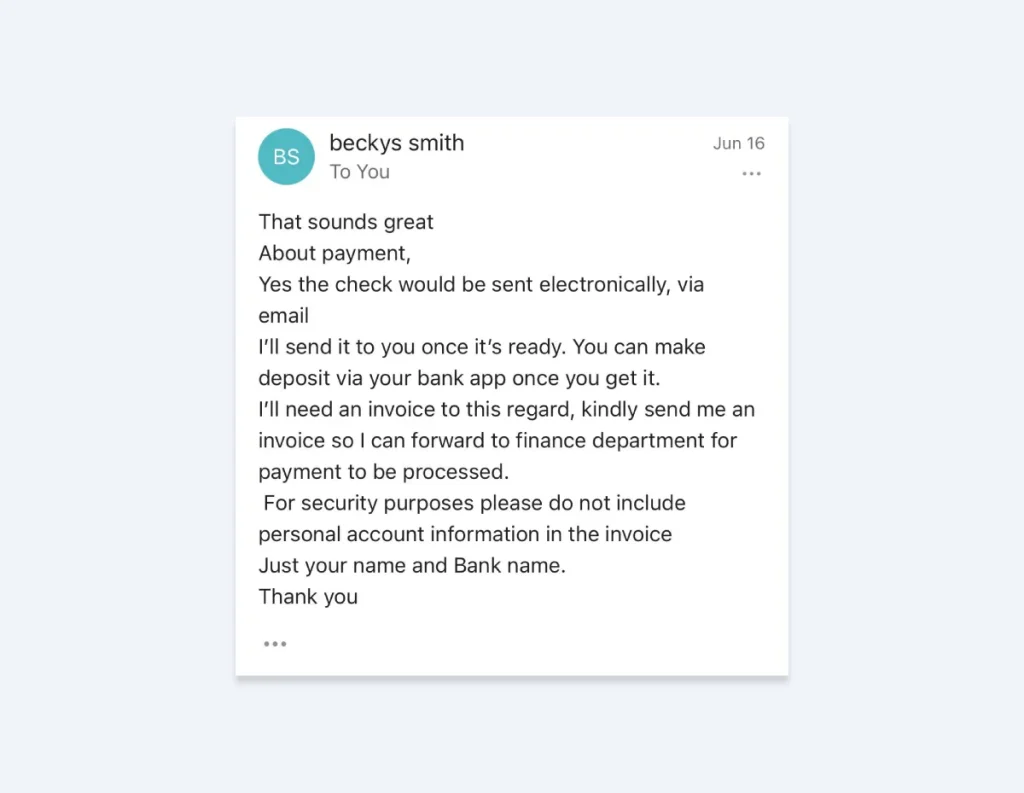
Let’s put some flesh on these bones, shall we? Here are two real-world examples (with names changed) that’ll make you think twice before clicking that suspicious link:
🎨 Sarah’s Six-Figure Swindle
Sarah, a talented logo designer, received an email from a well-known tech company’s “marketing director. They praised her portfolio and offered a £100,000 contract for a complete brand overhaul. The catch? She needed to pay £5,000 for “exclusive software licences” before starting.
Excited by the opportunity, Sarah nearly transferred the money. Luckily, a fellow designer warned her it was a common scam. When she pressed for more details, the “client” vanished.
Lesson learned: If it sounds too good to be true, it probably is. Always verify big opportunities through official channels.
💻 Tom’s Ransomware Nightmare
A web designer, Tom, received an email from a “potential client” with an attached PDF of project requirements. When he opened it, nothing seemed to happen.
Two days later, all his files were encrypted. A ransom note demanded £10,000 in Bitcoin to unlock them. Tom hadn’t backed up his recent work and lost months of projects.
Lesson learned: Never open attachments from unknown sources. Always keep robust backups of your work.
Arming Yourself: Practical Tips to Stay Scam-Free
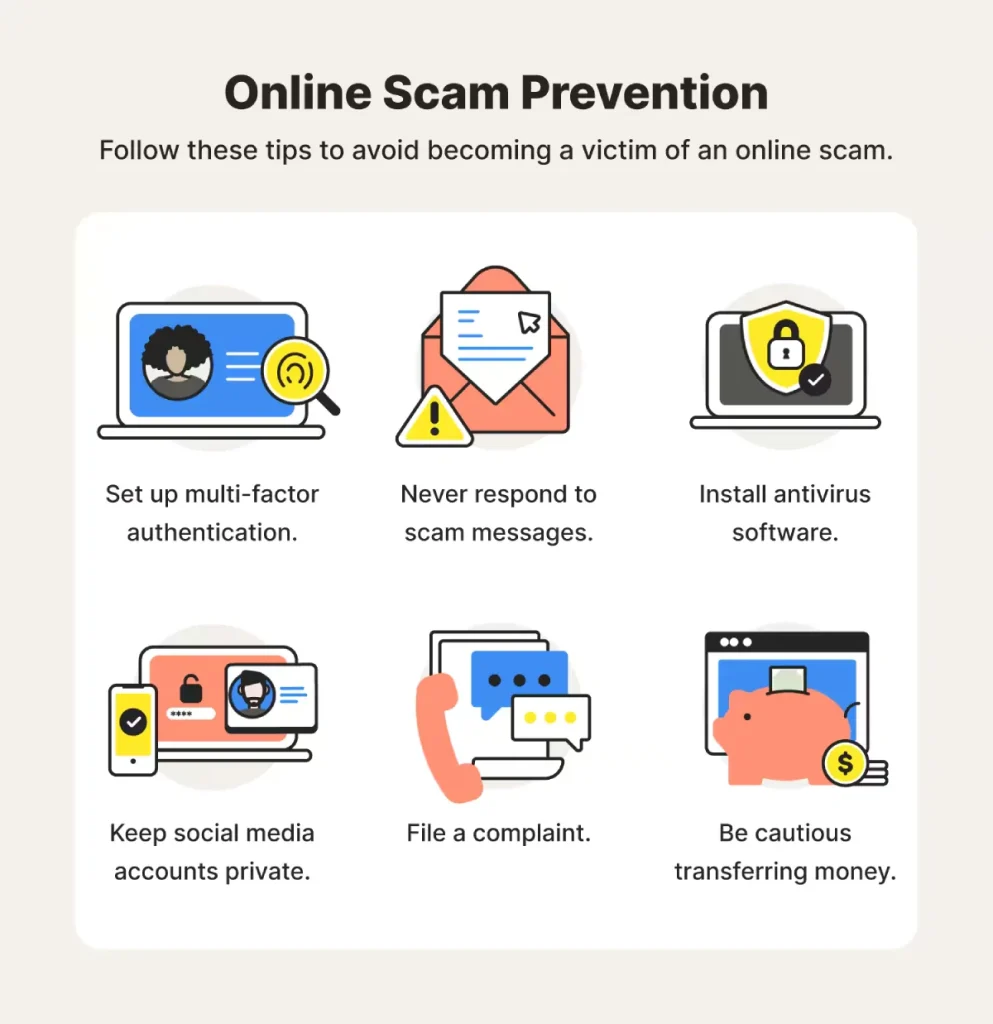
Right, enough doom and gloom. Let’s talk solutions. Here are concrete steps you can take to protect yourself from email scams:
1. Verify, Verify, Verify
Never take an email at face value. Always independently verify the sender’s identity.
- Do: Look up the company’s official website and contact them through those channels.
- Don’t: Use the contact info provided in the suspicious email.
2. Trust Your Gut
If something feels off, it probably is. Don’t let the fear of losing an opportunity override your instincts.
- Do: Take a step back and assess the situation objectively.
- Don’t: Let pressure or urgency cloud your judgment.
3. Implement Strong Security Measures
Your first line of defence is a robust digital security setup.
- Do:
- Use strong, unique passwords for every account
- For extra protection against phishing attacks and credential theft, using a secure password manager service helps ensure your logins remain safe across all design tools and accounts.
- Enable two-factor authentication wherever possible
- Keep your software and operating system updated
- Don’t:
- Reuse passwords
- Ignore security update prompts
4. Educate Yourself (and Your Team)
Stay informed about the latest scam tactics. Knowledge is your best defence.
- Do:
- Follow reputable cybersecurity blogs
- Attend webinars or workshops on digital security
- Share what you learn with colleagues
- Don’t: Assume you know it all – scammers are constantly evolving
5. Use Secure Communication Channels
When dealing with sensitive information or payments, use encrypted, verified channels.
- Do:
- Use secure client portals for file sharing and payments
- Consider encrypted email services for sensitive communications
- Don’t: Send sensitive information over unencrypted email
6. Be Wary of Unusual Payment Requests
Legitimate clients rarely have convoluted payment processes.
- Do:
- Stick to standard payment methods
- Be suspicious of requests involving gift cards, wire transfers, or cryptocurrency
- Don’t: Send money to “release” a bigger payment
The Scammer’s Toolkit: Psychological Tricks They Use
Understanding scammers’ psychological tactics can help you spot their tricks a mile away. Here’s what to watch for:
1. Urgency and Pressure
Scammers love to create a false sense of urgency. They want you to act before you have time to think.
Example: “If you don’t confirm your account details in the next 24 hours, your profile will be deleted!”
Defence: Take a deep breath. Legitimate businesses rarely use extreme pressure tactics.
2. Authority and Intimidation
They may pose as authority figures (CEOS, legal teams) to scare you into compliance.
Example: “This is the final warning from our legal department. Failure to respond will result in immediate legal action.”
Defence: Remember, real authorities follow proper channels. They don’t threaten via vague emails.
3. Flattery and Excitement
Scammers might stroke your ego to lower your defences.
Example: “Your exceptional design skills make you the perfect fit for our high-profile, confidential project!”
Defence: While flattery is nice, be wary of over-the-top praise from strangers.
4. Exploiting Goodwill
They may appeal to your kindness or desire to help others.
Example: “Our charity desperately needs a new website to continue our vital work. Can you help pro bono?”
Defence: Verify charities through official channels before committing time or resources.
Staying One Step Ahead: Emerging Scam Trends
The world of online scams is ever-evolving. Here are some trends to watch out for:
1. AI-Generated Scams
With the rise of AI language models, scammers are creating more convincing, personalised emails.
Defence: Look for subtle inconsistencies in tone or context that AI might miss.
2. Social Media Integration
Scammers are increasingly using social media to add legitimacy to their cons.
Defence: Cross-reference social profiles with official websites and be wary of recently created accounts.
3. Voice Phishing (Vishing)
Some scammers use voice-changing tech to impersonate clients or authorities over the phone.
Defence: If you receive a suspicious call, hang up and call back using a verified number.
When All Else Fails: What to Do If You’ve Been Scammed

Despite our best efforts, sometimes the worst happens. If you find yourself scammed, take these steps:
- Don’t panic. Take a deep breath and focus on damage control.
- Act quickly. Time is of the essence in limiting the scammer’s damage.
- Contact your bank immediately. They may be able to stop or reverse transactions.
- Change your passwords. Especially for any accounts that may have been compromised.
- Report the scam. Contact Action Fraud (the UK’s national fraud reporting centre) and file a report.
- Alert your clients and colleagues. They may be targeted next.
- Seek support. Being scammed can be emotionally draining. Feel free to reach out for help.
The Silver Lining: Turning Lemons into Lemonade
Getting scammed sucks. Full stop. But if it happens, try to find the silver lining:
- You’ve gained valuable experience. You’re now better equipped to spot future scams.
- You can help others. Share your story to prevent others from falling victim.
- It’s a wake-up call. Use this as motivation to tighten up your business practices.
Remember: You’re not alone. Many successful designers have faced scams and come out stronger.
Conclusion: Stay Creative, Stay Vigilant
As designers, our creativity is our superpower. But it can also be our kryptonite in the digital Wild West if we’re not careful.
The threats are real, but so is your ability to protect yourself. By staying informed, trusting your instincts, and implementing strong security practices, you can focus on what you do best – creating amazing designs – without constantly looking over your shoulder.
Remember:
- Verify everything
- Trust your gut
- Keep learning
- And never be afraid to walk away from a “too good to be true” opportunity
Your talent is too valuable to be exploited by scammers. Stay safe out there, and keep creating amazing things. 🎨✨
Call to Action: Have you encountered an email scam targeting designers? Share your story in the comments. Your experience could help protect fellow creatives!
FAQS: Your Burning Questions Answered
Are email scams really that common for designers?
Unfortunately, yes. Designers are often targeted due to their freelance nature and access to valuable intellectual property.
What’s the biggest red flag in a potential scam email?
Urgent requests for money or sensitive information are major red flags. Legitimate clients rarely operate this way.
Can’t my email provider’s spam filter catch all scams?
While spam filters are helpful, sophisticated scams can slip through. Your vigilance is crucial.
Should I engage with suspected scammers to gather evidence?
It’s generally not recommended. Report suspicious emails to the proper authorities instead of engaging directly.
Are there any safe ways to accept advance payments from new clients?
Use secure, reputable payment platforms like PayPal Business that protect buyers and sellers.
How can I verify a potential client’s identity?
Look up their company through official channels, check LinkedIn profiles, and consider video calls to confirm identity.
What should I do if a client asks me to purchase specific software for a project?
Be cautious. Legitimate clients rarely require this. If necessary, ensure you control the purchase and can verify the software’s authenticity.
Are there any cybersecurity tools specifically for designers?
While not designer-specific, tools like password managers (e.g., LastPass) and secure file-sharing platforms (e.g., Dropbox Business) are essential.
How often should I update my cybersecurity measures?
Regularly! Aim to review your security practices quarterly and update software as soon as new versions are available.
Can I get scammed through project management tools like Asana or Trello?
While less common, scammers can exploit these platforms. Always verify invitations to new projects, especially from unknown users.