Email Automation That Works: A 3-Step Plan for Growth
You’ve heard the promises about email automation. You’ve pictured a world where leads are nurtured and sales close while you sleep, all thanks to a beautifully complex, automated machine.
The reality, for most, is a bit grimmer.
The reality is a half-finished “welcome” email, a confusing dashboard you’re too scared to touch, and a monthly subscription fee that serves as a quiet monument to your good intentions.
The truth is, for most entrepreneurs and small business owners, email automation is a spectacular waste of money. It’s not because the technology is flawed. It’s because you’ve been sold a ridiculously complicated blueprint for a skyscraper when all you need, right now, is a solid foundation for a house.
This isn’t about building a labyrinthine funnel. This is about getting the basics so right that they outperform 90% of the convoluted systems.
- Focus on three foundational automations—welcome series, lead nurture, post-purchase follow-up—before building complex funnels.
- Choose tools by stage: simple platforms for "crawl", ActiveCampaign for "walk", HubSpot/Klaviyo only for large teams or serious e‑commerce.
- Measure action metrics (CTR, conversion, reply, unsubscribe), keep list hygiene, and write human, value-first emails—not robotic sales pitches.
The £500-a-Month Subscription Gathering Dust
The story is always the same. A business owner, eager to grow, signs up for a powerful marketing automation platform. They watch a few tutorials, see a flowchart with 47 different “if/then” branches, and feel excitement and dread.
They set up a single email: “Thanks for subscribing.”
And then… nothing. The dashboard is too intimidating. The possibilities are too vast. The fear of “doing it wrong” and spamming their entire list is paralysing. So the powerful tool sits there, collecting digital dust, while the monthly payments keep coming out.
This is the state of email automation for millions of businesses. The problem isn’t the software. It’s the approach.
It’s fueled by the biggest lie in the industry: the myth of “set it and forget it.” A sound automation system is a garden, not a statue. It needs tending, pruning, and attention. Forgetting it is the fastest way to become irrelevant to your audience.
What is Email Automation, Really?
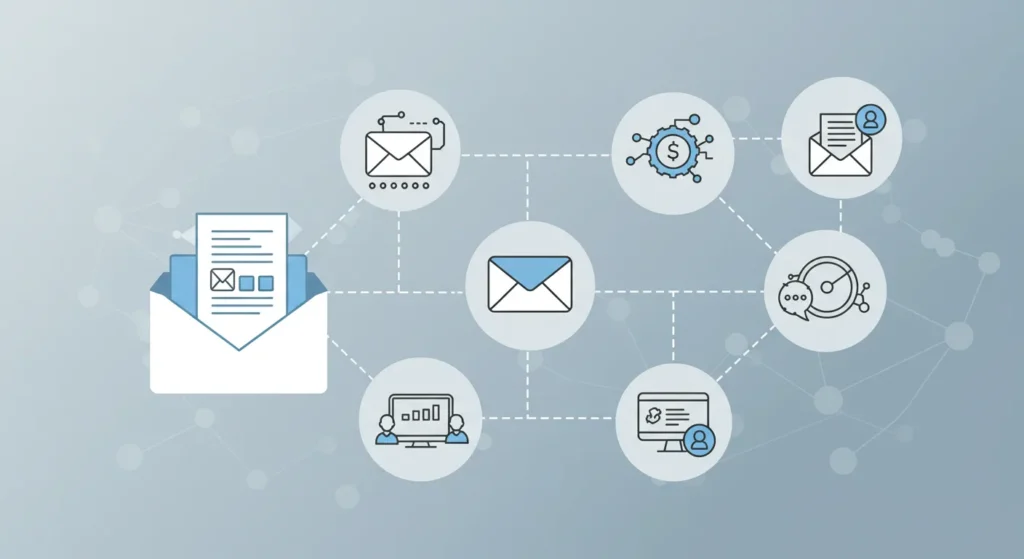
Forget the jargon. Email automation is simply about sending the right message to the right person at the right time, without you having to press “send manually.”
That’s it.
Every sophisticated system boils down to three simple components:
- The Trigger: An event that kicks off the automation. This is the cause. Examples include a person subscribing to your list, abandoning a shopping cart, or clicking a specific link in a previous email.
- The Action: What the software does in response to the trigger. This is the effect. The most common action is “send an email,” but it can also be “wait 3 days,” “add a tag to this contact,” or “notify a team member.”
- The Workflow: The sequence of these triggers and actions. A simple workflow might be: Trigger: New Subscriber -> Action: Send Welcome Email #1.
Magic isn’t about having the most triggers or actions. It’s about using the right ones in the correct order.
Forget Complex Funnels. Master These 3 Automations First (The “Crawl” Stage)
If the idea of building workflows makes you nervous, that’s good. It means you understand the stakes. The antidote to this paralysis is not a more advanced tool; it’s a simpler plan.
I call it the “Crawl, Walk, Run” framework. Most people try to sprint from a standstill and pull a hamstring. We’re going to start by crawling. These three automations are your foundation. Master them, and you’ll have a system that generates more value than most of your competitors’ complex messes.
1. The Welcome Series: More Than Just “Thanks for Subscribing”
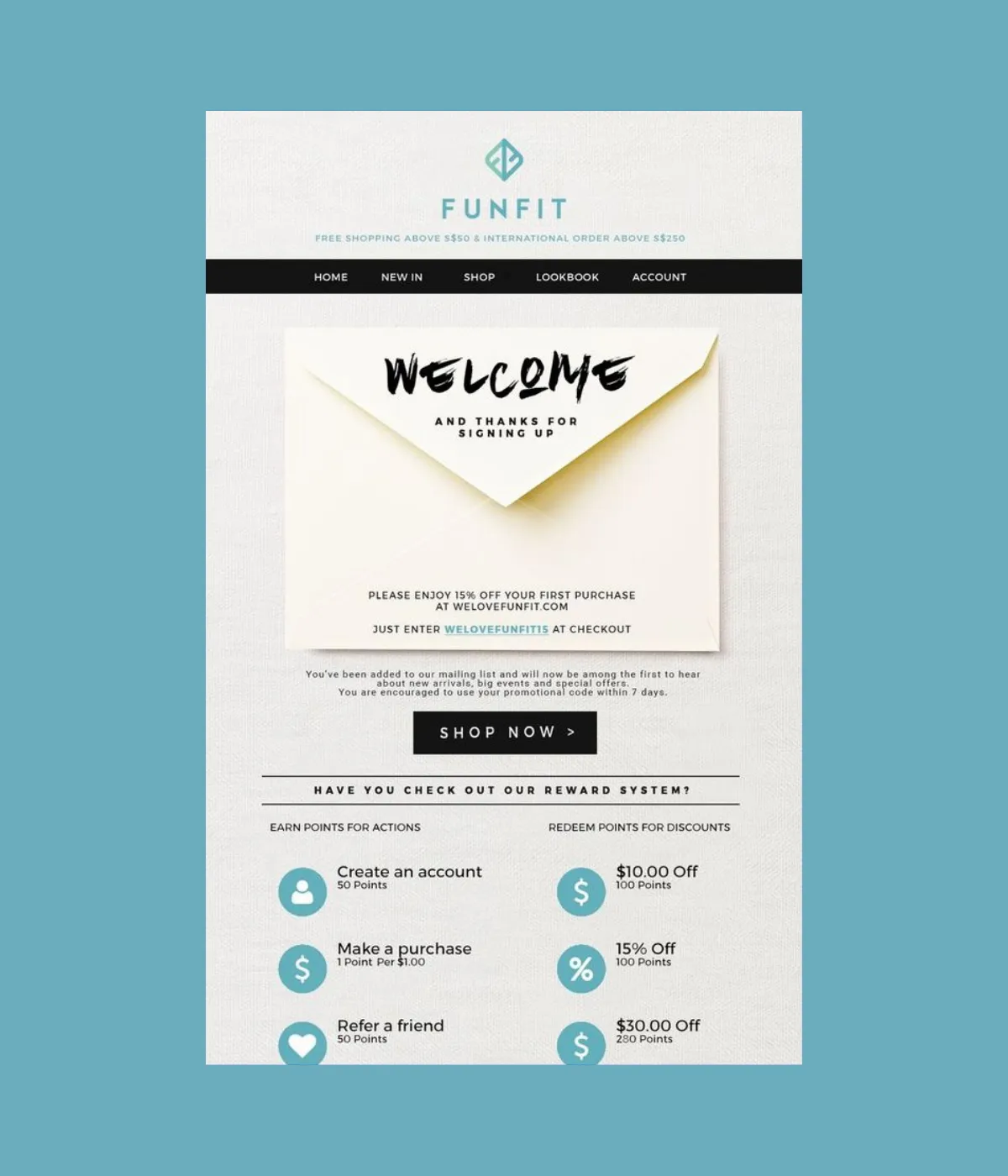
Its job is not just to deliver the PDF they signed up for. Its job is to introduce them to your world, set expectations, and prove that subscribing was wise.
A simple, practical welcome series can be just three emails:
- Email 1 (Immediately): The Welcome & Delivery. Deliver what you promised instantly. Welcome them and clearly state what they can expect from your emails (e.g., “I’ll be sending you one practical tip every Tuesday.”).
- Email 2 (Day 2): Your Greatest Hit. Send them your most popular blog post, a link to a powerful case study, or your most insightful video. Give them a quick win and establish your authority.
- Email 3 (Day 4): The Engagement Question. Ask a simple, open-ended question. “What’s your biggest challenge with X right now?” The goal is to get a reply. A reply signals to Gmail and Outlook that you’re a person, not a promotion, drastically improving your long-term deliverability.
2. The Lead Nurture Sequence: Turning Interest into Action
This automation triggers when someone shows a higher level of interest, like downloading a buyer’s guide or requesting a quote. They’ve moved beyond casual browsing. Your job is educating them, not batting them with a sales pitch.
A simple nurture sequence might look like this:
- Email 1 (Immediately): Deliver & Frame the Problem. Deliver the guide they requested. Frame the core problem that your product or service solves.
- Email 2 (Day 2): Address a Common Myth. Tackle a common misconception in your industry. By busting a myth, you build trust and position yourself as an expert.
- Email 3 (Day 4): Share a Success Story. Provide a short case study or testimonial. Show, don’t just tell them that you can solve their problem.
- Email 4 (Day 6): The Soft Call-to-Action. Gently transition towards a sales conversation. “If you’re struggling with [problem], perhaps a 15-minute chat could bring some clarity. No pressure, no hard sell.”
3. The Post-Purchase Follow-Up: The Easiest Money You’ll Ever Make
Someone just gave you their money. They are at peak excitement and trust. Most businesses squander this moment by sending a generic receipt and then going silent. This is a massive mistake.
- For E-commerce: A tool like Klaviyo excels here. The flow is simple.
- Email 1 (Immediately): Order Confirmation & Excitement. Confirm the order and reinforce their decision. “You’re going to love [product name]. Here’s how to prepare for its arrival.”
- Email 2 (Post-Delivery): How to Get Started. Provide a quick-start guide, a video tutorial, or a link to a helpful resource. Ensure they have a great initial experience.
- Email 3 (7-14 Days Later): Request a Review. Ask for their honest feedback. Social proof is gold.
- For Service Businesses: The principle is the same.
- Email 1 (Immediately): Welcome & Next Steps. Welcome them aboard. Clearly outline the next steps in your process to reduce anxiety and set a professional tone.
- Email 2 (Mid-Project): A Quick Check-In. A simple, automated “Just checking in to see if you have any questions” can work wonders for client satisfaction.
- Email 3 (30 Days Post-Project): The Follow-Up & Ask. Check in on their results. If they’re happy, it’s the perfect time to ask for a testimonial or a referral.
Ready to Pick Up the Pace? (The “Walk” Stage)
Only after those three foundational automations run, generate engagement, and prove their worth should you consider adding more layers. When you’re ready, here’s what comes next.

Segmentation and Tagging: The End of “Email Blasting”
Think of tags as digital sticky notes you attach to your subscribers based on their actions. This is how you stop shouting at everyone with the same message and start having quiet, relevant conversations.
The implementation is simple.
- Someone buys Product A? They get a customer-product-A tag.
- Someone clicks a link about your branding services? They get an interest-branding tag.
- Did someone attend your webinar? attended-webinar-oct25.
Now, you can only email people with the interest-branding tag—the relevance skyrockets. Your generic newsletter blast is dead.
The Abandoned Cart Sequence: Recovering Lost Sales
If you run an e-commerce store, this is non-negotiable. Roughly 70% of online shopping carts are abandoned. An automated email sequence can recover a significant portion of that. Studies show recovery rates between 3% and 14%. That’s pure profit.
The sequence doesn’t need to be complex.
- Email 1 (1-4 hours later): “Did you forget something?” A gentle, helpful reminder. Often, the abandonment was accidental.
- Email 2 (24 hours later): “Your items are waiting.” Reiterate the benefits of the products. Consider including a customer testimonial.
- Email 3 (48-72 hours later): The Final Reminder (Optional Incentive). A “last chance” email. You can try a small discount (e.g., 10% off) here, but don’t always train your customers to expect it.
You can create an “abandoned contact form” or “abandoned quote request” automation that follows a similar logic for service businesses.
The Re-engagement Campaign: Waking Up Your List
Over time, some subscribers will go cold. They stop opening, they stop clicking. These “inactive” subscribers are dead weight, hurting your deliverability and skewing your metrics.
Create an automation to clean your list.
- Define “Inactive”: Create a segment of subscribers who haven’t opened or clicked an email in the last 90 days.
- Trigger a Workflow: Send this segment a short, punchy 2-email sequence.
- Email 1: “Are we breaking up?” A pattern-interrupt subject line with a simple message asking if they still want to hear from you.
- Email 2 (1 week later): “Letting you go.” Inform them you’ll remove them from your list to respect their inbox, but give them one last chance to stay.
- Action: Unsubscribe. If there’s no response, automatically unsubscribe them. A smaller, engaged list is infinitely more valuable than a large, dead one.
Choosing Your Weapon: The Right Tool for the Right Stage
One of my biggest pet peeves is watching a brand-new business buy the most expensive, feature-rich software imaginable. The tool does not create the strategy. A brilliant strategist with a basic tool will destroy a clueless owner with an enterprise-level platform.
Choose your tool based on your stage.

Crawl Stage Tools (Your First £25/month)
Start here. You do not need more than this when you’re beginning.
- Mailchimp: It’s the standard for a reason. Its interface is clean, and its basic automations are perfect for building your first welcome series.
- Kit: Built for creators (bloggers, course sellers). Its visual automation builder and simple tagging system are fantastic for beginners.
Walk Stage Tools (£50-£150/month)
You’re ready to upgrade when you feel constrained by the “Crawl” tools—specifically when you need more advanced segmentation and conditional logic in your workflows.
- ActiveCampaign: This is the sweet spot for many small-to-medium businesses. It offers incredibly powerful automation capabilities at a fraction of the cost of enterprise solutions. Its CRM integration is a huge bonus.
Run Stage Tools (£500+/month)
You only need this if you have a dedicated marketing and sales team that needs a single, unified platform.
- HubSpot: It’s an all-in-one marketing, sales, and service platform. Its automation is tied directly into its world-class CRM. It’s fantastic, but it’s overkill for most small businesses.
- Klaviyo: For serious e-commerce businesses, Klaviyo is the undisputed king. Its deep integrations with platforms like Shopify allow for incredibly sophisticated, data-driven automations.
How to Measure What Actually Matters
Please, do me a favour. Stop obsessing over your open rate.
Apple’s Mail Privacy Protection has made open rates an unreliable, vanity metric. A 60% open rate means nothing if nobody clicks, replies, or buys. It’s like having a shop full of people standing there and leaving.
Focus on the metrics that track action and impact the bottom line:
- Click-Through Rate (CTR): How many people who opened took the desired action? This tells you if your message and call-to-action are compelling.
- Conversion Rate: How many people who clicked completed the goal (e.g., bought the product, booked the call)? This is the ultimate measure of success.
- Reply Rate: Are people responding to your questions? A high reply rate is a sign of a healthy, engaged list.
- Unsubscribe Rate: A consistently high rate is a clear signal that there’s a mismatch between what your audience expects and your sending.
Natural Orders: Email Marketing Automation Strategy
You’re sitting on your most valuable asset—your email list—and letting it go to waste. This book shows you how to fix that. It’s the comprehensive guide to email automation, using a unique ‘ecosystem’ framework to turn your subscribers into a predictable and profitable source of revenue.
As an Amazon Partner, when you buy through our links, we may earn a commission.
Your Automation Isn’t Working? It’s one of these things.
Don’t blame the software if your automations are running; the results are dismal. The issue is almost always strategic. Run through this checklist.
Your Emails Sound Like a Robot
You’re writing for a human, not a search engine. Ditch the corporate jargon. Write in short, simple sentences. Read your copy out loud. If it sounds unnatural when you speak it, rewrite it.
You’re Selling Too Hard, Too Soon
An automation sequence needs to earn the right to sell. Follow the 80/20 rule: provide value in 80% of your emails, and only pitch in 20%. Build trust first, then present your offer.
Your Subject Lines Are Rubbish
The best email copy in the world is useless if the email never gets opened. Your subject line has one job: to get the click. Be clear, not clever. Pique curiosity or state the benefit directly. A simple subject line like “Your guide to X” often outperforms a “witty” one.
You Have a Deliverability Problem
You might be landing in the spam folder. Ensure you’ve authenticated your domain (look up SPF and DKIM—a crucial one-time technical setup). Regularly cleaning your inactive subscribers list is the best way to maintain a healthy sender reputation.
You Don’t Need Another Complex Funnel, You Need a Strategy
The appeal of a complex, automated system is strong. It feels professional. It feels like what the “big companies” do. But complexity is the enemy of execution.
Start with the Crawl stage. Build a simple, practical welcome series. Create a thoughtful post-purchase follow-up. Nail these foundations. Let them run for a few months. Measure the results.
Building these foundational systems is the core of any effective digital marketing plan. It’s not about having the fanciest tools; it’s about having a clear, customer-focused strategy that the tools can execute.
A simple plan you implement will beat a complex one you never finish every day of the week.
Frequently Asked Questions about Email Automation
What is email automation in simple terms?
Email automation uses software to send pre-written emails to subscribers based on specific triggers or a set schedule. It allows you to send personalised, timely messages at scale without manual effort.
What is the difference between an email automation and a drip campaign?
A drip campaign is a type of automation that sends emails at predetermined intervals (e.g., Day 1, Day 3, Day 7). Modern email automation is broader and can be based on user behaviour (triggers), such as clicking a link, buying a product, or visiting a specific page on your website.
How many emails should be in a welcome series?
A sequence of 3 to 5 emails is ideal for most small businesses. This is enough to build rapport, provide value, and set expectations without overwhelming a new subscriber.
What is the best software for email automation for beginners?
Platforms like Mailchimp and ConvertKit are excellent for beginners. They have user-friendly interfaces and provide all the necessary tools to build foundational automations like a welcome series.
How much does email automation software cost?
Costs vary widely. Beginner-friendly tools can start with free or paid monthly plans around £20-£30. More advanced platforms like ActiveCampaign range from £50 to £150 per month, while enterprise-level systems like HubSpot can cost several hundred to thousands of pounds per month.
Can email automation feel personal?
Absolutely. The key to personal-feeling automation is segmentation and good copywriting. You can send highly relevant messages by tagging subscribers based on their interests and behaviours. Writing in a genuine, human voice is crucial to avoid sounding robotic.
What is an example of a trigger in email automation?
A user subscribes to a newsletter.
A customer purchases a product.
A shopper abandons their online cart.
A user clicks a specific link in an email.
A certain amount of time has passed since their last engagement.
What metrics should I track for my email automations?
Focus on action-oriented metrics. The most critical metrics are Click-Through Rate (CTR), Conversion Rate (how many clicks led to a sale or goal), Reply Rate, and Unsubscribe Rate. Avoid obsessing over Open Rate, as it has become an unreliable metric.
How often should I update my automations?
Review your core automations at least once a quarter. Check the metrics to see what’s working and what’s not. Update content that may have become outdated (e.g., links to old blog posts or mentions of past promotions).
What is list hygiene, and why is it essential for automation?
List hygiene is regularly removing inactive or invalid email addresses from your list. It’s vital because sending emails to unengaged accounts hurts your sender reputation, which increases the likelihood of all your emails (even to engaged subscribers) landing in the spam folder.
Can I use email automation for a service-based business?
Yes. Email automation is highly effective for service businesses. You can use it for lead nurturing (educating potential clients), client onboarding (sending welcome packets and resources), and follow-ups to request testimonials or referrals.
What is the difference between ActiveCampaign and HubSpot?
ActiveCampaign is a powerful email marketing and automation tool with a built-in CRM. HubSpot is an all-in-one platform with marketing automation, a more robust CRM, a sales pipeline, customer service tools, and a CMS. HubSpot is generally more comprehensive and expensive, but it is suited for businesses with dedicated teams.
Building an automated system that feels personal and drives results requires a clear strategy. If your time is better spent running your business than building workflows, it might be time to bring in a specialist.
At Inkbot Design, we focus on creating the foundational digital marketing services that allow your business to grow sustainably. We build the systems so that you can build the relationships.
Request a quote today to see how we can help.