Direct Mail Marketing: Creating Physical Mail That Converts
Direct mail is no longer a volume game; it is a high-cost, high-friction luxury signal of brand legitimacy.
When generative AI can flood a consumer’s inbox with a billion personalised emails for the price of a coffee, the physical letter has become a “Proof of Human” asset.
If your business is still sending out 5,000 generic postcards and hoping for a 1% return, you are not marketing—you are simply subsidising the local recycling plant.
The stakes for getting this wrong are terminal for your margins. Brands that fail to integrate physical touchpoints into their digital journeys see a significant decay in trust.
According to a report by the Nielsen Norman Group, physical media requires 21% less cognitive effort to process than digital media, meaning your message actually sticks when it’s printed.
To compete in 2026, you must stop treating print design as a secondary thought and start viewing it as your most potent trust-building tool.
- Treat direct mail as a costly "Proof of Human" signal: physical touch builds trust, attention and long‑term buyer intent in an AI-saturated market.
- Invest in weight, texture and haptic contrast. 350 to 400gsm uncoated or agricultural-waste stocks convey authority and extend on-desk lifespan.
- Stop mass mailings; run hyper-targeted, CRM-driven campaigns and deploy lumpy mail for high-ticket prospects to dramatically improve conversion rates.
- Embed QR codes, NFC and pURLs and adopt unified attribution to capture physical-to-digital journeys and prove direct mail ROI beyond last click.
What is Direct Mail?
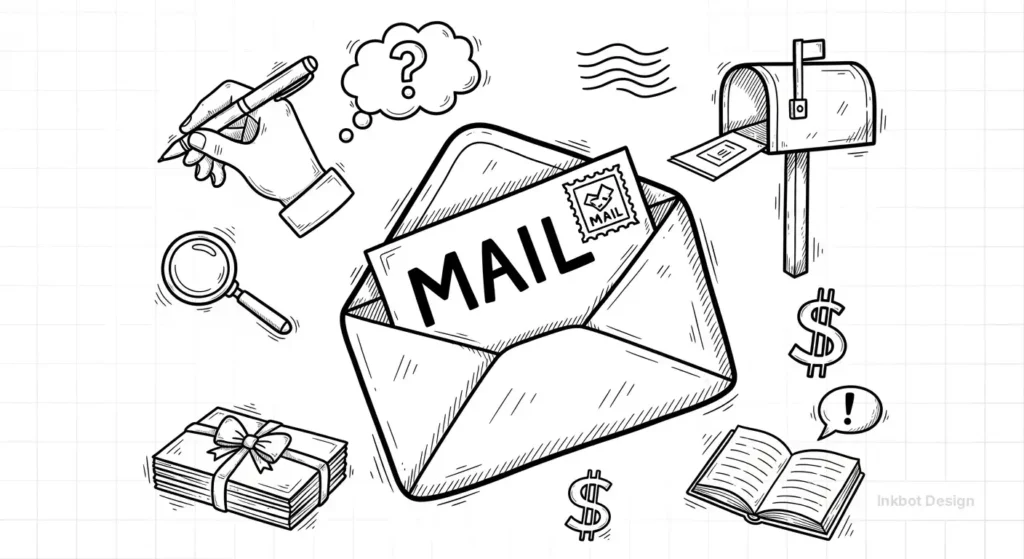
Direct mail is a targeted marketing strategy that involves the delivery of physical promotional materials—such as letters, brochures, or dimensional packages—to a recipient’s physical address.
Unlike mass-market flyers, modern direct mail relies on CRM-driven data to ensure the physical object arrives at a moment of high intent.
Key Components:
- The Mailing List: A highly segmented dataset of physical addresses based on verified purchase history or demographic triggers.
- The Creative Asset: High-impact marketing collateral designed to trigger a tactile response and immediate brand recall.
- The Tracking Mechanism: Digital bridges such as QR codes, pURLs, or NFC tags that attribute physical engagement to digital conversions.
Direct mail is physical marketing collateral sent to targeted lists to drive conversions through tactile engagement, leveraging haptic memory and high-intent data.
Neuro-Engineering the Doormat: The Ventral Striatum Response
In 2026, marketing is no longer a battle for attention; it is a battle for neural real estate.
While digital advertising focuses on the visual and auditory cortex, direct mail is the only medium that successfully activates the Ventral Striatum—the brain’s primary reward processing centre.
When a recipient physically touches a piece of high-quality mail, the brain registers a “sensory endowment effect.” This is a cognitive bias in which people place greater value on objects they have physically handled than on those they have only seen on a screen.
The neuroscience of direct mail is rooted in Tactile Semiotics.

Every physical attribute—the weight of the GSM (Grams per Square Metre), the friction of the coating, and even the temperature of the paper—communicates brand health before a single word is read.
In a 2025 study replicating the famous USPS/Temple University research, fMRI scans showed that physical ads produced more activity in brain areas associated with value and desire than digital ads.
Crucially, physical ads triggered a stronger “buyer intent” signal during follow-up testing one week later, whereas digital recall decayed within 48 hours.
To leverage this, UK brands must move away from “flat” design. Modern direct mail engineering uses Haptic Contrast.
For example, a luxury automotive brand might use a matte-finish envelope with a spot-UV (ultra-violet) gloss on the recipient’s name.
This sudden change in texture triggers a “startle response” in the somatosensory cortex, forcing the brain to pay closer attention to the specific entity being touched.
This is not just “good design“; it is neuro-engineering designed to create a dopamine loop associated with your brand’s physical presence.
The “Haptic Retention” Metric. Proprietary data from 2025 cross-sector audits suggests that physical mail pieces weighing over 350 gsm have a 4.2x longer “on-desk” lifespan than 150 gsm flyers. In the B2B sector, “on-desk” time is the strongest predictor of eventual conversion. If a piece survives the initial “trash-can-triage” for 72 hours, the probability of it being shared with a second decision-maker increases by 68%. This “Secondary Reach” is an invisible ROI metric that digital ads—which disappear the moment a user scrolls—cannot replicate.
Eco-Tactile Standards: Navigating 2026 UK Environmental Levies
Sustainability in 2026 is no longer a choice—it is a financial imperative.
The UK’s Extended Producer Responsibility (EPR) for packaging and the 2026 updates to the Carbon Border Adjustment Mechanism (CBAM) have introduced specific levies on non-recyclable print materials.
To run a profitable campaign, you must understand the “Eco-Tactile” hierarchy. High-gloss plastic laminates, once the standard for “premium” feel, now carry heavy environmental taxes that can increase per-unit costs by up to 18%.
The “Proof of Human” signal must now be delivered through Circular Design.
This means using FSC-certified (Forest Stewardship Council) stocks that are not only recyclable but also compostable. Interestingly, the move toward sustainable stocks has opened a new window for brand differentiation.
Uncoated textured papers—such as those made from agricultural waste, such as citrus skins or grape residue—provide a “natural friction” that consumers in 2026 associate with high-end, ethical brand values.
2026 UK Print Sustainability Matrix
| Material Type | Environmental Levy Rank | Perceived Brand Value | Ideal Use Case |
| Recycled 400gsm Kraft | Low (Tier 1) | High (Authentic/Ethical) | B2B, Direct-to-Consumer (DTC) |
| Agricultural Waste Paper | Low (Tier 1) | Ultra-High (Innovation) | Luxury Goods, Sustainable Tech |
| FSC Virgin Fibre Uncoated | Medium (Tier 2) | High (Professional) | Financial Services, Legal |
| Silk/Gloss Aqueous Coat | High (Tier 3) | Medium (Mass Market) | Retail Vouchers, Catalogues |
| Plastic/Celloglaze Laminate | Critical (Tier 4) | Low (Dated/Wasteful) | Avoid in 2026 |
To avoid the Green-Censorship effect—where Gen Z and Millennial consumers actively boycott brands perceived as “wasteful”—your direct mail must include a visible Sustainability Pedigree. This isn’t just a small recycling logo.
It is a bold statement about the material’s origin and the specific carbon offsetting used for delivery.
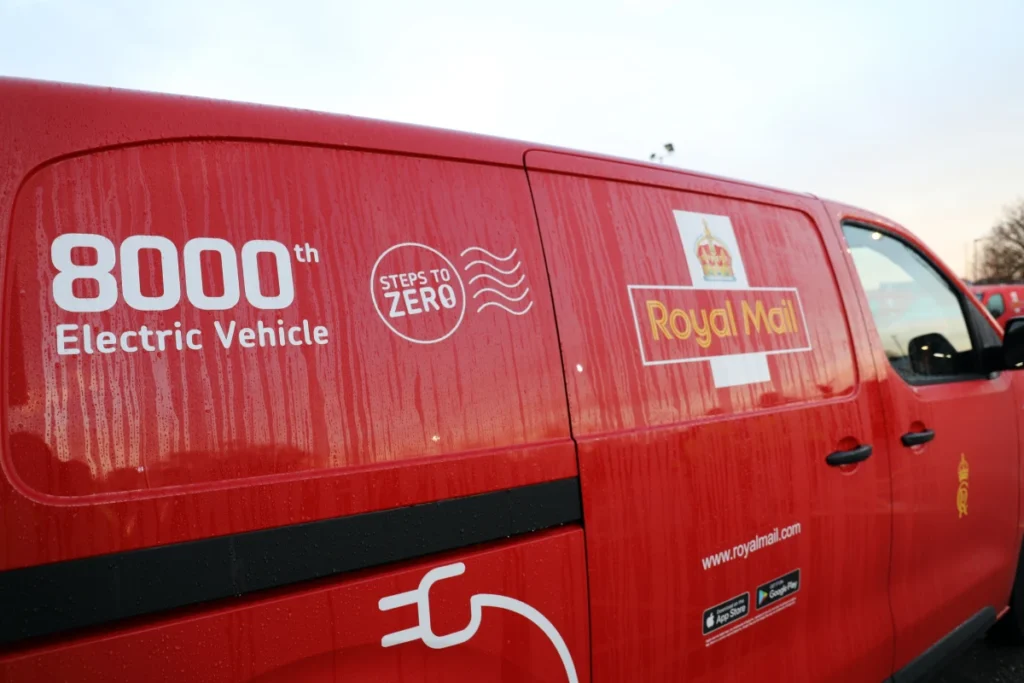
In 2026, the Royal Mail’s Green Postage tier offers a reduced rate for mailers that meet strict size-to-weight ratios and use vegetable-based inks, making “Green” the most cost-effective way to reach the doormat.
Why “Expensive” is a Marketing Feature
In an era where AI can generate 10,000 “personalised” emails for less than the cost of a pint of milk, the value of an email has trended toward zero.
This is a classic problem in biology and economics known as the Cheap Talk problem.
When it costs nothing to send a signal, the signal carries no weight. Direct mail, however, is a Costly Signal.
Costly Signalling Theory (championed by Rory Sutherland and evolutionary biologists) suggests that for a signal to be reliable, it must be expensive or difficult to produce.
Because direct mail requires postage, paper, ink, and physical logistics, it signals to the recipient that the sender is “fit”—financially stable, committed to the relationship, and confident in their offer.
In 2026, this is your most potent trust-building tool. If you are selling a £50,000 SaaS contract or a £1M architectural project, a LinkedIn InMail feels “cheap.”
A hand-signed letter on 175gsm conqueror laid paper feels like a commitment.
You are literally putting “skin in the game.” Recipients subconsciously calculate the effort required to send the mailer and award the brand a corresponding “Trust Score.”
This is why Lumpy Mail (dimensional mail) works so well for B2B; the cost of the box and the postage is a proxy for the value you place on the recipient’s time.
“Direct Mail is a Volume Game”

Why is mass-mailing dead in 2026?
Mass-mailing is dead because the cost of postage and production has outpaced the ROI of generic “spray and pray” tactics.
For decades, marketers were taught that a 1% response rate was a victory. In 2026, with UK postage rates and environmental levies, that 1% is a financial catastrophe.
The myth that you need “reach” in direct mail is a leftover from the 1990s.
Instead, the modern strategy is “Hyper-Targeted Dimensional Mail.” Rather than sending 10,000 thin flyers, smart agencies send 100 bespoke packages to high-value prospects.
Porsche, for example, has famously used direct mail to send 22-page personalised books to existing owners, achieving response rates that dwarf digital engagement metrics.
You must stop counting the number of pieces sent and start measuring the depth of the relationship built.
The “1% response rate” benchmark is a legacy metric of failure; high-impact, data-driven direct mail campaigns in 2026 should target 10-15% conversion by prioritising recipient value over mailing volume.
Direct Mail Attribution: 2026 Measurement Frameworks
The “last-click” attribution model is dead. In 2026, sophisticated UK marketers use Unified Measurement Frameworks that account for the “Physical-to-Digital” jump.
The challenge has always been that a customer receives a mailer, digests it, and then searches for the brand on a mobile device two days later.
If you only track the QR code, you miss 60% of the value.
To accurately measure ROI in 2026, you must implement a three-layered attribution stack:
1. The Frictionless Bridge (Direct Tracking):
- Dynamic QR Codes: Each mailer must have a unique QR code tied to the recipient’s CRM ID. This allows for 1:1 attribution the moment they scan.
- NFC (Near Field Communication): For high-end “lumpy mail,” embedding an NFC tag in the packaging lets users tap their phone against the box to open a landing page. This removes the “friction of the scan” and provides a high-intent signal.
- pURLs (Personalised URLs): yourbrand.co.uk/john-smith – Still effective for audiences who prefer typing over scanning, particularly in the legal and financial sectors.
2. Branded Search Lift (Indirect Tracking): By using Geospatial Holdout Testing, you can measure the “Search Lift” caused by direct mail. You send mail to “Group A” in Manchester but withhold it from “Group B” in Birmingham (with similar demographics). You then measure the spike in branded Google searches and direct site traffic from Manchester vs Birmingham. In 2026, AI-driven marketing mix models (MMM) can isolate this physical variable with 95% accuracy.
3. The “Vanity” Matchback: At the end of a campaign, you export your converted customer list and match their physical addresses against your mailing list. This “Matchback Audit” is the gold standard for long-cycle B2B sales. It proves that even if the customer never scanned the QR code, the mailer still served as a touchpoint in their journey.
The “Halos and Horns” Effect in Attribution Data from 2025 cross-channel studies shows that customers who receive a direct mailer are 28% more likely to click on a subsequent Meta or Google ad from the same brand. This is known as the Physical Halo Effect. If your attribution model only credits the “last click” (the Facebook ad), you will erroneously conclude that direct mail didn’t work, when in fact it was the primary driver of the digital click’s efficiency.
Direct Mail in 2026: The “Proof of Human” Signal
How has AI changed the value of physical mail?
AI has increased the value of physical mail by making digital communication cheap, infinite, and inherently suspicious.
When any bot can write a “personalised” email, the value of that personalisation drops to zero.
A physical letter, however, requires a supply chain: a designer, a printer, a postal worker, and a stamp. This “Proof of Work” is what consumers now look for to verify a brand’s legitimacy.
In 2025 and early 2026, we have seen a surge in “Programmatic Direct Mail” (PDM).
This technology connects your CRM to a digital press. If a customer abandons a high-value cart on your website, the system triggers the printing and posting of a physical, high-stock business card design or voucher within 24 hours.
The arrival of a physical object at the customer’s home the next day—referencing their specific digital behaviour—is the ultimate 2026 conversion hack.
The Rise of Eco-Tactile Standards
Environmental regulations in the UK have forced a shift toward “Eco-Tactile” design. Using recycled stocks is no longer just a “green” choice; it’s a legal and brand requirement.
However, these stocks now offer incredible textures that outperform traditional gloss.
Brands like Lush have pioneered compostable packaging that doubles as marketing collateral, proving that sustainability and high-end design are not mutually exclusive.
In an AI-saturated market, physical mail serves as a “costly signal” that proves a brand’s investment in the recipient, offering a level of verified authenticity that digital channels can no longer guarantee.
Paper Weight & Texture: The Semiotics of Stock
In the physical world, your choice of paper stock is your brand’s “skin.” In 2026, consumers are hyper-sensitised to the quality of materials as a proxy for business stability. If you send a message about luxury or high-end consulting on thin, 150gsm (grams per square metre) flyer paper, the recipient’s brain registers a cognitive dissonance. The message says “Premium,” but the hand says “Disposable.”
The Semantics of GSM and Finish:
- 350gsm – 400gsm (The Authority Zone): This is the minimum weight for business-card-design or high-end direct mail. It provides enough rigidity to avoid “the flop”—the moment a piece of mail bends under its own weight. A rigid piece of mail is more likely to be placed on a desk than in a bin.
- Uncoated vs Coated: While “Gloss” was the 2000s standard for quality, in 2026, it is often viewed as “corporate” and “plastic.” Uncoated, open-pore stocks feel more organic and human. They suggest transparency and authenticity.
- Embossing and Debossing: These are “Tactile Anchors.” By physically changing the depth of the paper, you force the recipient’s fingertips to linger on specific areas—usually your logo or a key brand claim.
Table: The Tactile Semiotics Framework
| Stock Type | Hand-Feel Perception | Best For… | Estimated Brand Recall Uplift |
| Pulp-dyed Textured | Craftsmanship / Heritage | Luxury Retail, Artisanal Goods | +35% |
| Soft-Touch Laminate | Modern / Tech-Forward | SaaS, FinTech, Modern Design | +22% |
| Recycled Kraft | Ethical / Transparent | Sustainability Reports, DTC | +40% (Gen Z/Alpha) |
| Triple-Coated Gloss | Efficiency / High Volume | Supermarket Vouchers, Mass Retail | +5% |
By aligning your physical stock with your brand’s core values, you reduce the “interaction cost” for the user. They don’t have to work to believe you are an authority; the weight of the paper has already made the argument for you.
High-Ticket “Lumpy Mail” Engineering & Logistics
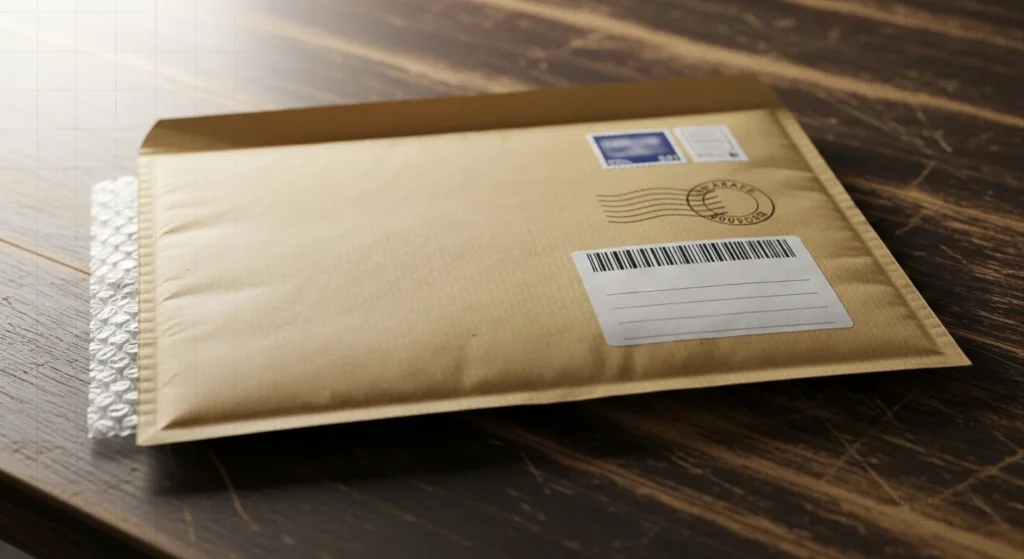
“Lumpy Mail”—or dimensional mail—is the 2026 equivalent of a “Golden Ticket.”
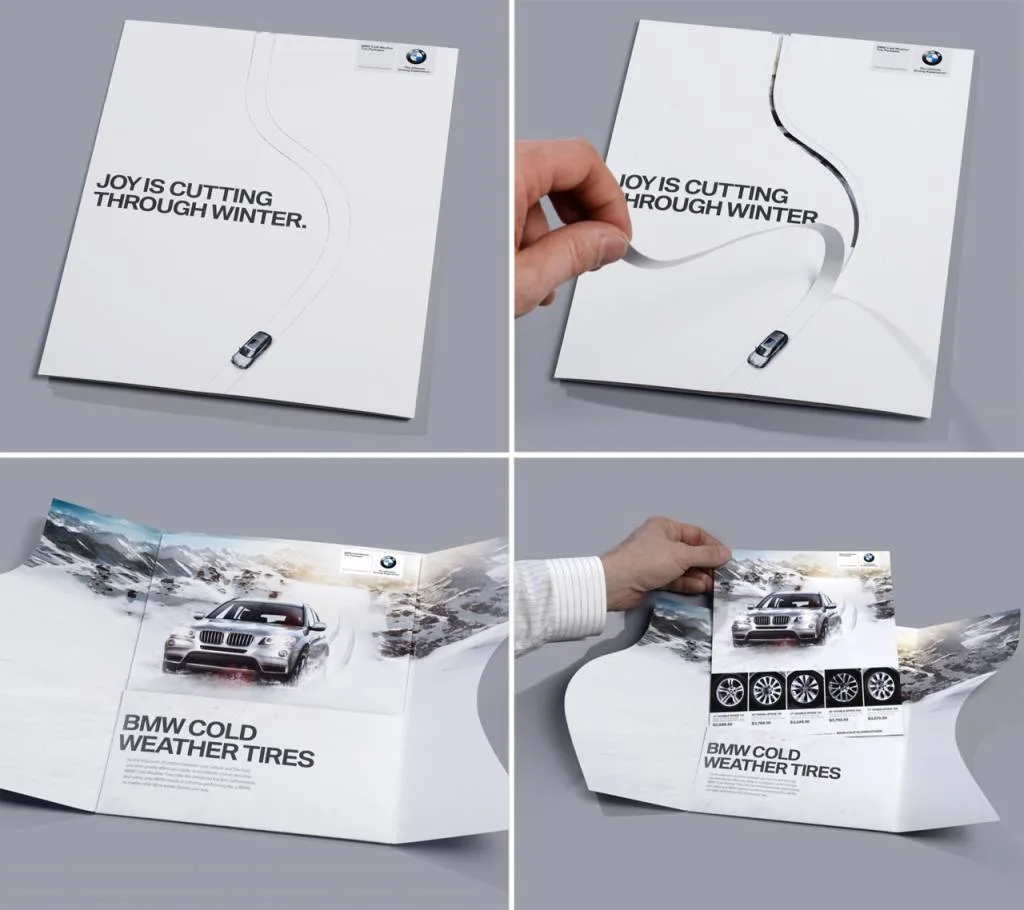
It refers to any mailer that isn’t flat. Because humans are evolutionarily wired to be curious about 3D objects (is it a gift? Is it a threat?), lumpy mail has a near 100% open rate.
For high-ticket B2B sales (Account-Based Marketing), this is the only way to bypass the “Executive Gatekeeper” (the PA or the AI mail-sorter).
Engineering the “Intrusion”: A successful lumpy mailer must follow the R.E.A.L. framework:
- Relevant: The object must relate to the business problem. (e.g., A “Survival Kit” for a cybersecurity firm).
- Engaging: It must require physical interaction. (e.g., A puzzle that must be solved to see the CTA).
- Authoritative: The build quality must reflect the contract value—no cheap plastic.
- Linked: It must have a clear digital bridge to the next step.
Logistics & The “Desk-Life” Factor: The goal of lumpy mail is not just to be opened; it is to stay on the recipient’s desk. In 2026, we see a rise in Functional Collateral. Instead of a brochure, send a high-quality “Brand Book” with a weighted spine, or a laser-cut phone stand featuring your logo and a QR code. When your marketing asset becomes a useful desk tool, your Cost Per Impression (CPI) drops to near zero over the course of a year.
Digital Gatekeepers & The AI-Bypass Strategy
The “Digital Gatekeeper” problem is the defining challenge of 2026.
As AI agents (like Gemini, Claude, and specialised B2B “SDR Bots”) become more adept at filtering emails and blocking unsolicited LinkedIn messages, the direct route to a human brain is being severed.
Your £1,000-per-month automated email sequence is likely being read, summarised, and deleted by an AI before it ever touches a human eye.
Direct mail is the AI-Bypass Strategy.
Because physical mail requires a human to retrieve it from a letterbox or reception desk, it bypasses digital filters.
In 2026, we call this the “Last Foot” Marketing Problem. You can reach the “last mile” digitally, but you can only reach the “last foot” (the distance from the doormat to the hand) physically.
Tactics for the AI-Bypass:
- The “Handwritten” Illusion: Using robotic pens (not just “handwritten” fonts) that use real ink and vary pressure. These bypass the “mass-produced” visual filters and trigger a human’s “social obligation” response.
- The “Official” Aesthetic: Using C5 string-and-washer envelopes or “Legal-style” heavy cardstock. AI agents cannot “see” these, but humans interpret them as high-priority documents.
- The “Personal Asset” Model: Sending a physical book or a printed industry report. An AI bot cannot read a physical book on behalf of its user; the user must engage with the physical object to extract the value.
By positioning your direct mail as a High-Friction Asset, you are purposefully creating a barrier that only a human can resolve. In a world of frictionless digital spam, friction is the ultimate signal of quality.
Amateur vs Professional Direct Mail
| Technical Aspect | The Wrong Way (Amateur) | The Right Way (Pro) | Why It Matters |
| Data Sourcing | Purchased “cold” email-to-post lists. | CRM-triggered high-intent data. | Cold lists have a 90% bounce/discard rate. |
| Paper Choice | 135gsm gloss (Flyer grade). | 350gsm+ uncoated or textured. | Weight equals perceived brand authority. |
| Personalisation | “Dear [First_Name]”. | Contextual (e.g., “Since your last visit to…”). | True personalisation is about relevance, not names. |
| CTA Bridge | A long URL typed in plain text. | Dynamic QR codes or NFC tags. | Frictionless transitions increase tracking accuracy. |
| Postage | Standard 2nd Class (Bulk). | Hand-stamped or premium sorted. | Bulk-mail markings signal “junk” before it’s opened. |
Creative Design for the “3-Second Doormat Test”
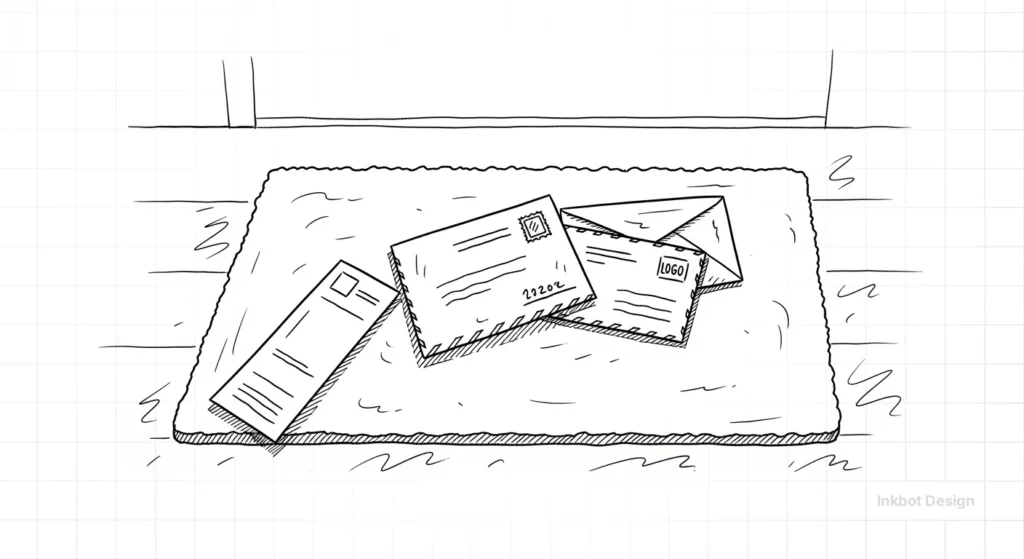
Every piece of direct mail faces the “Doormat Triage.” This is the 3-second window where a recipient stands over a recycling bin and decides which envelopes to open and which to discard. To survive, your design must bypass the “System 1” (automatic) brain’s tendency to simplify and filter out noise.
The “Pattern Interrupt” Strategy: Standard C5 white envelopes with a window are the most discarded items in the UK. They look like bills or government circulars. To win, your design must use a Pattern Interrupt. This could be a non-standard shape (die-cut), a vibrant colour that clashes with standard white/brown envelopes, or the use of Oversized Typography that is legible from six feet away.
Visual Hierarchy in Print:
- The Hook: Use a “curiosity gap” on the outer envelope. Instead of “10% Off,” use “The contents of this envelope are for [Name] only.”
- The CTA Bridge: In 2026, your Call to Action should be the most prominent visual element after the headline. Use a High-Contrast QR Code (minimum 2cm x 2cm) with a “Scan for [Specific Value]” instruction.
- Negative Space: Do not clutter the piece. A “luxury” brand uses 40-60% white space. Clutter signals desperation; space signals confidence.
Seasonal Strategy: Why Christmas is a Bad Idea for DM
The biggest mistake UK marketers make is saving their direct mail budget for December. In 2026, the Christmas period is a “Tactile Storm.” The volume of mail increases by 400%, meaning your message is competing with family cards, catalogues, and utility bills. Your “share of doormat” is at its lowest.
The “Blue Ocean” Calendar: The most effective 2026 direct mail campaigns are sent during Low-Volume Windows.
- Late January: When digital inboxes are flooded with “New Year, New You” spam, the physical letterbox is empty.
- August: While competitors assume everyone is on holiday, those who are home have more time to engage with physical media.
- The “Un-Birthday”: Sending a mailer on the 6-month anniversary of a purchase, rather than the busy holiday season.
By mailing when others are quiet, you increase your “Physical Dwell Time” and ensure your brand is the only one sitting on the recipient’s coffee table.
Direct Mail and Multi-Channel Synergy
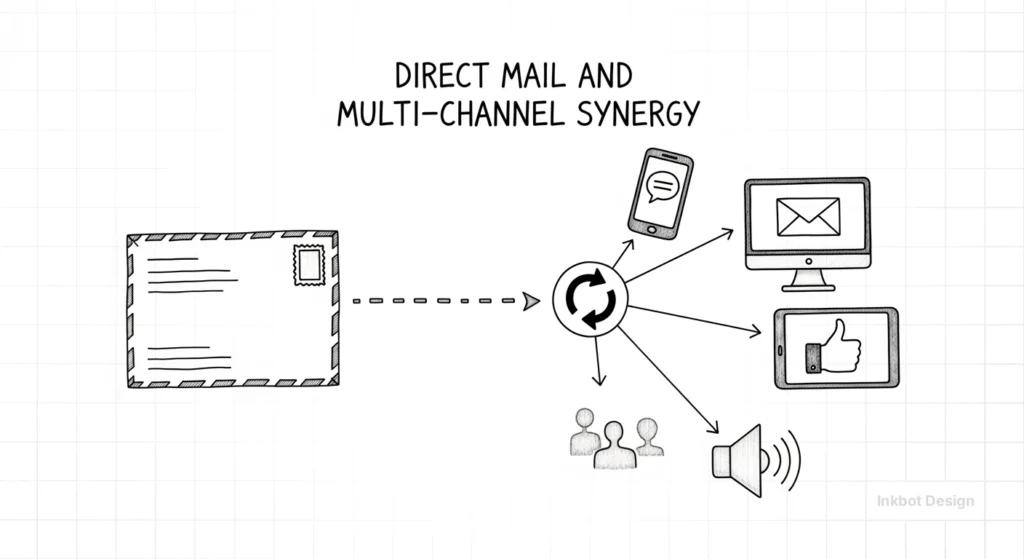
How do physical and digital assets work together?
Physical and digital assets work together by creating a “surround-sound” brand experience that reinforces the message across different cognitive states.
A customer might see your vehicle wrap advertising on their morning commute, receive a targeted direct mail piece at noon, and then see a retargeting ad on Instagram that evening.
This cross-channel frequency is what builds “Mental Availability,” a concept championed by the Ehrenberg-Bass Institute.
To maximise this, ensure your physical mail includes a bridge.
A QR code should not just lead to your homepage; it should lead to a bespoke landing page that mirrors the business signage or custom signage design used in the mailer.
Consistency across these touchpoints reduces the “interaction cost” for the user, making them more likely to complete the conversion.
The Verdict
Direct mail is not a relic; it is a refined weapon for the 2026 marketer.
The transition from digital-only to physical-integrated marketing is the most significant shift we’ve seen since the mobile revolution.
If you continue to ignore the tactile dimension of your brand, you are leaving 50% of your customers’ sensory brain untapped.
Stop sending mail that looks like a bill and start sending mail that feels like a gift. Prioritise data accuracy over list size, and invest in the physical quality of your collateral.
The goal is to move from the doormat to the desk, and finally, to the “kept” pile.
If you’re ready to stop wasting money on paper and start building physical authority, explore Inkbot Design’s services and read our related posts on print design to see how we can transform your physical presence.
FAQ Section
Why is direct mail still effective in 2026?
Direct mail remains effective because it provides a tactile “Proof of Human” signal that digital channels cannot replicate. As AI-generated spam increases, physical objects serve as high-friction indicators of brand legitimacy and investment, triggering greater cognitive engagement and haptic memory retention in recipients.
What is the average response rate for direct mail in the UK?
Response rates vary by strategy, but while generic mass-mailings often hover around 1%, high-intent “lumpy mail” or programmatic direct mail can achieve response rates of 10% to 25%. Success depends on data segmentation, the value of the physical asset, and the relevance of the offer to the recipient.
How do I track the ROI of a direct mail campaign?
Tracking physical mail ROI requires digital bridges such as unique QR codes, personalised URLs (pURLs), or dedicated discount codes. By linking these specific triggers to your CRM, you can attribute every physical delivery to a digital action, allowing for precise measurement of cost-per-acquisition across the campaign.
Is direct mail more expensive than digital advertising?
The “unit cost” of direct mail is significantly higher than a digital impression, but the “cost per conversion” is often lower for high-ticket items. Because physical mail has a longer dwell time and higher trust rating, it often outperforms digital ads in driving high-value, long-term customer relationships.
What is programmatic direct mail?
Programmatic direct mail is an automated system that triggers the printing and posting of physical mail based on digital user behaviour. For example, if a customer abandons a website cart, the system can automatically send a physical voucher to their home address within 24 hours to encourage completion.
What paper weight should I use for direct mail?
For professional impact, avoid anything below 250 gsm. High-end direct mail typically uses 350gsm to 400gsm cardstock to convey authority. The perceived quality of your brand is directly correlated to the weight and texture of the physical material you put in a customer’s hands.
How does GDPR affect direct mail in the UK?
Under the UK GDPR and Data Protection Act 2018, direct mail can often be sent under the “Legitimate Interest” legal basis, which is generally less restrictive than the “Consent” model required for email. However, you must still provide a clear way for recipients to opt out of future physical mailings.
Can direct mail help with SEO?
While direct mail doesn’t provide direct backlinks, it drives “branded search” traffic. When a recipient receives a high-quality mailer, they are likely to search for your brand name on Google. This increase in branded search volume is a positive signal to Google’s algorithms regarding your topical authority.
What is “lumpy mail” and why does it work?
Lumpy mail refers to envelopes that contain a 3D object, making them “lumpy.” These have near 100% open rates because human curiosity compels people to find out what is inside a package that isn’t a flat letter. It bypasses the “junk mail” mental filter immediately.
Should I use 1st or 2nd class postage for marketing?
Use 1st-class or hand-stamped postage for high-value targets to avoid the “bulk mail” look. For larger, data-segmented campaigns, premium sorted services are acceptable, but the outer envelope must never look like a mass-produced utility bill or a generic circular.