A Simple Guide to Branding and Positioning for SMBs
Most business owners treat branding like a fresh coat of paint. They assume that if they pick a “professional” blue and hire a freelancer to whip up a logo, the box is ticked.
They haven’t ticked a box; they’ve just funded an expensive exercise in blending in.
In our work at Inkbot Design, we often see businesses pouring thousands into Google Ads while their actual identity is so diluted it’s practically homoeopathic. They are driving traffic to a destination that has no soul, no story, and no competitive edge.
- Define a clear positioning: be the obvious choice for a specific target, not a generic "me too" provider.
- Build distinctive assets and verbal identity so customers and AI systems recognise you without your logo.
- Technical optimise entity signals: structured schema, co‑occurrence, and high‑quality mentions to boost Entity Density.
Why “Good Enough” is Costing You a Fortune
Ignoring your brand strategy doesn’t just result in a mediocre website; it costs you market share.
When you fail to position your business correctly, you relinquish control of your narrative. You stop being a “must-have” solution and become a line item on a spreadsheet. This forces you into the one place no growing business wants to be: competing on price.
In a price war, the only winner is the one with the deepest pockets—and that’s rarely the ambitious SMB. True positioning isn’t about being the cheapest; it’s about being the only choice for your specific ideal client.
What is Branding and Positioning?
Branding is the deliberate process of managing the associations, perceptions, and distinctive assets that reside in your audience’s minds.
Positioning is the strategic act of occupying a specific, defensible “slot” in a market category relative to competitors.
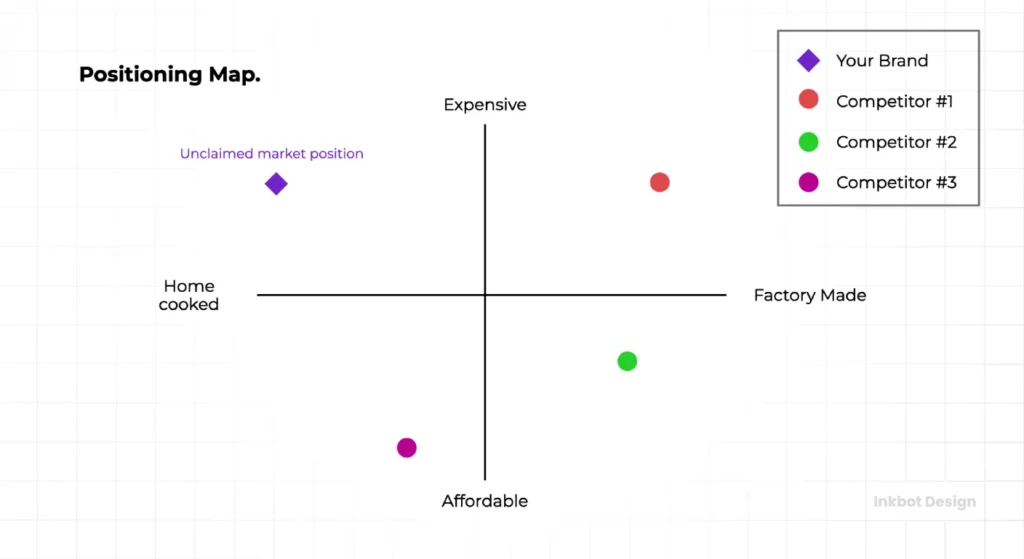
While branding is the what and the how, positioning is the where (in the mind) and the why (compared to others).
- Distinctive Assets: The non-copyable visual and auditory cues (logos, colours, fonts).
- Mental Availability: The probability that a buyer will notice, recognise, and think of your brand in a buying situation.
- Category Entry Points (CEPs): The internal and external cues that lead a consumer to think of a category (e.g., “I’m hungry” -> “Fast food” -> “McDonald’s”).
The Fundamental Difference
Branding is the “Who.” Positioning is the “Versus.” You cannot have one without the other, yet most SMBs try to build a “Who” without ever deciding who they are, Versus.”
The Death of the “Me Too” SMB
If I look at ten different accounting firms or construction companies, nine of them will use the same stock photography, the same “we value our customers” copy, and the same generic blue/grey palette. This is the “Me Too” trap.
In 2026, this isn’t just a creative failure; it’s a technical one. Search engines and Large Language Models (LLMs) now categorise businesses as “Entities.”
If your brand identity is indistinguishable from 500 other firms, you have zero Entity Density. The algorithm doesn’t know where to put you, so it puts you nowhere.
Real-World Example: Tropicana’s $30 Million Erasure
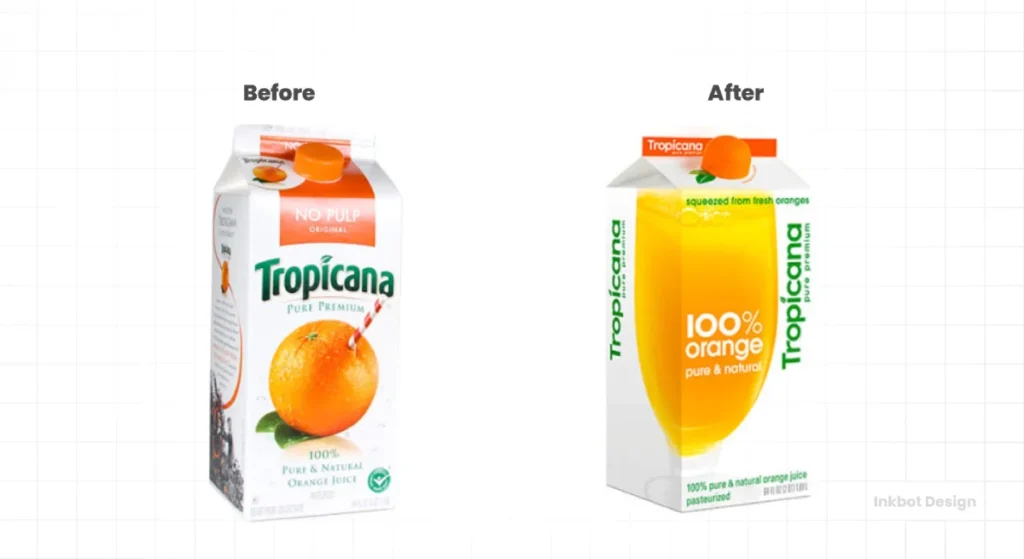
In 2009, Tropicana redesigned its packaging. They removed the iconic orange with a straw and replaced it with a clean, “modern” glass of juice. Sales plummeted by 20% in two months, costing the company $30 million.
Why? Because they destroyed their Distinctive Assets. Consumers literally couldn’t see them on the shelf. For an SMB, this kind of mistake is terminal. You don’t have $30 million to lose while you “find yourself.”
The Technical Blueprint: Syncing Your Brand with Knowledge Graphs
In 2026, your brand is a node in a massive digital web. If you don’t define the connections, the machines will do it for you—and they might get it wrong.
To secure your “Entity Density”, follow this technical implementation:
1. Schema.org Professional Integration
Do not just use a basic “Organization” tag. Use the Brand and Service properties to link your business to specific outcomes.
JSON

{

  "@context": "https://schema.org",

  "@type": "Brand",

  "name": "ShieldJuris",

  "alternateName": "The Legal Security Specialists",

  "description": "Cybersecurity and compliance for UK law firms.",

  "logo": "https://shieldjuris.co.uk/logo.png",

  "sameAs": [

    "https://www.linkedin.com/company/shieldjuris",

    "https://twitter.com/shieldjuris",

    "https://www.crunchbase.com/organization/shieldjuris"

  ],

  "areaServed": {

    "@type": "Country",

    "name": "United Kingdom"

  }

}
2. The Power of “Co-occurrence”
AI models learn via association. If your brand name frequently appears alongside the Speciality Coffee Association and Fairtrade International, the model assumes you are a premium, ethical coffee provider.
- Action: Seek guest features on industry-standard sites, not just any blog. One mention on a high-TA site is worth 1,000 mentions in generic directories.
The Myth of Brand Loyalty
Your customers aren’t loyal to you. They are just lazy, or you are the only one they remember.
The Ehrenberg-Bass Institute has repeatedly proven the Law of Double Jeopardy.
Small brands have fewer buyers, and those buyers are slightly less loyal. If you spend your limited budget trying to “deepen relationships” with existing customers through expensive loyalty schemes, you will stagnate.
Growth comes from Acquisition. To acquire, you need to be visible. To be visible, you need to be different. This is where brand visibility becomes your primary lever for growth.
Stop trying to make people “love” your brand. Aim for them to recognise your brand when they are in the mood to buy.
| Feature | The Amateur Approach (Wrong) | The Strategic Approach (Pro) |
| Messaging | “We provide high-quality service.” | “We fix [Specific Problem] for [Specific Group] in [Specific Time].” |
| Visuals | Trends, “Cool” designs, Stock photos. | Distinctive Assets, Repeatable Patterns, High Contrast. |
| Focus | Trying to please everyone. | Niche branding to dominate a segment. |
| Budgeting | Marketing is an “expense” to cut. | Branding is an “asset” that lowers CAC. |
| Positioning | “We are the best.” | “We are the only ones who [Unique Attribute].” |
Verbal Identity: Why Your “Voice” is a Technical Asset
Most SMBs focus on the logo (the visual) but ignore the voice (the verbal). In the age of voice assistants and AI-generated summaries, your Tone of Voice (ToV) is what makes your brand “sourceable”.
If your website copy sounds like it was written by a generic AI, you are training discovery engines to treat you as a generic commodity. To stand out, you must define:
- Vocabulary: Are you “Professional and Staid” or “Irreverent and Bold”? Do you use industry jargon or plain English?
- Rhythm: Do you use short, punchy sentences or long, academic prose?
- Personality Archetype: Are you the Sage (like The Economist), the Hero (like Nike), or the Everyman (like IKEA)?
The “No-Logo” Test
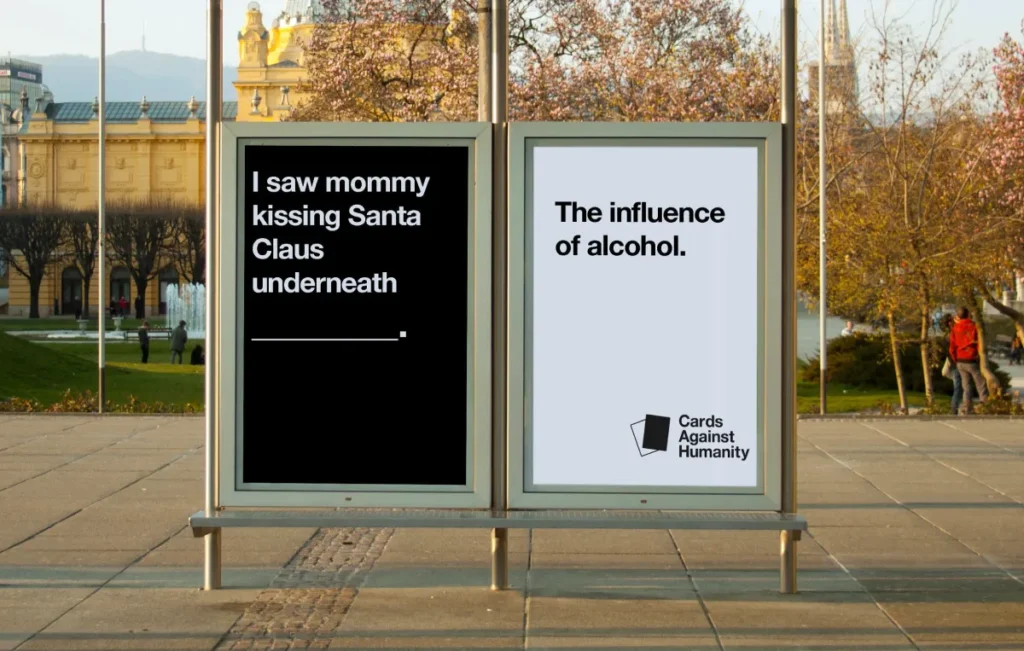
If you removed your logo from your latest email or blog post, would a customer still know it was you? If the answer is no, your positioning is invisible.
A strong verbal identity ensures that even when your brand is mentioned in a text-only AI Overview, the “essence” of your business remains recognisable.
Positioning Strategies: Finding Your Slot
You cannot position yourself in a vacuum. You must use a perceptual map to understand where your competitors sit. Are they the “Budget” option? The “Premium” option? The “Fast” option?
1. Blue Ocean Strategy
Instead of fighting over the same crumbs, you move to a “Blue Ocean” where there is no competition. This often involves a brand differentiation strategy that removes features people don’t care about and doubles down on one they do.
2. The Specialist (Niche Branding)
If you are a branding agency, don’t just be a “branding agency.” Be a fashion branding specialist or focus on branding for nonprofits.
The more specific you are, the higher your perceived value.
I once audited a client who was a “General Contractor.” They were struggling. We repositioned them as a “Luxury Kitchen Specialist for Victorian Homes.” Their lead quality tripled overnight because their positioning became a filter.
3. STP Marketing
You need to master STP marketing: Segmentation, Targeting, and Positioning.
- Segmentation: Who is in the market?
- Targeting: Which group can you actually serve profitably?
- Positioning: How do you make that group choose you over a generic alternative?
How to Construct Your Brand Positioning Statement
A positioning statement is not a slogan. It is an internal guide that dictates every marketing decision you make.
In 2026, when AI models summarise your business value in seconds, a weak statement leads to a muddled digital identity.
To build a defensible slot in the market, use the Geoffrey Moore framework, adapted for the modern SMB:
- For [Target Customer]
- Who [Statement of Need or Opportunity]
- The [Product/Service Name] is a [Product Category]
- That [Statement of Key Benefit – the compelling reason to buy]
- Unlike [Primary Competitive Alternative]
- Our Product [Statement of Primary Differentiation]
Example: A Boutique Cyber Security Firm
“For Mid-sized UK Law Firms that handle sensitive litigation data, ShieldJuris is a Managed Security Provider that offers 24/7 automated threat neutralisation. Unlike Generalist IT Firms, ShieldJuris provides bespoke compliance reporting specifically for SRA Standards, ensuring partners never face regulatory fines.”
Why this works: It uses specific entities (SRA Standards, Law Firms) and identifies a clear “Versus”. When a discovery engine crawls this, it immediately understands the “Contextual Co-occurrence” between your brand and the legal sector.
Brand Health & Positioning Builder
Are you a “Me Too” brand? Answer these 3 diagnostic questions to check your Entity Density before building your positioning statement.
Brand Architecture: Scaling Without Dilution
As an SMB grows, it often adds new products or services. This is where most brands break. You must choose a structure:
- The Branded House (e.g., Apple, FedEx): One master brand. Everything you do sits under that name (e.g., Apple Watch, Apple Music).
- Pros: Cheaper to build; equity flows from the parent.
- Cons: A failure in one product damages the whole brand.
- The House of Brands (e.g., Procter & Gamble, Unilever): The parent company is invisible; each product has its own identity (e.g., Tide, Dove).
- Pros: Allows you to target different niches with precision.
- Cons: Extremely expensive to manage multiple “Distinctive Assets”.
- The Endorsed Brand (e.g., Courtyard by Marriott): A middle ground where the new brand has its own name but is “backed” by the master.
Decision Factor: For most SMBs, the Branded House is the only viable path. Focus your limited budget on building one strong entity rather than three weak ones.
Sector-Specific Positioning Realities
Positioning isn’t a “one size fits all” framework. The requirements for real estate branding differ significantly from those for retail branding.
- Real Estate: Positioning is about Trust and Hyper-locality. You aren’t selling a house; you’re selling the area’s expertise.
- Retail: Positioning is about Salience and Convenience. If they don’t see you, you don’t exist.
- B2B Services: Positioning is about Risk Mitigation. The buyer’s biggest fear is looking stupid in front of their boss. Your brand must position you as the “Safe Choice.”
Is Branding a Cost or an Investment? Measuring ROI
The greatest challenge for an SMB is justifying the spend on “intangibles”. However, in 2026, the data is clearer than ever.
Strong positioning directly impacts your Customer Acquisition Cost (CAC) and Lifetime Value (LTV).
| Metric | The “Unbranded” SMB | The “Positioned” Entity |
| Direct Traffic | Low (Relies on paid ads) | High (Users search for the name) |
| Price Elasticity | Low (Must discount to win) | High (Can charge 15-30% premium) |
| Sales Cycle | Long (Constant “proof” required) | Short (Trust is pre-established) |
| LLM Recommendation | Generic (“A plumber near you”) | Specific (“The specialist for leak detection”) |
The “Brand Lift” Test
To measure this without a million-pound budget, track your Share of Search.
Use tools like Google Trends or SEMrush to compare the search volume for your brand name with that of your three closest competitors.
If your share of search is growing, your “Mental Availability” is increasing. This is a leading indicator of future market share.
The State of Branding and Positioning in 2026
We are currently in the era of Generative Engine Optimisation (GEO). In 2024 and 2025, search shifted from “ten blue links” to AI synthesising answers.
If you ask an AI, “Who is the best branding consultant in London?”, the AI doesn’t look at who has the best meta tags. It looks at Entity Associations.
It looks for:
- Sentiment: How is the brand spoken about across the web?
- Contextual Proximity: Is the brand frequently mentioned alongside industry-leading keywords?
- Co-occurrence: Does your brand name appear in the same “vector space” as the problems you solve?
If your positioning is vague, the AI won’t recommend you. It cannot synthesise a “maybe.” It needs a “definitely.”
This makes competitive analysis more technical than ever. You aren’t just competing for human eyeballs; you’re competing for LLM weightings.
How to Execute a Brand Repositioning
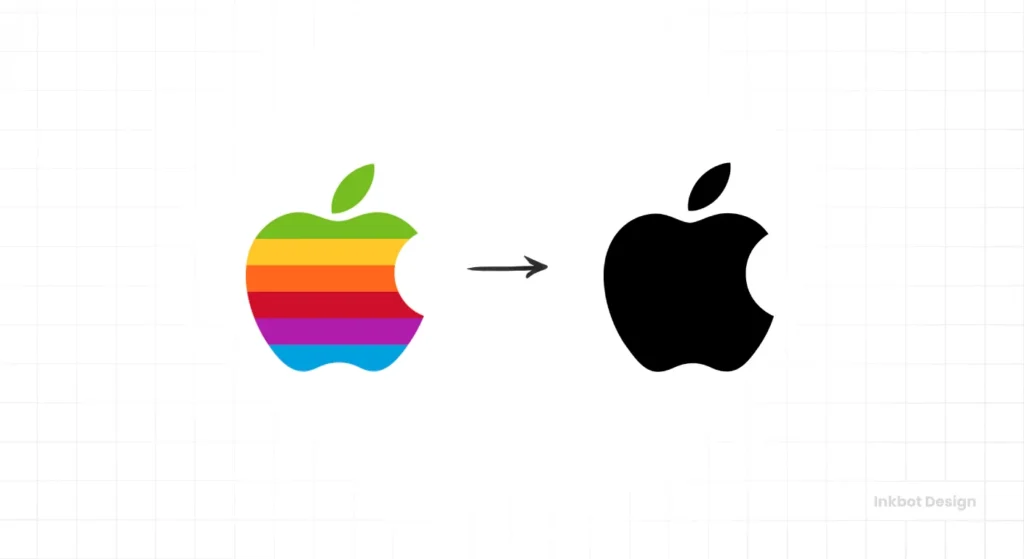
If you realise you’re in the “Me Too” trap, you need brand repositioning. This isn’t just changing a logo; it’s changing the fundamental promise of your business.
- Audit the Current Perception: What do people actually think you do? (Hint: It’s usually not what you think you do).
- Identify the Gap: Where is the “White Space” in the market? Use a Blue Ocean Strategy to find it.
- Update Distinctive Assets: Ensure your new positioning is reflected visually.
- Communicate the Shift: Don’t just update your website; update your sales deck, email signatures, and internal culture, too.
Why Rebranding Fails: 5 Mistakes to Avoid
Repositioning is surgery for your business. Done well, it saves you; done poorly, it’s terminal.
- Changing for the sake of “Newness”: If your Distinctive Assets (colours, fonts) have high recognition, don’t change them just because you’re bored. See the Tropicana example.
- Ignoring Internal Culture: If your staff don’t believe in the new positioning, your customers won’t either.
- Focusing on Aesthetics over Strategy: A new logo won’t fix a broken business model.
- Vague Messaging: Phrases like “We put customers first” are not positioning; they are the “entry fee” for being in business.
- Inconsistency: Changing your tone or visuals every six months. This destroys Mental Availability.
The Verdict
Branding and positioning are not “creative” tasks. They are business-critical functions that determine your profit margins and your long-term viability.
In 2026, the rise of AI-driven search means that “vague” is the same as “invisible.”
You must define your category, identify your distinctive assets, and occupy a mental slot that your competitors cannot touch. If you don’t, you’ll continue to spend 80% of your time fighting for the bottom 20% of the market.
If you are ready to stop being a “Me Too” business and start building an actual entity, request a quote today. Let’s fix your strategy before the market does it for you.
Frequently Asked Questions
What is the difference between branding and positioning?
Branding refers to the visual identity and emotional associations of your company (the “Who”). Positioning is the specific space you occupy in the consumer’s mind relative to your competitors (the “Versus”). Branding is the tool; positioning is the strategy.
How much does branding cost for an SMB?
Costs vary wildly, but for a professional strategic overhaul, SMBs should expect to invest between £5,000 and £25,000. Beware of “logo-only” packages for £500; they lack the strategic positioning required to actually move the needle on your revenue.
How does my brand’s “Sentiment” affect my ranking?
In 2026, AI systems actively scan reviews, social mentions, and forums to determine whether a brand is “trusted”. Negative sentiment or a lack of third-party validation acts as a filter; if the AI isn’t confident you’re a “good” solution, it won’t recommend you in an AI Overview.
Can an SMB use Blue Ocean Strategy?
Absolutely. In fact, SMBs are better suited for it than large corporations because they are more agile. By removing unnecessary features and focusing on a single, underserved need, an SMB can dominate a small, highly profitable niche.
What is the ROI of a professional brand strategy?
Research indicates that “power brands” achieve nearly 3x the total return to shareholders compared to weak brands. For an SMB, this manifests as a lower Cost Per Lead (CPL) and the ability to maintain higher margins even during economic downturns.
Why is brand loyalty a myth for small businesses?
Data shows that consumers are “poly-loyal.” They have a repertoire of brands they buy. Small brands have lower “Mental Availability,” meaning they are simply thought of less often. Growth comes from increasing this availability, not from forcing “loyalty.”
How does AI change branding in 2026?
AI models (LLMs) now act as gatekeepers. If your brand isn’t clearly associated with specific entities and solutions in the digital record, AI search engines won’t include you in their recommendations. Branding is now a technical SEO requirement.
What are the best tools for competitor positioning analysis?
Start with Perceptual Mapping (drawing your competitors on a graph of Price vs Quality or Speed vs Customisation). Use Brandwatch for sentiment analysis and SimilarWeb to see where your competitors’ traffic is coming from. This reveals the “White Space” where you can compete.
Can I do my own brand positioning?
Yes, but it is difficult to “see the label from inside the jar”. You can use frameworks like The Brand Flip by Marty Neumeier or the Blue Ocean Strategy canvas. However, many SMBs find that a neutral third party is required to challenge internal assumptions.
Is my logo my brand?
No. Your logo is a “Distinctive Asset” that triggers the brand in someone’s mind. The brand is the sum total of every interaction, perception, and memory a customer has of your business.
What is STP Marketing?
STP stands for Segmentation, Targeting, and Positioning. It is the process of segmenting the market, choosing the most profitable segment for your business, and tailoring your message to make it the obvious choice for that segment.
How do I choose between a descriptive and an abstract brand name?
Descriptive names (e.g., “The London Plumber”) offer immediate clarity and help discovery engines categorise you quickly. However, abstract names (e.g., “Nike”) provide long-term flexibility if you expand your services. For most SMBs, a “hybrid” name—one that suggests the benefit—is the most effective.