Brand Differentiation: 10 Real-World Examples & Strategy
Most businesses are remarkably boring.
I spend my days auditing brand identities that look, act, and sound exactly like their nearest competitors. A chronic lack of imagination is costing SMBs millions in wasted ad spend and price-war casualties.
If your customer cannot distinguish you from the “other lot” without looking at the price tag, you don’t have a brand; you have a commodity.
Ignoring differentiation isn’t just a creative oversight; it’s a financial suicide pact.
Data from McKinsey suggests that while 50% of consumers are willing to try new brands, they only stick with those that offer a distinct, recognisable value.
In an era where Customer Acquisition Cost (CAC) is skyrocketing, being “just as good” as the market leader is a guaranteed way to go broke.
Commercially, differentiation is a tool for eSOV (Excess Share of Voice). When a brand is highly differentiated, its marketing spend goes further because it doesn’t have to shout to be recognised.
This leads to a higher Efficiency of Acquisition—where you can spend less on PPC than competitors because your “Branded Search” volume is higher.
Differentiation creates an “Organic Moat” that protects your margins from the rising inflation of digital ad auctions.
- Differentiate by distinctiveness, not just features; own Category Entry Points to boost mental availability and reduce price sensitivity.
- Build and protect Distinctive Brand Assets that pass the 0.5-second recognition test; avoid copyable, short-lived "differences."
- Choose a strategic wedge: extreme personality, hyper-specialisation, or superior experience to create an unfair advantage.
- Combat AI-driven sameness with human authenticity and "perfect imperfection" to maintain trust and engagement.
What is Brand Differentiation?
Brand differentiation is the process of identifying and communicating a unique set of characteristics that distinguish a company from its competitors in the minds of the target audience.
It involves creating a perceived or actual difference in product features, service delivery, brand personality, or customer experience to reduce price sensitivity and build mental availability.
To achieve true differentiation, a brand must own specific Category Entry Points (CEPs). These are the internal and external cues that lead a consumer to think of a brand in a buying situation (e.g., “I’m in a rush,” “I need a treat,” or “I need to impress a client”).
Differentiation isn’t just about being different; it’s about being the most relevant brand for a specific “Why” or “When.”
If your brand doesn’t occupy a distinct CEP, it will never achieve high Mental Availability, regardless of how unique your logo is.
The three core elements of effective differentiation include:
- Distinctive Brand Assets (DBAs): Non-brand-name elements (colours, logos, fonts, sounds) that trigger immediate recognition.
- Relative Advantage: A clear, demonstrable reason why your solution is superior or more relevant to a specific segment.
- Emotional Resonance: The psychological connection that moves a brand from a functional tool to a lifestyle or identity choice.
Success in this arena requires a deep understanding of branding and positioning to ensure your message not only reaches the audience but also sticks with them.
The Differentiation Paradox: Why Your USP is Probably Useless
In my fieldwork, I observe the same mistake being repeated: an obsession with the “Unique Selling Proposition” (USP).
This 1940s concept, while foundational, is often misapplied today. Most businesses think their USP is “quality service” or “competitive pricing.”
Newsflash: These are not USPs. They are the “table stakes” required just to enter the game.
Debunking the USP Myth
The myth is that you must have a unique feature to win. The reality, backed by research from the Ehrenberg-Bass Institute, is that distinctiveness often outperforms differentiation.
| Feature | The Amateur Way (USP) | The Pro Way (Distinctiveness) |
| Focus | Trying to be “better” | Trying to be “different” |
| Consistency | Changing the message to find a “hook” | Doubling down on iconic assets for decades |
| Goal | Rational persuasion | Mental availability and recall |
| Pricing | Discounting to prove “value” | Premiumisation through brand equity |
| Technical Edge | Relying on temporary tech features | Building a brand identity that can’t be coded away |
The Differentiation Matrix
Don’t just copy the big brands. Find your own “unfair advantage.” Answer 2 questions to identify your best strategic wedge.
Technical differentiation is measured by the Distinctive Asset Grid. This framework audits your brand’s “fame” and “uniqueness.”
A forensic differentiator, such as the Inkbot Design logo, is designed to pass the 0.5-Second Rule: can a consumer identify the brand without seeing the name? If you remove your wordmark and the brand becomes unrecognisable, you have no “Distinctive Assets”—you only have a font.
The “Forensic Consultant” view is simple: If your competitor can copy your “difference” in a weekend, it isn’t a differentiator. It’s a temporary head start.
10 Real-World Marketing & Brand Differentiation Examples
1. Liquid Death: Category Subversion
Water is the ultimate commodity. For decades, the industry focused on “purity,” “glaciers,” and “softness.” Liquid Death looked at the stagnant water aisle and decided to treat water like a heavy metal band or an energy drink.
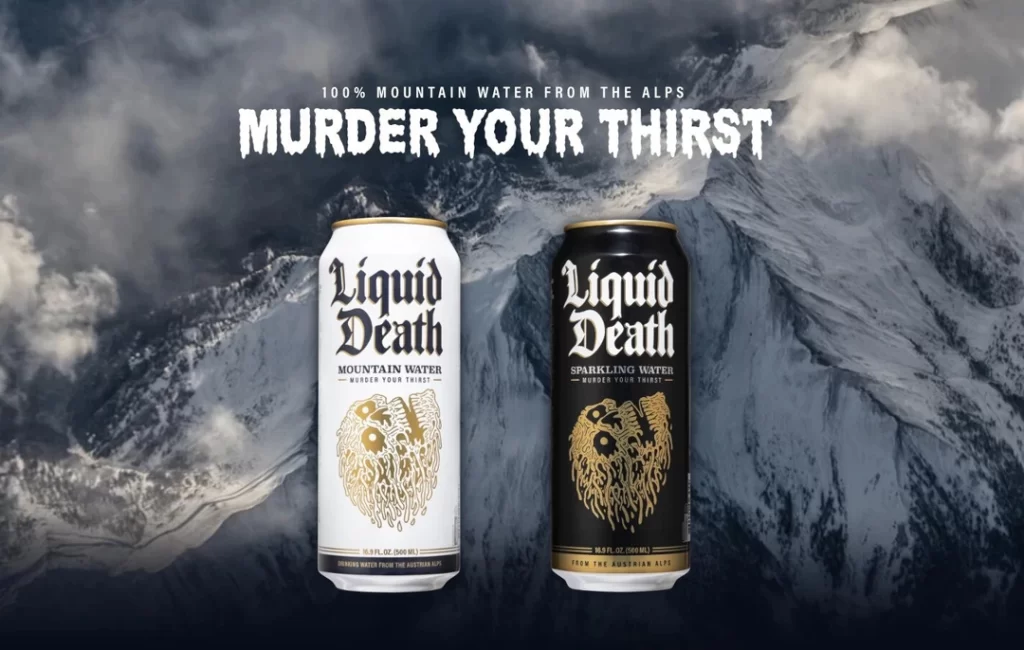
- The Move: Utilising tallboy cans (typically used for beer) and the “Murder Your Thirst” branding.
- The Result: A multi-billion-pound valuation for… canned water.
- The Lesson: You don’t have to change the product; change the container and the culture surrounding it. This is a classic example of a blue ocean strategy in action.
2. Apple: The Ecosystem Moat
Apple doesn’t just sell phones; they sell a frictionless existence. Their differentiation is rooted in vertical integration—the seamless marriage of hardware, software, and services.
- The Move: Designing custom silicon (M-series chips) that competitors can’t buy off the shelf.
- The Result: Performance benchmarks that leave PCs in the dust and a walled garden that makes leaving “painful.”
- The Technical Nuance: Their differentiation isn’t just “design”; it’s the proprietary control over the entire user stack.
3. Monzo: Radical Transparency and UX
Before Monzo, UK banking was a sea of grey suits, hidden fees, and archaic apps. Monzo didn’t just launch a bank; they launched a “Hot Coral” card that became a social signal.
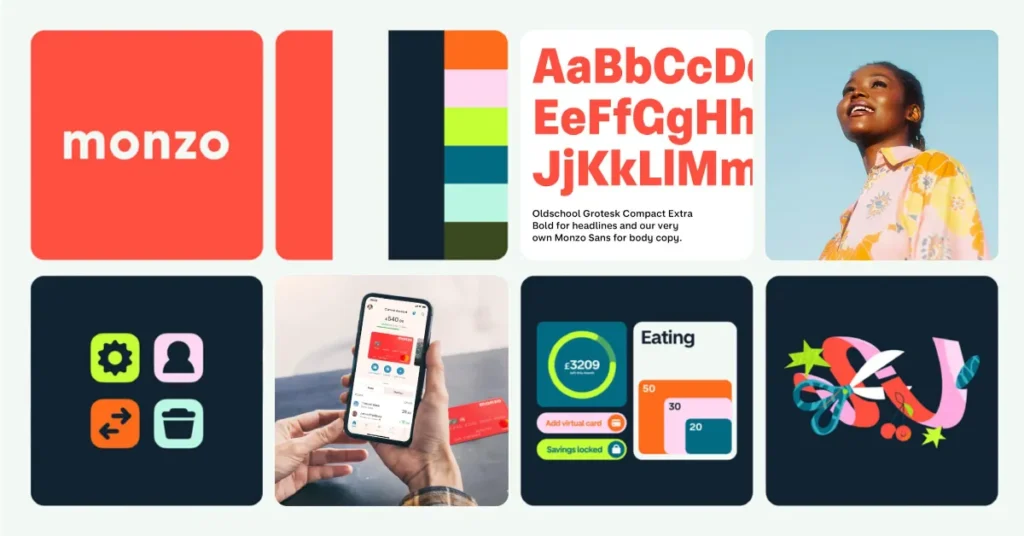
- The Move: Real-time spending notifications and a community-driven product roadmap.
- The Result: They turned banking—a chore—into a conversational topic.
- The Reality: They solved the “latency” of traditional banking, making financial data immediate and legible.
4. Patagonia: Radical Integrity (Fashion & Apparel)
In a world of “greenwashing,” Patagonia stands out because it actually means what it says. They advise against buying their jackets unless you truly need them.
- The Move: Making the planet their only shareholder by transferring ownership to a non-profit.
- The Result: Unparalleled brand loyalty that survives higher price points.
- The Consultant’s Take: Most brands use “values” as a marketing tactic. Patagonia uses them as an operational constraint. That is the ultimate differentiator.
This answers the common question of how to differentiate a fashion brand without relying on fleeting design trends—you lean into values instead.
5. BrewDog: Antiestablishment Marketing
BrewDog differentiated itself by being the “punk” alternative to “fizzy, yellow lager.” They used aggressive PR stunts and a “crowd-equity” model called Equity for Punks.

- The Move: Deliberately courting controversy to gain brand visibility.
- The Result: A global craft beer empire built on the back of a community that felt like “outsiders.”
- The Shift: While they’ve faced criticism recently, their initial growth was a masterclass in niche branding.
6. Dyson: Engineering-Led Premiumisation
James Dyson didn’t just make a vacuum; he made a “cyclonic separator.” He turned a boring utility item into a high-end piece of engineering.
- The Move: Making the dust visible in a clear bin—turning the “gross” part of cleaning into a “satisfying” proof of performance.
- The Result: The ability to charge £500 for a tool that competitors sell for £50.
- The Logic: If you solve a technical frustration (loss of suction), you earn the right to ignore market pricing.
7. Tesla: First-Principles Innovation
Tesla didn’t try to build a “better car.” They built a “computer on wheels” that happened to be electric.
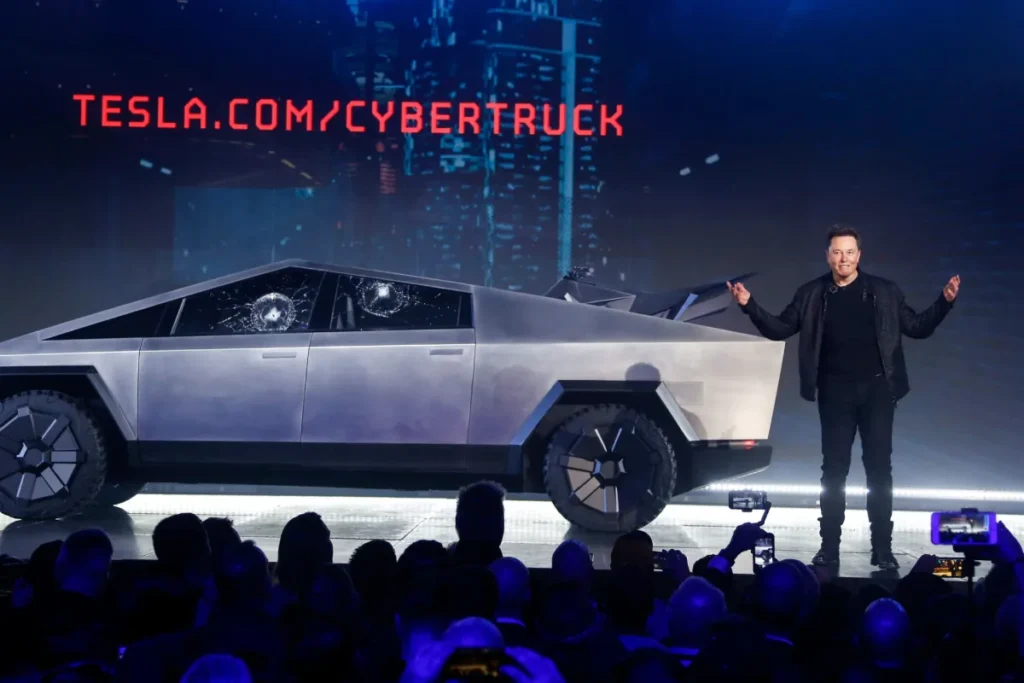
- The Move: Over-the-air (OTA) updates. Your car gets better after you buy it.
- The Result: They bypassed the traditional dealership model, controlling the entire customer experience.
- Strategy Note: This is a brand repositioning initiative for the entire industry.
8. IKEA: The Experience Economy
IKEA doesn’t sell furniture; they sell a day out and a “better everyday life.”
- The Move: The “IKEA Effect”—the psychological phenomenon where consumers value products more because they assembled them.
- The Result: Global dominance by combining low cost with a high-engagement retail experience (and meatballs).
- The Forensic View: Their differentiator is the logistics chain, not just the Swedish names on the wardrobes.
9. Lush: Sensory Dominance
You can smell a Lush shop from three streets away. In a digital world, they doubled down on the physical, sensory experience.

- The Move: “Naked” packaging. No bottles, no plastic, just the product.
- The Result: A retail environment that feels like a hybrid of a laboratory and a bakery, impossible to replicate online.
- Technical Edge: They use scent as a primary brand asset, creating a “scent-mark” that is as powerful as a logo.
10. Airbnb: Platform Trust
Airbnb differentiated itself by selling “belonging” rather than just “accommodation.”
- The Move: A robust peer-review system and professional photography services for hosts.
- The Result: They made staying in a stranger’s spare room feel safer than a hotel.
- The Strategy: They won through a competitive analysis that identified “sterile hotel rooms” as the enemy of “authentic travel.”
In 2026, the primary threat to SMBs is Synthetic Sameness—the result of AI-generated brand strategies that default to “Category Best Practices.” To solve this, you must reintroduce human friction into your branding.
This means prioritising “un-optimised” human insights, contrarian viewpoints, and raw, first-party data that a machine cannot replicate.
By being “perfectly imperfect,” you convey a trust signal that AI-driven competitors cannot easily replicate.
The State of Brand Differentiation in 2026
We are currently witnessing a massive shift. The market is saturated with AI-generated content, AI-designed logos, and AI-driven marketing strategies. This has led to a “Synthetic Sameness.”
The newest differentiator is Human Authenticity.
Brands that lean into “Perfect Imperfection”—unscripted video content, raw photography, and human-centric customer service—are seeing a 30% higher engagement rate than those using purely “optimised” AI outputs.
According to a recent Gartner report, 70% of CMOs are now prioritising “Brand Personality” over “Feature Set” to combat AI fatigue.
If your brand feels like it was spat out by a machine, you are already losing. You need to inject “friction” back into your brand—the kind of friction that proves a human being with a pulse is running the show.
A Consultant’s Reality Check
I once audited a B2B software client who insisted their differentiator was “our people.”
I told them that was rubbish.
Unless your people are literal clones of Albert Einstein, “our people” is a platitude, not a strategy. Every company has “people.” The differentiator is the system within which people work, the culture that dictates their decisions, and the proprietary methodology they use to solve a client’s problem.
In our fieldwork, we often see SMB owners get “brand stage fright.” They are so afraid of alienating someone that they end up appealing to no one. They want to be “professional” (boring), “reliable” (expected), and “affordable” (cheap).
The Truth: Real differentiation requires the courage to be “not for everyone.” If you aren’t turning some people off, you aren’t standing out to anyone. You can’t have a “premium” brand if you’re trying to win on price. You can’t be “innovative” if you’re waiting for everyone else to try the tech first.
The Verdict
Brand differentiation is not a “nice-to-have” creative exercise; it’s a necessity. It is a technical, strategic necessity for survival in a 2026 economy defined by AI noise and consumer scepticism.
You must identify your Distinctive Brand Assets, ignore the outdated USP model in favour of mental availability, and have the guts to stand for something specific.
Stop blending in. Stop being the “safe” choice. The safe choice is the one that gets ignored.
If you’re ready to stop guessing and start winning, read our step-by-step guide on Brand Differentiation Strategy to build your own framework.
Ready to fix your brand? Request a quote and let’s see if we can help your business stand out from the crowd.
Frequently Asked Questions
How long does it take to see results from SEO and Brand Strategy?
Typically, initial movement occurs within 3 to 6 months. However, for a “forensic” results phase—where peak ROI and stable rankings are achieved—you should expect a 9 to 12-month window. This allows time for technical foundations to settle and for “Brand Equity” to build in the search engine’s index.
What is the difference between On-Page and Technical SEO?
On-page SEO refers to the content quality and entity density that users see. Technical SEO involves backend optimisations—such as server response times, JSON-LD Schema, and XML sitemaps—that enable search bots to crawl and interpret your site data without friction.
Why are “Page Speed” and “Core Web Vitals” critical for rankings?
Google uses metrics like Interaction to Next Paint (INP) and Cumulative Layout Shift (CLS) to judge user experience. If your site feels “sluggish” or elements jump around while loading, your rankings will suffer regardless of how good your content is.
How long does a first impression of a brand actually take?
Neurological research proves that online first impressions are formed in approximately 50 milliseconds. This rapid judgment is based on visual appeal and layout, triggering an immediate appraisal of your business’s trustworthiness and competence.
What is the “Aesthetic-Usability Effect” in branding?
This is a psychological phenomenon where users perceive more attractive brands as being easier to use and more reliable. A premium first impression increases Price Elasticity, allowing you to command higher margins because the “Trust Gap” is bridged instantly.
What is a “Content Pillar” and why does it matter?
A content pillar is an exhaustive, high-level guide on a broad topic that serves as the foundation for a cluster of related sub-topics. It organises your site’s architecture, signalling deep expertise to search engines and reducing “Crawl Budget” waste.
What are “Content Pruning” and “Keyword Cannibalisation”?
Content pruning is the process of deleting or merging “thin” or outdated content. This prevents keyword cannibalisation—where multiple pages on your site compete for the same search term—ensuring Google knows exactly which page is the primary authority for a topic.
What is the “Hub and Spoke” model in content marketing?
The “Hub” is your main pillar page; the “Spokes” are the related cluster articles that link back to it. This creates a closed loop of Link Equity and authority that is easy for both search bots and human users to navigate.
What is the difference between Differentiation and Distinctiveness?
Differentiation is the reason to buy (features/benefits). Distinctiveness is being easy to find and remember (assets like colours, logos, and sounds). In 2026, owning a “Distinctive Brand Asset” is often more commercially powerful than a unique product feature.
How do I measure the ROI of a Brand Strategy?
Success is measured through Brand Equity indicators: a lower Customer Acquisition Cost (CAC), an increase in “Branded Search” volume, and the ability to maintain higher profit margins than unbranded, commodity competitors.
What is “Brand Salience”?
Salience refers to a brand’s propensity to be considered in a buying situation. It is the “Forensic Indicator” of brand health. High salience means your brand is the “default choice” when a customer encounters a problem your business can solve.
What is the difference between Responsive and Adaptive web design?
Responsive design is a fluid system that adapts to fill any screen. Adaptive design uses fixed “snapshots” for specific devices. Responsive is the modern standard because it accommodates every possible device size, including those yet to be invented.
What is “Reflow” and why is it a legal requirement?
Reflow is an accessibility standard (WCAG) requiring content to remain functional when zoomed to 400%. If your site forces horizontal scrolling during zoom, you may be in breach of the UK Equality Act 2010.
Why is AI making brand differentiation harder in 2026?
AI defaults to “Category Best Practices,” which results in synthetic sameness. Successful differentiation now requires “Human-Only” elements: vulnerability, contrarian thought leadership, and proprietary data that machines cannot replicate.
Does every brand need a “USP” (Unique Selling Proposition)?
The classic USP is often a myth. Most successful brands win by being more Salient and owning specific Category Entry Points (CEPs). Instead of a unique feature, focus on being the most “memorable” and “available” brand in your niche.