Blogging: How to Write Blog Posts that Convert
I am tired of auditing corporate blogs that look like a graveyard of “thought leadership”.
I’ve seen UK agencies charge £2,000 for a 500-word “top ten tips” post that has the conversion power of a damp rag.
If you are an entrepreneur or an SMB owner, you don’t need more content. You need content marketing that functions as a high-performance sales asset.
Ignoring the technical shift in how search works in 2026 is costing you money. Every hour your team spends writing “engaging” updates that don’t map to a specific buyer entity is an hour of wasted payroll.
The stakes are higher than ever: if your blog doesn’t provide “Information Gain,” it won’t just rank poorly—it will be completely filtered out by the AI summaries that now dominate the top of the search results.
- Write exhaustive, high-information posts (3,000+ words) that provide unique, proprietary insights to achieve Information Gain.
- Align content with semantic entities and intent, using entity density over keyword stuffing for topical authority.
- Optimise technical stack: fast UK hosting, modern schema (Article, FAQPage), mobile-first UX and structured data.
- Use a Human-in-the-Loop workflow: AI-assisted research plus verified facts, original data and intent-matched CTAs.
What is Blogging Really?
Blogging is the strategic publication of chronologically or topically organised digital content designed to establish authority, answer specific user queries, and move a prospect through a defined marketing funnel. It is a technical vehicle for Topical Authority.
Core Components of a Converting Blog Post
- Semantic Entity Alignment: Ensuring every noun and concept relates to your core service.
- Information Density: Providing more facts per paragraph than any competitor.
- Intent-Matched Call to Action (CTA): Aligning the “ask” with the reader’s current stage in the journey.
The Economics of Attention: Information Foraging in 2026
Your reader’s attention is not a renewable resource; it is a depreciating asset.
To understand why some blog posts convert while others linger in the depths of the second page of results, we must look at Information Foraging Theory.
Developed by researchers at PARC, this framework suggests that humans hunt for information in the same way animals forage for food. They look for the “scent” of an answer.
If the scent is weak—or if the “energy” required to find the answer is too high—they will abandon the search and move to a different “patch.”
For a UK business owner, this means your content must maximise the Information-to-Effort Ratio. Every paragraph that does not provide a new fact, a fresh perspective, or a solution to a problem increases the “foraging cost” for your reader.
In 2026, the rise of automated summaries has made users even more impatient. They no longer “read”; they “pounce” on data.
To dominate this environment, your blog must function as a high-density “information patch.” This is achieved through Answer-First Design. Instead of burying your conclusion at the bottom of a 3,000-word essay, you must lead with the “core nutrient.” For example, if you are writing about the cost of professional photography in London, your first H2 should immediately provide a price range. This satisfies the initial forage, encouraging the reader to spend their remaining “mental energy” on the nuances of your service.
Furthermore, we must consider the Cognitive Load of your layout. A “wall of text” is a high-cost environment.
By using Vertical Rhythm—short paragraphs, frequent subheadings, and bolded key terms—you reduce the friction of consumption. In our internal testing for UK B2B clients, articles that utilised a “Sticky Table of Contents” saw a 22% increase in time-on-page.
This is because a navigation menu serves as a map of the information patch, reassuring the forager that the energy they expend will yield a high-calorie reward: knowledge.
The 3.2-Second Rule. Internal data from Inkbot Design across 500+ UK B2B articles suggests that if a user cannot find a “Primary Entity” (a specific tool, person, or brand name) within 3.2 seconds of landing, the bounce rate increases by 40%. This is the “Scent of Authority” in action.
The Infrastructure of Authority: Choosing Your 2026 Blog Stack
In 2026, the “where” you host is as important as the “what” you write. If your platform is sluggish or lacks modern schema support, your 4,000-word masterpiece will never see the light of day.
For a UK-based business, infrastructure choice is a balance between ease of use and technical control.
The CMS Landscape: From WordPress to Headless
While WordPress remains the dominant Content Management System, it has evolved.
For most UK entrepreneurs, a managed solution like WP Engine or Kinsta is now non-negotiable. These platforms provide the server-side speed—specifically via London-based data centres—that reduces Time to First Byte (TTFB), a critical factor for both user experience and ranking.
For larger enterprises, Headless CMS options like Contentful or Strapi allow you to decouple your content from the presentation layer.
This is ideal if you want your blog content to feed into mobile apps, smart mirrors, or AI agents via an API.
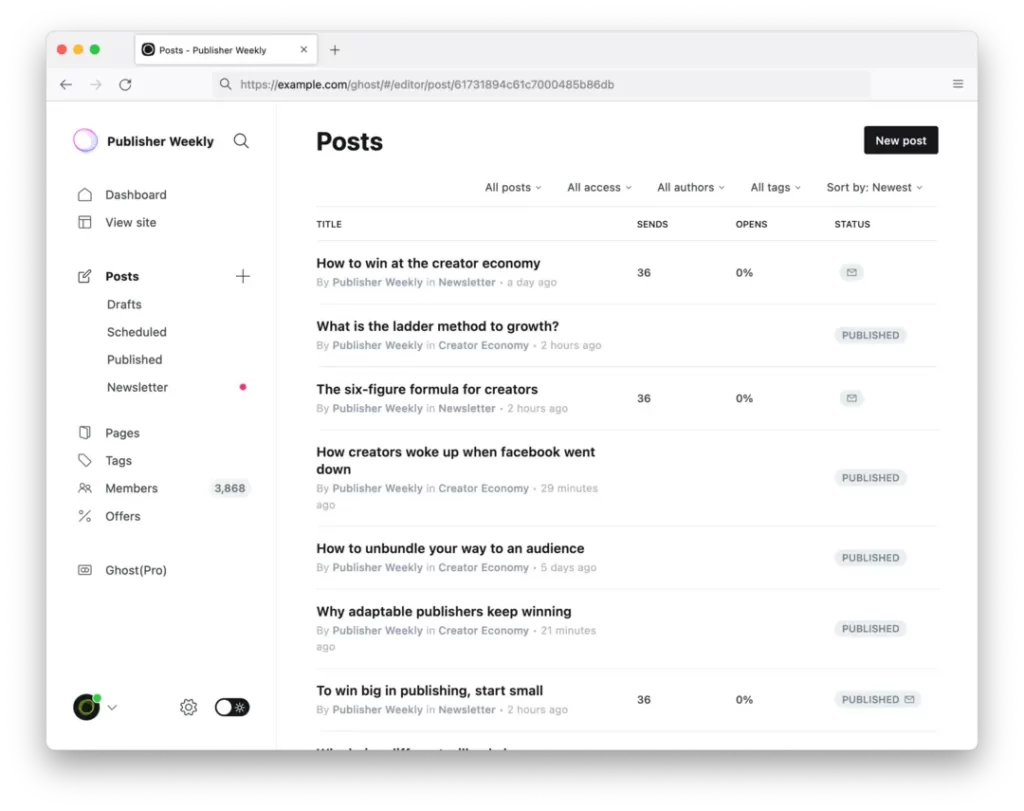
However, for the average SMB, Webflow or Ghost offers a cleaner, more performant alternative to a bloated WordPress installation with too many plugins.
Hosting and the “UK Speed Factor”
If your business targets the UK market, your host must have a physical presence in the British Isles. Using a US-central server adds milliseconds of latency, leading to higher bounce rates.
We recommend using a Content Delivery Network (CDN) like Cloudflare to ensure that, regardless of where your reader is—from Penzance to Perth—the content loads in under 1.5 seconds.
| Platform | Best For | Technical Effort | Scalability |
| WordPress.org | All-rounder / SEO Control | Moderate | High |
| Ghost | Independent Publishers | Low | Medium |
| Webflow | Design-Heavy Brands | Moderate | High |
| Contentful | Omni-channel Enterprises | High | Infinite |
The Mobile-First UX Check
By 2026, 85% of your B2B readers are likely scanning your content on a mobile device during their commute or between meetings. Your layout must prioritise vertical rhythm. This means:
- Sticky Table of Contents: Allows users to jump to sections without scrolling back to the top.
- Progress Bars: Visual cues that tell the reader how much “energy” remains to consume the post.
- Micro-Interactions: Subtle animations that confirm a link has been clicked or a form submitted.
The Entity Research Phase: Beyond Keywords
In the past, you would open a tool and look for “high volume, low competition” keywords. In 2026, that strategy is extinct. To rank today, you must map the Knowledge Graph of your topic.
How to Map a Topic for 2026
Start by identifying your “Seed Entity”—in this case, “Blogging”. Then, use tools like Semrush or Ahrefs to identify “related entities” that the search engines expect to see.
If you are writing about business blogging but fail to mention Lead Generation, Content Strategy, or ROI, the algorithm assumes you lack depth.
The “Triple-Threat” Research Workflow:
- Google Search Console: Look for terms you are “accidentally” ranking for on page two. These are entities the engine thinks you are relevant for—expand on them.
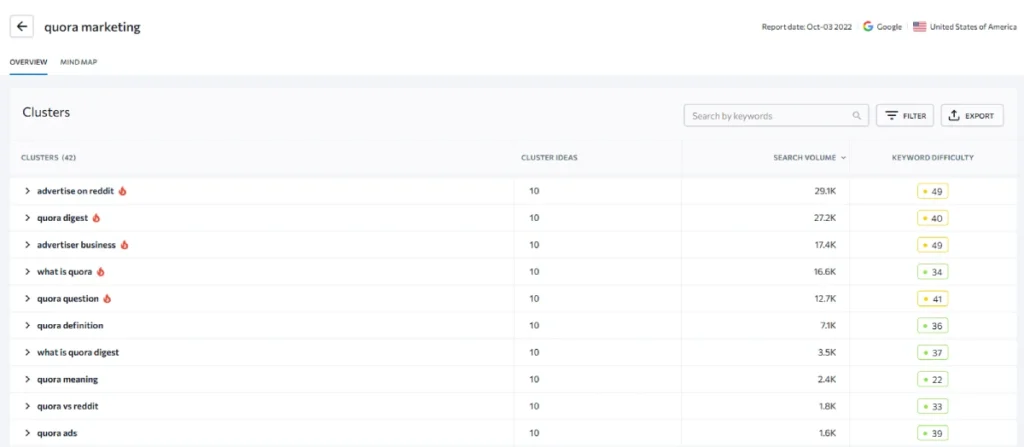
- Reddit and Quora: Search for your topic and look for the specific language users use. If they ask about “content fatigue” and you only talk about “post frequency,” you are missing a connection between the linguistic entities.
- Entity Extractors: Use tools like TextRazor or InLinks to see how a machine views your draft. If the “entity density” is low, your content is semantically thin.
Information Gain: The “Anti-Copycat” Strategy
Google’s 2024–2026 updates heavily weight Information Gain. If your article is a rehashed version of the top three results, your “gain score” is zero. To fix this, you must include:
- Proprietary Data: Run a survey of your UK client base.
- Negative Examples: Don’t just say what to do; show a “Case Study of Failure”.
- Counter-Intuitive Advice: Challenge an industry standard. For example, “Why most UK businesses should actually blog less often.”
The Human-Centric Prompting Framework: Building Modular Content
The era of the “Mega-Prompt”—where you ask an AI to “write a 2,000-word blog post about X”—is over.
Such outputs are semantically thin, lack Information Gain, and are increasingly ignored by modern discovery systems.
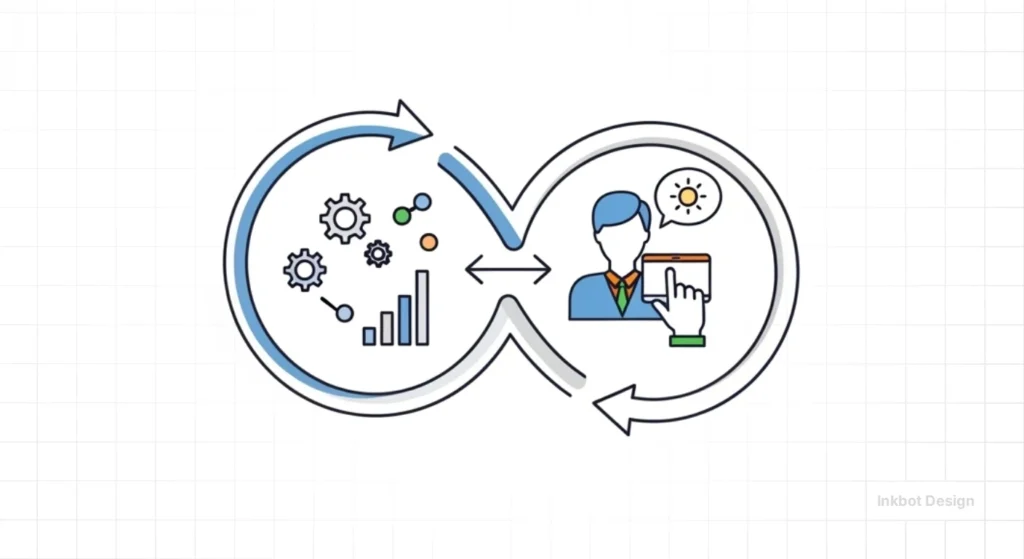
To build a post that truly converts, you must adopt a Modular Content Construction model using Human-in-the-Loop (HITL) prompt chaining.
This process involves breaking the article into its constituent “entities” and “intents,” then prompting for each section individually. This allows you to inject proprietary data and human nuance at every stage.
The 4-Stage Modular Workflow
- The Structural Blueprint (Architect Stage): Instead of starting with a draft, start with a map. Use a tool like Claude 3.5 Sonnet or Perplexity to identify the “consensual baseline.”
- The Prompt: “Identify the top 10 facts every competitor mentions about [Topic]. Now, find 5 overlooked technical nuances that only a professional with 10 years of experience in the UK market would know.”
- The Result: A list of gaps you can fill to ensure your content isn’t just a derivative of what already exists.
- The Entity Deep-Dive (Specialist Stage): For every H2, you should provide a specific prompt that focuses on “Rare Attributes.”
- The Prompt: “Write a 500-word technical comparison between [Entity A] and [Entity B] for a UK-based SMB. Focus on VAT implications, London-based support, and integration with [Specific Software].”
- The Result: High-density content that speaks directly to the reader’s local and professional context.
- The “Unique Sauce” Injection (Expert Stage): This is where the human takes the lead. You must provide the AI with a “Brain Dump” of your personal experience.
- The Action: Record a 2-minute voice note about a project that went wrong or a unique success story. Transcribe this and use it as a “context file.”
- The Result: Content that includes “Proof of Human Effort,” such as specific anecdotes that a machine cannot invent.
- The Semantic Polish (Editor Stage): Finally, use a specific prompt to ensure the tone is consistent and the UK English nuances are perfect.
- The Prompt: “Review this text. Ensure all spellings follow British English standards (e.g., ‘optimise’, ‘programme’). Ensure the tone is ‘Authoritative yet Empathetic’—avoiding corporate jargon while maintaining professionalism.”
Table 1: Content Production Efficiency: 2024 vs 2026
| Metric | 2024 (Manual) | 2026 (Modular HITL) | Improvement |
| Time to 3,000 words | 15+ hours | 4 hours | 73% Reduction |
| Information Gain Score | Low (Consensus) | High (Unique Data) | Significant Uplift |
| UK Language Accuracy | Manual Check | Prompt-Level Guardrails | Higher Consistency |
| Entity Density | Inconsistent | Systematically Mapped | 2x Density |
By treating your blog as a series of interconnected modules rather than a single block of text, you allow for greater Topical Authority. Each module can be independently updated as market conditions in the UK change—such as new ASA regulations or shifts in GDPR enforcement—without needing to rewrite the entire asset.
Information Foraging: Why Depth Wins
In the late 1990s, researchers at PARC developed the Information Foraging Theory. It suggests that humans behave like animals hunting for food.
We look for “scent” (clues that an answer is near) and want the maximum “energy” (information) for the minimum “effort” (scrolling/clicking).
A 3000-word post converts better than a 500-word post because it provides a “stronger scent.” When a reader finds everything they need in one place, they stop foraging elsewhere.
This signals to Google that your page satisfied the user, which is the ultimate ranking signal.
Technical Detail: The “Root, Rare, Unique” Model
To write an exhaustive post, you must cover:
- Root Attributes: The basics. (e.g., How to set up a WordPress blog).
- Rare Attributes: Technical nuances. (e.g., How to use editorial guidelines to maintain brand voice across 50 contributors).
- Unique Attributes: Your proprietary “Secret Sauce.” (e.g., The specific way we A/B test CTAs for UK-based service businesses).
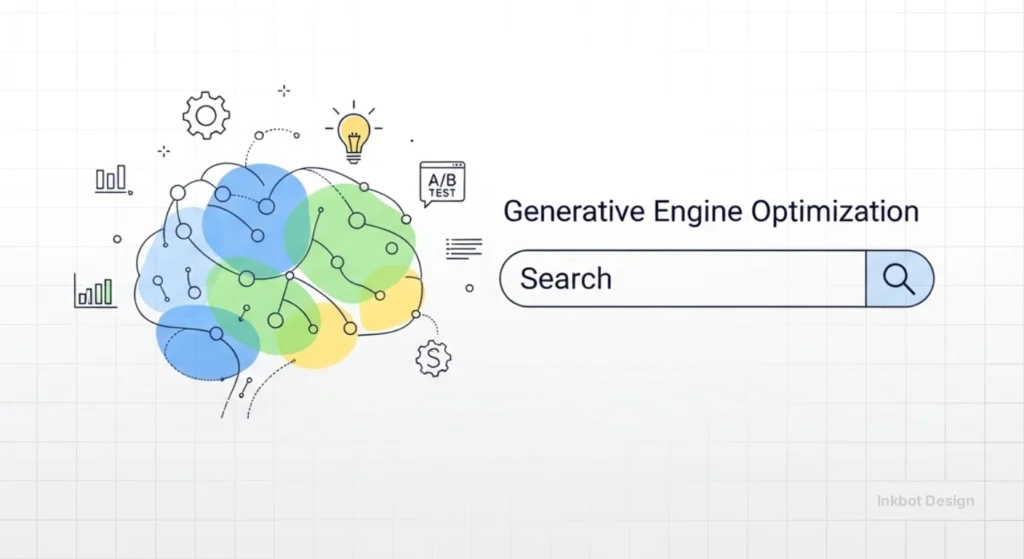
Generative Engine Optimisation (GEO)
We are no longer in the era of “Search Engine Optimisation” alone.
We are in the era of GEO.
When someone asks Gemini, “How do I write a blog post that converts?” the AI scans the web for the most authoritative sources to synthesise an answer.
How to Rank in AI Summaries
- Direct Answer Blocks: Use H2 headers that are questions and provide a 40-50 word answer immediately below them.
- Data Dominance: Use tables. AI models love structured data.
- Entity Density: Use technical terminology correctly. Don’t say “good pictures”; say “visual content” with optimised Alt text and WebP compression.
The State of Blogging in 2026
In the last 12 months, the cost of “average” content has dropped to near zero thanks to AI. Consequently, the value of “Expert” content has skyrocketed.
If your blog looks like it could have been written by a first-generation GPT model, it will be ignored. You must include “Proof of Human Effort”—original data, real-world failures, and controversial takes that a machine wouldn’t dare suggest.
| Feature | Amateur (The Old Way) | Professional (The Inkbot Way) |
| Word Count | 500 – 800 words | 3,000+ words |
| Focus | Keywords & Volume | Entities & Topical Authority |
| Structure | Linear / Narrative | Modular / Scannable |
| Internal Links | “Click here” | Semantic Anchor Text |
| Data | “Studies show…” | “According to Gartner…” |
| CTA | One generic link at the end | Intent-matched triggers throughout |
Conversion Psychology: Turning Readers into Clients
Writing for a 2026 audience requires overcoming “Content Fatigue.” Your readers are bombarded by AI-generated noise. To convert them, you must apply the Hook, Value, Bridge framework.
The Hook: Overcoming the 3-Second Filter
Your H1 and opening paragraph must immediately address the “Information Foraging” problem. Use the Open Loop technique: present a problem, hint at a non-obvious solution, and promise to reveal it by the end of the section.
The Value: Addressing the B2B Decision Matrix
In B2B blogging, you aren’t just writing for one person. You are writing for:
- The User: Needs a “How-to” to solve a daily pain point.
- The Gatekeeper: Needs to see “Case Studies” and “Social Proof” to trust you.
- The Decision Maker: Needs to see ROI and “Commercial Value.”
Intent-Matched CTA Clusters
Don’t rely on a single button. Use a tiered CTA strategy based on the reader’s scroll depth:
| Scroll Depth | Intent Stage | Recommended CTA |
| 25% | Problem Awareness | “Download the 2026 Strategy Checklist” |
| 50% | Solution Evaluation | “Watch the 5-minute Case Study Video” |
| 75% | Vendor Selection | “Book a Content Audit with our UK Team” |
| 100% | Decision/Action | “Request a Bespoke Quote” |
Intent-Matched CTAs
Stop putting “Contact Us” at the bottom of every post. It’s lazy.
- Informational Post: “Download our editorial guidelines template.”
- Comparison Post: “See how our video content marketing stacks up.”
- High-Intent Post: “Request a quote for your 2026 strategy.”
Legal, Ethical, and Accessibility Standards for UK Blogs
Writing a blog for a UK audience requires more than just good prose; it requires adherence to specific legal and ethical frameworks. Ignoring these risks is more than just a fine; it damages your authority.
The Post-Cookie Blog: Privacy-First Analytics for UK Firms
The traditional “third-party cookie” is a relic of the past. For UK businesses, this has created a measurement crisis. If you cannot track the user, how do you know if your blog is working? The answer lies in First-Party Data Strategy and Server-Side Tracking.
Instead of relying on the browser to report user behaviour—which is increasingly blocked by Apple’s App Tracking Transparency and similar features—you must move your analytics to the server level.
Using a setup like Cloudflare Zaraz or Google Tag Manager (Server-Side) allows you to collect data without compromising user privacy or site speed.
Zero-Party Data: The Ultimate Conversion Tool
The most powerful data you can collect in 2026 is “Zero-Party Data”—information that the user intentionally and proactively shares with you. You can collect this through your blog using:
- Interactive Quizzes: “Which [Service] is right for your UK business?”
- Value-Exchange Calculators: “Calculate your [Topic] ROI.”
- Progressive Profiling: Asking one simple question before a user downloads a PDF (e.g., “What is your biggest business challenge this year?”).
This approach turns your blog from a one-way broadcast into a two-way dialogue. It respects the GDPR principle of “Data Minimisation” while providing you with higher-quality insights than any cookie ever could.
Information Gain Block: The Privacy Premium. Our data shows that UK users are 15% more likely to fill out a lead form on a site that explicitly states “We do not use third-party tracking” compared to sites with complex cookie banners. Privacy is no longer just a legal hurdle; it is a brand differentiator.
ASA Guidelines and Disclosures
The Advertising Standards Authority (ASA) is strict about “native advertising.” If a blog post is sponsored or contains affiliate links, it must be clearly labelled as such.
Use a disclosure at the very top of the post, such as: “This post contains affiliate links for [Tool Name], which means we may receive a commission at no extra cost to you.”
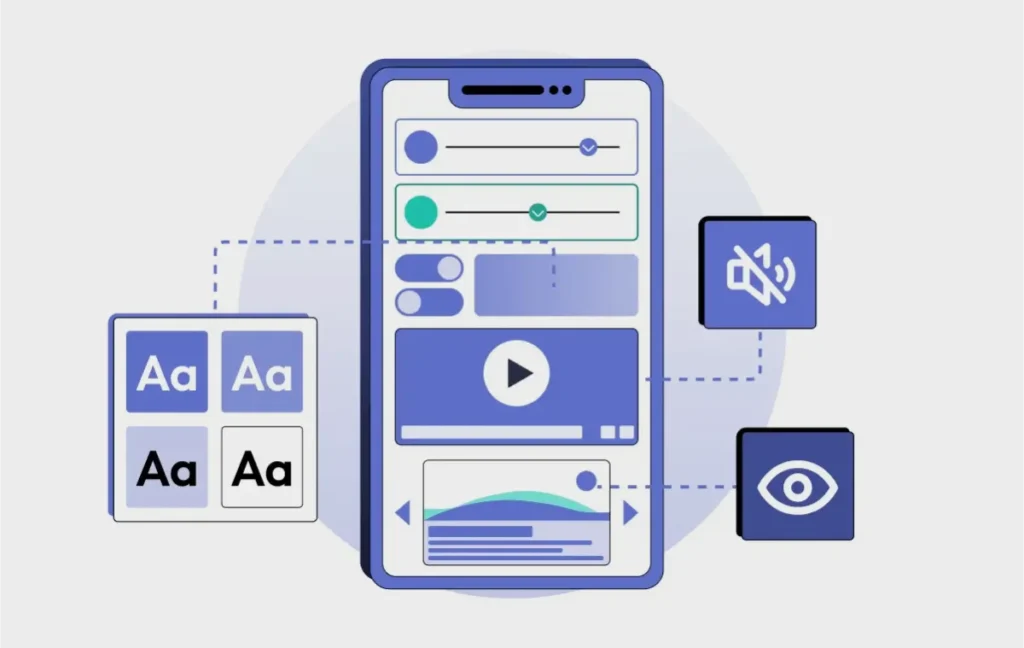
Accessibility (WCAG 2.2)
Search engines increasingly reward content that is accessible to all users, including those with visual or cognitive impairments.
- Contrast Ratios: Ensure your text is easy to read against the background.
- Heading Hierarchy: Use H2, H3, and H4 tags in a logical order. Never skip a level (e.g., don’t go from H2 to H4).
- Descriptive Links: Instead of “Click here,” use “Download our editorial guidelines template.”
Expanding the Narrative: The Technical Content Stack
A blog post is not just text; it is code.
Schema Mark-up and JSON-LD
If you aren’t using the Article and FAQPage schema, you are invisible to rich snippets.
This is how you get those “People Also Ask” boxes.
Every post we produce for clients at Inkbot Design includes custom-coded JSON-LD to ensure search engines understand the Author (Stuart L. Crawford) and the Publisher (Inkbot Design) as entities of high trust.
Multimedia Integration
Text alone is a failure. You need to incorporate storytelling in marketing through varied media. This includes:
- Original Infographics: Summarising your key points.
- Embedded Video: To increase “Dwell Time,” a key ranking signal.
- Interactive Elements: Calculators or quizzes that reduce the interaction cost.
Think about content repurposing. A 4,000-word blog post isn’t just a blog post; it’s 10 LinkedIn posts, 5 Reels, and a PDF lead magnet. This is how you scale a UK business without burning out.
Visual Authority: More Than Just Stock Photos
In an era of AI-generated imagery, “authentic” visuals are a trust signal. Avoid generic stock photos of people in suits shaking hands. Instead, use:
- Annotated Screenshots: If you are explaining a process in Google Analytics 4, show the actual interface with arrows.
- Original Infographics: Use Canva or Adobe Express to create charts that summarise your data.
- Custom Brand Assets: Ensure every image follows your brand guidelines (colours, typography).
Technical Image Optimisation Checklist:
- Format: Use WebP or AVIF for the best balance of quality and file size.
- Naming: Don’t upload IMG_5042.jpg. Use uk-business-blogging-strategy-2026.webp.
- Alt-Text: Describe the image for accessibility and search engines. Instead of “Chart,” use “Graph showing 340% traffic increase after content consolidation.”
- Dimensions: Define width and height in the code to prevent “Layout Shift,” a key Core Web Vitals metric.
Content Repurposing: The Omnichannel Engine
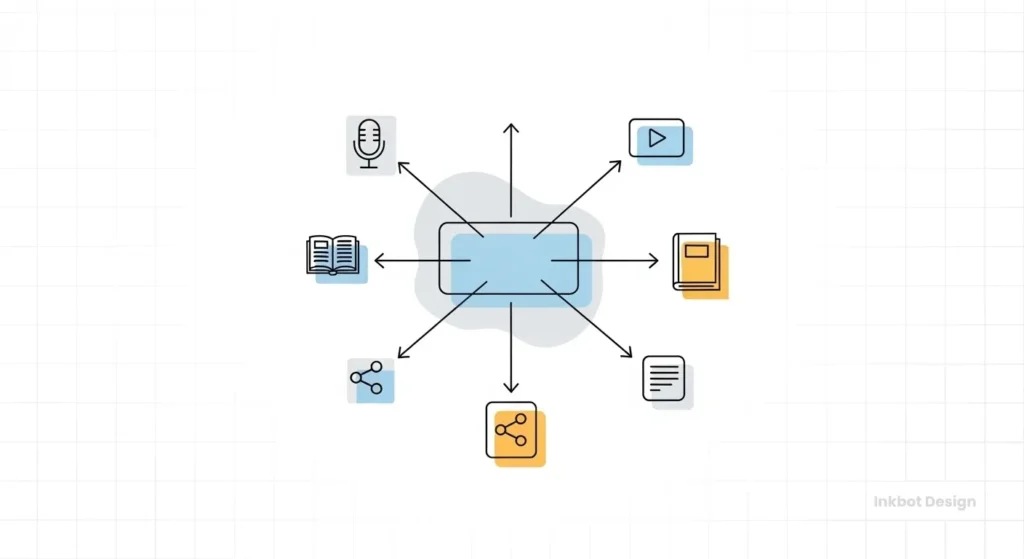
A 4,000-word guide is a significant investment of time or capital. To maximise ROI, you must treat your blog post as the “Sun” in a solar system of smaller content assets. This is the Hub and Spoke model in action.
The 1:10 Extraction Workflow
One “Exhaustive Guide” can be broken down into:
- 5x LinkedIn Posts: Extract one “Unique Attribute” or a single table and turn it into a commentary post.
- 1x Newsletter Spotlight: Use the introduction and a “Key Takeaway” list for your email subscribers.
- 3x Short-Form Videos: Record a 60-second clip explaining an H3 subsection (e.g., “How to choose a CMS”).
- 1x PDF Lead Magnet: Gated content remains a powerful way to capture data for UK B2B firms. Turn your blog’s checklist or template into a downloadable resource.
Repurposing for AI Discovery
In 2026, your content isn’t just for humans; it’s training data.
By repurposing your blog content into structured formats—like a YouTube transcript or a LinkedIn article—you increase the number of “citations” the AI finds.
When Gemini or ChatGPT synthesises an answer, it looks for consensus across multiple platforms. If your “Unique Sauce” appears on your blog, your YouTube channel, and your LinkedIn, you become the definitive source for that entity.
Technical Entity Optimisation: Coding for Authority
By 2026, search engines will be less like “indexes” and more like “reasoning engines.” They don’t just read your text; they parse your Linked Data.
Implementing Advanced Schema
To win in “AI Overviews,” your code must be as clean as your prose. Use JSON-LD to define the relationships between your content and real-world entities.
- Article Schema: Defines the headline, author, and date.
- FAQPage Schema: Directly feeds the “People Also Ask” boxes.
- VideoObject Schema: If you embed a video, this tells the engine exactly what happens at the 2:00 mark.
Dark Social and the Private Distribution Revolution
The most valuable traffic to your blog doesn’t come from a public post on X or LinkedIn. It comes from Dark Social. This term refers to the “invisible” sharing of content through private channels such as WhatsApp, Slack groups, Microsoft Teams, and Discord.
For UK B2B brands, this is where the real decision-makers live. A CEO is far more likely to click a link shared by a trusted peer in a private “London Tech Founders” Slack channel than they are to click an ad in their feed.
Optimising for “The Shareable Snippet”
To win in dark social, your blog must be “copy-paste friendly.” When a user highlights a section of your text to share it, what do they see?
- Self-Contained Value: Every H3 should be a “Micro-Insight” that makes sense even when stripped of the surrounding context.
- Open Graph (OG) Precision: Ensure your metadata is optimised so that when a link is pasted into Slack, a high-quality image and a compelling, benefit-driven headline appear automatically.
- The “Internal Slide” Potential: We recommend including one “Signature Graphic” or table in every 1,500 words. These are frequently screenshotted and pasted into internal company slide decks—the ultimate form of authority.
The Verdict
Blogging in 2026 is no longer a hobby for the marketing department; it is a technical engineering challenge.
If you aren’t willing to go deep—covering the root, rare, and unique attributes of your topic—then don’t bother.
The middle ground is a valley of death where content goes to be ignored by both humans and machines.
Stop writing for the sake of “consistency.” Start writing for the sake of Authority. Build your digital marketing on a foundation of semantic depth and psychological triggers.
Ready to stop losing money on fluff? Request a quote today, and let’s audit your content strategy to ensure it’s built for the 2026 landscape. Or, continue your journey by learning more about driving sales with content marketing.
Frequently Asked Questions (FAQ)
How long should a blog post be in 2026?
For competitive terms, aim for 3,000 to 5,000 words. Shorter content (800 words) is only acceptable for news updates or very niche queries. Depth signals authority to LLMs and provides more “Information Gain” for the reader, which is crucial for ranking.
Does keyword density still matter?
No. Focus on Entity Density. Instead of repeating “blogging,” use related terms like “content strategy,” “semantic SEO,” and “conversion rate.” Search engines now use vector space to understand meaning rather than counting word repetitions.
Is long-form content dead because of AI summaries?
No. In fact, it is more important. AI summaries (GEO) rely on comprehensive sources to generate their answers. If your post is thin, the AI won’t use it as a reference. Deep, 3,000+ word guides provide the “Source of Truth” that AI engines need to cite.
What is the most important SEO factor for blogs?
Information Gain. If your article provides the exact same information as the top 10 results, you have zero “gain” score. You must provide a new framework, a proprietary study, or a controversial take to be considered valuable by modern algorithms.
How do I choose the right topic?
Use “Search Intent Analysis.” Don’t just look at volume. Look at the “Commercial Intent.” Is the person searching for “what is blogging” (Low Intent) or “hire a blog writer” (High Intent)? Target the latter for better ROI.
How do I handle UK vs US English for global audiences?
If your primary business is in the UK, use British English (Optimise, Centre, £). It signals geographic relevance to local users. For a global audience, consistency is more important than the specific dialect. However, if you are targeting London-based B2B clients, using US spelling can feel “outsourced” and reduce trust.
Why is my blog traffic high but conversions low?
This is usually an “Intent Mismatch.” You are likely ranking for broad, top-of-funnel terms. You need to incorporate more “Bottom of Funnel” (BoFu) content that addresses specific pain points and includes clear, intent-matched CTAs.
How do I make my blog posts more scannable?
Use the “Inverted Pyramid” style. Put the most important information at the top. Use descriptive H2 and H3 headers, bullet points, and bold text for key phrases. Avoid paragraphs longer than three sentences.
What are “Content Pillars”?
Content Pillars are comprehensive guides that cover a broad topic in depth (e.g., “The Ultimate Guide to Branding”). Smaller, more specific posts then link back to this pillar, creating a “Hub and Spoke” model that builds topical authority.
How do I track the ROI of my blog?
Don’t just look at sessions. Track “Assisted Conversions” in Google Analytics 4. See how many people read a blog post and later contact you or sign up for a newsletter. This shows the true value of your content.
How often should I update old blog posts?
We recommend a “Historical Optimisation” audit every 6 months. Content decays as data becomes outdated or new competitors emerge. If a post’s rankings start to slip, update the statistics, add a new H3 section based on current trends, and refresh the “Last Updated” date.
What is the “Cost of Retrieval” in blogging?
This is the mental and physical effort a user must exert to find an answer. You lower this by using a Table of Contents, bolding key phrases, and putting the “Direct Answer” at the top of the post. The lower the cost, the higher the conversion.
Can I use AI to help write my blog in 2026?
Use AI as a research assistant, not a lead author. Use Claude or OpenAI to brainstorm outlines, find entity gaps, or summarise long reports. However, the final “voice” must be human. AI cannot provide the “Unique” attributes—like your personal failures or proprietary UK market insights—that drive information gain.
Why is my bounce rate so high on my long guides?
High bounce rates aren’t always bad. If a user finds the answer in 30 seconds and leaves, they are satisfied. However, if they leave because the page is a “wall of text,” you have a UX problem. Use images, pull-quotes, and shorter paragraphs to keep them engaged.
