Agentic Web Design: Structuring for AI Chatbots & Voice
Most entrepreneurs are still obsessed with how their site looks to a human. They forget that in 2026, the first “person” to visit their site isn’t a person at all.
It is an agent. A chatbot. A voice assistant.
If your site structure is a maze of unstructured CSS and “creative” naming conventions, you are paying for a digital billboard that the world’s most powerful search engines are choosing to ignore.
The importance of web design has shifted from visual persuasion to structural clarity. We are no longer just designing for eyes; we are designing for logic.
- Prioritise structural clarity over visuals; design for AI agents and voice assistants, not just human eyes.
- Adopt Triple-Tier Architecture: visual UI, semantic JSON-LD knowledge graph, and MCP/API actionable endpoints.
- Provide a Context Manifest (ai-manifest.json) and Markdown fragments to lower token cost and ensure factual precision.
- Build content as interconnected nodes: definition, entity, data, and proof for high information gain.
- Eliminate agentic friction: accessible DOM, explicit action labels, flat URLs, and no CAPTCHAs blocking crawlers.
What is Agentic Web Design?
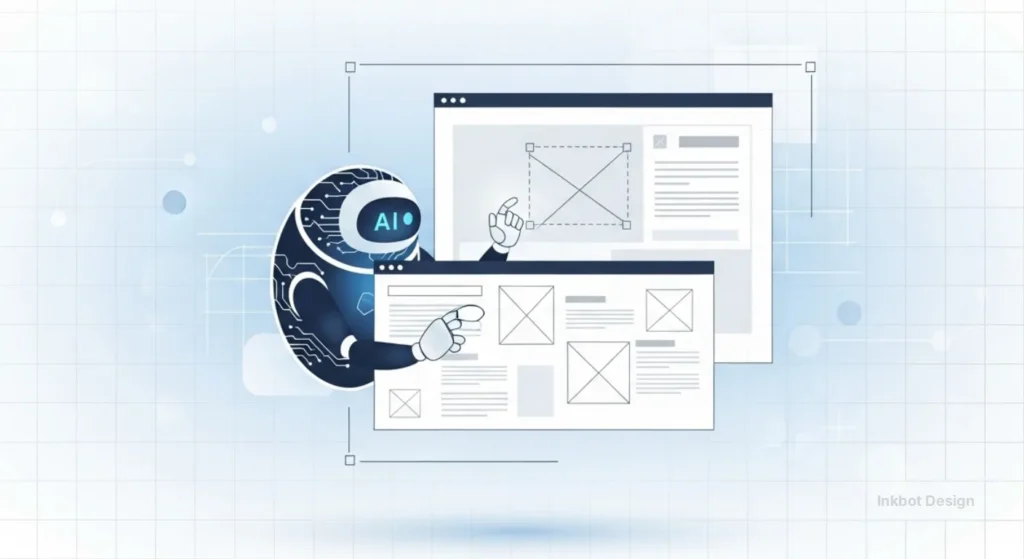
Agentic Web Design is a structural framework where a website’s architecture, content, and metadata are primarily optimised for autonomous AI agents and voice assistants.
It prioritises “Machine-Readability” and “Entity Clarity” to ensure LLMs can accurately retrieve, process, and recommend site data in generative search results.
The Architecture of the Agentic Web
In 2026, the Document Object Model (DOM) is no longer the final word in website construction. We now build with Agentic Orchestration in mind—a multi-layered approach that serves human-readable visuals and machine-readable logic simultaneously.
To succeed, your site must adopt a Triple-Tier Architecture:
- The Visual Layer (UI): High-performance CSS and interactive elements for human engagement.
- The Semantic Layer (JSON-LD): A deep Knowledge Graph that defines entities and their relationships.
- The Protocol Layer (MCP/API): Direct endpoints that allow agents to execute tasks without “clicking” a button.
Implementing the Model Context Protocol (MCP)
Developed as an open standard, the Model Context Protocol (MCP) has become the bridge between AI agents and local website data.
Instead of forcing an agent like Claude 3.5 to guess your availability by scraping a calendar, an MCP-enabled site provides a direct context window.
This allows the agent to pull real-time data—such as project timelines or live stock levels—with 100% precision.
When we design for Inkbot Design, we ensure that every client site includes a “Context Manifest.” This is a lightweight file (often ai-manifest.json) that tells the agent exactly where to find factual data.
This reduces the AI’s Token Cost, making your site the “path of least resistance” for the engine’s budget.
Scenario: The AI Procurement Agent.
Imagine a user tells their OpenAI agent, “Find me a brand designer in London with experience in high-end spirits packaging and book a 15-minute intro call.”
If your site relies on a contact form that requires a human to type, the agent will move on.
If your site has an Actionable Endpoint connected via MCP, the agent completes the booking in seconds. You didn’t just win a click; you won a client while your competitor was still loading their parallax background.
The 3 Core Elements of Agentic Design
- Semantic Data Layering: Moving beyond basic HTML to provide a dedicated “Knowledge Graph” of your business that agents can digest without rendering the full UI.
- Actionable Endpoints: Structuring services and products so an AI agent can perform a “task” (like booking a consultation) rather than just reading about it.
- Frictionless Information Retrieval: Eliminating technical hurdles—like gated content, heavy JavaScript, or ambiguous language—that prevent LLMs from indexing your facts.
The Death of the “Human-Only” Interface
For two decades, we designed for the “F-Pattern” of human eye movement. We worried about button colours and font legibility.
While those still matter for the final conversion, the “Top of Funnel” has changed.
Gartner research suggests that by 2026, traditional search engine volume will have dropped by 25%, as users pivot to AI-powered “answer engines.”
When a user asks their AI agent, “Find me a branding agency in Belfast that specialises in sustainable packaging,” that agent doesn’t “browse” your site. It queries a vector database.
If your site hasn’t been built with Agentic Web Design principles, the agent will skip you in favour of a competitor who has.
This isn’t just about SEO. It’s about survival in a headless web.
We see this in our web design services constantly; clients come to us wondering why their traffic is flat while their competitors are being cited as the “primary source” in ChatGPT and Perplexity. The answer is almost always a lack of semantic structure.
Real-World Example: The Klarna Shift
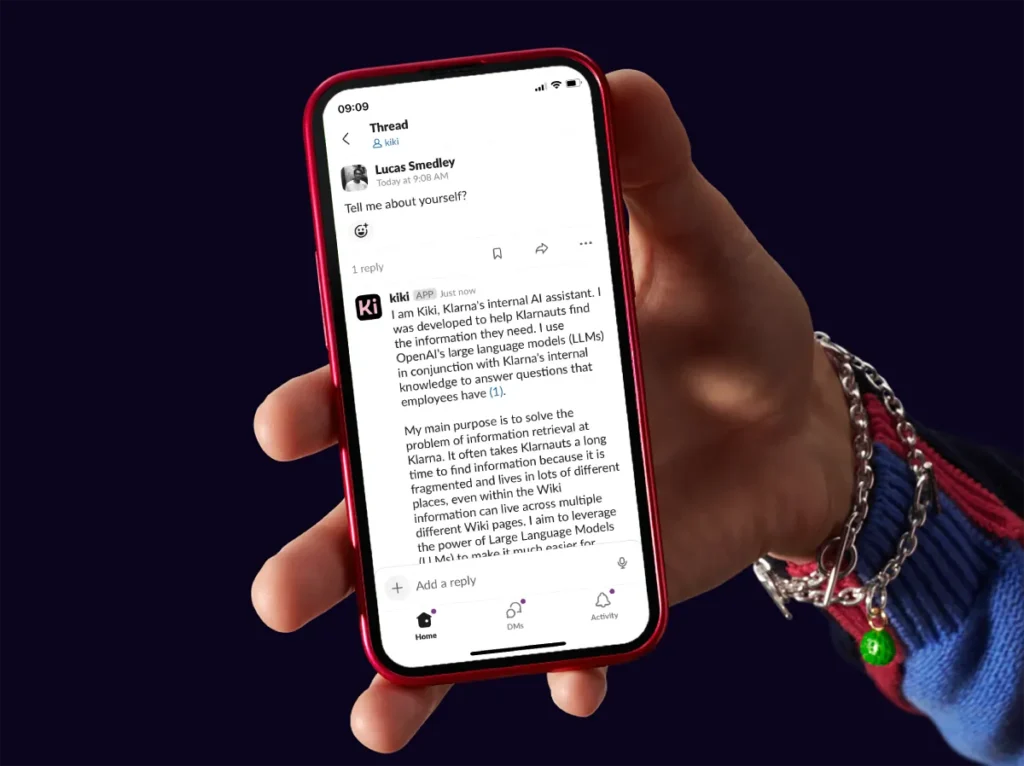
In early 2024, Klarna announced that its AI assistant was handling two-thirds of customer service chats—doing the work of 700 full-time agents.
This was only possible because their internal data and external interfaces were structured for agentic consumption. They didn’t just add a chatbot; they rebuilt their information architecture to be “Agent-First.”
Beyond the Blog: Engineering Synthetic Knowledge
The traditional blog post is dead. In 2026, LLMs don’t read “articles”; they ingest Synthetic Knowledge Nodes.
If your content contains common platitudes or rehashed generalities, it is filtered out by Retrieval-Augmented Generation (RAG) filters designed to prioritise “Information Gain.”
Information Gain is the metric AI systems use to determine if your page adds new, unique facts to the existing global training set. To win, your content must be “fact-dense” and “structurally chunked.”
The “Node-Based” Content Framework
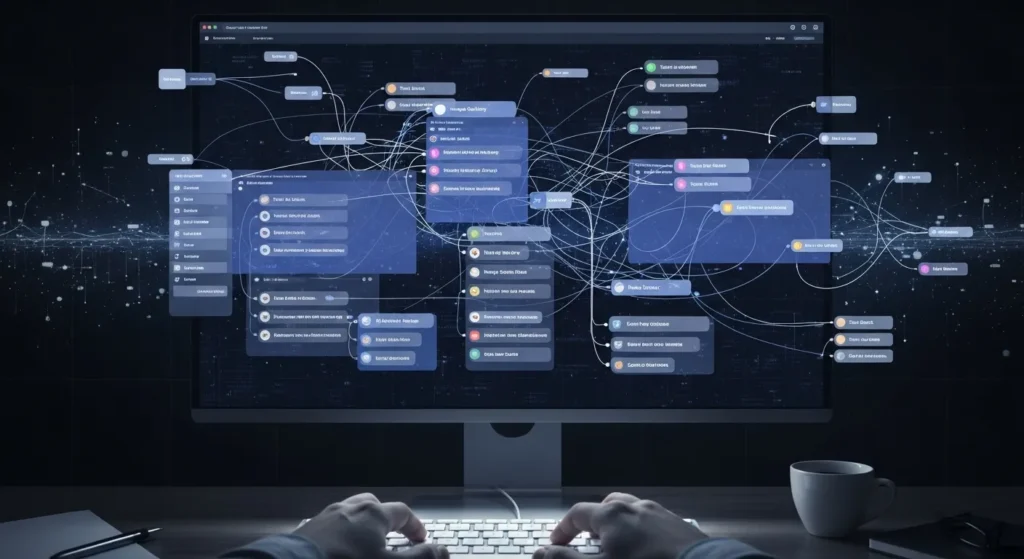
To make your content AI-ready, stop writing long, flowing narratives. Instead, build your pages as a series of interconnected nodes:
- The Definition Node: A concise, 50-word summary of the core concept.
- The Entity Node: Clear mentions of relevant brands (e.g., Adobe Creative Cloud, Figma, Webflow) and how they relate to the topic.
- The Data Node: A markdown table or JSON snippet containing benchmarks or statistics.
- The Proof Node: A mini case study or “work-in-progress” snapshot that proves human experience.
Avoiding the “Fluff Penalty”
AI agents are programmed to be efficient. When Gemini crawls a site, it assigns a “relevance score” to every paragraph.
If the first 300 words of your “Web Design in Belfast” page are about the history of the internet, the agent’s budget for that page is exhausted before it reaches your services.
Pro-Tip: Use Front-Loading. Every H2 and H3 should be followed immediately by a “Direct Answer Block.” If your heading is “How much does a brand audit cost?”, the first sentence must be: “A professional brand audit in 2026 typically costs between £1,500 and £5,000 depending on the number of entities analysed.” No preamble. No “it depends.” Give the facts, then expand.
Semantic Layering: Beyond the Meta Tag
If you think a few “Alt” tags and a Meta Description will save you in 2026, you’re mistaken.
Agentic design requires a “Semantic Layer.” This is a hidden (or semi-hidden) layer of your site that speaks directly to the agent’s logic.
1. Schema.org on Steroids
Basic “Article” schema is no longer enough. You need to use specific schemas, such as Service, Review, FAQPage, and ProfessionalService. But more importantly, you need to use Linked Data (JSON-LD) to connect your entities.
Tell the agent that “Stuart L. Crawford” is the “Creative Director” of “Inkbot Design” and authored this specific “Expertise” piece.
2. Markdown Fragments
While humans see the pretty CSS, agents love Markdown. Providing a simplified, Markdown-formatted version of your core data in the HTML source code helps agents parse your site with 100% accuracy.
It reduces the “token cost” for the LLM, making your site a “cheaper” and more attractive source of information.
3. Navigation for Bots
Stop using complex JavaScript menus that require a “click” to reveal content. AI agents struggle with “Hidden-on-Click” data.
Use a mobile-first design approach that ensures all core links are in the DOM (Document Object Model) at all times. If a bot has to execute complex JS to find your “Contact” page, it will likely give up.
Advanced Entity Linking: Building Your Knowledge Graph
In the age of Agentic Web Design, Schema.org is no longer just for rich snippets; it is the fundamental language of your brand’s identity.
To move from “being indexed” to “being understood,” you must implement Entity Linking.
The Power of sameAs and knowsAbout
One of the most common mistakes in modern web design is failing to anchor your site to the global Knowledge Graph. You do this through the sameAs property.
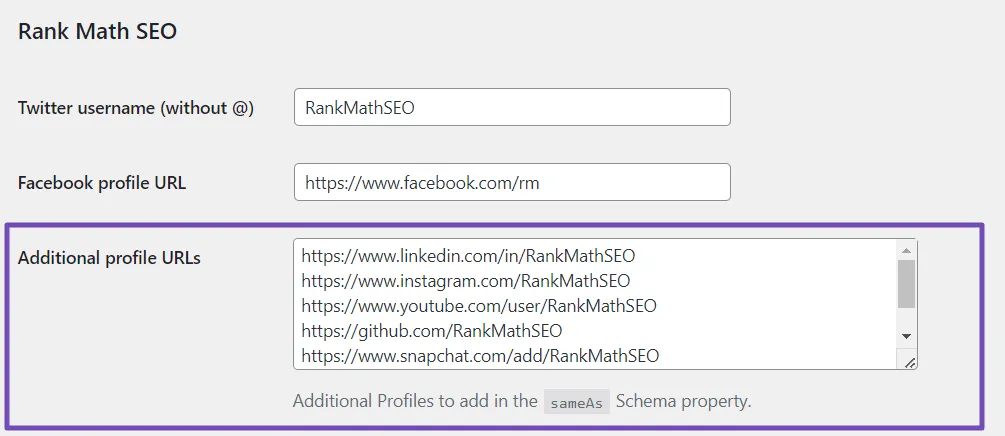
By linking your “About” page to your Wikipedia entry, your LinkedIn company profile, or your Crunchbase listing, you provide the AI agent with “Cross-Platform Verification.”
Similarly, the knowsAbout property tells the agent exactly what your business is an authority on. For a design agency, this might include specific entities like “Sustainable Graphic Design,” “Vector Illustration,” or “B2B Brand Strategy.”
Schema Nesting for Deep Context
Avoid using multiple separate schema blocks. Instead, use Nested JSON-LD. This creates a hierarchy that mirrors human logic.
- Organization
- Founder (Person)
- Author (of this article)
- Service (the offer)
- Review (the proof)
- Founder (Person)
This “stacking” allows an agent to see the relationship between a person’s expertise, the company they lead, and the quality of the service they provide in a single crawl.
Code Example: The 2026 Agentic Standard
JSON
{
  "@context": "https://schema.org",
  "@type": "ProfessionalService",
  "name": "Inkbot Design",
  "founder": {
    "@type": "Person",
    "name": "Stuart L. Crawford",
    "sameAs": "https://www.linkedin.com/in/stuartlcrawford/"
  },
  "knowsAbout": [
    "Agentic Web Design",
    "B2B Branding",
    "Knowledge Graph SEO"
  ],
  "hasOfferCatalog": {
    "@type": "OfferCatalog",
    "name": "Agentic Design Services",
    "itemListElement": [
      {
        "@type": "Offer",
        "itemOffered": {
          "@type": "Service",
          "name": "AI Visibility Audit",
          "description": "A technical audit to eliminate Agentic Friction and optimise for RAG."
        }
      }
    ]
  }
}
The 2026 Reality: LLM Scraping & Pricing
In the last 18 months, we have seen a massive shift in how AI companies handle web data.
OpenAI, Google, and Anthropic have moved from “Wild West” scraping to a more structured, and sometimes paid, relationship with content creators.
However, for the average SMB, the change is technical: The Rise of the robots.txt for AI. You now have to decide whether to allow “GPTBot” or “CCBot” to crawl your site.
Structuring for Voice: The “Natural” Trap
Voice search is not just “text search spoken aloud.” It is conversational and intent-heavy. When someone uses a voice assistant, they are usually looking for a single, definitive answer.
To win at voice, your site needs to follow a responsive web design philosophy that extends to your copy.

You need to answer questions before they are asked.
This is where web design trends for businesses are heading: “Conversational UI” that mirrors how people actually talk.
The “Question-Action” Framework
For every page on your site, identify the three most likely questions a user would ask a voice assistant.
- “How much does [Service] cost?”
- “How long does it take to [Process]?”
- “Where can I see examples of [Product]?”
Include these questions as H3 headers and provide direct, 40-word answers immediately below. This is prime real estate for “Featured Snippets” and “Voice Answers.”
Beyond the Screen: Designing for LAMs and Wearables
In 2026, the primary interface for your website might not be a screen. Devices like the Rabbit R1, Humane AI Pin, and Meta Ray-Ban Glasses rely on Large Action Models (LAMs).
These models are designed to understand user intent and execute actions across web interfaces.
The “Natural Language” Navigational Trap
Most navigation menus are designed for mice and thumbs. They are structured as a series of categories. LAMs, however, “think” in terms of actions.
If a user says to their glasses, “Buy a sustainable coffee table from that Belfast shop I saw yesterday,” the LAM needs to find a “Buy” or “Checkout” action that it can trigger without needing a visual UI.
Actionable Strategy for 2026:
- Semantic Button Labels: Instead of a button that says “Get Started,” use “Start Your Brand Strategy Project.” This provides the LAM with the “Verb” and “Noun” it needs to understand the action.
- Flat URL Hierarchies: Deeply nested URLs (e.g., /services/design/branding/belfast/package-a) are harder for LAMs to parse. Keep your primary action pages close to the root.
- Speakable Markup: Use the Speakable schema to identify which sections of your page are best suited for voice readout. This prevents the AI from reading out navigation menus or legal footers during a voice summary.
Eliminating Agentic Friction
“Agentic Friction” is anything that slows down or confuses an AI agent.
In our fieldwork, we often see sites that are “over-designed.” They use non-standard icons instead of text labels. They use “clever” names for their pages (like “The Lab” instead of “Portfolio”).
This kills your ranking in 2026.
Common Sources of Friction:
- CAPTCHA: Agents can’t get past them. If your core info is behind a “Verify you are human” wall, the AI won’t see it.
- Generic Buttons: “Read More” tells an agent nothing. Use “Read about our landing page design services.”
- Low Contrast/Poor Accessibility: Ironically, the same things that help humans with visual impairments help AI agents. Follow web accessibility guidelines to ensure your site is readable by all types of eyes.
Human-First vs. Agent-First Design (2026)
| Feature | Human-First Priority | Agent-First Priority | The “Agentic” Solution |
| Hero Section | Aesthetic Impact & Emotion | Immediate factual clarity | High-contrast visuals + Markdown Summary Fragment |
| Navigation | Intuitive menus (visual) | Logic-based DOM structure | Sticky headers + SiteNavigationElement Schema |
| Pricing | “Contact for Quote” (Gated) | Transparent ranges (Parsed) | Pricing tables in Markdown + PriceSpecification Schema |
| Case Studies | Storytelling & Images | Verifiable outcomes & Entities | Data-dense sidebars + Industry-standard entity links |
| Interactivity | JavaScript animations | Actionable API/Endpoints | Graceful degradation to HTML/MCP protocols |
2026 Agentic Readiness Audit
Is your website visible to AI agents, or are you invisible to the headless web?
Audit Complete
Your site’s Agentic Friction score is being processed. In 2026, even small technical hurdles can cause AI agents to skip your services entirely.
Don’t let your brand vanish from the generative search landscape. Get a professional structural audit.
Request an Agentic AuditThe Verdict
Agentic Web Design is not a trend; it is the fundamental restructuring of the internet. The transition from a web of “Pages” to a web of “Data Entities” is complete.
If you continue to build sites that only prioritise the visual layer, you are effectively opting out of the modern economy.
You must build a site that is a “Single Source of Truth” for both humans and machines. This means:
- Semantic clarity over creative ambiguity.
- Fact-dense content over marketing fluff.
- Accessible architecture that invites AI agents rather than blocking them.
If you are unsure where your site stands, it is time to stop guessing. We request a quote for a full agentic audit to ensure your brand remains visible in the age of AI.
Are you ready for 2026?
The cost of being invisible is far higher than the cost of an audit. Don’t let your website’s credibility vanish because you were too attached to 2015’s design standards.
The web has changed. It’s time your site did too.
Frequently Asked Questions
What is the difference between SEO and Agentic Web Design?
Traditional SEO focuses on keywords and backlinks to rank “pages” in search results. Agentic Web Design focuses on “Entity Clarity” and “Machine-Readability” to ensure AI agents can extract specific facts and perform actions directly from your site’s data.
How do I know if my site is “AI-friendly”?
You can test this by using tools like Google’s Rich Results Test or by asking an LLM (like GPT-4o or Claude 3.5) to “browse” your site and summarise your pricing or service process. If it hallucinates or fails, you have “Agentic Friction.”
Will Agentic Web Design make my site look boring for humans?
Not at all. The “Agentic Layer” is largely structural and invisible to the naked eye. It involves how the code is written and how information is organised in the DOM, allowing you to maintain a high-end visual UX design while being technically superior.
Does voice search really require a different design approach?
Yes. Voice search requires “Concise Answer Blocks” and a conversational content hierarchy. It prioritises the “First Right Answer,” meaning your site must be structured to provide a definitive response to specific user queries without requiring a “click.”
Is Schema markup enough for Agentic SEO?
No. While Schema is vital, Agentic Design also requires “Information Gain” in your content, a clean DOM structure, and the elimination of technical barriers, such as heavy JavaScript execution, that can cause AI crawlers to “time out” or fail.
How does “RAG” affect my website?
Retrieval-Augmented Generation (RAG) is how AI models pull “fresh” data from the web to answer prompts. If your site is structured for RAG, the AI will use your site as a primary source, giving you credit and potentially driving high-intent referral traffic.
Should I block AI bots in my robots.txt file?
Generally, no. Unless you have proprietary data you don’t want used for training, blocking bots like GPTBot will exclude your business from AI-generated answers and “Search Overviews,” leading to a massive loss in visibility.
How does the “Agentic Layer” affect site speed?
It actually improves it. By providing a lightweight Semantic Layer (JSON-LD and Markdown), you allow agents to “read” your site without downloading heavy images or executing complex JavaScript. This lowers the server load and improves your “Carbon Footprint” score—a key metric for sustainable design in 2026.
Can an AI agent “sign” a contract or make a payment?
Yes, through Actionable Endpoints. If your site integrates with Stripe or DocuSign via standard API protocols, and those protocols are mapped in your schema, a Large Action Model (LAM) can facilitate the transaction on behalf of the user, provided they have granted permission.
What is the “Synthetic Knowledge” penalty?
AI engines like Perplexity and ChatGPT Search now filter out content that has a low “Information Gain” score. If your site merely summarises what is already in the LLM’s training data, you will be penalised with zero visibility. You must provide original data, unique case studies, or specialised insights to be cited.
Should I create a “Bot-Only” version of my website?
No. This is considered “cloaking” and can lead to penalties. Instead, use a Dual-Purpose DOM that combines the human-facing UI and agent-facing logic within a single HTML structure, using modern semantic tags.
How do I test if my site has “Agentic Friction”?
Use the “Agentic Audit” method: Open an LLM with web access (like GPT-4o) and ask: “Based on [Your URL], what is the exact step-by-step process for booking a service, and what are the three main entities this business is connected to?” If the AI struggles, you have friction.

