Content Pillars: Organising Your Topics for Authority
Most business blogs are a visual representation of a disorganised mind.
I’ve spent years auditing digital estates where owners have thrown thousands of pounds at “content” only to end up with a fragmented mess of 500-word articles that go nowhere and say nothing.
It is a waste of capital, a waste of crawl budget, and frankly, an insult to your audience’s intelligence.
If your website feels like a digital junk drawer, you don’t have a “writing” problem. You have an architectural failure. You are lacking content pillars.
Ignoring the structural integrity of your website’s information architecture doesn’t just make it harder for users to navigate; it makes it impossible for search engines to categorise you as an expert. In the world of modern search, if you aren’t an authority, you are invisible.
This isn’t about “getting some clicks.” It is about whether your business can survive the shift toward AI-driven search results, where only the most authoritative and well-structured entities are cited.
- Build a central pillar page that comprehensively covers a topic and serves as the hub for related subtopics.
- Use tightly related cluster content plus strategic internal linking to signal topical authority and pass link equity.
- Prioritise information gain and unique insights over volume; prune or merge thin content to avoid cannibalisation.
What are Content Pillars?
A content pillar is a high-level, comprehensive piece of content that serves as the definitive foundation for a specific topic or theme on your website.
It acts as the central “hub” for a cluster of related, more granular sub-topics (the “spokes”), creating a logical, hierarchical structure that signals deep expertise to both users and search engines.
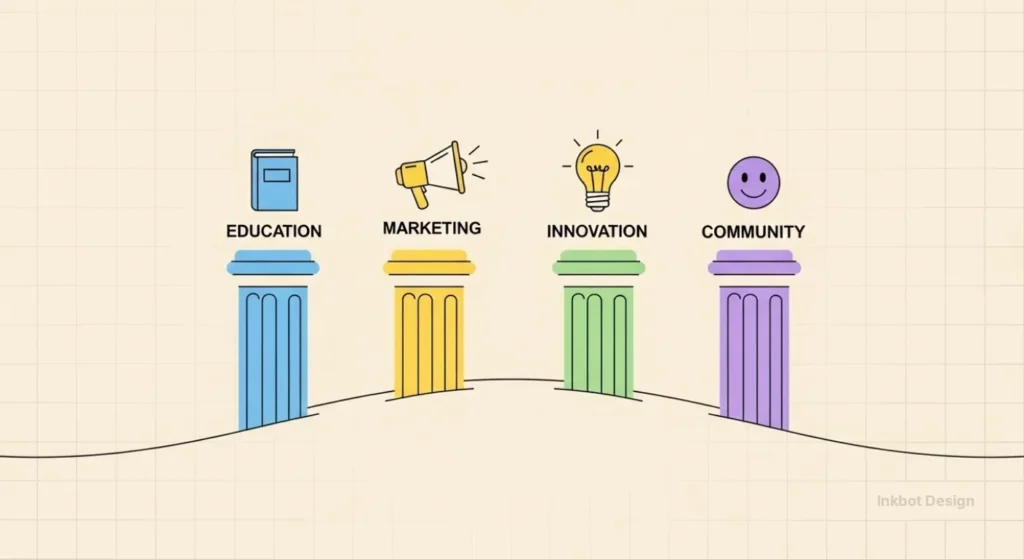
The three core elements of a content pillar strategy include:
- The Pillar Page: An exhaustive, “101-to-Advanced” guide on a broad topic.
- Cluster Content: Specific, detailed articles that answer niche questions related to the main pillar.
- Strategic Internal Linking: The connective tissue that passes “link equity” and topical relevance between the pillar and its clusters.
To understand pillars, you must distinguish between Taxonomy (how you classify content) and Ontology (how concepts relate to one another).
A pillar strategy isn’t just a filing system; it is a declaration of your site’s ontology. It defines the “Subject-Predicate-Object” relationships that search engines use to build their knowledge graph.
When you link a “Logo Design” pillar to a “Vector Mathematics” cluster, you are explicitly telling the algorithm that these two entities are semantically inseparable in your business’s universe.
Effective content marketing requires moving away from the “post and pray” model toward a forensic, structured approach.
The Anatomy of Authority: Root, Rare, and Unique Attributes
To build a pillar that actually ranks, you must move beyond basic “blogging.” You need to understand the attributes that define a high-performance content entity.
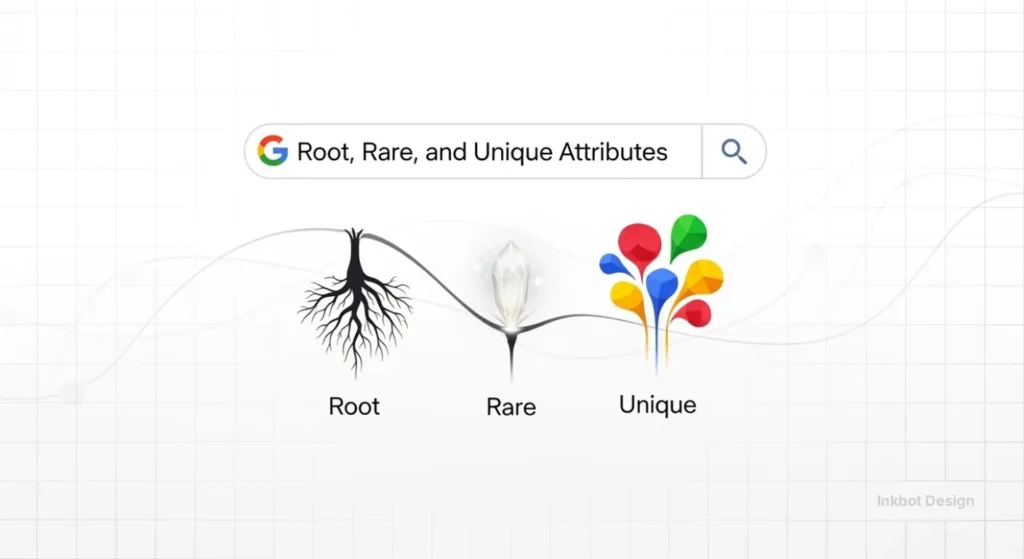
Root Attributes: The Foundation
These are the non-negotiables. If you miss these, don’t bother starting.
- Topical Relevance: Every piece of cluster content must be a logical extension of the pillar. If your pillar is “Logo Design,” your cluster shouldn’t be about “Office Furniture.”
- Search Intent Alignment: You must understand if the user wants to learn (informational), buy (transactional), or find a specific site (navigational).
- UX and Readability: According to research by the Nielsen Norman Group, users rarely read every word; they scan for headers and bolded facts. Your pillars must be designed for scannability.
Rare Attributes: The Technical Edge
This is where you start to outpace your competitors.
- Semantic Distance: This involves mapping the degree of closeness between your subtopics in the eyes of an LLM or search engine. The smaller the semantic distance between your clusters, the stronger the topical signal.
- Information Gain: Google’s patents have increasingly focused on “Information Gain.” If your pillar page simply repeats what the top 10 results say, you are a redundant entity. You must provide unique data, new frameworks, or expert commentary that doesn’t exist elsewhere.
- Crawl Depth Optimisation: A pillar strategy should ensure that no piece of critical content is more than three clicks away from the homepage.
From a technical perspective, a pillar strategy is a tool for managing your Internal Link Ratio.
Amateur sites often suffer from Dangling Nodes—pages that receive link equity but fail to pass it back to the central hub, causing the “Authority” to leak out into irrelevant subdirectories.
A forensic pillar ensures a bi-directional flow: the Pillar Page lends authority to the niche clusters, helping them rank, while the clusters pass specific “Topical signals” back up to the Pillar, reinforcing its position as the ultimate source of truth.
Unique Attributes: The Consultant’s Edge
This is the “Inkbot” way—the stuff that actually moves the needle for a business.
- The Psychological Logic of Architecture: Organising topics isn’t just for bots. It’s for the “Sceptical Entrepreneur.” When a prospect lands on your site and sees a perfectly mapped ecosystem of knowledge, the perceived risk of hiring you drops significantly.
- Revenue Mapping: Every pillar must lead to a conversion point. We don’t write for the sake of writing. We write to guide a user from “I have a problem” to “Inkbot Design is the solution.”
Beyond SEO, pillars serve a critical commercial function: Accelerating the Sales Cycle.
In high-ticket B2B consulting, a prospect rarely makes a purchase on the first touchpoint. They enter a “Research Loop.”
By providing a comprehensive pillar, you allow the prospect to self-educate through your entire ecosystem of knowledge.
This “Self-Service Authority” pre-qualifies the lead before they even request a quote, significantly reducing the “Time-to-Close” for your sales team.
You aren’t just ranking for keywords; you are building a digital surrogate for your best consultant.
| Attribute Type | What It Means (in SEO & Content) | SEO Keyword Focus | Content Examples | Strategic Value |
| Root Attributes | Foundational, category-defining topics that explain what something is and why it exists. These are broad, educational, and expected. | High-volume, competitive head terms and core queries | “What is branding?” “What is logo design?” “Packaging design explained”, “SEO basics for beginners” | Builds topical relevance, search trust, and indexing authority. Essential for pillar pages. |
| Rare Attributes | Less commonly covered angles, methods, or perspectives within a category. Often niche, specialised, or experience-driven. | Mid-volume, long-tail, problem-led keywords | “Brand audits for early-stage startups”, “Packaging design for DTC food brands”, “Pre-press mistakes agencies still make” | Differentiates your content while still capturing search demand. Easier to rank than root topics. |
| Unique Attributes | Content that only you can credibly produce because of proprietary frameworks, case studies, data, or philosophy. | Branded keywords, zero-volume terms, coined phrases | “The Inkbot Brand Ladder™”, “Our 7-step packaging design process”, “How we reduced print costs by 32% for a UK retailer” | Creates defensibility, brand recall, backlinks, and conversion power. Hard to copy. |
The Myth of Content Volume vs. Topical Density
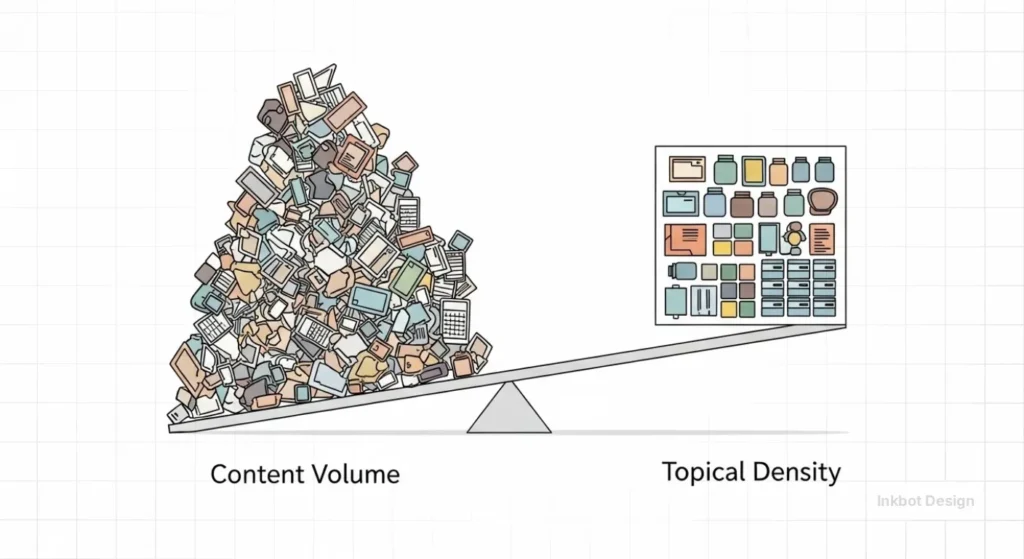
There is a persistent, dangerous myth in the marketing world: “The more you publish, the more authoritative you become.”
I see this daily. A client hires a cheap agency that pumps out four 600-word “lifestyle” posts a week. After six months, they have 100 pages of thin content, zero rankings, and a massive technical SEO headache.
This “volume-first” approach leads to keyword cannibalisation, where multiple pages on your site compete for the same search term, confusing Google and diluting your power.
Data from Gartner suggests that B2B buyers are overwhelmed by the volume of content, but starved for quality. Authority is not built through frequency; it is built through density.
The Reality: One 5,000-word “Master Guide” that is meticulously updated and linked to 10 deep-dive sub-articles is worth more than 500 disconnected blog posts.
A frequent pain point for established digital estates is Content Decay—where old, unorganised posts begin to lose their relevance and pull down the site’s overall “Average Quality Score.”
The solution is to use your pillars as a “Pruning Framework.” Instead of letting old content rot, you either “Up-cycle” it into a new cluster or “Merge” it into the main pillar.
This eliminates Keyword Cannibalisation, ensuring you don’t have twelve different pages fighting for the same search intent and confusing the search engine’s rank-selection process.
The Content Ecosystem Audit
Are you building an authoritative library, or a “content junkyard”? Google penalizes unorganized content. Check your structure below.
Case Study: The Dotdash Transformation
When About.com was failing, they didn’t write more content. They did the opposite. They broke the site apart into vertical pillars (like The Spruce for home and Verywell for health).
They deleted millions of pages of low-quality, “thin” content and consolidated the remaining information into massive, authoritative pillars.
The result? They became one of the most successful digital publishers globally. They proved that topical authority is about structure and depth, not raw volume.
The Content Pillar Comparison
| Feature | The Amateur Way (Random Acts of Content) | The Pro Way (Inkbot Pillar Strategy) |
| Topic Selection | “Whatever I feel like writing today.” | Data-driven “Root” topics with high semantic value. |
| Internal Linking | Random or non-existent. | Logical “Hub and Spoke” links to distribute equity. |
| Depth | 500-800 words of “fluff” and generic advice. | 3,000+ words of exhaustive, forensic detail. |
| User Journey | Leads to a dead end or a generic “Contact Us.” | Mapped to specific stages of the funnel. |
| SEO Focus | Single keyword per page. | Topical clusters and entity-based SEO. |
| Maintenance | Publish and forget. | Regular audits and “Freshness” updates. |
Semantic SEO: Why Pillars Matter to Google (and Humans)
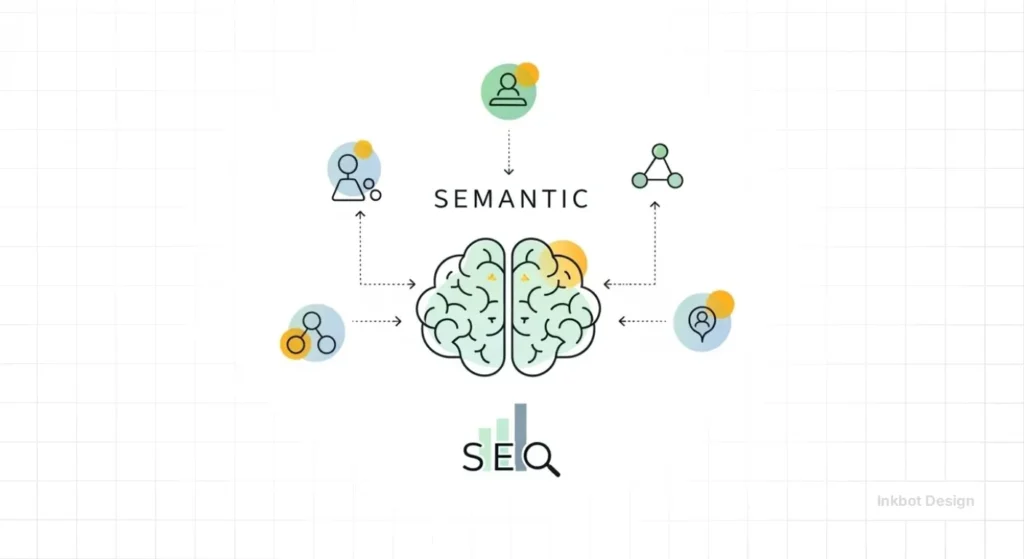
In the past, SEO was about repeating a keyword enough times to trick a robot. Those days are dead. Modern search engines utilise Natural Language Processing (NLP) to comprehend the intent and the relationships between entities.
When you create a content pillar, you are essentially building a “knowledge graph” for your own website. You are telling the search engine: ‘I don’t just know about ‘logo design’; I understand the relationship between ‘typography,’ ‘colour theory,”” vector mathematics,” and” brand psychology.”‘
By grouping these topics, you reduce the “Cost of Retrieval” for the search engine. It doesn’t have to guess what your site is about. This clarity leads to higher rankings and, more importantly, it makes you the “focus hub” for your audience.
To see this in practice, explore our digital marketing services. Each service is a pillar, supported by a wealth of specific, actionable insights.
The State of Content Pillars in 2026: The Generative Shift
As we move deeper into 2026, the game is changing again. We are now in the era of Generative Engine Optimisation (GEO). Platforms like Search Generative Experience (SGE) and other LLM-based search tools don’t just list links; they synthesise answers.
If your content is thin, an AI will simply scrape the one “fact” you have and never give you a click. To survive in 2026, your content pillars must be:
- Non-Linear: Users shouldn’t have to read from top to bottom. Use interactive “Jump Links” and clear H3 summaries.
- Evidence-Heavy: AI models prioritise content that cites real-world data and primary sources.
- Entity-Centric: Focus on becoming the primary source for specific industry terms and definitions.
McKinsey’s insights on B2B growth highlight that “omnichannel excellence” starts with a unified content strategy. You cannot have a unified strategy if your blog is a scattered mess of random ideas.
The Consultant’s Reality Check: I Once Audited a £5m Firm…
I once worked with a client—a successful B2B consultancy—who couldn’t understand why their organic leads had flatlined. They were publishing three times a week. When I audited their site, I found 45 different articles all competing for the same ranking position for “business strategy.”
Not one of them was longer than 700 words. They were effectively shouting at themselves. Google didn’t know which page to rank, so it didn’t rank any of them.
We deleted 35 of those posts. We selected the best parts of the remaining 10 and combined them into a single “Super-Pillar” of 6,000 words. Within three months, that single page was outranking their competitors’ entire domains for their primary keywords.
The lesson: Be the library, not the newsstand. A library is organised, permanent, and authoritative. A newsstand is a noisy, temporary, and disposable entity.
Building Your Architecture: A Forensic Blueprint
If you are ready to stop playing at marketing and start building an authoritative asset, follow this framework:
1. Identify Your Core Entities
Don’t start with keywords. Start with “Entities.” What are the 3-5 things your business must be known for? These are your pillars. For us, it’s things like Branding, Visual Content, and Strategy.
2. Map the Semantic Clusters
For each pillar, list 10-15 sub-topics.
- The “How-to”: Blogging: How to Write Blog Posts
- The “Why”: Storytelling in Marketing
- The “Technical”: Video Content Marketing
3. Audit Your Existing Mess
Go through your current blog. If a post fits a pillar, move it there. If it’s thin, merge it. If it’s rubbish, delete it. This is called “Content Pruning,” and it is one of the most underrated SEO tactics in existence. Use our editorial guidelines to ensure that anything you keep meets a high standard.
4. Create the “Connective Tissue”
The pillar page must link to every cluster post, and every cluster post must link back to the pillar. This creates a closed loop of authority. This also helps with content repurposing, as you can break your pillar down into social media snippets while always driving traffic back to the “Hub.”
The Verdict
Content pillars are not a “nice-to-have” SEO trick. They are the difference between a website that costs you money and one that generates revenue for you.
In an era where AI can generate a 500-word blog post in three seconds, the only way to win is through exhaustive depth, structural brilliance, and genuine authority.
Stop contributing to the noise. Build something that lasts.
If you’re tired of generic advice and want a content strategy that actually reflects the quality of your business, you know what to do.
Request a quote and let’s fix your architecture. Or, just keep posting 500 words of fluff and wondering why nobody is calling. Your choice.
Frequently Asked Questions (FAQ)
What is a content pillar?
A content pillar is an exhaustive, high-level guide on a broad topic that serves as the foundation for a cluster of related sub-topics. It organises your website’s information architecture, making it easier for search engines to recognise your Topical Authority and for users to find comprehensive answers in one central “Hub.”
What is the difference between a Pillar Page, a Blog Post, and a Category Page?
A Pillar Page is a definitive, evergreen resource. A Blog Post is a granular “Spoke” that answers a specific niche question. A Category Page is merely a dynamic list of links. Search engines prioritise Pillars because they offer high Information Gain, whereas category pages are often viewed as “Thin Content” with little unique value.
How many content pillars should a website have?
Most SMBs should focus on 3 to 5 core pillars. Attempting to cover too many broad topics can spread your “Link Equity” too thin and dilute your authority. It is commercially more effective to be a “Tier 1” authority on three core entities than a mediocre source for ten.
What is the ideal length for a pillar page?
While there is no “magic number,” an effective pillar page usually ranges from 3,000 to 5,000 words. The goal is “Exhaustive Depth”—you must provide more nuanced data and expert commentary than the current top-ranking results to satisfy both users and AI synthesisers.
How do I identify which topics should be Pillars?
Look for “Root Entities”—broad topics central to your revenue that have enough Semantic Depth to support at least 10–15 sub-topics. If you cannot brainstorm a dozen specific questions or long-tail queries about a topic, it is a “Cluster Spoke,” not a “Pillar Hub.”
Does every blog post need to belong to a Pillar?
Ideally, yes. In a forensic architecture, “Orphan Content” (posts with no parent pillar) struggles to rank because it lacks a clear relationship to your site’s core expertise. If a post doesn’t fit into your defined pillars, it may be a signal that the content is off-brand or redundant.
What is the “Connective Tissue” in a Pillar strategy?
This refers to your Internal Link Ratio. You must use descriptive, keyword-rich anchor text to link from the Pillar to the Clusters, and use “Hub-focused” anchors to link every cluster post back to the main Pillar. This creates a closed loop of authority that helps search engines crawl your site more efficiently.
Do I need to delete my old blog posts to create pillars?
You should “Prune” them. Any thin or outdated content should be deleted or merged into your new pillars. This consolidation focuses your “Link Equity” on your most important pages and prevents Keyword Cannibalisation, where multiple pages compete for the same search intent.
How often should I update my content pillars?
Pillar pages should be audited every 6 to 12 months. Search engines prioritise “Freshness,” especially in competitive industries. Updating statistics, adding new case studies, and refining the UX ensure your pillar remains the definitive, “Position Zero” resource.
How does SGE (Search Generative Experience) affect Pillar pages?
AI-driven search models prioritise High-Density sources. A well-structured pillar provides a “clean” data source for an AI to cite. By being the most exhaustive source, you increase the probability of your brand being the “Featured Source” in an AI-generated answer.
Can a service page be a content pillar?
Yes, if it is expanded into an exhaustive resource. However, for the best user experience, we recommend having a dedicated “Guide” as the pillar and linking it to a streamlined, conversion-focused service page. This separates “Education” from “Transaction” while maintaining SEO power.
Can I have overlapping Pillars?
You should avoid significant overlap to prevent confusing the search engine’s rank-selection process. If two pillars are too similar, the algorithm won’t be able to determine which one is the “Authority.” In such cases, it is always better to merge them into one “Super-Pillar” to concentrate your ranking power.