Brand Equity Models Explained: Keller vs Aaker
For many business owners, “brand equity” sounds like marketing jargon. It is the sort of term agencies use to justify a £50,000 invoice for a logo refresh.
But here is the cold reality: Brand equity is the reason you pay £4.00 for a Starbucks latte rather than £1.50 for a generic coffee, even if the beans are chemically identical. It is the commercial value derived from consumer perception. It is the difference between a commodity and a cash cow.
If you cannot measure it, you cannot manage it. That is where brand equity models come in. These aren't just academic diagrams; they are blueprints for printing money.
In this guide, we will not only define them but also explore their significance. We are going to strip down the two heavyweights of the industry—David Aaker and Kevin Lane Keller—and see which one actually works for growing a business in the real world.
- Brand equity equals commercial value from perception; measure it to manage pricing power and investor appeal.
- Aaker treats brands as financial assets focusing on loyalty, awareness, perceived quality, associations and proprietary assets.
- Keller frames equity as a consumer pyramid from salience to resonance; combine with distribution and distinctiveness for growth.
What are Brand Equity Models?
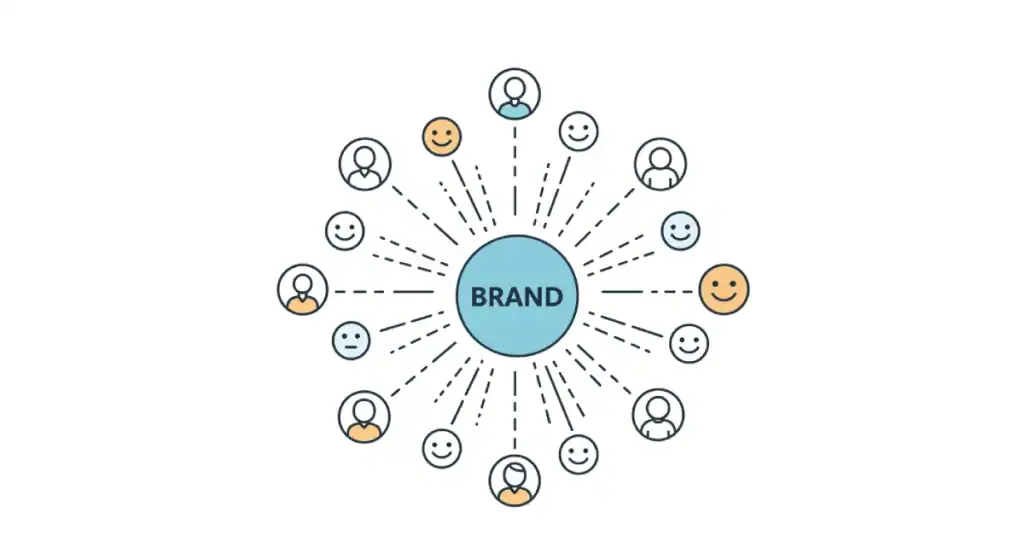
At its core, a brand equity model is a framework used to diagnose the health and value of a brand. It attempts to quantify the intangible.
If you strip away the jargon, every valid model agrees on three key components:
- Knowledge: Does the customer know you exist? (Awareness/Salience)
- Preference: Does the customer prefer you over the alternative? (Associations/Quality)
- Action: Does the customer consistently buy from you and disregard competitors? (Loyalty/Resonance)
Without a model, you are just throwing colours at a wall and hoping they stick. With a model, you are building an asset.
The Aaker Model: The Asset Approach
David Aaker, often cited as the “Father of Modern Branding,” introduced his model in 1991. Aaker views brand equity as a set of assets and liabilities linked to a brand’s name and symbol that add to (or subtract from) the value provided by a product or service.
It is less about “feelings” and more about structural integrity.
The 5 Pillars of Aaker’s Model
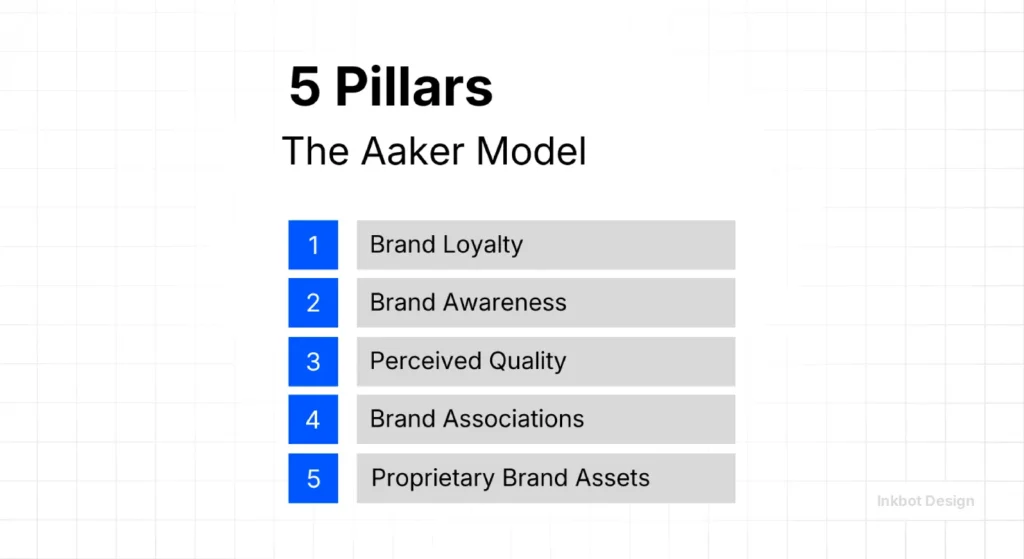
Aaker argues that equity is built on five pillars. If one crumbles, the value of the brand diminishes.
- Brand Loyalty: This is the core. A loyal customer base reduces marketing costs and provides trade leverage. It is cheaper to keep a customer than to find a new one.
- Brand Awareness: The anchor. If they don't know you, they can't buy you. Aaker distinguishes between recognition (I've seen this before) and recall (I can name this brand when asked about a category).
- Perceived Quality: This is not about actual engineering quality; it is about the customer's perception of quality. This directly drives pricing power.
- Brand Associations: Anything linked in memory to a brand. For Nike, it’s “Athleticism” or “Just Do It.” These associations provide a reason to buy.
- Proprietary Brand Assets: This is the one most people forget. Patents, trademarks, channel relationships. These are legal protections that prevent competitors from copying your success.
Real-World Application: The “Coca-Cola” Defence

Coca-Cola is the textbook example of Aaker’s model in action.
- Loyalty: People drink it daily for decades.
- Awareness: It is arguably the most recognised word on Earth after “OK.”
- Perceived Quality: Consistent taste worldwide.
- Associations: Happiness, Christmas, Red, Refreshment.
- Proprietary Assets: The trademarked contour bottle shape and the secret formula.
Even if all of Coca-Cola's factories were to burn down tomorrow, the company could walk into any bank and borrow billions purely on the value of its brand equity. That is the Aaker model: Brand as a financial fortress.
The Keller Model (CBBE): The Customer-Based Approach
Kevin Lane Keller took a different angle in 1993 with his Customer-Based Brand Equity (CBBE) model. While Aaker views the brand as a business asset, Keller views it through the consumer's eyes.
Keller’s premise is simple: The power of a brand lies in what resides in the minds of customers.
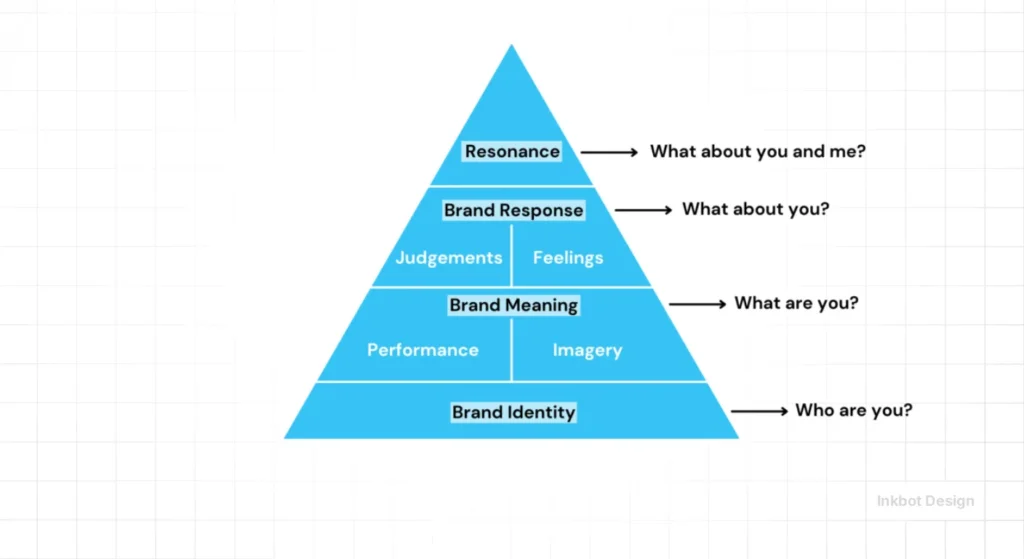
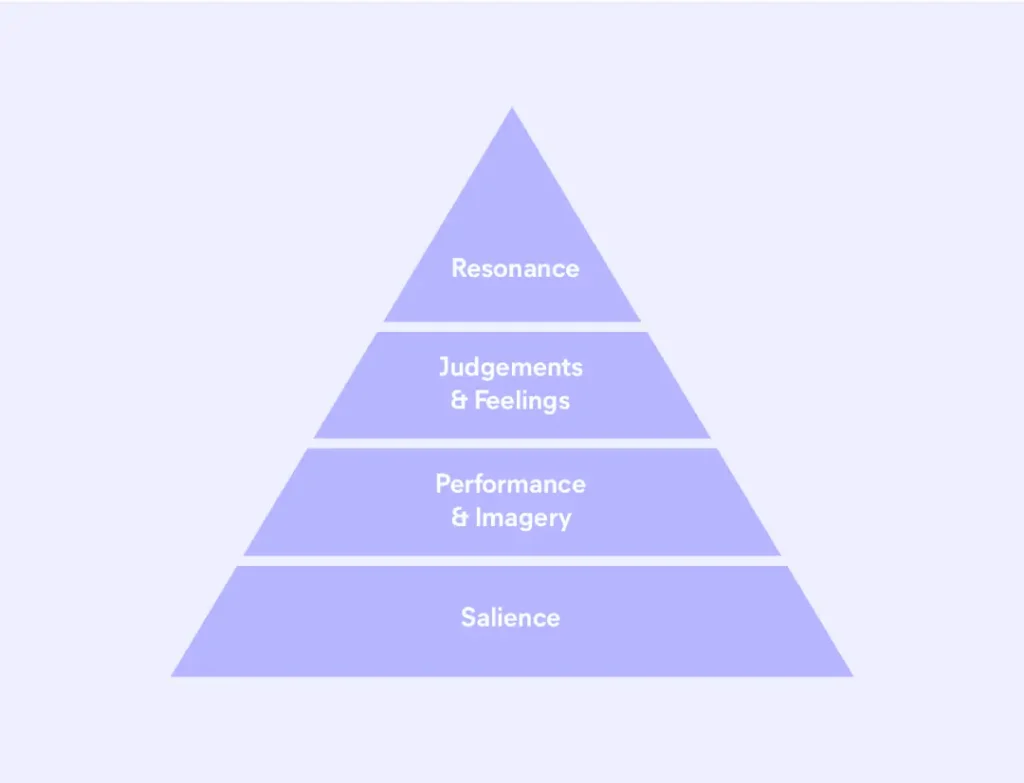
He visualises this as a pyramid. You cannot jump to the top (Loyalty) without building the foundation (Salience).
The 4 Steps of Keller’s Pyramid
Level 1: Identity (Who are you?)
Brand Salience. This is a deep and broad brand awareness. It’s not just “Do I know this brand?” but “Do I think of this brand when I’m thirsty/tired/hungry?” It is about mental availability at the moment of purchase.
Level 2: Meaning (What are you?)
This splits into two blocks:
- Performance: Does the product work? Is it reliable? (Functional).
- Imagery: What does the brand look like? Who uses it? (Psychological).
Level 3: Response (What about you?)
- Judgments: The customer’s cognitive reaction. Quality, credibility, superiority.
- Feelings: The customer’s emotional reaction. Fun, excitement, security, self-respect.
Level 4: Relationships (What about you and me?)
Brand Resonance. The peak. This is where the customer feels a psychological bond with the brand. It manifests as behavioural loyalty, attitudinal attachment, and active engagement (such as joining communities and posting on social media).
Real-World Application: Apple
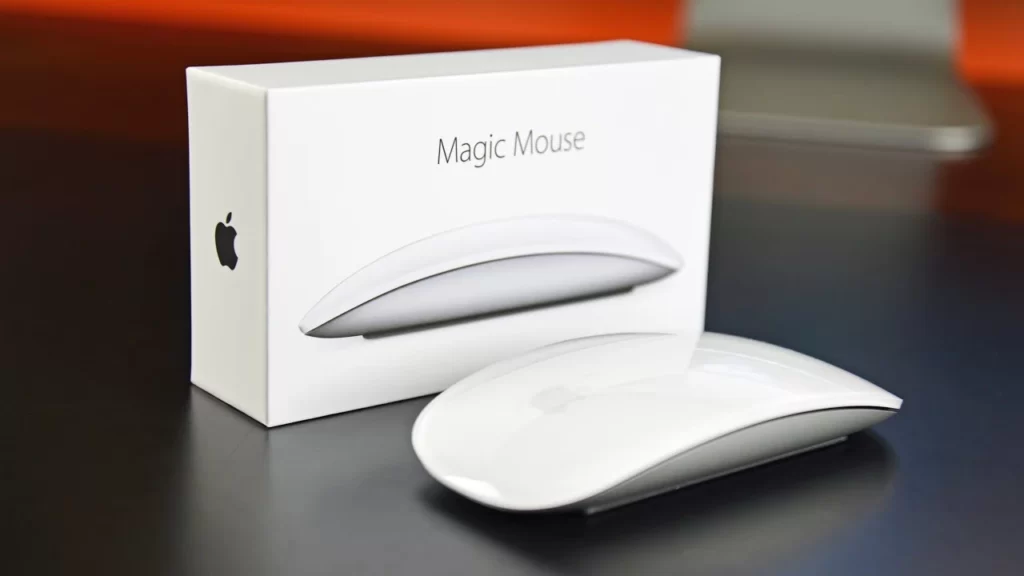
Apple plays the Keller game better than anyone.
- Salience: You see the logo; you know it’s premium tech.
- Meaning: High performance (M-series chips) mixed with sleek, minimalist imagery.
- Response: Judgments of superiority (“It just works”) and feelings of creativity and status.
- Resonance: Apple users defend the brand. They queue for iPhones. They are part of an ecosystem. They don't just buy; they belong.
The Showdown: Aaker vs. Keller
Entrepreneurs often ask us, “Which model should I use?” The answer depends on your goal. Are you trying to sell the company (Asset value), or are you trying to increase customer retention (Psychological value)?
| Feature | Aaker's Model | Keller's CBBE Pyramid |
| Primary Focus | Company Value & Recognition | Customer Psychology & Emotions |
| Key Metaphor | A set of Assets/Liabilities | A Ladder or Pyramid |
| End Goal | Market Leadership & Financial Value | Brand Resonance (Deep Loyalty) |
| Unique Component | Proprietary Assets (Patents/IP) | Resonance (Active Engagement) |
| Best For… | Established corps, M&A valuation, Legal strategy | Startups, Lifestyle brands, Community building |
| Weakness | Can feel cold/corporate; ignores “feelings” | Can be abstract; hard to measure “Resonance” financially |
The Consultant's Reality Check
In our fieldwork at Inkbot Design, we often see startups trying to force “Resonance” (Keller Level 4) before they have even established “Salience” (Keller Level 1) or “Perceived Quality” (Aaker Pillar 3).
Warning: You cannot “community build” your way out of a bad product. If your brand identity is weak and your product fails functionally, no amount of “emotional storytelling” will save you. Fix the foundation first.
The “Head vs. Heart” Brand Audit
Are you building Assets (Aaker) or Relationships (Keller)? Rate your brand below to see if your equity is balanced.
The “Third Player”: Byron Sharp & Mental Availability
We cannot discuss brand equity in 2026 without addressing the elephant in the room: The Ehrenberg-Bass Institute.
Professor Byron Sharp, in his seminal book How Brands Grow, challenged both Aaker and Keller. Sharp argues that “Brand Loyalty” and “Love” are largely myths or, at best, consequences of size rather than drivers of it.
Sharp’s data suggests:
- Most growth comes from light buyers (people who buy from you only once a year), not loyal customers.
- Differentiation (Meaning) matters less than Distinctiveness (Sensory cues like colours and logos).
- Equity is essentially comprised of Physical Availability (easy to acquire) and Mental Availability (easy to consider).
How Brands Grow
Your marketing strategy is based on myths and decades of bad theory. This book is the fix. How Brands Grow presents tried and tested, scientific laws—backed by decades of global research—on how brands actually grow. It demolishes conventional wisdom on loyalty programs, price promotions, and even how advertising works, giving you an evidence-based roadmap to sustained growth.
As an Amazon Partner, when you buy through our links, we may earn a commission.
The Takeaway: While Keller wants you to build a “relationship,” Sharp says you just need to be famous and easy to buy. For a small business, a blend is typically the best option. Use Keller to refine your messaging, but use Sharp’s logic to obsess over distribution and visibility.
The State of Brand Equity in 2026: The AI Shift
The models of 1991 and 1993 are being tested by the technology of 2026.
Specifically, Generative AI and Large Language Models (LLMs) have changed “Brand Salience.”
In the past, Salience meant popping into a consumer's head when they walked down a supermarket aisle. Today, Salience means popping into an AI's answer when a user asks, “What is the best CRM for a small plumbing business?”
If your brand equity (digital footprint, authoritative mentions, clear associations) isn't strong enough for the algorithm to cite you, you are invisible. This is the new Brand Awareness.
- Keller’s Update: “Resonance” now includes the amount of content generated by your users that feeds the AI models.
- Aaker’s Update: “Proprietary Assets” now includes your data sets and digital authority.
How to Build and Measure Equity (The Inkbot Method)
You don't need a million-pound budget to apply these frameworks. Here is a practical, step-by-step approach for SMBs.
1. Audit Your “Distinctive Assets” (Aaker)
Before you launch a campaign, list what you own.
- Do you have a trademark?
- Is your logo consistent everywhere?
- Do you have a specific colour code (like Tiffany Blue or Cadbury Purple)?
- Action: If your branding is inconsistent, you are leaking equity. Request a quote to standardise your visual identity.
2. Map Your Salience (Keller)
Ask 100 people in your target market: “When you think of [Your Industry], which three companies come to mind?”
- If you aren't on the list, you have a Salience problem, not a quality problem.
- Fix: Increase reach. Focus on broad brand recognition campaigns rather than niche targeting.
3. Check Your Performance vs. Imagery (Keller)
Are you promising one thing but delivering another?
- Example: If your website looks luxurious (Imagery) but your customer service is slow (Performance), you create “Cognitive Dissonance.” This destroys equity faster than anything else.
- Fix: Align your brand trust signals. Ensure that the operational reality aligns with the marketing promise.
4. Measure the “Price Premium”
The ultimate test of brand equity is pricing.
- Take your product price.
- Subtract the average price of a generic competitor.
- The difference is your Brand Equity Value.
- Note: If you cannot charge more than the generic option, you do not have a brand; you have a product. Read more on Branding ROI.
Debunking the Myth: “Brand Love”
There is a pervasive myth in marketing that customers want to “love” your brand. Outside of a few notable exceptions (Disney, Harley-Davidson, Apple), this is generally not the case.
Most customers don't want a relationship with their bank, their toothpaste, or their accountant. They want reliability and ease.
- Aaker was right: Perceived Quality drives the business.
- Keller was partially right: Feelings matter, but usually, the feeling the customer wants is “lack of anxiety.”
Don't over-invest in trying to make people “love” you. Invest in making sure they “trust” you. Trust scales; love is fickle.
The Verdict
So, Aaker or Keller?
- Use Aaker if you are building a business case for investors, planning an exit, or structuring your intellectual property. It is the language of the boardroom.
- Use Keller if you are crafting your messaging, designing your user experience, or trying to figure out why your marketing isn't clicking with humans. It is the language of the creative studio.
Ultimately, both models convey the same truth: a brand is not just a logo. A brand is a reputation that allows you to charge a premium.
If you are ready to stop playing around with visuals and start building a measurable asset, you need a strategy that combines the structural rigour of Aaker with the psychological depth of Keller.
Frequently Asked Questions
What is the main difference between Aaker and Keller's models?
The main difference lies in their focus. David Aaker’s model (1991) focuses on the brand as a business asset consisting of five pillars, including proprietary assets. Kevin Lane Keller’s model (1993) focuses on the consumer’s psychological journey, visualised as a pyramid leading to “Brand Resonance.”
Can small businesses use the Keller Brand Equity model?
Yes, but with caution. Small businesses should focus on the bottom two levels of Keller’s pyramid—Salience (Awareness) and Performance/Imagery. Trying to achieve “Resonance” (Level 4) without a massive budget or established trust is often a waste of resources.
What are Proprietary Brand Assets in Aaker's model?
Proprietary Brand Assets are the legal and tangible elements of a brand that competitors cannot legally copy. This includes trademarks, patents, channel relationships, and proprietary databases. Aaker argues these are critical for protecting brand value.
How do I measure brand equity without a big budget?
You can measure brand equity by tracking your “Price Premium” (how much more you can charge than a generic competitor) and your “Brand Salience” (how often you are mentioned unprompted in your category). Surveys and search volume data are cost-effective tools for this.
Why is Brand Salience important?
Brand Salience is the foundation of Keller’s model. It refers to how easily and frequently a brand comes to mind when making a purchase. Without salience, a customer will not consider your brand, regardless of the quality of your product.
Does brand equity affect the sale price of a company?
Absolutely. High brand equity contributes to “Goodwill” on the balance sheet. Investors pay a premium for brands with loyal customer bases (Aaker’s Loyalty) and strong protections (Aaker’s Assets) because they guarantee future cash flow with lower risk.
What is the role of ‘Brand Feelings' in branding?
In Keller’s model, ‘Feelings' are the customer’s emotional response to the brand (e.g., security, fun, social approval). These feelings drive the transition from simple satisfaction to active loyalty.
Is Brand Loyalty the same as Brand Resonance?
Not exactly. Brand Loyalty (Aaker) usually refers to the habit of re-purchasing. Brand Resonance (Keller) is a deeper, psychological bond that occurs when customers actively engage with the brand, advocate for it, and feel a sense of community.
How does Byron Sharp’s theory contradict Keller's?
Byron Sharp argues that “differentiation” (a key concept for Keller) is less important than “distinctiveness.” Sharp suggests brands grow by increasing “mental and physical availability” to light buyers, rather than focusing on deepening relationships with loyalists.
How can I improve my Perceived Quality?
Perceived Quality is improved not just by making a better product, but by signalling quality through design, packaging, pricing, and social proof. Consistent visual identity and high-quality “touchpoints” (website, support) are crucial for raising perception.