What is Brand Voice? Why It Matters + Examples
Here is a scenario I see constantly.
I open a company’s Instagram, and they are cracking jokes, using slang, and acting like my best mate. Then, I click through to their website, and suddenly I am reading a doctoral thesis on “synergistic operational paradigms.”
Finally, I have an issue and contact support, only to receive a cold, robotic email that sounds like a bailiff demanding payment.
This is the “Frankenstein Effect.”
It is what happens when you stitch together different departments without a central nervous system. It is jarring, it breaks trust, and it makes your business look amateurish.
If you want to know what is brand voice, it is the antidote to that chaos. It is not just about “sounding nice.” It is about operational consistency. When you get it right, you stop being a commodity and start being a distinct entity that people actually want to listen to.
- Brand voice is a consistent, distinct personality across all communications that makes a brand recognisable without its logo.
- Three pillars: distinctiveness from competitors, consistency across channels, and documented governance for scale.
- Voice is constant (who you are); tone varies (how you speak depending on context).
- Consistent voice boosts trust, engagement and revenue; inconsistency damages conversions and credibility.
- Document a practical voice framework (vocabulary, syntax, grammar), train teams, and use AI as a compliance tool.
What is Brand Voice? ( The Direct Definition)
Brand voice refers to the uniform personality and distinct verbal identity of a brand, as expressed through all its communications.
It is the purposeful selection of words, sentence structures, and attitudes that makes your brand recognisable, even if the logo is covered up. Whether you are tweeting, writing a legal disclaimer, or designing a 404 error page, the voice should feel like it is coming from the same person.

The Three Core Pillars of Brand Voice
To make this tangible, we break it down into three non-negotiable components:
- Distinctiveness: It must sound unlike your competitors. If you swap your logo with a rival’s and nobody notices the difference in the text, you do not have a voice; you have generic filler.
- Consistency: It must remain stable across all channels. Your LinkedIn post cannot sound like a stand-up comedian if your invoice email sounds like a Victorian headmaster.
- Governance: It must be documented. If the voice only exists in the founder’s head, it is not a brand asset—it is a bottleneck.
Note: Do not confuse Brand Voice with Brand Tone. Voice is your personality (constant). Tone is your mood (variable depending on the context). We will cover this distinction in detail later.
The “Boring” Business Case: Why Voice Equals Revenue
Entrepreneurs often dismiss brand voice as “creative fluff” reserved for B2C hipster brands selling oat milk. This is a naive view. Voice is a financial lever.
In a saturated market, your product features are likely replicable. Your pricing is likely comparable. Your communication is the only thing that is proprietary.
According to the State of Brand Consistency report by Marq, maintaining brand consistency across all platforms can increase revenue by up to 23%. Why? Because consistency breeds familiarity, and familiarity breeds trust. People do not buy from businesses they do not understand or recognise.
Furthermore, 86% of consumers prefer an authentic and honest brand personality on social networks. If your voice oscillates between “corporate drone” and “trying-too-hard Gen Z,” you signal incompetence. If you cannot organise your own words, why should a client trust you to organise their project?
The Cost of Inconsistency
I once audited a fintech client who was losing customers during the onboarding process. Their marketing promised “banking made simple,” but their signup forms used aggressive legal jargon like “pursuant to,” “indemnify,” and “obligatory.”
The friction wasn’t technical; it was linguistic. The user felt like they had been baited by a friendly brand, only to be switched to a hostile bank. We rewrote the microcopy to match the brand voice, and conversion rates lifted by 14% in two weeks. That is the ROI of voice.
Brand Voice vs Brand Tone of Voice: The Critical Distinction

This is where 90% of businesses fail. They use “voice” and “tone” interchangeably. They are not the same.
If you take nothing else from this article, remember this analogy:
- Voice is the weather.
- Tone is the temperature.
Or, perhaps more relatable:
Voice is who you are. Tone is how you speak, depending on who you are talking to.
You are the same person whether you are at a funeral or a football match. Your personality (Voice) does not change. However, you wouldn’t shout football chants at a funeral. You adjust your volume, vocabulary, and body language (Tone) to fit the emotional context.
The Breakdown
| Feature | Brand Voice | Brand Tone |
| Definition | The core personality of the brand. | The emotional inflexion applied to the voice. |
| Frequency | Constant. Never changes. | Variable. Changes based on context/audience. |
| Example Goal | To be recognised as us. | To show empathy, excitement, or authority. |
| Application | The overall website, mission statement. | An apology email, a celebration tweet, a legal notice. |
For a deeper dive into the specific mechanics of tone, read our guide on brand tone of voice. It explains how to modulate your messaging without losing your identity.
Why This Matters for Operations
If you have a “fun” brand voice, that’s great for marketing. But if your server crashes and a customer loses data, you cannot use your “fun” voice. You need to use a serious tone while maintaining your helpful voice.
Bad (Tone Deaf): “Whoopsie! We dropped the ball and lost your data. Sad face! 😢”
Good (Correct Voice/Tone): “We have made a mistake, and your data is currently unavailable. We are fixing it now. Here is what happens next.”
The second example is direct and helpful (Voice) but serious and urgent (Tone).
How to Build a Brand Voice Framework (The Mechanics)
You cannot just tell your team to “be professional.” That is subjective. “Professional” to a 20-year-old developer might mean using Slack emojis. “Professional” to a 60-year-old lawyer might mean using Latin phrases.
You need rigid parameters. We use the Nielsen Norman Group’s four dimensions of tone as a starting point, but we expand on them to create a functional framework.

1. The Vocabulary Matrix (Lexicon)
Define the words you use and the words you never use. This is the easiest way to control voice across a large team.
- The “We Are” List: straightforward, agile, precise, human.
- The “We Are Not” List: grandiose, bureaucratic, cheeky, slang-heavy.
Practical Application: Create a “Banned Words” list. For a B2B consultancy, you might ban words like “ninja,” “guru,” and “rockstar.” For a luxury fashion brand, you might ban “cheap,” “bargain,” or “get.”
2. Syntax and Cadence
This is the technical “rhythm” of your writing.
- Punchy/Direct: Short sentences. Few adjectives. Active verbs. (e.g., Apple, Nike).
- Flowing/Narrative: Longer sentences. Connectives. Storytelling elements. (e.g., The New York Times, Aesop).
Example of Cadence shifting perception:
- Cadence A: “Our software is fast. It saves you time. It saves you money. Buy it now.” (Aggressive, confident).
- Cadence B: “We have designed a platform that respects your time, allowing you to focus on the work that truly matters to your bottom line.” (Consultative, soft).
3. Grammar and Mechanics
Do you use contractions?
- Yes: “We’re here to help.” (Friendly, approachable).
- No: “We are here to help.” (Formal, serious, distant).
Do you use the Oxford Comma? Do you use ampersands (&) or the full word “and”? These tiny details accumulate to form the texture of your voice.
Real-World Examples: The Good, The Bad, and The Risky
Let’s look at companies that have successfully weaponised their brand voice.
1. Monzo (The Humaniser)
Before Monzo, UK banks spoke like encyclopaedias written by robots. Terms like “overdraft facility” and “remittance” were standard. Monzo’s voice is transparent, helpful, and colloquial.
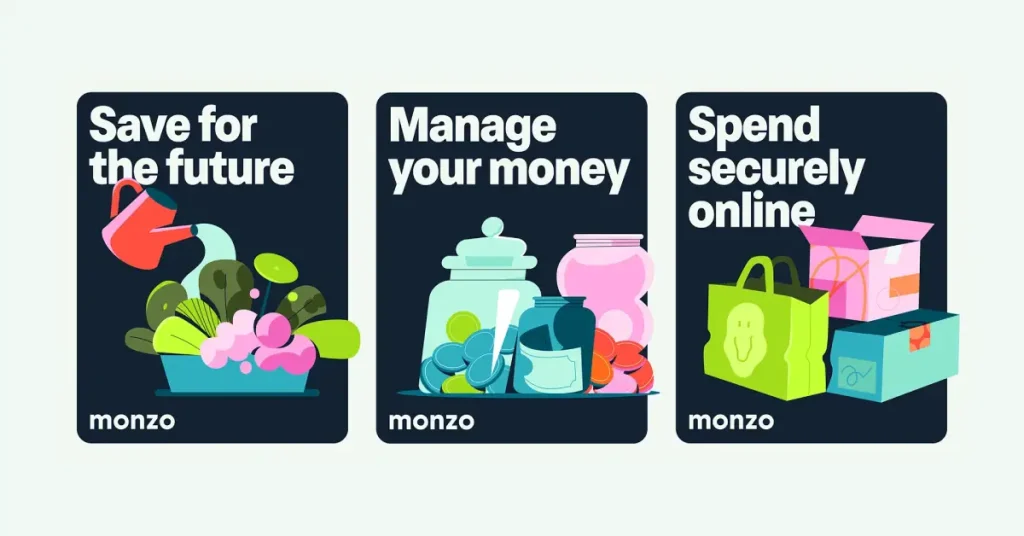
- Instead of: “Transaction declined due to insufficient funds.”
- Monzo says, “You don’t have enough money for this.”
They speak how people speak. This builds massive trust because it removes the suspicion that the bank is trying to trick you with fine print.
2. Oatly (The Meta-Commentator)
Oatly uses a voice that is self-aware, slightly neurotic, and anti-marketing. They explicitly acknowledge that they are an ad trying to sell you something.

- Example: Their packaging often includes long, rambling text about how boring the packaging is.
- Why it works: It appeals to a cynical audience who hates being sold to. By admitting the absurdity of marketing, they bypass the consumer’s defensive shields.
3. Cards Against Humanity (The Antagonist)
This is an extreme example. Their voice is hostile, rude, and nihilistic. And it works perfectly for their product.
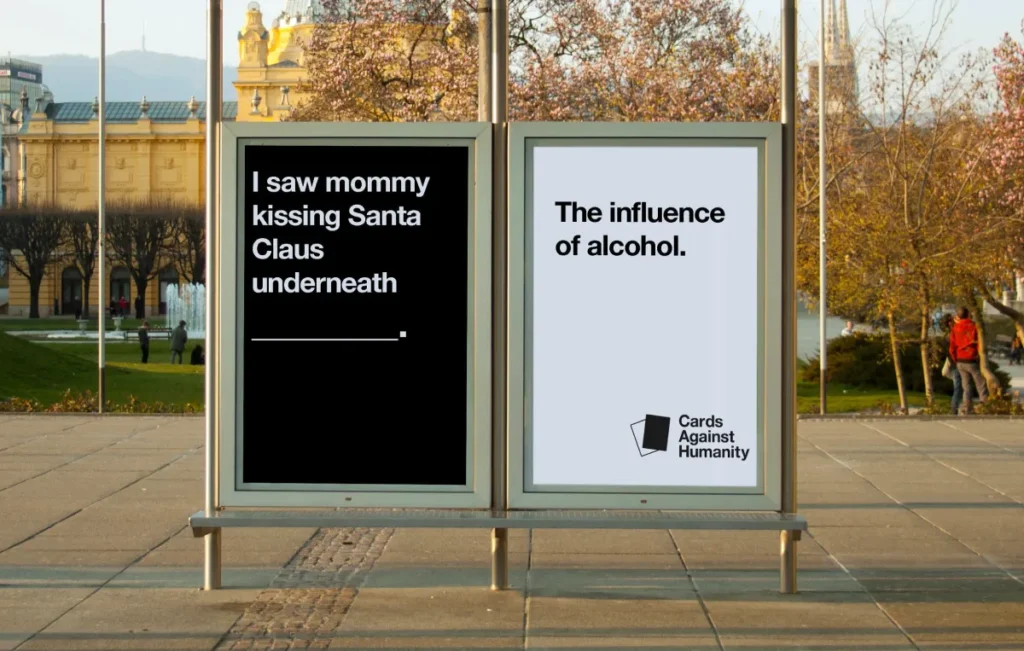
- Customer Service Style: They have been known to joke in an insulting manner with customers.
- The Risk: This only works because their product is offensive. If a law firm tried this, it would be sued. But it proves that “nice” is not the only option. “Distinct” is the goal.
4. Mailchimp (The Standard Bearer)
We cannot discuss this topic without referencing Mailchimp. They practically invented the modern style guide for voice and tone. Their voice is plain-spoken, dry, and encouraging.
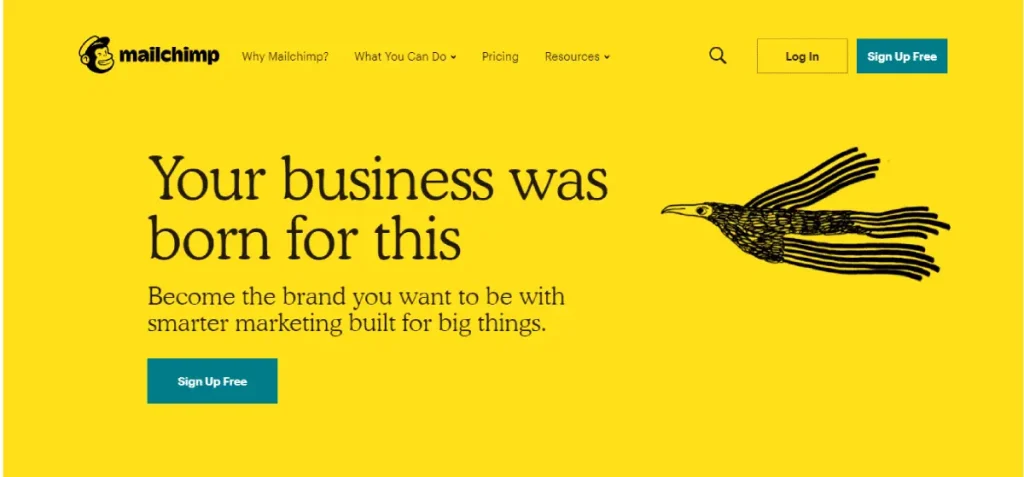
They understand that email marketing is stressful. So, when you are about to send an email to 10,000 people, their system gives you a virtual “high five.” It is functional empathy.
Where Brands Go Wrong
During my years at Inkbot Design, I have witnessed dozens of companies fail in this regard. The cause is rarely a lack of creativity. It is usually a lack of courage.
The “CEO’s Wife” Syndrome
I call it this because of a specific meeting I had years ago. We developed a sharp, edgy voice for a construction tech firm. The CEO loved it. Then, a week later, he killed it. Why? “My wife read the copy and thought it sounded a bit too aggressive.”
Brand voice is not about what the CEO, the marketing manager, or their spouses like. It is about what resonates with the customer. If you try to please everyone, you end up with “corporate beige”—that safe, boring middle ground where brands go to die.
The “Copy-Paste” Strategy
A client will often say, “Make us sound like Apple.”
You cannot sound like Apple unless you are Apple. Apple’s voice is minimalist and arrogant because they has the product quality to back it up. If a startup with a buggy beta product tries to emulate Apple’s minimalist approach, it just appears aloof and unhelpful. Your voice must be rooted in your reality.
The State of Brand Voice in 2026: The AI Factor
We are in a new era. Generative AI (LLMs like ChatGPT and Claude) has flooded the internet with mediocre, average-sounding copy.
This creates a massive opportunity.
Because AI defaults to the “average” of the internet, most content now sounds remarkably similar. It is polite, slightly verbose, and devoid of sharp edges. Human imperfection is now a premium asset.
How to Use AI Without Losing Your Soul
You should not use AI to write your brand voice from scratch. However, you can use it to enforce it.
If you have a documented voice guide (as we discussed above), you can feed that into an LLM and use it as a compliance checker.
- Prompt: “Analyse this email draft against our Brand Voice Guidelines. Highlight any words that are too passive or formal. Suggest 3 alternatives that are punchier.”
This ensures that even your junior staff or non-native English speakers can produce content that is consistent with your brand.
The Implementation: How to Roll This Out
You have defined your voice. Now, how do you get it off the page and into the business?
- Audit Existing Content: Look at your website, emails, and brochures. Highlight everything that sounds generic.
- Create a Cheat Sheet: Do not give your team a 50-page PDF. They won’t read it. Give them a one-page “Dos and Don’ts” list.
- Update the “Invisible” Copy: Fix your error messages, terms and conditions, and transactional emails (including password resets and receipts). This is where the brand voice shines brightest because nobody expects personality there.
- Train Support: Your customer service team speaks to your customers more than anyone else. If they don’t embody the voice, the brand is a lie.
If you need professional help defining your brand identity, consider our brand identity services. We don’t just design logos; we design the verbal architecture of your business.
The Verdict
So, what is brand voice?
It is the difference between a business that sells a commodity and a brand that builds a following. It is the consistent, distinct personality that runs through every single word your company produces.
It is not a “nice to have.” In an age of AI-generated noise and infinite competition, your voice is one of the few things you can truly own. If you are boring, you are invisible. And if you are invisible, you are broke.
Stop sounding like everyone else. Pick a lane. define your voice, and stick to it.
Frequently Asked Questions
What is the difference between brand voice and tone?
Brand voice is your company’s consistent personality (e.g., helpful, authoritative) that never changes. Brand tone is the emotional inflexion you apply to that voice depending on the situation (e.g., serious during a crisis, celebratory during a launch). Your voice is who you are; your tone is how you feel right now.
Why is brand voice important for SEO?
While Google doesn’t rank “voice” directly, a unique voice increases user engagement, time on page, and brand recall. It differentiates your content from AI-generated generic articles. High engagement signals to search engines that your content is valuable, indirectly boosting your SEO performance.
Can a small business have a strong brand voice?
Absolutely. Small businesses often have an advantage because they don’t have to navigate layers of corporate approval. A local coffee shop can adopt a hyper-local, cheeky voice that a global chain like Starbucks could never replicate. An authentic personality is a great equaliser for SMBs.
How do I find my brand voice?
Start by auditing your current culture. If your brand were a person, who would it be? Are they a strict professor or a helpful neighbour? Look at your target audience—how do they speak? Your voice should be a bridge between your authentic culture and your customers’ preferences.
Should my brand voice change over time?
Your core voice should remain relatively stable to build recognition, but it can evolve over time. Just as a person matures, a brand’s voice can become more sophisticated. However, radical shifts (e.g., transitioning from a serious to a comedic tone overnight) can confuse customers and should be avoided unless part of a comprehensive rebranding effort.
How do I document brand voice guidelines?
Create a style guide that includes a “Voice Matrix” (We are X, we are not Y), a vocabulary list (preferred vs. banned words), and real examples of “Good vs. Bad” copy for different scenarios (email, social, website). Keep it accessible to all employees.
Can I use AI to write in my brand voice?
Yes, but you must train it. You cannot just ask ChatGPT to “write a blog post.” You must upload your style guide and examples of previous high-quality content to teach the AI your specific syntax, vocabulary, and tone. Always have a human editor review the output.
What are some examples of bad brand voice?
“Bad” usually means inconsistent or inappropriate. For example, a funeral home using slang and emojis would be inappropriate. A tech startup using 18th-century legal jargon would be inconsistent with its claims to innovation. The worst voice is a generic one that sounds like everyone else.
How does brand voice impact customer trust?
Consistency creates predictability, and predictability builds trust. If a customer reads a friendly ad but gets a rude support email, the psychological disconnect (cognitive dissonance) makes them feel uneasy. A consistent voice across all touchpoints reassures the customer that the business is stable and reliable.
How much does it cost to develop a brand voice?
It varies. You can do it yourself for free using online guides. However, hiring a professional brand strategist or agency to conduct workshops, customer research, and produce a comprehensive verbal identity guide typically costs between £3,000 and £15,000, depending on the depth and size of the company.
