Website Design Cost: Guide to Average Pricing in 2026
In 2026, the “average” website design cost is a figure often manipulated by agencies to hide their own inefficiencies or by DIY website builders to lure you into a subscription trap.
If you are an entrepreneur or an SMB owner, you need to understand that a website is no longer a digital brochure. It is a high-performance engine. If you put cheap oil in a Ferrari, don’t be surprised when it seizes on the motorway.
The stakes are higher than ever. Since the massive Google API leaks of 2024, we know exactly how much “User Intent” and “Technical Authority” matter.
Ignoring the technical foundations of your site doesn’t just make you look bad—it makes you invisible to search engines.
This guide isn’t here to give you a “warm and fuzzy” estimate; it’s here to tell you what it actually costs to win in Website Design today.
- Invest in a proper Discovery phase to define strategy, save development costs, and ensure the site converts your specific audience.
- Avoid cheap builds; prioritize semantic architecture, accessibility compliance, and high-performance hosting to reduce long‑term TCO and legal risk.
- Budget for AI and GEO readiness: llms.txt, schema, vector-readability, and ongoing AI compute are now essential line items.
What Is Your Real Website Design Cost?
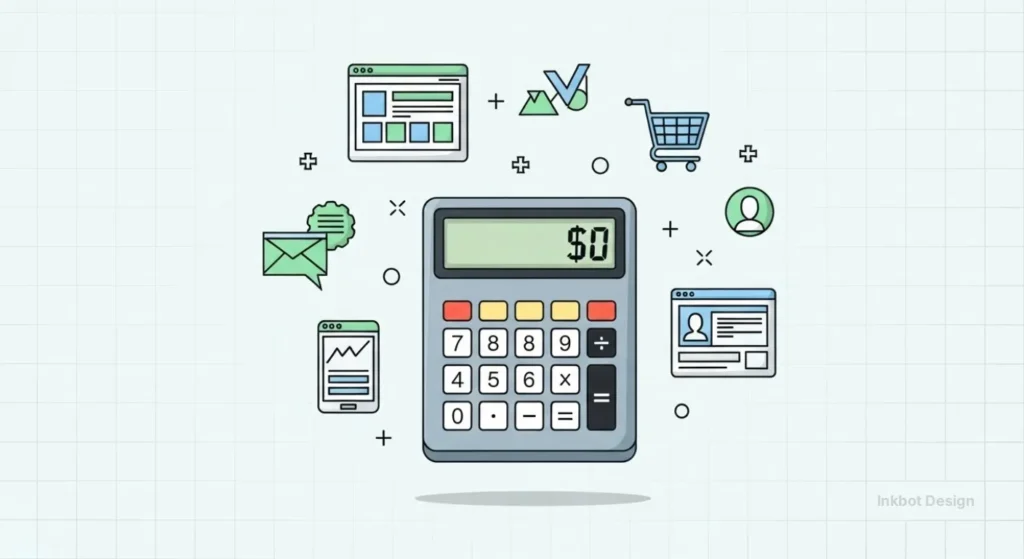
Website design cost is the total financial investment required to strategise, design, develop, launch, and maintain a digital presence that achieves specific business objectives.
In 2026, this includes the cost of semantic SEO architecture, accessibility compliance, and high-performance hosting environments.
Key Components of Website Design Cost:
- Core Infrastructure: Domain name registration, web server selection, and SSL security certificates.
- Strategy & Architecture: Information architecture and wireframing that dictate user flow.
- Creative Assets: Custom UX vs UI design and high-conversion content creation.
- Technical Implementation: Custom development, mobile-first design, and third-party integrations.
Generative Engine Optimisation (GEO) Setup. In 2026, you aren’t just paying for SEO; you are paying for GEO. This is a new line item on professional invoices that covers:
llms.txtConfiguration: Creating the text file that allows AI agents to read your site without hallucinating.- Entity Schema Validation: Coding your “About” and “Service” pages with JSON-LD that links your brand to the Knowledge Graph.
- Vector-Readability Check: Ensuring your content is structured for Retrieval-Augmented Generation (RAG). Estimated Cost: £1,000 – £2,500 (One-off setup).
To truly understand the cost of website design, an entrepreneur must consider the Total Cost of Ownership (TCO).
This is the sum of the initial build, hosting, maintenance, and the Opportunity Cost of lost leads due to poor performance.
A “cheap” £500 site often has a higher TCO over three years than a £5,000 professional build because it requires constant patching, lacks scalability, and fails to convert traffic.
In 2026, the price you see on the invoice is only the beginning of the financial narrative.
The Cost of Strategy: Why “Discovery” is the Most Important Line Item
In 2026, jumping straight into Figma or a code editor is a recipe for project failure. Professional agencies now mandate a Discovery Phase (often called a Strategy Workshop). This phase identifies the “why” before the “how.”
- The Process: A series of workshops involving your stakeholders and the agency’s lead strategist, UX researcher, and technical architect.
- The Deliverables: A detailed Sitemap, User Personas, a Technical Requirement Document (TRD), and high-fidelity wireframes.
- The Value: Investing £2,500 in discovery often saves £10,000 in late-stage development changes. It ensures that the site is built to convert your specific audience, rather than just looking “pretty.”
For a mid-market UK firm, a discovery phase usually spans 2–4 weeks. Without this, you are essentially asking a builder to build a house without a blueprint.
Choosing Your Provider: The 2026 Talent Market
The price of your website is heavily influenced by the internal overheads and expertise of your chosen partner.
| Provider Type | Price Range | Best For… | Key Risk |
| Solo Freelancer | £1,500 – £5,000 | Micro-businesses, MVP builds | Single point of failure; limited capacity. |
| Small Boutique Agency | £7,500 – £25,000 | SMBs, B2B Service firms | May lack deep enterprise integration skills. |
| Mid-Market Specialist | £30,000 – £80,000 | Scaling SaaS, E-commerce | Higher overheads reflected in hourly rates. |
| Global Enterprise Firm | £100,000+ | Multinational Corporations | Slower speed to market; high bureaucratic “tax.” |
The Freelancer Reality: A top-tier UK freelancer often charges £400–£700 per day. If they quote you £2,000 for a full build, they are likely skipping the “Forensic” steps, like accessibility testing and schema validation. You aren’t buying a discount; you’re buying Design Debt.
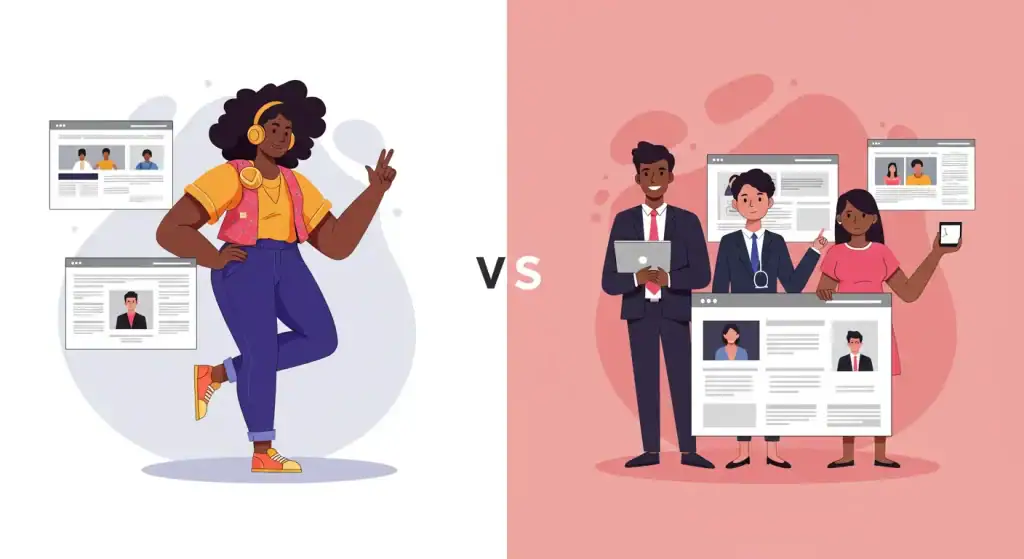
1. The Small Business Foundation (£3,000 – £7,500)
This is the entry point for a serious business. At this level, you aren’t just getting a website template. You are paying for a professional to understand why web design is important for your specific niche.
- Expect: A custom-skinned framework (optimised for Core Web Vitals), basic landing page design, and a technical search engine optimisation setup.
- The Trap: Avoid a web design agency at this price point that uses DIY tools like Elementor or Divi. They are trading your site’s speed for their convenience.
The “Compliance Tax”: Why Cheap Sites Risk Fines in 2026
Since the European Accessibility Act (EAA) enforcement deadline passed in June 2025, non-compliant websites now face real financial peril. It is no longer just about “being inclusive”; it is about protecting your bottom line.
- The Risk: Fines for non-compliance can range from €20,000 to €100,000, depending on the jurisdiction, or up to 5% of the company’s turnover.
- The Cost: A proper WCAG 2.2 Audit and remediation during the build phase costs £1,500–£3,000. Retrofitting a “cheap” site later can cost £ 10,000 or more. A £500 website that ignores ARIA labels and keyboard navigation is not a bargain; it is a legal liability waiting to be flagged by an automated audit bot.
The “Rescue” Build: When Your £500 Site Fails
We frequently see entrepreneurs who spent £1,000 on a site that looks fine but doesn’t rank or convert. This is often due to Technical Debt—poorly written code, heavy plugins, and a lack of semantic structure.
- The Audit Cost: A professional, technical, and UX audit costs between £1,200 and £3,000.
- The Fix: Retrofitting an existing site for speed and accessibility is often more expensive than starting fresh. If your site has a “Core Web Vitals” score below 50, expect to pay a “Performance Tax” of at least £2,500 to bring it up to 2026 standards.
- Case Example: A UK-based recruitment firm saw its lead volume drop by 40% after a “cheap” redesign. We discovered that the new site used non-semantic headings and lacked a Sitemap.xml file, making it invisible to AI crawlers. The “fix” cost them £6,000—triple what they saved by hiring the initial budget developer.
2. The Mid-Market Growth Engine (£8,000 – £25,000)
For businesses with a turnover of £1m or more, your website is your primary salesperson. Partnering with a full-service firm allows you to leverage this budget for in-depth research on UX vs. UI design and custom e-commerce website functionality.
- Expect: Custom third-party integrations (CRM, ERP), advanced Google Analytics setup, and compliance with web accessibility guidelines.
- The Evidence: A Forrester Research study found that every $1 invested in UX returns $100—an ROI of 9,900%.
Commercially, a higher website budget buys you a higher Trust Floor. This is the psychological baseline a user must reach before they are willing to share their data or make a purchase.
By investing in Micro-interactions and Visual Hierarchy, you are performing Conversion Rate Optimisation (CRO) at the architectural level.
Every £1,000 spent refining the user flow can result in a 10x reduction in Customer Acquisition Cost (CAC), as your site becomes more efficient at turning visitors into leads.
3. The Enterprise Custom Build (£30,000+)
This is for brands that need to dominate their sector. We are talking about “Headless” architectures, where the front end is decoupled from the back end to maximise website security and speed.
- Expect: Comprehensive information architecture audits, interactive elements such as Lottie animations, and multi-regional SEO strategies utilising Google Trends data.
Headless vs. Traditional: The 3-Year TCO
Why does an Enterprise build cost £30k+? It’s the infrastructure.
| Feature | Traditional (WordPress/Woo) | Headless (Sanity/Next.js) |
| Build Cost | Lower (£8k – £20k) | Higher (£25k – £60k+) |
| Hosting Cost | Low (£20-£50/mo VPS) | Medium (£100+/mo Vercel/Netlify) |
| Maintenance | High (Constant Plugin Updates) | Low (Security is decoupled) |
| Performance | Degrading (Bloat over time) | Elite (Static delivery) |
| Best For | Marketing / Content Sites | High-Scale SaaS / E-commerce |
Green Web Design: The Cost of Carbon Neutrality
Sustainable web design is no longer a niche preference; it is a brand requirement for many UK enterprises.
- Low-Carbon Hosting: Providers like Krystal or dedicated green tiers on Google Cloud often carry a 10–15% premium.
- Optimisation for Energy: This involves reducing the data weight of your site. Smaller images, no auto-playing video, and efficient code don’t just help the planet—they improve your PageSpeed Insights score.
- The Certification Cost: Achieving a “Green Web Foundation” certification for your site build typically adds £500–£1,500 to the project for the extra optimisation hours required.
The “Cheap Site Tax”
Let’s examine the “Amateur” vs. “Pro” approach to technical infrastructure and pricing models.
| Feature | The Amateur Way (Low Cost) | The Pro Way (Inkbot Standard) | 2026 Impact |
| Hosting | £5/mo Shared Web Hosting | £50+/mo Managed VPS Web Server | Load times < 1s vs 5s+ |
| Theme | Bloated Website Template | Clean Custom Development | 90+ PageSpeed Score |
| SEO | Generic Keyword Stuffing | Semantic Search Engine Optimisation | Topical Authority Ranking |
| Security | Basic SSL Certificate | Security Monitoring & WAF | Trust & Protection |
| Design | Stock Photos | Custom Logo Design & Graphics | Brand Authority |
A hidden technical factor in modern pricing is Semantic HTML Architecture. Amateur builds often use “Div Soup”—layers of redundant code that make it difficult for AI crawlers to parse information.
A forensic build uses clean, semantic tags that reduce the Cost of Retrieval for search engines.
By optimising your Crawl Budget, you ensure that Google’s bots spend less time navigating your code and more time indexing your high-value content.
This technical efficiency is a primary driver of the higher market rate for custom development.
The “Information Gain” of Competitive Intelligence

In the UK market, the market rate for high-end digital products is set by players like Vita Mojo and Strafe Creative.
Vita Mojo has revolutionised the hospitality sector by proving that an ecommerce website isn’t just about taking an order; it’s about the data ecosystem behind it.
Their pricing models reflect a deep understanding of third-party integrations (EPOS, loyalty, and inventory). When we look at Vita Mojo, we see a masterclass in reducing “cost of retrieval” for users.
Similarly, Strafe Creative consistently pushes the boundaries of design complexity in the B2B SaaS space. Their work often incorporates interactive maps and interactive elements that justify a higher website budget.
By studying the success of Vita Mojo and the technical execution of Strafe Creative, we can see that website costs are an investment in operational efficiency, not just aesthetics.
At Inkbot, we frequently examine how Vita Mojo handles user flow to inspire our own custom-built eCommerce site architectures.
If you are an entrepreneur, you aren’t just competing with the guy down the street; you are competing with the digital standard set by firms like Vita Mojo.
If your site resembles one built in 2019 with a website builder, you’ve already lost the battle for a strong visual brand image.
The State of Website Design Cost in 2026: What’s Changed?
In the last 18 months, the “standard” for a website has shifted. We are no longer just building for humans; we are building for “LLM Visibility.” If your site’s code is a mess, AI crawlers won’t be able to parse your website content, and you’ll disappear from AI search results.
The Rise of AI-Generated Pages and Lottie Animations
While AI-generated pages can help scale content, they must be refined by a human web designer to maintain E-E-A-T. In 2026, the use of Lottie animations has become a market standard for high-end sites, providing visual feedback without the bloat of traditional video.
The Mandatory SSL Security Certificates and Web Server Performance
A simple SSL certificate is no longer enough. Modern website security requires active security monitoring and hardened web server configurations. Your hosting and domain costs should reflect this shift.
Beyond GEO: Budgeting for the AI-Native Web
By 2026, a website will be more than a destination; it will be a data source for Large Language Models (LLMs) and AI agents. Professional builds now include “AI-Readiness” as a standard component.
- Agentic Chatbots: Unlike the “dumb” chatbots of 2022, modern AI agents use Retrieval-Augmented Generation (RAG) to answer customer queries based on your site’s specific content. Setup costs start at £3,000.
- Semantic Content Mapping: This involves structuring your content so that AI crawlers (such as GPT-3 or Google’s Internal Crawler) can index your expertise effectively.
- Vector-Readability: Ensuring your site’s internal search is powered by vector embeddings rather than simple keyword matching. This improves user experience and “AI findability.”
The Hidden Cost: Expect to pay an ongoing “AI Compute” fee of £50–£200/month if you host your own LLM instances or use premium API keys for site interactions.
The Ecommerce Reality: Beyond the Basic Store
Building a modern ecommerce website is a complex task that involves numerous technical requirements. You cannot simply install a plugin and hope for the best. You need to consider:
- Payment Gateways & Processing: Choosing the right payment processing partner can significantly impact your margins and conversion rates.
- E-commerce Platform Choice: Should you use Shopify, WooCommerce, or a custom-built eCommerce site? This decision impacts your CMS setup and CMS integration costs.
- Third-party Integrations: Connecting your store to email marketing tools, ERPs, and shipping providers is where the real design complexity lies.
Whether you are building e-commerce sites for a local shop or a global brand, the e-commerce capabilities must be mapped out during the project scope phase.
The “Hidden” Costs: Domain, Hosting, and Maintenance
When you see a quote for a web design package, you are often seeing the “tip of the iceberg.” Here is the heavy lifting happening below the waterline:

1. Domain Registration and Renewal
Your domain name is your digital real estate. Domain registration is cheap, but domain renewal and managing domain hosting across multiple TLDs can add up.
2. Hosting Fees and Web Server Management
Cheap hosting fees are a red flag. High-performance web hosting on a dedicated web server is essential for responsive design to function correctly under load.
3. Managed Performance: Post-Launch Retainers
A website is a living organism. In 2026, “hosting” is only 10% of the ongoing cost. You need a Managed Performance Plan.
- Tier 1: Essential (£150/mo): Security patches, daily backups, and core software updates (e.g., WordPress or Shopify core).
- Tier 2: Growth (£500/mo): Includes Tier 1 plus 2–4 hours of developer time for UX tweaks, landing page creation, and monthly performance reporting.
- Tier 3: Elite (£1,500/mo+): A dedicated “Digital Partner” approach including active Conversion Rate Optimisation (CRO) testing, continuous accessibility monitoring, and quarterly strategy refreshes.
Pro Tip: Avoid agencies that offer “Unlimited Support” for a low flat fee. They usually lack the proactive monitoring required to prevent downtime before it happens.
A website is useless if no one finds it. You need a budget for SEO tools and potentially Google AdWords to kickstart traffic. Google Trends should inform your content updates and email marketing hooks.
Debunking the “Free” CMS Myth
The most common question I get is:
“Why should I pay for web development when website builders are free?”
This is the ultimate “False Economy.” Nielsen Norman Group has repeatedly shown that users form an opinion about a website in 0.05 seconds.
DIY website builders often lead to “Design Debt”—the cumulative cost of all the small errors and limitations of a generic platform.
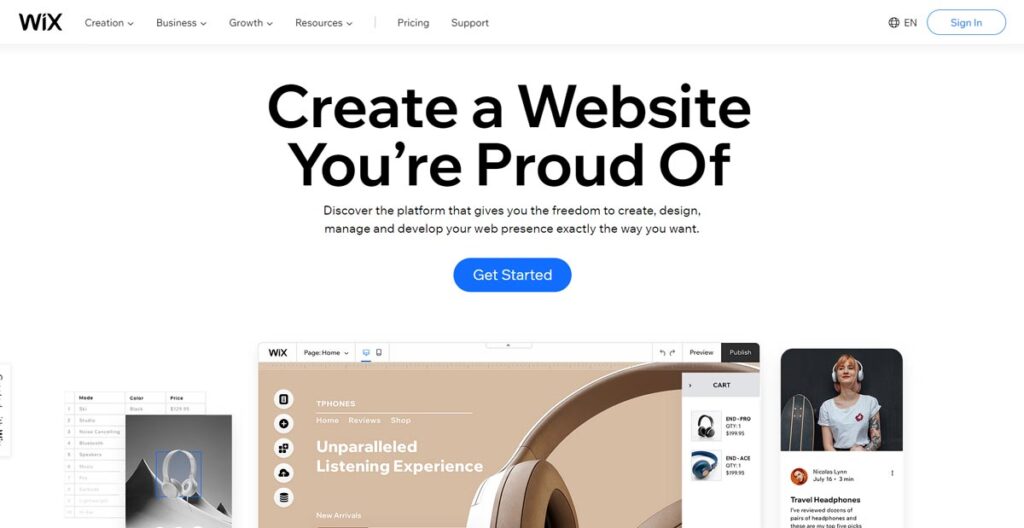
The Problem with DIY Tools in 2026
In 2026, the “Cost of Retrieval” is a core SEO metric. If Google’s bot has to spend more “crawl budget” to understand your page because of nested divs and redundant CSS from website builders, your rankings will suffer.
- The Pro approach: Invest in custom websites built on lightweight frameworks. This enables a mobile-first design that is lightning-fast and easy for search engines to index.
A major pain point in 2026 is the Accessibility Gap. With the tightening of UK and EU digital laws, a non-compliant site is a ticking legal time bomb.
The solution is Inclusive Design—ensuring your site meets WCAG 2.2 standards from day one. Retrofitting a site for accessibility can cost three times as much as building it correctly the first time.
A professional quote that includes accessibility isn’t “overcharging”; it provides a legal and commercial safeguard for your business.
The Verdict
The average website design cost in 2026 is not a single number; it reflects your business’s ambition. You can spend £500 on complex websites (that are actually just messy), or you can invest £10,000+ in a strategic asset that generates leads while you sleep.
In the era of AI-driven search and strict accessibility laws, the “middle ground” of mediocre web design is disappearing. You are either a high-performance authority or you are noise.
If you’re ready to stop guessing and start investing in a site that actually moves the needle, it’s time to look at professional web design services.
Frequently Asked Questions (FAQ)
Can I get a professional website for under £1,000 in 2026?
Realistically, no. While you can use a DIY builder for that price, a professional UK build requires at least 40–60 hours of expert work. At market rates, £1,000 barely covers the discovery and design phase, let alone development, accessibility testing, and security setup.
Why is a Headless CMS so much more expensive?
Headless architecture decouples the “head” (the part users see) from the “body” (where content is stored). This requires custom front-end development using frameworks such as Next.js. You are paying for ultimate speed, security, and the ability to push content to any device, not just a web browser.
How much would it cost to make my current site WCAG 2.2-compliant?
If your site was built poorly, a manual remediation can cost between £2,000 and £7,000. It involves rewriting code for screen readers, fixing colour contrasts, and ensuring keyboard-only navigation works perfectly. For many, a fresh build is more cost-effective.
Do I really need to pay for a ‘Discovery Phase’?
Yes. Discovery prevents “Scope Creep”—the primary reason projects go over budget. By defining every feature and user flow upfront, you get a fixed-price quote and a site that actually aligns with your business goals.
What is the average hourly rate for a UK web designer in 2026?
Standard agency rates range from £85 to £150 per hour. Specialist technical architects or high-end UX designers can command £200+ per hour. Freelancer rates are typically lower, between £45 and £90 per hour.
How much should I budget for website photography and video?
Do not use stock photos if you want to build trust. Budget at least £1,500 for a professional brand shoot. For high-end sites, Lottie animations or custom 3D renders can add another £2,000–£5,000 to the creative budget.
Are there hidden costs in Shopify pricing?
While the base monthly fee is clear, “App Fatigue” is a real cost. Most successful Shopify stores spend £200–£500 per month on third-party apps for SEO, loyalty programmes, and advanced shipping.
How does a custom website lower my Google Ads spend?
Google rewards fast, relevant sites with a higher Quality Score. This lowers your Cost Per Click (CPC). A £10,000 site that loads in 1 second can save you thousands in ad spend over a year compared to a slow, “cheap” site.
What is a ‘Maintenance Retainer’ and do I need one?
A retainer is a pre-paid block of time that ensures your agency is available to fix bugs, update security, and keep your site running. Without one, you are a “low priority” when things break, which can cost you days of lost revenue.
Does the cost include copywriting and content?
Usually, no. Most agencies expect you to provide content. Professional Semantic Copywriting—written for both humans and AI crawlers—typically costs £150–£300 per page.
