Social Media Crisis Management: Protecting Brand Reputation
You never worry about social media crisis management until the moment you desperately need it. It is the insurance policy nobody wants to pay for, right up until the kitchen catches fire.
In the analogue days, a customer complaint stayed between you, the customer, and perhaps a few of their friends at the pub.
Today, a disgruntled client—or worse, a bored teenager with a TikTok account—can wipe significant value off your brand equity before you have even poured your morning coffee.
The speed of the internet has compressed the “Golden Hour” of PR into the “Golden 15 Minutes.” If you are not controlling the narrative within that quarter-hour, the algorithm is doing it for you. And the algorithm prefers outrage to nuance.
This isn’t about “being nice” online. It is about asset protection.
- Act within the "Golden 15 Minutes": acknowledge the issue quickly to control the narrative before algorithms amplify outrage.
- Have pre-built protocols: dark sites, holding statements, and paused scheduled posts to avoid tone-deaf automation.
- Clear chain of command: designate decision-maker, executor (login), and legal counsel to expedite responses.
- Differentiate trolls from real crises: assess evidence, reach, and engagement before engaging or ignoring.
- Recovery over deletion: apologise appropriately, avoid deleting legitimate complaints, and use SEO/PR to rebuild trust.
What is Social Media Crisis Management?
Social Media Crisis Management is the strategic protocol an organisation uses to identify, assess, and neutralise reputation threats spreading across digital platforms. It is not community management; it is digital damage control.
The core objective is to reduce the “half-life” of a negative event—shortening the time it takes for public sentiment to return to a neutral state.
A robust crisis management framework consists of three non-negotiable pillars:
- Identification: Detecting the spark (negative sentiment spike) before it becomes a blaze.
- Containment: Implementing immediate protocols (holding statements, pausing ads) to stop the spread.
- Recovery: The long-term SEO and PR work required to rebuild trust and push negative content off Google’s Page 1.
The Anatomy of a Digital Disaster
Before we fix the problem, we must understand the mechanics of the explosion. A social media crisis rarely follows a linear path; it follows a viral coefficient.
1. The Trigger Event
This is the incident itself. It falls into two categories:
- Operational Failure: Your product broke, your site crashed, or (like KFC in 2018) you ran out of chicken. These are forgivable if handled with humility.
- Moral Failure: A staff member was rude, a discriminatory ad was published, or an executive was caught saying something appalling. These are harder to survive because they attack the brand’s values, not just its competence.
2. The Amplification Phase
This is where most SMBs fail. They ignore the Trigger Event, hoping it will blow over. Meanwhile, the “Outrage Economy” kicks in. Influencers, sensing engagement, quote-tweet the complaint. Reddit threads appear. The algorithm detects the high velocity of interaction and pushes the content to a broader audience.
3. The Mainstream Crossover
Once the engagement metrics hit a certain threshold, traditional media (journalists scraping Twitter for stories) pick it up. Now your Twitter problem is a BBC News headline.
Pre-Crisis: The Work You Do in Peacetime
If you are reading this while currently in a crisis, skip to the next section. If you are smart enough to prepare, this is where you win the war.
The “Dark Site” Protocol
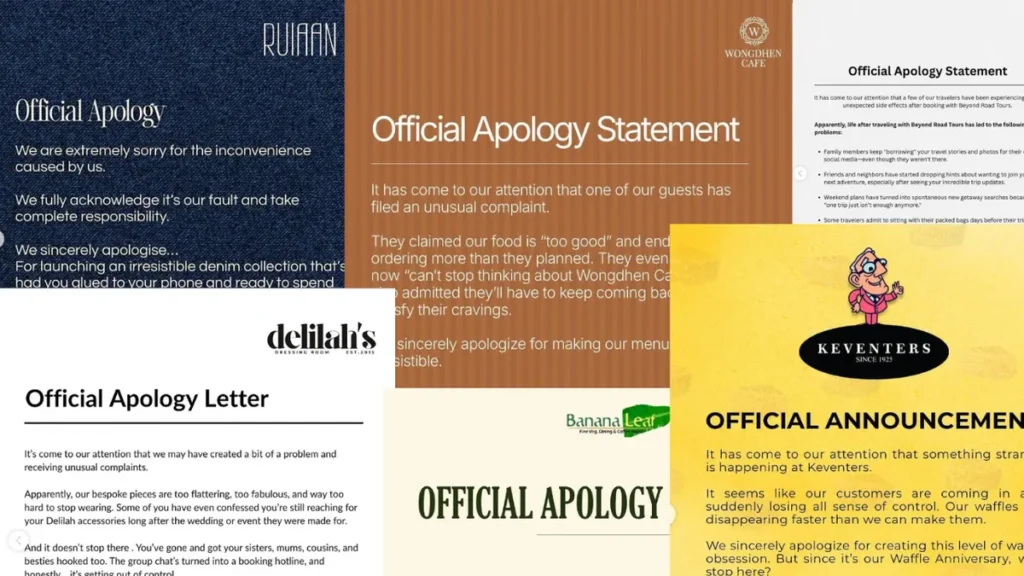
In high-stakes industries (finance, healthcare, aviation), we build “Dark Sites.” These are pre-built, non-indexed web pages that sit dormant on your server. They contain placeholder structures for apologies, press releases, and contact information.
When a crisis hits, you do not waste time coding a landing page. You flip a switch, and the Dark Site goes live, replacing your cheerful homepage with a sombre, information-heavy resource. It shows you are in control.
The “Stop the Bots” Drill
I once audited a client who suffered a major PR backlash regarding a product defect. While their PR team was drafting an apology, their pre-scheduled marketing automation software posted a meme on their Facebook page, saying, “Happy Friday! Life is good!”
The comment section tore them apart.
The Rule: The moment a crisis is flagged (Red Alert), your first technical move is to pause all scheduled posts on Buffer, Hootsuite, or HubSpot. Silence is better than tone-deaf noise.
Establishing the Chain of Command
Who has the password to the Twitter account? If that person is on a flight to Ibiza, you are dead in the water.
- The Decision Maker: The person who signs off on the apology (CEO/Founder).
- The Executor: The person with login access to post it.
- The Legal Counsel: The person who ensures your apology doesn’t invite a lawsuit.
Note: There is often friction in this area. Legal will say, “Admit nothing.” PR will say, “Show empathy.” The sweet spot is the “Non-Apology Apology” regarding liability, but a “Full Apology” regarding impact. e.g., “We are sorry that our customers are experiencing this…”
During the Storm: The Golden 15 Minutes
The alert just came in. Your brand is trending, and not in a good way. Here is the forensic step-by-step.
Step 1: Assessment (Troll vs. Crisis)
Not every negative tweet is a crisis. Do not confuse a “Troll Attack” with a “Reputation Crisis.”
- The Troll: Low follower count, generic avatar, provocative language. Action: Ignore or Block.
- The Crisis: Valid complaint, evidence (photos/video), high follower count, rapidly growing engagement. Action: Engage immediately.
Step 2: The Holding Statement
You do not need the solution yet. You just need to acknowledge the fire. Silence is often interpreted as a sign of indifference or guilt.
The Template:
“We are aware of the issue regarding [Topic]. This falls below our standards, and we are currently investigating the exact circumstances surrounding the incident. We will provide a full update by [Time]. Thank you for your patience.”
This buys you time. It moves the conversation from “They don’t care” to “They are fixing it.”
Step 3: Take it Offline
Never have a full argument in a comment thread. It performs for the gallery. Your goal is to move the user to a private channel (DM, Email, Phone) immediately.
- Wrong: “Actually, looking at our records, you are mistaken…”
- Right: “This sounds incredibly frustrating, John. Please DM us your Order ID so I can fix this personally. – Stuart.”
Signing off with a name is a psychological trigger. It is harder to abuse a human than a faceless corporate logo.
Debunking the Myths of Crisis Management
Myth 1: “The Customer is Always Right”
In the physical world, maybe. In the digital world, the “customer” might be a bad-faith actor, a competitor, or a bot farm.
If you apologise for something you didn’t do, you validate the mob. If the facts are on your side, state them clearly and dispassionately. There is a growing trend of brands fighting back against unreasonable outrage. If you have the receipts, publish them.
Myth 2: “Delete the Negative Comments”
This is the “Streisand Effect” in action. If you delete a legitimate complaint, the user will screenshot the deletion and post it again with the caption: “Look at [Brand] trying to silence me.” Now you are not just incompetent; you are censorship-happy.
Exception: You should delete hate speech, racism, or spam. But clearly state in your bio: “We delete abusive comments.”
Myth 3: “Any PR is Good PR”
Tell that to Gerald Ratner. In the era of social media marketing, “cancellation” has a significant impact on the bottom line. A 2019 survey by Edelman found that 64% of consumers worldwide are willing to buy or boycott a brand solely because of its stance on a social or political issue.
Case Studies: The Good, The Bad, and The Ugly
We can learn more from a train wreck than from a smooth journey. Let’s look at the evidence.
The Gold Standard: KFC (The FCK Bucket)
The Crisis: In 2018, KFC UK switched logistics partners (from Bidvest to DHL) and ran out of chicken. Literally. A chicken shop with no chicken. The British public was furious.
The Response: Instead of a corporate press release blaming the supply chain, they ran a full-page ad in the Metro newspaper. It showed an empty bucket with the letters rearranged to read “FCK.”

Why it worked:
- Tone: It was self-deprecating and matched the absurdity of the situation.
- Honesty: They didn’t spin it. They just said, “We messed up.”
- Result: It became the most awarded ad campaign of the year. They turned an operational failure into a brand-building exercise.
The Disaster Class: United Airlines (Dr Dao)
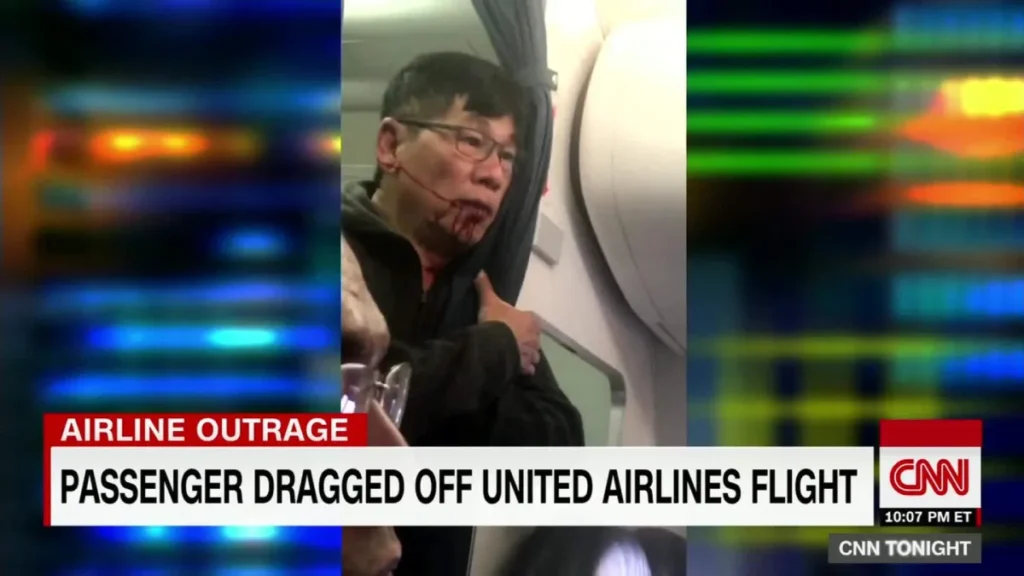
The Crisis: A passenger was forcibly dragged off an overbooked flight. Videos went viral instantly.
The Response: The CEO, Oscar Munoz, released a statement apologising for “re-accommodating” the passengers. He then sent an internal email (which was leaked) calling the passenger “disruptive and belligerent.”
Why it failed:
- Corporate Speak: “Re-accommodating” became a meme for assault.
- Lack of Empathy: They prioritised policy over humanity.
- Stock Impact: United lost nearly $1 billion in market value in the days following its announcement.
The Consultant’s Reality Check
I often work with business owners who treat their social media profiles like a broadcast tower—they speak, but they don’t listen.
I once consulted for a mid-sized B2B firm. Their CEO was terrified of Twitter. When a minor complaint surfaced, he froze. He didn’t want to “say the wrong thing,” so he said nothing for 48 hours. By the time he approved a response, the thread had 2,000 retweets, and industry blogs were writing about their “incompetence.”
The lesson: Imperfect action is better than perfect inaction. In a crisis, speed is the currency of trust. You can correct a typo in a statement later; you cannot correct the perception that you were hiding under a desk.
If you are unsure where your current strategy stands, you may want to review our Digital Marketing Services to ensure your monitoring protocols are effective.
Technical Implementation: Tools of the Trade
You cannot manage what you do not measure. Manual checking is insufficient. You need “listening” infrastructure.
| Tool Category | Purpose | Recommended Tool |
| Social Listening | Monitors brand mentions (tagged and untagged) across the web. | Brand24, Mention |
| Sentiment Analysis | AI that grades mentions as Positive, Neutral, or Negative. | Hootsuite Insights, Sprout Social |
| Workflow Management | Pausing content and assigning tickets to support staff. | HubSpot, Buffer |
| Search alerts | Free, basic monitoring of your brand name. | Google Alerts |
The “Venting” Protocol:
Create a dedicated support handle (e.g., @BrandHelp). Direct all anger there. This keeps your main marketing channel (@BrandName) cleaner for prospective clients, quarantining the negativity to a service-focused feed.
The State of Social Media Crisis Management in 2026
We must look forward. The landscape is shifting. The next wave of crises will not be caused by human error, but by synthetic media.
The Deepfake Threat:
We are entering an era where a disgruntled employee or a competitor can generate a convincing audio clip of your CEO using a racial slur, or a video of your product failing, using Generative AI.
- The Defence: You need “Content Provenance.” Establish a cryptographic-verified source for your official news (such as a blockchain-verified press release) so that media outlets can instantly verify whether a viral video is real or synthetic.
Algorithmic Polarisation:
Platforms like X (formerly Twitter) and TikTok are tweaking algorithms to favour “high-arousal” emotions (anger). This means a lukewarm complaint goes nowhere, but a furious, exaggerated takedown goes viral. Brands will need to become much better at de-escalation rather than just explanation.
How to Survive a Crisis
You are unprepared for the multiplying crises ahead—from cyberattacks to the threat of AI. This is the instruction manual. It’s the playbook from the former Director of GCHQ, providing you with the intelligence strategies to detect and survive any crisis with minimal loss. Stop leaving survival to chance.
As an Amazon Partner, when you buy through our links, we may earn a commission.
The Verdict
Social media crisis management is not about spinning a lie; it is about mitigating the damage of the truth.
Mistakes happen. Operations fail. Staff members have bad days. The market will forgive a mistake; it will not forgive a cover-up, arrogance, or silence.
Your Action Plan:
- Audit: Do you have the login details for all your accounts accessible to more than one person?
- Draft: Write three “Holding Statements” today (Service Outage, Data Breach, General Apology).
- Monitor: Set up a Google Alert for your brand name right now.
If you are concerned that your current brand strategy is fragile or if you are currently facing a PR issue, please contact us to request a quote for reputation management. Don’t wait for the smoke to clear—by then, the house is usually gone.
Frequently Asked Questions
What is the “Golden 15 Minutes” in crisis management?
The “Golden 15 Minutes” is the critical window that immediately follows a crisis breaking online. Brands must acknowledge the issue within this timeframe to control the narrative before influencers and algorithms amplify the negativity.
Should I delete negative comments on social media?
Generally, no. Deleting comments often triggers the “Streisand Effect,” causing the user to repost with greater anger. Only delete comments that violate community guidelines (racism, hate speech, excessive spam).
What is a “Holding Statement”?
A holding statement is a pre-prepared, neutral message acknowledging a problem without admitting liability or offering a solution yet. Its purpose is to buy time for the internal team to investigate the facts.
How do I handle a “Troll Attack” vs a real crisis?
Assess the validity and reach. Trolls usually have low follower counts and use provocative language; they should be ignored or blocked. A genuine crisis involves legitimate complaints, evidence (such as photos/video), and high engagement from real users.
What are the best tools for social media monitoring?
Brand24, Mention, and Sprout Social are industry standards. For a free entry-level option, Google Alerts can notify you of web mentions, though it misses many social media conversations.
Why should I pause scheduled posts during a crisis?
Continuing to post cheerful marketing content during a crisis makes the brand appear tone-deaf and automated. It provides a new venue for angry users to comment, compounding the damage.
How can a “Dark Site” help my business?
A Dark Site is a pre-built, non-indexed website page designed to replace your homepage in the event of a major catastrophe. It removes marketing fluff and focuses purely on crisis communication, information, and updates.
Is it better to apologise via video or text?
Text is safer and easier to control legally. Video carries a high risk; if the tone, body language, or eye contact is off, it can become a meme and worsen the situation. Use video only if the spokesperson is highly trained and experienced.
What is the role of employee advocacy in a crisis?
During a crisis, employees should be instructed not to engage or defend the brand publicly unless authorised. Uncoordinated employee responses can contradict official statements and fuel the fire.
How do I repair my brand reputation after a crisis?
Recovery involves pushing negative content down search results (SERP suppression) by publishing high-quality, positive content, gathering new positive reviews, and implementing structural changes to prevent recurrence.