Generative AI in Design and Marketing: A Guide to 2026
I am tired of seeing “AI gurus” on LinkedIn selling prompt packs to business owners who don’t know the difference between a kerning pair and a k-means cluster.
We have reached a point where the novelty of Generative AI has worn off, leaving behind a digital waste pile. Most entrepreneurs are currently using these tools to accelerate their descent into mediocrity.
Ignoring the technical nuances of how AI in graphic design actually works is costing you more than just a monthly subscription fee.
It is costing you your brand equity.
When every competitor is using the same Midjourney prompts to generate their social media headers, “differentiation” becomes a historical relic.
If your marketing looks like it was birthed by a statistical average, don’t be surprised when your customers treat you like a commodity.
- Generative AI risks producing homogenised, forgettable marketing; human-led differentiation is essential to preserve brand equity.
- Use RAG and citation signals so AI cites your proprietary expertise, boosting AI Share of Voice and high-intent traffic.
- Treat AI as a force multiplier: automate tedious work but retain human designers for vector production, stylistic inflexions, and governance.
What is Generative AI?
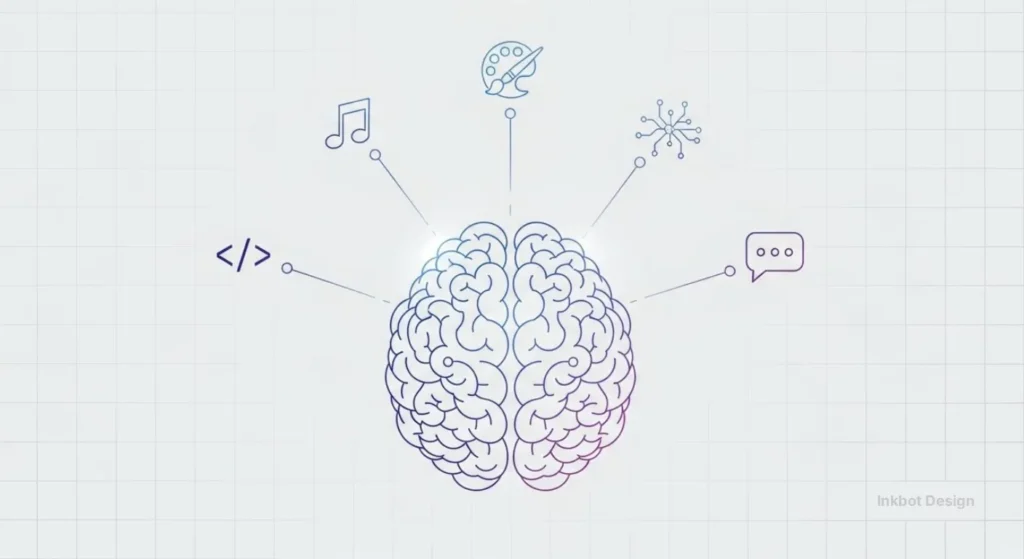
Generative AI refers to a subset of artificial intelligence models trained on vast datasets to create new content—ranging from text and imagery to code and video—that mimics human output by predicting the most probable next element in a sequence.
Unlike discriminative AI, which classifies data, generative systems use probabilistic frameworks to “hallucinate” new iterations based on user-defined constraints.
In 2026, the definition of AI has shifted from “Generative” to “Agentic.” We are no longer just looking at models that create content; we are looking at AI Agents that autonomously manage entire workflows.
Consequently, the primary goal of marketing has shifted from SEO to GEO (Generative Engine Optimisation).
This is the practice of ensuring your brand is not just indexed by a crawler, but “understood” and cited as a primary authority by Large Language Models (LLMs) like GPT-5 and Perplexity.
The 3 Core Elements of Generative AI
- Large Language Models (LLMs): Systems like GPT-4 or Claude that process and generate text by predicting tokens (word fragments) based on context.
- Diffusion Models: The engine behind tools like Midjourney and DALL-E 3, which create images by “denoising” a field of random pixels until a coherent visual emerges.
- Neural Networks: The underlying architecture that mimics human brain patterns to recognise relationships in data, allowing the AI to “understand” style, tone, and composition.
To avoid the “statistical average” trap, forensic marketing in 2026 relies on RAG (Retrieval-Augmented Generation).
RAG is a technical framework that grounds an AI model in your specific, proprietary data (such as case studies, brand guidelines, and unique research) rather than allowing it to make assumptions based on its training data.
By providing Citation Signals through a structured schema and verified third-party mentions, you ensure that the AI views your brand as a “Primary Source,” which is the only way to appear in an AI-generated search summary.
Why “Average” is the Enemy of Marketing
In marketing, being “good” is often worse than being “bad.”
If you are bad, you might at least be memorable. If you are average, you are invisible.
Generative AI, by its very nature, is a machine designed to find the “mean.” It looks at millions of images of “modern minimalist logos” and gives you the most probable result.
Data from McKinsey & Company suggests that Generative AI could add trillions of dollars in value to the global economy; however, much of that value lies in operational efficiency, rather than in creative breakthroughs.
For a small business, using AI to write your brand story is effectively asking a robot to tell you what everyone else is already saying.
From a commercial perspective, the “moat” for your business is now AI Share of Voice (AI-SOV). This metric measures how often your brand is cited as a solution in an AI-powered search query compared to your competitors.
Companies that invest in high-quality, Information Gain content see a 240% improvement in pipeline quality because they are being recommended by the AI as the “Trusted Expert” before the user ever sees a list of blue links.
Real-World Example: The “Willy Wonka” Disaster

In early 2024, an event organiser in Glasgow used Generative AI to create a website filled with “enchanting” candy-land imagery.
The reality was a grey warehouse with a few plastic props. This is the ultimate “AI Marketing” failure: using generative tools to create a promise that the physical brand cannot keep.
The backlash was global, demonstrating that when AI outpaces reality, brand trust can vanish instantly.
The “Hidden” Flaws in AI Design
Most business owners see a shiny image from Midjourney and think they have a new logo. They don’t. They have a flat raster file that is technically useless for professional branding.
This is where I spend half my time: fixing the mess created by “AI-first” amateurs.
Raster vs. Vector: The Scaling Nightmare
Generative AI produces raster images (pixels). A professional brand identity requires vector files (mathematical paths).
| Feature | AI-Generated Image (Raster) | Professional Design (Vector) |
| Scalability | Becomes blurry/pixelated when enlarged. | Infinitely scalable without loss of quality. |
| Editability | Cannot easily change specific lines or fonts. | Every anchor point can be manipulated. |
| Print Suitability | Poor for embroidery, signage, or large format. | Essential for all physical branding. |
| Legal Protection | Currently cannot be copyrighted in many jurisdictions. | Fully protectable intellectual property. |
If you use an AI logo generator, you are building your house on rented land.
Recent rulings by the US Copyright Office and similar discussions in the UK suggest that works created solely by AI without “significant human authorship” are not eligible for copyright protection. Imagine spending £50k on ads only to find out you don’t actually own your logo.
Field Notes from the AI Frontline
I once audited a mid-sized tech firm that had replaced its entire content team with an AI-powered workflow. On paper, their “cost per post” dropped by 90%. However, within six months, their organic search traffic plummeted by 65%.
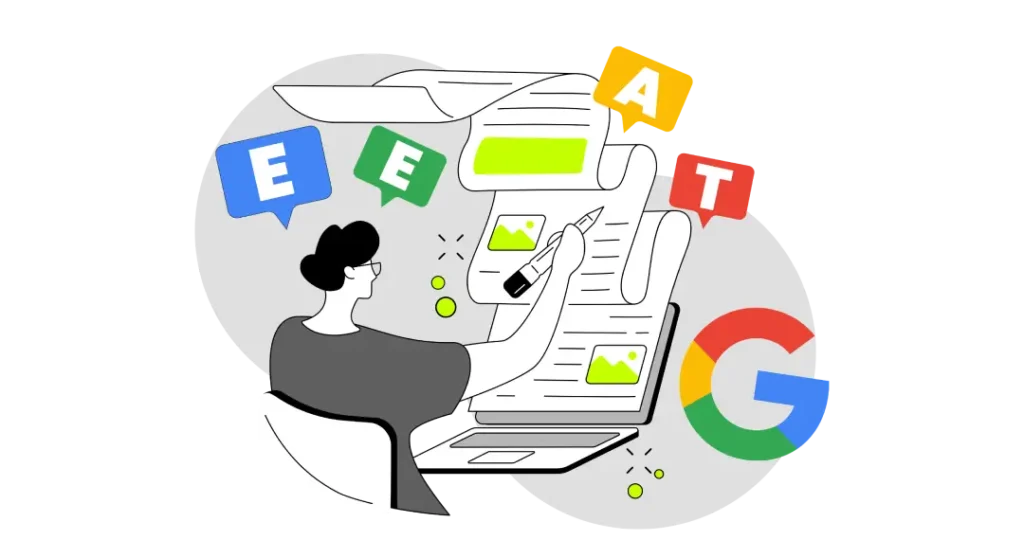
Why? Because they were producing “hollow content.” The AI was generating technically correct but functionally useless articles. It lacked what Google’s E-E-A-T guidelines (Experience, Expertise, Authoritativeness, and Trustworthiness) demand: Personal Experience.
The AI couldn’t talk about the time a server rack caught fire or the specific nuances of UK tax law for contractors. It just synthesised what was already on the web.
We had to spend three months deleting 80% of their “optimised” content just to stop the bleeding.
If you want to request a quote for a brand that actually stands for something, you have to move beyond the prompt box.
AI in Marketing: Personalisation vs. Privacy
Where Generative AI actually shines is in AI marketing automation—specifically, hyper-personalisation. We are moving away from “Segmented” marketing towards “Individualised” marketing.
The 2026 Shift: Synthetic Personas
Over the last 12 months, we have witnessed a significant shift in how brands utilise Synthetic Personas.
Instead of guessing what a “40-year-old male in Manchester” wants, brands are now running their copy through AI models trained specifically on their own customer data.
The Right Way (Pro):
Using an LLM to analyse 1,000 customer reviews to identify “pain point language” and then using that language to inform a human copywriter.
The Wrong Way (Amateur):
Asking ChatGPT to “write a funny Facebook ad for a plumber” and hitting ‘Publish’ without checking if the jokes even make sense in a UK context.
The State of Generative AI in 2026
We have entered the “Integration Phase.” The novelty is dead. In 2026, AI is no longer a separate tool; it is a feature inside every graphic design software and best graphic design tools package.
Adobe’s Firefly has become the industry standard for ethical AI because it is trained on Adobe Stock data, solving the “stolen art” problem that plagued early models.
Meanwhile, AI website design has moved from “template generation” to “dynamic layout adjustment.” Your website in 2026 should technically look different to a first-time visitor than it does to a returning customer.
AI-Powered SEO: The Death of Keywords?
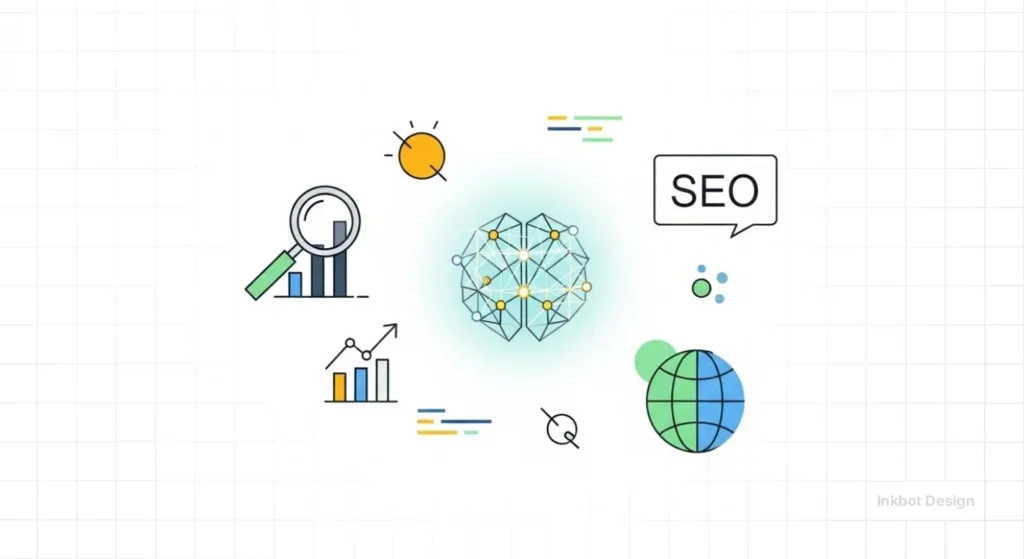
Keywords are becoming secondary to Entity Relationships.
Search engines now use LLMs to understand the “intent” behind a query. If you are still stuffing keywords into your graphic design websites, you are living in 2015.
Today, it’s about AI-powered SEO—creating a semantic web of information that proves you are an authority on the subject.
The solution to Synthetic Sameness is a Human-in-the-Loop (HITL) architecture. Instead of letting AI run the entire creative process, use it as a “Reasoning Engine” for data analysis, while reserving the Visual Inflexion Points—the elements that make a brand feel human and slightly “imperfect”—for expert designers.
This ensures your brand passes the “Humanity Test,” a confirmed trust signal that search engines now use to filter out low-value, AI-generated content farms.
The Verdict
Generative AI is a force multiplier. If you multiply a zero, you still get zero. If you have no brand strategy, no technical design knowledge, and no unique value proposition, AI will only help you fail faster.
At Inkbot Design, we don’t use AI to replace thinking; we use it to accelerate the tedious parts of execution, allowing us to spend more time on the “Root” and “Unique” attributes of your brand. Don’t let a machine decide your company’s future.
Frequently Asked Questions
Is Generative AI content still “searchable” in 2026?
Yes, but the metric has shifted from “Visibility” to “Citations.” Search engines now use Generative Engines to synthesise answers. If your content is generic, the AI will scrape it without a link. If your content is proprietary and authoritative, the AI will cite your brand as the source, driving high-intent traffic to your site.
What is the “Copyright Gap” for AI branding?
Under the 2026 legal updates, AI-generated assets with “minimal human intervention” remain in the public domain. To protect your brand, you must prove Significant Human Authorship (e.g., human-led vector refinement and strategic modification) to register a trademark and avoid “Brand Piracy.”
What is Retrieval-Augmented Generation (RAG) in marketing?
RAG is a process where you connect an AI model to your own private database (like your CRM or unique research). This prevents the AI from “hallucinating” and ensures that the marketing copy it generates is rooted in your brand’s actual expertise rather than internet generalities.
How can I prevent my brand from appearing like “AI Slop”?
The solution is Visual Differentiation. Avoid “probabilistic” prompts. Instead, use AI to generate the mathematical foundations of a design, then have a professional designer apply Stylistic Inflexions—unique textures, custom typography, and intentional “asymmetry”—that an AI model would naturally try to smooth out.
What is the “Agentic Revolution” in design?
We have moved from “Chatbots” to “Agents.” An AI Agent doesn’t just write a post; it can research a topic, draft the copy, generate a compliant image, and schedule it—all while adhering to a Brand Governance framework. The designer’s role in 2026 is to act as the “Agent Orchestrator” or “Editor-in-Chief.”
How is Generative AI different from traditional AI?
Traditional AI (Discriminative) is designed to recognise and categorise data (e.g., “Is this a picture of a cat?”). Generative AI is designed to create new data based on patterns it has learned (e.g., “Draw me a cat in the style of Picasso”).
Will AI replace graphic designers?
AI will replace designers who only perform “commodity tasks,” such as background removal or basic layout. It will not replace Creative Directors or Strategists who understand human psychology, brand positioning, and technical production requirements.
What are the best AI design tools in 2026?
Adobe Firefly remains the leader for ethical, professional-grade integration. Midjourney is the king of raw creative output, while Canva has become the go-to for SMBs needing rapid, template-based AI assistance. Explore our list of the best AI design tools for more details.
Is AI-generated content bad for SEO?
Not inherently. Google has stated it rewards high-quality content regardless of how it is produced. However, “low-effort” AI content that lacks original insight or expertise will likely be penalised by helpful content updates.
How can SMBs use AI without losing their “human touch”?
Use AI for the “First Draft” or “Research” phases. Let it synthesise data or suggest outlines, but ensure the final “Voice” and “Fact-Checking” are handled by a human who understands the brand’s unique tone.
What is “Prompt Engineering”, and do I need to learn it?
It is the art of crafting specific instructions to optimise the performance of an AI. While useful, the trend in 2026 is towards “Intent-Based” AI, where the models become better at understanding vague instructions, making technical prompting less critical.
What is the biggest risk of using AI in marketing?
Brand Dilution. If you rely too heavily on AI, your brand loses its unique “edge” and starts to sound like every other company in your sector. An authentic connection requires human vulnerability and insight that AI cannot simulate.
Is AI ethical for small businesses to use?
Yes, provided you are transparent and ensure the tools you use (like Adobe Firefly) respect the intellectual property of the original artists used in the training data.