GDPR: How Data Privacy Shook Up Digital Marketing
In the early days of the internet, data privacy was not a concern.
We were all just so amazed by this superhighway of information that we never stopped to think about what happened to all our personal information.
Brands took users’ digital footprints for granted; they feasted on consumer data and served us targeted ads as if it were nothing. Our online activities, searches, and personal details have become an open buffet for marketers.
But with everything going digital came a realisation. Stories about cyberattacks, identity thefts, and other gross misuse of personal data have started increasing daily.
People felt violated; they couldn’t believe how companies would casually collect their information without asking permission first – and then use it as a cash cow.
- GDPR empowers individuals by requiring explicit consent before data collection, transferring control from companies to consumers.
- Organisations must enhance transparency and respect user privacy with clear consent processes for data handling.
- GDPR necessitated major shifts in digital marketing, prompting brands to prioritise consumer trust and ethical data practices.
- Fine compliance and data protection initiatives grew essential, impacting global marketing strategies and prompting similar laws elsewhere.
- The regulation sparked a cultural shift towards greater awareness and demand for data privacy in consumer behaviour.
Enter the GDPR, the Data Privacy Superhero

The European Union took a stand against the increasing distrust among its members. In 2018, they introduced the GDPR (General Data Protection Regulation), which was imposed on the world, much like a superhero slaying a dragon.
These regulations were the most significant shift in data protection law since immemorial. Companies had to adapt quickly and focus all their efforts on maintaining confidentiality and obtaining consent within Europe and globally.
GDPR applies to any enterprise that operates within the EU or handles information about its citizens. Therefore, if you wanted to avoid being locked out of one of the largest consumer markets in the world, you had no choice but to comply with these new privacy standards for personal data protection.
Summary of GDPR
GDPR is designed to give people control over their data while compelling organisations collecting such data to adhere to stricter standards than ever before.
Some important points include:
- Consent – under GDPR rules, businesses must seek explicit permission before gathering someone’s private details; implied consent and pre-ticked boxes are not allowed.
- Right to Access – Individuals have the right to know who collects information about them, why it is being collected, and where this entity is located.
- Data Portability – This regulation enables individuals to request copies of their owned records from one provider and then transfer them to another if necessary; different service providers may also be involved in this process.
- Right To Be Forgotten – people can ask organisations to erase files containing their particulars provided certain conditions are met, i.e., when there’s no longer a need for processing such files.
- Privacy by Design – developers should incorporate security measures into systems from inception rather than attempting to fix issues later after an attack has already occurred.
- Strict breach rules: serious system intrusions must be reported within 72 hours after detection. Otherwise, penalties may be applied according to the GDPR.
- Data Minimisation and Purpose Limitation – It’s simple, really: only collect the data you actually need for a specific reason you’ve stated upfront. Stop hoarding extra details; it’s a liability waiting to happen and goes against the rules.
The main idea behind these principles was straightforward: give citizens control over what happens to their private information. No more using public data without permission!
The GDPR Vulnerability Scanner
Is your marketing data compliant, or are you a fine waiting to happen? Answer 3 questions to assess your risk level.
The Role of the ePrivacy Directive
Right, here’s something most people get mixed up. You know all those incredibly annoying “accept cookies” banners that popped up everywhere?
Everyone blames GDPR for them, but that’s only half the story. The real culprit is a different piece of law called the ePrivacy Directive, often referred to as the “Cookie Law”.
Think of GDPR and the ePrivacy Directive as a tag team. GDPR is the heavyweight champion, addressing how personal data is processed, stored, and protected in general.
But the ePrivacy Directive is more specific. It’s the one that governs electronic communications.
Its job is to protect the confidentiality of your communications, and that includes stopping websites from placing items, such as cookies and trackers, on your computer or phone without your permission.
Therefore, you require consent under the ePrivacy Directive to drop the cookie, and then you need a lawful basis under the GDPR to process any personal data that the cookie collects. They work together to give you back control.
Digital Marketing Before GDPR: The Wild West
To understand the GDPR’s impact, it is helpful to envision the digital marketing landscape before this privacy shake-up. It was like the Wild West, with very few rules.
Brands could indiscriminately track user behaviour across the internet through cookies, online trackers, purchasing third-party data, and more. Client email lists were bought and sold like baseball cards. Sensitive personal data was widely collected, shared and used for microtargeting with virtually no restrictions.
Yes, there were some basic privacy laws and regulations in place. However, enforcement was so lax that most companies continued to operate blissfully, business as usual. Using every trick in the book to gather personal data was considered a clever marketing tactic.
Leaving a Digital Footprint Everywhere
Think about all the personal data trails we were leaving across the internet without a second thought:
- Filling out forms and signups everywhere, providing names, emails, birthdays, etc.
- Entering payment and address details to make online purchases.
- Using social logins liberally to access countless sites and apps quickly.
- Innocuously browsing and searching, unaware we were being tracked and profiled.
- Sharing private updates, location data, and personal content on social media.
Our digital footprints were there for the harvesting, turning our data into pure marketing gold before GDPR stepped in.
Creepy Ad Targeting on Point
The savvy use of big data and tracking has allowed digital marketers to refine ad targeting to a remarkably accurate science.
You could inadvertently look at a pair of shoes once on a website, and suddenly those suckers would haunt you with ads across the internet for weeks. A bit too much birthday cake one year, and you’d soon be bombarded with weight loss spam.
While awesomely precise for brands, this invasive level of personal ad targeting was a rude wake-up call for many consumers who didn’t realise their data was being siphoned and monetised so heavily.
Once the extent of covert data harvesting and use for targeted ads came into the spotlight, demanding tighter privacy measures became inevitable.
The GDPR Game-Changer for Digital Marketing
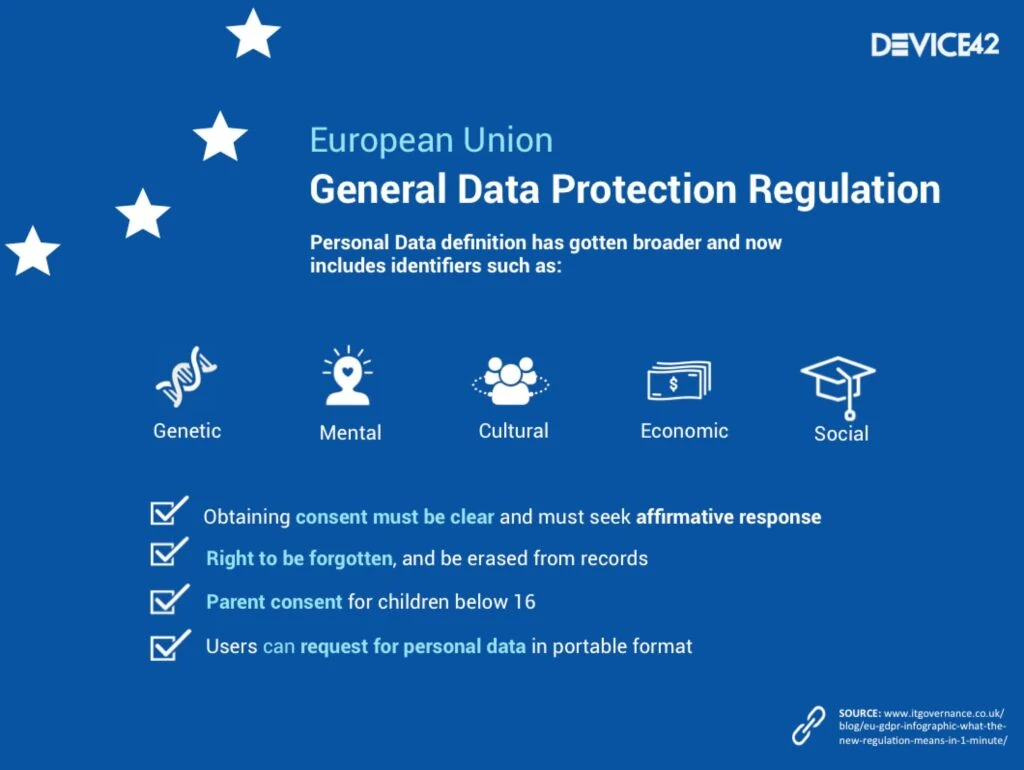
Now, take a moment to consider how thoroughly the marketing landscape was transformed by the GDPR’s stringent data privacy regulations. Marketers had to radically reinvent their data collection and ad targeting methods. Talk about being shaken to the core!
Say Goodbye to Business as Usual
Out went mining for personal data indiscriminately through cookies and online trackers without explicit consent. No longer could companies bombard people with hyper-targeted ads using sketchy data they bought from brokers.
In its place, brands were forced to build consumer trust through complete transparency and straightforward opt-in consent for data collection. And cue all the emails from every company under the sun asking if we accept their new privacy policies.
Those pesky pre-checked boxes, designed to trick people into sharing their data? Relics of the past under GDPR. Clear, granular consent became king – no more shady marketing tactics based on implied or uninformed consent.
The Rise of Data Privacy Tools
In addition to maintaining their privacy policies, most brands must also upgrade their data infrastructure to remain compliant. Systems like consent management platforms surfaced to adequately capture, record and manage consent at every touchpoint.
Are you sensing a theme? The GDPR placed a heavy burden on brands to prioritise privacy woven throughout their people, processes, and products. Many expensive consultants have become very wealthy by helping companies adapt.
A New Sheriff in Town: The DPO
To keep everyone in line, GDPR introduced a new, mandatory role for many organisations: the Data Protection Officer, or DPO. Think of this person as the company’s data conscience, a walking, talking expert on privacy law.
Their job isn’t to help sales hit their targets. Their job is to ensure the business doesn’t break the law when it comes to data.
They’re responsible for overseeing the entire data protection strategy, conducting internal audits, and serving as the primary point of contact for the public and regulators in the event of an issue.
Crucially, they have to be independent. A DPO needs to be able to walk into the CEO’s office and say, “No, we can’t do that with our customer data,” without fearing for their job.
It created an internal check and balance system that simply didn’t exist in most companies before.
The Great Data Purge
And due to the GDPR’s “right to be forgotten” requirement? Many companies had to undergo intense data scrubbing and delete user information en masse if they lacked proper consent records. Some even opted to block EU visitors altogether rather than become compliant.
The Fallout for Ad Targeting and Analytics
Beyond establishing proper consent protocols, the GDPR’s most significant impacts were likely on data-driven marketing tactics like advertising, tracking and analytics.
When the Cookies Crumbled
GDPR has forced digital marketers to rethink their reliance on tracking cookies and other intrusive tactics for measuring online behaviour.
Brands could only drop non-essential cookies once informed consent was granted. Goodbye to clandestine tracking of user sessions, locations, purchases and more without permission.
Untargeted Ads Become the Norm
Without unfettered access to consumer data, hyper-targeted advertising suffered a significant setback. No longer could brands indiscriminately track people across the internet and use intimate personal profiles for retargeting or highly customised ad campaigns.
Instead, marketing shifted toward broader audience targeting based on general interests, demographics and context. It is less granular but also less invasive to privacy.
The Strategic Shift to First-Party Data
So, with the Wild West of buying dodgy third-party data lists well and truly over, smart marketers had to get back to basics. The game changed overnight.
You could no longer just scrape or buy information about people who had never even heard of your brand. The new gold rush was for first-party data.
What’s that? It’s the information you collect directly from your customers with their full permission.
Think about email newsletter sign-ups, the details someone provides when creating an account, their purchase history, or data from your loyalty programmes.
The thing is, you have to earn it now. This led to a focus on the “value exchange”.
You want my email address? Fine, give me a genuinely useful guide, an exclusive discount, or early access to a product launch.
You can’t just ask for data anymore; you have to give people a bloody good reason to hand it over. It forced brands to build real relationships instead of just treating people like entries on a spreadsheet.
Performance Marketing Headaches
Within digital marketing, performance channels that rely on tracking user actions are limited by GDPR regulations.
For affiliate marketers, lead generators, and online retailers, accurate attribution from clicks to conversions was severely hampered without cross-site tracking of visitors. The days of pixel tracking and fingerprinting for ultra-precise measurement were over.
The Attribution Crisis in Analytics
On a related note, the GDPR’s privacy rules regarding cookies, tracking, and consent have thrown web analytics into chaos. The ability to obtain exact analytics attribution was significantly reduced.
How do you properly track online behaviours and conversions if users don’t accept cookies or block specific data collection methods? Suddenly, key marketing metrics became foggy when calculated accurately.
Behind the Walled Gardens
Where did some of these tracking and ad-targeting capabilities remain intact? The infamous “walled gardens” of Facebook, Google, Amazon and other tech giants.
Because they own these ecosystems, these companies can capture vast amounts of first-party data, where consumers have consented to receive hyper-targeted, hyper-relevant ads everywhere.
GDPR Inspires MarTech Innovation
While disruptive, GDPR’s data privacy rules also sparked ad and martech innovation to find new, compliant ways to reach audiences.
Consent management platforms emerged to adequately capture, store and manage permissions at every customer touchpoint across websites, apps, and devices.
Customer data platforms helped centralise and govern personal data compliantly, mapping out unified consumer profiles for analysis and targeted engagement in accordance with GDPR standards.
Meanwhile, publishers and brands turned to alternatives, such as contextual targeting, to display relevant ads based on a webpage’s content rather than user data. Fingerprinting and other tracking workarounds were also explored.
Evolving Consumer Privacy Attitudes

An often-overlooked aspect was how the GDPR accelerated changes in public attitudes around data privacy. Once a vague and unimportant concept for most people, safeguarding personal information has become much more mainstream.
Distrust of Data Harvesting
Thanks to significant breaches, the Cambridge Analytica scandal, and increased awareness of intrusive tracking tactics, people have developed a profound distrust of how their data is being covertly harvested and monetised without their consent.
Whereas people once willingly gave up personal information for something as trivial as a discount code, the “Privacy Paradox” began to break down. Consumers grew tired of the non-transparent and cavalier ways businesses handled their private data.
The Privacy-Conscious Consumer
GDPR played a significant role in this cultural shift, empowering individuals with control over their data and compelling brands to educate their customers on privacy practices. Individuals began exercising those data rights in more significant numbers.
Surveys showed more consumers were clearing cookies, using ad blockers, browsing incognito, and becoming more selective about sharing information. Public demand for privacy-by-design principles in companies proliferated.
Privacy as a Premium Feature
In response, many businesses started positioning strong data privacy as a premium service and critical brand differentiator. Tighter privacy measures became a selling point.
Ad-free paid content models thrived, as did privacy-focused search, email, messaging and cloud services that prioritised anonymity over data harvesting. Even grocery stores and other retailers touted privacy-first policies and consent practices as a competitive advantage.
Compliance Challenges and Growing Pains
Though revolutionary, the GDPR rollout was far from seamless. Even years later, businesses of all sizes continue to grapple with data privacy compliance challenges, costly processes, and unclear grey areas left unaddressed by the regulations.
Overwhelmed and Underprepared
The GDPR deadline caught most companies flat-footed and underprepared. With massive fines looming for non-compliance, demand skyrocketed for data privacy consultants, tools, and employee training.
Costs skyrocketed into the billions for companies to audit their data systems, rework practices related to consent, and update their privacy and security infrastructure. Some surveys showed over 50% of businesses were still trailing in compliance even after the deadline.
Lack of Resources and Clarity
Beyond the financial burden, businesses often lacked the internal resources, know-how, and clear guidance to achieve GDPR readiness.
Departments needed clarification on new protocols for securely collecting, managing and deleting data. There was a rampant misunderstanding surrounding vague requirements like “privacy by design,” which lacked specifics on practical implementation.
With fines for non-compliance ranging up to €20 million or 4% of global revenue, the pressure was immense for already stretched teams.
High-Profile Fines Underscore Real-World Consequences
And don’t think for a second this was just some paperwork exercise with a slap on the wrist. The regulators weren’t messing about.
The fines were designed to inflict significant harm, even to the largest companies on the planet. Take Meta, for example.
In 2023, they were hit with a staggering €1.2 billion fine. That’s billion, with a ‘b’.
Why? The Irish Data Protection Commission found that Facebook was illegally transferring the personal data of European users to the U.S. without adequate protection.
The regulators essentially stated that you cannot simply ship our citizens’ data wherever you please without ensuring its safety. It wasn’t a one-off, either.
In 2021, Amazon was fined €746 million by Luxembourg’s data watchdog. The issue was centred around their advertising system and how they processed personal data for targeting ads without obtaining the proper, clear consent required by GDPR.
These fines sent a shockwave through boardrooms everywhere. This wasn’t just the cost of doing business; this could cripple you.
Complexity Hampers Enforcement
The GDPR’s scope and complexity turned out to be a double-edged sword, hampering early enforcement.
Vague terminology, expansive reach across industries, and various member-state interpretations of details meant regulators struggled with diverging compliance standards.
Limited resources and overtaxed supervisory authorities hindered rigorous and proactive audits and investigations. Years after enactment, high-profile penalties for GDPR violations remained minimal.
Setting Global Data Privacy Precedents

Despite its turbulent rollout, the GDPR decisively shook up the data privacy status quo worldwide in lasting ways. Its impacts reverberated far beyond just the EU.
The Great Privacy Awakening
Instantly, the GDPR raised global consumer privacy expectations to new heights and forced companies to prioritise data protection practices universally – not just in Europe.
Brands couldn’t simply target EU citizens with robust data privacy and handle the data of others more loosely. Unified global protocols became essential to avoid violations.
Following the EU’s Lead
Reacting to the GDPR fervour and rising privacy sentiments, other major countries and jurisdictions began rapidly enhancing their data protection laws.
Nations like Japan, Brazil, Thailand, and India, among others, have enacted stringent privacy legislation inspired by GDPR principles, focusing on consumer consent, data governance, and strict enforcement.
Similarly, U.S. states started pursuing their GDPR-style regimes, with trailblazers like California’s CPRA, Colorado’s CPA and Virginia’s VCDPA granting citizens privacy rights over their personal information.
Creating De Facto Global Standards
By setting a new gold standard for data privacy, the GDPR compelled multinational brands to adopt advanced protection practices globally – even where local laws were more lenient.
Why? Because data flows so fluidly across borders in our hyper-connected world. Applying different privacy standards regionally became an operational nightmare. It’s far easier to align on universal policies rather than invite heavy regulatory sanctions.
Big Tech Responds to Align
Few companies have experienced this as profoundly as the big U.S. tech giants, including Apple, Google, Facebook, Amazon, and Microsoft. They rapidly evolved their data privacy measures to meet GDPR standards.
These companies had to implement additional privacy controls, conduct data flow audits, and establish uniform processes for users to configure permissions across all products used worldwide. The reputational risks of half-hearted compliance were too high.
The shifts were codified into privacy-centric philosophies, such as Apple’s famous pro-privacy marketing, which positioned data protection as a point of brand differentiation.
The GDPR’s Ripple Effects Today
While not a perfect law, GDPR left an indelible mark on the digital landscape more than four years later. Its ripple effects permanently reshaped marketing practices centred on privacy and consent.
Greater Privacy Accountability
Thanks to the GDPR, businesses and consumers have a far greater awareness of their privacy rights globally. Most leading brands have data privacy, protection, and compliance departments.
Companies are showing more respect for personal information, establishing detailed consent procedures and greater transparency into how customer data is used.
Consumer Trust as Mission-Critical
Data privacy has evolved into a critical business imperative, extending beyond mere legal compliance. Brands increasingly recognise that safeguarding privacy is instrumental in building and maintaining customer trust, loyalty, and brand reputation.
Quarterly privacy reports, proactive data governance, and regular security audits are becoming standard practices for businesses that promote privacy-first mindsets as a core tenet.
However, those who don’t take privacy seriously often get burned badly by public blowback and defections to more consumer-friendly alternatives. Just look at Facebook’s issues following the Cambridge Analytica scandal.
Data Ethics in the Spotlight
GDPR has also helped to thrust data ethics more into the mainstream conversation for companies. There’s greater scrutiny now around the types of data that are collected, how it’s obtained, and whether specific uses of analytics or targeting are ethically correct, even if they are legally permissible.
Many brands, such as those with Chief Data Ethics Officers, have established hiring roles to carefully evaluate data practices through an ethical lens, extending beyond just legal and compliance checkboxes.
The philosophy of “just because you can, doesn’t mean you should” when leveraging consumer data gained prominence. A higher ethical bar emerged around respecting privacy as a fundamental human right rather than a commercial fig leaf to pay lip service to.
Ongoing Privacy Challenges
Of course, GDPR and its ripple effects created ongoing privacy practice challenges that marketers continue wrestling with today:
- Balancing personalisation and privacy remains an uphill battle when you can’t rely on rich personal data for laser-targeted ads and content. Achieving relevance at scale grew arduous in a post-tracking world.
- Obtaining explicit consent at every step to avoid violations creates endless friction that disrupts user experiences and conversions. Confusing privacy disclaimers and consent pop-ups are now inevitable annoyances.
- Data silos persist across organisations, hampering the creation of unified consumer profiles based on various opt-in/opt-out permissions granted. Centralised data governance is elusive.
- Analytics attribution remains an imprecise science, with the depreciation of third-party cookies, fingerprinting restrictions, and other GDPR-driven blockades.
Despite the hurdles, data privacy standards raised by GDPR are the new normal. There’s simply no putting that user privacy genie back in the bottle.
FAQs on GDPR’s Marketing Impact
What are some fundamental GDPR principles impacting marketing?
Major GDPR principles disrupting marketing include requirements for obtaining consent to collect/use data, enabling user data access requests, the right to be forgotten, incorporating privacy by design into products/services, notifying data breaches promptly, and restricting data sharing without explicit permission.
How did GDPR change digital advertising practices?
GDPR limited tracking/profiling abilities, so hyper-targeted ads became less prevalent. Behavioural ad targeting declined in favour of less personalised, more contextual targeting that is not reliant on user data. Third-party data sharing for ad purposes dropped considerably.
What are some GDPR compliance challenges for marketers?
Key challenges include capturing full consent at every touchpoint, centrally governing data and permissions, adapting to new tracking/targeting restrictions, maintaining transparency, and implementing ‘privacy by design’ across products and processes.
How did consumer attitudes shift after GDPR?
Consumers have become much more privacy-conscious, sceptical of how personal data gets harvested/used, and proactive in taking measures like clearing cookies, using ad blockers, and being selective about sharing information.
Did GDPR requirements extend beyond Europe?
Yes, any company operating in the EU or handling data of EU citizens had to comply, effectively creating a de facto global standard that most major multinationals adopted universally rather than trying to segment by region.
What positives did GDPR bring to marketing?
It fostered greater transparency and trust between brands and consumers regarding data practices. Consent and privacy rights have helped combat bad actors who abuse personal data. It sparked privacy-centric innovation in the martech and ad tech sectors.
How did big tech companies respond to GDPR?
Major tech giants, including Google, Apple, Microsoft, Amazon, and Facebook, had to quickly align to create more robust global privacy controls, permissions management, and transparency reporting across their product ecosystems to avoid potential violations.
In Conclusion
What began as an EU data protection overhaul quickly evolved into a full-blown privacy revolution, permanently reshaping the norms of digital marketing on a global scale.
While disruptive and challenging to adapt to GDPR’s sweeping new rules around consent, data governance and user control over personal information, it put power back into consumers’ hands. Companies could no longer harvest and leverage our intimate data so cavalierly for targeted advertising and analytics purposes without explicit permission.
Beyond upending those ingrained data collection practices, GDPR motivated a much-needed culture shift in how brands and everyday people value personal privacy protections as a fundamental right to be ethically respected – not just a legal compliance box to check.
The regulation forced businesses to establish entirely new processes, staff and tools for adequately collecting, storing, managing and protecting private information to consumer satisfaction. Data privacy evolved from an afterthought into a mission-critical priority that could no longer be ignored, lest brands risk crippling fines or devastating damage to their reputations.
Yes, the GDPR sparked plenty of confusion, expenses and headaches as companies scrambled to interpret opaque requirements and overhaul infrastructures. However, the benefits of greater transparency, proactive data ethics, and a restored level of consumer trust regarding privacy can’t be overstated.
In many ways, the ripple effects of this pioneering data protection law permanently changed the paradigm of how we think about personal privacy in the digital age. That raised privacy consciousness, no matter how unintentional, and is ultimately a net positive for the long-term sustainability of ethical data practices.
So, while an imperfect solution, GDPR still represents a landmark, generation-defining shift in holding companies adequately accountable for the responsible stewardship of people’s personal information in a modern world ravenous for data. It reasserted individual liberties over unbridled corporate greed when data privacy practices grew too invasive by any civilised ethical standards.
The shockwaves of GDPR won’t be subsiding anytime soon as more countries and states continue to chart their own unique data protection standards inspired by the EU’s example. And that heightened vigilance over safeguarding consumer privacy is perhaps the most significant legacy this sweeping regulation could leave. The data privacy renaissance has only just begun.