Font Licensing Explained: The 2026 Guide for Brands
Typography isn’t just “the pretty bit” of your brand. It is software.
When you use a font, you aren’t “buying” the letters; you are purchasing a limited licence to use a piece of code. If you treat it like a one-time purchase of a hammer, you are going to get sued.
Ignoring the technicalities of font usage costs UK businesses millions in retrospective licensing fees and legal settlements.
The risk is quantifiable: The Font Bureau’s lawsuit against NBCUniversal for $2 million demonstrated that even giants aren’t immune to consequences when they mismanage their assets.
If you are an entrepreneur or an SMB owner, you need to stop viewing fonts as a creative choice and start viewing them as a legal liability.
- Fonts are software not goods; you purchase licences that define where, scale and duration of use, so treat typography as legal risk.
- Desktop, web and app licences differ; using a desktop font on a website or in an app without the correct licence breaches the EULA.
- 2026 risks include AI training bans, variable‑font premiums and subscription "font debt" — audit licences and secure company‑held perpetual rights.
What is Font Licensing?
Font licensing is a legal agreement, typically an End-User License Agreement (EULA), between a font foundry or designer and a user. It defines exactly how, where, and by whom a typeface can be used. It covers permissions for desktop installation, web embedding, mobile apps, and commercial broadcasting.
To understand the legal risk, you must distinguish between a Typeface (the visual design) and a Font (the software).
In the UK and US, while the “look” of an alphabet is difficult to copyright, the Font Software (the .woff2 or .otf file) is protected as a computer program.
When you “install” a font, you are executing code. Licensing audits treat every font as a software installation, meaning a breach isn’t just a design error—it is an unlicensed software deployment, subject to the same statutory damages as pirating enterprise CRM or OS tools.
The three core elements of a font licence are:
- The Medium: Where the font appears (e.g., website, PDF, physical signage).
- The Scale: The volume of use (e.g., monthly page views, number of workstations, or app installs).
- The Duration: How long the licence remains valid (e.g., perpetual or annual subscription).
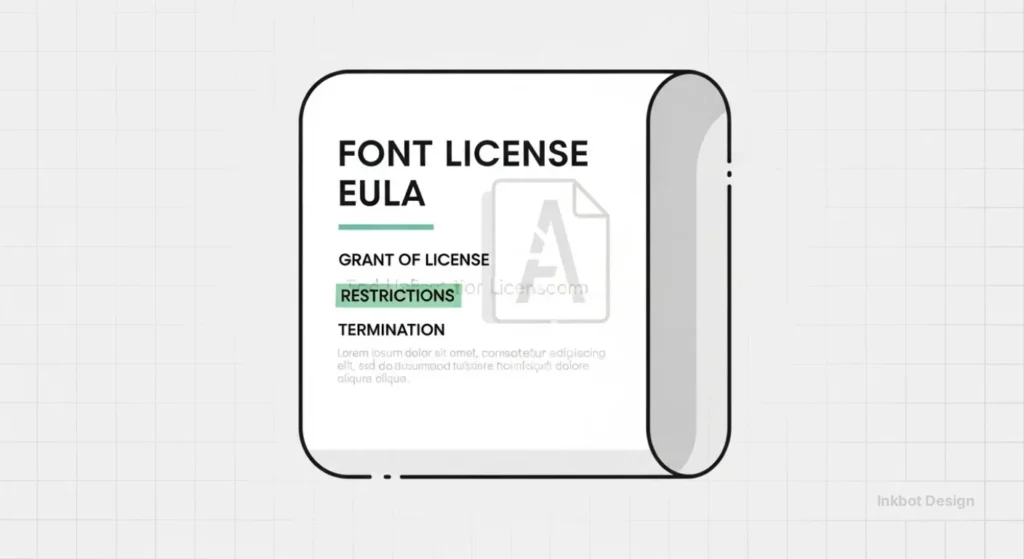
The Anatomy of the EULA: Why “Free” Isn’t Free
Most business owners assume that if a font is on their computer, they own it.
This is the first step toward a legal disaster. When you open a font file, you are interacting with a proprietary software product.
You need to master typography basics to understand why different files require different legal permissions.
The Myth of “Free for Commercial Use”
Foundries often use “free” as a lead magnet. Sites like Google Fonts provide open-source licences, but even these have strings attached.
The SIL Open Font Licence (OFL) is the gold standard for open fonts, but if you bundle that font into a software product you sell, you must follow specific attribution rules.
A common myth I encounter is that “if I modified the font in Illustrator, it’s a new work.” This is false.
The Nielsen Norman Group has often highlighted how typography impacts user trust, but that trust vanishes when your brand is hit with a public copyright claim.
Modifying the outlines of a character does not negate the original licensing requirement for the software that generated those outlines.
Desktop vs. Web: The Great Divide
A Desktop Licence allows you to install the font on your Mac or PC, enabling you to create static images (such as logos, flyers, and PDFs). It does not give you the right to upload that font to your website’s server.
For that, you need a Webfont Licence. These are typically billed by monthly page views.
In 2026, many foundries have shifted to “pay-as-you-go” models or annual audits. If your traffic spikes because of a viral campaign and you haven’t upgraded your licence, you are technically in breach of contract.
This is why our web design services always include a mandatory audit of font permissions before launch.
From a technical perspective, your Webfont Licence is often tied to the integrity of the file’s Metadata.
Foundries use “Fingerprinting” and Hash-Checking to identify unlicensed software on your server.
If you use a “Sub-setting” tool to reduce file size—stripping out unused characters to improve your LCP (Largest Contentful Paint)—you must ensure your licence permits “Software Modification.”
Removing the foundry’s name or licence link from the file’s internal metadata is a confirmed “Red Flag” that triggers automated legal crawlers.
The State of Font Licensing in 2026: AI & Variable Fonts
The last 18 months have seen a seismic shift in how foundries protect their intellectual property. We are now in the era of Generative AI Typography and Variable Fonts.
Variable Fonts and Licensing Complexity
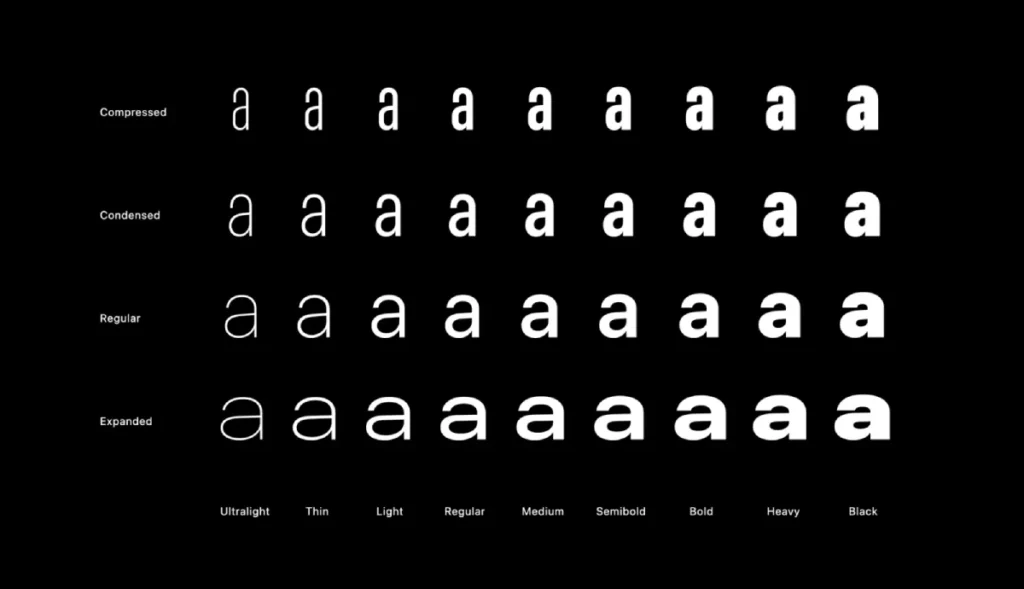
Variable fonts are a single file that acts like multiple fonts, allowing for infinite variations in weight, width, and slant.
While they are a technical marvel in terms of performance, they pose a licensing nightmare. Many foundries now charge a premium for variable files because they “replace” an entire font family.
According to data from W3C documentation, variable fonts can reduce CSS file sizes by up to 70%, but if your licence only covers “Regular” and “Bold,” using a variable file to generate a “Semi-Light” version could put you in breach.
AI Training Prohibitions
In 2026, the biggest change in EULAs is the AI Training Clause.
Most major foundries (Monotype, Hoefler & Co., Lineto) have updated their terms to explicitly forbid using their font data to train generative AI models.
If your brand uses an internal AI to generate social media assets, and that AI is “fed” your brand’s licensed fonts, you may be violating the EULA.
The Rise of Subscription-Only Models
The days of buying a font once for £30 are dying. Large foundries are shifting toward the “Adobe model”—a model of constant subscriptions.
This creates a “Font Debt” for your brand. If you stop paying the monthly fee, your website technically loses its right to display that typeface.
This is a critical consideration when we discuss brand typography with our clients; we often recommend perpetual licences for core brand assets to avoid this recurring trap.
Cost Analysis: Renting vs. Owning in 2026
Don’t let “cheap monthly fees” fool you. Here is the 5-year Total Cost of Ownership (TCO) for a standard corporate rebrand (Web + Desktop, 50k monthly views).
| Licensing Model | Year 1 Cost | Year 5 Total Cost | Risk Level | Best For |
| Adobe/Creative Cloud | Included ($0 extra) | $0 (if sub active) | High (Lose rights if sub ends) | Agencies & Freelancers |
| Perpetual (Desktop + Web) | ~$400 (One-time) | $400 | Low (Asset owned forever) | Serious Brands/Corps |
| Server/Subscription | ~$60/year | $300+ | Medium (Price hikes common) | High-traffic News Sites |
| Variable Font License | ~$800 (One-time) | $800 | Low (Performance boost) | Tech/SaaS Companies |
The “Social Video” Grey Area
In 2026, the most common breach isn’t on a website—it’s in a video.
If you create a video in Adobe Premiere or CapCut using a licensed desktop font, you are generally safe if the text is rasterised (flattened into pixels).
However, if you use “Live Text” features in social apps or embed the font file into a dynamic video generator tool for your team to use, you likely need a Digital Broadcasting/App License.
New 2026 AI Clauses: Major foundries, such as Monotype and Hoefler & Co., have updated their 2026 EULAs with strict “No-AI” clauses.
- The Restriction: You cannot use the font software to train your internal Large Language Model (LLM) or image generator.
- The Risk: If you upload your brand’s font files into a private GPT wrapper to “generate on-brand assets,” you are technically strip-mining their code. Automated audit bots now scan for font fingerprints in AI-generated vector outputs.
Technical Audit: Amateur vs. Professional Licensing
The difference between a “DIY” approach and a professional brand strategy is how you manage these assets.
| Feature | The Amateur Way (The Risk) | The Pro Way (Inkbot Standard) |
| Sourcing | Downloading from “Free Font” aggregator sites. | Direct purchase from the foundry or verified distributor. |
| Tracking | Files stored in a “Fonts” folder with no documentation. | A centralised Font Management System (FMS) with EULA PDFs. |
| Web Use | Using @font-face with a desktop .otf file. | Self-hosting WOFF2 files with a valid Web Licence. |
| Sub-Contractors | Assuming the freelance designer owns the licence. | The Brand/Client owns the licence; designers are “Authorised Users.” |
| Audit Trail | None. Hope for the best. | Annual review of page views vs. licence tiers. |
The “Designer’s Mistake”
In our fieldwork, we often observe a catastrophic pattern: a startup hires a freelancer, who then uses their personal “Creative Cloud” fonts to design the logo, and everyone moves on.
Three years later, that startup is a “Scale-up” with £10m in funding. They go to trademark their logo, and the foundry notices the font is being used commercially by a corporation, not an individual designer. The “Designer’s Licence” does not cover the “Client’s Usage.”
I once audited a client who had been using a specific serif font for their entire global identity. When we dug into the paperwork, we found the designer had “borrowed” the font from a university server a decade prior. We had to pause their entire rebrand to negotiate a five-figure “forgiveness” fee with the foundry.
To avoid this, you must understand the difference between serif vs sans serif not just aesthetically, but in how different foundries price these styles. Some high-end serifs, intended for “prestige” use, have significantly higher licensing hurdles than utility sans-serifs.
Commercially, a clean licensing trail is a requirement for Mergers and Acquisitions (M&A).
The “Exit-Ready” Font Audit Checklist.
When you sell your company, the buyer’s legal team will request a Data Room. If this folder is empty, your valuation drops.
- Receipts for all Primary Brand Fonts: Must show the company name as the licensee, not a freelancer.
- Webfont Domain Validation: Verify that your license covers your current URL and any subdomains.
- Traffic Tier Verification: Proof your current web traffic hasn’t exceeded your original license cap (e.g., “Up to 50k views”).
- App/E-pub Addendums: Specific riders if you have a mobile app or published whitepapers/eBooks.
- Vendor List: A list of all 3rd party agencies that have access to your font files.
During a due diligence audit, a lack of “Licensing Portability” can devalue a brand asset. If the font licences are tied to a defunct agency rather than the brand entity, the new owners inherit a massive Legal Liability.
Investing in a “Corporate-Wide Licence” from day one ensures Asset Portability, allowing your brand to scale or be acquired without the friction of a £100,000 retrospective licensing negotiation.
Securing Your Visual Hierarchy
A brand’s success depends on consistency. This is achieved through a clear typographic hierarchy. However, every level of that hierarchy requires a licence.
- Primary Brand Font: Used for the logo and headlines. Needs a Perpetual Desktop + Web Licence.
- Secondary Support Font: Used for body copy. Often, an open-source font (such as those from Google) is used to reduce page-view costs.
- App Fonts: If you have a mobile app, you need an App Licence. This is separate from a Web Licence. It allows the font to be embedded directly into the application’s code.
If you are struggling to decide which fonts to invest in, consider our guides on font pairing and font combinations.
Choosing a pair where one font is open-source and the other is a “prestige” licensed font is a smart way to balance budget and legal safety.
The Cost of Embedding
Smashing Magazine has long argued that performance is a feature. In 2026, “Performance” also means “Legal Performance.” Embedding fonts in PDFs that are distributed to thousands of people is another common breach.
Check your EULA for “Document Embedding” rights. Some licences allow you to embed a font in a PDF only if the PDF is “Read Only.” If the recipient can edit the text, you are likely in violation.
Dealing with Foundries: The Negotiation
If you are a large SMB, don’t just click “Buy” on a website. You can negotiate.
Foundries like Monotype offer “Enterprise” tiers that encompass everything—web, desktop, app, and social media—under a single umbrella.

This is often more cost-effective than purchasing individual licences for each department.
When you request a quote, ensure you specify your:
- Expected monthly web traffic.
- Number of employees who will install the font.
- Geographic reach (some licences are “Regional”).
- Intent for variable fonts usage.
Foundries are becoming more aggressive with automated “crawlers” that scan website code for unlicensed font files.
If you are self-hosting fonts, ensure your CSS doesn’t expose the font name in a way that makes it obvious you are using a “cracked” or unlicensed version.
A frequent technical “pain point” is the FOUT (Flash of Unstyled Text) caused by slow-loading licensed fonts.
While a designer might suggest using font-display: swap to improve speed, this can create “Visual Jitter” that fails CLS (Cumulative Layout Shift) tests.
The forensic solution is to use Preload Hints for your primary brand fonts.
This ensures the licensed software is prioritised by the browser, maintaining both legal compliance and a stable user experience without sacrificing your Core Web Vitals score.
The Verdict
Font licensing is not a suggestion; it is a foundational business requirement.
In 2026, the intersection of AI, variable font technology, and aggressive legal enforcement by foundries means that “ignorance” is an expensive excuse.
A “perfect” brand identity is one that is both visually stunning and legally bulletproof. If you cannot produce a PDF licence for every font your company uses today, you are at risk.
The Checklist for 2026 Compliance:
- Audit every font file on your server.
- Match every font to a specific EULA.
- Ensure the “Company” owns the licence, not the “Designer.”
- Upgrade to Webfont licences that match your current traffic.
- Check for AI training prohibitions in your existing contracts.
Don’t let a beautiful typeface be the reason your business faces a legal crisis.
Begin by understanding the basics of typography and work your way up to an enterprise-grade asset management strategy.
If you need a forensic audit of your brand’s current typography or want to build a new identity that is legally sound from day one, Inkbot Design is here to help.
Our team specialises in bridging the gap between high-end creative and technical legal compliance.
FAQ: Font Licensing for Brands
What is the difference between a Typeface and a Font Licence?
A typeface is the visual design; a font is the Software used to render that design. Your licence (EULA) is a contract for the use of that software. Using the software without a licence is considered a software copyright violation, not just a design theft.
Can I use a font I bought for a logo on my business website?
Typically, no. A Desktop Licence covers static images (like a logo file). Using the font as live, searchable text on a website requires a Webfont Licence, which is usually priced based on your monthly page views.
Why are Variable Fonts more expensive to license?
Variable fonts replace an entire family of static fonts (Bold, Light, Italic) with one file. Foundries often charge a “Family Premium” because this single software file provides the functionality of 10 or more individual licenses, while significantly improving your site’s LCP performance.
Does my “Creative Cloud” subscription cover my brand’s web fonts?
No. Adobe Fonts (formerly Typekit) provides a licence for the designer to use. If you cancel your subscription or the designer leaves, the licence for the website often expires. For long-term Brand Integrity, the business entity should own its own perpetual licences.
What is a “Sub-setting” and is it legal?
Subsetting is the process of removing unused characters from a font file to improve its performance. While it improves SEO speed, many foundries’ EULAs forbid “modifying the software.” You must verify that your licence allows for file modification before subsetting your WOFF2 files.
What are the risks of using “Free” font sites?
Many “free” sites host pirated or “cracked” versions of professional fonts. If a foundry’s crawler finds its proprietary code on your server without a matching purchase record, you will be liable for retrospective fees and legal damages.
Do I need a separate licence for a mobile app?
Yes. An App Licence is required to embed font software into a mobile application’s code (iOS/Android). This is distinct from a web licence because the font resides within the app rather than being “called” from a web server.
How do foundries catch unlicensed font usage?
Foundries use automated Web Crawlers that scan CSS files and metadata. They look for specific “Fingerprints” in the font software. If they find a match and no corresponding licence for that domain, their legal team is automatically notified.
What is an “OFL” (Open Font Licence)?
The SIL Open Font Licence is the standard for open-source fonts (like many on Google Fonts). It allows for free commercial use and modification, but it requires that you include the original author’s attribution if you bundle the font in a product.
Can I modify a font’s “Kerning” in my logo?
Yes. Modifying the Outlines of letters in a vector program like Illustrator for a logo is generally permitted under a desktop licence. You are not modifying the software, just the visual path derived from it.
What is “Font Debt”?
Font debt is the recurring cost of subscription-based fonts. If your brand is built on a subscription typeface and you stop paying, you lose the legal right to use your brand’s “voice” overnight. We recommend Perpetual Licences for core brand assets to avoid this.
Why are “Self-Hosting” fonts better than using a CDN?
Self-hosting (putting the files on your own server) gives you total control over Privacy Compliance and performance. However, it places the “Legal Burden” on you to ensure the files are properly licensed and that their metadata hasn’t been stripped.
What should be in a “Font Audit”?
An audit should match every font used in your company (from emails to websites) to a specific PDF EULA and purchase receipt. It must also verify that the licence is held by the correct “Legal Entity” (the business).
Can I use a font for a paid Digital Advertisement?
Some foundries require a specific Digital Ad Licence for use in HTML5 banners or video ads. If your campaign has millions of impressions, the foundry will expect a licence tier that reflects that scale.
How does font licensing affect my company’s “Shareholder Value”?
During a sale or IPO, a “Copyright Liability” in your brand’s core assets is a major red flag for investors. A clean licensing trail is a sign of a mature, professionally managed business entity.
Can I use a font I bought on MyFonts for my TikTok videos?
Generally, yes, if the text is “burned in” (rasterised) into the video file using video editing software. However, you cannot upload the font file itself to the TikTok app or a cloud-based video editing tool without a special Server/App License.
What happens if I stop paying for my Adobe Creative Cloud subscription?
You immediately lose the license to use those fonts for new projects. Any existing static images (PDFs, printed flyers) typically remain valid; however, your website (if using Adobe Fonts web hosting) will revert to a default fallback font, such as Times New Roman, which breaks your brand consistency.