25 Famous Slogans: What Makes a Tagline Work for B2B
The most famous slogans in history work not because of what they say, but because of what they refuse to say — and B2B firms keep getting this backwards.
Every founder who tries to write a tagline ends up with something descriptive, something that explains the service, something that could belong to any firm in their category. That is the problem. Not the writing. The logic.
Understanding how famous slogans actually function — at a mechanical level, not just an inspirational one — is the difference between a brand positioning that compounds over time and one that gets revised every two years because it never quite lands.
A solid brand messaging framework sits underneath every slogan worth using, and without it, even a well-written tagline has nothing to anchor to.
This is a working analysis. Twenty-five slogans. What each one actually does. What B2B firms consistently misread about them. And what the mechanism looks like when you translate it into professional services contexts.
- Slogans should claim a stance, identity or territory rather than describe the service.
- Specificity and deliberate exclusion create distinctiveness; be willing to narrow audience to build recognisable brand assets.
- AI-generated taglines homogenise categories; make a specific, verifiable claim and use it consistently to compound brand equity.
What Are Slogans?
Famous slogans are short, repeatable phrases that position a brand in a market by asserting a stance rather than describing a product or service.
Key components:
- Category ownership: A slogan stakes out territory before a competitor can occupy it
- Deliberate omission: The most effective slogans leave out the obvious to make space for the memorable
- Sustained repetition: A slogan’s power accumulates through consistent use over years, not months
Famous slogans work not by describing a product but by claiming a category stance, with the most effective B2B taglines following the same mechanism of deliberate omission rather than explanation.
The 25 Famous Slogans (And What They Actually Do)

1. Nike — “Just Do It” (1988)
“Just Do It” does not describe athletic footwear. It does not explain cushioning technology, carbon-fibre plates, or fit precision. It makes a psychological claim about the person wearing the product. Wieden+Kennedy copywriter Dan Wieden has stated publicly that the line was inspired by the final words of convicted murderer Gary Gilmore: “Let’s do it.” The morbid origin is irrelevant to what the slogan does: it transfers Nike’s identity from product to user. For B2B firms, the lesson is that the most powerful taglines are not about the service — they are about the client’s self-image after engaging it.
2. De Beers — “A Diamond Is Forever” (1947)
Frances Gerety of N.W. Ayer & Son wrote this line to solve a commercial problem: diamond rings were not a default engagement gift in the United States. According to Edward Jay Epstein’s 1982 investigation published in The Atlantic, De Beers’ diamond engagement ring market share in the US grew from roughly 10% in 1939 to 80% by 1990. The slogan did not describe diamond quality. It created a social norm. The phrase functions as a permanence claim — attaching durability to the emotional transaction rather than to the gemstone. B2B professional services with long-term retainer models have direct access to this mechanism: permanence, trust, and continuity are claims worth making explicitly.
3. L’Oréal — “Because You’re Worth It” (1973)
Written by a 23-year-old copywriter, Ilon Specht, in response to advertising briefs that positioned haircare products as things women used for men. The slogan does not describe the product — it refuses to. It claims a value alignment instead. The Ehrenberg-Bass Institute at the University of South Australia has documented, across multiple published studies, that brand value alignment — rather than feature-based differentiation — drives disproportionate recall in mature categories. L’Oréal’s tagline is a textbook example of stance-as-slogan: it says nothing about the product and everything about the customer’s relationship to self-worth.
4. Apple — “Think Different” (1997)
Apple launched this slogan the year Steve Jobs returned to the company with a $300 million loss on the books. TBWA\Chiat\Day developed the campaign. The slogan does not describe computing power, operating systems, or hardware design. It claims a type of person as Apple’s customer. Jobs reportedly objected initially, believing “Think Different” was grammatically incorrect. He was persuaded to keep it precisely because the grammatical irregularity made it more memorable—the mechanism: differentiation through identity claim, not product attribute. For B2B firms, this translates as: your tagline should attract the clients you want, not describe the service they’ll receive.
5. Volkswagen — “Think Small” (1959)
Doyle Dane Bernbach’s Volkswagen campaign is routinely cited as the first example of self-deprecating advertising at scale. In a US market dominated by oversized American automobiles, Volkswagen did not compete on size. It claimed size restraint as a virtue. The slogan reframes the category’s weakness as a differentiator. A small car was considered inferior — Volkswagen turned the inferiority into a positioning advantage. Management consultancies with smaller teams or boutique law firms have direct access to this mechanism: claim the constraint before the client notices it.
6. M&Ms — “Melts in Your Mouth, Not in Your Hand” (1954)
This is one of the few famous slogans that does describe a product feature, but the feature it describes is a problem solved, not a capability offered. The slogan is product-led, but the product claim is a relief claim. Consumers buying chocolate in the 1950s had experienced the mess of chocolate that melted at the slightest touch. M&Ms addressed the anxiety directly. For B2B firms, this mechanism is underused: naming the specific problem your service eliminates — not the capability it provides — is often more persuasive than any benefit claim.
7. De Beers aside — M&C Saatchi, “Labour Isn’t Working” (1979)
The UK Conservative Party’s 1979 election slogan, produced alongside an unemployment-queue poster by Saatchi & Saatchi (later M&C Saatchi), functions as a category-destroying mechanism rather than a positioning claim. It does not say what the Conservatives will do. It claims the competitor has already failed. The History of Advertising Trust has documented this as one of the most effective political slogans in UK history precisely because it shifted the frame from future promises to present evidence. B2B firms competing in markets with visible incumbent failures can use the same mechanism — name the failure the prospect has already experienced.
8. Avis — “We Try Harder” (1962)
Doyle Dane Bernbach again. Avis ranked second in the car rental market, behind Hertz. The strategy was to claim second place explicitly and turn it into a service promise. The line ran for 50 years. What it does mechanically: it converts market position (a fact the prospect already knows) into a commitment (a fact the prospect now holds the brand accountable to). The Avis campaign is the canonical example of constraint-as-positioning. A professional services firm with fewer clients than the market leader, a smaller headcount, or a narrower specialism can use identical logic.
9. Gillette — “The Best a Man Can Get” (1989)
Gillette’s slogan operates as a category authority claim — not a product description. It does not say the blades are sharp or durable. It says Gillette is the category leader for a specific audience. The claim is so broad as to be theoretically unprovable, which is precisely what makes it memorable rather than litigable. The mechanism is aspiration anchoring: connecting the product to the highest achievable standard. For accountancy or legal firms, a version of this mechanism — claiming the best outcome rather than the best process — is often more compelling than capability-led messaging.
10. KFC — “It’s Finger Lickin’ Good” (1956)
This slogan began as an improvised comment by a KFC franchise manager caught on a local television advertisement. It describes a sensory response to the product, not the product itself. The slogan works because the sensory claim is visceral and specific. It creates a micro-experience in the reader’s imagination. For professional services, visceral claims are rare — which is exactly why they are effective when executed correctly. “The audit your finance team won’t dread” operates on similar logic.
11. Mastercard — “Priceless” (1997)
McCann Erickson developed the “Priceless” campaign using a formula: itemise the costs of ordinary purchases, then name the emotional outcome “priceless.” The slogan repositions Mastercard from a payment method to a facilitator of meaningful experiences. What it does mechanically: it separates the transactional from the emotional and claims ownership of the latter. Professional services firms billing on retainers or project fees can use this separation: name the cost, then name what the cost cannot measure.
12. BMW — “The Ultimate Driving Machine” (1973)
This slogan is a category apex claim made on a specific axis — driving performance, not luxury, comfort, or status. BMW chose its ground deliberately. By claiming “ultimate” on a single dimension, it avoided competing directly with Mercedes-Benz for prestige or with Rolls-Royce for luxury—the mechanism: axis selection. Choose which dimension of competition you want to own and make the claim on that axis alone. For B2B firms, this translates as: do not claim to be the best firm — claim to be the best on a specific axis your prospect cares about.
13. Subway — “Eat Fresh” (2000)
Subway’s slogan does one thing: it differentiates by process rather than outcome. Other fast food competitors sell taste or speed. Subway claims its ingredients are prepared fresh. The mechanism is supply chain differentiation surfaced as a consumer benefit. For professional services, the equivalent is process transparency — surfacing how you work as a differentiator when the prospect assumes the outcome (good legal advice, sound accounts) is equal across all providers.

14. Wheaties — “The Breakfast of Champions” (1933)
This slogan is a third-party endorsement mechanism disguised as a product claim. It works by associating the product with the habits of elite performers — not by claiming the product makes you elite. The semantic distinction matters. B2B firms that work with named, recognisable clients have access to this mechanism through case study and association: name who uses the service, not just what the service does.
15. HSBC — “The World’s Local Bank” (2002)
Produced by Lowe Worldwide, this slogan resolves a brand paradox: HSBC is a global bank (which could feel distant and impersonal) that operates locally (which could feel too small). The tagline holds both truths simultaneously and turns the tension into a differentiation claim. The mechanism is paradox resolution. Professional services firms operating nationally but positioning locally — or vice versa — can use the same structure.
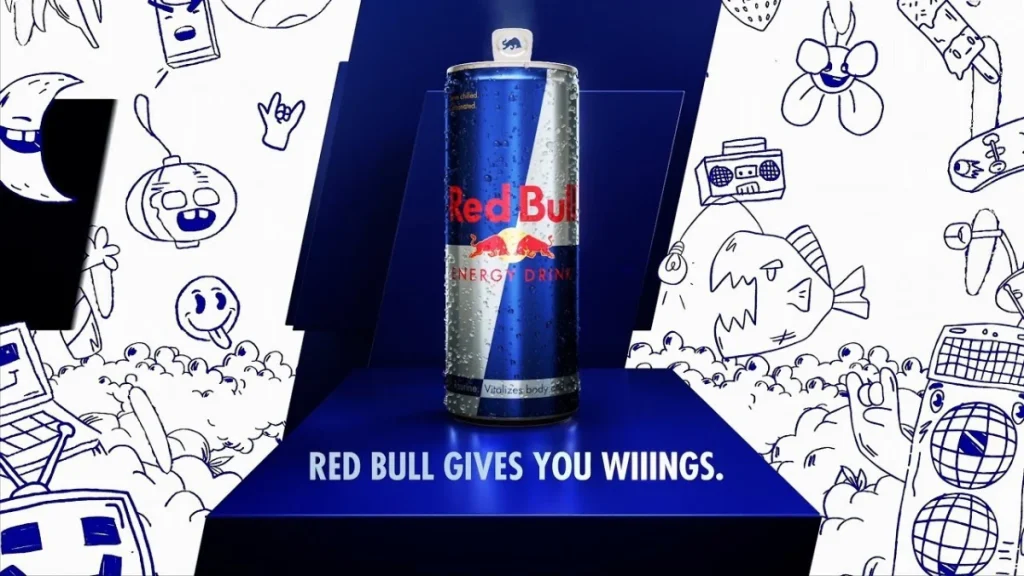
16. Red Bull — “Red Bull Gives You Wings” (1987)
Red Bull’s slogan is a category-creation device as much as a product-benefit claim. In 1987, energy drinks were not a consumer category — they were pharmaceutical products. The “wings” metaphor bypassed the regulatory language around caffeine and taurine and made a visceral, aspirational claim instead. The slogan helped Red Bull define and own the energy drink category before competitors could establish competing definitions. For B2B firms in emerging service categories — ESG advisory, AI strategy, brand-led growth — early category naming is available and underused.
17. FedEx — “When It Absolutely, Positively Has to Be There Overnight” (1978)
This slogan is the longest on this list and also the most explicit promise. Fallon McElligott wrote it for a period when FedEx was competing against the US Postal Service’s ground delivery. The slogan works because it makes a specific, verifiable claim with an implied guarantee. Length did not damage it — specificity made it credible. The lesson for B2B: a specific, verifiable commitment is more persuasive than a polished, vague aspiration.
18. Harley-Davidson — “American Made. Legend Built.” (Various)
Harley-Davidson’s various slogans across decades share a single mechanism: origin as identity. The brand’s American manufacturing heritage is not a feature — it is an identity claim. Buyers of Harley-Davidson motorcycles are not purchasing transportation; they are affiliating with a cultural identity. For B2B firms in the UK and Ireland, origin positioning — Belfast-based, Manchester-rooted, independently operated — is underused as an identity mechanism.
19. The Economist — “The Economist. Read by the people who run things.” (Various)
This slogan is an audience aspiration mechanism. It does not describe the publication’s content, editorial stance, or production values. It describes who reads it — and implies that reading it places you in that company. For professional services, this mechanism translates as audience signalling in marketing copy: name the type of client you serve, not the service you provide.
20. Carlsberg — “Probably the Best Beer in the World” (1973)
Orson Welles recorded the voiceover for this campaign. The word “probably” is not hedging — it is a rhetorical device that creates implied understatement. By backing off the absolute claim, Carlsberg made it more credible, not less. This is the confidence-as-understatement mechanism. B2B professional services firms that over-claim (award-winning, industry-leading, best-in-class) lose credibility. Firms that understate with specificity gain it.
21. Tesco — “Every Little Helps” (1993)
Tesco’s slogan began as an internal customer service principle before becoming a brand tagline. What it does is position incremental value accumulation as the service model — not transformation, not disruption, but consistent marginal improvement. For professional services operating on retainer relationships, this is a powerful, honest signal: it promises reliability over revolution, which is often what clients actually want after experiencing an unreliable provider.

22. Intel — “Intel Inside” (1991)
Intel created a B2B ingredient branding campaign — one of the few on this list from a company selling to other businesses rather than end consumers. The “Intel Inside” logo and slogan appear on products that Intel does not manufacture, sold by companies that Intel does not own. The mechanism is co-branding as a quality signal: Intel’s brand lifts the laptop manufacturer’s credibility, and the laptop’s reach expands Intel’s consumer recognition. For specialist B2B suppliers, visible co-branding with client names is the equivalent mechanism.
23. Bounty — “The Quicker Picker-Upper” (1970)
Phonetic engineering. “Quicker Picker-Upper” uses alliteration and internal rhyme to create a phrase that is difficult to forget because it is easy to say. The mechanism is prosodic — the sound structure itself aids recall, independent of meaning. Ehrenberg-Bass Institute research on distinctive brand assets confirms that phonetic distinctiveness is one of the most reliable predictors of aided recall in competitive categories.
24. John Lewis — “Never Knowingly Undersold” (1925)
This slogan is a century old and still in use. It functions as a permanent price-match guarantee encoded as a brand promise. The mechanism is commitment as differentiator: by making an explicit, ongoing, potentially costly promise, John Lewis signals confidence in its pricing. For B2B firms, the equivalent is the standing guarantee — not a one-off policy but a built-in promise that prospects can hold you to.
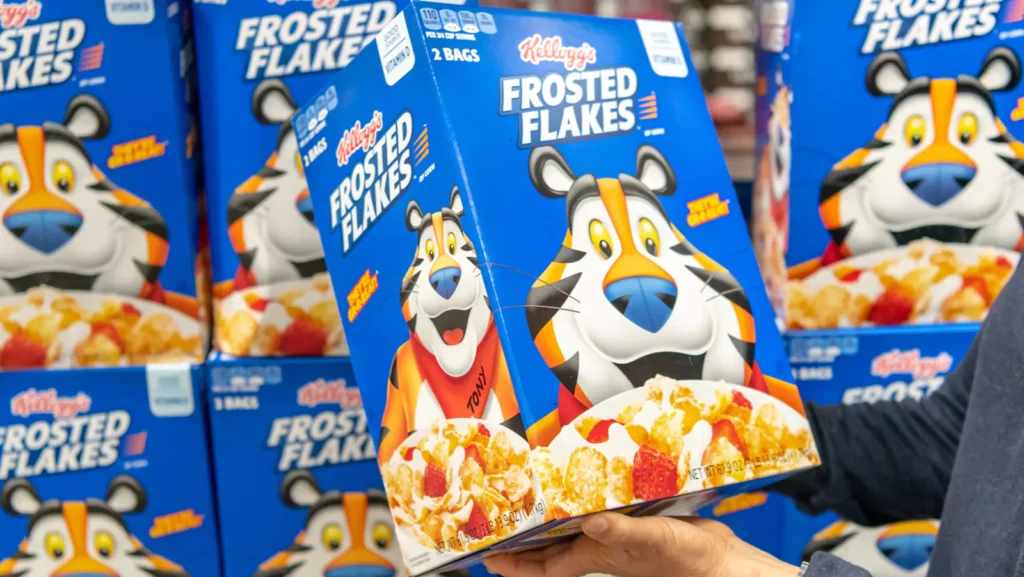
25. Tony the Tiger / Kellogg’s Frosties — “They’re Great!” (1952)
The simplest slogan on this list. Three words. Pure enthusiasm, no substance. The mechanism is character transfer: the enthusiasm comes from Tony the Tiger, not from a human spokesperson, which removes the credibility requirement. The same claim from a person would be dismissible. From a cartoon character, it is endearing. For B2B firms — where a mascot or character is unlikely — the lesson is that enthusiasm without evidence needs a vehicle to carry it. Without the character, “We’re great” is noise.
The famous slogans that have lasted decades share one mechanism: they refuse to describe what the product does and instead claim who the customer becomes, what the brand believes, or what territory it owns. B2B firms that study these slogans for inspiration tend to copy the words. Those who study them for their mechanisms tend to permanently change their positions.
The “Describe What You Do” Myth (And Why It’s Killing B2B Taglines)
Descriptive taglines do not work in professional services, and the advice to write one is the most damaging single instruction in B2B brand strategy.
The myth is that your tagline should describe what you do — “Strategic accounting for ambitious businesses” or “Independent legal advice for growth-stage companies.” These taglines fail not because they are badly written but because they are doing the wrong job.
The advice made sense in one context: product packaging, where a consumer with two seconds of shelf time needed to understand what a product was. That is not the context of professional services procurement.
A managing partner considering a law firm has already narrowed the category. They know what a law firm does. They do not need describing — they need differentiating.
The Ehrenberg-Bass Institute at the University of South Australia has consistently published on the distinction between functional brand claims and distinctive brand assets.
Their research, most accessibly summarised in Byron Sharp’s How Brands Grow (2010, Oxford University Press), shows that functional claims — descriptions of what a product or service does — have near-zero impact on brand salience in established categories.
What drives recall is distinctiveness: assets that are consistently associated with the brand across exposures, irrespective of whether those assets communicate function.
A law firm with the tagline “Expert legal advice you can trust” is not distinctive. Every law firm could say it. The tagline owns no territory. It gives the prospect no mental hook to associate with that firm specifically.
The alternative is not to be clever or cryptic. It is to claim a stance. “The law firm that says no” owns a territory.
“Legal advice for founders who’ve been burned before” owns an audience. Neither describes the service. Both create a positioning that competitors cannot easily copy without abandoning their own brand.
The myth persists because describing feels safer. A descriptive tagline seems accurate. It is not false. But accuracy is not the metric — distinctiveness is.
Descriptive B2B taglines are accurate by design and forgettable by consequence. The slogans that last decades never describe the service — they claim the stance, the audience, or the belief that the service represents.
Famous Slogans in 2026
The slogan landscape in 2026 has a new and specific problem: AI-generated brand copy has flooded the market with competent-sounding taglines that are functionally identical to each other.
Jasper, Copy.ai, and dozens of other AI writing platforms now generate taglines on demand. The outputs are grammatically polished and tonally appropriate.
They are also entirely undifferentiated. A prompt for “B2B accountancy firm tagline” generates results that any prompt engineer can reproduce — and any competitor can generate the same list. The net effect is a compression of tagline distinctiveness across entire categories.
This is not speculation. Kantar’s BrandZ 2025 Global Brand Equity Report documented a measurable decline in what it calls “meaningful difference” scores — consumer-side perceptions that a brand is unique and worthwhile — across professional services categories in the UK and US markets.
The report attributes part of this decline to category-wide homogenisation of brand messaging, of which AI-generated copy is a contributing factor.
The brands gaining ground in this environment share one characteristic: they made specific, concrete, often uncomfortable brand claims that AI tools would filter out for being too polarising.
Gymshark’s evolution through social commerce, Monzo’s conversational brand voice built on transparency about banking fees, and within professional services, Magic Circle law firm Linklaters’ shift toward explicitly naming its technology and private equity sector concentration, rather than claiming general excellence — all of these moves represent the opposite of AI-generated consensus.
For B2B professional services firms, 2026 presents a specific opportunity. The AI tools your competitors use to generate taglines produce outputs that are indistinguishable from one another.
A firm willing to make a specific claim — one that excludes some prospects, commits to a particular type of client, or names an uncomfortable truth about the category — has a genuine differentiation advantage precisely because the tools cannot safely produce it.
The other 2026 development worth noting is the rise of AI search and generative engine responses. When a prospective client searches for “strategic branding agency Belfast” or “M&A brand integration consultancy UK,” they increasingly receive an AI-generated summary rather than a ranked list of links.
That summary extracts phrases from brand websites, LinkedIn profiles, and content.
A slogan that is specific, attributable, and semantically rich is more likely to be extracted and repeated by AI systems than a polished but generic one.
The operational implication: write your tagline as if an AI system will need to cite it in a paragraph about your firm. Specificity, stance, and distinctiveness are no longer just brand values — they are search infrastructure.
The firms that will compound brand equity over the next three to five years are those that treated their taglines in 2024 and 2025 as strategic commitments rather than copywriting exercises. The ones that asked an AI tool for a list of options and picked the least offensive one have built nothing that will survive the current environment.
In 2026, the risk to a B2B firm’s slogan is no longer that a competitor will copy it — it is that an AI tool will generate something identical for every other firm in the category simultaneously. Distinctiveness has become infrastructure, not aspiration.
Famous vs Forgettable: The Mechanism Comparison
| Decision Point | The Wrong Approach | The Right Approach | Why It Matters |
| What the slogan describes | The service or capability | The stance, belief, or customer outcome | Services are interchangeable; stances are not |
| Specificity of claim | “Expert advice for growing businesses” | “First-exit acquisition finance for owner-managed firms” | Vague claims create no recall anchor |
| Length policy | Keep it to three words maximum | Use as many words as the claim needs — no more | FedEx’s longest slogan on this list is also one of the most effective |
| Differentiation source | The thing you do best | The thing no competitor wants to claim | Differentiation is territorial, not qualitative |
| Who it excludes | Nobody — broadest appeal | A specific segment — deliberate narrowing | Excluding some prospects makes you credible to the right ones |
| Revision cadence | Revised when the firm feels like a refresh | Consistent for years, regardless of internal boredom | Brand assets require 5–7 years of consistent use to achieve reliable recognition, per the Ehrenberg-Bass Institute |
| AI-generation risk | Generated by a tool, selected by a committee | Made by decision, committed to by leadership | AI tools produce convergent outputs; differentiation requires divergent choices |
For firms ready to build a messaging system that goes beyond a single tagline, the detailed work starts with understanding what a brand voice and copywriting strategy actually involve — not just the words themselves, but the framework that makes them consistent across every client touchpoint.
The Verdict
B2B firms keep studying famous slogans for the wrong lesson.
They take note of the brevity, the memorability, the emotional resonance — and then they try to replicate those surface features with a tagline that still, fundamentally, describes what they do. That is not what made any of the 25 slogans on this list work.
Every effective slogan here — from De Beers to Avis to The Economist — functions by claiming something other than the product. A stance. A customer identity. A territorial position. A deliberate exclusion.
The service description is absent because the founders or the agencies involved understood that the prospect already knew what the service was. What they need to know is why this firm, this product, this brand — not the category.
The specific lesson for professional services in 2026 is not that you need a punchier tagline.
It is that you need to make a decision that most of your competitors have not made: what do you refuse to be? What do you claim so specifically that the wrong client self-selects out before they ever call? What do you believe about your market that would make the right client feel, for the first time, that someone in this industry actually understands their situation?
That decision is the tagline. The words are just how you express them.
If you want support translating that decision into a brand positioning that holds across every client touchpoint, explore Inkbot Design’s brand voice and copywriting services — or start by understanding how your current brand messaging compares to what the market expects.
FAQs
What makes a slogan “famous” rather than just well-known?
Famous slogans achieve cultural penetration beyond the brand’s direct marketing reach — people who have never bought the product know and repeat the phrase. This requires sustained use over years, a specific linguistic structure that aids recall, and a claim that resonates beyond the core audience. “Just Do It” is known by people who have never purchased Nike products.
How long should a B2B tagline be?
A B2B tagline should be as long as the claim requires and no longer. FedEx’s “When It Absolutely, Positively Has to Be There Overnight” ran for decades at fifteen words. Tesco’s “Every Little Helps” runs at three. Length is irrelevant — specificity and commitment are the operative variables. A vague three-word tagline is weaker than a specific eight-word one.
Is it true that B2B firms don’t need slogans?
B2B firms do need slogans — but most of what B2B firms call slogans are actually mission statements in disguise. A slogan claims external territory. A mission statement articulates internal purpose. The two are not the same, and confusing them produces copy that is internally coherent and externally invisible.
Why do so many professional services firms have identical taglines?
Professional services taglines converge because most firms use the same brief: describe the service, emphasise quality, appeal to the broadest possible audience. The Ehrenberg-Bass Institute’s research on category-level brand behaviour shows this convergence is not an accident — it is what happens when firms optimise for inoffensiveness rather than distinctiveness.
When should a firm change its tagline?
A firm should change its tagline when the underlying strategic positioning has genuinely shifted — not when the founding partners are bored with it. Brand recall assets require five to seven years of consistent exposure to achieve reliable recognition, per the Ehrenberg-Bass Institute, University of South Australia. Changing a tagline prematurely resets that clock and destroys accumulated equity.
What is the difference between a tagline and a value proposition?
A tagline is external-facing, short, and designed for repetition in market-facing contexts. A value proposition is an internal strategic document that articulates the specific outcome delivered for a specific client type at a specific price point. Every tagline should be derivable from the value proposition — but they are not the same document, and they serve different functions.
Can a B2B firm use humour in its tagline?
Humour in B2B taglines works when the humour signals confidence rather than approachability. Carlsberg’s “Probably the Best Beer in the World” uses understatement as a confidence mechanism. The same structure is available to a professional services firm: “Probably the only M&A lawyers who’ll tell you not to do the deal” signals confidence through apparent self-deprecation. Humour that signals desperation or informality tends to undermine professional credibility.
How do I know if my current tagline is working?
A working tagline should pass three tests: a prospect who has never visited your website can repeat it after two exposures; your three nearest competitors cannot adopt it without material contradiction; and it makes a claim specific enough that some prospects will self-select out. If your tagline passes none of these tests, it is not working.
Should a tagline include the firm’s name?
Including the firm name in a tagline is rarely necessary and usually weakens it. “Intel Inside” is the exception that proves the rule — it works because Intel is a B2B ingredient brand where the name is the claim. For professional services, the tagline and the name function separately. The name is the entity; the tagline is the claim.
How did the most famous slogans in history get created?
Most of the famous slogans on this list were created under commercial pressure, not creative inspiration. Frances Gerety wrote “A Diamond Is Forever” the night before a deadline. Dan Wieden wrote “Just Do It” in the final hour before a client presentation. The implication is not that slogans require a crisis to emerge — it is that the quality of a slogan has almost no relationship to the amount of time spent on it. The clarity of the strategic positioning underneath it almost entirely determines the quality.
What role does AI play in slogan writing in 2026?
AI tools produce grammatically competent taglines that are functionally indistinguishable from competitors’ AI-generated taglines. They are useful for generating raw material and identifying common conventions in a category, which tells you what to avoid. A slogan that only an AI tool could generate is, by definition, not distinctive. Effective tagline development in 2026 requires a human strategic decision about what to claim and what to exclude, with AI tools used to stress-test options rather than generate them.
Is “Just Do It” still the best example of a famous slogan?
“Just Do It” is the most cited example of a famous slogan, which is precisely why most analyses of it are unhelpful. Every competitor content piece uses it as the anchor. The mechanism is more clearly visible in less-cited examples: Avis’s “We Try Harder,” which turns market position into service commitment, and The Economist’s audience-aspiration mechanism. The overuse of Nike as the primary example has obscured the fact that its mechanism — identity transfer — is one of several available, not the only one worth studying.
