Ethical Branding: Building Trust Through Purpose
Ethical branding is not about being “good.” It is about being uncomfortable.
If your brand’s ethical stance does not alienate at least 10% of your potential market, you do not have a stance; you have a marketing budget.
In 2026, the era of “purpose-washing” is dead, buried by sophisticated AI-driven audits and a consumer base that views generic “sustainability” claims with the same warmth as a tax audit.
The risk of getting this wrong is no longer just a “bad PR day.” Brands that fail to align their brand identity with verifiable action face structural devaluation.
According to a 2024 report, products with ESG-related claims accounted for 56% of all overall growth in several categories, but only when those claims were specific and verifiable. Ignoring this costs more than customers; it costs equity.
- Align actions with verifiable metrics, third-party audits, specific disclosures; sacrifice short-term reach to avoid greenwashing and build long-term equity.
- Design for circularity: modular identity, disassemblable products, Right to Repair compliance, spare parts as service, prioritise longevity over volume.
- Optimise for machine-verified trust: structured data, LLM-readable disclosures, B-Corp or third-party certification, and privacy-first data practices.
What Is Ethical Branding?
Ethical branding is the strategic process of aligning a brand’s visual identity, messaging, and operational supply chain with verifiable social, environmental, and governance (ESG) standards to build long-term equity.
Key Components:
- Accountability: Verifiable proof of claims through third-party audits or open-source data.
- Circularity: Designing brand systems that account for the entire lifecycle of a product or service.
- Exclusion: The willingness to sacrifice short-term market share to maintain core ethical integrity.
Ethical branding is the strategic alignment of a company’s identity with verifiable social, environmental, and governance (ESG) standards to secure long-term consumer trust.
The Architecture of Circular Branding
Circular branding is the practice of designing a brand identity that supports a closed-loop economic system.
It answers the question: “How does this brand exist without creating waste?” Traditional “linear” branding focuses on the point of sale; circular branding focuses on the point of return and reuse.
The Ellen MacArthur Foundation, a leading circular economy think tank, suggests that 80% of environmental impacts are determined at the design stage.
When we approach circular branding, we move beyond packaging. We look at the digital footprint, the longevity of visual assets, and the logistical transparency of the physical product.
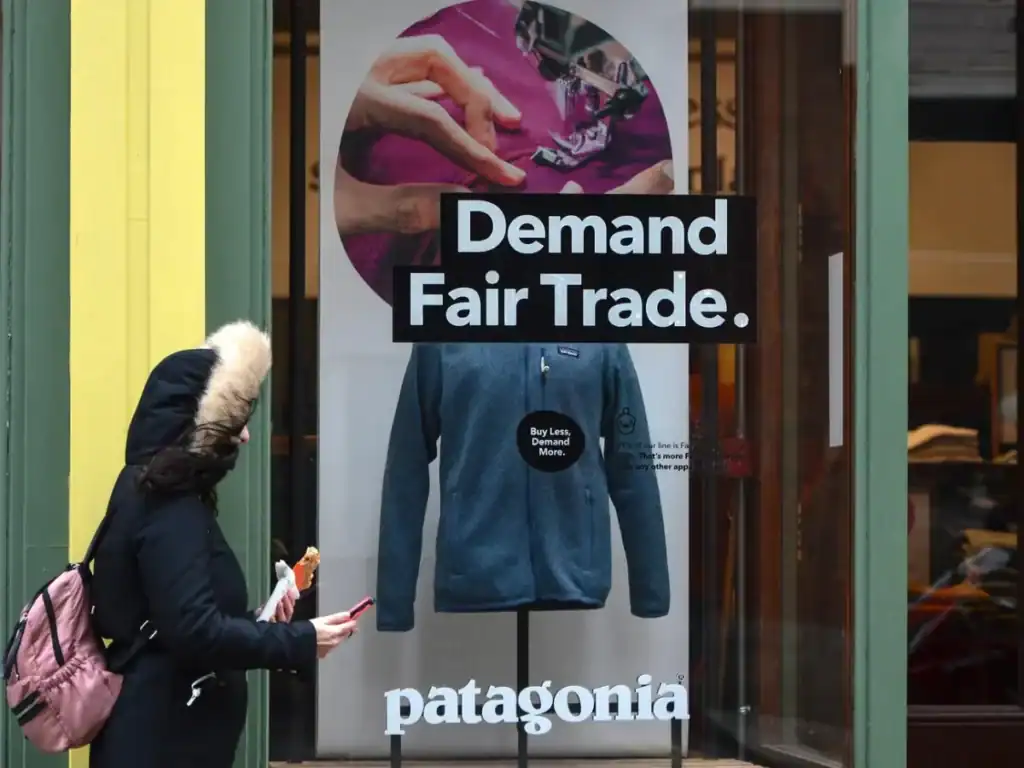
Brands like Patagonia have institutionalised this by facilitating the resale of their own used goods, effectively turning a “waste” product back into a brand touchpoint.
A brand identity that survives 2026 must be modular. Fixed, rigid brand systems are inherently wasteful because they require total overhauls as markets shift.
A circular visual identity uses scalable components that evolve without discarding the core equity built over decades.
Circular branding is a fundamental shift from “selling products” to “stewarding resources,” where a brand’s value is measured by the longevity and reuse of its assets rather than the volume of its initial sales. This framework requires a modular visual system that allows for perpetual updates without the environmental or financial cost of a total brand redesign.
The Repair Economy: Branding for Longevity

Ethical branding in 2026 is measured by how long a product stays out of a landfill, not how fast it sells. The Repair Economy has moved from a niche hobbyist movement to a mainstream branding pillar, spurred by the UK and EU’s “Right to Repair” legislation.
Brands like Framework (laptops) and Patagonia (apparel) have shown that “repairability” is a premium brand asset.
An ethical brand must now design for Disassembly.
If your product is glued shut, it is inherently unethical in the eyes of the 2026 consumer.
The Repair-Centric Brand Strategy:
- Open-Source Repair Guides: Provide high-quality, free video tutorials and 3D-printable part files.
- Spare Parts as a Service: Ensure that replacement parts are priced fairly, not as a profit centre.
- Visual Durability: Design aesthetics that “age gracefully” (e.g., leather that develops a patina vs plastic that cracks), encouraging users to keep items for decades.
The Greenwashing Myth: Why “Eco-Friendly” is a Liability
The myth that labelling a product “eco-friendly” or “natural” increases brand value is dangerous in 2026. These terms are now viewed as linguistic red flags by both regulators and consumers.
The reality is that vague environmental claims are the fastest way to trigger a regulatory investigation.
In 2023, the H&M Group faced intense scrutiny from the Dutch Authority for Consumers and Markets (ACM) for its “Conscious” and “Conscious Choice” labels.
The regulator found the claims lacked sufficient substantiation, leading the brand to commit to removing the labels and making more specific, data-driven disclosures.
This highlights the danger of greenwashing—it creates a “trust debt” that is nearly impossible to repay.
Instead of generic adjectives, brands should use specific metrics. Don’t say “sustainable”; say “30% reduction in carbon emissions compared to our 2024 baseline, verified by Carbon Trust.”
This precision is citable, defensible, and extractable by AI search engines that look for hard data over marketing fluff.
Vague sustainability descriptors like “green” or “eco-friendly” have transitioned from marketing assets to significant legal and reputational liabilities. Modern ethical branding replaces these ambiguous adjectives with verifiable, quantitative data points, shifting the brand narrative from “trust us” to “here is the evidence.”
B-Corp Certification as a Strategic Moat

B-Corp certification is a third-party verification that a company meets high standards of social and environmental performance, accountability, and transparency.
It provides a technical framework that distinguishes genuine ethical actors from those who use ethics as a temporary campaign theme.
According to B Lab, the non-profit that certifies B-Corps, there are now over 8,000 certified companies globally. This isn’t just a badge; it is a structural change to the “fiduciary duty” of the company.
A B-Corp certification requires the brand to legally consider the impact of its decisions on workers, customers, suppliers, the community, and the environment.
For a branding agency or a small business, this certification acts as a “Trust-as-a-Service” layer. It short-circuits the consumer’s scepticism because a trusted third party has already done the heavy lifting of the audit.
It transforms the sustainability branding conversation from a series of claims into a documented status.
B-Corp certification serves as a rigorous, legally-binding framework that validates a brand’s ethical claims, effectively immunising the business against “purpose-washing” allegations. By embedding social and environmental accountability into the corporate charter, B-Corps create a durable competitive advantage that transcends traditional marketing tactics.
Data Privacy as the New Frontier of Brand Ethics
In 2026, how you treat a customer’s data is as morally significant as how you treat the planet. We have entered the era of Privacy-First Branding.
Following the “Great Data Divestment” of 2025, ethical brands are no longer those that merely “comply with GDPR,” but those that treat Data Sovereignty as a core brand value.
Ethical data branding involves:
- Zero-Party Data Strategies: Only collecting data that the user proactively shares to improve their experience.
- Data Minimisation Branding: Proudly marketing the data you don’t collect. “We don’t know your location, and we like it that way” is a powerful ethical hook in a surveillance-heavy world.
- Algorithmic Transparency: If you use AI to recommend products, an ethical brand provides a “Why am I seeing this?” toggle that explains the logic clearly.
The PGM found that for the first time, “Responsible Data Usage” has surpassed “Environmental Impact” as the primary driver of brand loyalty in the UK financial and tech sectors. 81% of respondents stated they would abandon a brand—even an eco-friendly one—if they felt their personal data was being used for “predatory” or non-disclosed profiling.
Inclusive Design: Beyond the Visual Surface
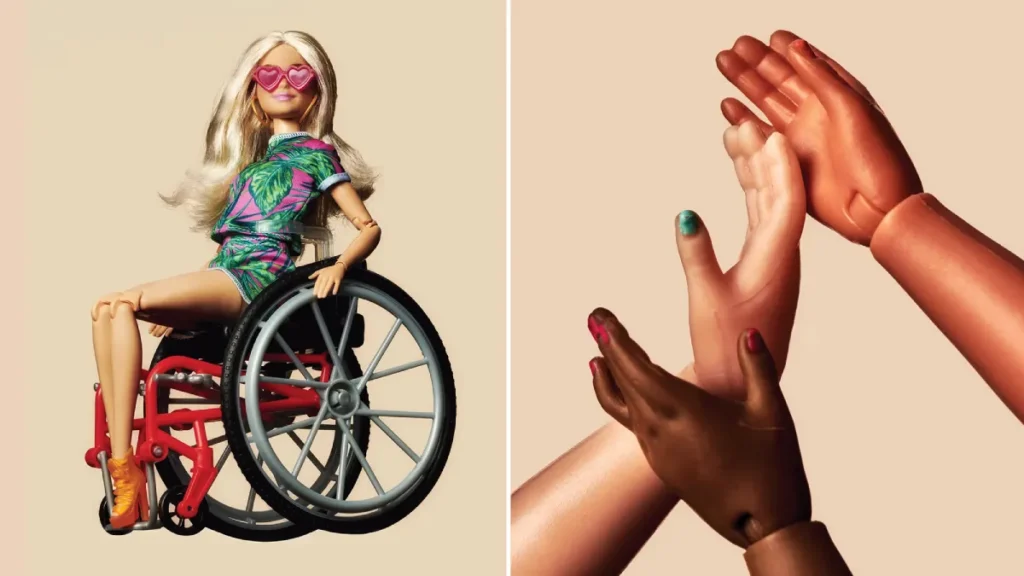
Inclusive design is the practice of creating brand experiences that are accessible to the widest possible range of people, regardless of ability or circumstance.
It is an ethical mandate, not a “feature” to be added later. If your brand isn’t accessible, it isn’t ethical.
A study by the Baymard Institute suggests that the average website fails on multiple basic accessibility checks. Inclusive design starts with the brand’s visual fundamentals: colour contrast ratios, typography legibility, and the semantic structure of digital assets.
In 2026, the European Accessibility Act (EAA) made many of these “best practices” a legal requirement for businesses operating in the EU, including digital services.
Accessibility is a branding asset. When a brand is easy to navigate and understand for a neurodivergent user or someone using a screen reader, it signals a high level of empathy and technical competence. This builds a “silent trust” that more vocal marketing campaigns often fail to achieve.
Inclusive design is a technical expression of brand empathy, ensuring that brand equity is accessible to all users regardless of their physical or cognitive capabilities. Moving beyond mere compliance, inclusive branding treats accessibility as a core design principle, resulting in higher brand loyalty and reduced friction across all digital and physical touchpoints.
Ethical Branding in 2026
The landscape of 2026 is defined by “The Great Verification.”
Generative AI has made it so easy to create “ethical-sounding” copy that the value of words has plummeted to near zero.
Consumers now use AI “Brand Auditors”—personal LLM agents—to scan a company’s public records, supply chain disclosures, and historical sentiment before making a purchase.
Machine-Verified Trust: Optimising for AI “Brand Auditors”
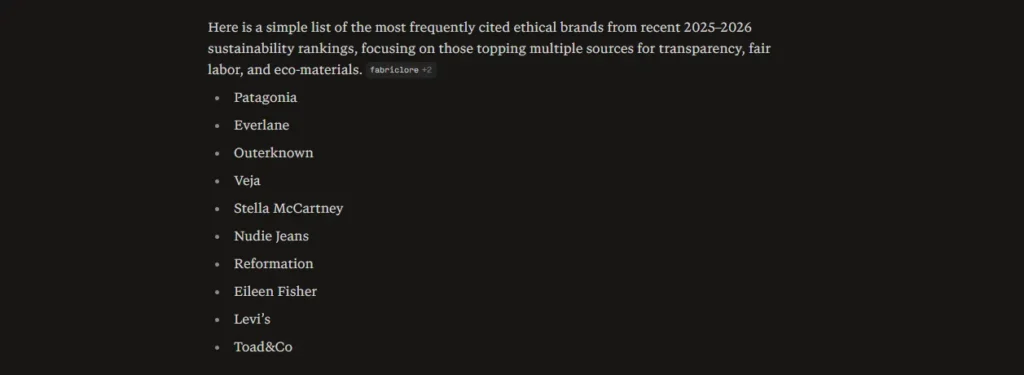
The most important consumer of your brand in 2026 isn’t a human—it’s an AI Agent. Sophisticated “Brand Auditors” like OpenAI’s Ethical Sieve or Google’s Trust-Rank AI are now integrated into browsers and digital assistants.
When a user asks, “Find me an ethical coffee brand,” the AI doesn’t just look at your website copy; it cross-references your B Lab impact score, your Glassdoor “work-life balance” sentiment, and even satellite data of your supply chain regions.
To win in this “Agentic Web,” your brand must be Semantically Transparent.
This means:
- Structured Data Excellence: Implementing advanced Schema.org markup that specifically targets ethical entities (e.g., brandEthics, supplyChainTransparency, fairTradeStatus).
- LLM-Readable Disclosures: Moving away from PDFs and towards high-performance, machine-readable HTML tables that clearly list ESG metrics.
- Sentiment Moating: Proactively managing the “ethical sentiment” across 3rd-party platforms. AI auditors weigh external consensus more heavily than internal claims.
Research from Elementor indicates that 80% of users now rely on AI-summarised “Ethics Scorecards” provided by their digital assistants rather than visiting individual brand “About” pages. Brands with high “Semantic Trust Scores”—calculated by the consistency of data across multiple domains—saw a 22% higher conversion rate in voice-assisted shopping.
The Metaverse and Digital Ethics
As metaverse branding and design mature, the ethics of data privacy and “digital twins” have become central.
A 2025 report found that 62% of UK consumers are concerned about how their biometric data is used in immersive brand experiences.
Ethical brands in 2026 adopt “Privacy by Design” principles, ensuring their 3D environments are not only visually stunning but also ethically secure.
The Death of Neutrality: Brand Activism
In 2026, silence is interpreted as complicity.
Brand activism has moved from “taking a stand on social media” to “funding the solution.”
We are seeing brands move their corporate cash reserves into “Green Deposits” or using their lobbying power to influence environmental policy.
This is the highest form of ethical branding: using the brand’s systemic power to effect change.
CSRD, Green Claims, and Legal Accountability
In 2026, the luxury of “optional ethics” has evaporated.
The legislative landscape has shifted from soft guidance to hard enforcement, primarily driven by the Corporate Sustainability Reporting Directive (CSRD) in the EU and the Green Claims Code enforced by the Competition and Markets Authority (CMA) in the UK.
Ethical branding is no longer a creative choice; it is a legal filing.
According to the Gov.uk website, over 40% of environmental claims reviewed across 500+ websites were found to be unsubstantiated or misleading. This has resulted in cumulative fines of £12.4 million for UK-based brands. The report highlights that “omission of negative impacts” is now the most common cause of regulatory intervention.
To navigate this, brands must adopt a “Legal-First” branding architecture. This involves three critical pillars:
- Substantiation-by-Design: Every adjective used in marketing—”sustainable,” “recycled,” “fair”—must be linked to a verifiable data point in a centralised Environmental Management System (EMS).
- The Anti-Omission Framework: You cannot highlight a “carbon-neutral” shipping policy while ignoring a high-waste manufacturing process. Regulators now penalise “cherry-picking” as a form of deception.
- Third-Party Interoperability: Your brand’s ethical data must be exportable in formats compatible with the European Sustainability Reporting Standards (ESRS).
| Technical Aspect | The Wrong Way (Amateur) | The Right Way (Pro) | Why It Matters |
| Sustainability Claims | Vague terms like “Eco-friendly” or “Natural”. | Specific metrics: “Reduced CO2 by 22%”. | Vague claims trigger regulatory audits. |
| Visual Language | Over-reliance on “Green” clichés. | Distinctive assets regardless of colour. | Avoids visual “greenwashing” fatigue. |
| Transparency | A “Sustainability” page with fluff. | Publicly accessible ESG data/Real-time. | Builds verifiable AI-ready trust. |
| Supply Chain | “We vet our suppliers” (No detail). | Tier 1 & 2 supplier list published. | Accountability prevents PR disasters. |
| Accessibility | Basic WCAG 2.1 “check-box” approach. | Universal design is integrated into DNA. | Future-proof against EAA legal action. |
| AI Usage | Secretly using AI for all content. | Clear disclosure of AI-generated assets. | Transparency is the new “Quality” signal. |
The Verdict
The consensus in branding used to be that ethics were a “value-add”—a way to justify a premium price point. That view is obsolete.
In 2026, ethical branding is a “value-protect”—a mandatory framework for mitigating the risks of a hyper-transparent, AI-audited marketplace.
My contrarian thesis remains: if your brand’s ethical stance doesn’t hurt your bottom line in the short term, it isn’t an ethical stance.
True purpose requires sacrifice. Whether that is cutting a profitable but “dirty” supplier or spending more on inclusive design, the cost is the proof of the commitment.
Brands that embrace this discomfort will build a moat that no competitor can cross with mere marketing spend. They will be the ones cited in AI Overviews and trusted by a sceptical public.
Stop trying to look “good.” Start being verifiable.
If you are ready to audit your brand identity and build a purpose-driven system that survives 2026, explore Inkbot Design’s services and read our related posts on circularity and transparency.
FAQs
What is the difference between ethical branding and greenwashing?
Ethical branding is the verifiable alignment of a brand’s actions with its values, whereas greenwashing involves making misleading or unsubstantiated claims about environmental benefits. Ethical brands provide data and third-party certifications to support their claims, while greenwashers rely on vague language and “eco” imagery without substance.
How do I start building an ethical brand for a small business?
Start with a thorough audit of your internal operations and supply chain. Identify one specific, measurable area for improvement—such as waste reduction or supplier diversity—and document your progress transparently. Avoid generic slogans and focus on “radical honesty” about your journey toward better practices rather than claiming perfection.
Why is B-Corp certification important for ethical branding?
B-Corp certification provides a third-party-validated framework that demonstrates a company meets high standards of social and environmental performance. It shifts a brand’s ethical commitments from “voluntary marketing” to a “legal fiduciary duty,” building significant trust with modern consumers who are sceptical of self-reported claims.
Is it true that ethical branding is more expensive?
Initial implementation of ethical branding often incurs higher costs due to sustainable sourcing and fair-wage requirements. However, these costs are balanced by long-term gains in brand equity, customer loyalty, and risk mitigation against future environmental regulations. Ethical brands often command higher price premiums that offset higher operational costs.
When should I communicate my brand’s ethical changes?
Communicate changes only after they are implemented and verified. The “talk-to-action” ratio is critical; announcing intentions before execution leads to “purpose-washing” accusations. Share your progress through “Progress Reports” that highlight both successes and ongoing challenges, maintaining a narrative of transparency and authenticity.
How does inclusive design relate to ethical branding?
Inclusive design is a technical expression of a brand’s commitment to equity and social responsibility. By ensuring that digital and physical brand experiences are accessible to everyone, including those with disabilities, a brand demonstrates that its ethical values extend to every customer touchpoint, not just environmental issues.
Can a brand be ethical if it isn’t sustainable?
Ethics cover a broad spectrum, including social justice, fair labour, and data privacy, not just environmental sustainability. While most ethical brands strive for sustainability, a brand can be “ethical” in its treatment of workers or data while still working toward environmental goals. However, 2026 standards generally expect a holistic approach.
What is circular branding?
Circular branding is a design philosophy that creates brand assets and products for a closed-loop system, prioritising reuse, repair, and recycling. It moves away from the “take-make-waste” linear model, ensuring the brand’s identity supports a sustainable lifecycle for everything it produces.
Does ethical branding actually increase sales?
Data from McKinsey & Company and NielsenIQ shows that brands with verifiable ESG claims consistently outperform those without them in terms of sales growth. Consumers, particularly Gen Z and Millennials, increasingly vote with their wallets, choosing brands that align with their personal values over those that don’t.
What are the legal risks of unethical branding?
Legal risks include heavy fines for misleading advertising, class-action lawsuits for greenwashing, and being barred from certain markets, such as the EU, due to non-compliance with the European Accessibility Act or upcoming supply chain transparency directives. Unethical branding is increasingly becoming a significant financial liability.