Dealing With Difficult Clients: 7 Tactics To Regain Control
During my years at Inkbot Design, I have dealt with screamers, ghosts, micromanagers, and individuals who think “make the logo pop” is constructive criticism.
But looking back at those failed relationships, 90% of the time, the door was left unlocked from the inside.
Dealing with difficult clients isn’t just about having thick skin or “active listening.” It is about structural engineering. It is about building a business framework that repels time-wasters and attracts professionals.
If you are constantly battling clients who refuse to pay on time, demand endless revisions, or call you at 10 PM on a Sunday, you don’t just have a “bad client” problem. You have a “bad process” problem.
This guide isn’t about how to be nicer. It’s about how to be more professional, more rigid in your standards, and consequently, more profitable.
- Pre-emptive filtering: refuse red-flag prospects; vet urgency, price-first buyers, and vague "I know what I want" clients.
- Contracts as armour: use detailed clauses (kill fee, silence-as-approval) to set boundaries and deter abuse.
- Money and scope control: require deposits/upfront payment and charge for out-of-scope requests with "Yes, and..." estimates.
- Rigid communication protocols: mandate single channels, SLAs, and move prescriptive feedback to descriptive problem-solving.
How are We Dealing with Difficult Clients?
Dealing with difficult clients involves a systematic process of identifying, managing, and resolving conflicts with customers who exhibit counterproductive behaviours, such as scope creep, non-payment, aggression, or indecision. It is not merely a customer service function; it is a risk management protocol.
To effectively manage these relationships, you must master three core components:
- Pre-emptive Filtering: Identifying red flags before the contract is signed.
- Contractual Armour: Using legal agreements to define boundaries, not just deliverables.
- Emotional Detachment: Treating the project as a commercial transaction, not a personal validation.
1. The Pre-Emptive Strike: Vetting and Red Flags

The most effective way to deal with a difficult client is to never work with them in the first place. This sounds obvious, yet many entrepreneurs, desperate to start an online business, ignore the warning signs because they see dollar signs.
When you are hungry for work, your brain has a habit of filtering out the noise. You ignore the slight disrespect in the first email or the haggling over a clearly defined price. This is a mistake.
The “I Know Exactly What I Want” Trap
Beware the client who arrives saying, “I know exactly what I want; I just need someone to use the mouse.” This is rarely true. If they knew exactly what they wanted and how to execute it, they would not be hiring you. What they usually mean is, “I have a vague, rigid vision in my head that defies the laws of design/physics/coding, and I will blame you when reality doesn’t match my imagination.”
The “Urgency” Illusion
If a prospect contacts you on Friday afternoon demanding a proposal by Monday morning because it’s “urgent,” run. Lack of planning on their part does not constitute an emergency on your part. These clients operate in a permanent state of chaos and will drag you into their vortex.
Data Point: According to marketing data from HubSpot, prospects who prioritise price over value in the initial meeting are statistically more likely to churn or express dissatisfaction later. They are buying a commodity, not a solution.
2. The Contract as a Weapon (Not Just Paperwork)
Amateurs use contracts to define what they will do. Professionals use contracts to define what they won’t do.
If you are dealing with difficult clients without a robust freelance design contract, you are walking into a gunfight with a spork. Your contract is not just for legal protection; it serves as a blueprint for the relationship you have with your partner. It sets the tone. A heavy, detailed contract signals: “I am a professional. I take this seriously. You should too.”
The “Kill Fee” Clause
Nothing sobers a difficult client up faster than a Kill Fee. This clause states that if the client cancels the project without fault on their part, they will still owe a percentage (usually 50-100%) of the remaining balance. This prevents clients from treating your schedule as a placeholder they can discard at will.
The “Silence as Approval” Clause
One of the most common frustration points is the “Ghost Client”—the one who vanishes for three weeks and then returns demanding the project be finished yesterday.
Insert a clause that states: “If feedback is not received within [X] business days, the work submitted will be deemed approved, and we will proceed to the next phase.” This puts the onus of momentum back on them.
3. Money Talks: Aggressive Payment Structures
Why are clients difficult about money? Because you gave them the leverage.
If you deliver the work before you get paid, you have zero leverage. You are essentially extending an unsecured line of credit to a stranger. Unless you are a bank, stop doing this.

The 50/50 vs. 100% Upfront Rule
For years, the standard was a 50% deposit and the remaining 50% upon completion. This is fine for large projects (£5k+). However, for smaller engagements or consulting calls, it is recommended to move to a 100% upfront payment.
When a client has paid in full, their psychology shifts. They are no longer looking for reasons to withhold payment (finding faults, nitpicking). They are now invested in getting the value they paid for. They become collaborators rather than critics.
Real-World Context: Look at the SaaS model. You don’t use Salesforce for a month and then decide if you want to pay the invoice. You pay, then you use. Service businesses should emulate this. Using proper invoicing software can automate this and remove the awkward “asking for money” email.
4. Communication Protocols: No WhatsApp, No Mercy
If a client texts you at 9 PM and you reply, you have just taught them that you are available at that time. You cannot blame them for doing it again.
Difficult clients often lack boundaries because they tend to be anxious. They think that if they don’t tell you right now about the font change, the world will come to an end. You must establish strict channels.
The “Single Point of Truth”
Do not accept feedback via WhatsApp, text, Facebook Messenger, and three different email threads. This fragmentation leads to errors, and errors lead to conflict.
The Fix: Mandate a project management tool (Trello, Asana, Basecamp) or a single email thread. If they text you, reply via email: “Saw your text. Moving this to email so we can track it properly.” Be polite, but immovable.
The 24-Hour Rule
Establish a response time Service Level Agreement (SLA) to ensure timely service delivery. “We reply to all queries within 24 business hours.” This stops the “Did you get my email?” follow-up that comes 15 minutes after the first message.
5. The “Scope Creep” Defence
Scope creep is the silent killer of profitability. It starts small: “Can we just change this one headline?” “Can you just resize this for Instagram?” “Can we add a quick contact form?”
Before you know it, you have done 20% more work for 0% more money.
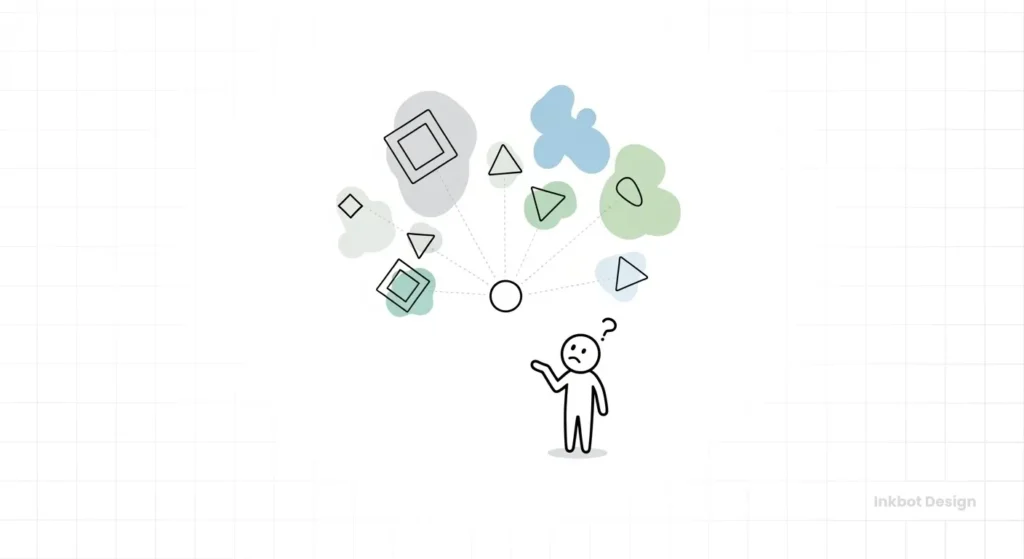
Value Creep vs. Scope Creep
There is a distinction. If a client requests something that adds significant value and you can do it in five minutes, do it. That’s good service. However, if they request something that alters the deliverables outlined in the scope creep section of your agreement, you must charge accordingly.
The “Yes, and…” Technique
Never say “No.” It sounds confrontational. Instead, say:
“Yes, we can absolutely add that feature. That falls outside the current scope, so I’ll send over a separate estimate for that additional work. Once that’s signed off, we can get started.”
This forces the client to put a price tag on their “small request.” Suddenly, that “urgent” change becomes much less urgent when it costs £500.
| Feature | The Amateur Approach | The Professional Approach |
| Feedback | “What do you think?” (Open-ended) | “Does this meet the objective defined in the brief?” (Objective) |
| Revisions | “Unlimited revisions until you’re happy.” | “Two rounds of revisions included. Additional rounds at £150/hr.” |
| Communication | “Call me anytime!” | “Scheduled calls only. Email for everything else.” |
| Payment | “Net 30 / Pay when you can.” | “Work begins upon receipt of deposit. Files released upon final payment.” |
| Conflict | Apologises immediately to keep the peace. | Refers to the contract and suggests a solution. |
6. The Feedback Filter: Prescriptive vs. Descriptive
Clients are not designers, copywriters, or developers. When they try to speak your language, they fail. A difficult client will say: “Make the logo bigger,” or “Move that button to the left.”
This is Prescriptive Feedback. They are telling you how to fix a problem they haven’t identified.
You need to force them into Descriptive Feedback. You need them to tell you what the problem is, not how to solve it.
The Script:
Client: “Can we make the background blue?”
You: “We can certainly look at that. But could you help me understand the goal? Is the current colour not standing out enough, or does it feel off-brand?”
Often, they will admit, “It feels too cold.”
Now you can solve the problem. Maybe blue isn’t the answer. Maybe it’s typography. When you move the conversation from “Do what I say” to “Let’s solve the problem,” you regain your status as an expert.
This is crucial in services like branding or web design, where subjectivity can run rampant.
7. The Nuclear Option: When (and How) to Fire Them
Sometimes, despite your best efforts, boundaries, and patience, a client is simply toxic. They are abusive, they lie, or they refuse to pay.
At this point, you must fire them. Keeping a toxic client is an opportunity cost. Every hour you spend arguing with them is an hour you cannot spend finding a good client or delivering value to your existing good ones.

The “It’s Not You, It’s Me” Strategy
Do not turn it into a fight. You want to extract yourself with minimal damage.
The Script:
“Based on our recent interactions, it has become clear that our agency is not the right fit to achieve the results you are looking for. To ensure you receive the best possible outcome, I recommend we part ways. I will package up all work completed to date and hand it over once the final balance is settled.”
Do not justify. Do not argue. State the fact, offer a smooth handover, and leave.
The State of Client Relations in 2026: The AI Variable
We are now seeing a new breed of “difficult client” emerging: The AI-Empowered Micromanager.
Over the last 18 months, clients have gained access to tools such as Midjourney and ChatGPT. They now come to you with AI-generated mockups, saying, “I did this in 5 seconds, why does your work cost £5,000?”
This represents a pivotal turning point for the industry. You cannot compete on “generation.” You must compete on curation and strategy.
When a client brings you AI work, do not dismiss it. Treat it as a mood board. But you must articulate that AI generates average outcomes based on existing data.
Your role is to deliver exceptional outcomes in line with market strategy. If they cannot see the difference, they are not your client. They are a commodity buyer, and you should let them go.
This reinforces the need for value-based pricing. You are not charging for the hours it takes to move pixels; you are charging for the intellectual property and the commercial result.
Consultant’s Reality Check
I once audited a creative agency in London that was on the brink of insolvency. On paper, they had plenty of work to do. Their revenue numbers looked okay. But their cash flow was a disaster.
Why? Because they had three “whale” clients who treated them like employees. These clients dictated payment terms (Net 60, often paid late), demanded weekend work, and rejected work arbitrarily to delay milestones.
The agency owners were terrified to push back because these clients represented 60% of their revenue.
We implemented a simple “Red Velvet Rope” policy. We fired the worst offender immediately. We renegotiated the contracts of the other two, instituting late fees and strict revision limits. One client walked. The other signed.
The result? Revenue dropped by 30% overnight. But profit went up. The team stopped burning out. They had time to market themselves to better clients. Six months later, they were more profitable than they had ever been.
The Lesson: Revenue is vanity. Sanity (and profit) is sanity.
The Verdict
Dealing with difficult clients is a test of your business maturity. If you are consistently experiencing “bad luck” with clients, it’s essential to examine your onboarding process, contracts, and your own tolerance for disrespect.
You teach people how to treat you. If you allow scope creep, you are teaching them that your time is available at will. If you accept late payments, you are teaching them that your invoices are optional.
Tighten your contracts. enforce your boundaries. Be willing to walk away. It is the only way to build a sustainable business.
Frequently Asked Questions (FAQ)
How do I politely tell a client they are wrong?
Do not tell them they are wrong; tell them the implications of their choice. Use data or design principles to explain why option A serves their business goals better than option B. Frame it as “risking the objective” rather than “bad taste.”
What should I do if a client refuses to pay?
Stop work immediately. Do not deliver final files. Refer to the late fee clause in your contract. If the amount is significant, send a formal demand letter. For smaller amounts, assess if the stress of chasing is worth the cash; sometimes writing it off is the price of freedom.
How do I handle scope creep after the project has started?
Refer back to the original Scope of Work (SOW). State clearly: “This request is outside the SOW. I’m happy to do it, but it will be a separate billable item. Shall I send an estimate?”
Is the customer always right?
No. In professional services (such as law, medicine, design, and engineering), the customer is hiring you because they do not know the answer. If they were always right, they would do it themselves. Your job is to lead them, not just please them.
How do I deal with a client who ghosts me?
Send a “break-up email.” “I haven’t heard from you in X weeks. I’m assuming this project is paused. I will archive the files and remove this from my active schedule. Let me know when you are ready to restart (restart fees may apply).” This usually gets a response.
Should I charge a deposit?
Always. Charging a deposit (50-100%) validates the client’s intent and solvency. Never start work without money in the bank. It changes the dynamic from “auditioning” to “working.”
How do I fire a client without ruining my reputation?
Keep it professional and vague. “Strategic realignment” or “capacity issues” are safe reasons. Never get personal. Fulfil your contractual obligations regarding file handover so they cannot claim breach of contract.
What is the difference between a difficult client and a confused client?
A confused client listens when you explain the process. A difficult client argues with the process. You can educate a confused client; you can rarely fix a difficult one.
Can I charge for “emotional labour”?
Not line-itemised on an invoice, but you should factor the “PITA (Pain In The Ass) Tax” into your pricing for difficult clients. If you know a client will be high-maintenance, quote 20-30% higher to cover the extra management time.
How do I prevent clients from texting me personally?
Do not reply to the text. Reply via email. “I saw your text—just replying here to keep everything in one place.” If you reply to the text even once, you have validated the channel.
What if a client hates the work?
Go back to the brief. Did you meet the requirements? If yes, it’s a subjective preference issue. Offer one round of revisions within reason. If they just “don’t like it” without objective reasons, refer to the cancellation/kill fee clause.
How does trademark vs copyright affect client disputes?
If a client hasn’t paid, you legally own the copyright to the work. Reminding them that they do not have the right to use the work until the final invoice is cleared is a powerful lever for getting paid.