Business Loans for Freelancers: A Comprehensive Guide
Being a freelancer is a rollercoaster ride. The ability to choose your clients and projects? Superb. But are you achieving a stable cash flow? Well, that’s an altogether different ball game.
As an independent-minded, self-employed individual, you must be familiar with the expected financial obstacles that come with this road. From irregular earnings to unexpected costs, keeping your enterprise alive takes work.
What if I told you there was a way of getting the money you need without selling yourself out (or your grandmother’s famous cheesecake recipe)? That’s right, buddy – Freelancer loans could be what saves your life.
- Freelancer loans provide essential cash flow support during irregular income periods and can facilitate growth opportunities.
- Types of business loans include term loans, lines of credit, and invoice financing, tailored for freelancers’ needs.
- Maintaining a strong credit profile and proper financial records increases the likelihood of loan approval.
Why Consider a Business Loan as a Freelancer?

Borrowing money may seem strange when you do not know how much you will earn. But wait for me – a well-timed business loan can be a game-changer for freelancers in different positions. Consider a few scenarios where a loan could be your saviour in shining armour.
Bridging the Cash Flow Gap
Freelancers practically go through this phase of irregular income. We have many invoices to process in one month, and next month, we will need help buying a cup of coffee with our last pennies. Business loans can help inject cash during these lean periods, allowing operational expenses to continue, staff salaries to be paid, and the lights to stay on.
Financing Growth Opportunities
How nice it is to dream about expanding our freelance empires. A large project may require hiring additional personnel or purchasing new equipment. Alternatively, one could finally change his side gig into an actual business. Regardless of how you would like your brand to grow, a business loan will provide a capital injection without requiring you to dip into your savings.
Weathering Unexpected Emergencies
Life always throws us unexpected things right! Your financial stability as an independent contractor may be compromised by unexpected costs, such as medical bills and natural disasters, among other things. A business loan is a form of insurance policy for professional obligations and personal welfare against such uncertainties.
Types of Business Loans for Freelancers
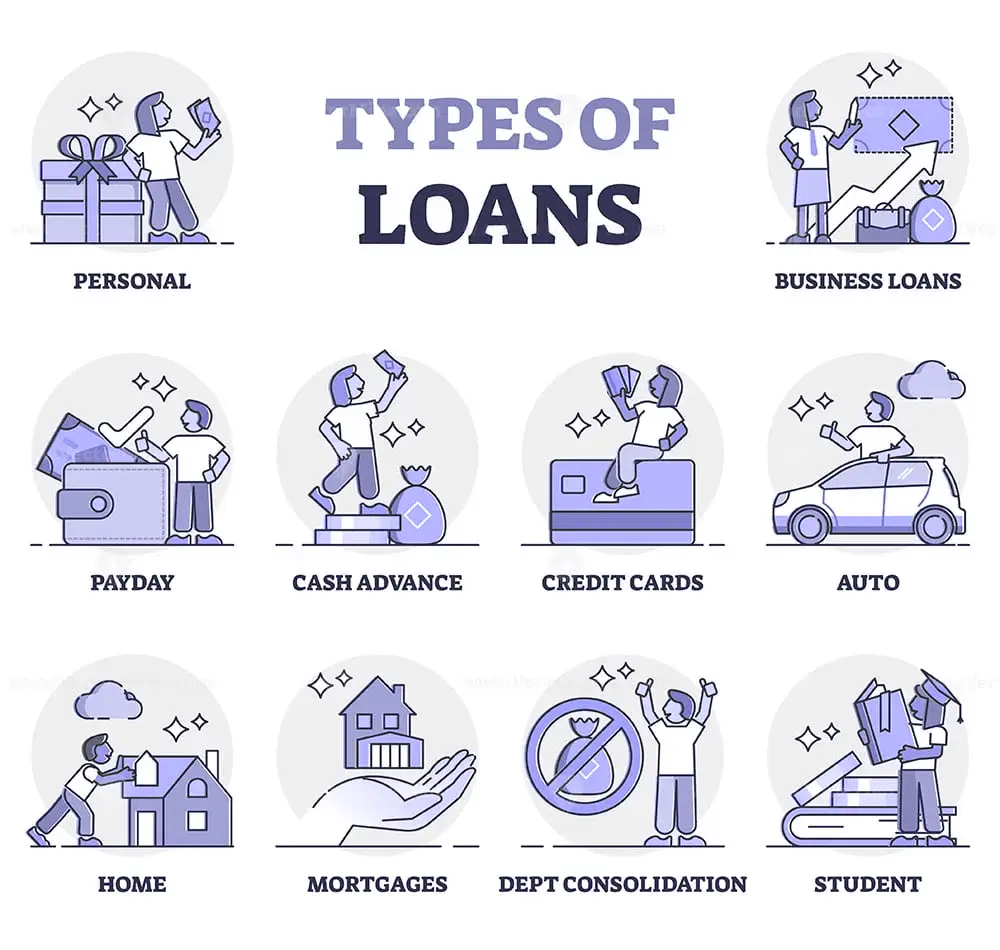
Now that our business loan seems like a good idea, let us look at some available freelancer choices. Brace yourselves; the landscapes for lending are vast:
Term Loans
Term loans are when you can make money quickly and run away without getting caught. You will receive a lump sum payment to pay off over an agreed period with interest (often spanning a few years). Such loans usually have collateral (like equipment or property) and are suitable for larger investments or significant cash needs.
Lines of Credit
Think of a line of credit as your freelance credit card, which has a specific borrowing limit, allowing for funding withdrawal on a need basis and paying interest only on the amounts used. Consequently, this makes them the ideal means of managing financial fluctuations or covering small, recurring expenditures.
Invoice Financing/Factoring
Freelancing comes with its irritations. Clients often delay payment for months before settling their invoices. With invoice financing (factoring), lenders purchase unpaid invoices by providing borrowers with instant loans in advance. It addresses temporary cash difficulties, but be aware that such fees may increase rapidly.
Microloans
Microloans may also be considered when capital requirements are minimal, as these can typically be less than $50,000. These smaller loans are typically offered by nonprofits or alternative lenders, which may be more flexible regarding terms and offer lower rates, making them attractive to beginners among freelancers facing short-term financial crises.
SBA Loans
Right, let’s talk about government-backed options. The fact is, the Small Business Administration (SBA) doesn’t provide you with direct funding. Instead, they guarantee a chunk of your loan with a partner lender, like a bank. This makes the banks feel more secure about lending to a freelancer like you.
What’s in it for you? Better terms, usually. Consider lower interest rates and more time to repay it all. The SBA Microloan programme is particularly beneficial for us, offering up to £40,000 for items such as equipment or simply maintaining a healthy cash flow. Be warned, though, the application is a bit of a paper-chasing marathon.
Business Credit Cards
Think of a business credit card as your financial Swiss Army knife. It’s a revolving line of credit you can dip into whenever you need it. It’s not for buying a new van, but it’s brilliant for covering day-to-day costs, buying software, or bridging a small gap while you wait for an invoice to be paid.
Using one responsibly helps build your business credit history, which is gold dust for future loans. It also keeps your business and personal spending separate, making your accounting a doddle. Just be dead careful, mate. The interest rates can be a proper killer if you let the balance creep up.
Personal Loans
While technically not “business loans”, freelancers with excellent credit scores may consider personal loans as another option. However, one should never forget that mixing business and personal finances is not advised based on experience; thus, cautionary measures should be applied here (perhaps even consulting a finance adviser).
Crowdfunding
With the rise of the internet, crowdfunding platforms like Kickstarter and Indiegogo have emerged as innovative ways for freelancers to collect funds for their specific projects or ventures. It is not a traditional loan, but through crowdfunding, you can leverage your network (and the Internet’s anonymous masses) to raise financial support without making repayments.
Qualifying for a Business Loan as a Freelancer
Let’s talk about the elephant in the room: obtaining a business loan as a freelancer can be slightly more complex than for traditional businesses. They view freelancers as high-risk borrowers due to their inconsistent incomes.
But fret not, my brave freelancer friend! With some groundwork and a good understanding of what lenders seek, you can increase your odds of securing that desirable lending consent.
Strong Credit Profile
Your credit score is your financial report card, which potential lenders will meticulously analyse. Work towards achieving a score higher than 670 (the higher it is, the better) by paying bills on time without fail, reducing outstanding debts and challenging any inaccuracies that may be contained in your credit file.
Steady Income
Lenders require evidence that you have consistent cash inflows to consider you eligible for the loan and, therefore, should always request that you provide income records. Tax returns, bank statements, and invoices from the previous one or two years will help show your earning capacity and how stable (or unstable) your cash flow is.
Correct Financial Records
For this reason, freelancers should never overlook meticulous bookkeeping. Properly arranged financial statements, including profit and loss accounts and balance sheets, give detailed insight into an organisation’s financial state, thereby enhancing the chances of having one’s application for loans approved.
Look, nobody gets into freelancing because they love bookkeeping, I get it. However, lenders need to see that you have your act together. They want cold, hard proof you’re not just winging it. Properly organised financial records show them you’re serious and that you can handle their money.
Get this lot in order, and you’re halfway there. They’ll almost always ask for:
- Tax Returns: At least two years’ worth, for both personal and business.
- Bank Statements: Typically, the last three to six months of statements show your income, even if it’s irregular.
- Financial Statements: A recent Profit and Loss (P&L) statement is a must. It shows you’re making more than you spend.
- Client Contracts or Invoices: This shows them you have work lined up and money coming in. It’s proof of future earnings.
Availability of Collateral (If Possible)
Although it may not always be necessary, providing collateral such as equipment, vehicles, or real estate can increase the chances of approval, thereby making possible loan terms at lower interest rates. However, if you default on payment, they’ll seize whatever asset was used as security against such borrowing request(s).
Establishment of Business Credit
Building business credit, distinct from personal credit, could also have other benefits, as it indicates your commitment to freelance work and provides additional data points for lenders when evaluating your creditworthiness.
Crafting a Solid Business Plan
The lenders need to ensure that you have thought through how to use the money and repay it. A comprehensive business plan, which discusses your objectives, target customers, marketing strategies, and income forecasts, can be a valuable source of confidence in your freelance undertaking.
Online Lenders vs. Traditional Banks
Alright, so where do you actually go to get this cash? You essentially have two main choices: the traditional high street banks or the new online lenders. They both have their place, but they play the game in very different ways.
Traditional Banks
These are your Lloyds, Barclays, and local credit unions. A significant advantage is that they often offer the lowest interest rates. The downside? They can be slow, fussy, and a bit stuck in the past when it comes to freelancers. Their rulebook was written for 9-to-5 businesses, so your irregular income can sometimes throw them off.
The application process can feel like you’re trying to break into Fort Knox. However, if you have a solid history and aren’t in a rush, the savings can be worthwhile.
Online Lenders
These are the fintech companies that operate online. Their whole game is speed and convenience. The application is typically a simple online form, and you can receive a decision and even the cash in a couple of days. They’re also much more comfortable with the freelance model because their algorithms are built for it.
The trade-off for all this speed is that you’ll likely pay a higher interest rate or more fees. It’s a classic case of paying for convenience. If you need money quickly to seize an opportunity, they are often your best bet.
Tips for Managing a Business Loan as a Freelancer

You have successfully secured the elusive business loan – congratulations! The journey doesn’t stop there. You must manage your loan responsibly to avoid financial mishaps and achieve success in this venture. Here are some tips to help:
- Budget: Ensure you determine a realistic budget and closely monitor your spending to maximise the use of loan funds.
- Stay in touch with your lender consistently: Openness counts here. If there are any significant changes in your finances or business operations that may affect your ability to repay the loan, please notify your lender.
- Seek alternative ways of repaying loans: Several lenders provide adjustable repayment plans, which can be customised according to freelancers’ unique cash flow trends. Do not hesitate any longer; go for conditions that match your earning times.
- Loan repayment must be prioritised: Although it is sometimes tempting to spend money elsewhere, paying off what you owe should come first to avoid late charges, additional fines or possible harm to your credit ratings.
- Make a distinction between personal and business finances: You can easily track expenses related to borrowing by having separate accounts for individual and company outlays, hence simplifying bookkeeping functions.
- Look into refinancing options: If there is an improved financial position or lower interest rates, consider renegotiating the loan terms and securing better conditions that may lower the total cost of borrowing.
- Set up automatic payments: Honestly, this is a no-brainer. Life as a freelancer is chaotic enough without trying to keep track of payment dates. Just set up a direct debit and forget about it. It protects you from daft late fees and keeps your credit score looking healthy, which is exactly what you want.
Alternative Financing Options for Freelancers
However, business loans are not the be-all and end-all. Based on your unique preferences and conditions, you may want to consider these alternative methods of financing:
- Grants and Government Programs: Various government offices and non-profit organisations offer grants, subsidies or loans with low interest rates specifically designed for small businesses and freelancers. Carry out a study to find out if there are any assistance programs you can qualify for in your area or field.
- Investor Funding: If you are daring enough (and have an excellent business idea), looking for investors may be an option. Equity funding may be applicable in cases involving angel investors, venture capitalists, or crowdfunding platforms such as Wefunder or StartEngine.
- Retirement Account Loans or Withdrawals: For those who have adequately funded their retirement accounts, borrowing from them (or withdrawing funds) from their 401(k) or IRAs may work well as a short-term financing solution. However, consider the potential tax implications and early withdrawal penalties when taking this path.
- Borrowing from Friends and Family: Although it has its downsides (both financial and personal), obtaining unsecured loans from people close to you is one option – just ensure that it is treated professionally with clear terms of the transaction, including repayment plans, to avoid unnecessary scenes.
The Pros and Cons of Business Loans for Freelancers

As with all financial decisions, choosing a business loan as a freelancer has advantages and disadvantages that must be carefully considered. Let’s go through them:
Pros:
- Access to funding for growth, emergencies or cash flow management
- Ability to save personal reserves and assets
- Tax advantages, if any, should be consulted with tax professionals.
- Differentiating between personal and corporate finances.
- Chance of establishing a firm credit rating
Cons:
- Risk of defaulting on the loan that ruins credit history.
- Interest rates and fees can significantly increase the overall cost.
- Collateral requirements may endanger personal property.
- Irregular income can be put under strain by inflexible repayment timetables.
- Prolonged processes of application and approval.
Finally, whether or not you decide to take out a business loan depends entirely on your unique financial circumstances, aspirations and risk tolerance as a self-employed worker (freelancer).
Conclusion
Freelancers often feel like risking their lives in a financial environment with no safety net. But then again, don’t worry because loans can help you with this problem. It is an essential tool that will give you the financial backing required to survive through periods of negative cash flow, exploit growth opportunities and maintain a successful freelance business.
However, remember that obtaining a loan is only half the battle. For instance, it entails proper financial management, prudent budgeting, and responsible repayment.
Ultimately, whether to take out a business loan should be an informed choice, highlighting its probable merits versus demerits and aligning it with your future goals as a freelancer. Nevertheless, those elusive words may be meaningless without careful consideration and long-term strategies, especially if you are financially savvy enough to make it happen.
FAQs
Can I get a business loan if I don’t have a registered business?
Although registering an LLC or corporation can strengthen your chances of securing funding, it is not always mandatory to do so. Provided you can demonstrate a consistent income stream and a strong credit profile, many creditors consider loans to freelancers who trade in their own names.
How much money does an average freelancer borrow?
Lending institutions and the type of loan you seek will determine how much money you can borrow, as loan amounts vary significantly depending on the lender and the type of loan. Generally, microloans (less than $50,000) are more available to freelancers, while larger sums require stricter eligibility criteria and collateral.
Can I use my business loan for personal purposes?
Though possible in some cases, using a commercial loan for personal financial obligations is generally discouraged (and could be seen as fraudulent). It is advisable to keep separate accounts for your enterprise and personal finances, borrowing funds only when necessary for company needs.
How long does it usually take to process applications?
Depending on the complexity of your application and the lender, processing and approval may take anywhere from days to weeks. Online lenders and alternative financing providers typically process loans more quickly than traditional banks.
Do I need security as a freelancer when applying for a business loan?
Not necessarily. Some lenders may require security (usually equipment or property) in exchange for higher-value loans, while others may be willing to offer unsecured ones based solely on your creditworthiness or income history.
Can my financial status enable me to refinance my business loan?
Yes! Suppose you borrowed this money while still earning meagre income or had a poor credit report score. In that case, these figures experience significant upward changes once they are in possession of the funds, as refinancing with better rates (lower interest rates), longer repayment periods, etc., becomes realisable. This option should be pursued, as it could lead to long-term savings.
Can freelancers claim tax deductions on business loan interest?
Most of the time, yes. However, depending on your specific situation and how you use the borrowed funds, it is always wise to consult with a tax advisor to ensure that you follow the proper rules and maximise your tax savings.
What happens if I fail to pay my business loan as a freelancer?
Failure to make timely payments (default) under a business loan may lead to consequences such as a low credit rating, possible legal action by lenders and loss of security, for instance. One should be prudent when considering borrowing because meeting financial obligations next month can become difficult.
Can two independent contractors or two freelancers apply for a business loan together?
Yes. Many lenders will approve joint applications for small business loans, thereby increasing the chances of approval and the amount allowed for borrowing. However, this involves terms of agreement upon which each party selects their liability according to their experience in previous years.
Are there any specific loans or programs for freelancers in my industry or area?
Most likely! Depending on your location, industry, and other considerations, unique financing options, including specialised loan programs and grants, may be available only to individuals like you who work independently. You may discover what is offered through Small Business Development Centres (SBDCs), industry trade groups or government units.
How can I increase my chances of qualifying for a business loan as a freelancer?
Factors such as improving your credit score, maintaining accurate financial records, offering collateral (if available), and developing a well-structured business plan will significantly enhance the likelihood of having your loan application approved. It may also be helpful to approach several lenders to compare rates and consider alternative financing options, allowing you to find the right loan product.
Should I apply for a personal or business loan if I work as a freelancer?
Although freelancers might consider taking out personal loans when faced with this dilemma, it is generally better to avail oneself of commercial loans because they help keep personal and business finances separate. However, it all depends on your circumstances, particular worthiness, and your intended use.