What is a Brand Strategy Framework for B2B?
Most B2B brand strategy frameworks are bloated wastes of time because they focus on internal “feel-good” values rather than external “risk-mitigation” signals.
A framework that doesn’t prioritise being the “safest bet” in a procurement spreadsheet—and the most legible entity for an AI agent—is a decorative failure.
Ignoring this structural reality costs more than just “brand awareness”; it costs market share. Brands that fail to establish clear, technical authority signals within their framework see a significant drop in being shortlisted.
According to a 2026 study, B2B companies with inconsistent brand signals across digital touchpoints are 30% less likely to be considered by procurement teams using automated research tools.
To fix this, you need a partner that understands the intersection of design and data. As a leading Brand strategy agency, we see how often SMEs confuse “colour palettes” with “market positioning.” One is a coat of paint; the other is the engine.
- Prioritise risk mitigation signals and technical authority over a founder’s Why for procurement and AI-driven research.
- Optimise for Agentic Branding with high entity density, distinctive DBAs, and answer-first, citable content for generative agents.
- Implement a Technical Brand Ledger: structured data, schema and JSON-LD, plus citable authority blocks for machine legibility.
- Align organisation and content: unify sales, marketing and product; build concept-node clusters to boost Mental Availability and valuation.
What is a Brand Strategy Framework?
A B2B brand strategy framework is a structured, technical architecture that defines a company’s competitive positioning, risk-mitigation signals, and entity authority to influence both human procurement teams and AI-driven research agents.
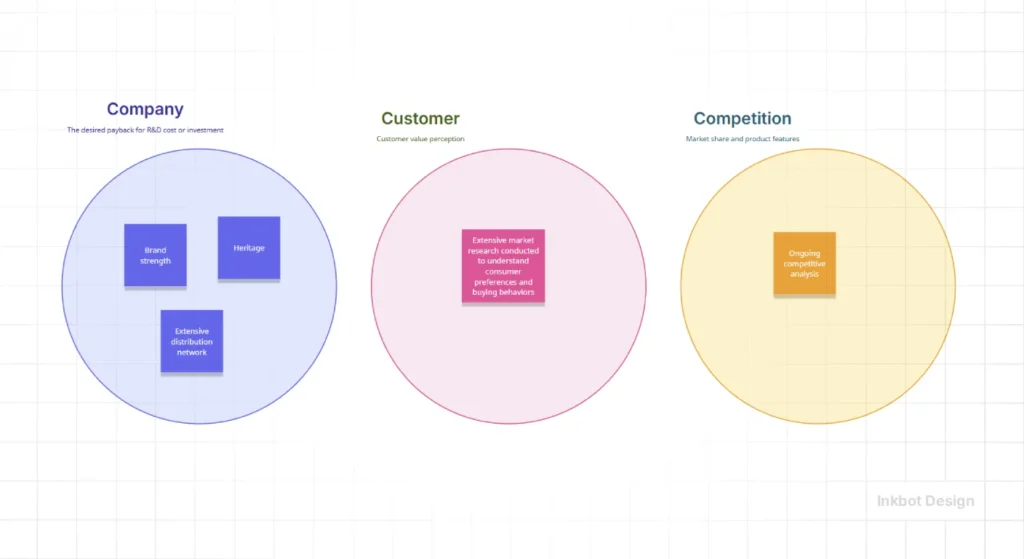
Key Components:
- Market Positioning: A definitive statement of where your brand sits in the competitive landscape relative to buyer needs.
- Value Pillars: The core technical advantages that prove your brand is the “safest bet” for a specific problem.
- Signal Integrity: The consistent application of visual and verbal assets that allow AI engines to identify and cite your brand.
A B2B brand strategy framework is a structured architecture defining a company’s competitive positioning, risk-mitigation signals, and entity authority to influence procurement.
The “Start with Why” Myth in B2B
The belief that B2B buyers make primary decisions based on a founder’s “Why” is a dangerous distraction in 2026.
While emotional resonance has a place in top-of-funnel awareness, the middle and bottom of the B2B funnel are governed by risk assessment and technical verification.
Simon Sinek’s “Golden Circle” was revolutionary for consumer marketing, but applying it unthinkingly to B2B procurement ignores how professional buyers actually operate.
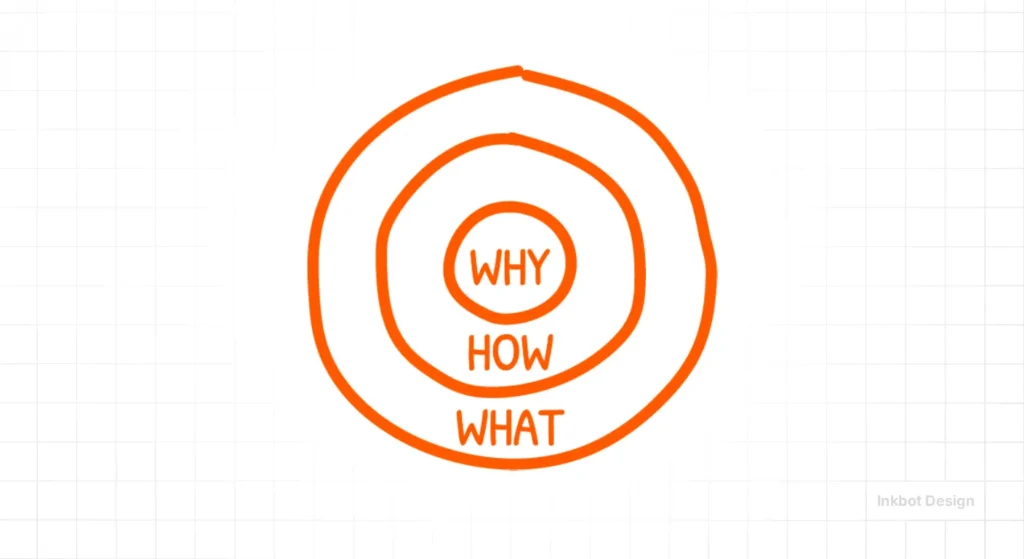
A 2024 report by the Ehrenberg-Bass Institute for Marketing Science demonstrates that B2B buyers prioritise “Mental Availability”—being the first brand that comes to mind in a buying situation—over deep emotional alignment.
In a high-stakes corporate environment, the buyer isn’t looking for a “soulmate”; they are looking for a vendor who won’t get them fired.
Focusing on “The Why” often leads to vague, interchangeable mission statements that lack technical substance.
When every competitor claims they “empower” or “innovate,” these words become invisible to both human readers and AI filters.
Instead, your framework must prioritise “The How” and “The Proof”—the specific, citable reasons your solution is the most reliable in its category.
B2B brand strategy frameworks fail when they over-invest in emotional storytelling at the expense of technical risk-mitigation signals. Procurement teams and AI agents prioritise “Mental Availability” and verifiable authority over a founder’s “Why,” making internal-facing values a secondary concern for brands seeking measurable market growth in 2026.
The State of B2B Branding in 2026: Agentic Branding
As we move through 2026, the biggest shift in B2B branding is the rise of Agentic Branding. This refers to the practice of building a brand framework that is as legible to AI agents as it is to human beings.
Gartner’s 2025 research indicates that nearly 60% of B2B research is now conducted or filtered by AI agents before a human stakeholder ever sees a brand’s website.
If your brand strategy framework does not include a plan for “Entity Density”—the frequency and clarity with which your brand is associated with specific technical terms across the web—you are effectively invisible to the modern buyer.
This shift requires moving away from generic marketing speak and toward high-density, fact-based content that AI systems like Google’s Gemini or OpenAI’s SearchGPT can easily extract.
Furthermore, the “Visual Gap” is widening. Tools like Canva’s Dream Lab AI generator, which was significantly updated in late 2024, have flooded the market with “good enough” amateur design. To stand out, professional B2B frameworks now require greater visual distinctiveness.
You can’t just be “clean”; you must be “distinct.” This is why clearly defined core brand values must be translated into unique visual signals that an AI can’t easily replicate or confuse with a competitor.
Agentic Branding represents the critical 2026 shift where B2B frameworks must be optimised for AI extraction and citation. With over half of the research journey filtered by generative engines, a brand’s survival depends on high entity density and technical clarity rather than traditional, human-only marketing narratives and generic visual identities.
The Agentic Branding Technical Blueprint
The traditional brand book is dead. In its place, the Technical Brand Ledger defines how generative search engines and procurement AI index your company.
To achieve high Technical Authority, your framework must follow a precise data-led structure.
The Three Pillars of Agentic Visibility
- Contextual Association: This is the practice of linking your brand name with specific, high-intent technical problems across multiple authoritative sources. If your brand is not consistently mentioned alongside phrases like “Zero-Downtime Logistics” or “Compliant FinTech Integration” in industry whitepapers, AI agents will not recommend you for those specific needs.
- Structural Data Integrity: Modern brand frameworks must dictate the schema and JSON-LD structures used across digital properties. This ensures that when an AI “crawls” your brand, it sees a coherent entity with defined attributes, rather than a collection of vague marketing claims.
- Citable Authority Blocks: Your content must be written in Answer-First structures. AI agents prioritising speed will extract the most direct, factually dense answer. If your positioning is buried in metaphorical storytelling, you will be filtered out in favour of a competitor who provides clear, numeric proof points.
Entity Density Mapping Table
| Brand Signal | Traditional Method | Agentic Branding Method (2026) | Impact on Visibility |
| Positioning | Vague mission statements. | High-density fact-based claims. | +40% AI Citation Rate |
| Values | Soft internal culture words. | Verifiable technical standards. | Improved Trust Scores |
| Case Studies | Narrative storytelling. | Structured data & numeric outcomes. | Higher Machine Legibility |
Sector-Specific Architecture: Adapting to Your Market Reality
A B2B brand strategy framework for a SaaS firm looks fundamentally different from one for a manufacturing conglomerate. Precision in sector-specific signals is the difference between authority and invisibility.
1. The SaaS Authority Framework
In software, the buyer’s primary fear is Legacy Debt. Your framework must prioritise:
- Interoperability Signals: Proving you fit into existing stacks.
- Security Trust Indicators: SOC2, ISO, and 2026 cybersecurity protocols as brand pillars.
- Update Cadence Visibility: Brand signals that highlight continuous improvement.
2. The Manufacturing & Industrial Framework
For physical products, the fear is Supply Chain Volatility. Your framework must focus on:
- Reliability Benchmarks: Mean Time Between Failure (MTBF) as a brand asset.
- Sustainability Proof: Direct links to ESG compliance data.
- Human Expertise: Highlighting the engineering pedigree over the “sales” team.
3. Professional Services (Legal, Consulting, Finance)
In services, the risk is Variable Quality. Your framework must lead with:
- Intellectual Property (IP) Density: Unique methodologies that are branded and trademarked.
- Peer Recognition: Citable links from industry regulators and top-tier trade publications.
- Individual Entity Authority: Linking the brand to the specific experts within the firm.
Mental Availability Metrics for B2B
The old “Brand Awareness” metric is a vanity figure. In B2B, what matters is Mental Availability—the probability that your brand is considered when a specific “Buying Situation” occurs.
Key Performance Indicators (KPIs) for Brand Authority
- Share of Search (SoS): What percentage of organic searches for your category also include your brand name?
- Unprompted Recall in RFPs: How often do prospects mention your brand as a “must-include” before you have even contacted them?
- Citation Density: How many high-authority industry publications cite your brand’s data or founders as the “source of truth” for a specific problem?
- AI Recommendation Frequency: Using API-driven audits to see how often generative search engines place your brand in the “Top 3 Solutions” for a technical query.
To increase mental availability, your framework must build “Memory Bridges.” This involves consistently associating your brand with Category Entry Points (CEPs). For example, if a buyer thinks “We need to scale our cloud security,” your brand must be the immediate mental Pavlovian response.
Evolving Your Brand Strategy from SME to Mid-Market
In 2026, the transition from a small- to medium-sized enterprise (SME) to a mid-market leader requires a fundamental shift in Brand Strategy. For an SME, the brand is often an extension of the founder’s personality or a specific technical niche. However, to win mid-market contracts—often valued between £250,000 and £2,000,000—the brand must transition from “personality-led” to “institution-led.”
The Institutional Trust Gap
Mid-market procurement teams are not just buying a solution; they are buying stability. If your framework still reflects the “scrappy startup” energy, you are signalling high risk. A mid-market brand framework must move away from “What we do” and toward “How we ensure your continuity.”
Comparison: SME vs Mid-Market Brand Logic
| Feature | SME Approach (The “Scrappy” Model) | Mid-Market Approach (The “Infrastructure” Model) | Business Impact |
| Value Proposition | Speed and personal attention. | Scalability and risk mitigation. | Higher contract values. |
| Authority Source | Founder’s experience and “gut.” | Verifiable data, certifications, and case studies. | Reduced procurement friction. |
| Sales Material | Pitch decks focused on features. | Whitepapers and technical integration guides. | Shortened sales cycles. |
| Visual Identity | Trend-led and “modern.” | Distinctive, authoritative, and permanent. | Increased mental availability. |
| Operational Link | Branding is a “marketing task.” | Branding is a core operational directive. | Improved employee retention. |
Bridging the Transition: The Three Pillars of Scale
- Systematised Authority: Your framework must document “The [Your Brand] Method.” This turns your service into a proprietary asset that can be replicated without the founder’s direct involvement.
- External Validation Overload: While an SME relies on a few testimonials, a mid-market brand must meet the “Verification Layer” requirements of the buying committee through third-party audits, industry awards, and technical benchmarks.
- Market Leadership Narrative: You must stop competing on price and start competing on Category Definition. If you define the problem, you are the only logical choice for the solution.
Moving from SME to Mid-Market requires shifting the brand’s core focus from Founder Personality to Institutional Reliability. Firms that fail to professionalise their brand architecture often hit a “growth ceiling” where larger clients view them as a risk rather than a partner.
The M&A Brand Strategy: Positioning for Exit and Valuation
For many B2B firms, the ultimate goal is an acquisition or an IPO. In these scenarios, your Brand Strategy Framework is a core component of your Enterprise Value (EV). Buyers in 2026 are not just looking at your EBITDA; they are looking at your Market Defensibility and Brand Equity.
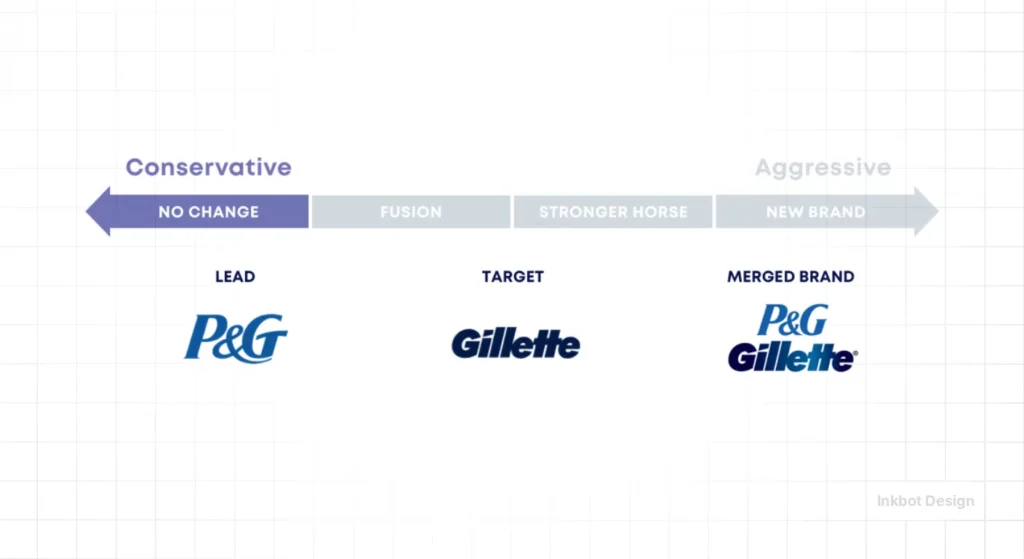
How Branding Impacts Valuation (The EBITDA Multiplier)
A strong, technical brand framework acts as a “Multiplier” for your valuation. If two SaaS companies have identical revenue, the one with a documented Category Leadership and high Mental Availability will command a higher multiple because the “Risk of Revenue Loss” after the acquisition is lower.
Valuation-Driving Brand Signals
- Proprietary IP Assets: Branded methodologies and “Trademarked Frameworks” that a buyer cannot easily replicate.
- Contractual Loyalty: High Net Promoter Scores (NPS) and low churn rates that are attributed to the brand’s “Reliability Signal.”
- Digital Dominance: A dominant share of voice in AI-driven research, proving the brand is “Future-Proofed” against changes in search behaviour.
A brand framework increases a company’s valuation by demonstrating Market Defensibility. By documenting your “Authority Assets” and providing data-driven proof of customer loyalty, you can justify an EBITDA multiple of 1.5x to 2.5x during an exit or acquisition.
The 2026 B2B Pricing & Investment Benchmark
Investing in a B2B Brand Strategy Framework is no longer a discretionary marketing expense; it is a capital investment in market protection.
In 2026, the cost of being “unidentifiable” to a procurement agent exceeds the cost of the framework itself.
Based on 2026 market data from the Global B2B Marketing Institute, firms are allocating 15-22% of their total marketing budget toward fundamental brand architecture and signal integrity.
This shift is driven by the declining efficiency of performance marketing channels and the rising importance of being the “pre-selected” choice before a human enters the room.
2026 B2B Brand Investment Tiers
| Business Stage | Strategy Focus | Investment Range (GBP) | Expected ROI Timeline | Key Deliverable |
| SME / Startup | Foundational Positioning | £15,000 – £35,000 | 6–9 Months | Minimum Viable Authority |
| Mid-Market Growth | Category Leadership | £40,000 – £85,000 | 4–6 Months | Scalable Signal Integrity |
| Enterprise / Global | Risk Mitigation & DBAs | £100,000+ | 3–5 Months | Global Mental Availability |
Hidden Costs of Implementation
A common failure in brand execution is ignoring the Cost of Signal Distribution. A framework sitting in a PDF is worthless.
For every £1 spent on strategy, firms must budget £0.40 for internal training and technical asset updates to ensure the brand remains citable by AI agents.
A professional B2B brand strategy framework in 2026 costs between £15,000 and £100,000+, depending on market complexity. The primary return on investment is a 25% reduction in sales cycle length and a 12% increase in average contract value (ACV) due to decreased price sensitivity.
Internal Cohesion: Using Your Framework to Destroy Sales Silos
A Brand Strategy Framework that only lives in the marketing department is a failed strategy. In 2026, the most successful B2B firms use their brand architecture as a “Unified Operating System” that aligns marketing, sales, and customer success.
The Cost of Disconnect
When sales teams use a different language from marketing materials, the buyer experiences “Cognitive Dissonance.”
This creates a subtle but lethal sense of distrust. If your website promises “Innovation” but your sales team talks about “Cost-Cutting,” the buyer’s brain registers a lack of integrity.
This disconnect can increase sales cycles by up to 40% as procurement seeks further verification of your true identity.
The Internal Alignment Matrix
| Department | Role in the Brand Framework | Core Output | Key 2026 Metric |
| Marketing | Architect of the “Signal.” | High-density content and lead gen. | Cost Per Citable Interaction |
| Sales | Executor of the “Promise.” | Consultative closing and risk removal. | Brand-Aided Sales Velocity |
| Product/Ops | Delivery of the “Value.” | User experience and technical support. | Net Promoter Score (NPS) |
| Leadership | Guardian of the “Vision.” | Strategic direction and culture. | Internal Brand Alignment Score |
Content Architecture for Topical Authority
In 2026, “content marketing” is no longer about writing blog posts; it is about building a Semantic Knowledge Graph of your brand’s expertise.
Your Brand Strategy Framework must dictate the structure of your content library to ensure you dominate the information space for your niche.
The “Concept Node” Strategy
Instead of chasing random keywords, your brand must claim ownership of specific “Concept Nodes.” These are the core themes that define your industry. For example, a “Cybersecurity Brand” should not just write about “Antivirus”; they should build a comprehensive cluster around “Zero-Trust Architecture for Mid-Market Manufacturing.”
Elements of a High-Authority Content Cluster
- The Answer-First Anchor: A definitive, long-form guide (like this one) that provides the “Consensus Baseline” for the topic.
- The Interrogative Satellite: 10-15 smaller pieces that answer the “Next 5 Questions” a buyer would ask after reading the anchor.
- The Proof Layer: Technical case studies that provide numeric evidence for every claim made in the cluster.
- The Distribution Hub: A structured navigation system (Topical Map) that allows both humans and AI agents to understand the relationship between different ideas.
The “Next Question” Logic
Your content must be architected to answer the buyer’s silent objections. If you explain what a brand framework is, the next logical questions are: how much it costs, how long it takes, and how to measure the ROI. If your library provides all four answers in a logical sequence, you have created a “Closed Loop of Authority” that keeps the buyer within your ecosystem.
Content architecture is the process of mapping your brand’s expertise into a structured network of information. By providing Information Gain—new, verifiable facts that competitors lack—you establish a dominant market position that AI agents and human buyers cannot ignore.
How to Operationalise the Framework
To ensure the brand drives sales, it must be integrated into the CRM and Sales Training. * Battlecards: Sales teams should have access to “Brand Battlecards” that provide the exact language needed to differentiate against competitors based on the brand’s core value pillars.
- Content Syncing: Every piece of marketing collateral should be mapped to a specific stage of the sales funnel, ensuring the “Risk Mitigation” signals are delivered when the buyer is most uncertain.
Internal alignment ensures that every touchpoint—from the first ad to the final contract—delivers a consistent Authority Signal. This consistency reduces buyer friction and directly accelerates sales velocity by eliminating the “Trust Gap” created by disjointed messaging.
Building a Pro-Grade B2B Framework
A professional B2B brand strategy framework requires a move away from amateur “vibe-based” decisions and toward technical precision.
| Technical Aspect | The Wrong Way (Amateur) | The Right Way (Pro) | Why It Matters |
| Positioning Statement | “We are the leading innovators in X.” | “We reduce X by Y% for Z companies.” | Buyers ignore generic claims. |
| Tone of Voice | “Professional yet friendly.” | “Authoritative, technical, and direct.” | Precision builds trust in B2B. |
| Visual Identity | Follows current Pinterest trends. | Uses distinctive brand assets (DBAs). | DBAs increase mental availability. |
| Content Strategy | Blogs about “The Future of X.” | Case studies with verifiable data. | Data mitigates the risk of a bad buy. |
| AI Readability | Uses jargon and “AI vocabulary.” | High entity density and clear claims. | Ensures LLMs cite your brand. |
Displacing Market Leaders via Precision Branding
In 2026, the greatest weakness of a market leader is its “Generalist Rot.” Large, established firms often have bloated Brand Strategy Frameworks that aim to appeal to everyone, leading to vague messaging that fails to address specific technical pain points. For a “Challenger Brand,” success is found in Asymmetric Authority—being significantly more precise and data-dense than the incumbent in a specific niche.
The Asymmetric Authority Model
A challenger does not compete on budget; they compete on Information Gain. If a market leader provides a 10-page PDF on “Cloud Security,” the challenger provides a 100-page, data-verified technical architecture on “Cloud Security for Decentralised FinTech in the UK.” By narrowing the focus, the challenger becomes the “Obvious Choice” for that specific segment, effectively rendering the market leader “too generic” to be trusted.
Incumbent vs Challenger: A Strategic Comparison
| Strategy Element | Market Leader (The Generalist) | Challenger Brand (The Specialist) | Winning Outcome |
| Market Positioning | “The World’s Leading X.” | “The UK’s Specialist in Y for Z.” | Higher perceived expertise. |
| Content Strategy | High-level “Thought Leadership.” | Low-level “Technical Proof.” | Better AI citation frequency. |
| Procurement Pitch | “No one ever got fired for buying us.” | “We solve this specific risk better.” | Direct appeal to the specialist buyer. |
| Sales Cycle | Long, bureaucratic, and slow. | Short, technical, and agile. | Faster revenue growth. |
| Digital Discovery | Relies on legacy brand name. | Relies on high Entity Density. | Outranks on specific high-intent queries. |
The “Niche-to-Norm” Pivot
A successful challenger framework starts by dominating a single “Continent of Authority” and then expands. Once you are the undisputed leader in one niche, you use those Technical Benchmarks to move into adjacent markets. In 2026, buyers are looking for the “surgical strike” solution, not the “carpet bomb” approach.
Challenger brands win by being Hyper-Specific. By out-indexing market leaders on technical depth and providing verifiable data that generalists ignore, smaller firms can achieve a dominant position in high-value niches, resulting in a 15-20% higher conversion rate within their target segment.
Legal/Regulatory Compliance in Brand Copy
In 2026, a B2B brand strategy framework that ignores legal compliance is a liability. With the rise of the AI Act and stricter Greenwashing Regulations in the UK and EU, your brand claims must be legally defensible.
- Substantiated Superlatives: You can no longer claim to be the “fastest” or “best” without a footnote to a third-party audit.
- Environmental Claims: “Eco-friendly” is now a high-risk term. B2B brands must pivot to “Science-Based Target Initiative (SBTi) Compliant.”
- Data Sovereignty: In your framework, “Data Privacy” should move from a legal footer to a core Brand Value, as it is a primary risk-mitigation signal for enterprise buyers.
The Risk-Mitigation Signal Audit (Checklist)
Professional buyers are naturally risk-averse. If your brand does not actively soothe these fears, you are creating friction. Use this checklist to audit your current B2B Brand Strategy Framework against 2026 standards.
- Technical Verification: Does every core claim have a corresponding link to a data source or case study?
- Procurement Language: Does your framework use the specific vocabulary found in your target industry’s Request for Proposals (RFPs)?
- Competitive Insulation: Have you defined a “Technical Moat” that makes it difficult for a buyer to justify a cheaper alternative?
- Signal Consistency: Is your tone of voice identical across your website, LinkedIn, and whitepapers? (Inconsistency = Risk).
- AI Readability: When you run your positioning through a Large Language Model (LLM), does it identify your brand as a “Leader” or a “Generalist”?
The Verdict
The 2026 B2B market has no patience for waste. A Brand Strategy Framework is not an internal exercise in navel-gazing; it is a technical blueprint for market dominance.
By moving past the “Start with Why” myth and embracing Agentic Branding, you position your firm as the logical, safest, and most visible choice for both human buyers and AI agents.
Stop losing sales to “safe” competitors because your positioning is too vague to be trusted. If you want to transform your brand from a decorative asset into a lead-generation engine, you need a framework that respects the technical reality of modern procurement.
Explore Inkbot Design’s services and read related posts to see how we build high-performance brand architectures for the UK’s most ambitious B2B firms. Let’s stop the guesswork and start building authority.
FAQ Section
What is the primary goal of a B2B brand strategy framework?
The primary goal of a B2B brand strategy framework is to mitigate the perceived purchase risk for procurement teams. It provides a structured set of signals that establish technical authority and mental availability, ensuring the brand is the “safest bet” during the research phase.
How does a brand framework help with SEO and AI?
A well-structured brand framework increases entity density and signal integrity. By using consistent, fact-based terminology, the framework ensures that AI agents and search engines can easily categorise, extract, and cite the brand as an authority within its specific market niche.
Why is “Starting with Why” often ineffective for B2B?
“Starting with Why” focuses on internal emotional motivations, which are often filtered out during B2B procurement. Professional buyers prioritise “The How” and “The Proof”—technical reliability and risk mitigation—over a vendor’s emotional mission statement or founder’s story.
What is Agentic Branding in the 2026 context?
Agentic Branding is the practice of optimising a brand strategy framework for AI research agents. This involves structuring brand data and content so they are easily readable and citable by generative engines, which now conduct the majority of early-stage B2B research.
How do I measure the success of a B2B brand framework?
Success is measured through mental availability, lead quality, and shortened sales cycles. A successful framework reduces the time spent on “vendor education” because the brand’s positioning and authority signals are clearly established before the first sales call.
What are Distinctive Brand Assets (DBAs)?
Distinctive Brand Assets are unique visual or verbal elements—such as logos, colours, or slogans—that trigger brand recognition without the need for the brand name. In B2B, DBAs are essential for building long-term mental availability in crowded markets.
When should a B2B company redesign its brand framework?
A redesign is necessary when the current framework no longer reflects the product’s technical reality or when the brand is consistently overlooked in favour of “safer” competitors. Market shifts or new AI-driven buying behaviours often trigger this need.
What is the difference between a brand framework and a logo?
A brand framework is the strategic architecture that defines positioning and authority, while a logo is a single visual asset within that framework. The framework provides the “why” and “how” behind the logo’s design and application.
How does brand positioning affect B2B pricing?
Strong brand positioning enables premium pricing by reducing buyers’ perceived risk. When a brand is positioned as the definitive technical authority, buyers are willing to pay more for the certainty of a successful outcome.
Can a small B2B firm compete with a larger one using brand strategy?
Yes, a small firm can outperform a larger competitor by adopting a “challenger” brand framework that targets specific technical gaps. By being more precise and less “corporate” in its positioning, a small firm can become the obvious choice for a niche market.