B2B Brand Positioning: Guide for Marketing Directors
Most B2B brands don’t have a positioning problem. They have a courage problem.
The workshops have been run, the competitive matrix has been built, and the output is language so carefully negotiated — so diplomatically inoffensive — that it communicates nothing to anyone.
“We help businesses grow.”
“Your trusted partner in digital transformation.”
“Innovative solutions for modern challenges.”
These aren’t positioning statements. They’re the verbal equivalent of beige.
The cost of this is measurable. According to Bain & Company’s research on B2B purchase decisions, buyers typically shortlist only two to three vendors before committing — and brand perception shapes that shortlist before a single sales call.
If your brand positioning isn’t doing the pre-sales work to make you the obvious choice, your sales team is fighting an uphill battle every single time.
This guide covers what category-defining B2B brands actually do differently. Not the theory.
The decisions, the trade-offs, and the specific mistakes that most marketers never get told about because no one wants to say the uncomfortable thing.
- Be specific: choose a precise frame of reference and one clear point of difference; like Salesforce's No Software clarity wins shortlists.
- Signal necessary points of parity (POPs) first, then lead with one credible point of difference (POD); buyers need safety boxes checked.
- Ensure AI visibility with Atomic Claims: explicit category, quantified attribute, causal evidence; have the courage to keep messages specific and consistent.
What Is B2B Brand Positioning?
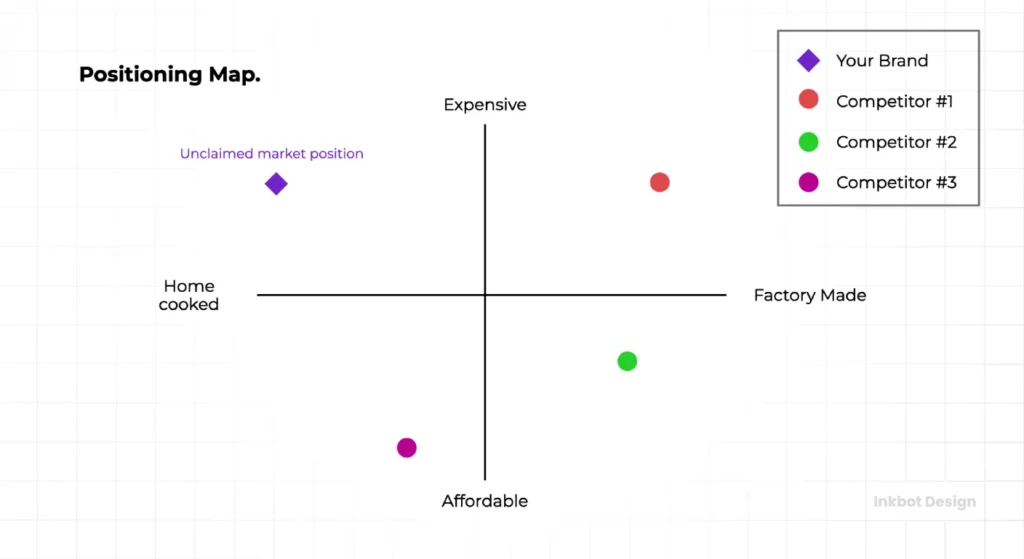
B2B brand positioning defines the specific market category in which a company competes, the target customer it serves, and the single most compelling reason the customer should choose it over every available alternative.
Key components:
- Frame of reference — the category your brand sits within, which determines who you’re being compared to
- Target customer — not a demographic, but a specific decision-maker with a specific problem
- Point of difference — the one reason, credibly substantiated, that makes you the better choice
B2B brand positioning is effective when a prospective buyer, hearing your name for the first time, can immediately place you in a category and form a preliminary preference — without visiting your website or speaking with your team.
Why Generic B2B Positioning Is a Commercial Liability
Generic B2B positioning doesn’t just fail to attract customers — it actively costs you revenue at the top of the funnel, before you’ve had a chance to make a case.
Bain & Company’s research on B2B purchase decisions consistently shows that buyers form vendor shortlists early, often before engaging with sales teams.
A positioning message that fails to signal category relevance and clear differentiation immediately means your brand doesn’t make the shortlist. It doesn’t get considered. It disappears.
The Salesforce vs Siebel Systems story from the early 2000s is the canonical B2B positioning case study for good reason. Siebel was the dominant CRM provider — expensive, enterprise-grade, installed on-premise. Salesforce didn’t try to out-feature them. It built its entire brand around two words: “No Software.”
That positioning statement — a direct attack on the incumbent’s delivery model — didn’t describe what Salesforce did. It described what Salesforce wasn’t.
And it created immediate, visceral clarity for every buyer who had suffered through a Siebel implementation.
By 2004, Salesforce had grown to 150,000 subscribers, and Siebel was in irreversible decline, ultimately acquired by Oracle in 2005 for $5.85 billion — a fraction of what its brand had been worth at peak.

The lesson isn’t “attack your competitor by name.” The lesson is that specificity creates conviction. Salesforce’s positioning worked because it named a real enemy: the pain of enterprise software installation. Vague differentiation doesn’t create conviction. It creates indifference.
B2B brands that shy away from a definite position in their category don’t occupy neutral ground — they occupy no ground at all. Buyers aren’t waiting to be converted by a nuanced positioning statement; they’re pattern-matching against vendors they already have in mind. If your brand doesn’t fit the pattern, it doesn’t fit the shortlist.
The Frame of Reference: The Decision You’re Getting Wrong
The frame of reference is the most consequential positioning decision that most B2B marketers never consciously make.
A frame of reference answers one question: what category does your brand compete in? Get this wrong, and every other element of your positioning is built on a crack.
A cybersecurity firm that positions itself within “IT services” will be evaluated against IT generalists.
The same firm positioned within “compliance-focused security for financial services” is evaluated only against other compliance specialists — a much smaller and more favourable competitive set.
Kevin Lane Keller’s brand equity model, developed at Dartmouth’s Tuck School of Business, identifies frame of reference as the necessary prerequisite for all other positioning work.
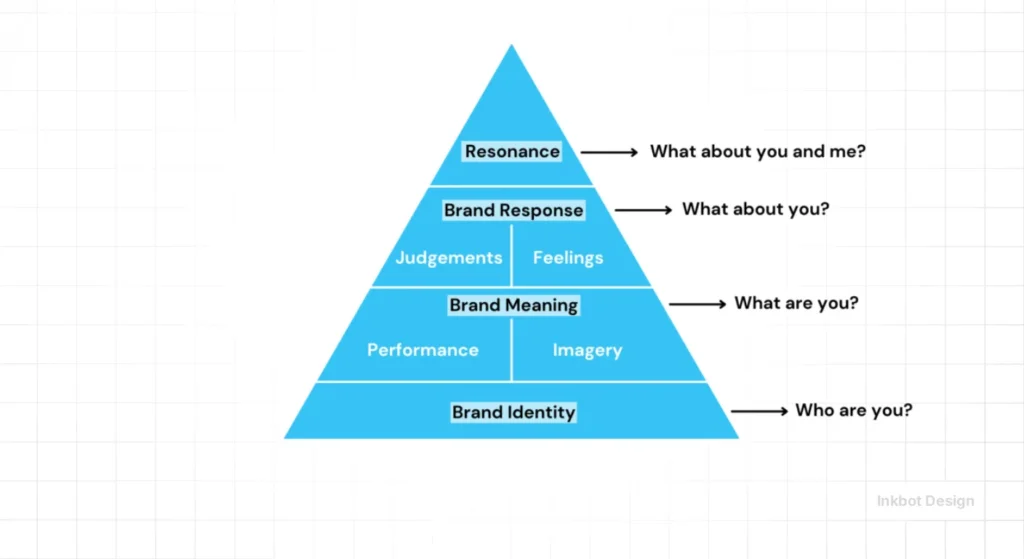
You cannot establish a point of difference until you’ve established a point of comparison. Buyers need to know what game you’re playing before they can evaluate whether you’re winning it.
The B2B brands that get this right don’t just pick a narrower category.
They sometimes create a new one. Drift, the conversational marketing platform, didn’t position itself as a live chat tool — it created the category of “conversational marketing” and then defined what that category required. By naming the category, Drift automatically owned it.
Competitors that entered the space later were, by definition, following Drift’s lead.
The practical implication: your frame of reference should be specific enough that you can name every significant competitor within it — and broad enough that it represents a real market your buyers already participate in.
If you can’t name three competitors within your frame of reference, you’ve either created a category (excellent, but requires significant investment to educate the market) or invented one that doesn’t exist (a serious problem).
The frame of reference is not a category you fit into — it’s a competitive context you choose. Choose the wrong one, and you’ll be measured against the wrong competitors, win the wrong evaluations, and attract the wrong customers for the rest of your brand’s life.
Points of Difference vs Points of Parity: The Distinction That Changes Everything
Most B2B marketers spend all their energy on differentiation, and none on parity — and that imbalance produces positioning that sounds distinctive but fails to convert.
Kevin Lane Keller and Alice Tybout’s research on brand positioning, developed through decades of study at the Kellogg School of Management and Dartmouth’s Tuck School, introduced a framework that most practitioners know by name and almost none apply correctly.
- Points of difference (PODs) are the attributes or benefits buyers associate with your brand that they believe they cannot find to the same degree from a competitor.
- Points of parity (POPs) are attributes that aren’t unique to your brand but that buyers require before they’ll consider you at all.
The failure mode in B2B positioning is spending all available communication budget on PODs while leaving POPs unaddressed.
A buyer evaluating a professional services firm cares deeply about whether the firm is financially stable, has relevant sector experience, and can provide client references.
These are POPs — baseline requirements. If you spend your entire brand communication on “our proprietary methodology” without signalling that you also meet the baseline requirements, buyers disqualify you on grounds you didn’t even know were in play.
The practical application: map your category’s POPs before you craft your PODs. What does every credible competitor in your frame of reference already communicate? Those things need to be present (but not prominent) in your positioning. Your PODs sit on top of that foundation — they distinguish you after you’ve cleared the credibility threshold.
Basecamp — the project management and communication tool built by 37signals — has applied this principle more deliberately than almost any other B2B software company. Its POPs are obvious: it’s reliable, it works, and it’s been around since 2004.
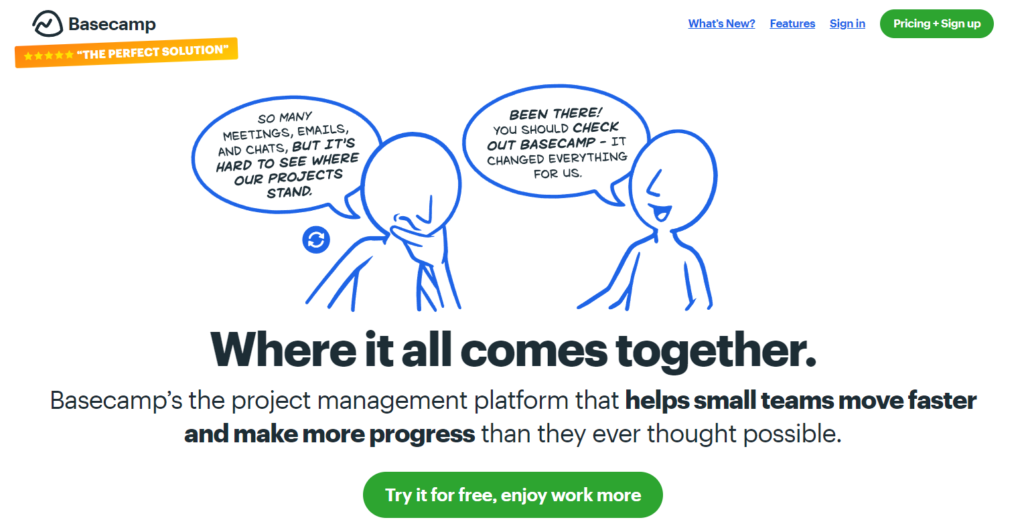
Basecamp doesn’t spend time proving those things. Its PODs are that it explicitly rejects enterprise complexity, mandatory integrations, and the “grow at all costs” mentality. That rejection is the brand. And it resonates precisely because the POPs are assumed, not belaboured.
Points of difference without points of parity produce positioning that sounds confident but fails to convert. Buyers need to check their safety boxes before they engage with your differentiators. Skip the POPs, and your PODs never get heard.
2026 Pricing Reality Check: Investment Benchmarks
The cost of establishing a definitive market position has shifted from a one-off project expense to a continuous operational requirement. In 2026, the marketplace rewards clarity with lower customer acquisition costs and punishes vagueness with a “hidden tax” on every sales lead generated.
B2B organisations typically allocate budget based on the complexity of their competitive set and the maturity of their Frame of Reference.
| Project Tier | Scope of Work | UK Price Range (2026) | Typical Duration |
| Founder-Led Sprint | ICP definition, core messaging, and basic visual alignment. | £15,000 – £25,000 | 4–6 Weeks |
| Mid-Market Evolution | Full category audit, multi-stakeholder alignment, and sales enablement. | £45,000 – £85,000 | 3–5 Months |
| Enterprise Dominance | Global category creation, AI-discovery optimisation, and cultural integration. | £150,000+ | 6–12 Months |
| Continuous Refresh | Quarterly performance audits and competitive response adjustments. | £3,000 – £7,000 /mo | Ongoing |
The ROI of Specificity: Quantitative Impacts
Data from McKinsey & Company and Inkbot Design internal audits indicate that brands with “High Clarity” scores—defined by a single, undisputed Point of Difference—experience the following commercial advantages:
- Sales Cycle Reduction: 22% faster progression from initial inquiry to signed contract.
- Price Elasticity: The ability to maintain 15–18% higher margins than category generalists.
- AI Surface Rate: A 3x higher likelihood of being featured in “Top Vendor” summaries generated by automated research tools.
Hidden Costs of the “Safety Net”
The most significant financial drain is not the agency fee, but the “Opportunity Cost of Compromise”. When a Brand Strategy Committee removes the “sharp edges” of a message to avoid alienating secondary markets, the customer acquisition cost (CAC) for the primary market typically rises by 30–40%. This occurs because the message lacks the “pattern-matching” signals that high-intent buyers use to filter vendors.
The 2026 Value Framework
To justify the investment, businesses must move beyond “brand awareness” and measure Categorical Preference. This is calculated by the percentage of the target audience that identifies your brand as the “default choice” for their specific problem before engaging with any marketing collateral.
Structuring for Machine Discovery: The Atomic Messaging Framework
By 2026, the journey from problem identification to vendor shortlist is increasingly mediated by large-scale language models. These systems do not “read” your website like a human; they decompose your digital presence into Atomic Claims.
The Atomic Claim Structure
Every piece of your brand communication must contain three machine-verifiable elements:
- Explicit Entity Association: Clearly state your category (e.g., “We are a Logistics Software Provider”).
- Attribute Quantification: Use specific numbers to anchor your claims (e.g., “Reducing overhead by 14.2%“).
- Causal Evidence: Link the action to the result (e.g., “Through our Proprietary Route Optimisation Algorithm”).
The 2026 Discovery Hierarchy Machine-led discovery follows a specific sequence of evaluation:
- Level 1: Category Membership: Does this brand belong to the requested search cluster?
- Level 2: Comparative Utility: Does this brand offer a distinct attribute that others in the cluster do not?
- Level 3: Credibility Verification: Are there third-party citations, verifiable data points, or historical records that support the brand’s claims?
Example: Repositioning for Machine Clarity
- Vague Statement: “We provide innovative marketing solutions for growing companies.”
- AI-Optimised Statement: “Inkbot Design is a B2B Brand Strategy Agency serving Series A SaaS scale-ups in the United Kingdom, specialising in reducing Sales Cycle Length through Frame of Reference mapping.”
The second statement allows a machine to index the brand across four distinct nodes: Agency Type, Target Sector, Geographic Location, and Specific Outcome.
The Myth: Your Positioning Statement Is Your Strategy

Positioning statements are workshop outputs, not strategic assets — and treating them as the end goal of a positioning process is one of the most expensive misconceptions in B2B marketing.
The idea of the positioning statement has a specific and useful origin. Al Ries and Jack Trout’s 1981 book Positioning: The Battle for Your Mind introduced the concept of owning a position in the consumer’s mind.
The positioning statement emerged as a practical shorthand—a single-sentence format designed to force strategic clarity.
The original format, popularised in marketing education: “For [target customer] who [need or opportunity], [brand name] is [frame of reference] that [point of difference] because [reason to believe].”
The problem isn’t the format. The problem is what happens to it.
In practice, a B2B positioning statement passes through a strategy workshop, a marketing team review, a legal check, and a leadership approval process.
At each stage, specificity gets rounded off. “We serve seed-stage SaaS founders who are pre-product-market-fit” becomes “we serve high-growth technology companies.”
The point of difference that was once uncomfortable and specific becomes something the whole room can agree on, which means nothing to the buyer.
Notion, one of the most successfully positioned B2B software products of the last decade, has never published a formal positioning statement. Its brand position — “the all-in-one workspace” — emerged from product decisions, not from a strategy document.
The positioning is legible because the product is opinionated, not because a committee approved a sentence.
The alternative isn’t abandoning strategic clarity. It’s separating internal alignment tools from external brand expression. Use a positioning framework internally to align your team on who you serve, what category you compete in, and why you win.
Then build your external communications — your website, your thought leadership, your sales materials — as expressions of that strategy, not transcriptions of it.
A positioning statement that everyone in the room can agree on is one that no one outside the room will care about. The specificity that creates internal discomfort is exactly the specificity that creates external conviction.
B2B Brand Positioning in 2026
B2B brand positioning has entered a period of structural disruption, driven by three simultaneous shifts: the collapse of search-led brand discovery, the rise of AI-assisted vendor evaluation, and the documented failure of category creation as a default growth strategy.
Search collapses, and what replaces it
For most of the 2010s, B2B brand positioning worked in concert with search engine visibility.
A brand could afford to position itself vaguely because SEO content would do the specificity work — a thousand articles, each targeting a long-tail query, compensating for a generic positioning statement at the top of the funnel.
That model has fractured. Google’s AI Overviews and Perplexity’s AI-generated summaries are now answering the research queries that previously sent buyers to branded content.
According to Search Engine Land’s ongoing coverage of Google’s AI Overview rollout throughout 2024 and into 2025, organic click-through rates on informational queries have declined materially for mid-tier publishers — in some categories by more than 30%.
The implication for positioning: brands can no longer rely on content volume to compensate for strategic vagueness.
AI systems summarise categories and surface the clearest examples within them. If your positioning isn’t crisp enough to be cited as a clear example of a specific category, AI search surfaces your competitors instead of you.
AI-assisted vendor evaluation
Gartner’s research on B2B buying behaviour, updated through 2024, consistently shows that B2B buyers now spend more time researching independently — often using AI tools — than engaging with vendor sales teams.
Buyers are using tools like ChatGPT and Perplexity to generate vendor shortlists, compare feature sets, and surface customer sentiment before they ever fill in a contact form.
This changes the calculus for brand positioning in one critical way: your brand now needs to be citable by an AI system, not just recognisable to a human researcher.
Brands with clear, specific, and consistently expressed positioning are more likely to be surfaced by AI-generated vendor comparisons.
Brands with vague or inconsistent positioning — where the homepage says one thing, the LinkedIn bio says another, and the case studies imply a third — are structurally disadvantaged in AI-assisted evaluation environments.
The category creation correction
Between roughly 2016 and 2022, “category creation” became the dominant positioning strategy among VC-backed B2B SaaS companies.
The logic, popularised by Play Bigger’s Category Creation (2016), was that brands that create new categories capture the majority of value within them. The advice was sound. The execution was almost universally terrible.
Hundreds of B2B SaaS companies spent tens of millions of pounds creating categories with invented names that the market never adopted.
The graveyard is full of “conversational intelligence platforms,” “revenue enablement ecosystems,” and “customer success orchestration layers” that nobody asked for.
The correction, visible across B2B marketing since late 2023, is a return to clarity over novelty. Buyers — exhausted by category jargon — are rewarding brands that describe what they do in plain language within a recognisable frame of reference.
The positioning opportunity in 2026 is not category creation. It’s category clarity: being the most obviously, specifically, credibly positioned player within an existing category that buyers already understand.
The Intercom repositioning: a live case study
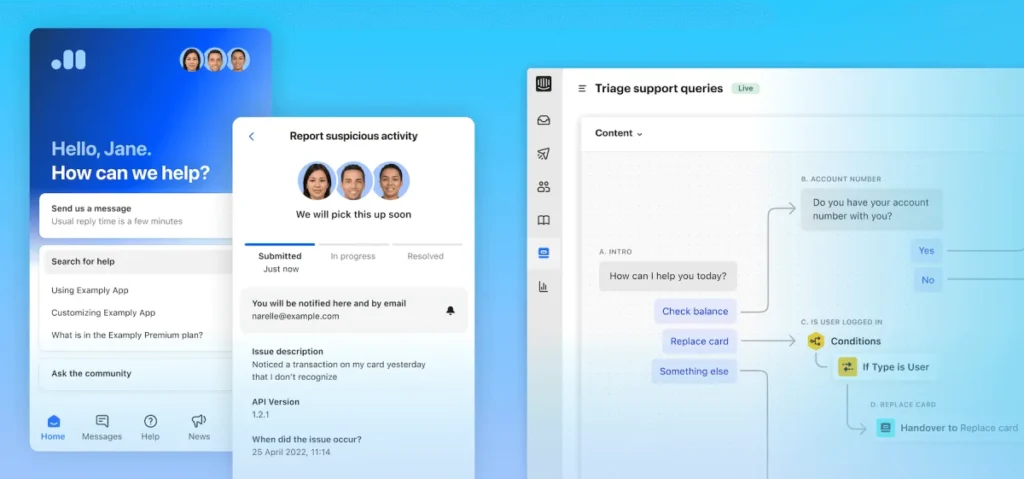
Intercom’s 2023–2024 repositioning from “the customer communications platform” to leading with AI-first customer service represents one of the most instructive positioning shifts of the current period.
Rather than defending its existing category position against an increasingly crowded live chat and messaging market, Intercom bet its brand on a new frame of reference: AI-powered customer service automation.
The repositioning involved a new product (Fin, its AI customer service agent), new messaging across the entire brand, and a deliberate decision to let some of its legacy ICP (human-staffed support teams) deprioritise the brand.
Whether the repositioning succeeds in the long term remains to be seen.
But the strategic logic is instructive: Intercom identified that its existing category was commoditising rapidly, chose a new frame of reference with a meaningful point of difference, and accepted the short-term cost of alienating some existing users in exchange for a defensible future position.
B2B Positioning Decisions
| Decision Point | The Wrong Way | The Right Way | Why It Matters |
| Frame of reference | “We serve businesses of all sizes across multiple sectors” | “We serve Series A SaaS companies in the UK preparing for their first US expansion” | Specificity determines which shortlists you make |
| Point of difference | “We’re more experienced and more affordable” | “We’re the only agency that embeds a former CMO from your target market into every engagement” | Vague PODs are dismissed instantly by experienced buyers |
| Reason to believe | “Our clients love us” | “87% of our clients achieve their primary positioning goal within 90 days — independently verified by client testimonials tied to specific outcomes” | Unsubstantiated claims produce scepticism, not confidence |
| ICP definition | “Mid-market B2B companies” | “CMOs at B2B SaaS companies with £5M–£30M ARR who have tried and failed at positioning once already” | The ICP defines your message, your tone, and your channels |
| Category language | Invented category name (“Revenue clarity ecosystem”) | Recognised category with a specific modifier (“B2B brand strategy for SaaS scale-ups”) | Invented categories require market education; most brands can’t afford it |
| Competitive differentiation | List of features longer than competitors’ | Single most important outcome, specifically quantified | Buyers compare on the dimension you name; name the one you win |
| Positioning consistency | Different message on website, LinkedIn, and proposals | Identical core positioning expressed differently across channels | Inconsistency signals strategic uncertainty; buyers notice |
The Consultant’s Reality Check
The most expensive positioning mistake I see consistently — across Inkbot Design engagements spanning 21 countries and dozens of B2B brand audits — is what I call the “committee safety net.”
A founder or CMO comes to us with a genuinely sharp positioning hypothesis: a specific ICP, a clear frame of reference, and an uncomfortable point of difference.
The kind of positioning that, when you say it out loud, makes someone in the room visibly uncomfortable because it excludes someone they know.
Then it goes through internal review. The CFO is concerned about excluding a sector that accounted for 20% of last year’s revenue. The sales director wants to keep the door open for enterprise. The board advisor who worked at a big consultancy says it sounds “a bit aggressive.”
So the edges get filed down.
The specific ICP becomes broader. The uncomfortable POD becomes a safe one. Six months later, the brand launches with a positioning that everyone internally approved — and that none of their target customers found memorable enough to repeat.
The fix isn’t autocratic decision-making. It’s separating the external positioning strategy from the internal sales flexibility.
Your brand can say “we specialise in Series A SaaS” while your sales team continues to field enterprise enquiries.
The brand does the targeting work.
The business does the revenue work.
Conflating the two is how you end up with a brand that sounds like a form letter.
The Verdict: Courage Is the Strategy
The uncomfortable truth about B2B brand positioning is that the frameworks aren’t the hard part. The Keller model is not complicated. The frame-of-reference decision is not conceptually difficult. The ICP definition exercise is not technically challenging.
What’s hard is making a specific, defensible claim and sticking to it when every internal stakeholder wants to broaden the appeal and every short-term revenue pressure urges compromise of the message.
Brands like Salesforce, Basecamp, and Drift didn’t win their markets because they had better positioning frameworks. They won because they made a specific bet — on a customer, on a category, on a point of difference — and held it under pressure.
The positioning work we’ve walked through in this guide — frame of reference, points of parity and difference, myth-busting the positioning statement ritual, and understanding how AI-assisted evaluation is reshaping the discovery process — all point to the same conclusion. Specificity is the strategy. Courage is the implementation.
If your positioning statement could belong to your three nearest competitors with the company name swapped out, it’s not a positioning statement. It’s a holding position. And holding positions doesn’t win markets.
If you’re ready to build a brand position that actually creates preference before your sales team picks up the phone, explore Inkbot Design’s brand positioning services — or read more on our blog about the brand strategy decisions that separate category leaders from category followers.
Frequently Asked Questions
What is B2B brand positioning?
B2B brand positioning is the strategic definition of the market category in which a company competes, the specific buyer it serves, and the single most credible reason that buyer should choose it over all alternatives. It shapes how buyers perceive a brand before any sales conversation begins.
How is B2B brand positioning different from B2C positioning?
B2B positioning targets professional decision-makers — often committees, not individuals — who evaluate vendors against rational criteria including risk, ROI, and organisational fit. B2C positioning typically addresses emotional drivers and individual preference. B2B buyers also tend to have longer evaluation cycles and higher switching costs, which means positioning clarity has compound commercial value.
What is a frame of reference in brand positioning?
A frame of reference defines the competitive category your brand inhabits — the context in which buyers compare you to alternatives. Choosing a narrower frame of reference reduces the number of competitors you’re measured against and increases your chances of being perceived as the category-leading option within that space.
What is the difference between a point of difference and a point of parity?
A point of difference (POD) is the attribute or benefit that buyers associate uniquely with your brand and cannot find to the same degree from a competitor. A point of parity (POP) is a baseline requirement — something every credible competitor in your category already delivers. Effective positioning establishes POPs implicitly and leads with PODs explicitly.
How many points of difference should a B2B brand claim?
One — or at most two. Research by Kevin Lane Keller at Dartmouth’s Tuck School of Business consistently shows that buyers can only reliably recall a single differentiating attribute per brand. Claiming three or more points of difference spreads credibility too thin and produces a brand remembered for nothing in particular.
How long does B2B brand repositioning take?
A full brand repositioning — covering strategy, visual identity, messaging, and market communications — typically requires 90 to 180 days to develop and a further 12 to 24 months before measurable shifts in buyer perception register in pipeline data. Brands that expect immediate commercial returns from repositioning are measuring the wrong things at the wrong intervals.
Is it true that your brand positioning should appeal to everyone in your target market?
No — and this is one of the most damaging misconceptions in B2B marketing. Positioning that aims to appeal to everyone in a broadly defined market results in messaging that resonates with no one in particular. The best B2B positioning actively signals to the wrong-fit buyer that they should look elsewhere. That specificity makes it more compelling to the right-fit buyer.
When should a B2B brand reposition?
Repositioning is warranted when the existing frame of reference is commoditising rapidly, when the ICP has materially shifted from the one the brand was built around, when a significant product or service change creates a genuine new point of difference, or when pipeline data shows consistent pre-sales brand rejection across previously reliable segments.
What role does brand positioning play in AI-assisted vendor evaluation?
AI tools used for vendor research — including ChatGPT, Perplexity, and Google’s AI Overviews — surface brands that are consistently and specifically positioned within a recognisable category. Brands with vague or inconsistent positioning are structurally less likely to be surfaced by AI-generated vendor comparisons. Clear, atomic brand claims — specific category, specific ICP, specific POD — are now a prerequisite for AI visibility, not just human recall.
How do you validate a B2B brand positioning hypothesis?
Test the positioning with a sample of your current ideal customers—not prospects, but clients who have already chosen you. Ask them to articulate in their own words why they selected you over alternatives and what category they placed you in during evaluation. If their language matches your positioning hypothesis, the position is real. If it doesn’t, their language is more likely to be accurate than your internal strategic document.
What makes a B2B positioning statement fail?
Three factors account for the majority of positioning statement failures: excessive ICP breadth (the target customer definition is too wide to generate specific messaging), committee-mediated specificity reduction (internal review processes sand off every uncomfortable edge), and conflation of internal alignment language with external brand communication. The statement that passes every internal stakeholder becomes the one that moves no external buyer.
How does brand positioning connect to pricing power?
Brands with clear, specific, and differentiated positioning command higher prices within their frame of reference because buyers perceive fewer substitutes. McKinsey & Company’s research on B2B pricing consistently links brand clarity to reduced price sensitivity among ideal-fit buyers. Vague positioning invites price comparison; specific positioning invites value comparison — and value comparisons typically favour the more precisely positioned brand.

