Brand Journalism: The Art of Thinking Like a Publisher
The advertising model is broken.
I don’t say that to be dramatic; I say it because the numbers are screaming it.
Click-through rates on banner ads have fallen to a statistically insignificant level (often below 0.1%), ad blockers are installed on hundreds of millions of devices, and consumer trust in traditional media is at an all-time low.
Yet, businesses still throw money into the “rented attention” pit—buying 30-second spots or boosting posts on platforms that can change their algorithm (and destroy your reach) overnight.
There is a smarter way. The world’s savviest companies stopped trying to interrupt the content you enjoy. They decided to become the content you enjoy.
This is the era of Brand Journalism.
It is not public relations. It is not copywriting. It is the strategic decision to operate your brand like a media company, reporting stories that your audience actually cares about, rather than just shouting about your latest product feature.
If you are tired of shouting into the void, it is time to build a newsroom.
- Shift from interruption to publishing—become the content your audience chooses, not another unwanted ad.
- Operate with journalistic rigour: truth, editorial integrity, and stories that stand without your logo.
- Focus on audience beats—cover what you know and what they care about, not every possible topic.
- Build a small newsroom: editor, brand journalist, audience developer; enforce an Editorial Charter to avoid self-promotion.
- Measure long-term value: time on page, subscribers, backlinks, and trust over immediate sales attribution.
What is Brand Journalism?
Let’s strip away the buzzwords.
Brand Journalism is the practice of creating and distributing credible, multimedia news content by a corporate entity. It involves adopting the rigour, ethics, and storytelling techniques of traditional journalism to tell stories related to a brand’s industry, culture, or values, rather than its specific products.

It was defined by former McDonald’s CMO Larry Light in 2004 as a way to handle the fragmented media landscape. He realised that a single ad slogan could not capture the complexity of a global brand.
The Three Pillars of Brand Journalism
- Editorial Integrity: The story must be true and interesting, even if the brand didn’t exist. If you remove the logo and the content becomes boring, it’s an ad.
- Audience-Centricity: It answers the question, “What does the reader get out of this?” not “What do we get out of this?”
- Owned Distribution: You publish on your own platforms (your website, your magazine), creating an asset you control forever.
Consultant’s Note: Do not confuse this with “Native Advertising.” Native advertising is paying The New York Times to host your article. Brand journalism is becoming the New York Times of your specific niche.
The Great Lie: Brand Journalism vs. Content Marketing
In our agency work, we see clients use these terms interchangeably. This is a mistake. While they overlap in the Venn diagram of “Corporate Communications,” their intents are fundamentally different.
If you treat brand journalism like traditional content marketing, you will kill the story with a sales pitch.
| Feature | Content Marketing | Brand Journalism |
| Primary Goal | Lead Generation & Conversion | Brand Affinity & Awareness |
| Metric of Success | Sales, Clicks, Leads | Time on Site, Shares, Sentiment |
| Tone | Persuasive, Utility-driven | Informative, Narrative-driven |
| Focus | The Customer’s Problem | The Human Story |
| Call to Action (CTA) | “Buy Now,” “Sign Up” | “Read More,” “Subscribe” |
| Shelf Life | Evergreen (optimised for SEO) | Topical (optimised for news cycle) |
The Content Marketing Approach:
“5 Ways Our Software Speeds Up Your Accounting.” (Utility, Product-focused).
The Brand Journalism Approach:
“How a Small Accounting Firm in Bristol Saved a Local Bakery from Bankruptcy.” (Story, Human-focused).
The second headline doesn’t sell software directly. But it positions the brand as a champion of small business success. That builds trust. And as we know, trust is the currency of modern commerce.
Why The “Hard Sell” Has Failed (and Why You Need a Newsroom)
The Edelman Trust Barometer has consistently shown a decline in trust towards government and media, while trust in “My Employer” and business remains comparatively high. People are looking to corporations to take a stand and provide factual information.
This creates a vacuum that you can fill.
1. The Death of Interruption
You can no longer force people to watch ads. Streaming services are ad-free. Browsers block pop-ups. The only way to get in front of a customer is to provide something they choose to consume. Red Bull Media House is the gold standard in this regard. They don’t just sell energy drinks; they produce documentaries on extreme sports that people pay to watch. They report on the culture their product inhabits.

2. The SEO Benefit of “Topical Authority”
Search engines like Google are evolving. They prioritise “E-E-A-T” (Experience, Expertise, Authoritativeness, and Trustworthiness). A brand that consistently publishes high-quality, journalistic reports on industry trends signals immense authority. If you are a cybersecurity firm that reports on the latest hacks with the speed and accuracy of a news outlet, Google views you as a primary source, not just a vendor.
3. Controlling the Narrative
If you don’t tell your story, someone else will. Usually, that “someone else” is a disgruntled customer on Twitter or a journalist looking for a scandal. By establishing your own newsroom, you create a repository of truth. When a crisis hits, you have an established channel with a loyal audience to communicate your side of the story directly.
How to Build a Corporate Newsroom (The Operational Blueprint)
You do not need a multi-million-pound budget to do this. You need a shift in mindset. You need to stop acting like a marketing department and start acting like a publisher.
Step 1: Define Your “Beat”
A “beat” in journalism is the specific subject area a reporter covers. You cannot cover everything. You must find the intersection between What Your Brand Knows and What Your Audience Cares About.
- Nike doesn’t just cover “shoes.” They cover “human potential and athletics.”
- Inkbot Design doesn’t just cover “logos.” We cover “business growth through visual identity.”
Action: distinct topics you will cover. If you are a coffee roaster, your beat isn’t “coffee beans.” It is “sustainable agriculture,” “morning rituals of successful people,” and “cafe culture.”
Step 2: Assemble the Team (The Roles)
You don’t need to hire the entire staff of The Guardian, but you do need these three functions covered, even if one person does them all.
- The Managing Editor: The gatekeeper. This person holds the “Editorial Charter.” They have the power to kill a story if it sounds too much like an ad. They plan the editorial calendar.
- The Brand Journalist: The creator. This could be an in-house writer, a freelancer, or a subject matter expert within your company. Their job is to dig for stories, interview sources (internal and external), and write.
- The Audience Developer: The distributor. Content is useless if nobody sees it. This role focuses on creating newsletters, distributing content through social media, and optimising SEO.
Step 3: The Editorial Charter
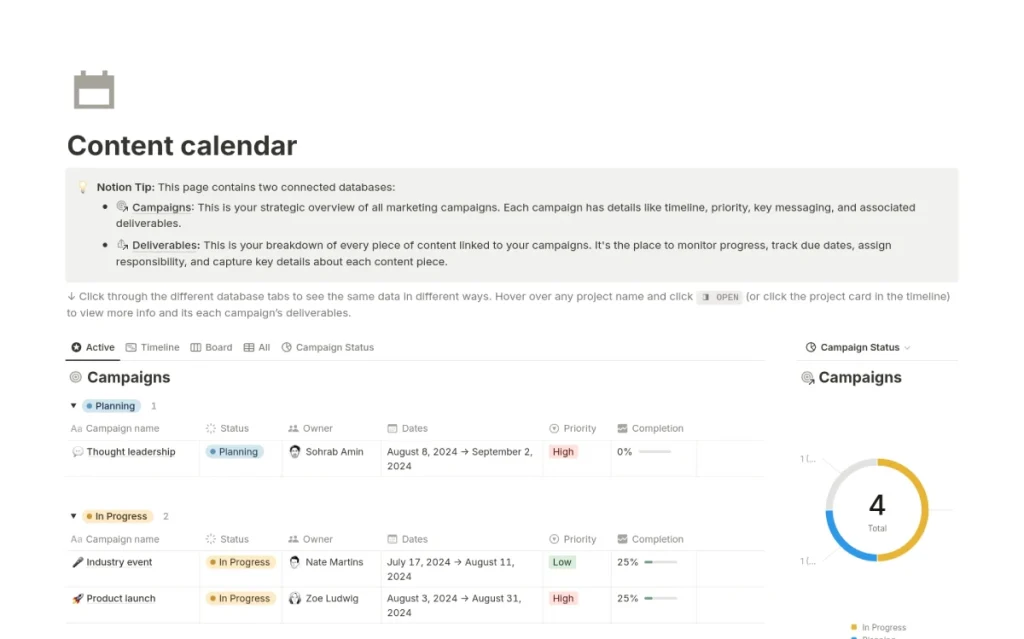
This is the most critical document you will create. It is the constitution of your newsroom. It sets the rules of engagement.
Your Charter must define:
- Voice & Tone: Are we serious, witty, or academic?
- The “No-Go” Zone: What topics do we avoid? (e.g., Politics, Religion, Competitor bashing).
- The Pitch Process: How do stories get approved?
- Disclosure Policy: How do we handle conflicts of interest? If we interview a client, do we disclose that financial relationship? (The answer is yes).
Consultant’s Reality Check: I once audited a client who wanted to start a “news blog.” Their first three articles were “Why our product is great,” “10 reasons to buy from us,” and “Our CEO is a genius.” I had to stop them. That isn’t journalism; that’s a brochure. If your Editorial Charter doesn’t explicitly ban self-promotion in news stories, your project will fail.
Real-World Case Studies: The Good, The Bad, and The Ugly
Let’s examine who is doing this right and identify the pitfalls.
The Gold Standard: GE Reports (General Electric)
General Electric is a B2B industrial giant. Jet engines and medical imaging devices are not “sexy” consumer products. Yet, GE Reports is a masterclass in brand journalism.
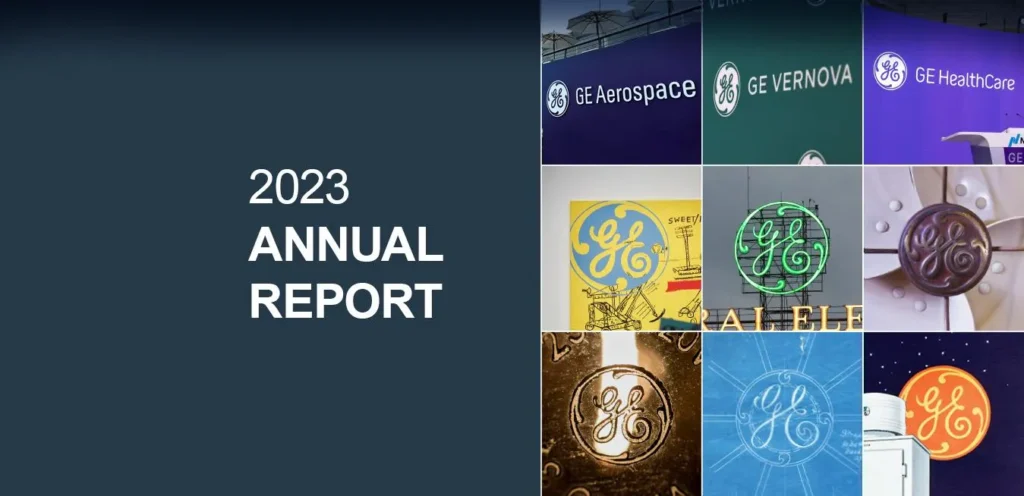
- The Strategy: They treat their R&D labs like a set from a sci-fi movie. They report on the technology behind the products.
- The Content: Stories about how 3D printing is saving lives, or the physics of wind turbines.
- The Result: They built an audience of millions. When they need to recruit top engineering talent, they don’t have to beg; engineers are already reading their content.
The SMB Example: River Pools and Spas
This is a classic example often cited by Marcus Sheridan. River Pools was a struggling fibreglass pool installer. They started a blog that answered every single question a customer could have, honestly and transparently—including “How much does a fibreglass pool cost?” and “Why you shouldn’t buy a fibreglass pool.”
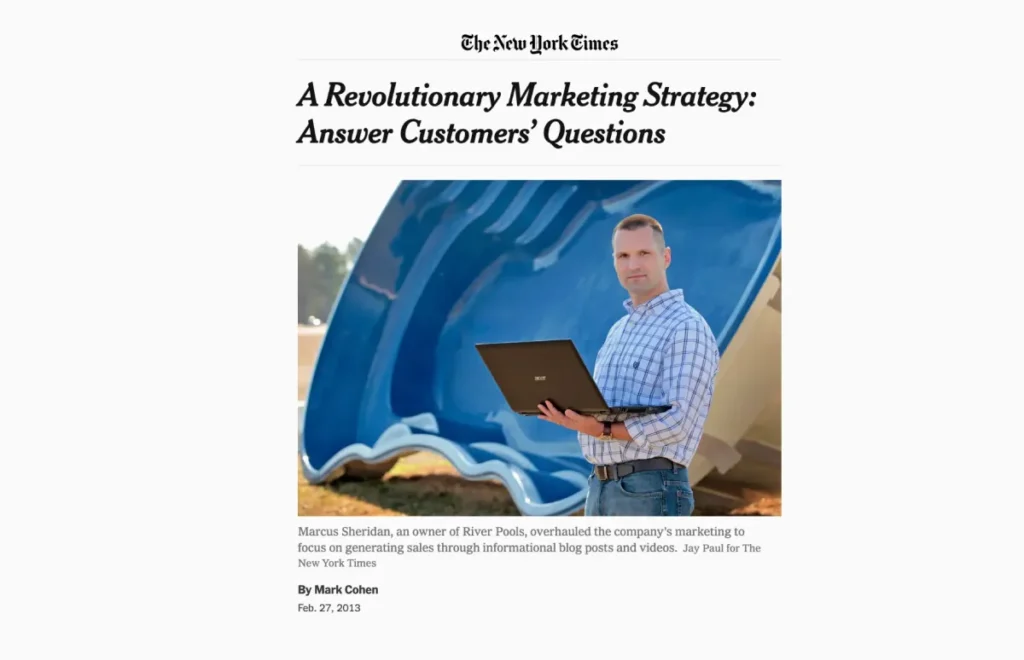
- The Journalism: They reported on the industry with brutal honesty, even highlighting the downsides of their own product category.
- The Result: They became the Wikipedia of swimming pools. Trust skyrocketed. Sales followed.
The Cautionary Tale: The “Fake News” Trap
Some brands create “local news sites” that are actually just propaganda outlets. For example, energy companies create websites that resemble local newspapers but only publish positive stories about fracking.
This is Brandwashing. It is deceptive. When the audience finds out (and they always do), the backlash is severe. True brand journalism requires transparency. Your “About Us” page must clearly state who owns the publication.
The State of Brand Journalism in 2026: The AI Factor
We are witnessing a significant shift in how content is created. Over the last 18 months, the barrier to entry for content creation has significantly decreased due to the emergence of Generative AI.
The Risk: The internet is being flooded with mediocre, AI-generated slop.
The Opportunity: Human journalism is becoming a premium product.
In 2026, the brands that win will not be the ones using AI to churn out 50 articles a day. They will be the ones using AI to assist with research and transcription, but will rely on humans to conduct interviews and provide their perspective.
The “Human-in-the-Loop” Necessity:
If your brand journalism reads like a Wikipedia summary, you have failed. You need primary sources. You need quotes from real people. AI cannot interview your head engineer about the time a prototype exploded in the lab. That story is your competitive advantage.
New Tech: The Rise of “Owned Social”
We are also seeing a move away from relying on X (formerly Twitter) or Facebook for distribution. Brands are building “owned social” spaces—such as Circle communities, Slack groups, and Substack newsletters—to engage with their audiences. The focus is shifting from “Reach” (how many saw it) to “Resonance” (how many cared).
Measuring Success: ROI Beyond the Click
Entrepreneurs love direct attribution. “I spent £100 on ads, I made £200 in sales.” Brand journalism does not work like that. It is a long game.
You measure the success of a newsroom differently:
- Share of Voice: Are people talking about your brand in the context of industry trends?
- Subscriber Growth: Are you building an email list of people who actually open your emails?
- Backlinks & Domain Authority: Are legitimate news sites linking to your data and stories? This boosts your entire website’s SEO, lifting your digital marketing services pages along with it.
- Time on Page: Are people reading for 3 minutes (journalism) or bouncing after 10 seconds (clickbait)?
The “Dark Social” Metric:
Much of the value comes from “Dark Social“—people sharing your articles in private WhatsApp groups or Slack channels. You can’t track this easily, but you feel it when prospects get on a call and say, “I read that piece you wrote about X, and I knew I had to work with you.”
The Consultant’s View: How to Start Tomorrow
I am often asked, “Stuart, we sell plumbing supplies. How can we possibly be journalists?”
My answer is always the same: Every business has its share of drama.
Every business has problems it solves. Every business has characters.
- Interview the guy who has managed the warehouse for 20 years. He knows more about logistics than a supply chain textbook.
- Write a report on the changing regulations in water conservation.
- Tell the story of a customer who used your supplies to build an orphanage.
Your Immediate Next Steps:
- Audit Your Blog: If your last 10 posts are all about company awards or product updates, delete them or move them to a “Press Release” section.
- Appoint an Editor: Find the person on your team who writes the best emails. Give them the keys.
- Find One Story: Don’t try to launch a magazine. Just find one real, human story within your ecosystem this week. Interview someone. Write it down. Publish it with a great photo.
If you are ready to take this seriously, you may need help establishing a visual identity that conveys authority for your newsroom. A sloppy website kills credibility faster than a typo. If you need a partner to bring your brand to life, you can request a quote from us.
The Verdict
Brand journalism is the antidote to advertising fatigue. It respects the intelligence of your customer. It says, “We know you are too smart for a catchy slogan, so here is the truth instead.”
It requires patience. It requires a thick skin. You have to be willing to publish stories that don’t immediately ask for a credit card. But if you stick with it, you build something that ads can never buy: Loyalty.
Do not build a marketing funnel. Build a legacy.
Frequently Asked Questions (FAQ)
What is the main difference between brand journalism and content marketing?
Content marketing focuses on conversion and customer utility (solving problems to sell products), whereas brand journalism focuses on storytelling, news, and building long-term affinity without a direct sales agenda.
Can small businesses afford brand journalism?
Yes. Brand journalism is about mindset, not budget. A small business can start by publishing one high-quality, interview-based story per month on their blog, focusing on local or niche industry news.
Does brand journalism help with SEO?
Absolutely. By covering topical news and industry trends, you create “link-worthy” content. Other sites are more likely to link to a well-researched news piece than a product sales page, improving your overall Domain Authority.
How do I find stories for my brand newsroom?
Look internally first. Interview your product developers, customer service agents, or long-standing employees. Look externally at industry trends, regulation changes, or interesting ways customers are using your products.
Should I use AI to write my brand journalism articles?
Use AI for research, outlining, and transcription, but avoid using it to write the final prose. AI lacks the nuance, human voice, and journalistic “beat” required to build genuine trust with readers.
What is an Editorial Charter?
An Editorial Charter is a governance document that outlines your brand’s voice, editorial standards, ethical guidelines, and the approval process for stories. It ensures your content remains credible and doesn’t drift into advertising.
Is brand journalism the same as PR?
No. PR (Public Relations) is often about pitching stories to external media outlets to manage reputation. Brand journalism involves serving as the media outlet and publishing stories directly to your audience.
How do we measure the ROI of brand journalism?
Focus on “soft” metrics, such as time on page, social shares, brand sentiment, and subscriber growth. While it drives sales in the long term, direct attribution is harder to track than with direct-response advertising.
Can a B2B company use brand journalism?
B2B companies are often the best at brand journalism (e.g., GE, Adobe). Complex industries have complex stories that trade publications often overlook, presenting a unique opportunity to educate and inform your target market.
What are the risks of brand journalism?
The biggest risk is “Brandwashing”—hiding your commercial intent or bias. If you are not transparent about who owns the publication or if you publish propaganda disguised as news, you will permanently lose audience trust.