The 7 Best Design Books Worth Reading Twice
If a book teaches you how to pick a font but doesn’t explain how that font impacts your customer’s “Cost of Retrieval” or “Information Gain,” it is a waste of your time.
The reality is that “pretty” is now a commodity.
With AI models like Adobe Firefly 3 and Midjourney v7 capable of generating perfect layouts in seconds, the role of design has shifted from production to strategy.
You do not need more inspiration; you need more distinctive brand assets.
Brands that fail to create these assets lose an average of 15% of their market share to more recognisable competitors every five years, according to data from the Ehrenberg-Bass Institute.
To survive this shift, you must understand the best graphic design tools and the psychology behind them.
The following seven books are the only ones that provide the structural logic required to turn visual choices into financial results.
- Design is strategic: transform visuals into measurable business assets by prioritising distinctive brand assets over mere aesthetics.
- Distinctiveness beats meaning: follow How Brands Grow—ensure mental and physical availability through recognisable, category-specific assets.
- Validate quickly: use the Sprint methodology to prototype and test in five days, reducing risk and speeding data-driven decisions.
What Are the Best Design Books on My Shelf?
In my opinion, the best design books provide a synthesis of visual psychology, business strategy, and technical execution.
They move beyond aesthetic trends to offer evergreen frameworks for creating distinctive brand assets that resonate with specific target audiences and drive measurable commercial outcomes.
Key Components:
- Actionable Frameworks: Models that can be applied directly to business problems.
- Psychological Foundation: Evidence-based insights into how humans process visual information.
- Strategic Integration: Practical advice on aligning design decisions with market positioning and sales goals.
The best design books for 2026 focus on business ROI, distinctive assets, and psychological triggers rather than purely aesthetic or historical design principles.
1. “Logo Design Love” by David Airey
David Airey’s Logo Design Love is the definitive manual for anyone who thinks a logo is just a “pretty icon.” It answers the question of how to create a visual identity that scales without losing its meaning.
In 2026, when brand marks appear on everything from tiny smart-watch favicons to massive digital billboards, the scalability rules Airey outlines are non-negotiable.
Airey uses the 2009 Tropicana redesign failure—a mistake that cost the brand $30 million in sales in just two months—to illustrate why changing a brand’s visual “short-cut” is dangerous.
He argues that a logo’s job isn’t to describe what a company does, but to identify it in a way that is memorable and persistent.
This is essential reading if you are currently exploring the best branding books to refine your company’s identity.
The book provides a step-by-step process for developing a brand identity, from the initial brief to the final delivery. It avoids the easy pass of “inspiration” and focuses on the grit of client management and technical precision.
Logo Design Love
Logo Design Love is the definitive “behind-the-curtain” look at how iconic identities are actually born—not just as aesthetic exercises, but as strategic business tools. Airey moves beyond the final “glossy” result to show the messy, sketch-filled reality of the creative process. For a branding agency like Inkbot Design, this book serves as a masterclass in the client-designer relationship and the “long-game” of brand longevity.
As an Amazon Partner, when you buy through our links, we may earn a commission.
A logo is a business’s most efficient psychological anchor, serving as a visual shorthand for every customer interaction with a brand. David Airey’s Logo Design Love demonstrates that effective identity design is a discipline of subtraction, where the removal of non-essential elements increases a mark’s ability to be recalled and recognised across fragmented digital ecosystems.
2. “How Brands Grow” by Byron Sharp
While technically a marketing text, Byron Sharp’s How Brands Grow is the most critical design book of the last decade.
It destroys the myth that “brand loyalty” is something you can design for. Instead, the research of the Ehrenberg-Bass Institute shows that growth comes from physical and mental availability.
Designers often try to make brands “meaningful,” but Sharp proves that being “distinctive” is far more valuable.
If your design doesn’t help a customer find your product on a crowded shelf (physical or digital), it has failed.
This book should be paired with the best marketing books on your shelf to ensure your visual strategy isn’t accidentally working against your growth strategy.
Sharp’s data-driven approach is a wake-up call for SMB owners who spend thousands on “storytelling” design that no one actually notices.
It teaches you to protect your distinctive assets—like Coca-Cola’s red or McDonald’s arches—at all costs.
How Brands Grow
How Brands Grow is the 21st century’s most disruptive marketing text. It uses empirical evidence to dismantle “common sense” marketing myths, replacing them with scientific laws that govern how consumers actually behave.
As an Amazon Partner, when you buy through our links, we may earn a commission.
Distinctive brand assets are the primary drivers of commercial recognition, far outweighing the perceived value of brand “meaning” or “personality.” Byron Sharp’s research indicates that the primary role of design is to facilitate rapid brand identification, ensuring that a product is mentally available to the consumer at the exact moment of a purchase decision.
3. “The Win Without Pitching Manifesto” by Blair Enns
For the entrepreneur who is also a service provider, Blair Enns offers a masterclass in the business of design.
This book is the antidote to the “commoditisation of creativity.” It teaches you that if you design like everyone else, you will be paid like everyone else.
Enns argues that the way you sell your design services is a design project in itself.
If you are looking for the best sales books to help grow your agency or consultancy, this is the one that addresses the specific nuances of selling “intangible” creative value.
It moves the conversation away from “hourly rates” and toward “value-based outcomes.”
The book’s direct, punchy style mirrors the advice it gives: stop being a “vendor” and start being an “expert.” In 2026, experts are the only ones AI won’t replace.
The Win Without Pitching Manifesto
If Byron Sharp explains how brands grow, Blair Enns explains how your agency survives. The Win Without Pitching Manifesto is the definitive guide for firms to stop acting like vendors and start acting like experts.
As an Amazon Partner, when you buy through our links, we may earn a commission.
The commercial value of design is determined by the expert’s ability to diagnose a business problem rather than their ability to execute a visual solution. Blair Enns’ The Win Without Pitching Manifesto provides a framework for escaping the commodity trap by positioning design as a high-stakes strategic intervention that commands premium pricing through demonstrated authority and specialised knowledge.
4. “Building a StoryBrand 2.0” by Donald Miller
Donald Miller’s Building a StoryBrand 2.0 is the essential guide for aligning your design with your narrative. Most business websites are a mess of confusing visuals and “look at me” copy.
Miller teaches you that your customer is the hero, and your brand is the guide.
When you apply this to your web presence, you realise that every layout choice should lead the “hero” toward their “victory.”
This updated book is frequently cited alongside the best business strategy books because it simplifies the complex process of market positioning into a seven-part framework.
Designers who understand StoryBrand create websites that convert because they don’t let visual clutter get in the way of the message.
They use design to highlight the “Plan” and “Call to Action,” reducing the user’s cognitive load.
Building a StoryBrand (2.0)
If Blair Enns teaches you how to act like an expert, Donald Miller teaches you how to talk like one. Building a StoryBrand 2.0 is the definitive manual for cutting through digital noise. Miller’s core breakthrough is simple: Your customer is the Hero of the story, not your brand. Your brand is the Guide.
As an Amazon Partner, when you buy through our links, we may earn a commission.
Narrative-driven design reduces the customer’s cognitive friction by positioning the brand as a guide rather than the protagonist of the story. Donald Miller’s StoryBrand framework ensures that every visual and textual element on a page serves a single purpose: moving the user through a structured path toward a specific, beneficial outcome.
5. “Designing for Emotion” by Aarron Walter
In a world of sterile, “optimised” UIs, Aarron Walter’s Designing for Emotion argues that humans are not rational actors; we are emotional ones.
If your design doesn’t make someone feel something, they won’t remember it. This is a staple for those seeking the best web design books because it focuses on the “delight” that creates user retention.
Walter, the former VP of Design at Mailchimp, shows how small touches—like a mascot’s wink or a clever loading screen—can build a loyal following.
He argues that “functional” is the baseline, but “emotional” is the competitive advantage.
In 2026, as AI-generated interfaces become increasingly common, the “human touch” described in this book will be what separates high-end brands from low-cost alternatives.
Designing for Emotion
In the second edition of this classic, Walter argues that “usable” is no longer enough. In 2026, when every service is a commodity, Emotion is the only sustainable differentiator. Walter’s central thesis is a reimagining of Maslow’s Hierarchy of Needs, applied to interface design: a product must be Functional, Reliable, and Usable before it can finally be Pleasurable.
As an Amazon Partner, when you buy through our links, we may earn a commission.
Emotional design acts as a powerful retention mechanism by creating a positive psychological association between the user and the interface. Aarron Walter demonstrates that, beyond functional usability, integrating personality and “delight” into a product’s design transforms a casual user into a brand advocate who remains loyal despite lower-priced competition.
6. “Ruined by Design” by Mike Monteiro
Mike Monteiro’s Ruined by Design is the “uncomfortable” book on this list.
It is a polemic against the “move fast and break things” culture that has dominated design over the last decade.
Monteiro argues that designers are responsible for what they put into the world—including addictive algorithms and exclusionary interfaces.
For an SMB owner, this book is a reminder that your design choices have consequences.
Exclusionary design—like a website that isn’t accessible to those with visual impairments—isn’t just a moral failing; it’s a legal and financial risk.
According to the Pew Research Center, nearly 1 in 4 adults in the UK/US live with a disability, making accessibility a massive market opportunity, not a chore.
Ruined by Design
Ruined by Design is the “angry” manifesto the industry needed. It is a call to arms for designers to stop seeing themselves as “service providers” and start seeing themselves as gatekeepers with the power—and the moral obligation—to say “No.”
As an Amazon Partner, when you buy through our links, we may earn a commission.
Design is a political and ethical act that carries a professional responsibility for the social and economic consequences of its output. Mike Monteiro’s Ruined by Design serves as a critical directive for modern businesses to adopt ethical design frameworks, ensuring that their products do not cause unintended harm while simultaneously opening their services to a broader, more diverse audience.
7. “Sprint” by Jake Knapp
Jake Knapp’s Sprint provides the “how-to” for the modern design process.
It details the five-day process Google Ventures uses to test big ideas and solve significant problems. It is the ultimate book for the “hates filler writing” crowd because it is 100% actionable.
A “Sprint” allows you to skip the months of back-and-forth emails and “I’ll know it when I see it” feedback loops. It forces you to build a prototype and test it with real users in less than a week.
This is the fastest way to find out if your design idea actually has legs before you sink thousands of pounds into it.
If you are an entrepreneur who values speed and data over “creative intuition,” this book will change how you run your business.
Sprint
Born at Google and perfected at Google Ventures, this isn’t about “perfect” design; it’s about “time-boxed” certainty. In 2026, when the speed of AI-driven competition is relentless, the Sprint is the ultimate hack to stop guessing and start knowing.
As an Amazon Partner, when you buy through our links, we may earn a commission.
The Design Sprint methodology provides a structured environment for rapid prototyping and user validation, effectively de-risking the creative process for high-stakes business decisions. Jake Knapp’s framework demonstrates that five days of focused, cross-functional collaboration can yield more actionable data than months of traditional, siloed design development and internal debate.
The “Universal Design Principles” Myth
One of the most dangerous myths in 2026 is that “Good Design is Universal.”
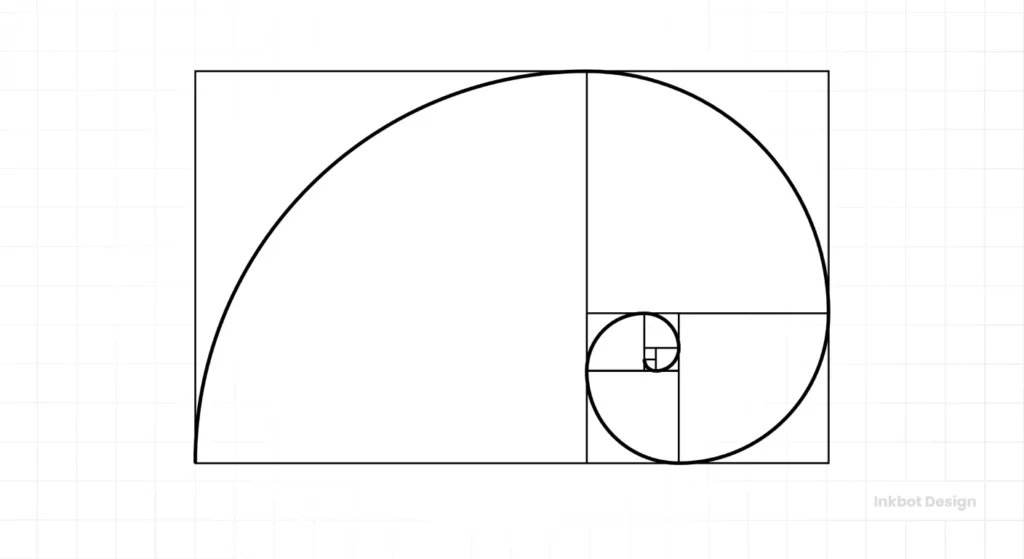
This is the idea that if you follow the “rules” of Swiss Design or the Golden Ratio, your work will be practical regardless of context.
This is demonstrably false and commercially harmful.
Design that works for a high-end luxury watch brand in Mayfair will utterly fail for a fast-casual chicken shop in Manchester.
Why? Because the “design rules” are secondary to the “category norms.”
The Ehrenberg-Bass Institute has shown that for design to be effective, it must first be distinctive within its category, not just “correct” in an academic sense.
In 2026, the obsession with “clean, minimal design” has led to a phenomenon known as “Blanding.” Brands like Airbnb, Google, and even fashion houses like Burberry moved toward a similar sans-serif, minimalist aesthetic.
The result? They all became harder to distinguish from one another. To win today, you must be willing to break “universal” rules to achieve category distinctiveness.
The State of Design Books in 2026
The design industry underwent a seismic shift in late 2024 and throughout 2025.
The release of Adobe Firefly 3 and the deep integration of AI-assisted design systems in Figma have changed the “Cost of Production” for high-quality visuals to near zero.
Consequently, the value of design has shifted from the how to the why.
The Rise of the “Prompt Strategist”
We are seeing a move away from “craft-based” design books toward “logic-based” strategy.
In 2025, Canva’s Dream Lab AI generator—launched to simplify complex branding for non-designers—demonstrated that even amateur users can now produce “professional-looking” assets.
This means that “looking professional” is no longer a competitive advantage for your business. It is the bare minimum.
The Return of High-Contrast Branding
A 2025 report by the Nielsen Norman Group (NN/g) noted a significant “usability fatigue” among consumers who are tired of identical, minimalist “SaaS-style” interfaces.
This has led to a resurgence of “Maximalism” and high-contrast branding.
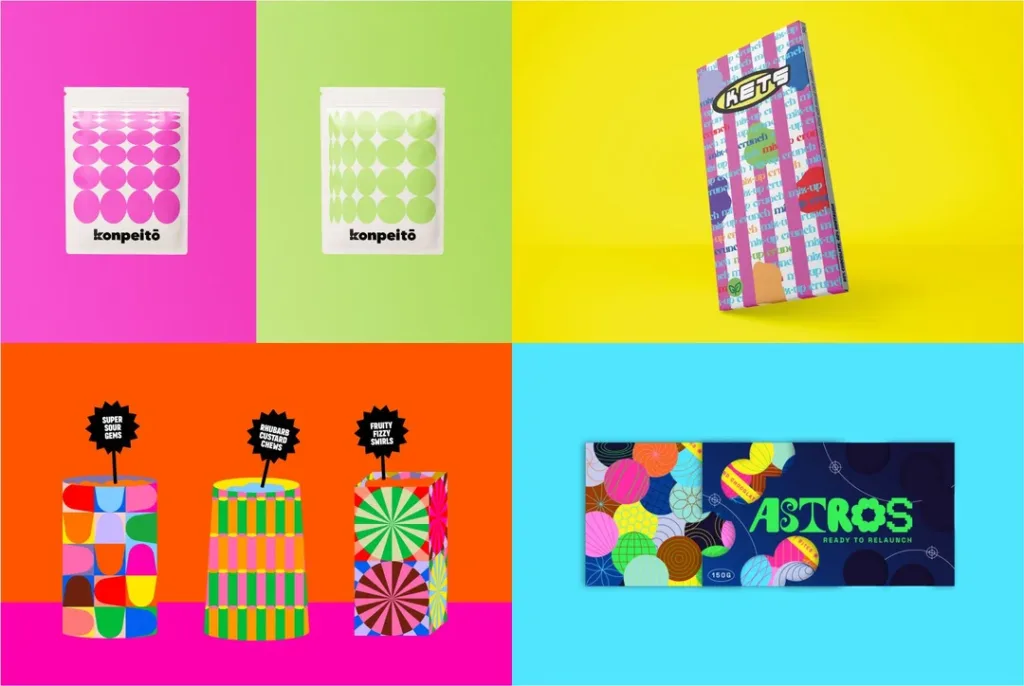
The best design books being written now focus on “Visual Friction”—the idea that making something slightly more complicated to process actually makes it more memorable.
Biometric Feedback and Real-Time Design
We are also entering the era of “Fluid Identities.” Modern design systems now allow for logos and interfaces that subtly change based on the user’s current environment or device.
Books like Designing for Emotion are becoming more relevant as we seek ways to make these automated systems feel “human” and “empathetic,” rather than “robotic” and “surveillance-led.”
Amateur vs Professional Design Strategy
| Technical Aspect | The Wrong Way (Amateur) | The Right Way (Pro) | Why It Matters |
| Asset Goal | “Make it look clean and modern.” | “Make it distinctive and memorable.” | Amateur design blends in; professional design stands out. |
| Typography | Choosing a “popular” font from Google Fonts. | Selecting a typeface based on legibility at 12px and personality. | Improves “Information Gain” and brand recall. |
| Process | Spending weeks on “mood boards” and “vibe checks.” | Using a 5-day Sprint to prototype and test with real users. | Reduces “Cost of Retrieval” for the business and the customer. |
| Colour Use | Using a colour because “I like it” or “it’s trendy.” | Using colour to create a “Visual Anchor” that consumers associate with the brand. | Dominates the consumer’s “Mental Availability.” |
| Scalability | Creating a complex logo that turns into a blob at small sizes. | Designing a responsive system of marks (Primary, Stacked, Icon). | Ensures brand recognition on all digital devices. |
| UX Focus | Focus on “The Wow Factor” or animations. | Focus on reducing cognitive load and clear “Calls to Action.” | Converts “attention” into “action” (ROI). |
The Verdict
The 7 books listed here are not just about “design”; they are about optimising your business’s visual communication.
In 2026, you cannot afford to treat design as an afterthought or a purely aesthetic choice.
Every pixel on your website and every curve in your logo must be a strategic decision, grounded in the principles of distinctive assets and narrative logic.
The contrarian truth is that the best design books often have the fewest pictures. They are the ones that force you to think about the psychological levers that drive human behaviour.
By mastering the frameworks in Logo Design Love, How Brands Grow, and Sprint, you move from being a consumer of design to a strategist who uses visuals as a weapon for market dominance.
Don’t just read these books once.
Read them, apply them, and then read them again when your competitors start to look like you.
If you want to see how these principles are applied in the real world, explore our branding services or read our latest audit on the best graphic design tools.
Ready to turn your design into a distinctive brand asset? Book a consultation with Inkbot Design today, and let’s audit your current visual strategy for the 2026 market.
FAQ
What is the best design book for a total beginner?
Logo Design Love by David Airey is the best starting point. It provides a clear, jargon-free introduction to the principles of identity design and branding. It focuses on the practical steps of creating a logo, making it accessible for those without a formal design background while remaining strategically relevant for experts.
Why is “How Brands Grow” considered a design book?
How Brands Grow by Byron Sharp is essential for design because it provides the data-driven justification for “Distinctive Brand Assets.” It proves that the primary role of design is not to create “meaning” but to create “recognisability,” which is the foundation of all successful visual brand strategies in 2026.
Are these books still relevant in the age of AI design?
These books are more relevant now than ever. AI can handle the production of design, but it cannot handle the strategy or the “why” behind it. The frameworks in these books allow humans to act as “Creative Directors” who guide AI tools toward commercially effective and ethically sound outcomes.
How long does it take to see results from a “Design Sprint”?
A standard Design Sprint takes exactly five days. By the end of day five, you will have a high-fidelity prototype that real users have tested. This provides immediate, actionable data that can save months of development time and thousands of pounds in wasted design fees.
Is it true that “good design” is always simple?
Simplicity is a tool, not a rule. While minimalist design can reduce cognitive load, it can also lead to “Blanding”—where a brand becomes indistinguishable from its competitors. Professional design focuses on “functional simplicity” paired with “visual distinctiveness” to ensure a brand is both easy to use and impossible to forget.
When should a business invest in a professional redesign?
A redesign is necessary when your current “Distinctive Brand Assets” no longer align with your market position or when your “Cost of Retrieval” is too high. If customers find your brand confusing or hard to find among competitors, it is time to apply the principles found in these 7 books.
How does “Designing for Emotion” affect conversion rates?
Emotional design increases conversion by building trust and delight, which reduces a user’s “fear of purchase.” When users feel a positive connection to an interface, they are more likely to complete a transaction and return to the site, directly impacting long-term customer lifetime value (CLV).
Which book is best for improving website sales?
Building a StoryBrand by Donald Miller is the best book for increasing sales. It provides a narrative framework that ensures your website clearly communicates how you solve your customers’ problems, removing the “noise” that typically prevents users from clicking the “Buy Now” button.
Why is accessibility a major design trend in 2026?
Accessibility is no longer optional due to both legal requirements (like the European Accessibility Act) and the realisation that inclusive design expands your total addressable market. Books like Ruined by Design highlight that designing for everyone is a key driver of modern business growth and ethical brand perception.
Can I learn design strategy without being a “creative” person?
Design strategy is a logical discipline based on psychology and business outcomes, not “artistic talent.” Anyone can learn to make better design decisions by following the structured frameworks provided in books like Sprint and The Win Without Pitching Manifesto.