
Creative Burnout: The Silent Killer of Business Innovation
You are staring at a blank artboard in Adobe Illustrator. The cursor is blinking—a rhythmic, mocking pulse.
You know the brief. You know the client needs a “fresh, disruptive visual identity.” You have the skills. You have done this a thousand times.
But today, there is nothing.
No spark. No lateral connection. Just a heavy, grey fog sitting behind your eyes and a rising sense of panic in your chest.
This isn't just “writer's block.” This is the engine seizing up.
In the design and marketing world, we fetishise the “hustle.” We wear 80-hour weeks like badges of honour. But there is a point where the law of diminishing returns kicks in, and the quality of your output falls off a cliff.
That point is creative burnout.
If you are an entrepreneur or an agency owner, you cannot afford to view this as a “soft” HR issue. When your creatives burn out, your product differentiation vanishes. You stop innovating and start replicating. You start losing money.
This isn't a fluff piece about taking a bubble bath. This is a forensic examination of why your creative battery runs out, the costly consequences of ignoring it, and how to rebuild the machinery of your imagination.
- Creative burnout is systemic exhaustion that kills innovation, causing cynicism, inefficacy, and loss of product differentiation.
- Always-on culture, subjective criticism, and AI-driven speed expectations drain creativity and create existential stress.
- Fixes require structural change: input deprivation, maker/manager separation, minimum viable days, and protected deep work.
What is Creative Burnout?
Let’s be precise. Creative burnout is not simply being “tired.” You can be tired and still have good ideas. You can be exhausted and still execute a strategy.
Creative burnout is a state of emotional, physical, and mental exhaustion caused by excessive and prolonged stress.
It occurs when you feel overwhelmed, emotionally drained, and unable to meet constant demands.
In 2019, the World Health Organization (WHO) officially classified burnout as an “occupational phenomenon” in the ICD-11. It is not a medical condition, but rather a factor that influences health status.
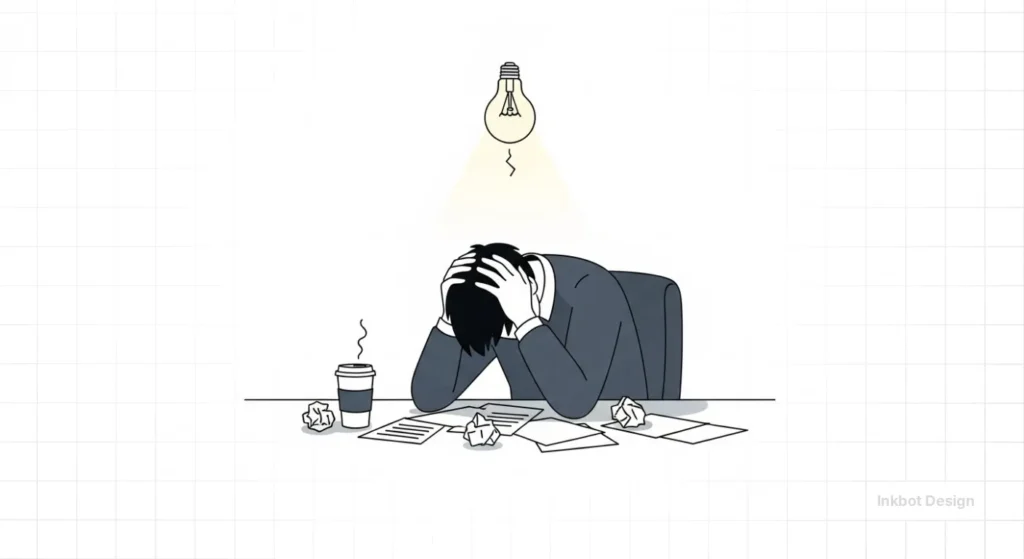
The Triad of Burnout
According to the psychological definition, burnout manifests in three distinct dimensions:
- Exhaustion: A profound lack of energy. This is the “bone-deep” tiredness that sleep does not fix.
- Cynicism (Depersonalisation): A negative or detached attitude towards the job. You start calling clients “idiots” more often. You stop caring about the quality of the kerning. You treat the work as purely transactional.
- Inefficacy: The feeling that nothing you do matters or is good enough. Your skills feel blunted. Tasks that used to take an hour now take four.
Consultant’s Note: During my time resolving brand disasters, I have observed that the “Cynicism” phase is the most perilous for business owners. A cynical designer stops trying to solve the client's problem and starts trying to get the file off their desk as fast as possible. That is when mistakes happen. That is when you get sued.
The Anatomy of the Crash: Why It Happens
Why do creatives hit the wall harder than accountants? It comes down to the nature of the work. Creative work requires emotional labour. You are not just processing data; you are extracting something from within yourself. You are subjectively judging your own worth based on the output.
If you are running on empty, you need a strategy, not just a holiday. Check out our freelance survival guide for a broader look at maintaining your sanity in this industry, but for now, let’s look at the specific triggers of burnout.
1. The “Always-On” Culture vs. The Default Mode Network
Neuroscience tells us that creativity often happens in the “Default Mode Network” (DMN)—the brain state active when you are daydreaming or not focusing on a specific task.
The modern agency workflow destroys the DMN. Slack notifications, Zoom calls, and 15-minute timesheets force the brain into “Executive Function” mode permanently. You are constantly reacting, never processing.
When you deny your brain the downtime required to make lateral connections, you literally run out of ideas. You are trying to draw water from a dry well.
2. The Subjectivity Trap
In data entry, you are either right or wrong. In design, you are “on brand” or “off brand,” but often you are just subject to the whim of a client who “doesn't like blue.”
Constant criticism of subjective work wears down your resilience. When you pour your soul into a project only to have it dismantled by a committee that doesn't understand design theory, it creates a “reward-prediction error” in the brain. You expected validation; you got rejection. Repeat this 1,000 times, and the brain stops producing the dopamine required to feel motivation.
3. The “Golden Handcuffs” of Mediocrity
Many senior creatives burn out not because they are working too hard, but because they are working on boring things.
High-paying corporate work often involves strict brand guidelines that leave zero room for innovation. You become a “wrist”—someone who just moves the mouse where they are told. This lack of autonomy is a primary driver of burnout. You are trading your creative identity for a paycheck, and eventually, the internal conflict causes a shutdown.
The Warning Signs: It’s Not Just Fatigue
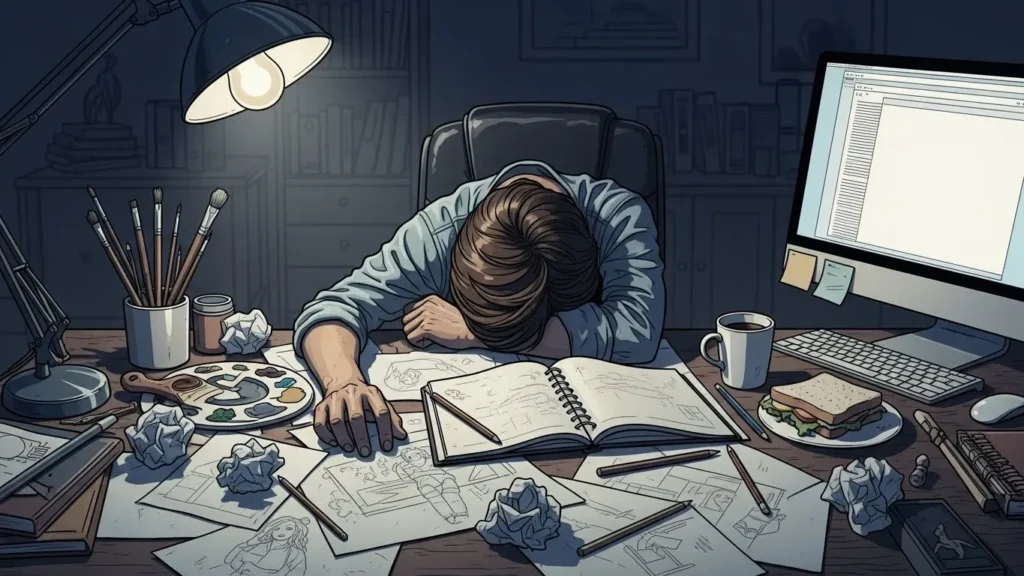
How do you know if you (or your Lead Designer) are burning out? It rarely starts with a breakdown. It starts with subtle shifts in behaviour and output quality.
| The Normal Stress Response | The Burnout Danger Zone |
| Reaction: “I need to work harder to fix this.” | Reaction: “I don't care anymore. Whatever they want is fine.” |
| Emotions: Anxiety, hyperactivity, urgency. | Emotions: Numbness, apathy, flatness. |
| Physical: Adrenaline spikes, jittery energy. | Physical: Chronic headaches, insomnia, suppressed immunity. |
| Output: Rushed, but attempts to be creative. | Output: Safe, derivative, relying on templates. |
| Recovery: A weekend off restores energy. | Recovery: A week off changes nothing; the dread returns instantly. |
The “Dread” Metric
The most accurate metric for burnout is the “Sunday Night Dread.” If the thought of opening your email on Monday morning causes a physical reaction—nausea, tight chest, shallow breathing—you are already in the danger zone.
The State of Creative Burnout in 2026: The AI Factor
We cannot discuss creative burnout today without addressing the elephant in the server room: Generative AI.
Over the last 18 months, the landscape has undergone significant changes. Tools like Midjourney, Sora, and ChatGPT have introduced a new, specific type of burnout: Existential Obsolescence.
The “Machine Speed” Problem
Clients now have a warped perception of how long creative work takes. Because they can generate a generic logo in 30 seconds with AI, they expect human designers to match that velocity.
- The Reality: Good design is thinking made visual. AI mimics the visual, but skips the thinking.
- The Burnout Trigger: Creatives are now constantly forced to justify their existence and timelines. The pressure to “out-create” a machine that never sleeps is a recipe for rapid mental collapse.
The Identity Crisis
For decades, artists defined themselves by their technical skills—their ability to render light, code CSS, or write perfect copy. Now that a machine can replicate the technical execution, creatives are suffering from a crisis of identity. “If a bot can do my job, what am I worth?”
This psychological weight adds a massive layer of background stress to every project. It is no longer just work; it is a fight for relevance.
Consultant's Observation: We are seeing agencies pivot. The smart ones are using AI to handle the grunt work, freeing up humans for high-level strategy. If you attempt to compete with AI on volume, you will likely burn out your team within six months. Guaranteed.
The Recovery Protocol: How to Fix It
If you are already cooked, “trying harder” is the worst thing you can do. You cannot will yourself out of burnout any more than you can will yourself out of a broken leg. You need a structural fix.
Here is the protocol we recommend for creatives and agency owners.
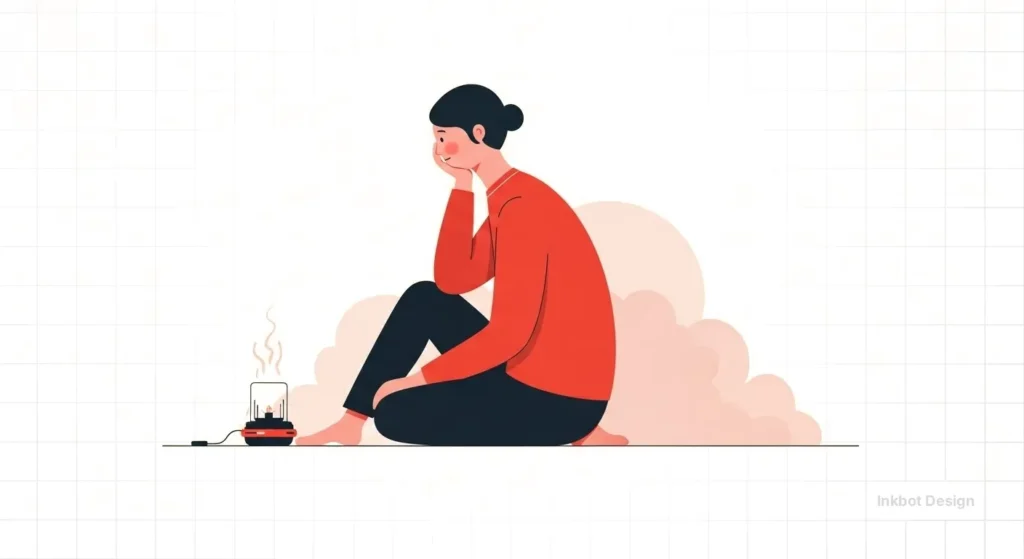
1. Radical Input Deprivation (The “Boredom” Cure)
When you are burnt out, your brain is overstimulated. Most people try to “relax” by scrolling Instagram, watching Netflix, or listening to podcasts. This is wrong. That is still information processing.
You need Input Deprivation.
- The Tactic: Spend time doing absolutely nothing. No phone. No music. No book. Just sit, walk, or stare at a wall.
- The Science: This forces your brain off the dopamine treadmill. It lowers the baseline for stimulation. After 48 hours of low-input existence, the urge to create will naturally return, as the brain seeks to solve problems when it isn't overwhelmed by noise.
2. The “Minimum Viable Day”
Stop trying to have “great” days. Aim for “functional” days.
Define the absolute minimum amount of work required to keep the business alive (e.g., “Answer 3 emails, finish 1 sketch”). Do that, and stop.
This removes the crushing weight of expectation. Success begets success. Achieving small, tiny goals rebuilds the dopamine reward loops that burnout destroyed.
3. Separate “Maker” and “Manager” Modes
Paul Graham’s famous essay on Maker's Schedule, Manager's Schedule is crucial here.
- Manager Mode: 30-minute blocks, meetings, emails.
- Maker Mode: 4-hour deep work blocks.
You cannot switch between these rapidly without a cognitive cost.
The Fix: Batch all your admin/calls into one day (or the mornings). Leave large, uninterrupted blocks for creative work. If you interrupt a designer every hour, you are actively destroying their ability to work.
4. Reconnect with “Useless” Creativity
Burnout often comes from the commodification of your talent—everything you make has a price tag or a KPI attached.
The Fix: Make something that cannot be sold. Draw a terrible comic. Build a Lego set. Cook a complex meal. Engage in creative play where the outcome does not matter. This reminds your brain that creativity is fun, not just a transaction.
If you are struggling to find time for this because you are overwhelmed with admin, consider our digital marketing services. Sometimes, the best way to overcome burnout is to outsource the heavy lifting, allowing you to focus on the creative vision.
For the Boss: Protecting Your Asset
If you are the agency owner or the manager, your team is your machinery. If you run them into the ground, you have no product to sell.
The Cost of churn
Replacing a senior creative costs roughly 150% of their annual salary when you factor in recruitment fees, onboarding time, and lost productivity. Burnout is expensive. Prevention is cheap.
1. Audit Your Process
Is your approval process a nightmare? Do you have a “too many cooks” problem?
I once audited a client who had seven layers of approval for a social media post. By the time the creative reached the end, the designer had lost all will to live. Streamline your workflow. Give autonomy back to the creators.
2. Kill “Toxic Positivity”
Do not tell a burnt-out team, “We've got this!” or “Dreamwork makes the team work!” It is insulting.
Acknowledge the difficulty. Say: “This project is a grind. I know it's tough. Here is how we are going to get through it, and here is the time off you get when it's done.” Honesty builds trust. Fluff breeds resentment.
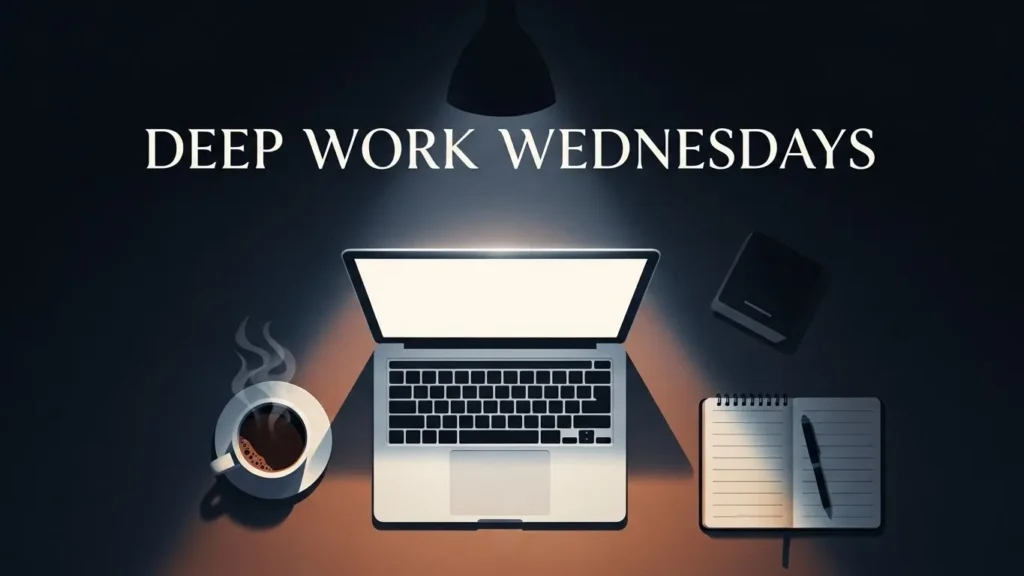
3. Implement “Deep Work” Wednesdays
Institute a “No Meeting” day. A full day where Slack is quiet, Zoom is off, and people can actually design. You will be surprised at how much productivity increases when you stop interrupting people.
If you are ready to stop fighting the grind and start building a brand that works for you, you might need a partner who understands the balance. You can request a quote for a consultation. We fix broken brands, and often, that starts with fixing the workflow.
Debunking the Myths: What Doesn't Work
Let’s clear the air on some common bad advice you will find on generic business blogs.
Myth 1: “Just Push Through the Block”
The Truth: Creative block and burnout are different. You can push through a block. Pushing through burnout causes permanent damage. It is like running on a sprained ankle; you turn a temporary injury into a chronic disability.
Myth 2: “A Holiday Fixes Everything”
The Truth: If you return from a two-week holiday to the exact same toxic environment, unclear briefs, and micromanagement, you will be burnt out again by Tuesday morning. The environment must change, not just your location.
Myth 3: “Passion Prevents Burnout”
The Truth: Passionate people are more susceptible to burnout. Because they care deeply, they often struggle with poor boundaries. They work late because they want it to be perfect. As an owner, you need to protect your passionate staff from themselves.
The Verdict
Creative burnout is a signal. It is your brain’s way of pulling the emergency brake because the current speed is unsafe.
If you ignore it, you will crash. If you respect it, analyse the root causes, and adjust your workflow, you can return stronger, sharper, and more profitable.
Creativity is a renewable resource, but only if you manage the ecosystem that produces it. Stop treating yourself (or your team) like a vending machine where you insert coffee and extract logos.
Protect the asset. Prioritise deep work. And if the workload is drowning you, get help.
Is your brand suffering because you are too burnt out to give it the attention it needs? It might be time to bring in the professionals. Explore our design portfolio to discover what a fresh, energised perspective can bring to your business.
Frequently Asked Questions (FAQ)
What is the difference between creative block and creative burnout?
Creative block is a temporary inability to access ideas, typically resolved by changing the context or employing lateral thinking. Creative burnout is a systemic state of physical and emotional exhaustion, characterised by feelings of cynicism, detachment, and inability to function, often requiring significant time and structural changes to recover.
Can you recover from creative burnout while working?
It is difficult, but possible if you can alter the nature of the work. You must reduce the volume, switch to lower-stakes tasks (such as administrative or rote work), and strictly enforce boundaries. However, full recovery usually requires a period of complete disconnection from the stressors.
How long does creative burnout last?
There is no set timeline. Mild burnout might resolve in a few weeks with rest and lifestyle changes. Severe burnout, where the nervous system is dysregulated, can take months or even years to fully recover from.
Is creative burnout a medical condition?
The World Health Organization (WHO) classifies burnout as an “occupational phenomenon” in the ICD-11, not a medical condition. However, it affects health status and can lead to medical issues like depression, anxiety, and cardiovascular problems if left untreated.
How does AI contribute to creative burnout?
Generative AI tools create “Existential Obsolescence.” Creatives feel pressure to compete with the speed of machines, leading to anxiety about job security and a sense that their skills are being devalued. This constant low-level dread accelerates the burnout process.
What are the physical symptoms of burnout?
Physical signs include chronic fatigue, insomnia, headaches, gastrointestinal issues, and a weakened immune system (getting sick frequently). You may also experience a physical sensation of “dread” or tightness in the chest when thinking about work.
How can agency owners prevent team burnout?
Agency owners should focus on “Input Deprivation” (reducing noise/interruptions), implementing “Deep Work” blocks where meetings are banned, ensuring briefs are clear to avoid wasted effort, and recognising that “passion” is not a substitute for rest.
Does perfectionism cause burnout?
Yes. Perfectionism creates a gap between your current output and your impossible standards. The constant feeling of falling short, regardless of external praise, drives the “inefficacy” component of burnout. Learning to accept “good enough” is a key recovery skill.
Why do I feel guilty when I am not creating?
This is “Toxic Productivity,” the belief that your worth is tied solely to your output. In the creative industry, where personal identity and work are closely linked, stopping work feels like a loss of self. This guilt loop prevents true rest and perpetuates burnout.
What is the ‘Minimum Viable Day' strategy?
This is a recovery tactic where you define the absolute smallest amount of work required to keep things running (e.g., one email, one sketch) and give yourself permission to stop after that. It helps rebuild confidence and prevents the paralysis that comes from being overwhelmed.