The Content Calendar is Dead: What to do in 2026
If your content calendar is merely a list of dates and titles, you don’t have a strategy; you have a chore list.
In 2026, where Generative Engine Optimisation (GEO) and Large Language Models (LLMs) dictate visibility, an amateur approach to blogging is a fast track to irrelevance.
Ignoring the semantic architecture of your calendar costs you more than just time. It costs you the “Cost of Retrieval.”
If Google (or an AI agent) has to work too hard to figure out what you’re an expert in because your calendar is a scattergun of random topics, it will simply ignore you.
- Replace date-only schedules with semantic silos mapping content to specific Entities and Attributes for topical authority.
- Design metadata-rich, Answer-First entries and allocate 30% of output to historical optimisation to prevent content decay.
- Prioritise Information Gain and a hub-and-spoke distribution framework over frequency to maximise AI citations and ROI.
What is a Content Calendar?
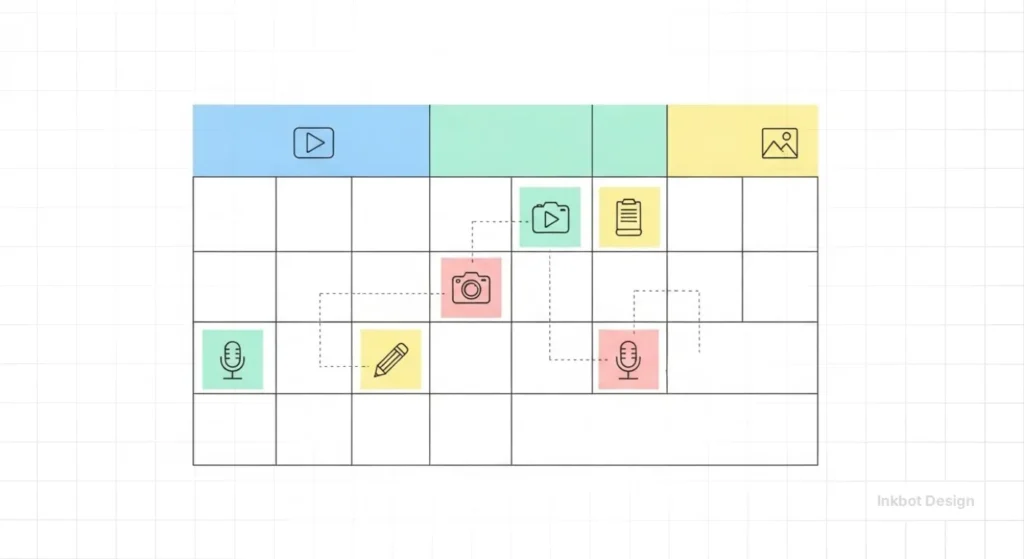
A content calendar is a strategic, time-bound framework used to plan, organise, and execute the creation and distribution of media assets.
In a professional context, it serves as the operational hub for digital marketing services, ensuring that every piece of content contributes to a specific “Entity” or “Topical Authority” goal rather than existing in a vacuum.
At the atomic level, a 2026 content calendar is built on Semantic Triples. This is the Entity-Attribute-Value (EAV) model that search engines use to understand facts.
You aren’t just writing a post about a “Content Calendar” (Entity); you are defining its “Cost-Effectiveness” (Attribute) and its “90% ROI Increase” (Value).
By planning your calendar around these triples, you provide a “clean” data structure that AI agents can easily ingest and verify, moving your site from a collection of paragraphs to a verified node in the Google Knowledge Graph.
The three core elements of a modern calendar are:
- The Semantic Silo: Mapping content to specific “Content Pillars” to build topical depth.
- The Distribution Blueprint: Defining where and how content is repurposed across platforms.
- The Performance Feedback Loop: Using data to decide whether to update, delete, or double down on specific topics.
The 2026 Shift: From Keywords to Entities
For years, “experts” told you to find a high-volume keyword and write a post about it. In 2026, that advice is a death sentence.
Google’s transition to an “Entity-based” search engine means it no longer looks for strings of text; it looks for things (entities) and the relationships between them.
Your content calendar must reflect this. Instead of a list of keywords, your calendar should be a map of semantic siloing.
Why Keywords Failed: The Rise of Vector Search
To dominate in 2026, you must understand how AI reads. It doesn’t match keywords; it uses Vector Embeddings. Imagine a 3D map where “Apple” (the fruit) is far away from “Apple” (the iPhone).
- Old Way: Write “Apple” 50 times.
- New Way: Write about “Crunch,” “Orchard,” and “Pie” to pull your content into the “Fruit” vector cluster. Your content calendar must focus on Semantic Proximity—grouping concepts that belong in the same vector space to signal strong topical relevance to the AI.
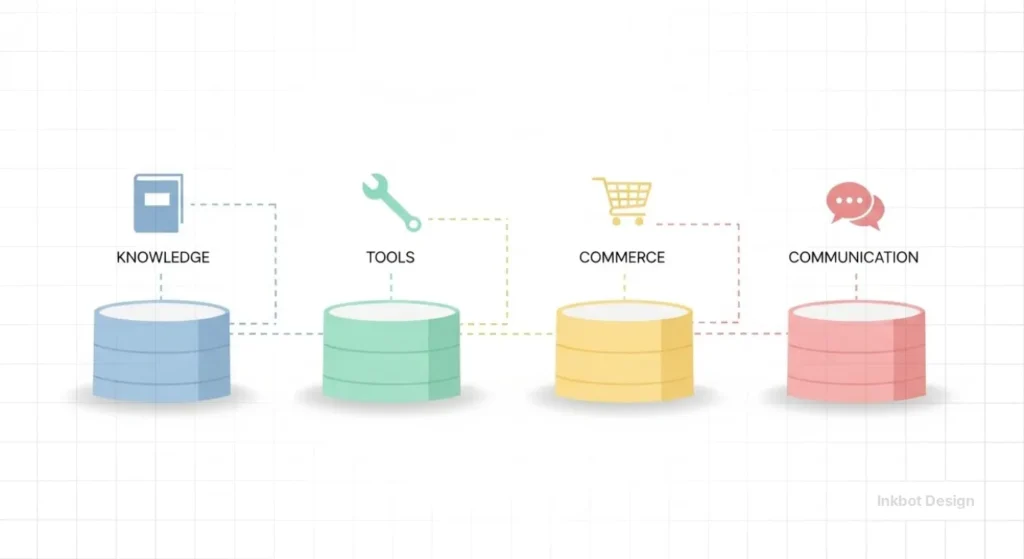
What is Semantic Siloing?
It is the process of grouping related content into “silos” to demonstrate exhaustive knowledge of a subject.
If you are a branding agency, your calendar shouldn’t just have random posts about logos. It should have a structured flow that covers content pillars, visual content, and storytelling in marketing.
Real-World Example:
Look at how Deloitte Insights structures its publishing. They don’t just “post.” They release themed series that cover every aspect of a macroeconomic shift.
This isn’t accidental. It’s a deliberate attempt to dominate the “Entity” of “Global Economic Trends” in the eyes of both human readers and search algorithms.
According to Deloitte’s own research, structured, authoritative content is the primary driver of B2B trust in the digital age.
The “Zombie Calendar” Syndrome: Why Most SMBs Fail
During our fieldwork at Inkbot Design, we often encounter what I refer to as the “Zombie Calendar.” It’s a calendar that looks alive—it has dates, it has posts—but there is no soul, no strategy, and zero ROI.
I once audited a client who was spending £4,000 a month on a content agency that “filled their calendar.” They had 200 blog posts. Not a single one ranked in the top 50.
Why? Because the agency was using a “Root Attribute” model only—the basics. They weren’t looking at “Rare” or “Unique” attributes. They were writing what everyone else was writing.
The Myth of Consistency Debunked
The most common piece of advice is: “Post consistently to stay top of mind.”
This is a lie.
Nielsen Norman Group has shown through decades of eye-tracking studies that users don’t want “consistent” noise; they want “utility” and “credibility.”
If you post three times a week but offer nothing new (no Information Gain), you are training your audience to ignore you.
In 2026, the “Cost of Attention” is at an all-time high. Your calendar should focus on Impact over Frequency.
| Feature | The Amateur Way (Zombie Calendar) | The Pro Way (Inkbot Strategy) |
| Goal | “Fill the slots” | Build Topical Authority |
| Topic Selection | “What’s trending on Buzzsumo?” | Semantic Silo Mapping & Entity Gaps |
| Format | 800-word blog posts only | Video content marketing + Long-form |
| Metrics | Likes and Shares | Topical Coverage & Conversion ROI |
| Distribution | “Post and Pray” | Content repurposing framework |
Technical Foundations: The Infrastructure of an Elite Calendar
If you’re still using a basic Google Calendar to manage your brand’s future, you’re bringing a knife to a drone fight. A professional content calendar requires a database-driven approach.
1. Metadata Tagging
Every entry in your calendar must have metadata. We aren’t just talking about “Author” and “Date.” We need:
- Target Entity: What is the primary thing this post is about?
- User Intent: Is this Informational, Transactional, or Navigational?
- Funnel Stage: Top of Funnel (Awareness) or Bottom of Funnel (Conversion)?
- Editorial Guidelines: Does this meet your editorial guidelines for 2026?
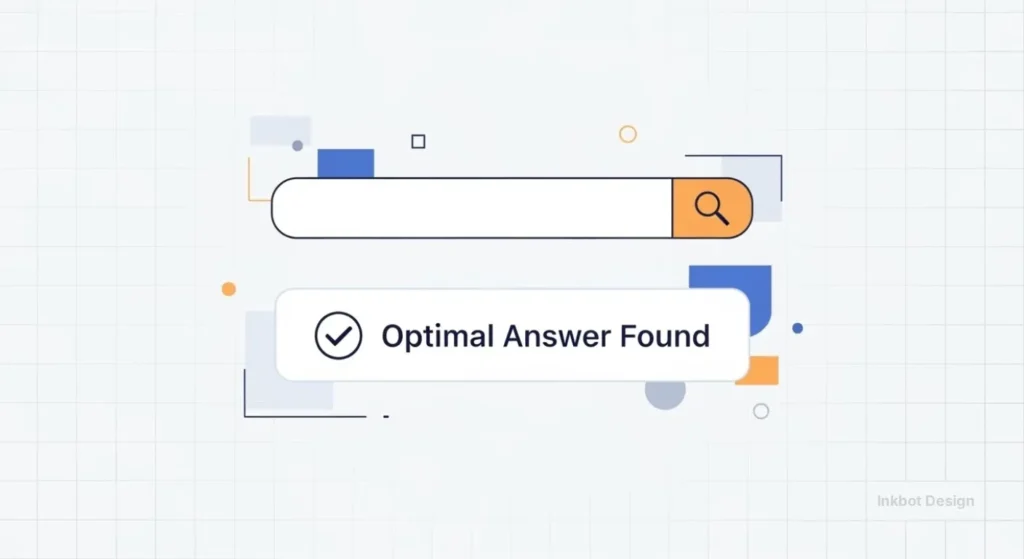
From a technical perspective, every entry in your calendar must be architected for Answer Engine Optimisation (AEO).
This requires Answer-First Formatting, which involves placing a concise, two-sentence takeaway immediately below your H2 headers.
This “Content Chunking” is essential for 2026 because it allows Generative Engines to extract and cite your brand as the “Featured Answer” in an AI Overview.
If your calendar doesn’t mandate these “Snippet-Ready” blocks, you are building a library that the AI can’t read.
The Missing Link: Calendar-to-Schema Mapping
A Semantic Calendar is useless if that data dies in your spreadsheet. In 2026, your calendar columns must map directly to Schema.org properties on your live site.
- Calendar Column: “Primary Entity” -> Schema Property:
about(The main topic). - Calendar Column: “Related Concepts” -> Schema Property:
mentions(Secondary entities). - Calendar Column: “Target Audience” -> Schema Property:
audience(Who is this for?).
By mirroring your internal database in your external JSON-LD code, you hand-feed Google’s Knowledge Graph the exact relationships you planned, reducing the “ambiguity tax” on your content.
2. The Content Supply Chain
McKinsey & Company highlights the importance of the Content Supply Chain. You need to treat your content like a physical product. Where are the bottlenecks? Is it in the “Idea” phase or the “Approval” phase?
A calendar that doesn’t account for the “Review” cycle is a calendar that will always be behind schedule.
Information Gain: The Trick for 2026
Google’s “Information Gain” patent is the most important thing you’ve never heard of. It essentially says: “If your content doesn’t add anything new to what’s already on the web, we have no reason to rank it.”
When planning your calendar, every topic must pass the “So What?” test.
- Does this offer a new perspective?
- Does it include proprietary data?
- Does it fix a mistake your competitors are making?
If you are just regurgitating the top 10 results, you are wasting your time. You must include “Unique Attributes.”
For example, when we help a client with a UK services page, we don’t just list the service; we also provide relevant information to support it.
We audit the source code, examine the semantic density, and ensure the copy is A/B tested for a specific British audience. That is the “Unique Attribute” that provides Information Gain.
Managing the “Content Decay” Problem
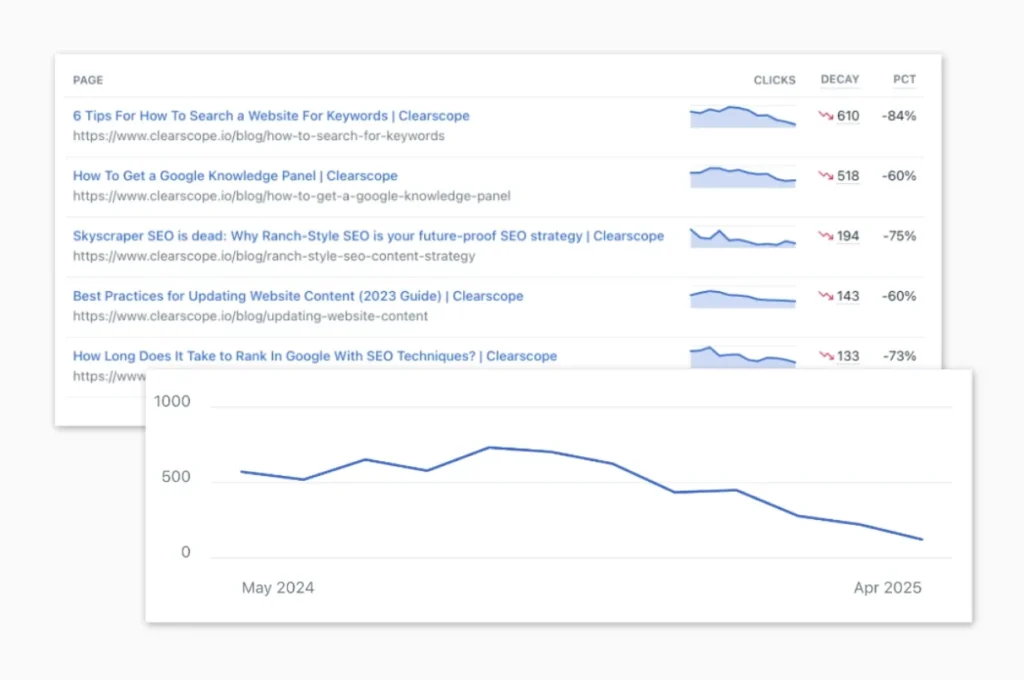
One of the biggest mistakes I see in content calendars is a 100% focus on new content.
Pro Tip: 30% of your calendar should be dedicated to Historical Optimisation.
The web moves fast. A post written in 2024 about “Best SEO Practices” is likely obsolete by 2026. If you don’t schedule time to audit and refresh your legacy content, it becomes “Technical Debt.” It weighs down your site’s authority.
Real-World Failure: Remember the site About.com? It was a titan of the early internet. It failed because it allowed millions of pages of content to decay. It didn’t have a calendar focused on maintenance. It was eventually broken up and rebranded into “Dotdash” brands (like Verywell and The Spruce), which now follow a rigorous “Update or Delete” calendar strategy.
Why You’re Really Failing
Let’s be honest. You’re likely failing with your content calendar because you’re trying to do too much with too little.
I’ve seen entrepreneurs try to manage a blog, a podcast, a YouTube channel, and five social media platforms simultaneously. The result? Mediocrity across the board.
In our fieldwork, the most successful brands are those that master one primary channel and use a content repurposing strategy to feed the others. Your calendar should reflect this “Hub and Spoke” model.
- The Hub: One exhaustive, high-authority piece of content (like this guide).
- The Spokes: 10 social posts, 2 videos, and 1 newsletter derived from that one hub.
This reduces the “Cost of Production” while maximising your “Entity Density.”
The primary commercial benefit of a forensic calendar is the expansion of your Share of Voice (SOV) on LLMs.
In 2026, we don’t just track ranking positions; we track how often your brand is cited in a Perplexity or ChatGPT response.
A structured calendar creates a “Semantic Moat”—by saturating an entity cluster with high-quality data, you make it mathematically difficult for a competitor to dislodge you as the primary authority.
This leads to a massive reduction in Cost Per Lead (CPL), as the AI acts as a free, 24/7 recommendation engine for your business.
A critical problem for growing estates is the Information Decay Gap.
To solve this, your 2026 calendar must implement the “30% Refresh Rule.”
Instead of obsessing over 100% new creation, you must allocate 30% of your production capacity to “Historical Optimisation”—updating old posts with fresh data, new JSON-LD Schema, and primary research.
This prevents “Rank Erosion” and signals to Google that your site is an active, accurate authority, protecting the capital you’ve already invested in your legacy content.
The Evolution: Standard vs. Semantic Calendar
| Feature | The “Zombie” Calendar (2024) | The Semantic Calendar (2026) |
| Primary Unit | Blog Post Title | Entity / Knowledge Node |
| Success Metric | Click-Through Rate (CTR) | LLM Citation Frequency |
| Structure | Chronological (Dates) | Topological (Clusters) |
| Optimization | Keywords (Yoast Green Light) | Information Gain & Schema |
| Maintenance | None (Post & Forget) | 30% Historical Refresh Rate |
| Target Audience | Humans on Google | Humans + AI Agents |
The Verdict
A content calendar is not a static document; it is a living, breathing blueprint for your brand’s authority. If you treat it like a chore, your audience will treat your content like junk mail.
In 2026, the winners will be those who move away from “Keyword Frequency” and toward “Semantic Depth.” You need a calendar that accounts for entity relationships, information gain, and the technical realities of LLM retrieval.
Stop guessing. Stop filling slots. Start building an entity.
If you’re tired of seeing zero ROI from your content efforts, it’s time for a forensic audit of your strategy. Request a quote today, and let’s build a content engine that actually moves the needle for your business.
Frequently Asked Questions (FAQ)
What is a “Forensic” Content Calendar?
It is a strategic framework that moves beyond simple dates to map content to specific Entities and Semantic Silos. It ensures that every post builds your brand’s authority in a way that both humans and AI engines can verify and cite.
Why is “Information Gain” the most important metric in 2026?
Google’s Information Gain patent rewards content that provides new data or perspectives not found in existing search results. If your calendar just repeats what is already on page one, you are creating a “Zombie Post” that will likely never rank.
What is the difference between a Topic and an Entity?
A topic is a general subject (e.g., “Web Design”). An Entity is a distinct, well-defined concept (e.g., “Responsive Web Design”) with specific relationships to other entities. 2026 SEO is about building a “Knowledge Graph” of these entities.
How does “Answer-First” formatting affect my calendar?
It dictates the structure of your writing. Every piece of content should lead with a concise summary that an AI can easily extract. This increases your chances of appearing in Position Zero and being cited in AI-generated search overviews.
How much of my calendar should be dedicated to old content?
We recommend the 30% Refresh Rule. For every seven new posts, you should audit and refresh three old ones. This prevents Content Decay and ensures your site’s historical authority remains a ranking asset.
What is “Generative Engine Optimisation” (GEO)?
GEO is the process of making your content “readable” for LLMs like ChatGPT and Google Gemini. This requires structured data, clear semantic triples, and the avoidance of “fluff” that confuses machine-learning scrapers.
Can I use AI to write my content calendar?
AI is excellent for Predictive Trend Mapping and outlining, but “filling” a calendar with generic AI text creates a “Zombie Calendar” that lacks the E-E-A-T (Experience, Expertise, Authoritativeness, and Trust) required to rank in 2026.
What are “Content Spokes” in a Hub and Spoke model?
If your “Hub” is an exhaustive guide, your “Spokes” are smaller, platform-specific assets (such as videos, social posts, and infographics) derived from it. This ensures a consistent message while maximising your “Return on Content.”
How do I measure the ROI of a content calendar?
Stop looking at likes. Measure Topical Share of Voice, Branded Search Volume, and Assisted Conversions. A successful calendar should decrease your Customer Acquisition Cost (CAC) over 6-12 months.
What is “Semantic Siloing”?
It is the process of grouping related content into logical “Silos” to prove your exhaustive expertise on a subject. It tells search engines, “I don’t just know a little about X; I know everything about X, Y, and Z.”
Why is “First-Party Data” critical for content planning?
In 2026, with the decline of third-party cookies, your own data (customer surveys, internal research, case studies) is your most valuable asset. Using this in your calendar provides the Information Gain that AI cannot replicate.
How far ahead should I plan my calendar?
Maintain a 90-day strategic view and a 30-day granular view. Planning too far ahead (6-12 months) makes you slow to react to “Predictive SEO” shifts and new algorithmic updates.
What is the “Zombie Calendar” syndrome?
It occurs when a business publishes content solely to meet a schedule. This leads to high production costs with zero ROI. A forensic calendar prioritises Impact over Frequency.
What tools are best for a 2026 content calendar?
Database-driven tools, such as Notion or Airtable, are superior to flat spreadsheets. They allow you to tag content with metadata, track “Entity Density,” and manage the entire Content Supply Chain in one place.
How does a content calendar help with “Brand Recall”?
By consistently providing high-utility “Unique Attributes,” you build a stronger neural pathway in the consumer’s mind. You become the “Default Answer” to their problems, which is the ultimate goal of any branding strategy.
What is a “Human-in-the-Loop” (HITL) protocol?
HITL is a verification step in your calendar where a qualified human expert reviews AI-assisted content for accuracy and nuance. In 2026, Google’s “E-E-A-T” algorithms can detect pure AI slop; HITL is your insurance policy against ranking demotions.
How do I measure “Information Gain”?
You measure it by auditing the top 3 results for your target entity. If they all cite Stat A, and you cite Stat B (from your own proprietary data), you have achieved Information Gain. It is the “Delta” between the status quo and your unique value.