25 Famous Blue Logos That Aren’t Just “Trustworthy”
Calling blue a “trustworthy” colour for a logo is the most boring, overused piece of advice in branding. It’s technically accurate, but utterly useless. It’s like saying water is wet.
Of course, blue can signal trust. It can also signal coldness, sadness, or utter conformity.
The reality is, blue is the default choice for countless businesses because it’s safe. It’s the colour you pick when you don’t want to offend anyone. However, “not offending” is a terrible strategy for building a memorable brand.
We will dissect 25 famous blue logos to see what’s going on. We’ll look past the lazy psychology and find the strategic thinking that makes them work.
- Blue is a common choice in branding due to its perceived trustworthiness but can also signal coldness and conformity.
- The effectiveness of a blue logo depends on its specific shade and how it relates to competitors.
- Tech companies redefine blue branding, using it to convey innovation, connection, and a clean future.
- Choosing blue should be a strategic decision focused on your brand's desired message and context, not merely safety.
Why Is Blue So Ridiculously Popular in Branding?
Blue is everywhere in the corporate world. Studies have shown it’s the most used colour in the logos of the top 100 global brands, with some analyses putting the figure as high as 33%.
The textbook reasons are apparent. Blue is associated with the sky and the sea—vast, dependable constants. This translates into psychological triggers for stability, calmness, and intelligence. It feels professional and secure.
But the real secret isn’t that brands use blue. It’s how they use it.
The specific shade, the shape it fills, and the competitors it stands against separate a powerful brand from a forgettable one. A vibrant sky blue on a social media app communicates something entirely different from a financial institution’s deep, authoritative navy.
The Tech Giants: Blue as a Symbol of Innovation and Connection
Tech companies were among the first to break blue out of its conservative, “corporate” box. They used it to signal a new kind of trust: trust in technology, connection, and a clean, efficient future.
1. Facebook (Meta)
The specific shade, known as “Facebook Blue,” was reportedly chosen by Mark Zuckerberg because he has red-green colour blindness; blue is the colour he sees most vividly. A happy accident, perhaps, but the result is a blue that is energetic and accessible, not stuffy. It became the visual shorthand for social media—open, inviting, and for a long time, ubiquitous.
2. Telegram
The paper plane is genius. It’s a universal message symbol, understood by a five-year-old and a ninety-five-year-old. It immediately communicates speed and directness.

The specific shade of bright, clear blue reinforces this. It’s not a heavy, corporate blue that weighs the icon down; it’s the colour of a clear sky you’d fly that plane through. The colour and the symbol work together to create a feeling of effortless, unhindered communication. It’s a visual promise that your message will go.
3. LinkedIn
LinkedIn uses a more buttoned-up, professional blue. It’s serious and corporate, but lacks the heavy, intimidating feel of a traditional bank’s navy. This shade perfectly positions the brand as a bridge between a casual social network and a formal business tool. The colour says “get to work.”
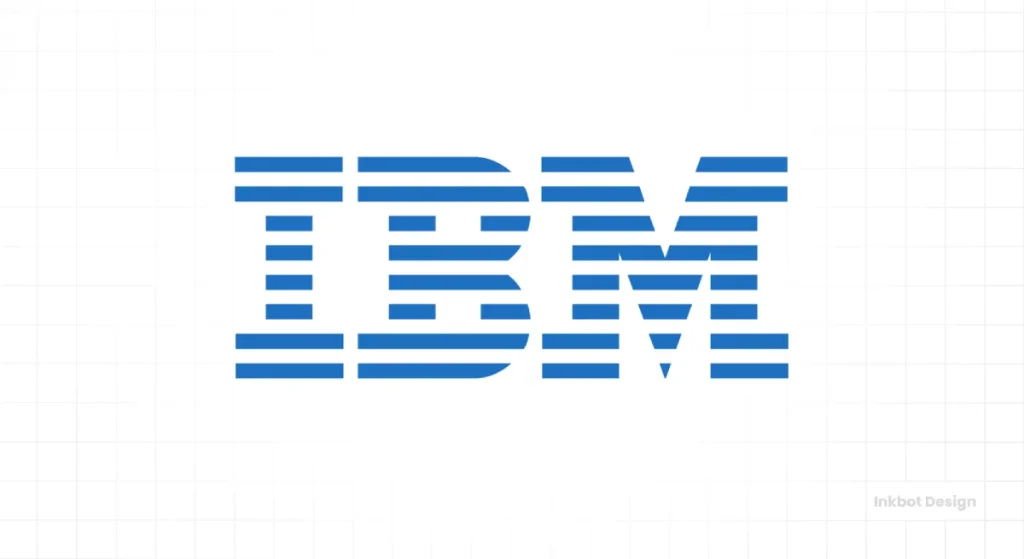
4. IBM
“Big Blue.” The name and the colour are one. Paul Rand’s iconic 8-bar logo, introduced in 1972, gives a solid, authoritative blue a sense of dynamism and technology. The stripes suggest scanning lines on a screen or moving data. This isn’t just a colour; it’s a visual statement of enterprise-level reliability and computing history.
5. Samsung
Samsung’s simple, clean wordmark uses a calm and confident blue. As a global giant producing everything from phones to refrigerators, the brand needs a colour that communicates reliability across dozens of categories. This uncomplicated blue is a consistent mark of quality and trust, no matter the product.
6. Dell
Dell’s logo, with its famous slanted ‘E’ housed in a blue circle, is all about accessibility. The blue is straightforward and non-threatening. It reflects the company’s original mission: to make computer technology available and straightforward to everyone. It’s a dependable, no-frills colour for a dependable, no-frills brand.
7. Intel
The decades of the “Intel Inside” campaign cemented Intel’s blue identity. While the modern logo is cleaner, it retains the colour that came to represent intelligence and processing power. The blue is the “brain” inside the machine—a cool, efficient, and powerful core.
8. HP (Hewlett-Packard)
Much like Dell, HP’s blue is a simple, elegant choice that signals consumer and business technology reliability. The consistent use of this particular shade has made it a quiet but constant mark of accessible innovation. It’s a reassuring colour in a market that can often feel complex.
9. PayPal
For a financial service, trust is paramount. PayPal’s two-tone blue monogram uses rounded, friendly letterforms to make it feel more like a modern tech company than a stuffy bank. The overlapping ‘P’s suggest partnership and a secure connection, while the approachable blues lower the anxiety associated with online payments.
10. WordPress
The friendly, medium blue of the WordPress ‘W’ is iconic to a generation of bloggers, developers, and creators. The platform powers an estimated 43% of the entire internet. Its blue needs to communicate stability, community, and creative potential, which this accessible shade accomplishes perfectly.
11. Skype
Skype’s logo is a masterclass in visual metaphor. The soft, sky-blue colour and the cloud-like bubble border perfectly visualise its service: voice communication over the “cloud.” The colour is light, friendly, and conversational—precisely what you want from a communication tool.
The Financial & Corporate Titans: Blue for Authority and Security
In finance and big industry, blue isn’t just a choice; it’s practically a uniform. Here, darker shades project immense stability, security, and conservatism. This is the colour of protecting money, data, and legacy.
12. American Express
The Amex logo isn’t just blue; it’s a blue box. The solid, square shape and gradient blue fill make it look like a seal of approval or a vault. The design projects immense security, exclusivity, and heritage. It’s a badge of financial credibility.
13. JP Morgan Chase
This is the epitome of a conservative, powerful financial institution. The logo uses a strong, dark navy blue and an octagon shape that suggests strength and structure. The colour is deep, profound, and unwavering—projecting the steadfastness you want from a global bank.
14. Barclays
The Barclays logo combines the trust of blue with the powerful symbolism of an eagle. The eagle represents vision, reach, and oversight—qualities expected from a bank with a 300-year history. The blue grounds that power in a feeling of stability and trust.

15. General Electric (GE)
The script monogram inside the “GE Blue” circle has been a mark of American industrial power and innovation for over a century. The shade is so linked to the company that it feels historic and forward-looking. It’s the colour of invention, from lightbulbs to jet engines.

Retail, Health & Consumer Goods: Blue as a Sign of Quality and Cleanliness
For products we use daily, blue often signals reliability, value, and clinical effectiveness, especially in healthcare. It’s a colour that promises consistency and quality.
16. Walmart
For years, Walmart used a stark, corporate navy blue. The shift to a softer, friendlier blue, accompanied by the yellow “spark,” was a strategic move to reposition the brand as more customer-centric and accessible—the current blue concerns everyday dependability and value, not just corporate scale.
17. Ford
The deep blue of the Ford oval is a classic badge of American industry. In use for over a century, the colour represents heritage, mass-market trust, and the promise of reliability. It’s instantly recognisable and carries the weight of history.
18. Oreo
While the logo is the wordmark, the Oreo brand is inseparable from its vibrant blue packaging. The blue packaging helps it stand out on the shelf in a sea of red and yellow snack foods. It provides a high-contrast background for the iconic white lettering, creating a classic, familiar, and craveable look.
19. Oral-B
In the health and hygiene aisle, blue is king. The specific shade used by Oral-B communicates clinical efficacy, cleanliness, and dentist-approved science. You trust the product because the colour subconsciously signals that it’s safe and effective.
20. Pfizer
The brand colour must exude science, research, and unwavering trust for a pharmaceutical giant. Pfizer’s clinical blue does precisely that. The modern logo, which uses a two-tone blue ribbon resembling a DNA helix, cleverly ties the trustworthy colour to the company’s cutting-edge biopharmaceutical work.
Icons of Culture, Luxury & Public Trust
This is where blue shatters the “corporate” stereotype. In these examples, blue conveys everything from futuristic entertainment and aspiration to the vastness of space and the promise of a clear sky.
21. The United Nations (UN)
This isn’t just any blue; it’s a statement of neutrality. The specific, calm shade of light blue was deliberately chosen as the opposite of a military or nationalistic colour. It is the colour of peace, designed to be non-threatening and universal.
Paired with the world map projection, the message is unambiguous: global cooperation and calm oversight. The UN logo is a masterclass in using colour to communicate a complex philosophical and political idea—peace—in a single glance. It’s branding in service of a mission.
22. Tiffany & Co.
Tiffany & Co. didn’t just choose a colour; they own one. The iconic Tiffany Blue, a specific shade of robin’s egg blue, is trademarked. It has become a global symbol of luxury, aspiration, and excitement. This is the ultimate example of colour as a brand asset—the blue box is often more desired than its contents.
23. Nivea
For over 100 years, Nivea’s brand has been distilled into this deep blue and simple white text. It’s one of the world’s most consistent and recognisable identities, often associated with the iconic blue tin.

The colour here doesn’t scream for attention. It’s calm, clean, and incredibly reassuring. This isn’t the innovative blue of tech or the mighty navy of finance; it’s a colour of quiet, domestic trust. It’s the visual equivalent of a product that simply works, generation after generation. Nivea proves that sometimes, the most potent brand asset is a simple colour used with absolute consistency.
24. Sega
This is the perfect case study for blue as an energetic, rebellious colour. In the 90s console wars, Sega’s electric, futuristic blue stood in stark, aggressive contrast to Nintendo’s playful red. It positioned Sega as the cooler, faster, more mature choice. It proves blue can be edgy.
25. Deutsche Bank
Anton Stankowski’s 1974 design—the “slash in a square”—is a masterwork of minimalist corporate branding. The confident, forward-moving slash represents growth and dynamism. The shade of blue communicates modern efficiency and global reach, setting it apart from more traditional, navy-clad financial institutions.
What Can You Actually Learn From All This?
Looking at these 25 examples reveals a few truths that go deeper than “blue is trustworthy.” These are the real lessons if you’re an entrepreneur considering blue for your brand.
Lesson 1: Your Shade is Your Strategy
Don’t just choose “blue.” Decide what your blue needs to do.
- Light Blue: Use aky blue or cyan for brands about communication, clarity, and approachability (Twitter, Skype).
- Dark Blue: Use a navy or midnight blue for brands that must project authority, security, and expertise (JP Morgan Chase, IBM).
- Vibrant Blue: Use an electric or royal blue for brands that need to convey energy, innovation, and excitement (Sega, PayPal).
Lesson 2: Look at Your Competitors
Colour doesn’t exist in a vacuum. Its meaning is defined by its context. Use blue to stand out, not to blend in. The most powerful use of blue is often as a point of contrast. Sega chose blue specifically because Nintendo was red. If every competitor in your space uses aggressive red logos, a calm, confident blue can make you look like the stable, expert choice.
Lesson 3: The Logo is More Than the Colour
A great colour cannot save a bad design. The colour’s job is to support the core idea of the logo. IBM’s stripes, American Express’s square, and Nivea’s dot are as crucial to their identity as their hue. Don’t expect the colour to do all the heavy lifting.
Getting the right combination of colour, typography, and form is precisely what professional logo design is about. A good designer doesn’t just pick a colour; they build a system where the colour amplifies the message.
Is a Blue Logo Right For Your Business?
It’s a strong choice if your brand values are trust, reliability, intelligence, professionalism, or calm. Tech, finance, healthcare, and extensive corporate services are natural fits.
It’s a weak choice if your brand is meant to be passionate, high-energy, or urgent (where red or orange might serve you better). It can also be a mistake if you’re in an industry saturated with blue logos and have no other strong point of differentiation. You risk looking generic.
Don’t choose blue because it’s safe. Choose it because it’s the right strategic weapon for the message you need to send.
The 25 brands above didn’t just pick a colour from a swatch book; they wielded it with intent. The question you should ask isn’t “Should I use blue?” The real question is, “What do I want my blue to say?”
If you’re trying to figure out what your brand’s colours should say, it’s time to talk to someone who understands the strategy behind the swatch. Explore our logo design services or request a quote to get a no-nonsense perspective on your brand.
Frequently Asked Questions About Blue Logos
What does a blue logo say about a company?
A blue logo typically communicates trust, stability, professionalism, and intelligence. However, the shade dramatically alters the message; light blue can feel friendly and innovative, while dark navy blue feels authoritative and secure.
Why do so many tech companies use blue logos?
Tech companies use blue to signal reliability, intelligence, and clean innovation. It helps build trust in new technologies and platforms by feeling forward-thinking and secure. Brands like Facebook, Intel, and IBM have made blue synonymous with the tech industry.
Is blue a good colour for any industry?
Blue is versatile but not universal. It excels in finance, technology, healthcare, and corporate sectors. It can be less effective for industries that need to evoke passion, speed, or appetite, such as fast food or high fashion, where reds, oranges, and blacks are often more common.
What is the difference between a light blue and a dark blue logo?
Light blue logos often convey openness, freedom, and communication (e.g., the old Twitter logo). Dark blue logos project strength, authority, security, and expertise (e.g., JP Morgan Chase).
Can a blue logo be exciting?
Absolutely. A vibrant, electric blue can be highly energetic and exciting. The Sega logo is a perfect example, using a dynamic blue to communicate speed and futuristic entertainment, directly challenging Nintendo’s playful red.
What is the most famous blue in branding?
Tiffany Blue is arguably the most famous. It’s a trademarked colour synonymous with the luxury brand Tiffany & Co. The colour has become a powerful brand asset, representing aspiration and exclusivity.
Should my startup use a blue logo?
Use a blue logo if your primary brand attributes are trust, reliability, and expertise. It’s a solid choice for B2B services, FinTech, or HealthTech. However, be mindful of your competitors. If everyone else is blue, you may struggle to stand out unless your design is exceptionally unique.
What colours go well with blue in a logo?
White and silver are classic pairings for a clean, professional look. Yellow or orange can create a high-contrast, energetic combination (e.g., Walmart, IKEA). Grey can provide a sophisticated, muted partner for a more corporate feel.
Why do banks use dark blue logos so often?
Banks use dark blue as the ultimate colour of security, stability, and conservatism. It subconsciously reassures customers that their money is safe and that the institution is dependable and has a long-standing history.
Is blue a good colour for a food brand?
Generally, blue is considered an appetite suppressant, making it a tricky choice for food brands. However, there are exceptions. Oreo uses blue packaging effectively to stand out; some seafood or water brands use it to signal freshness.
How did IBM get the nickname “Big Blue”?
The exact origin is debated, but it’s widely believed to have come from the deep blue colour of its mainframe computers in the 1960s and 70s. The name stuck and became synonymous with the company’s massive, dominant presence in the industry and its blue logo.
Does the blue shade in a logo matter that much?
Yes, it’s critical. The difference between PayPal’s friendly two-tone blue and American Express’s corporate gradient blue is immense. The shade sets the tone, defines the brand’s personality, and manages audience expectations before they read a word.