Social Media Advertising: 2026 Framework for Growth
Most social media advertising is a quiet, expensive failure.
I see it every week. An entrepreneur spends £5,000 on “Boosted Posts,” sees a spike in “Engagement,” and then wonders why their bank balance hasn’t moved.
They’ve been sold the lie that “brand awareness” is a substitute for sales.
In 2026, if your social advertising isn’t tied to a complex social media marketing strategy, you aren’t marketing—you’re gambling.
The platforms have changed. The “privacy wars” of the early 2020s are over, and the platforms won by building “walled gardens” powered by AI.
If you are still targeting people based on “Interest: Golf,” you are using 2015 tactics in a 2026 world. You are making it harder for the algorithm to find your customers, and you are paying a premium for the privilege.
- Trust broad AI targeting and make creative the targeting; avoid narrow interest stacks that raise costs and limit algorithmic optimisation.
- Build a bulletproof technical stack (server-side CAPI plus 6–8 matching parameters) to restore data, lower CPA and enable full-funnel attribution.
- Relentless creative testing and clear visual hierarchy: rapid iterations, 1.7s mobile hook, and static images for fast conversion stages.
What is Social Media Advertising?
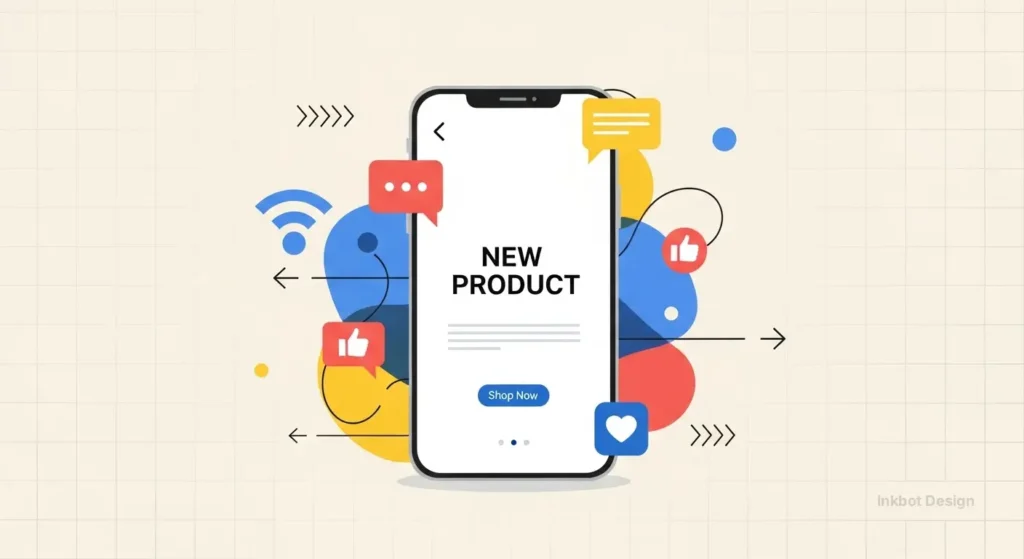
Social media advertising is the technical process of paying for media placement on social networking platforms to deliver specific, measurable business outcomes.
Unlike organic social media, it uses sophisticated algorithmic bidding and first-party data signals to bypass chronological feeds and reach high-intent users at scale.
The three core elements are:
- The Creative Signal: The visual and textual assets that act as the primary filter for audience qualification.
- The Attribution Engine: The technical stack (Pixels, CAPI) that tracks the user journey from click to conversion.
- The Bidding Logic: The financial auction where your “Ad Quality Score” determines your real-world cost per acquisition.
B2B Social Media Advertising: The 95:5 Framework
In 2026, the B2B landscape has shifted away from aggressive lead-gen forms toward building “Mental Availability.”
According to the Ehrenberg-Bass Institute, only 5% of your target market is “in-market” at any given time. If your ads only focus on “Book a Demo,” you are ignoring 95% of your potential revenue.
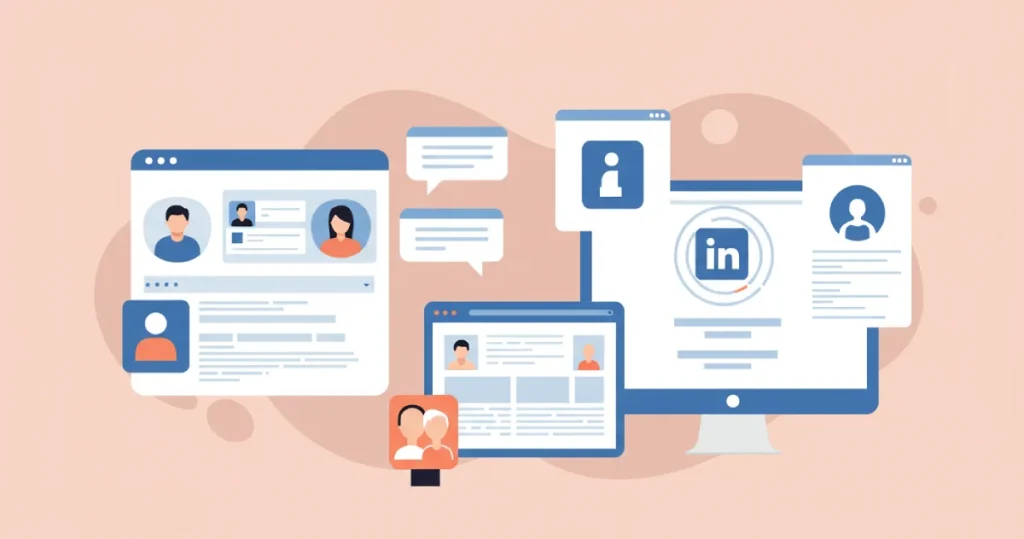
The LinkedIn & Meta Synergy
While LinkedIn remains the primary platform for professional targeting, B2B advertisers in 2026 use a “Surround Sound” approach. This involves:
- Expert-Led Carousels: On LinkedIn, carousels generate 278% more engagement than standard video. Use these to solve one specific problem (e.g., “How to Reduce Churn by 12%”).
- Meta Retargeting: Once a prospect engages with your LinkedIn content, use Advantage+ to show them case study videos on Instagram. This lowers your blended CPL (Cost Per Lead) because Meta’s CPM (Cost Per Mille) is significantly cheaper than LinkedIn’s £40+ benchmarks.
Scaling Through Employee Advocacy
A critical B2B entity in 2026 is Employee Advocacy. Content shared from your team’s personal profiles receives 8x more engagement than content from brand pages.
Pro-tier advertisers now use “Thought Leader Ads” on LinkedIn, where you pay to boost a post from your CEO’s personal account rather than the company page. This builds human trust before a salesperson ever reaches out.
The Death of Interest-Based Targeting
The most significant shift in 2026 is the irrelevance of manual interest targeting. In the past, you told Meta or TikTok exactly who to show your ad to.
Today, the AI is more intelligent than you. It looks at the first three seconds of your video or the first line of your copy and “reads” who it is for.
Adding narrow interest layers increases the Cost of Retrieval. You are essentially telling the platform, “Only show this to people who like X, Y, and Z.”
If those people are currently expensive to reach, the platform will charge you more. If you go “Broad” and let your creative do the work, the platform can find the cheapest path to a conversion.
The Evidence: Meta’s Advantage+ Case Study
Data from Meta’s own internal studies indicates that advertisers using AI-driven “Advantage+ Shopping” campaigns saw a 17% decrease in CPA (Cost Per Acquisition) compared to manual targeting.
This isn’t because the AI is “magic”—it’s because it has more data points than any human consultant could ever process.
Creative-Led Targeting: The 2026 Methodology
In our digital marketing services, we focus on “The Creative as the Targeting.” This means your ad must be so specific that it repels the wrong people and attracts the right ones instantly.

Visual Hierarchy
If your ad doesn’t follow a strict visual hierarchy, the user’s eye will never reach the call to action. You have roughly 1.7 seconds on mobile to stop the scroll. If you waste that on a generic “Hello” or a slow-moving logo animation, you’ve lost.
The “UGC” Fatigue
By 2026, users will have developed “UGC Blindness.” They know when a creator has been paid to say a product is “life-changing.” The new “Rare Attribute” is Raw Authenticity. This isn’t a “polished” video; it’s high-value, direct-to-camera insights that solve a problem immediately.
The Psychological Impact of Latency
A Gartner report on digital experience highlights that even a 100ms delay in landing page load time after an ad click can drop conversion rates by 7%. Your social media advertising doesn’t end on the platform; it ends on your site. If your technical SEO is lacking, your ad spend is wasted.
| Feature | The Amateur Way (Wasteful) | The Pro Way (Inkbot Style) |
| Targeting | Narrow Interest Stacks (e.g., “People who like Design”) | Broad Targeting + Creative Filtering |
| Creative | One “Perfect” Video | 10-20 “Lo-Fi” Iterations for Testing |
| Budgeting | “Boost Post” for £20/day | CBO (Campaign Budget Optimisation) |
| Tracking | Browser-based Pixel only | Server-Side CAPI + First-Party Data |
| Copy | Fluffy, “Revolutionary” claims | Direct, Problem-Solution, UK English |
2026 Ad Strategy Auditor
Benchmark your performance against 2026 standards.
1. Technical Tracking Stack:
2. Creative Methodology:
3. Targeting Logic:
Strategy Maturity: Variable
In 2026, manual targeting and browser-only tracking are the leading causes of budget waste. If you chose the first option for any of these questions, you are likely losing 30%+ of your attribution data.
Get a Professional Strategy →Why Static Images are Winning in 2026
While Reels and TikToks dominate “Discovery,” static images are seeing a massive resurgence in “Conversion” stages. Why? Attention Economy Fatigue. Users are scrolling so fast that a 15-second video is often a “high friction” commitment.
A clear, high-contrast static image with a Direct Response headline can communicate a value proposition in 0.5 seconds—faster than any “hook” in a video.
- The “Split-Test” Framework: For every campaign, test 2 high-production videos against 5 “Lo-Fi” static images.
- Visual Hierarchy: Ensure your “Headline” is at the top 30% of the image, with a clear “Trust Badge” (e.g., “Rated 4.9 on Trustpilot”) and a high-contrast CTA button.
I Once Audited a £50,000 Mistake
I remember auditing a client—a mid-sized UK retailer—who was spending £50,000 a month on social media advertising. They were thrilled with their “Engagement.” They had thousands of likes and shares.
But when I looked at their social media crisis management protocols and their actual conversion data, I found a disaster. 80% of their traffic was bouncing within 2 seconds. They were targeting “Worldwide” to get cheap likes, but they only shipped to the UK.
They were essentially paying to show ads to people who could never buy from them. We cut their budget by 60%, focused on “UK Only” broad targeting, and their actual sales increased by 30%.
Stop chasing vanity. If it doesn’t lead to a request for a quote, it isn’t working.
Technical Infrastructure: CAPI and the Post-Cookie Era
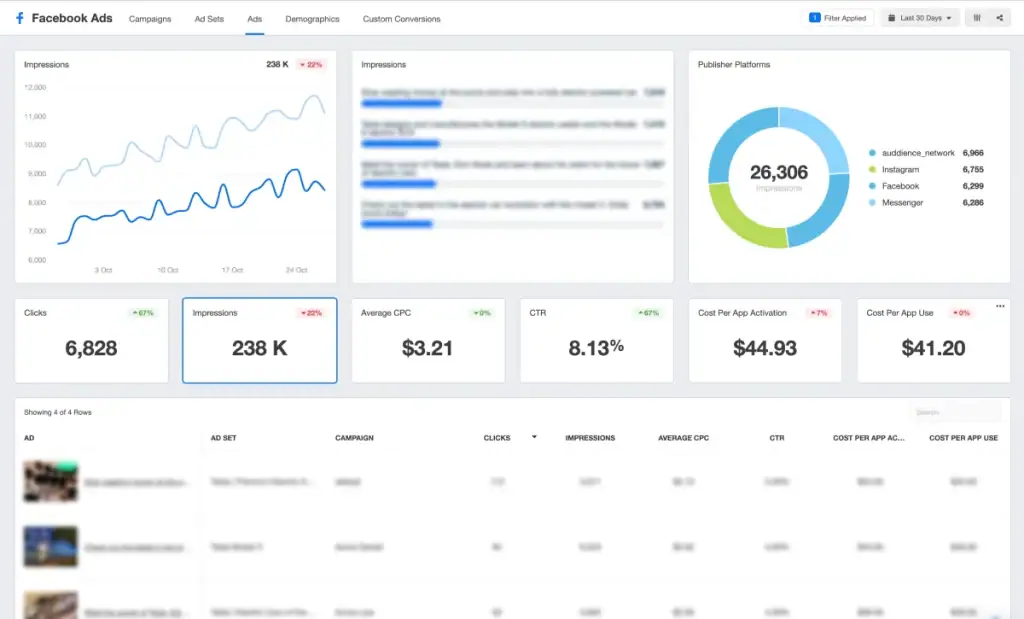
If you are still relying on a browser-based pixel, you are losing 30-40% of your data to ad blockers and privacy settings. In 2026, Conversions API (CAPI) is mandatory.
CAPI sends data directly from your server to the platform’s server. It bypasses the browser entirely. This allows for:
- Better Data Match Quality: You can securely send more identifiers (Email, Phone).
- Lower CPAs: Better data means the algorithm learns faster.
- Full-Funnel Tracking: You can track offline conversions or CRM changes back to a specific ad.
A Deloitte Insights study suggests that companies with “high data maturity” in their advertising see a 2x increase in marketing-driven revenue. You cannot have high data maturity with a broken technical stack.
Implementing a Bulletproof Technical Stack
In 2026, a “High Data Match Quality” score is the difference between a 2.0x and a 5.0x ROAS. If your Conversions API (CAPI) isn’t sending at least 6-8 matching parameters (Email, IP, Phone, Browser ID, FBP, FBC), the algorithm is “flying blind.”
The 2026 Attribution Hierarchy:
- Server-Side GTM: Use Google Tag Manager on a server-side container to send clean data to Meta, Google, and your CRM simultaneously.
- Offline Conversions: If you are a UK service business, sync your HubSpot or Salesforce CRM back to Meta. When a lead moves to “Closed Won,” the platform learns which creative actually drove the revenue, not just the click.
- The 7-Day Scaling Rule: In 2026, never scale a campaign before the 7-day mark. The AI needs a “Learning Phase” of at least 50 conversions per week. If you “tinker” with the budget too early, you reset the bidding logic and increase your CPA.
The State of Social Advertising in 2026
We have entered the “Post-Search” era. Many users, especially Gen Z and Alpha, use TikTok and Instagram as search engines. This means your social media advertising must be Search-Optimised.
- Keyword-Rich Captions: The algorithm uses your text to categorise your content.
- On-Screen Text: AI “reads” the text in your videos. Use it to signal your influencer marketing strategies or your core product benefits.
- Entity Density: Mention your brand and your category frequently to build “Topical Authority” in the platform’s eyes.
The Rise of Native Social Commerce
The “click-to-website” model is no longer the default. In 2026, TikTok Shop and Instagram Checkout have reached parity with traditional e-commerce.
Data suggests that native checkout converts 20-40% better than external links because it removes the “latency leak” (the 7% drop-off for every 100ms of site load time).
| Feature | In-App Checkout | Website Link-out |
| Conversion Rate | 3.5% – 5% (High) | 1.5% – 2.5% (Medium) |
| Data Ownership | Limited (Platform-owned) | Full (Brand-owned) |
| Trust Signal | High (Platform protection) | Variable (Site dependent) |
| LTV Potential | Medium (Harder to email) | High (Direct CRM entry) |
The Strategy: “The Hybrid Funnel”
Don’t abandon your website. Use TikTok for high-volume, impulsive “Social Commerce” sales of lower-priced items (under £50).
For high-ticket items or complex services, use social ads to drive users to a high-converting landing page where you can capture Zero-party data (explicit preferences) via quizzes or calculators.
This ensures you aren’t entirely dependent on the “Walled Gardens” of Meta or ByteDance.
The Verdict
Social media advertising is no longer a “creative” discipline; it is a technical and data-driven one.
If you are still focusing on which colour button to use or what time of day to post, you are missing the forest for the trees.
Success in 2026 requires:
- Total trust in the algorithm’s broad targeting capabilities.
- Relentless creative testing (Quantity leads to Quality).
- A “Bulletproof” technical tracking stack (CAPI).
- A strategy that values ROI over “Reach.”
If you want to stop guessing and start scaling, you need a partner who understands both code and creativity. At Inkbot Design, we don’t do fluff. We build engines.
Explore our services and get a real-world strategy for your brand.
Frequently Asked Questions (FAQ)
Is social media advertising still effective for B2B in 2026?
Absolutely. While B2C dominates the conversation, LinkedIn and Meta’s professional targeting (even within broad sets) are highly effective. The key is “Long-form Creative.” B2B buyers need more data before they trust you. Use social ads to distribute white papers or case studies rather than a “Buy Now” pitch.
How much should a small business spend on social ads?
Don’t start with a budget; start with a “Target CPA.” If you know a customer is worth £100 to you, you can spend up to £50 to acquire them. Start small (£20-£50/day), prove the ROI, and then scale infinitely. There is no “upper limit” if the ads are profitable.
What is the difference between “Reach” and “Impressions”?
Reach is the number of unique people who saw your ad. Impressions are the total number of times your ad was shown. If your impressions are much deeper than your reach, your “Frequency” is high—meaning the same people are seeing your ad repeatedly, which leads to ad fatigue.
Why is my CPC so high?
High CPC is usually a symptom of a “Low Ad Quality Score.” The platform thinks your ad is boring or irrelevant to the audience it’s being shown to. To fix it, change your “Hook” (the first 3 seconds) or your thumbnail. The more people click, the less the platform charges you.
What is “Ad Fatigue”?
Ad fatigue happens when your target audience has seen your creative so many times that they stop noticing it. In 2026, this happens faster than ever. You should be swapping out your creative assets every 2-4 weeks to keep the algorithm—and the users—interested.
How do I target high-net-worth individuals in the UK without interest stacks?
In 2026, you use Broad Targeting combined with “Affluence Signals” in your creative. Use visuals of premium environments (London skylines, high-end interiors) and copy that mentions “Wealth Management” or “Capital Gains.” The AI “scans” these signals and finds users who engage with similar high-value content.
What is “Dark Social” and how does it affect my ad tracking?
“Dark Social” refers to shares via private channels like WhatsApp, Slack, or Telegram. Standard pixels cannot track these. To solve this, use unique UTM parameters for every ad variation and a “How did you hear about us?” post-purchase survey to catch what the technical data misses.
Is TikTok advertising viable for “boring” B2B niches like accounting or law?
Yes, but the strategy is “Educational Micro-dramas.” Don’t pitch your services; film a 45-second “Day in the life of a tax audit” or “The 3 biggest mistakes UK founders make with VAT.” Use these to build a “Warm Audience” of people who watched 50% of the video, then retarget them with a lead-form ad.
How often should I refresh my ad creative to avoid “Ad Fatigue”?
With 2026 AI-driven feeds, fatigue sets in every 2-4 weeks. However, don’t replace everything at once. Use the “Incremental Refresh” method: swap out the bottom 20% of your worst-performing ads with new iterations every Tuesday.
Should I disclose the use of AI in my ad images?
In the UK, the ASA (Advertising Standards Authority) requires disclosure when AI makes a product appear better than it actually is (e.g., AI-smoothed skin in skincare ads). For lifestyle backgrounds or “brainstorming” art, disclosure is optional, but “Human-Made” is becoming a premium trust signal.
What is “Broad Targeting”?
Broad targeting is when you remove all interest, lookalike, and demographic filters (except age and location) and let the platform’s AI find your customers based on how they interact with your ad. It is the gold standard for scaling in 2026.
How do I write a good ad headline?
Stop trying to be clever. Be direct. State the problem, then state the solution. Use “You” and “Your.” Avoid “Clickbait” as the platforms will penalise your reach. A good headline for us would be: “Your Brand is Failing. Here is how to fix it.”
Can I run social ads without a large following?
Yes. That is the entire point of advertising. You are “buying” the reach you haven’t earned organically yet. In fact, many of the most successful advertisers have very little organic presence; they focus entirely on the paid “Dark Posts” that don’t appear on their main profile.