Metaverse Branding: Is there a Future in Web3?
In 2022, every “futurist” with a LinkedIn premium account told you that your business would die if you didn’t buy a virtual plot of land next to Snoop Dogg. They were wrong.
Millions of pounds were set on fire by brands buying digital real estate in “realms” that are now digital ghost towns.
I’ve spent the last three years auditing these failures, and the conclusion is simple: the Metaverse isn’t dead, but the way you were told to brand it was a lie.
Most branding agencies treated the Metaverse like a 3D version of Instagram. They slapped a logo on a digital wall and called it “innovation.” That’s not branding; that’s expensive wallpaper.
True ethical branding in a Web3 context requires a fundamental shift from “watching” to “inhabiting.”
If you’re an entrepreneur looking for a shortcut to digital relevance, look away now.
This is about the technical and psychological architecture of identity in an era of spatial computing.
- Metaverse branding must shift from spectacle to persistent, interoperable 3D identity across decentralised and centralised spaces.
- Digital Product Passports (DPP) turn compliance into immersive brand experiences via NFC/QR linked on-chain records and spatial models.
- OpenUSD master files and exports to glTF and USDZ prevent 3D asset debt and enable cross-platform delivery.
- Design distinct strategies for the bifurcated hardware landscape: VisionOS (luxury, USDZ) versus Meta (performance, glTF/WebXR).
- Spatial branding requires Sonic Systems, procedural AI environments, and sustainability-first Web3 choices for measurable digital ROI.
What is Metaverse Branding?
Metaverse Branding is the strategic process of creating a persistent, three-dimensional, and interactive brand identity that functions across decentralised and centralised virtual environments.
It involves deploying digital assets, sensory triggers, and community-governed narratives to maintain brand equity in Web3 ecosystems.
Partnering with a specialised Web3 marketing agency can help brands craft immersive campaigns, engage decentralised communities, and maximise impact across blockchain platforms.

Core Elements of Metaverse Identity
- Persistence: The ability for a brand asset (like a digital sneaker or a logo) to exist and maintain its value across different platforms.
- Interoperability: The technical capacity for brand elements to move between ecosystems (e.g., from Roblox to a private corporate Metaverse).
- Agency: Allowing the user to interact with, modify, or co-create the brand experience within defined parameters.
The Phygital Mandate: Digital Product Passports (DPP) in 2026
For the UK entrepreneur, the Metaverse is no longer an “optional” virtual playground; it is a regulatory requirement.
As of 2026, the EU Digital Product Passport (DPP) regulation has fundamentally unified the physical and digital identities of goods.
If you sell textiles, electronics, or batteries in the European market, your brand identity must now live in a “Phygital” state.
This isn’t just about compliance; it’s a branding goldmine.
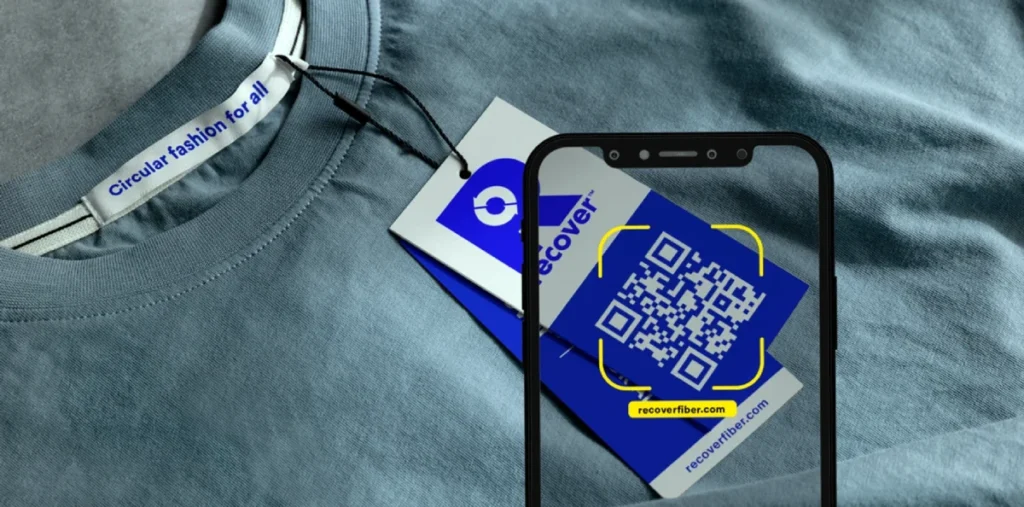
A Digital Product Passport is a persistent digital twin of a physical item, accessible via an NFC (Near Field Communication) tag or a secure QR code.
When a customer taps your product with their Apple Vision Pro or smartphone, they don’t just see a receipt—they enter your brand’s “Spatial Layer.”
How to Implement a DPP Branding Strategy:
- Identity Encoding: Use NFC tags embedded directly into product hardware or labels (e.g., using Avery Dennison or Blue Bite platforms).
- Web3 Verification: Link the tag to an on-chain record (often a Soulbound Token) that proves authenticity and provides a lifecycle map—from the sustainable sourcing of materials to repair guides.
- Spatial Interaction: Ensure that scanning the product triggers a USDZ model (for iOS users) or a glTF model (for the open web) that provides a 3D “inside-out” view of the product’s craft.
By treating the DPP as a “Brand Key” rather than a barcode, you turn a legal hurdle into a high-trust, immersive story.
The 2026 Hardware War: Branding for VisionOS vs. Meta Horizon

In 2026, the “Metaverse” has bifurcated into two distinct branding philosophies: Spatial Computing (High-end, Productivity, Walled Garden) and Virtual Reality (Mass-market, Social, Open Web).
Your brand assets must be optimised for both, but your strategy should differ for each.
| Feature | Apple Vision Pro M5 | Meta Quest 3S |
| Philosophy | “Spatial Computing” – Blending pixels with the room. | “Immersive VR” – Transporting to a new world. |
| Input Method | Eyes and Hands (High-precision Soli-style tracking). | Controllers and Hand-tracking (Gaming-centric). |
| Primary Format | USDZ / Reality Composer Pro. | glTF / WebXR. |
| Brand Tone | Luxury, Minimalist, High-Fidelity. | High-energy, Community-driven, Social. |
| Key Capability | Spatial Personas for co-working/shopping. | Horizon Worlds for massive social events. |
Branding for the Apple Ecosystem:
Apple’s VisionOS demands a “Glassmorphism” aesthetic.
Your 3D logos shouldn’t just be solid blocks; they should react to the lighting of the user’s actual living room. Use Reality Kit to define how your brand “refracts” real-world light.
Branding for the Meta Ecosystem:
Meta’s Horizon ecosystem is built on the OpenXR standard. Here, performance is king.
To reach the millions of users on the Meta Quest 3S, your branding assets must be aggressive in their Mesh Optimisation.
We recommend using Draco compression to ensure your virtual storefront loads in under 3 seconds on a standard 5G connection.
Debunking the Hardware Myth
A common sceptical objection is: “Nobody wears VR headsets, so why bother?”
This is the “Hardware Fallacy.”
Data from Gartner’s 2025 Emerging Tech Hype Cycle indicates that 70% of Metaverse interactions now occur through “Spatial Browsers” on smartphones or desktop computers, not VR headsets.
Branding in Web3 is about the Backend (Blockchain) and the Frontend (3D Interaction), not the peripheral on your face.
Web3 marketers understand that sustainable growth comes from strong tokenomics, community trust, and seamless digital experiences, not just visual identity.
| Feature | The Amateur Way (2022) | The Professional Way (2026) |
| Platform | Single “Walled Garden” (e.g., Decentraland) | Cross-platform Interoperability |
| Asset Format | Proprietary FBX/OBJ files | glTF/USDZ for Spatial Web |
| Engagement | One-way “Events” | Continuous Community Ownership |
| Success Metric | “Hype” and PR mentions | Real-world Utility and Digital ROI |
| Governance | Top-down Corporate Control | DAO-integrated “Brand Activism” |
Solving “3D Asset Debt”: The OpenUSD to glTF Workflow
The single biggest waste of branding budget in 2026 is creating assets that only work on one platform.
To avoid 3D Asset Debt, your creative workflow must follow the Universal Scene Description (OpenUSD) standard.
Developed by Pixar and championed by the Alliance for OpenUSD (AOUSD) (including Nvidia, Apple, and Autodesk), OpenUSD is the “Master File” for your brand.
The 2026 Branding Pipeline:
- Authoring (The Master): Create your brand assets in OpenUSD. This preserves all layers, physics, and material properties (using MaterialX).
- Distribution (The Delivery): For web-based AR and Android devices, export from the Master to glTF 2.0. For the Apple ecosystem, export to USDZ.
- Optimisation: Use Meshopt or Simpligon to create “Levels of Detail” (LODs). Your 3D logo should have a “High-Poly” version for cinematic renders and a “Low-Poly” version (under 5,000 polygons) for real-time spatial browsers.
| Asset Type | Max Polygon Count | Target File Size | Recommended Format |
| Hero Product (AR) | 50,000 | < 5MB | glTF (Draco) |
| Brand Logo (Floating) | 2,500 | < 500KB | USDZ |
| Virtual Storefront | 250,000 | < 25MB | glTF / WebXR |
Beyond the Sonic Logo: Creating Brand “Sonic Systems”
In 2D marketing, a “ping” is enough. In Spatial Computing, your brand needs a soundscape.
In 2026, we have moved from “Sonic Logos” to Sonic Systems—flexible, AI-driven musical frameworks that adapt to the user’s environment.
When a user enters your brand’s virtual space on a Meta Quest 3S, the audio shouldn’t just play on a loop. It should be Object-Based Audio.
If they walk toward a digital product, the “Brand Hum” should increase in intensity from that specific 3D coordinate.
3 Key Elements of a 2026 Sonic System:
- Acoustic Materiality: What does your brand “feel” like? Is it a “reverb-heavy” cathedral-like sound (Luxury/Trust) or a “dry,” crisp, immediate sound (Tech/Speed)?
- Utility Cues: Unique, branded sounds for spatial interactions—tapping a menu, “grabbing” a 3D asset, or completing a micro-transaction.
- Personalised Mnemonics: Using Generative AI to slightly alter the brand melody based on the user’s time of day or current activity, ensuring the “tudum” moment remains fresh.
Case Example: Netflix evolved its “tudum” into a full spatial environment. In 2026, when you open the Netflix app on a headset, the sound doesn’t just reach your ears; it fills the virtual room, creating an emotional “anchor” before the content even starts.
The Industrial Pivot: Branding for the “Work Metaverse”
While consumer “Ghost Stores” failed, the Industrial Metaverse—led by Siemens, BMW, and Nvidia (Omniverse)—is thriving. For UK B2B brands, “Metaverse Branding” is about Digital Twins.
A Digital Twin is a real-time, data-backed virtual replica of a physical asset. Branding here is about Visibility and Clarity.
- Operational Branding: If you manufacture components, your “brand” is how well your 3D assets integrate into your client’s Siemens Digital Twin Composer.
- Trust through Transparency: Using the Nvidia Omniverse to show clients a real-time simulation of their supply chain. Your brand value is no longer a logo; it’s the Interoperability and Data Accuracy of your digital models.
The ROI of Industrial Branding: Gartner (2025) research shows that 75% of industrial companies using spatial digital twins saw a 10% increase in operational efficiency.
For an SMB, this means providing your products as “ready-to-sim” 3D assets is the ultimate B2B marketing move.
Case Study: The “Nike.Swoosh” Success
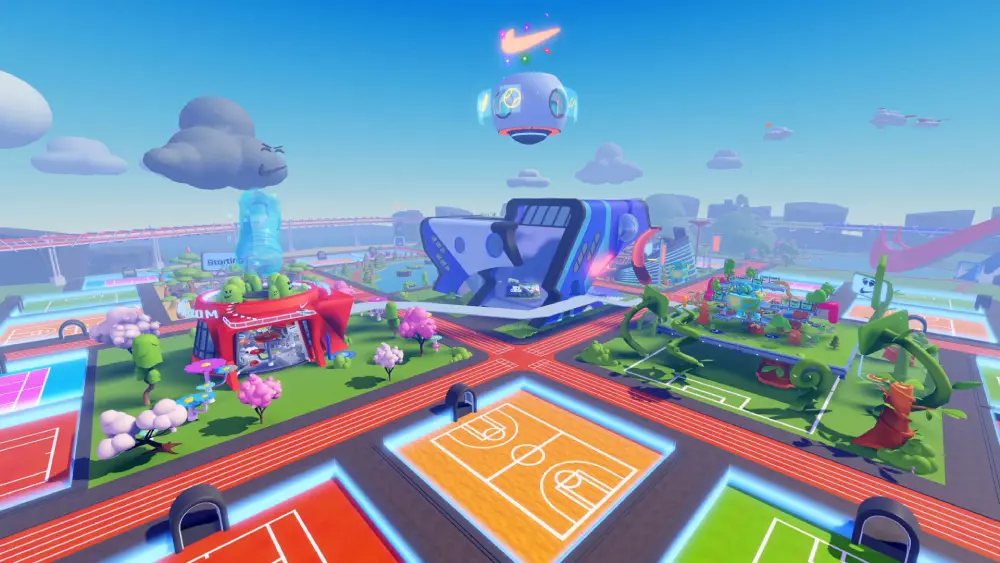
Nike didn’t just build a world; they built a platform. By allowing users to co-create digital sneakers, they moved from “Selling to” to “Creating with.”
This is the ultimate expression of brand activism. They used the blockchain to prove ownership, but the “Branding” happened in the community’s imagination.
Contrast this with brands that do “Greenwashing” in the Metaverse—claiming they are “sustainable” because they don’t have physical stores, while their server farms consume more energy than a small town.
For a deep dive into avoiding these traps, see our guide to greenwashing.
The State of Metaverse Branding in 2026
As of January 2026, the biggest shift has been the integration of Generative AI into 3D environments.
Brands no longer build static worlds; they build “Procedural Environments.”
- Dynamic Branding: Your virtual storefront can now adapt its layout to each user’s browsing history.
- AI Brand Ambassadors: Instead of static FAQs, brands use LLM-powered avatars that perfectly embody the brand’s voice.
- Micro-Transactions: The “Gas Fee” problem of 2023 has been solved by Layer-2 scaling, making it viable for SMBs to sell digital items for £2 or £3.
If you are ignoring sustainability branding in this context, you are missing the point. The 2026 consumer expects your digital footprint to be as clean as your physical one.
This includes choosing low-energy blockchains and optimising your B-Corp certification status to include your digital assets.
The Verdict
Metaverse branding is not about “Ready Player One” fantasies. It is the evolution of brand identity into the spatial and decentralised web. For the UK entrepreneur, the path forward is clear:
- Stop buying virtual land. It’s a vanity metric.
- Start building 3D assets. Ensure they are in glTF or USDZ formats.
- Think about Persistence. How does your brand follow the customer from their phone to their office to their digital social space?
The future of Web3 branding belongs to those who treat it as a technical challenge, not a marketing gimmick. If you’re still trying to “unleash” your brand’s “synergy” in the “virtual realm,” you’ve already lost.
Do you need a brand identity that survives the jump to Web3? Request a quote today, and let’s build something that actually works.
Frequently Asked Questions (FAQ)
Is the “Metaverse” still a thing in 2026, or is it just “Spatial Computing”?
The term “Metaverse” has largely been replaced in corporate circles by Spatial Computing (the interface) and Web3 (the ownership layer). However, the vision of a persistent, 3D internet remains. Brands now focus on “Spatial Layers”—AR and 3D web experiences—rather than isolated “Virtual Worlds.”
How do I start with Digital Product Passports (DPP)?
Start by auditing your supply chain data. In 2026, branding is about Verifiable Evidence. Use a PIM (Product Information Management) system like Bluestone PIM to centralise your sustainability data, then link it to an NFC-enabled physical label.
Which 3D file format should I use for my logo?
For 2026, use glTF 2.0 for most web applications (Android, Windows, Meta) and USDZ for the Apple ecosystem. Always keep an OpenUSD master file to ensure you can re-export as new hardware emerges.
Do I need to buy virtual land in 2026?
Almost certainly not. The “land rush” of 2022 was a speculative bubble. In 2026, brands are building on their own websites using WebXR or creating “Spatial Apps” for headsets. Focus on Asset Portability rather than digital real estate.
How does AI affect my 3D brand identity?
AI is used for Procedural Generation. Instead of hand-coding every virtual shelf, brands use AI to dynamically adjust the store layout based on users’ On-chain Identity and browsing habits.
Can I protect my 3D brand assets from being “stolen”?
While you can’t stop someone from copying a 3D model, you can use Blockchain-based Proof of Origin. Register your brand on the Ethereum or Polygon networks and use Digital Watermarking within your 16-bit textures.
Is spatial audio really necessary for a small brand?
If you have a 3D presence, yes. In a spatial environment, silence feels “broken.” A simple, branded Spatial Audio Signature (a specific 3D sound that triggers upon interaction) increases brand recall by up to 30%.
What is glTF, and why does my brand need it?
glTF is the industry-standard file format for 3D scenes and models. It is designed to be small and fast-loading. If your brand assets aren’t in this format, they won’t be compatible with the modern spatial web.
Can I use my existing logo in the Metaverse?
Yes, but it needs to be “Extruded” into 3D and optimised. A flat PNG will look out of place. You need to consider how the logo reacts to virtual light, shadows, and different viewing angles.
Are NFTs still a part of Metaverse branding?
Yes, but the focus has shifted from “Collectables” to “Utility.” NFTs are now used as digital receipts, membership passes, or “Keys” that unlock specific experiences in a brand’s digital ecosystem.
How does the Metaverse affect my SEO?
Search engines like Google are increasingly indexing 3D content and “Spatial Entities.” Having optimised 3D assets can improve your visibility in “GEO” (Generative Engine Optimisation) as AI models search for visual and spatial data.
What is “Identity Fragmentation” in Web3?
It refers to users having different “Avatars” or identities across different platforms. Your brand must be able to recognise and interact with users, whether they appear as realistic humans or floating robots.
Is Metaverse branding environmentally friendly?
It depends on the blockchain used. Modern networks like Ethereum (post-Merge) or Polygon use 99% less energy than older systems. Branding your business as “Web3 Ready” requires choosing these sustainable paths.
Where should I host my brand’s virtual assets?
Avoid “Walled Gardens” if possible. Use decentralised storage like IPFS to ensure your assets remain persistent even if a specific platform goes bust. This ensures long-term brand stability.