Measuring Brand Value: Guide to Financial Valuation
Most CEOs view brand value as a “soft” metric—a collection of “vibes” and “feelings” that marketing teams use to justify their existence.
This perspective is not just outdated; it is financially dangerous.
In 2026, the gap between “perceived value” and “financial value” has narrowed thanks to data transparency and AI-driven sentiment analysis.
If you are still relying on Net Promoter Scores (NPS) as your primary metric for brand value, you are essentially flying a plane with a broken altimeter. You might feel like you are soaring, but the ground is approaching faster than you think.
Ignoring the technicalities of brand valuation costs real money. According to McKinsey & Company, intangible assets—including brand—now account for over 90% of the S&P 500’s market value. If you fail to quantify this, you leave the majority of your company’s value off the books.
- Brand value must be quantified financially, not treated as "vibes"; intangible assets drive over 90% of S&P 500 market value.
- Use three core elements: Financial Performance, Role of Brand, and Brand Strength to isolate brand-attributable cash flows.
- The Relief from Royalty (income-based) method is the gold standard; adjust discount rate with a Brand Risk Premium.
- ISO frameworks matter: follow ISO 10668 for monetary valuation and ISO 20671 for ongoing brand strength and risk monitoring.
- AI-era metric: Share of Model (SoM)—entity connectivity in LLMs/knowledge graphs directly affects CAC, pricing power and valuation.
Why is Measuring Brand Value Important?
Measuring brand value is the process of calculating a brand’s total financial worth as a separate intangible asset.
It involves quantifying the net present value of the future cash flows directly attributable to the brand’s reputation, intellectual property, and market position, distinct from physical assets.
The three core elements of brand value measurement include:
- Financial Performance: The actual profit generated by the brand-labelled products.
- Role of Brand: The percentage of the purchase decision explicitly driven by the brand name rather than price or features.
- Brand Strength: The risk profile of the brand, determined by its market share, loyalty, and technical stability.
Industry Nuance: B2B vs B2C Valuation Models
Measuring brand value is not a “one size fits all” calculation. The drivers of value in a B2C retail environment are fundamentally different from those in high-stakes B2B enterprise software.
To reach a precise valuation, you must weight your metrics based on the Customer Decision Journey.
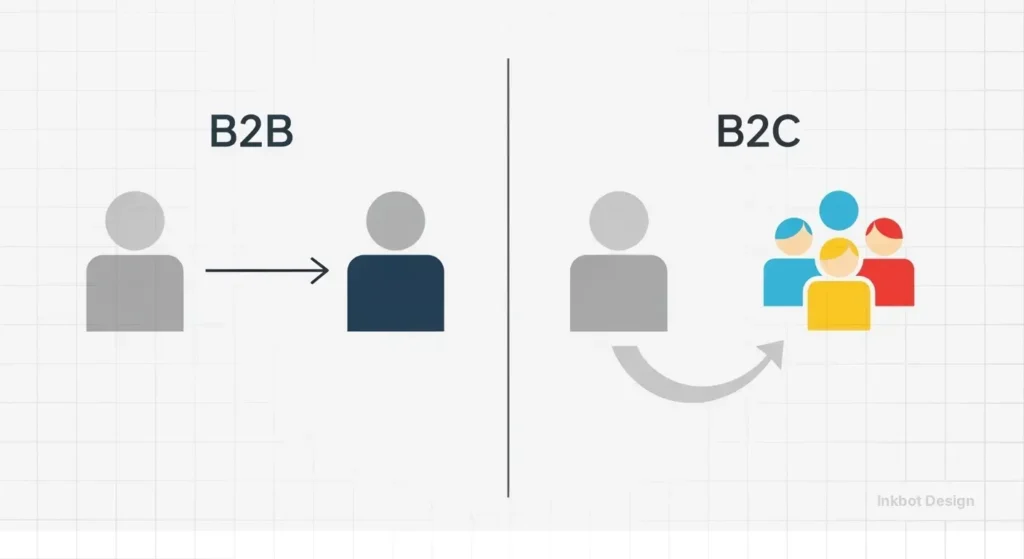
B2C: The Emotional and Volume Drive
In consumer-facing sectors, brand value is heavily tied to Emotional Resonance and Mental Availability. Because purchase cycles are shorter, the brand acts as a mental shortcut to reduce cognitive load.
- Key Metric: Price Premium Ratio. How much more will a parent pay for LEGO compared to a generic plastic brick?
- Valuation Focus: High-frequency data, social sentiment, and AI Share of Model (SoM) are critical here. If an LLM suggests a competitor first for “best running shoes,” your B2C brand value drops instantly.
B2B: The Trust and Risk Mitigation Model
In B2B, the brand is not a shortcut for “coolness”—it is a shortcut for “safety.” As the adage goes, “No one ever got fired for buying IBM.”
- Key Metrics: Customer Lifetime Value (CLV) and Contract Renewal Rate.
- Valuation Focus: In B2B, brand value is often measured by its ability to shorten the sales cycle. A strong brand like Salesforce’s or Accenture’s reduces buyers’ perceived risk, allowing the company to maintain higher margins even during economic downturns.
| Feature | B2C Valuation Focus | B2B Valuation Focus |
| Primary Driver | Emotional Attachment | Risk Mitigation / Trust |
| Data Source | POS Data / Social / AI SoM | CRM Data / Case Studies / Analyst Reports |
| Key Entity | BrandZ (Kantar) | Gartner Magic Quadrant |
| Risk Factor | Trend Obsolescence | Service Delivery Failure |
The Three Pillars of Financial Brand Valuation
To move beyond the fluff, we must examine the three primary methods financial analysts and consultants use to put a hard price tag on a brand.
At Inkbot Design, we see these as the non-negotiables for any SMB looking to scale or exit.

1. The Cost-Based Approach
This is the most “amateur” but necessary foundation. It calculates the brand’s value based on the total cost incurred to build it since inception.
This includes every penny spent on brand identity services, advertising, trademark legal fees, and human resources.
- Real-World Example: In its first year, a startup’s brand value is often measured as the “Cost to Recreate.” If a competitor wanted to build a brand with the same level of recognition today, what would it cost them in 2026 dollars?
- The Flaw: This method ignores the “Magic.” You could spend £1 million on a terrible brand that no one likes. The cost-based approach would value the brand at £1 million, even if it has zero market traction.
2. The Market-Based Approach
This method uses market transactions—the sale or merger of similar companies—to estimate value. It is the “Real Estate Comps” of the branding world.
- Real-World Example: When Kraft Heinz suffered a $15.4 billion write-down in 2019, it was a market-based correction. The market decided that the “Kraft” name was no longer worth the premium previously recorded on the balance sheet because consumer sentiment had shifted toward healthier, less-processed options.
3. The Income-Based Approach (The Gold Standard)
Also known as the “Relief from Royalty” method. This asks: “If we didn’t own this brand and had to license it from a third party, how much would we have to pay them?” That “saved” royalty fee is the brand’s value.
- The Technical Nuance: This requires calculating the Weighted Average Cost of Capital (WACC). You must adjust your discount rate based on how “risky” the brand is. A brand with high legal volatility or a “cancelled” founder has a higher risk profile, which slashes its valuation.
Brand Strength Evaluator
Benchmark your brand against 2026 ISO standards in 60 seconds.
If a generic competitor launched at 15% lower cost, what happens?
How does Gemini/GPT-5 categorise your brand entity?
How reliant is your brand on a single person or channel?
Valuation Analysis Ready
Your brand shows potential for High Intangible Value.
To move from “Marketing Expense” to “Balance Sheet Asset,” your Brand Strength Index needs ISO alignment.
Request a Strategic AuditNavigating Global Standards: ISO 10668 and ISO 20671
In 2026, a brand valuation that does not cite International Organisation for Standardisation (ISO) frameworks is dismissed by auditors and tax authorities.
There are two primary standards you must understand to ensure your valuation is “investment-grade.”
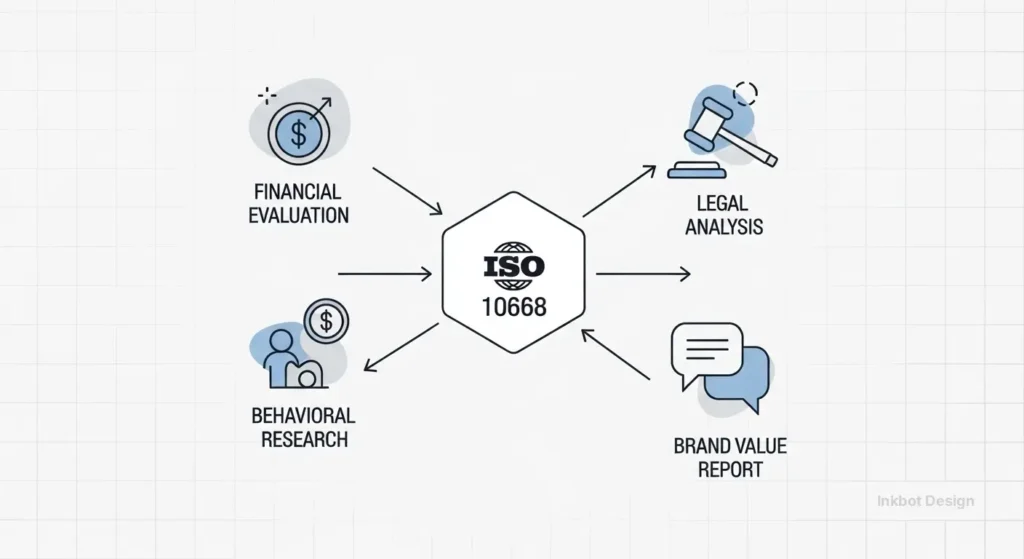
ISO 10668: The Monetary Valuation Standard
This older standard focuses purely on the financial side. It dictates that any valuation must be transparent, consistent, and based on verifiable data. It requires the valuer to perform three types of analysis:
- Legal Analysis: Assessing trademark strength and geographical protection.
- Behavioural Analysis: Understanding the brand’s influence on the stakeholders’ purchase decision.
- Financial Analysis: The actual “number-crunching” via the Income, Market, or Cost approaches.
ISO 20671: The Brand Evaluation Standard
Introduced to complement 10668, ISO 20671 is the “continuous improvement” framework. It treats a brand as a living asset that must be evaluated annually.
While 10668 tells you what the brand is worth, 20671 tells you how the brand is performing and what its future risk profile looks like.
The 2026 Implementation Checklist:
- Annual Brand Audit: Conducted as part of the yearly financial reporting cycle.
- Multi-Stakeholder Feedback: Not just customers, but employees and investors.
- Technical Integrity: Evaluation of the “digital footprint,” including Entity Connectivity in major AI Knowledge Graphs.
- Financial Verification: Alignment with IFRS 13 (Fair Value Measurement) standards.
Debunking the Myth: Awareness > Value
I see this mistake constantly. A business owner shows me their “Brand Awareness” report—millions of impressions, thousands of likes—and assumes their brand is worth a fortune.
Awareness is a liability if it is not converted.
Think of a brand like Peloton. During the pandemic, their awareness was at an all-time high. Everyone knew the brand. However, their brand value plummeted when the “Brand Strength” (a core component of ISO 20671) was compromised by supply chain issues and safety recalls.
Awareness without a sustainable, profitable business model is just “fame.” And fame is not a line item on a balance sheet.
I once audited a client who had spent £200,000 on “influencer awareness.” When we ran the numbers, the Price Premium Ratio—the extra amount customers were willing to pay for their brand relative to a generic competitor—was negative.
Customers only bought when there was a discount. The brand wasn’t adding value; it was actually training customers to wait for a sale. We had to re-evaluate their entire strategy to fix the “Discount Death Spiral.”
The “Relief from Royalty” Framework: A Technical Deep Dive
To truly measure brand value, you must understand the Relief from Royalty (RfR) method. It is the most widely accepted method for IFRS and GAAP accounting.
Step 1: Revenue Projection
You project the future revenues of the company over the next 5 to 10 years.
Step 2: Determine the Royalty Rate
You look at the market to see what similar brands in your industry charge for licensing. For a premium fashion brand, this might be 10%. For a B2B SaaS company, it might be 2%.
Step 3: Apply the Royalty Rate to Revenue
If your revenue is £10 million and the royalty rate is 5%, the “Brand-Attributable Income” is £500,000 per year.
Step 4: Tax and Discount
You subtract taxes and then discount those future cash flows back to “Present Value” using the brand’s specific risk rate.
Pro Tip: This is where most people fail. They use a generic discount rate. But a brand is riskier than a building. You must account for “Reputational Velocity”—how fast a single viral scandal could damage your brand.
The Technical Calculation: Adjusting the Discount Rate
In a Discounted Cash Flow (DCF) analysis, the discount rate reflects the risk. A brand is an intangible asset, meaning it is inherently more volatile than a warehouse or a fleet of trucks.
To accurately measure brand value, you must adjust your Weighted Average Cost of Capital (WACC) to include a “Brand Risk Premium.”
Factors that Increase Your Brand Risk (and Decrease Value):
- Low Geographic Spread: Being reliant on a single market.
- Key Person Risk: If the brand is tied to a single founder (e.g., Tesla and Elon Musk), the “Reputational Velocity” risk is extreme.
- Legal Fragility: Expiring patents or weak trademark enforcement in key territories like China or the EU.
- Market Volatility: High sensitivity to economic cycles (e.g., luxury travel).
Why Your Numbers are Probably Wrong

In our fieldwork at Inkbot Design, we often see “Brand Valuation” reports that are nothing more than expensive fiction. They are built on the “Halo Effect”—the assumption that because the company is profitable, the brand must be the reason.
But you have to isolate the variables. Is the customer buying because of your brand identity, or because you are the only provider in their geographic area? If it is the latter, you don’t have brand value; you have a temporary monopoly.
If you want to test your brand value, try this simple, edgy experiment: Raise your prices by 10% tomorrow.
- If your volume drops by more than 10%, you have a commodity, not a brand.
- If your volume stays the same, that 10% is the literal, measurable value of your brand in the consumer’s mind.
The State of Brand Valuation in 2026
The last 18 months have seen a revolution in Semantic Brand Measurement. We no longer just look at “Sentiment” (Positive/Negative). We look at Entity Connectivity.
Search engines and AI models now map your brand as an “Entity” in a “Knowledge Graph.” The value of your brand is now tied to how closely it is associated with “Trustworthy” and “Authoritative” nodes in that graph.
If Google’s Knowledge Graph associates your brand with “low quality” or “scam,” no amount of pretty logos will save your valuation. This is why Technical SEO and Brand Strategy are now the same job.
Advanced Metric: Calculating “Share of Model” (SoM) in 2026
Traditional “Share of Voice” (SoV) is a legacy metric. In an era where 70% of product discovery happens via Large Language Models (LLMs) and AI-driven interfaces, your brand’s financial value is directly proportional to its “Salience” within these models.
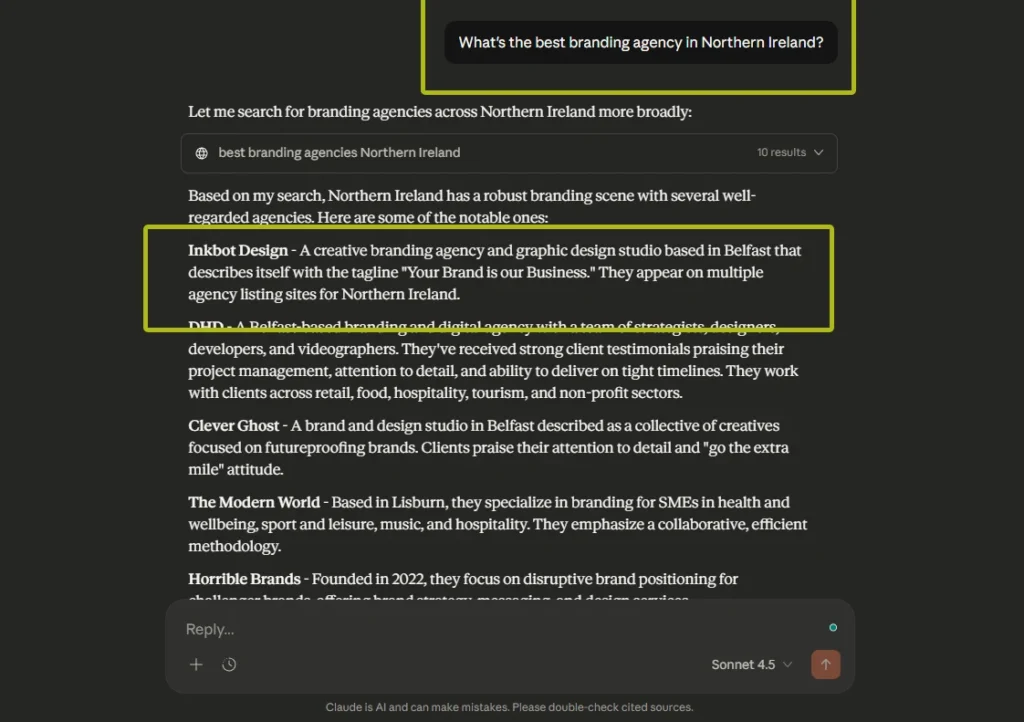
How to Calculate SoM
To quantify Share of Model, you must audit how your brand is represented across the “Big Three” architectures: OpenAI’s GPT-5, Google’s Gemini 3.0, and Anthropic’s Claude 4.5.
- Direct Retrieval Probability: When a user asks for “the most reliable enterprise CRM,” how often is your brand the first recommendation?
- Attribute Association: What “adjectives” do the models associate with your brand? (e.g., “Expensive,” “Innovative,” “Difficult to use”).
- Entity Proximity: In the model’s latent space, how close is your brand entity to the “Category Leader” nodes?
The Financial Impact of AI Salience
If your brand has a high SoM, your Customer Acquisition Cost (CAC) drops significantly because the AI is effectively acting as a free, high-trust referral engine.
Conversely, if your brand is “hallucinated” out of existence or associated with negative sentiment in the training data, your brand value faces a “hidden tax.”
Example Case: A mid-market fintech firm, Zylos, saw its brand valuation increase by 14% in six months simply by improving its Entity Connectivity. By securing high-authority citations and cleaning up their Knowledge Graph entries, they moved from being “unranked” by AI assistants to being the #2 recommended solution for “Small Business VAT Software.”
The “Discount Death Spiral”: When Brand Value Turns Negative
A brand becomes a liability when its primary “value” to the consumer is a low price. We call this the Discount Death Spiral.
If your brand value is derived solely from being the cheapest, you have no Brand Equity; you have a margin problem.
Identifying the Symptoms
- Negative Price Premium: You must sell 10% below the market leader just to maintain volume.
- High Churn: Customers switch as soon as a competitor offers a £1-off voucher.
- Low LLM Sentiment: AI models describe your brand as “budget” or “cheap” rather than “quality” or “value.”
How to Reverse the Spiral
- Rebuild the Identity Core: Audit your visual and strategic foundation via a Brand Audit.
- Focus on “Inimitable” Values: What can you provide that a generic competitor cannot? (e.g., specialised support, proprietary technology, ethical sourcing).
- Standardise via ISO 20671: Use the framework to identify which “Brand Strength” factors are failing and fix them systematically.
The Verdict
Measuring brand value is not an optional exercise for spreadsheet lovers. It is a critical survival skill for any business owner who wants to build something of lasting worth.
Whether you use the Relief from Royalty method or follow the strict guidelines of ISO 20671, the goal is the same: move the brand from the “Marketing” column to the “Asset” column.
Stop chasing likes. Start chasing “Brand Contribution.” If you can’t prove that your brand allows you to charge more or spend less on acquisition than your unbranded competitor, you don’t have a brand—you have a hobby.
If you are ready to stop guessing and start building a brand that actually shows up on the balance sheet, it’s time to get serious about your visual and strategic foundation.
Are you ready to quantify your impact?
Request a quote from Inkbot Design today, and let’s audit your brand’s true market potential.
Frequently Asked Questions (FAQ)
What is the difference between brand value and brand equity?
Brand value is the financial amount the brand is worth on a balance sheet (a pound figure). Brand equity is the set of consumer perceptions and associations that create that value. Equity is the “why,” and Value is the “how much.”
How do I measure brand value for a small business?
For SMBs, the simplest method is the “Price Premium” test. Compare your prices and margins to a generic or “budget” competitor. The difference in profit, multiplied by your sales volume, is a baseline for your annual brand value.
What is the Relief from Royalty method?
This is a valuation technique that estimates the brand’s value by calculating the royalty fees a company would “save” by owning the brand rather than licensing it from a third party. It is the industry standard for accounting under IFRS.
Does social media following affect brand value?
Only indirectly. A large following only adds brand value if it reduces the Customer Acquisition Cost (CAC) or increases the Customer Lifetime Value (CLV). If the following doesn’t convert, it is a “vanity metric” with zero financial weight.
Why is ISO 20671 critical?
ISO 20671 provides a standardised, technical framework for brand evaluation. It ensures that brand valuations are consistent, transparent, and based on both financial and non-financial data, making them more “audit-proof” for investors.
Can brand value be negative?
Yes. If a brand’s reputation is so damaged that it increases the cost of doing business (e.g., higher recruitment costs or legal fees), the brand becomes a liability. This is often recorded as an “Impairment Charge” on the balance sheet.
How often should I perform a brand valuation?
Ideally, once a year. Regular audits allow you to track the Brand Strength Index (BSI) over time and identify if your marketing spend is actually increasing the company’s capital value.
How does AI affect brand value in 2026?
AI models now act as gatekeepers. Your brand value is increasingly tied to Share of Model—how often and how accurately LLMs recommend your brand as a solution to user queries.
What is the “Price Premium Ratio”?
This is the percentage difference between what a customer is willing to pay for your branded product versus a generic version. A high ratio indicates a strong brand with significant financial value.
What are typical royalty rates for brand licensing?
Rates vary by industry: 1-3% for B2B/Industrial, 4-8% for Consumer Goods, and up to 10-15% for Luxury or Entertainment brands (e.g., Disney).