Earn Passive Income as a Designer: 2026 Strategic Guide
Most designers are unknowingly working themselves into an early grave.
They’ve swallowed the lie that “hustle” is the only path to a successful creative career, grinding away for clients who value their hours more than their insights.
In reality, the most profitable designers in 2026 aren’t the ones pulling 80-hour weeks. They are the ones who have commoditised their expertise.
If you aren’t building a system that generates revenue while you sleep, you aren’t a business owner—you’re a high-priced labourer. And in a market where generative AI can produce a “good enough” brand kit in six seconds, the market value of manual labour is in a freefall.
The data backs this up. The creator economy is on track to become a half-a-trillion-dollar industry by 2027. But look closely at where that capital is flowing: it’s moving toward those who own Intellectual Property (IP), not those who rent out their time by the hour.
Ignoring this creative culture shift isn’t just a missed opportunity; it’s a fast track to irrelevance. If you want to thrive, you have to stop selling your “doing” and start selling your “thinking.”
- Shift from selling hours to owning IP: build defensible, scalable assets that generate revenue independent of your time.
- Prioritise Asset Defensibility: use pixel poisoning, W3C verifiable credentials and smart contracts to protect and monetise work.
- Focus on high-complexity products: variable fonts, vertical design systems and design-to-code bundles command premium pricing.
- Sell the workflow not just the output: micro‑SaaS, private GPTs and workflow stores create recurring, high-margin income.
What is Passive Income for Designers?
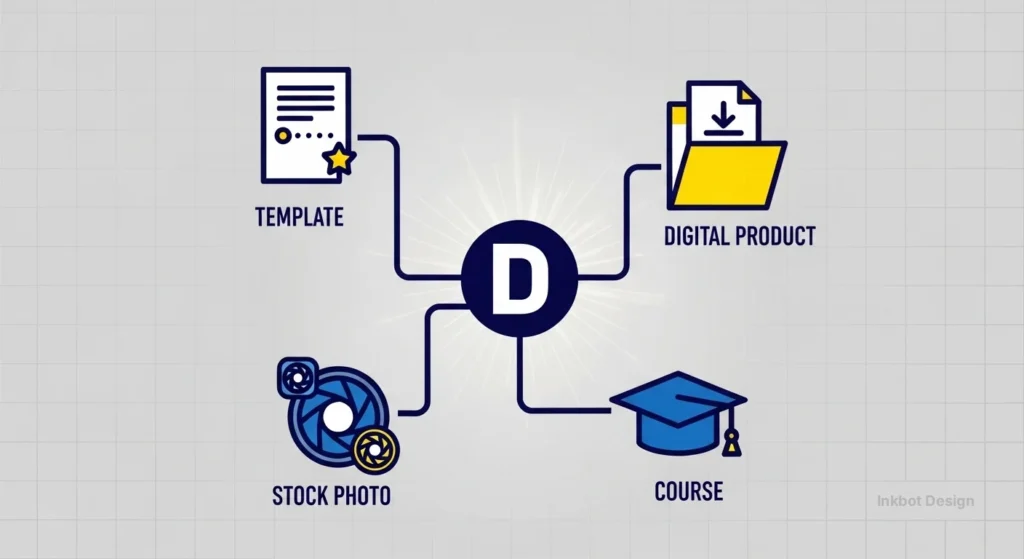
Passive income is revenue generated from intellectual property (IP) or systems where the contribution of labour is decoupled from the financial reward.
It is not “free money”; it is the delayed return on an initial, intensive investment of creative and technical capital.
The three core elements of 2026 passive income are:
- Asset Defensibility: The ability to protect your work from AI replication or unauthorised scraping.
- Scalability: A distribution model where the cost of selling to the 1,000th customer is near zero.
- Algorithmic Relevance: Ensuring your assets are discoverable in a saturated, AI-filtered marketplace.
The State of Passive Design Income in 2026
The landscape has shifted. Two years ago, you could sell a generic pack of “Boho Instagram Templates” and buy a mid-range car with the profits.
Today, that market is dead. Canva and integrated AI tools have democratised low-end design to the point of zero value.
In 2026, “Passive Income” has moved up-market. We are seeing a massive shift toward Certified Human Design (CHD) and Dataset Licensing.
Companies are terrified of the legal ramifications of using unvetted AI assets.
This has created a premium for designers who can provide “clean,” human-verified assets with clear provenance.
Furthermore, the rise of digital marketing services that focus on authenticity has made unique, licensable assets more valuable than ever.
The Economics of AI Training Royalties: Payouts and Strategies
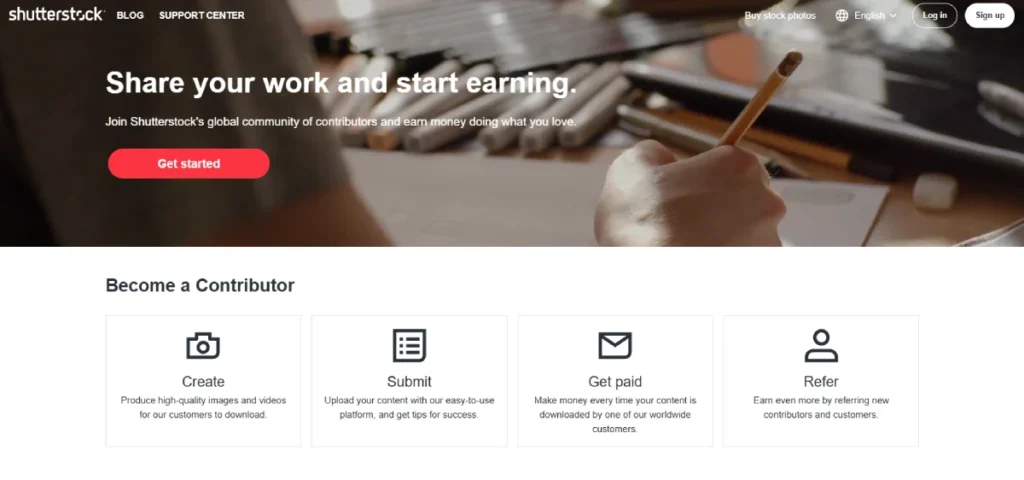
In 2026, the traditional “stock” model has been eclipsed by the Contributor Fund model.
Platforms like Adobe Firefly and Shutterstock no longer just pay per download; they pay for the “influence” your work has on their generative models.
How it works: When a user generates an image using a prompt that triggers weights associated with your style or specific technical assets, you receive a micro-royalty.
2026 Payout Benchmarks:
- Adobe Contributor Fund: Currently distributing ~£120M annually. High-volume contributors with “Clean Provenance” assets (human-verified) are seeing an average of £0.15-£0.45 per “influence event.”
- Shutterstock Data Licensing: Large-scale enterprise deals (e.g., with OpenAI or Meta) have resulted in lump-sum “back-pay” for long-term contributors, often ranging from £500 to £5,000 depending on portfolio breadth.
When should you opt in? If your work is highly replicable or “stylised” (e.g., specific 3D textures or unique vector patterns), opting into these funds provides a floor for your income.
However, for high-end bespoke branding, you may prefer to opt out and use Nightshade to poison your pixels, preserving the value for direct IP licensing.
Technical Defensibility: Hardening Your Assets Against AI
Your passive income is only “passive” if it isn’t stolen and devalued by unauthorised AI training. In 2026, Asset Defensibility is a technical requirement, not an option.
1. Pixel Poisoning with Nightshade and Glaze.
Before uploading to any public-facing marketplace, designers are now using Nightshade.
This tool subtly alters invisible pixels, causing AI models to misinterpret the image (e.g., seeing a “car” as a “cow”).
This “breaks” the scraper’s ability to learn from your style without your permission.
2. W3C Verifiable Credentials and Metadata.
Every asset you sell should include Verifiable Credentials. This is a W3C standard that embeds a digital signature into the file’s metadata. Unlike standard EXIF data, this is cryptographically linked to your digital identity.
- The Benefit: In 2026, large enterprises are increasingly refusing to purchase assets that lack “Clean Provenance” metadata due to legal concerns. By including this, you can charge a 20-30% “Human-Certified” premium.
3. Smart Contract Triggers.
For high-value assets like brand identities, use Smart Contracts (built on Ethereum or Polygon).
Instead of a static PDF license, your license is a dynamic contract that can trigger additional payments if the client’s valuation exceeds a certain threshold—a model known as Fractional IP.
5 High-Margin Passive Income Streams for 2026
1. Advanced Typeface Engineering and Foundries
Type design remains one of the most defensible forms of passive income. Why? Because a font is not just a picture; it is a piece of software.
AI still struggles with the intricate kerning, hinting, and OpenType features required for professional-grade typography.
- The Technical Edge: Don’t just make a “pretty” font. Build variable fonts that respond to viewport data or OpenType-SVG fonts that include built-in textures.
- Real-World Example: Independent foundries like Ohno Type Co have built massive recurring revenue by focusing on high-personality, technically perfect typefaces that AI cannot yet mimic with soul.
- Strategy: Host on your own site to avoid the 50% “middleman tax” from MyFonts, but use the big platforms for initial discovery. Ensure your design portfolio showcases these fonts in “real-world” high-stakes branding scenarios.
2. Scaling Client Work: Building a “Design System in a Box”
The most lucrative passive income stream for senior designers in 2026 is the vertical-specific design system.
General UI kits are dead; niche systems for MedTech, FinTech, or ClimateTech are thriving.
The 4-Step Productisation Workflow:
- Asset Audit: Look at a successful client project. Strip away the brand-specific logos and colours. What remains? The Atomic Design components: the buttons, the input fields, and the navigation logic.
- Variable Integration: In Figma, convert all static values into Figma Variables. Ensure light/dark modes and spacing scales are mapped to JSON tokens. This allows your buyers to “re-skin” the system in seconds.
- Documentation with Zeroheight: A design system is useless without a “Playbook.” Use Zeroheight or Notion to document why specific UX patterns were used. This moves your product from a “UI Kit” to a “Strategic Framework.”
- The “Pro” Bundle: Don’t just sell the Figma file. Include React components (using Shadcn or MUI) and React ARIA for accessibility. This “Design-to-Code” bridge is what allows you to charge £500+ per license instead of £50.
| Feature | Standard UI Kit (£49) | “System in a Box” (£495+) |
| File Type | Static Figma layers | Figma Variables & Tokens |
| Code | None | React/Tailwind Components |
| Documentation | Minimal | Full Zeroheight portal |
| Accessibility | Untested | WCAG 2.2 Compliant |
| Support | None | 6 months of tech updates |

The “Workflow Store”: Monetising Creative Thinking
In 2026, designers are making significant revenue by selling the way they work. This is the Workflow Store model.
Example: The Brand Voice GPT.
Instead of writing a 50-page brand guideline that no one reads, designers are building custom GPTs (Generative Pre-trained Transformers) for their clients.
- The Product: A private AI tool trained on the brand’s specific tone, visual style, and values.
- The Model: You charge a monthly “Maintenance Fee” to keep the AI’s training data up to date. This is Micro-SaaS for designers.
Other High-Value Workflows:
- Prompt Engineering Vaults: A curated library of Midjourney or DALL-E 3 prompts that maintain consistent brand aesthetics across 1,000+ images.
- Onboarding Automations: Selling your Notion-based client portal that automates feedback loops and contract signatures.
- Technical Arbitrage: Selling “No-Code” wrappers around design tools—like a custom plugin that audits a file for accessibility in one click.
3. Licensed Educational “Micro-SaaS”
Instead of a 10-hour course that no one finishes, 2026 is about “Micro-Learning” tools. Think of a custom GPT or a specialised Figma plugin that teaches a specific skill while the user works.
- The Technical Edge: Use “No-Code” tools to build a wrapper around your specific design methodology. You are selling your brain as a service.
- Real-World Example: Designers are now building custom “Brand Voice” or “Accessibility Audit” GPTs and charging for API-based access.
4. Technical Arbitrage: The “Workflow” Store
Stop selling the “What” and start selling the “How.”
Designers are making significant passive income by selling their creative thinking processes—Automated Notion templates for client onboarding, specialised prompts for Midjourney that maintain brand consistency, or custom shaders for 3D renders.
5. Fractional IP and Smart-Contract Licensing
Using blockchain for more than just “monkey pictures.” In 2026, savvy designers are using smart contracts to manage sub-licensing.
If a small business buys your logo and later becomes a billion-pound enterprise, your contract can trigger additional royalties.
The Amateur vs The Pro
| Feature | The Wrong Way (Amateur) | The Right Way (Pro) |
| Asset Type | Generic PNG/JPG stock images. | Variable fonts and SVG-coded components. |
| Distribution | Relying 100% on Etsy/Creative Market. | Multi-channel: Own site + Niche marketplaces. |
| Pricing | Racing to the bottom (£5-£10). | Value-based licensing tiers (£50-£5000). |
| SEO Strategy | Keywords like “Cool Logo.” | Semantic entity targeting (e.g., “B2B SaaS UI System”). |
| Legal | “Standard” platform license. | Custom IP assignments with usage triggers. |
Debunking the Myth: “Passive Income is Automated”

There is a dangerous trend of “gurus” claiming you can use AI to churn out 1,000 low-quality colouring books or stock patterns and retire. This is a lie.
This is “junk design,” and search engines are already penalising it.
Data from Nielsen Norman Group suggests that as AI content becomes ubiquitous, user trust in “obviously synthetic” assets has dropped by 40%.
If your “passive” assets look like everyone else’s AI-generated garbage, your conversion rate will hit zero.
Actual passive income in 2026 requires a “Human-in-the-loop” verification. You must spend time on the “Rare” attributes—the technical nuances that an LLM misses—to maintain your market position.
If you’re struggling to find the time to build these assets, you might need to make a productive workplace at home or address your creative burnout first. You cannot create a passive engine on an empty tank.
The Verdict
Earning passive income as a designer in 2026 is no longer about volume; it is about Technical Authority.
The market for “average” is gone. To succeed, you must move toward high-complexity assets like variable typography, licensed AI datasets, and proprietary design systems.
Stop thinking like a freelancer and start thinking like a software company.
Own your IP, protect your style, and build systems that work when you don’t. The alternative is a lifelong race against an algorithm that doesn’t sleep and doesn’t charge for its time.
FAQ: How to Earn Passive Income for Designers
Is selling on Creative Market still worth it in 2026?
Only if you avoid the “Middle Tier.” AI saturates the market for generic social media templates. To succeed, you must sell Complex Assets like variable fonts, 3D shaders, or vertical-specific design systems that require deep technical expertise.
How do I protect my work from being scraped by AI?
Use a combination of Nightshade for pixel poisoning and W3C Verifiable Credentials for ownership metadata. Additionally, host your most valuable assets on your own domain rather than on open marketplaces, and control crawler access via robots.txt and gated logins.
What is the most profitable digital product for designers right now?
Variable fonts and specialised “Design-to-Code” frameworks. Anything that bridges the gap between static design and live implementation has the highest perceived value and price ceiling.
Do I need to know how to code to earn passive income?
You don’t need to be a software engineer, but basic “Technical Literacy”—understanding SVG structure, JSON, and CSS variables—is mandatory for building the high-value assets that 2026 demands.
How do AI training royalties actually work?
Platforms like Adobe Firefly track which contributor assets influenced a generated output. They then distribute a portion of subscription revenue back to those contributors. It’s a volume-based game, but it’s genuine passive income.
Is it better to host my own store or use a marketplace?
Both. Use marketplaces for “Discovery” (finding new customers) and your own site for “Retention” and high-ticket sales. This avoids the 30-50% commission fees on your most loyal customers.
How much can a designer realistically earn from passive income?
It ranges from £50/month for hobbyists to £10,000+/month for those with established foundries or SaaS-style design systems. It depends entirely on the “Defensibility” of your assets.
How do I handle UK VAT on digital products?
If you sell via your own site, you must use a tool like Paddle or Lemon Squeezy. They act as the “Merchant of Record,” handling the complex global VAT/GST calculations so you don’t have to register in every country.
What is “Fractional IP” and how do I use it?
It is a licensing model where you retain a small percentage of a brand’s future value (often managed via Smart Contracts). If you design a logo for a startup that eventually goes public or is acquired, your contract triggers a “Success Royalty.”
How do I start if I have zero digital products?
Perform an “Asset Audit.” Look at your last three years of client work. What did you build that wasn’t used? What “base” components did you use across multiple projects? Start there.
Will AI eventually kill all passive income for designers?
No. It will kill the “Low-End” market. The demand for “Authenticated Human Design” is actually increasing as a counter-trend to the “Synthetic Sea” of AI content.
What is the most prominent mistake designers make with passive income?
Treating it as “Set and Forget.” You must update your assets for new software versions (e.g., Figma updates) and refresh your SEO tags every 6 months to stay relevant in the 2026 algorithm.
Should I sell my design prompts?
Yes, but don’t sell the prompt itself—sell the “Resulting Framework.” A PDF of prompts is low value. A Notion dashboard that generates those prompts based on brand variables is a high-value product.
How much does Adobe pay for the Contributor Fund?
As of early 2026, high-quality contributors are seeing payouts based on “Influence Scores.” For a portfolio of 1,000 human-verified vector assets, monthly royalties typically range from £200 to £800, depending on how often the generative model utilises your style.
What is the “Human-in-the-Loop” premium?
This is a pricing strategy in which you charge more for assets that carry a Certified Human Design (CHD) seal. Large corporations now pay a 20-40% premium for these to ensure they aren’t infringing on AI-generated copyright or using “poisoned” pixels.
Do I need to learn React to sell UI Kits?
While not strictly mandatory, “Design-to-Code” is the highest-margin sector. Understanding how to hand off JSON tokens to a developer—or partnering with one to sell a “Figma + React” bundle—can increase your product’s value by 10x.