International Trademarking: The Madrid Protocol Explained
Let’s be clear about one thing immediately: there is no such thing as a “Global Trademark.”
If someone sold you a “worldwide copyright” or a “global brand registration,” you have been scammed.
Intellectual property is territorial. Your UK trademark only applies up to the border.
If you launch your product in the USA, France, or China without registering there, you are effectively handing your brand assets to the first squatter who decides to file the paperwork before you do.
For entrepreneurs and SMBs, this creates a massive headache. You cannot afford to hire local solicitors in 190 countries.
This is where the Madrid Protocol comes in—a system designed to simplify this chaotic process. However, it is not a silver bullet, and treating it as such is a fast track to losing your protection entirely.
I’ve seen companies spend five figures on branding, only to receive a cease-and-desist letter because they didn’t understand the geography of brand protection.
This is not legal advice; this is business survival. Here is how international trademarking actually works.
- Madrid Protocol centralises multi-country filings via WIPO, saving costs and administration compared with separate national applications.
- Five-year "central attack" dependency: if your home (basic) mark is cancelled, linked international registrations can be voided.
- National nuances (US use requirement, China sub-classes, EU unitary risk) and accurate class descriptions are critical to avoid refusals.
What is International Trademarking?
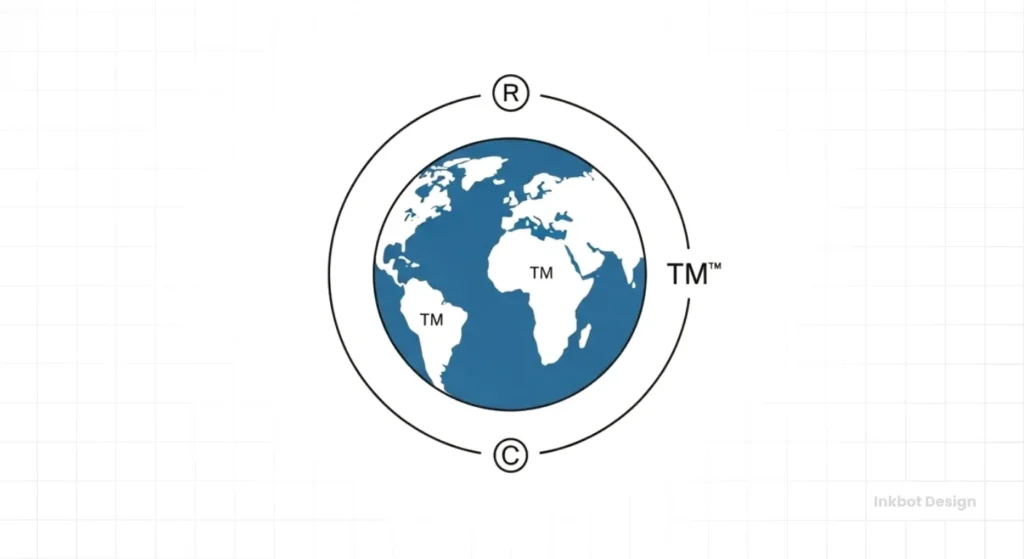
At its core, international trademarking is the strategic process of extending your brand’s legal protection beyond your home country.
Most businesses use the Madrid System (governed by the Madrid Protocol), managed by the World Intellectual Property Organization (WIPO) in Geneva, Switzerland.
The Madrid System Definition
The Madrid System is a centralised filing mechanism that allows a trademark owner to seek protection in up to 130+ countries (Contracting Parties) by filing a single application, in a single language, with a single set of fees.
Key Components:
- The Office of Origin: Your home trademark office (e.g., the UK IPO). You must first complete a basic application or registration on this site.
- The International Bureau (WIPO): The central hub that checks your paperwork and forwards it to other countries.
- Designated Contracting Parties (DCPs): The specific countries where you want protection (e.g., USA, EU, Australia).
The Madrid System does not grant you an “International Trademark.” It creates a bundle of national rights. Once WIPO processes your application, it sends it to the USA, China, and Japan. Those countries then examine it in accordance with their local laws and regulations. The US can say “No” while Japan says “Yes.”
The “Global Trademark” Myth: Why It Doesn’t Exist
We often hear clients ask, “Can we just copyright it worldwide?”
No.
Trademark rights are strictly territorial because they are based on consumer protection within a specific market or region.
The German government does not care if consumers in Brazil are confused by your logo; they care about German consumers.
This fragmentation leads to three main routes for international protection:
- The National Route (Direct Filing): You hire a local lawyer in every single country. You pay local fees in local currency.
- Pros: Total control, no dependency on your home mark.
- Cons: Astronomically expensive and administratively impossible for SMBs.
- The Regional Route: E.g., The European Union Trade Mark (EUTM) or OAPI in Africa. One application covers a bloc of countries.
- Pros: Efficient for regions.
- Cons: Vulnerable to a single opposition (if you are blocked in Malta, you are blocked in the whole EU).
- The International Route (Madrid Protocol): The hybrid solution. One central filing that splits into national applications.
The “First to File” Trap
In the UK and the USA, we recognise “Common Law” rights. If you have been using a name for ten years, you have some unregistered rights.
In most of the world (China, much of Europe, South America), it is “First to File.”
Real-World Example: The Tesla Disruption

In 2013, Tesla Motors faced a trademark dispute in China. A businessman named Zhan Baosheng had registered the “Tesla” trademark years before Elon Musk’s company entered the market. He wasn’t even making cars. This isn’t illegal in a “First to File” jurisdiction; it’s a smart asset acquisition strategy. Tesla had to resolve the dispute (likely through a settlement) to operate freely. If you ignore international filing, you are essentially waiting to be held to ransom.
The Madrid Protocol Process: Step-by-Step
Understanding the workflow is vital to managing your expectations regarding time and money.
Step 1: The “Basic Mark” (The Foundation)
You cannot use the Madrid System without a foundation. You must have a live application or registration in your country of origin (Office of Origin).
- Warning: Your international application must match your Basic Mark exactly. Same owner, same mark, same goods/services. If you tweak the logo for the international version, it will be rejected.
Step 2: Filing the International Application (MM2)
You file the international application through your Office of Origin. They certify that it matches your Basic Mark and forward it to WIPO.
- Cost: You pay a Basic Fee to WIPO (currently 653 CHF for black/white marks, 903 CHF for colour), plus a fee for each country you designate.
Step 3: WIPO Formalities Examination
WIPO checks the form. They do not verify if your brand is unique; they simply check if you have filled out the boxes correctly and paid the fees. If approved, your mark is recorded in the International Register and published in the WIPO Gazette.
- Outcome: You receive an International Registration Certificate. Do not celebrate yet. This is just a receipt. It does not mean you are protected in the USA or China yet.
Step 4: Substantive Examination (The National Phase)
WIPO notifies the trademark offices in the countries you selected (e.g., USPTO in the US, CNIPA in China).
These offices have strict time limits (usually 12 or 18 months) to accept or refuse your mark.
- The Silence Rule: If a country does not respond with a refusal within the specified time limit (12-18 months), protection is automatically granted. Silence is golden.
Step 5: Grant or Refusal
- Grant: The country issues a Statement of Grant of Protection.
- Provisional Refusal: The country objects (e.g., your mark is too similar to a local brand, or it’s descriptive).
- Action: If refused, the Madrid System pauses for that country. You must hire a local lawyer to directly challenge the refusal with the national office.
The “Central Attack”: The Hidden Risk of Madrid
This is the part most generic guides gloss over because it scares people. But you need to know it.
For the first five years, your International Registration is legally tethered to your Basic Mark (home registration). This is called the Dependency Period.
If your home trademark is cancelled, invalidated, or withdrawn during these five years, your entire International Registration dies.
This is known as a “Central Attack.”
Scenario: The Domino Effect
- You file in the UK (Basic Mark).
- You use Madrid to extend it to the USA, China, and Australia.
- A competitor in the UK realises your UK mark infringes on theirs. They sue to cancel your UK mark.
- They win. Your UK mark is cancelled.
- Result: Your marks in the USA, China, and Australia are also automatically cancelled, even if no one in those countries had a problem with you.
The Safety Net: Transformation
If you fall victim to a Central Attack, you can convert your international designations into national applications. This is called Transformation. You retain your original filing date, but you must pay national filing fees to each country again. It is an expensive insurance policy.
Madrid Protocol vs. Direct National Filing
When should you use the centralised system, and when should you go direct?
| Feature | Madrid Protocol (Centralised) | Direct National Filing |
| Administration | Single application, one language. | Multiple applications, multiple languages. |
| Cost | Generally cheaper (savings of 40-50% for multiple countries). | Expensive (local attorney fees per country). |
| Management | Renewals and address changes are handled centrally via WIPO. | Must update each country individually. |
| Speed | Can be slower (due to WIPO processing time and transmission). | Faster (direct to the local examiner). |
| Flexibility | Rigid. Goods/Services must be identical to Basic Mark. | Flexible. Can tailor the description for each market. |
| Risk | Central Attack (5-year dependency). | Independent rights (one failure doesn’t kill the others). |
| Best for | entering 3+ countries; broad protection. | Critical “Must-Win” markets; distinct brands per region. |
I once audited a client who tried to use the Madrid Protocol to cover 45 countries immediately. They saved money on filing fees but spent a fortune responding to “Irregularity Letters” because their list of goods was too vague for the US and too specific for China. Sometimes, for your absolute Tier 1 market (e.g., if 80% of your revenue comes from the USA), file directly. For Tier 2 and 3 markets, use Madrid.
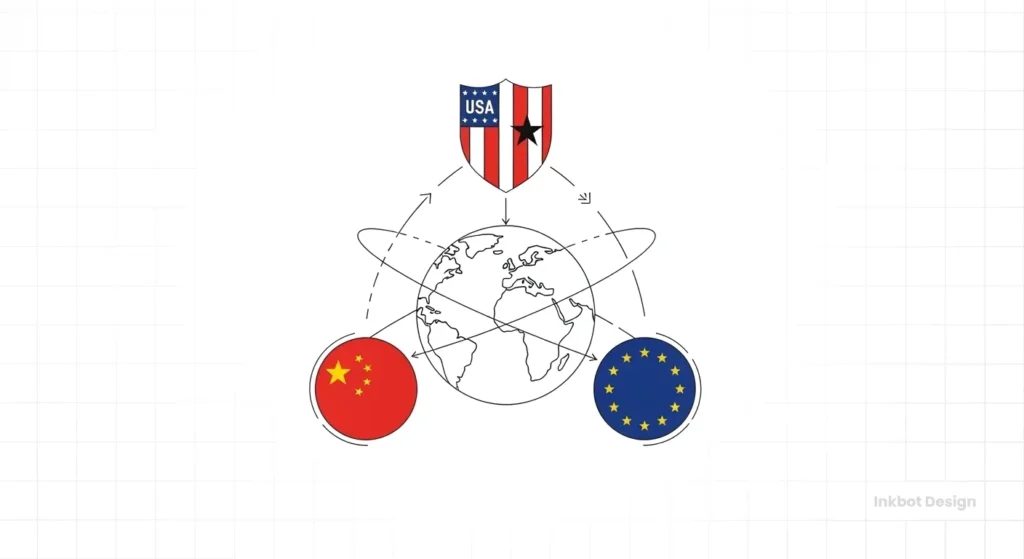
Critical Regional Nuances: USA, China, and EU
International trademarking fails when you treat every country like your home turf. Here are the three biggest hurdles.
1. The United States: “Use in Commerce”
The US is an outlier. Most of the world registers marks based on intent. The US requires proof of “Use in Commerce.”
When you designate the US via Madrid, you must declare a bona fide intention to use the mark in the US. However, before the registration is fully secure (and definitely for renewal), you must submit a “Specimen of Use”—photos of the product with the logo on it, sold to a US consumer.
- The Trap: If you file for “clothing, software, and consulting” but only sell software, the USPTO will demand you delete the other classes or prove you sell them.
2. China: The Sub-Class System
China utilises the Nice Classification system, but it also incorporates a unique layer of “Sub-Classes.”
In the West, if you register for “Clothing” (Class 25), it generally covers shoes and shirts. In China, Class 25 is divided into distinct sub-groups. If you register for “shirts” but not “shoes,” someone else can legally register your logo for “shoes.”
- Strategy: When filing in China, you often need to select specific items from every sub-class to prevent squatting. Madrid filings can sometimes be too broad or vague to effectively capture these sub-class nuances.
3. The European Union (Post-Brexit)
Since Brexit, a UK trademark is no longer an “Office of Origin” for an EU trademark, and vice versa.
- For UK Businesses: You must designate the EU (EM/European Union) in your Madrid application. This covers all 27 member states.
- The Risk: The EU operates on a “unitary” basis. If your mark is opposed in one country (e.g., Greece), the entire EU designation fails. You can then convert it to national applications in the remaining 26 countries, but it’s a hassle.
The Cost of International Trademarking
“How much will it cost?” is the wrong question. The right question is, “How much is the market worth?”
However, for budgeting purposes, here is the structure (values in Swiss Francs – CHF, the currency of WIPO).
- Basic Fee: 653 CHF (b/w) or 903 CHF (colour).
- Standard Designation Fee: 100 CHF per country (for countries that don’t set their own individual fees).
- Individual Fees: Many countries (USA, EU, Japan, Australia) set their own higher fees.
- USA: Approx 300-400 CHF per class.
- EU: Approx. 900 CHF for one class.
- China: Approx 250 CHF per class.
Example Calculation (Estimates):
A UK brand filing a black-and-white logo in 1 Class (e.g., Class 25 for Clothing) designating the USA, EU, and Australia.
- Basic Fee: 653 CHF
- USA: ~360 CHF
- EU: ~830 CHF
- Australia: ~300 CHF
- Total WIPO Fees: ~2,143 CHF (approx £1,900 GBP).
Hidden Costs:
- Handling Fee: Your home office (UK IPO) charges £40 to process the MM2 form.
- Legal Fees: If you receive a refusal (Office Action), you must hire a local attorney in that country. This can cost £1,000 – £3,000 per refusal.
The State of International Trademarking in 2026
The landscape has shifted in the last 18 months. Here is what is new.
1. The Rise of AI in Examination
Offices like the USPTO and EUIPO are deploying sophisticated AI tools for image recognition. This means “visual similarity” searches are becoming incredibly accurate. If your logo resembles an existing, obscure Japanese logo by 70%, the AI will likely identify it. The days of “hoping the examiner misses it” are over.
2. The “Bad Faith” Crackdown
The US and China are aggressively purging the register of “dead wood” and fraudulent filings. In 2024 and 2025, we observed a surge in USPTO audits of foreign-domiciled applicants. If you use a “rent-a-lawyer” service solely to obtain a signature, your application may be voided from the outset. Authenticity and legitimate legal representation are now scrutinised heavily.
3. Digital Goods & The Metaverse Fallout
Following the 2022-2024 hype cycle, trademark offices have standardised how they treat virtual goods. “Downloadable virtual goods” (e.g., for gaming or virtual environments) are firmly Class 9. Services related to them are Classes 35 or 41. If you are a tech brand, ensuring your brand identity covers both physical and digital iterations of your product is now standard practice, not a futuristic optional extra.
Classification: The Nice Classification System
International trademarks rely on the Nice Classification (NCL) system. There are 45 classes (1-34 for goods, 35-45 for services).
Why it matters: You pay per class.
If you are a coffee shop, you might think you just need Class 43 (Services for providing food and drink). But do you sell branded mugs? That’s Class 21. Do you sell bags of coffee beans? That’s Class 30. Do you have an app for ordering? That’s Class 9.
The “Vague Description” Problem
WIPO provides a “Madrid Goods & Services Manager” tool. Use it.
If you use vague terms like “Computer programs,” the US will reject it for being indefinite (they want “Computer programs for accounting”). If you use terms that are too specific, you limit your ability to protect yourself.
- Tip: Always check the specific “Acceptable Identification of Goods” manual for your target countries before filing.
Protecting the Investment: Watching Services

Filing is defensive. Enforcement is offensive.
WIPO does not police the market for you. If someone files a logo in France that looks just like yours three years after you registered, WIPO will not call you.
You need a Trademark Watching Service.
These are services (often subscription-based) that monitor new filings globally. If a conflicting mark appears, they alert you so you can file an opposition within the tight 2-3 month window.
Without a watching service, your registration is a passive asset. You might only find out about a copycat when they are already stealing your market share.
The Verdict: Is the Madrid Protocol Worth It?
For 90% of SMBs looking to export, yes.
The Madrid Protocol is the only financially viable method for building a portfolio across multiple regions simultaneously. It centralises management and drastically lowers the barrier to entry.
However, it requires a strategy.
- Audit your markets: Don’t file in 50 countries “just in case.” File where you will make money in the next 36 months.
- Solidify the Base: Ensure your UK (or home) mark is bulletproof to avoid a Central Attack.
- Budget for Defence: Set aside cash for local refusals. They will happen.
Intellectual Property is not just legal paperwork; it is the commercial value of your reputation. Don’t let a form-filling error cost you your brand.
Next Steps:
If you are ready to take your brand global but your visual identity is still stuck in a local mindset, we need to talk. A trademark protects the logo, but strategy builds the brand.
Frequently Asked Questions (FAQ)
What is the difference between the Madrid Protocol and the Madrid Agreement?
The Madrid System has two treaties: the Agreement and the Protocol. The Protocol is the modern, more flexible version that most major economies (including the US and EU) use. For practical purposes today, most filers operate under the Protocol rules, which allow for English filings and longer time limits.
Can I file a Madrid application directly with WIPO?
No. You must file through your “Office of Origin” (your national trademark office). They must certify that your international application matches your local basic mark before forwarding it to WIPO.
How long does an international trademark last?
International registrations are valid for 10 years from the date of registration. They can be renewed indefinitely every 10 years upon payment of the renewal fees.
Does a UK trademark cover Europe?
No. Since Brexit (January 1, 2021), UK trademarks no longer provide protection in EU member states. You must file a separate European Union Trade Mark (EUTM) or designate the EU via the Madrid Protocol.
What happens if my international trademark is refused in one country?
A refusal in one country (e.g., China) does not affect your protection in other designated countries (e.g., the USA or Australia). The system allows for “partial refusals,” meaning your registration can be valid in some countries and rejected in others.
Is it cheaper to file directly or use the Madrid System?
The Madrid System is generally cheaper if you are filing in three or more countries. It saves on local attorney fees and translation costs. However, for a single country, direct filing might be comparable in cost and faster.
Can I add more countries to my international registration later?
Yes. You can file a “Subsequent Designation” to add new countries to your existing International Registration at any time. This is useful as your business expands into new markets.
What is a “Central Attack” in trademark law?
Central Attack refers to the dependency of the international registration on the basic (home) mark for the first five years. If the home mark is cancelled or invalidated during this period, the international registration is also cancelled.
Do I need a lawyer to file a Madrid application?
While not legally required, it is highly recommended. Errors in the classification of goods or the listing of the applicant can result in “Irregularity Letters” from WIPO or refusals from national offices, which are costly to rectify.
How long does the international registration process take?
After WIPO records the mark (usually 2-3 months), national offices have 12 to 18 months to examine it. If no refusal is issued within that timeframe, protection is granted. The total process usually takes 12-18 months.