Guest Blogging for Personal Branding: The Definitive Guide
The digital marketing industry has a tendency to ruin good things.
It takes a nuanced strategy, strips it of its sophistication, and sells it as a “hack.” Guest blogging is perhaps the greatest victim of this industrialisation.
For years, “experts” have sold the idea that the goal of guest blogging is to scatter as many links as possible across the internet, regardless of where they land.
This is not just a waste of budget; it is an active act of brand sabotage. If your name appears on a website filled with casino links and spun content, you are not building authority. You are signalling desperation.
Real guest blogging—the kind that builds personal branding—is not a volume game. It is a reputation game. It is about “Reputation Borrowing.”
When you publish on a platform that your audience respects, you are not just getting a backlink; you are inheriting their trust.
This guide is not about spamming 500 webmasters with a generic template. It is a forensic breakdown of how to utilise guest blogging to establish a personal brand that commands respect, justifies higher fees, and generates legitimate revenue.
- Prioritise reputation over volume: publish on respected, relevant platforms to "borrow" audience trust, not to scatter backlinks.
- Target vetting: use audience-overlap, engagement, and content-audit checks to avoid link farms and find high-intent readers.
- Pitch like a peer: send bespoke, value-first pitches highlighting a content gap, data, and a clear headline or skeleton.
- Deliver unique value: publish root/rare/unique content, use strategic internal links and a high-conversion bio to convert readers.
What is Guest Blogging?

Guest blogging (also known as guest posting) is the strategic practice of contributing original, high-value content to a third-party website or publication in exchange for exposure, authority, and usually a link back to your own properties.
In the context of personal branding, it serves three specific functions:
- Authority Transfer: Legitimising your expertise by associating with established industry leaders.
- Audience Expansion: Accessing a pre-qualified audience that matches your ideal client profile.
- Signal Generation: creating “Entity Salience” in search engines, teaching algorithms that you are an expert in Topic X.
Note: If you are guest blogging solely for SEO link juice, you are playing a 2010 game in a 2026 world. The algorithm is smarter than that. The primary value is the brand association.
The Strategic Shift: From SEO to Reputation Engineering
Most entrepreneurs view content through the lens of content marketing, focusing purely on their own domains. They jealously guard their best ideas for their own blog. This is a strategic error.
If you have zero traffic, posting your best article on your own site is like playing a symphony in an empty room. Nobody hears it.
The “Trojan Horse” Strategy
The most effective personal brands utilise guest blogging as a Trojan Horse. They take their most insightful, data-backed, and controversial ideas and present them to platforms that already have a large audience.
When you publish a defining piece of thought leadership on a major industry publication, two things happen:
- Immediate Validation: The audience assumes you must be important because the platform is important.
- Referral Filtering: The traffic that clicks through to your site is high-intent. They read your article, liked your brain, and want more.
The Reality of “Link Farms” vs. Editorial Standards
I often audit clients who claim they are “doing guest blogging.” When I look at their backlink profile, it is a graveyard of “General News” sites and “Tech Tips” blogs that clearly sell links for $50.
Let me be clear: Google knows.
If a site publishes articles on “Best Dog Food,” “Crypto Trends,” and “Plumbing Tips” all on the same day, it is a link farm. Associating your personal brand with these sites triggers negative E-E-A-T (Experience, Expertise, Authoritativeness, and Trustworthiness) signals. You are telling the world you belong in the bargain bin.
Identifying the Right Targets: A Forensic Approach

Stop looking for “sites that accept guest posts.” That query lists sites that are desperate for free content. You want sites that are exclusive. You want the clubs that have a bouncer at the door.
The “Audience Overlap” Coefficient
Your goal is not traffic; it is the right traffic. You need to identify platforms where your potential clients are already hanging out.
If you run a B2B design consultancy, a guest post on a high-traffic “Mummy Blogger” site is worthless, even if it has a Domain Authority of 90. A post on a niche SaaS marketing blog with a Domain Authority of 30 might be worth £50,000 in new business because the audience comprises decision-makers.
The 3-Step Vetting Process
Before you even write a subject line, you must vet the target.
- The “Real Human” Test: Look at the comments section. Are there real discussions? Or is it just spam bots promoting fake Ray-Bans? If there is no engagement, there is no audience.
- The Social Proof Check: Check their social media channels. Do they actually share their contributors’ work? Or do the articles die in silence?
- The Content Audit: Read the last 5 posts. Are they thin, 500-word fluff pieces? If so, placing your 3,000-word masterpiece there is a waste of assets.
The Amateur vs. The Professional Approach
| Feature | The Amateur Approach (Spam) | The Professional Approach (Brand) |
| Target Selection | “Write for us” Google searches. | Competitor backlink analysis & industry reads. |
| Metric Focus | Domain Authority (DA) only. | Audience relevance, Traffic, Engagement. |
| Content Type | Generic “7 Tips for X” listicles. | Contrarian views, Case Studies, Data analysis. |
| Outreach | Mass templates (BCC’d). | Bespoke pitches referencing specific editors. |
| Goal | Get a Do-Follow link. | Get a client/subscriber & Reputation. |
The Pitch: How to Bypass the Gatekeepers
Editors at reputable publications are inundated with garbage. They receive hundreds of emails daily from “SEO agencies” offering “high-quality content.” These emails are deleted instantly.
To get into a Tier 1 publication, you must not sound like a marketer. You must sound like a peer.
The “Value-First” Framework
Do not ask for a favour. Offer an asset. Your pitch should convey that you are doing them a service by allowing them to publish your insights.
The Golden Rules of Pitching:
- Name the Editor: Never use “Dear Editor.” Find the specific person in charge of content on LinkedIn.
- Prove You Read It: Reference a recent article they published and explain why yours adds to that specific conversation.
- The “Gap” Angle: Show them what they are missing. “I noticed you covered X, but nobody is talking about Y. Here is the data I have on Y.”
The Anti-Template
Here is a structure that actually works. It is blunt, respectful, and value-driven.
Subject: Pitch: Why [Topic] is failing (Data from [Your Industry])
Hi [Editor Name],
I’ve been following [Site Name]’s coverage on [Topic]. Your recent piece on [Specific Article] was excellent, particularly the point about [Detail].
However, I believe there’s a missing angle: [Your Contrarian/Unique Point].
I lead [Your Company/Role], and we have recently identified a notable [Data Point/Observation]. I’d love to write a piece for your audience titled: “[Proposed Headline]”.
The Skeleton:
- Point A (The common myth).
- Point B (The data-backed reality).
- Point C (Actionable framework for your readers).
I don’t need a backlink for SEO; I just want to share this data with an audience that will actually understand it.
Samples of my writing:
- [Link 1]
- [Link 2]
Best,
[Your Name]
Notice what is missing? I didn’t ask about “Do-Follow” links. I didn’t offer to pay. I focused on the content gap.
Writing the Content: The “Expert” Standard

Once you get the “Yes,” the real work begins. The biggest mistake people make is holding back their best content for their own site.
Give them your best work.
If you write a mediocre post for Forbes or Entrepreneur, thousands of people will see it and think, “This person is mediocre.” You have just scaled your own incompetence.
The “Root, Rare, Unique” Content Model
To build a personal brand, your content must offer Information Gain—something that cannot be found on page 1 of Google.
- Root: Cover the basics quickly (10%).
- Rare: Provide technical details or industry nuances that only a practitioner would know (40%).
- Unique: Offer a personal case study, proprietary data, or a framework you invented (50%).
For example, instead of writing “How to Design a Logo,” write “Why Vector Scalability at 16px Determines B2B Conversion Rates.” The specificity signals authority.
Internal Linking Strategy
When you write the guest post, you will likely be allowed one or two links within the body content. Do not waste these on your homepage. Link to a high-value, relevant resource on your site.
If you are writing about branding, link to your detailed guide on digital marketing services or a specific case study. This provides the reader with a logical “next step” if they want to learn more.
The Bio: Your Most Valuable Real Estate
The author bio is not an afterthought. It is your sales pitch. It is the only place where you are allowed to be self-promotional.
Most bios are boring: “John Smith is a writer who likes coffee and dogs.”
Nobody cares, John.
The High-Conversion Bio Formula:
- Social Proof: Who are you? (e.g., “Founder of…”, “Featured in…”).
- The Problem You Solve: What do you do for clients?
- The Hook (CTA): Why should they click?
Bad Bio:
“Stuart is a creative director at Inkbot Design. He loves helping businesses grow.”
Good Bio:
“Stuart L. Crawford is the Creative Director at Inkbot Design. He helps B2B entrepreneurs build dominant brands that strip away the fluff. Get a free brand audit here.”
By directing them to a specific landing page or a “Request a Quote” page, you can measure the direct ROI of your guest blogging efforts.
The State of Guest Blogging in 2026
The landscape has shifted. The rise of AI-generated content means that “average” content is now readily available and free. Editors are drowning in ChatGPT-written articles that all sound the same.
This presents a significant opportunity for personal branding.
The Rise of “Entity-First” Indexing
Google is moving towards an entity-based understanding of the web. It wants to know who wrote the content, not just the keywords.
When you guest blog on high-authority sites, you are feeding Google’s Knowledge Graph. You are connecting your entity (Your Name) with the entity of the Topic (e.g., Branding) and the entity of the Publisher (e.g., Smashing Magazine).
Over time, this triangulation tells Google that you are a topical authority. This is why you see certain names dominate the search results, even on their smaller personal blogs. They have “borrowed” enough authority from big players that Google trusts them implicitly.
The “No-Click” Era
In 2026, many users consume content directly on the platform (or via AI-generated summaries) without needing to click through. This makes your brand voice critical. Even if they don’t click your link, they must remember your name. Your arguments must be so distinct that they cannot be separated from your identity.
A Consultant’s Reality Check: The Myths We Bust
In my time at Inkbot Design, I have had clients ask if they should buy a “package” of 50 guest posts for £500.
I tell them this: If you can buy the placement, it is worthless.
If a site has a “Write for Us” page that looks like a menu with prices, Google has likely already flagged it. The links you get from there are toxic. I once audited a client who had spent thousands on these “services.” Their organic traffic had flatlined. We had to spend three months disavowing those links just to get them back to baseline.
Personal Branding is not a shortcut. It is a long game. One feature in a top-tier industry journal is worth 1,000 posts on generic blog farms.
Why?
Because the top-tier journal is read by the people who sign cheques. The blog farms are read by… nobody.
Case Study: The “Buffer” Blueprint
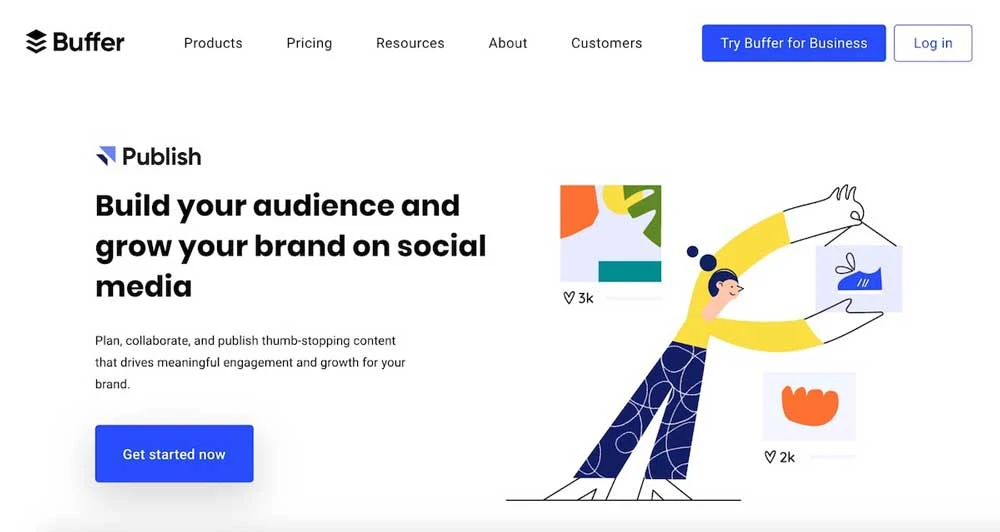
We cannot discuss guest blogging without mentioning the gold standard: Leo Widrich, co-founder of Buffer.
In the early days of Buffer, Leo didn’t have an ad budget. He wrote approximately 150 guest posts in nine months. He didn’t just write for anyone; he targeted sites where small business owners and social media managers hung out.
The Result:
- Buffer acquired its first 100,000 users.
- They didn’t invest in customer acquisition.
- They built a massive backlink profile that continues to power their SEO dominance today.
The Lesson:
Leo didn’t write about “Buffer.” He wrote about “How to Tweet to get more clicks” and “The science of timing.” He gave away valuable knowledge. The product growth was a byproduct of the value he provided.
Technical Considerations: The “Boring” Stuff That Matters
While the strategy is creative, the execution must be technical.
Anchor Text Distribution
Do not use the same anchor text for every guest post. If every link points to your site saying “best logo design,” Google will penalise you for manipulation.
Natural Anchor Text Ratios:
- Branded: “Inkbot Design,” “Stuart Crawford” (50%).
- Naked URL: “inkbotdesign.com” (20%).
- Generic: “click here,” “this guide” (10%).
- Exact Match: “logo design services” (20% – Use sparingly).
Tracking Your Success
How do you know if it’s working? It is not just about rankings.
- Referral Traffic: Check Google Analytics 4 (GA4). Are people coming from that domain?
- Engagement Rate: Do those visitors stay on your site? If they bounce immediately, your guest post promised something your landing page didn’t deliver.
- Brand Search Volume: Are more people searching for your name on Google? This is the ultimate metric of personal branding.
The Verdict
Guest blogging for personal branding is an exercise in ego management. You have to be willing to share your best ideas with someone else’s platform. You have to be willing to face rejection from editors. You have to be willing to write for free.
But the returns are asymmetrical. One great article can drive leads for years to come. One connection with a major publisher can elevate your status from “service provider” to “industry authority.”
If you are serious about building a lasting brand, stop looking for shortcuts. Stop buying links. Start writing content that is so good, publishers would be insane to reject it.
If you need help refining your brand voice or visual identity before you start pitching to the big leagues, we can help. Inkbot Design specialises in turning businesses into brands that demand attention.
Frequently Asked Questions
What is the difference between guest blogging and sponsored posts?
Guest blogging is typically unpaid and based on editorial merit and value exchange (content for exposure). Sponsored posts are paid advertisements where you buy space on a website, often legally requiring a “Sponsored” or “Ad” disclosure tag.
Does guest blogging still help SEO in 2026?
Yes, but only if done on reputable, relevant sites. Links from high-authority, topically related domains pass significant “link equity” and trust signals. However, low-quality guest posting on “link farms” can result in manual actions or algorithmic devaluation.
How many guest posts should I write per month?
Quality beats quantity. One high-quality post on a major industry publication is worth more than 20 posts on low-traffic blogs. Aim for 1-2 Tier 1 placements per month rather than a high volume of low-tier links.
Should I accept “No-Follow” links in guest posts?
Absolutely. While “No-Follow” links do not pass direct link equity (PageRank), they still drive referral traffic and build brand awareness. Furthermore, a natural backlink profile contains a healthy mix of Follow and No-Follow links.
How do I find guest blogging opportunities?
Avoid searching for “write for us” pages, as these are often spammed. Instead, identify the blogs your target audience reads. Look for contributor bylines on those sites and reach out to the editors directly with a bespoke pitch.
Can I republish my guest post on my own blog?
Generally, no. Most legitimate publishers require exclusive rights to the content to avoid duplicate content issues. However, you can write a summary or “teaser” on your own blog that links to the full article on the host site.
What is the best way to pitch a guest post?
Research the publication’s content gaps. Pitch 2-3 specific headlines that fit their audience but haven’t been covered yet. Keep the email short, prove your expertise, and show examples of your previous writing.
How long should a guest blog post be?
It depends on the host site’s guidelines, but generally, 1,500 to 2,500 words is the sweet spot for “definitive” content. Longer, comprehensive posts tend to perform better in search and are more likely to be accepted by top-tier editors.
Is guest blogging risky?
It becomes risky only when you use automated tools, spin content, or publish on low-quality “link farm” networks. If you write genuine, high-quality content for real audiences, there is zero risk; it is simply good public relations.
What is “Entity Salience” in guest blogging?
Entity Salience refers to how clearly a search engine understands the relationship between a named entity (You) and a topic (e.g., Design). Guest blogging on relevant sites strengthens this connection in the Knowledge Graph, establishing you as an authority in your field.