Video Content Marketing for YouTube, Reels, and B2B Growth
If you are treating YouTube like a dumping ground for Zoom recordings or Reels like a playground for dancing CEOs, you are bleeding capital.
Ignoring the technical nuances of video distribution costs more than just production fees; it costs market share.
According to Gartner’s research on digital sales, B2B buyers now spend only 5% of their time with a sales rep. The rest is spent on independent research.
If your video isn’t there to answer their technical questions, you don’t exist.
- Treat video as a strategic ecosystem: align platform-specific formats with buyer journey stages for discovery, consideration, and decision.
- Prioritise technical standards: adopt AV1, HDR, 4K, and pro audio to ensure mobile efficiency and reduce buffering drop-off.
- Create pillar long-form videos then atomise into short hooks, transcripts, and social fragments to build topical authority.
- Use hybrid AI personalisation: combine AI variables with human-authored core content and disclose synthetic elements for trust.
What is Video Content Marketing?

Video content marketing is the strategic use of motion-based media to build topical authority, educate a defined audience, and drive profitable customer action. Unlike traditional television advertising, it relies on alignment with platform-specific algorithms and user intent.
The three core elements include:
- Algorithmic Alignment: Matching metadata and watch-time signals to the specific platform (e.g., YouTube Search vs Instagram Discovery).
- Information Density: Providing more value per second than text-based alternatives.
- Entity Association: Linking your brand to specific industry keywords through visual and transcript-based data.
Effective content marketing requires a shift from “making videos” to “building a video ecosystem.”
Mapping Video to the 2026 Buyer Journey
To build a “video ecosystem” rather than a collection of clips, you must align your production with your prospect’s specific psychological state.
In 2026, the B2B buyer is self-educating through a fragmented path of social discovery and deep-dive research.
- Top of Funnel (TOFU) – Discovery: Focus on YouTube Shorts and LinkedIn Video native uploads. The goal is “Micro-Authority.” Use high-energy, high-entropy content that identifies a specific industry pain point in under 5 seconds.
- Middle of Funnel (MOFU) – Consideration: This is where long-form content shines. Host “Masterclass” style videos or “Solution Architectures” on your site using an ad-free player like Wistia or Vimeo Enterprise. These videos should solve the problem you identified in the TOFU stage.
- Bottom of Funnel (BOFU) – Decision: Shift to Hyper-Personalised Video (HPV). Using Salesforce data, generate a video for the specific stakeholder that addresses their procurement hurdles or technical integration issues.
Scenario: A SaaS company uses a 60-second LinkedIn video to highlight a data security flaw in legacy systems. Viewers who click through are sent to an 8-minute deep dive on SOC2 compliance frameworks. Finally, high-intent leads receive a personalised Vidyard message from the CTO addressing their specific cloud architecture.
The Technical Reality of Video in 2026
The landscape has shifted. We are no longer in the “just start with your phone” era.
While authenticity matters, technical standards have skyrocketed.
YouTube: The Long-Form Authority Engine
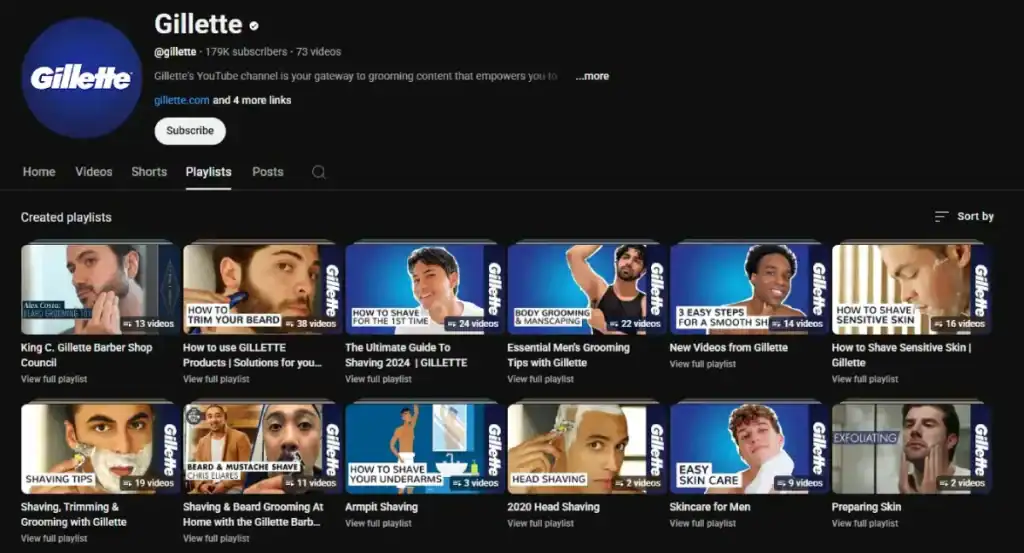
YouTube remains the only platform where video acts as a long-term compound asset.
Because it is the world’s second-largest search engine, every video you post must be treated as a landing page.
In early 2026, we’ve seen a massive shift toward AV1 Codec adoption. This enables 4K-quality at significantly lower bitrates, which is essential for mobile users in regions with fluctuating connectivity.
If you aren’t optimising your visual content for the YouTube “Shorts-to-Long” funnel, you are missing the most potent discovery loop available.
The “Short” acts as the hook; the long-form video acts as the conversion tool.
Reels and the “Dopamine-to-Dollar” Bridge
Instagram Reels and TikTok have changed the B2B lead generation game. The “Rare Attribute” here is the 3-second Hook-Rate.
If you don’t stop the scroll within 120 frames, your customer’s retrieval cost skyrockets. We use these platforms to build “Micro-Authority.”
It’s about being seen enough times with high-value snippets that when the user finally searches for a solution on Google, your Inkbot Design brand name triggers a “familiarity heuristic.”
B2B Growth and Lead Qualification
B2B video can reduce the sales cycle. I once audited a client who was spending 40 hours a week on “Discovery Calls” that went nowhere.
We replaced the first half of their sales pitch with a 12-minute, high-production “Solution Architecture” video.
The results?
- Lead Quality: Only people who watched the whole video booked a call.
- Sales Velocity: Calls moved from “What do you do?” to “How do we start?”
- Revenue: They saw a 30% increase in closing rates because the video handled the heavy lifting of education.
The 2026 Technical Standard: AV1, HDR, and Mobile Efficiency
The backbone of video delivery in 2026 is the AV1 Codec. If your video assets are still relying solely on legacy H.264 or even HEVC, you are sacrificing up to 50% in bandwidth efficiency.
For a B2B buyer researching on a mobile device via LinkedIn, this is the difference between an instant-play experience and a 3-second buffering delay—the latter of which results in a 40% drop-off rate.
Why AV1 is Non-Negotiable:
- Bandwidth Savings: AV1 provides the same visual fidelity at 30% lower bitrates than HEVC.
- FGS (Film Grain Synthesis): Premium B2B “Brand Films” often use cinematic grain. AV1’s FGS technology strips the grain during encoding and resynthesizes it on the viewer’s device, significantly reducing file size without losing that professional “look.”
- Mobile-First HDR: Using HDR10+, you can deliver high-dynamic-range content that adapts scene-by-scene to the specific smartphone display your prospect is using, ensuring your product demos look vivid regardless of hardware.
For legacy devices that lack hardware support, we recommend implementing the Dav1d software decoder or serving an HLS-streamed fallback to maintain Core Web Vitals compliance.
The Professional vs. Amateur Framework
If you want to compete in 2026, you must stop acting like a YouTuber and start acting like a brand publishing house.
| Feature | Amateur Approach (The “Wrong Way”) | Pro Approach (The “Right Way”) |
| Audio | Camera-top mic with echo. | XLR Condenser/Lav with -12db floor and 32-bit float recording. |
| Scripting | “Hey guys, welcome back to the channel!” | Immediate “Gap-Solution” hook within 2 seconds. |
| SEO | Generic title like “Our New Service.” | Semantic title based on “Entity + Intent” (e.g., “B2B SaaS Lead Gen Framework”). |
| Lighting | Ceiling lights or “natural” window light. | 3-point lighting (Key, Fill, Back) with high CRI (95+) LEDs. |
| CTA | “Like and Subscribe” at the end. | Contextual CTA linked to a request a quote page in the first third. |
Vertical-Specific Video Strategies
A one-size-fits-all approach is a recipe for mediocrity. Different sectors require different visual languages.
| Industry | Primary Video Format | Key Entity/Tool Focus | Conversion Goal |
| SaaS & Tech | Screen-share Deep Dives | Loom, Tavus, API Visuals | Free Trial / Demo |
| Manufacturing | Cinematic “Floor Tours” | 4K/60fps, HDR10+, Drones | RFQ (Request for Quote) |
| Prof. Services | Thought Leadership / Q&A | XLR Audio, High-CRI Lighting | Consultation Call |
| Healthcare/MedTech | Compliance & Ethics Guides | SOC2, HIPAA Visuals | Stakeholder Approval |
SaaS Strategy: Focus on “Speed to Value.” Show the interface immediately. Use AV1 encoding to ensure the dashboard looks crisp on mobile devices, preventing the “blurry text” syndrome that kills tech demos.
Manufacturing Strategy: Focus on “Scale and Reliability.” Use slow, high-bitrate shots of machinery. This builds “Technical Trust” that a simple PDF brochure cannot replicate.
The 2026 Technical Production Checklist
To meet the minimum quality threshold that Google and YouTube algorithms now use to determine “Authority,” your production must move beyond basic settings.
- Audio Dynamic Range: Use an XLR Condenser Microphone paired with a recorder capable of 32-bit float recording. This ensures that even if your subject whispers or shouts, the audio data is preserved without “clipping,” providing the high-fidelity signal that AI transcriptions require for 100% accuracy.
- Visual Entropy: Shoot in 4K at 10-bit colour depth. This isn’t just for the viewer; higher bit-depth provides more data for the YouTube algorithm’s “Visual AI” to recognise on-screen entities and products.
- Pattern Interrupts: Every 15–20 seconds, introduce a visual change (B-roll, text overlay, or camera angle change). This is a primary signal for Watch Time retention in 2026.
- Lighting Colour Rendering: Ensure your LEDs have a CRI (Colour Rendering Index) of 95+. Poor lighting creates “visual noise” that decreases the efficiency of video compression and makes your brand look amateur.
The Content Multiplier: From Pillar to Particle
To dominate the query fan-out, you shouldn’t create 50 unique videos. You should create one Pillar Video and atomise it.
- The Pillar (10-15 mins): A deep-dive YouTube video answering a primary industry question (e.g., “The Future of B2B Logistics”).
- The Fragments (30-60 secs): Extract 5–10 “Hooks” for Instagram Reels and YouTube Shorts.
- The Visual Transcripts: Convert the audio into a 1,500-word long-form article and 5 LinkedIn carousels.
- The SEO Boost: Use the VideoObject Schema to map these fragments back to the pillar, creating a “cluster” that signals total topical authority to search engines.
AI Hyper-Personalised Video (HPV)

In 2026, the “one-to-many” generic video message is basically dead.
Hyper-Personalised Video (HPV) has moved from a novelty to a core requirement for Account-Based Experience (ABX) strategies.
Tools like Tavus and Vidyard now allow sales teams to clone a human spokesperson and generate thousands of individualised videos where the subject’s mouth movements and audio perfectly match the recipient’s name, company, and specific pain points.
The “Human-Centric” Guardrail:
Despite AI’s efficiency, Nielsen reports show a “trust ceiling” for 100% synthetic content. To win in 2026, use a “Hybrid-Personalisation” workflow:
- AI for Variables: Use AI to personalise the intro and the specific data points (e.g., “Hi [Name], I noticed [Company] is struggling with [Metric]”).
- Human for Authority: Record the core value proposition as a real, unscripted human moment.
- Dynamic Call-to-Action: Embed a unique, personalised button that links directly to a Salesforce or HubSpot tracked landing page.
| Feature | AI-Only (Synthetic) | Hybrid (AI + Human) | Traditional (Manual) |
| Scalability | Infinite | High | Low |
| Trust Signal | Low (Uncanny Valley) | High (Authentic) | Very High |
| ROI (B2B) | High (Low Cost) | Extreme (High Closing) | Low (High Effort) |
You must follow strict editorial guidelines for video just as you do for text. This includes:
- Closed Captions (SRT): Crucial for “Silent Scrollers” on LinkedIn and for Google’s crawlers to understand your video’s “Entities.”
- Chapter Markers: Use these to map your content pillars within the YouTube progress bar.
- Thumbnail Psychology: A/B test your thumbnails. A 1% increase in Click-Through Rate (CTR) can lead to a 50% increase in total views over the video’s lifetime.
Navigating AI Disclosure and Trust
As of 2026, transparency is a legal and brand requirement. The EU AI Act and similar global regulations now mandate the disclosure of synthetic media.
- Watermarking: Use C2PA (Coalition for Content Provenance and Authenticity) standards to embed metadata in your videos, proving they are either “Human-Made” or “AI-Assisted.”
- The Trust Ceiling: While tools like Sintra AI can scale outreach, 92% of B2B buyers in 2026 prefer “Verified Human” content for high-ticket contracts (over £50k).
- Best Practice: Always include a small “AI-Enhanced” or “Synthetic Media” badge in the corner of HPV content to maintain integrity and avoid the “uncanny valley” backlash.
Dominating AI Overviews through Video AEO
By 2026, Google’s AI Overviews (formerly SGE) will have fundamentally changed how video content is discovered.
Traditional SEO—optimising for a blue link—is now secondary to Answer Engine Optimisation (AEO).
When a user asks a complex B2B question, the AI looks for “Entity-Dense” video content that provides a clear, structured answer it can summarise.
AEO Technical Requirements for Video:
- Schema.org Implementation: You must use the VideoObject and FAQPage structured data types. This tells the AI exactly what “Entity” (e.g., a specific SaaS product or legal framework) your video is discussing.
- Transcript-Rich Descriptions: Gone are the days of short YouTube descriptions. Your description should be a 500-word mini-blog that maps out the “knowledge graph” of the video.
- Chapterised Authority: Use YouTube’s Chapter Markers to segment your video into discrete “Answers.” Each chapter should align with a specific long-tail query (e.g., “How does [Product] integrate with [Tool]?”).
Example JSON-LD for Video SEO:
JSON

{

  "@context": "https://schema.org",

  "@type": "VideoObject",

  "name": "B2B Lead Generation Framework 2026",

  "description": "An exhaustive guide to using AV1-encoded video for B2B sales velocity.",

  "thumbnailUrl": "https://example.com/thumbnail.jpg",

  "uploadDate": "2026-02-11T08:00:00+00:00",

  "duration": "PT12M30S",

  "contentUrl": "https://example.com/video.mp4",

  "embedUrl": "https://www.youtube.com/embed/xyz123",

  "hasPart": [

    {

      "@type": "Clip",

      "name": "The AV1 Codec Advantage",

      "startOffset": 45,

      "endOffset": 180

    }

  ]

}
Measuring Video ROI: Beyond the View Count
In 2026, a “view” is a vanity metric. To prove the value of your video content strategy, you must track Sales Cycle Acceleration and Pipeline Contribution.
Use the following formula to determine the Video Lead Value (VLV):
VLV = (Total Pipeline Value × Video Influence %) / Total Video Leads
Critical Metrics to Monitor:
- Retention Rate at Key Value Props: If 70% of viewers drop off before you mention your unique selling point, your script is failing, regardless of total views.
- View-to-Meeting Conversion: The percentage of users who book a call via a HubSpot or Calendly link embedded directly in the video player.
- Entity Association Score: Using Google Search Console data to see if users are searching for your brand name alongside high-value industry terms after watching your YouTube series.
The Verdict
Video content marketing is the most powerful technical lever you can pull in 2026, but only if you treat it as a precision instrument rather than a blunt object.
You need the technical backbone of high-quality production, the semantic intelligence of SEO, and the edgy directness that cuts through the noise of AI-generated fluff.
Stop making “videos.” Start building a video-led authority engine that qualifies your leads and sells your services while you sleep.
Ready to stop being invisible?
Explore our full range of services or request a quote today to see how we can transform your B2B growth strategy.
Frequently Asked Questions
Why is video content marketing important for B2B in 2026?
B2B buyers are increasingly digital-native and prefer self-serve research. Video provides the fastest way to convey complex technical information and build trust without a sales rep. It effectively reduces the sales cycle by qualifying leads through educational content before they ever book a discovery call.
How has the YouTube algorithm changed for B2B in 2026?
The 2026 algorithm prioritises “Satisfaction Signals” and “Session Extension” over raw views. It uses multimodal AI to watch your video frame by frame, understanding the content rather than just the metadata. For B2B, this means deep-dive, high-authority content is rewarded with better distribution to qualified “Target Entities” (CEOs, CTOs).
Is the AV1 codec actually necessary for my business videos?
Yes. With over 80% of B2B research happening on mobile, AV1’s ability to reduce buffering by 45% and save 30% on bandwidth is critical for retaining high-intent leads. It ensures your videos play instantly in 4K quality even on mid-tier mobile devices.
What is HPV, and how should I use it for lead generation?
Hyper-Personalised Video (HPV) uses AI to create unique videos for every lead in your CRM. You should use it at the “Middle of Funnel” to follow up on high-value prospects, addressing them by name and sharing a screen share of their specific website or problem, which can increase sales velocity by up to 30%.
How do I optimise my video for Google’s AI Overviews?
Focus on Answer Engine Optimisation (AEO). This involves using a deep VideoObject Schema, providing a full transcript in the description, and using “Chapter Markers” that correspond to specific user questions. The AI needs to be able to “parse” your video into discrete answers.
Should I prioritise YouTube Shorts or Long-form content?
In 2026, you need a hybrid “Shorts-to-Long” funnel. Use YouTube Shorts (under 60s) as a “Discovery Magnet” to capture attention with a 2-second hook. Then, use pinned comments and end screens to drive those viewers to 8–15-minute long-form videos that build the actual authority needed to close a deal.
Can AI replace my human spokesperson in B2B videos?
While AI avatars from platforms like Sintra AI or Tavus are incredibly realistic, B2B buyers still crave “Human-Centric” trust signals for high-ticket items. Use AI for technical demos and personalisation, but keep your primary subject matter experts human to maintain high levels of brand trust.
What are the best metrics to track for video ROI in 2026?
Ignore “Views.” Instead, track “View-through to Lead” (VTL), “Average Watch Time per Buying Group,” and “Sales Cycle Acceleration.” Use integration tools to see if a prospect watched at least 70% of a solution video before booking a discovery call.
Do I need expensive equipment to succeed?
In 2026, “Medium” is the minimum. You don’t need a £50k cinema camera, but you do need professional audio, stable 3-point lighting, and a 4K sensor. Poor audio is the number one reason users abandon a video. Invest in a dedicated XLR microphone before you buy a new camera.
How often should I post video content?
Quality and consistency beat frequency. One high-value, technically perfect video per week is significantly better than five “filler” videos. The algorithm rewards “Watch Time” and “Repeat Viewership,” which are only achieved through high-quality, relevant content that respects the viewer’s time.
What is the difference between YouTube and Instagram Reels strategy?
YouTube is a library; Reels is a river. YouTube content is “Evergreen” and relies on search and long-term recommendations. Reels are “Discovery-based” and rely on immediate engagement and “Hook-Rate.” You should use Reels to tease your YouTube content and drive traffic to your long-form authority pieces.
Can I use AI to create my video marketing content?
Yes, but use it as a co-pilot, not the captain. Use AI to generate transcripts, identify “Viral” clips from long-form video, and perform basic colour grading. Avoid 100% AI-generated “Faceless” videos in B2B, as they lack the “Trust Signals” and human authority required to close high-ticket sales.
How do I measure the ROI of my video marketing?
Move beyond “Vanity Metrics” like views. Track “View-through to Conversion,” “Average Watch Time,” and “Sales Cycle Reduction.” Use unique tracking URLs in your video descriptions to see exactly how many leads are coming directly from your video assets to your contact page.
What are the common mistakes in B2B video marketing?
The most common mistake is being too corporate and boring. People buy from people. Another mistake is ignoring technical SEO aspects such as thumbnails, titles, and tags. Finally, many brands fail to include a clear, contextual Call to Action, leaving the viewer with nowhere to go.
How do I optimise video for mobile users?
Ensure your “Mobile-First” content, such as Reels, is shot in the 9:16 aspect ratio. For 16:9 YouTube content, ensure your text overlays and graphics are large enough to be legible on a small screen. Use HLS streaming for web-embedded videos to ensure fast loading times on slower mobile networks.
Why should I hire an agency for video content marketing?
An agency like Inkbot Design provides the intersection of technical SEO expertise and high-end creative direction. We ensure your video isn’t just “pretty,” but is strategically designed to rank, qualify leads, and ultimately drive revenue by aligning with your broader brand ecosystem.