What Is Data-Driven Marketing & Why Is It Important?
Data is the new oil, but unlike oil, it is renewable, infinitely scalable, and doesn’t pollute our planet.
Data, within marketing, is less of a tool and more of a foundation from which modern strategies can be built. It serves as a compass to guide decisions, a lens to sharpen customer needs into focus and an engine that powers personalisation.
Data-driven marketing isn’t a buzzword or passing trend; it’s a core shift in how we understand and connect with our audience.
And the numbers speak for themselves: Companies leveraging data-driven marketing are six times more likely to be profitable year-over-year.
Yet, despite this proven success, too many businesses cling to outdated, intuition-based approaches. They’re the equivalent of sailors navigating by the stars in an age of GPS.
It means stepping into the data revolution – to stop guessing and to start knowing, to go from the broad strokes of paint to the precise brushwork as we paint an image of our ideal customer.
Are you ready to tap into big data and change your marketing? Let’s dive in.
- Use customer data to inform decisions, enabling precise personalisation and higher profitability through tested, evidence-based strategies.
- Prioritise zero-party and first-party data with strong privacy practices to build trust and deliver hyper-relevant experiences.
- Invest in infrastructure and analytics—CDPs, clean rooms and AI—to turn clean data into predictive, actionable marketing insights.
The Essence of Data-Driven Marketing

Quite literally, data-driven marketing refers to making decisions based on what the number says and what we might assume it would say.
In Data-Driven Marketing, the customer’s actions, preferences, and behaviours are considered a form of conversation with customers. Yet, no words are involved, just a simple, clever idea.
Data-driven marketing is the use of customer data to inform your marketing activities. It’s collecting data, integrating it with data integration tools, analysing it, and utilising those insights to further enhance your marketing strategies.
Think of it this way: you gather data, learn from it, adjust your approach, and then collect more data to see how well those adjustments worked.
Does anybody remember how much marketing had to do with sheer creative genius? Those days are not gone, but they have been turbocharged thanks to data.
Today, we can test our creative ideas in real time, see what works, and double down on success. It is like a superpower – to be inside our customers’ minds.
Why Data-Driven Marketing Matters Now More Than Ever
Living in a world where consumers are bombarded with thousands of marketing messages daily, standing out today is more challenging than ever.
Data-driven marketing can give you an edge. It helps you slice through the din and convey messages that get across to your audience. This is not about being louder; it is about being smart.
The Building Blocks of Data-Driven Marketing
Throughout the past modules, we discussed what data-driven marketing is and why it matters. However, collection alone is simply the first step in any data-driven process.
The crucial point is to collect the right data and understand how to apply this information to develop your marketing strategies.
Types of Data: The Fuel for Your Marketing Engine
- Demographics can mean anything from age and gender to location and even income. Demographic data helps segment audiences and craft messages that resonate with specific groups.
- Behavioural data: It’s about action. It means showing behaviours such as customers’ purchasing habits, browsing patterns, and interactions with your brand. If you know what your customers do, you understand how they interact with your product or service.
- Psychographic Data: While information about ‘what’ helps you know your customer, psychographic data explains the ‘why’ of things-interests, values, and life choices. It will shed light on their motives and attitudes, helping you create messages that resonate with them emotionally.
- Transactional Data: This is the hard proof of customer involvement, showing what the customers bought, when they bought it and how much money they spent. You can identify trends in transactional data, optimise pricing strategies, or offer personalised recommendations.
The New Gold Standard: Zero-Party and First-Party Data
In the privacy-conscious landscape of 2026, the way we source information has undergone a radical shift. With the deprecation of third-party cookies, successful brands have pivoted toward Zero-Party Data—information that a customer intentionally and proactively shares with you.
Think of it as the difference between eavesdropping on a conversation (third-party) and being invited to the table (zero-party). When a user completes a preference centre profile, takes a style quiz on a site like Stitch Fix, or engages with an interactive poll, they are giving you a roadmap to their heart.
| Data Type | Definition | Example | Value in 2026 |
| Zero-Party | Data shared proactively by the user. | Quiz results, preference centres. | Extremely High (High Trust). |
| First-Party | Data collected from your own channels. | Purchase history, site clicks. | High (Behavioural Insight). |
| Second-Party | Another company’s first-party data. | Partnership data (e.g., airline + hotel). | Medium (Strategic). |
| Third-Party | Data from aggregators. | Demographic bundles from 3rd parties. | Low (Privacy risks/Inaccuracy). |
Scenario: A skincare brand uses a “Skin Type Quiz”. Instead of guessing that a user likes “anti-ageing” products based on their age (third-party), the user explicitly states they have “sensitive skin and prefer vegan ingredients.” This allows for Hyper-personalisation that feels helpful rather than creepy.
Building Your 2026 Data Infrastructure
A CRM is no longer enough to manage the complexity of the modern customer journey. To truly compete, your “Arsenal” must include tools that can handle real-time processing and privacy-safe collaboration.
1. Customer Data Platforms (CDPs) While a CRM manages sales relationships, a Customer Data Platform (CDP) like Segment, Tealium, or mParticle acts as the central nervous system for all your data. It ingests information from your website, mobile app, offline stores, and customer service logs to create a “Single Customer View.”
2. Data Clean Rooms As privacy regulations tighten, Data Clean Rooms (such as Snowflake or InfoSum) have become essential. These are secure environments where two parties (like a brand and a publisher) can join their data for analysis without either party seeing the other’s raw PII (Personally Identifiable Information). It allows you to see how your customers overlap with a specific audience without ever compromising their privacy.
3. Server-Side Tagging To ensure data accuracy in an age of ad-blockers and browser restrictions, shifting to server-side tracking via Google Tag Manager is a necessity. This moves the tracking load from the user’s browser to your server, giving you more control over what data is sent to third parties like Meta or Google.
Collecting Data Process: Gather Gold
Data gathering is like panning for gold-you have to know where the nuggets of value are and be prepared with appropriate tools to extract those nuggets.
Here’s how to efficiently gather the data that fuels your marketing efforts:
- Identify your data sources: Data may be amassed from various sources, such as website analytics, social media networks, customer surveys, and purchase history. Each touchpoint will provide a different view of audience behaviour and preferences.
- Establish Collection Methodologies: Depending on your requirements, this could range from adding tracking codes to your website to installing a full-fledged CRM system. The important thing is that the methods you adopt must be robust and scalable.
- Ensure Data Quality: ‘Garbage in, garbage out’ is especially apt in data-driven marketing. Regularly audit and clean your data for relevance, accuracy, and consistency.
- Be compliant: In this data-driven world, one must comply with regulations such as GDPR and other data protection laws. Ensure that data collection, storage, and use are always ethical and transparent.
By following these steps and using the right tools, you won’t just gather meaningful data; you will unlock actionable insights that transform your marketing strategy into a targeted, efficient, and effective one.
Turning Data into Insights: The Analytics Advantage
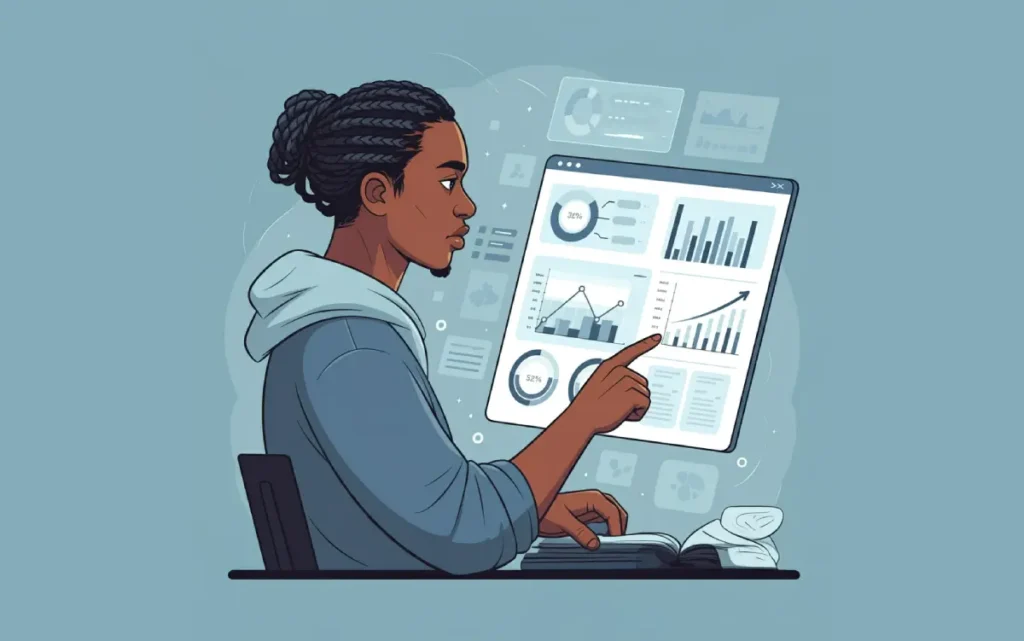
Having data is one thing; understanding it’s another. This is where analytics examines data to conclude the information contained.
From Prediction to Prescription: The AI Evolution
In 2026, we have moved beyond simply asking “What will happen?” to “How can we make it happen?”
- Predictive Analytics uses machine learning to forecast future behaviour. For example, using Salesforce Einstein, a B2B company can assign a “Propensity to Buy” score to every lead, allowing the sales team to focus only on the top 10% most likely to convert.
- Prescriptive Analytics takes it a step further. It suggests the exact creative, offer, and channel to use for a specific individual.
Example: An e-commerce brand notices a segment of customers who haven’t purchased in 30 days. The prescriptive model doesn’t just suggest a “We miss you” email; it identifies that this specific group responds best to SMS offers on Tuesday mornings and automatically triggers a 10% discount code for the specific category they last browsed.
Key Metrics to Track: Your Marketing Dashboard
- Customer Acquisition Cost (CAC)
- Customer Lifetime Value (CLV)
- Conversion Rates
- Engagement Rates
- Return on Investment
From Data to Action: Making Sense of the Numbers
Gathering and analysing data isn’t enough; one needs to act on it. Here’s how:
- Find Trends and Patterns: Identify what recurs in your data.
- Segment Your Audience: Group customers based on shared characteristics.
- Personalise Your Approach: Incorporate insights into your marketing messages.
- Optimise Your Channels: Focus on what works best for you and fix the rest.
- Future Behaviour Prediction: Use past trends to predict future behaviour.
Implementing Data-Driven Marketing: A Step-by-Step Guide
Ready to start applying data-driven marketing? Here’s a straightforward roadmap to guide you step by step.
Step 1: Define Your Goals
First, clearly define what you want to attain.
Do you want to improve sales, enhance customer retention, or increase engagement?
The more specific and measurable your goals are, the easier it will be to monitor your progress and make necessary adjustments in your strategies.
Instead of something as vague as “more sales,” make a goal like “increase sales 15% over the next quarter.”
Step 2: Identify your data requirements.
Once you have set your objectives, identify the data that will make them a reality.
One may easily get drowned in data, but zoom in on what is most relevant to your goals.
For instance, if your objective is to retain more customers, you’ll want data regarding customer behaviour, transaction history, and feedback on other metrics.
Step 3: Set Up Your Data Infrastructure
You will need proper infrastructure for efficient data collection and analysis.
This may mean upgrading your existing systems and adding new components, such as CRM platforms, analytics tools, and automation software.
Ensuring a robust data infrastructure is a solid foundation for turning raw data into usable insights.
You must also consider scalability issues: your system needs to grow as your data grows.
Step 4: Collect and Preprocess Your Data
Active data collection can come from various sources, such as website analytics, social media, email campaigns, or direct customer interactions.
However, collecting is half the process. You need to clean and prepare the data. Inaccurate or inconsistent data leads to wrong inferences. Cleansing is a frequent process to maintain quality and accuracy.
Step 5: Analyse and Interpret
With clean data, the next step is analysis.
Break out your analytics tools and start digging patterns, trends, and insights from a magical land. Here, deciphering these will lead you to understand customer behaviours, identify opportunities for improvement, and highlight potential growth areas.
Tracking which campaigns drive the most conversions or seeing where customers drop off is crucial in making informed decisions.
To help visualise and organise this information, using free Power BI templates can make analysis more straightforward and actionable.
Step 6: Develop Data-Driven Strategies
Based on your analysis, you would develop marketing strategies that included these new insights.
Or you can further personalise content, better optimise the customer journey, and target better, or even focus on different audience segments.
In this way, your marketing will be data-driven and strategy-based, grounded in real-world evidence, not assumption-based.
Step 7: Execution and Test
Now, go live with your plans. However, the implementation is not the last step.
Always test different aspects of your campaigns to see precisely what works with your audience.
That’s where A/B testing can be beneficial, as it helps you identify which tactics, messages, and channels work. Testing will also enable you to course-correct quickly should something not work as planned.
Step 8: Monitoring and Adjusting
Ongoing monitoring keeps you ahead of the performance curve. Watch your key metrics closely and be flexible.
Be prepared to adjust your strategies based on the data, doubling down on successful tactics or adjusting underperforming elements.
Data-driven marketing is not set-and-forget; it is an ever-evolving process in which one continuously adapts to achieve optimal efficiency.
This roadmap will help you integrate data-driven marketing into your core strategy while ensuring that decisions are led by honest, actionable insights that drive measurable results.
The Benefits of Data-Driven Marketing: Why It’s Worth the Effort

By now, you must be thinking this is a lot of work. And you are right; it is. However, the payoff can be huge. Let’s look at some of the key benefits that make it all worth your while:
Improved ROI: Get More Out of Your Marketing Budget
Data-driven marketing is all about harnessing resources where they can be most effective. Weeding out those missteps, producing next to nothing and building on their successes enormously improves your ROI.
Instead of blowing money on misguided campaigns, the data essentially whips your strategy into shape, so every pound you spend is guaranteed to deliver the maximum value.
Improved Customer Experience: Meet Your Customers’ Needs with Precision
The more you understand your customers, the more targeted and personalised experiences you can create that talk directly to their specific preferences.
Personalisation of this nature fuels customer satisfaction and loyalty and, more importantly, increases retention rates.
You’re giving them targeted content to resonate better with your audience and transforming casual buyers into loyal advocates.
Increased Efficiency: Work Smarter, Not Harder
Data at your fingertips means that much of the guesswork is removed from the decision-making process.
You will make decisions faster and more informed, refining your marketing and saving you much irrecoverable time and resources.
You are not flying by the seat of your pants, making intuition-based or trial-and-error-based choices, but you are informed with solid evidence to support your decisions. In this way, it frees your team to invest in strategies that work.
Competitive Advantage: Stay Ahead of the Game
Businesses that are not reaping benefits from their data are falling fast behind. Conversely, when you implement data-driven marketing, you stand to outcompete your rivals who remain tethered to traditional or outdated approaches.
Data gives you a competitive advantage: it allows you to spot trends, respond to changes in the market, and stay flexible in a world that moves at breakneck speed.
Better Products, Superior Services: Innovate Through Insight
The insights you get from data-driven marketing don’t just stop with marketing strategies but can fuel innovation in your products and services.
By analysing customer feedback, behaviours, and trends, one can identify unmet needs, inform product development, and enhance service offerings.
Your business communicates effectively with customers and delivers the solutions they expect.
Overcoming Challenges in Data-Driven Marketing
Not everything is smooth sailing in data-driven marketing. Here’s how you can rise above some of the common challenges you might face:
Data Overload: Drowning in Numbers
With the world bringing so much data, one certainly gets overwhelmed by information. The key lies in focusing on the metrics that matter the most to your business goals. Quality will always win over quantity.
Skills Gap: Building Your Data Dream Team
Data-driven marketing skills differ from other marketing skills. You may have to retrain your staff or recruit professionals with data analysis experience.
Integration Issues: Breaking Down the Silos
For most organisations, the data is scattered among various departments and systems. Pulling them all together into a single, integrated view may be challenging, but it is vital for success.
Data Ethics Minefield: How to Address Privacy Concerns
With significant data comes great responsibility. Ensure you comply with data protection regulations and clearly explain how you’ll use their data.
Overcoming Resistance to Change: Winning over the Sceptics
Not everyone will necessarily be on board with a data-driven approach. You must sell the benefits and demonstrate early successes to gain buy-in across your organisation.
The Human Element: Governance and Literacy
The most advanced tech stack will fail if your organisation treats data as a “marketing thing” rather than a “business thing.”
Data Silos are the greatest enemy of the data-driven marketer. When your customer service data lives in a different tool than your email data, your marketing will inevitably feel disjointed. Solving this requires Data Governance—a set of rules for how data is collected, stored, and used across the entire company.
Cultivating Data Literacy You don’t need every marketer to be a data scientist, but you do need them to be “data-fluent.” This means:
- Understanding the difference between Correlation and Causation.
- Knowing which metrics (like CLV) drive long-term growth versus “vanity metrics” (like likes or impressions).
- Comfort with using visualisations in Tableau or Power BI to tell a story to stakeholders.
Case Studies: Data-Driven Marketing in Action

Now, let’s look at real-world examples of businesses that have excelled at data-driven marketing and achieved extraordinary success.
Netflix: King of Personalisation
Netflix pioneered personalisation by using users’ navigation history to recommend shows and movies tailored to their preferences. This improves their experience and plays a vital role in customer retention.
Analysing user behaviour-what they have watched, for how long they watched it, and what genres they prefer-Netflix constantly refines its recommendation algorithms.
It works so well that it’s estimated the strategy saves the company an astonishing $1 billion a year in reduced churn alone: They keep users satisfied and glued to the screen with personalised content.
Amazon: The Flag Bearer for Predictive Analytics
Amazon has set a benchmark in e-commerce predictive analytics.
This fabled product recommendation system effectively suggests items based on a customer’s history, including those browsed, purchased earlier, and even those added to the cart but not bought.
Using advanced algorithms to predict what customers are most likely to want next, Amazon mastered the science of cross-selling and upselling, driving significant additional revenue.
This data-driven marketing strategy, however, drives sales and makes shopping even more convenient and personalised.
Spotify: Creating the Soundtrack for Your Life
Spotify’s use of data-driven marketing epitomises personalisation.
The most striking feature is perhaps the “Discover Weekly” playlist, which renews itself every week with a fresh selection of songs compiled by curators based on a particular listener’s tastes.
It analysed millions of data points from songs users listened to, how much time they spent on each track, and even which ones they skipped, to build a deep understanding of users’ music preferences.
This hyper-personalisation keeps users fascinated and eager to discover new music, driving a superior customer experience and loyalty.
Starbucks: Brewing Up Customer Loyalty with Data
Starbucks nailed data-driven marketing through its mobile app and loyalty program.
By analysing customer purchase and preference data in the application, Starbucks can send personalised offers that appeal to each customer’s taste and habits.
Whether offering a discount on a favourite drink or suggesting new products based on past orders, Starbucks’ use of data increases customer engagement, drives sales, and builds loyalty.
This directed method also allows Starbucks to tailor its marketing to deliver offers that customers are more likely to act on.
The North Face: Generative Discovery
In 2025-2026, The North Face revolutionised the shopping experience by moving away from traditional filters (size, colour, price) toward a data-driven, natural-language discovery engine.
By integrating their product catalogue with an LLM (Large Language Model) and customer browsing data, they allowed users to ask complex questions like, “I’m hiking the Highlands in November; what gear do I need for a three-day trek?”.
The system didn’t just show jackets; it analysed weather data, historical trek difficulty, and the user’s past purchase size to recommend a complete, personalised kit. This data-driven approach saw a 20% increase in average order value compared to traditional site search.
The Future of Data-Driven Marketing: What’s Next?
And with ongoing technological change, the prospects of data-driven marketing are evolving. Watch for the following trends:
Artificial Intelligence and Machine Learning
AI and machine learning will take data analysis to the next level, providing even deeper insights and more accurate predictions.
Real-time Personalisation
With faster data processing, there should be more real-time personalisation and marketing messages that adapt on the fly based on user behaviour.
Voice Search and Smart Speakers
As voice-activated devices rise, marketers must rethink their approach to align with voice search and audio content.
Augmented and Virtual Reality
As these AR and VR technologies become mainstream, they will allow new dimensions for immersive data-driven marketing experiences.
Blockchain and Data Security
Blockchain technology will finally change how we collect, store, and utilise customer data, adding security and transparency.
Conclusion: Embracing the Data-Driven Future
Data-driven marketing isn’t a buzzword; it’s the way forward. Data will enable businesses to adopt effective, efficient, and personalised marketing strategies to make it happen.
But remember, data-driven marketing is about informing creativity with cold, complex numbers, not replacing it. The most successful marketers will be able to merge data-driven insights with creative storytelling.
Only those businesses that can convert this data into actionable insights and these insights further into sublime customer experiences will continue to win in a progressively digitised world. So, would you join this data-driven marketing revolution?
FAQs: Your Data-Driven Marketing Questions Answered
How do I measure ROI in a cookieless world?
In 2026, we rely on Marketing Mix Modelling (MMM) and Incrementality Testing rather than simple click-tracking. By running “lift studies” (comparing a group shown ads vs. a control group), you can determine the true incremental value of your spend without tracking every individual user across the web.
What is the difference between a CRM and a CDP?
A CRM (Customer Relationship Management) is built for sales and manual entry, focusing on individual interactions. A CDP (Customer Data Platform) is built for marketing and automation, ingesting vast amounts of technical data from every touchpoint to create a unified profile in real-time.
Is data-driven marketing still effective in light of GDPR and other privacy laws?
Yes—in fact, it’s more effective. By focusing on Zero-Party Data and explicit consent, you build a foundation of trust. Customers in 2026 are more willing to share data with brands they trust in exchange for genuine value and better experiences.
What is ‘Synthetic Data’ and should I use it?
Synthetic Data is artificially generated data that mirrors the statistical properties of real data without containing any real personal information. It is incredibly useful for training machine learning models or testing new strategies in a 100% privacy-safe environment.
How do I start if I have a small budget?
Focus on “Small Data.” Master your GA4 insights and focus on one specific part of the funnel—like reducing basket abandonment. You don’t need a million-pound CDP to start making decisions based on evidence rather than intuition.
Does it help in customer retention?
Most definitely! You will know your customers, their behaviour, and their preferences; thus, you can add more personal touches that bring them back.
What are some of the common mistakes in data-driven marketing?
Common missteps include focusing on the wrong metrics, disregarding poor data quality, and failing to act on insights.
How will I know if my data-driven marketing effort was successful?
Monitor key performance indicators that match your business goals. Examples are return on investment, conversion rate and customer lifetime value.
Can one have too much data?
Yes, a thing known as data overload. Focus on collecting and analysing information that is directly relevant to your marketing goals at all times.
Where can we start with data-driven marketing when the budget is tight?
Start using free tools such as Google Analytics, focus on just one or two key metrics, and build out the data-driven work incrementally based on the proof of results.