Circular Branding: How to Build for a Reuse-First Economy
The linear economy is a graveyard for brand equity.
You extract resources, create a product, and the customer uses it once, then discards it.
From a purely commercial standpoint, that is madness. You are effectively designing your product—and by extension, your brand—to be garbage.
For decades, we have accepted the “take-make-waste” model as the default. But the market is shifting.
We are witnessing a fundamental shift where access takes precedence over ownership, and longevity prevails over planned obsolescence. This isn’t just about saving the turtles; it is about saving your margins.
If your brand strategy ends the moment the cash register opens, you are leaving money on the table. Circular branding is the antidote to the disposable economy.
It is about designing a system where your products, packaging, and brand narrative form a loop of value, rather than a one-way trip to a landfill.
Here is the uncomfortable truth: if you are not planning for the second, third, and fourth life of your product, someone else is. And they will take your market share while they do it.
- Design products and packaging for multiple lives, prioritising repairability, durability, and separability to close material loops.
- Shift messaging from ownership to access, promoting service models and ongoing relationships rather than one‑time sales.
- Use material honesty and industrial transparency in design to build trust and communicate true circular credentials.
- Brand the return journey and digital product passports, making reverse logistics a celebrated, seamless part of the user experience.
What is Circular Branding?
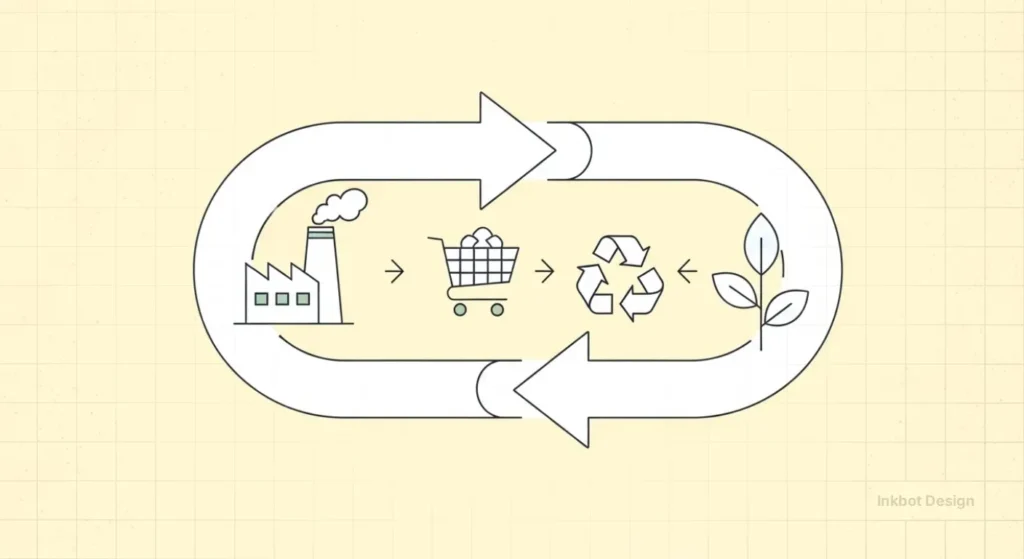
Circular branding is the strategic integration of circular economy principles—eliminating waste, circulating products and materials, and regenerating nature—into a business’s core identity and communication.
It is not just “green marketing.” Green marketing is putting a leaf icon on a plastic bottle. Circular branding is designing a bottle that never needs to be thrown away. It shifts the narrative from consumption to stewardship.
The Core Components:
- Durability: Designing assets and narratives that withstand the test of time (and trends).
- Service-Over-Product: Positioning the brand as a provider of utility, not just physical goods (e.g., repair, lease, resell).
- Transparency: Radical honesty about materials, sourcing, and the end-of-life journey of the product.
The Economics of Loops vs. Lines
Most businesses operate on a straight line. They buy cheap materials, sell them at a markup, and wash their hands of the result. But the cost of customer acquisition is skyrocketing. Keeping a customer in a “loop” is significantly cheaper than constantly hunting for new ones.
According to the Ellen MacArthur Foundation, the circular economy offers a trillion-dollar opportunity by reducing material costs and creating new service models. When you design for circularity, you are essentially building a retention engine.
The “User” Shift
The first step in circular branding is a linguistic and psychological one. Stop calling people “consumers.” To consume means to destroy. If your goal is for the product to survive and return to you, they are “users.”
Users have a relationship with the product. Consumers just eat it up. When you brand for users, you design for engagement, maintenance, and upgradeability.
Debunking the Myth: “Circularity is Too Expensive”
There is a persistent myth that building a circular brand is a luxury reserved for high-end heritage companies. This is demonstrably false.
At Inkbot Design, we have observed that the cost of inaction is significantly higher. The linear model is vulnerable to supply chain shocks (as seen in 2021), raw material price volatility, and increasing regulation of waste.
Consider the cost of packaging.
In a linear model, you pay for packaging that is immediately discarded. It is a sunken cost. In a circular model (such as Loop by TerraCycle), packaging is considered an asset on your balance sheet.
You buy it once, and it generates value over hundreds of cycles. The initial CapEx is higher, but the OpEx per unit drops dramatically over time.
1. Branding the “Reverse Logistics” (The Return)
The most neglected touchpoint in modern business is the return. In a linear economy, a return is a failure. In a circular economy, a return is a feature.
How do you brand the act of returning a product? This requires a complete overhaul of your User Experience (UX) and visual identity.
The “End of Life” Narrative
You need to design the “goodbye” as carefully as the “hello.”
- Instructional Design: Does your product clearly state how it should be returned, repaired, or recycled? Or is that information buried in a 6-point font manual no one reads?
- Incentivisation: How do you reward the loop? IKEA implemented a “Buy Back & Resell” service, effectively turning their customers into suppliers. The branding here wasn’t apologetic; it was celebratory. “Sell it back to us” became a headline message, reinforcing the quality of their furniture.
Case Study: The Patagonia Worn Wear Programme
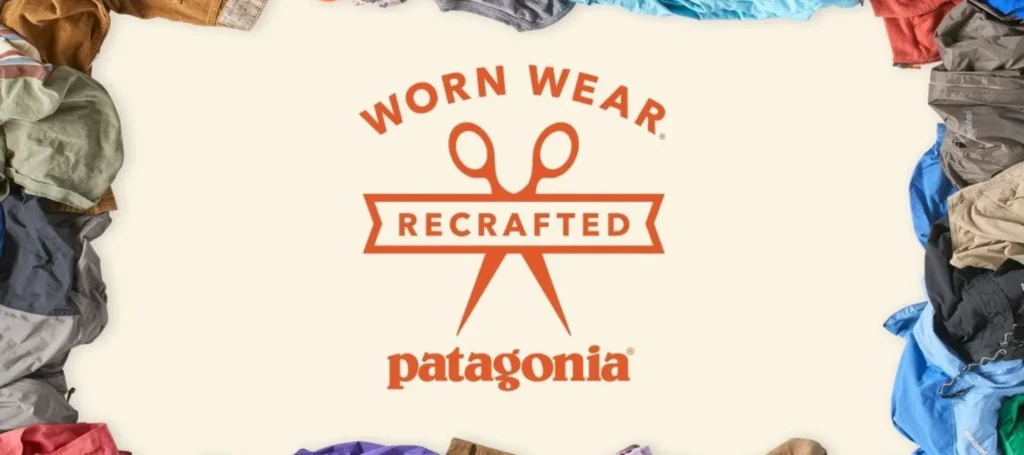
Patagonia didn’t just tell people to recycle; they built a sub-brand, Worn Wear, dedicated to repair and resale. They brand the scuffs and tears on their jackets as “stories,” not defects. This approach converts wear and tear into brand equity. It signals that the product is so good, it is worth fixing. That is ethical branding in action.
2. Materiality as a Brand Asset
In the digital age, we obsess over pixels. But circular branding demands a return to the physical. The materials you choose tell a story. If your brand promises “sustainability” but your product feels like cheap, brittle plastic, your brand is lying.
Honest Materials
Stop hiding the imperfections. Recycled materials often have inconsistent textures or colours. A linear brand tries to bleach and homogenise these out. A circular brand highlights them.
The “Raw” Aesthetic
We are seeing a rise in “industrial transparency.” Brands like Fairphone utilise translucent back covers to showcase their internal modular components. They want you to see the screws. They want you to know you can open it. The design language screams “repairable.”
If you are developing a brand identity, ask yourself: Does the visual language support the physical reality? If you are using unbleached cardboard, avoid applying a glossy, laminated sticker to it. Use soy-based ink stamps. Make the medium the message.
| The Linear Way (Amateur) | The Circular Way (Pro) |
| Material Hiding: Painting over recycled textures to look “new.” | Material Honesty: Celebrating the flecks, grain, and imperfections of recycled stock. |
| Adhesive Obsession: Glued components that break when opened. | Modular Assembly: Screws, clips, and visible fasteners for easy disassembly. |
| Static Packaging: Single-use boxes that end up in the bin. | Functional Packaging: Packaging that transforms into storage or return vessels. |
| Generic Icons: Standard “Recycling Symbol” tucked away at the bottom. | Custom Instructional Graphics: bold, brand-aligned guides on how to disassemble/return. |
3. The Service-Model Pivot
The ultimate form of circular branding is when there is no product to discard because the user never owned it in the first place. This is the “Product-as-a-Service” (PaaS) model.
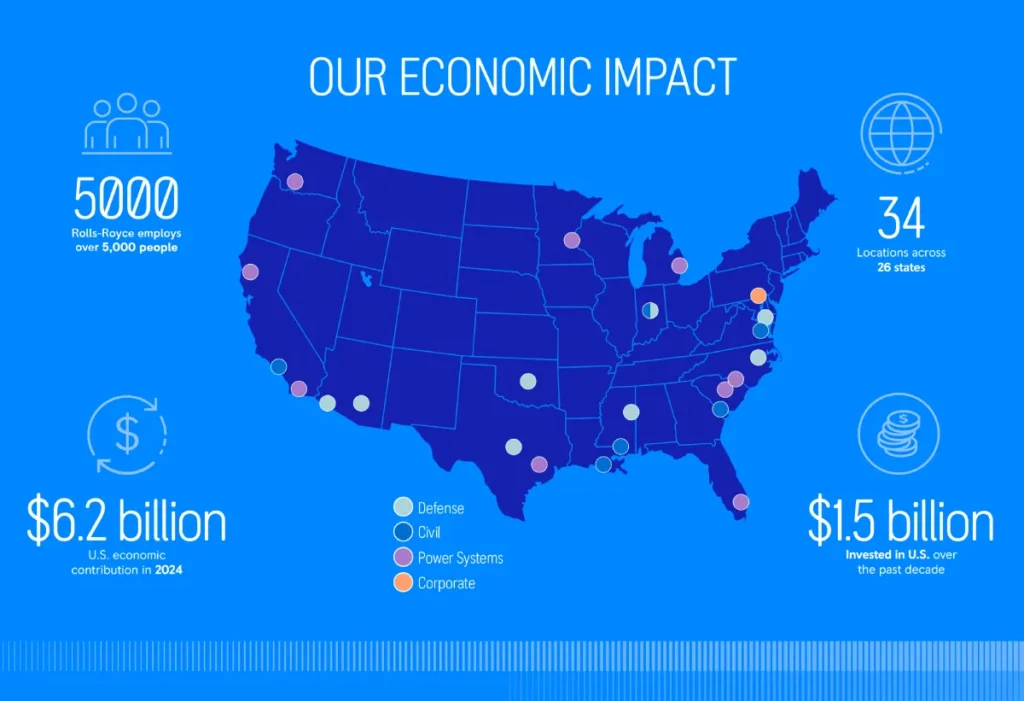
Rolls-Royce did this decades ago with their “Power by the Hour” for aircraft engines. Airlines don’t buy engines; they pay for uptime. Rolls-Royce retains ownership and maintenance responsibility.
For SMBs, this might involve leasing office furniture, subscription-based clothing services (like Rent the Runway), or tool libraries.
Branding Access, Not Ownership
This requires a shift in messaging. You aren’t selling “the best drill.” You are selling “the perfect hole, guaranteed.”
- Trust is the Product: If I am leasing something from you, I need to trust that you will support me if it breaks. Your branding must communicate reliability and support, not just flash and awe.
- Community Building: Service models require ongoing interaction. Your email marketing, customer support portals, and app interfaces become the primary brand touchpoints, more so than the physical object.
The Consultant’s Reality Check
I once audited a client in the consumer electronics space. They had splashed “Sustainability” all over their homepage—green palettes, leaf motifs, the works.
I asked them a simple question: “If I buy this speaker and the battery dies in two years, what happens?”
The CEO paused. “Well, they’d probably have to buy a new one. The unit is sealed for water resistance.”
That is not sustainability branding. That is a lie wrapped in a green CSS file. If your engineering doesn’t support the narrative, your branding is hollow. Consumers are becoming forensic. They will tear down your product (literally and metaphorically) to see if you walk the walk.
If you cannot make the product circular yet, be honest about the roadmap. “We are 40% of the way there” is a better brand story than a fake “We are 100% Green.”
Circular Design Auditor
Sustainable branding isn’t just about using recycled paper. It’s about the entire lifecycle. Audit your current (or planned) packaging below.
The State of Circular Branding in 2026
As we move through 2026, the regulatory landscape is tightening. The EU’s “Right to Repair” legislation and Digital Product Passports (DPP) are no longer theoretical—they are compliance requirements.
The Rise of Digital Product Passports
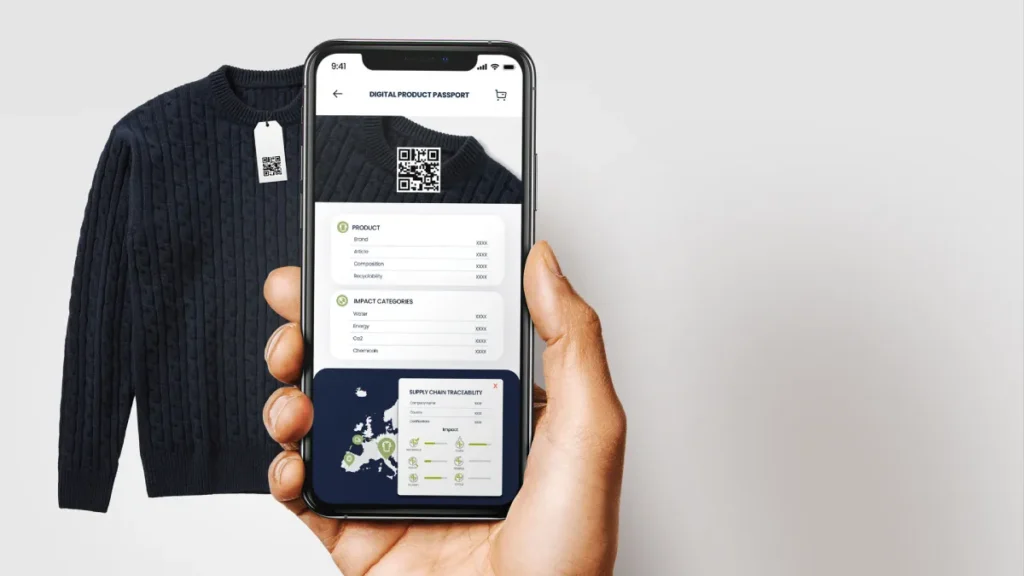
Brands are now embedding QR codes or NFC chips into products that reveal their entire lifecycle. Who made it? What is it made of? How do I fix it?
This is a massive branding opportunity. That digital passport is a canvas. It is a place to tell your supply chain story in deep, interactive detail.
- Fact: According to Gartner, by 2027, 40% of product-centric enterprises will utilise Digital Product Passports to enhance customer experience and facilitate sustainability verification.
- Action: Start designing your “digital twin” experience now. When a user scans your product, what do they see? A boring PDF manual, or an immersive brand experience?
Designing for Disassembly
If you want your brand to survive in a circular economy, you must design for death. Or rather, reincarnation.
Graphic designers and structural packaging designers must collaborate.
- Ink Usage: Heavy ink coverage makes paper harder to recycle. Inclusive design and eco-design overlap here—high contrast, low ink volume.
- Separability: Can the plastic window be separated from the cardboard box? If not, you have contaminated the recycling stream. Brand the “tear here” strip. Make the separation part of the unboxing ritual.
The “Patina” Effect
Leather, denim, and wood get better with age. Plastic gets worse.
Choose materials that age gracefully. Build a brand that celebrates the scratches, the fades, and the dents. This aligns with the concept of Wabi-Sabi, which finds beauty in imperfection. This is a powerful counter-narrative to the sterile perfection of Silicon Valley tech branding.
The Verdict
Circular branding is not a trend. It is an operational necessity for the resource-constrained future. The days of “churn and burn” commerce are numbered.
You have two choices:
- Cling to the linear model, fight for diminishing resources, and get regulated out of existence.
- Build a system where every product you sell eventually comes back to fuel your next sale.
The latter builds a fortress around your business. It turns customers into partners and waste into wealth. Stop designing for the shelf, and start designing for the cycle.
Is your brand identity ready for the circular economy?
If you are tired of a generic design that ignores the lifecycle of your product, we should talk. At Inkbot Design, we build brands that work in the real world, not just on a mood board.
Request a Quote for Your Brand Identity Project
Frequently Asked Questions (FAQ)
What is the difference between sustainable branding and circular branding?
Sustainable branding is a broad term that can refer to any eco-friendly initiative, often superficial. Circular branding specifically refers to designing business systems and identities that minimise waste and maximise resource utilisation through repair, reuse, and regeneration.
Is circular branding only for physical products?
No. Service-based businesses can adopt circular principles by optimising digital waste, choosing circular suppliers, and helping clients reduce their own footprints. However, the impact is most visible in manufacturing and retail sectors.
How does circular branding save money?
It reduces dependency on raw materials (which are subject to price volatility) and lowers customer acquisition costs by increasing retention. Service models (repair/resale) also open new revenue streams from the same inventory assets.
What is a Digital Product Passport (DPP)?
A DPP is a digital record (accessible via QR code or NFC) that provides comprehensive information about a product’s origin, materials, repairability, and disposal instructions. It is becoming a key tool for transparency in circular branding.
Can small businesses afford circular branding?
Yes. Simple shifts, such as designing packaging for reuse, offering repair services, or establishing a “buy-back” scheme for used items, can be implemented without requiring significant capital investment. It is often more cost-effective than constantly purchasing new single-use packaging.
What is the “Right to Repair”?
This is legislation that requires manufacturers to design products that can be easily repaired by consumers or independent shops, and to make parts/manuals available. Brands that proactively embrace this approach build trust; those that resist it appear hostile to users.
How do I stop circular branding from looking “messy” or “cheap”?
Embrace “industrial transparency.” Utilise clean typography and high-quality structural design to effectively showcase the recycled materials. The goal is to make the recycled nature look intentional and premium, not accidental.
What role does packaging play in circular branding?
Packaging should either be part of the product (reusable) or fully compatible with existing recycling streams (recoverable). It is the first physical touchpoint that signals your commitment to the circular model.
How do I communicate circularity without greenwashing?
Avoid vague words like “eco-friendly.” Be specific. State the percentage of recycled content, the expected lifespan, and the exact method of disposal. Radical transparency creates trust; platitudes create suspicion.
What is “reverse logistics” in branding?
Reverse logistics is the process of returning goods from customers to the seller or manufacturer. Branding this involves designing the user experience for returns, repairs, and recycling to be as positive and seamless as the initial purchase.