Branding ROI: How to Calculate Brand Value
Feelings do not pay the rent.
If you are spending money on brand awareness, you deserve to know exactly how much revenue that activity returns.
The problem is not that branding ROI is impossible to calculate; the problem is that most people are using the wrong maths.
They treat branding as a cost centre (like buying printer paper) rather than an asset class (like buying a rental property).
This guide is not about “likes” or “shares.” It is a forensic breakdown of how to calculate the financial return on your branding investment.
We will examine price premiums, customer acquisition efficiency, and the long-term compounding value of brand equity.
If you are looking for fluff, go elsewhere. If you’re interested in the numbers, read on.
- Measure branding as an asset, not a cost, attributing future earnings to brand equity.
- Use ROI = ((Brand Earnings − Brand Investment) / Brand Investment) × 100 to quantify returns.
- Attribute Brand Earnings via price premium or volume premium to isolate brand-driven profit.
- Evaluate over multi-year horizons (12, 24, 36 months) for accurate, compounding brand value.
What is Branding ROI?
Branding ROI (Return on Investment) is a financial metric that measures the efficiency and profitability of investments made in brand-building activities. It quantifies the degree to which brand equity contributes to financial gain, distinct from the utility of the product or service itself.
At its core, the calculation answers one question: How much extra profit did we generate because of who we are, rather than just what we sell?

The Core Equation
While there are nuances we will cover later, the fundamental logic follows the standard ROI structure:
ROI = ((Brand Earnings – Brand Investment) / Brand Investment) x 100
Here is the breakdown of that formula in plain English:
- Take your Brand Earnings (the extra money the brand made you).
- Subtract your Brand Investment (the money you spent building the brand).
- Divide that result by the Brand Investment.
- Multiply by 100 to get your percentage.
The three non-negotiable components you must identify are:
- Brand Investment: The total capital deployed. This includes agency fees for brand identity, media spend, trademarking costs, and the salaries of the team managing the brand.
- Brand Earnings: The specific portion of revenue attributable only to the brand. This is often calculated via the “Price Premium” (the amount by which you charge more than a generic competitor) or the “Volume Premium” (the rate at which you sell more quickly).
- Time Horizon: Branding is a long game. Calculating ROI over a 30-day period is statistical malpractice. We examine 12-, 24-, and 36-month cycles.
Brand ROI Projector
Should you invest in branding? Enter your current numbers to estimate the potential return on investment from a stronger brand identity.
Scenario: A strategic rebrand that improves pricing power and conversion by ~15%.
(Based on 3-5% of revenue) $0
*This projection assumes that branding improvements (trust, pricing power, conversion) yield the selected lift percentage over 12 months.
Invest in Your GrowthThe "Direct Answer": Why Most Calculations Fail
The reason you struggle to see ROI is likely because you are measuring Sales Activation, not Brand Building.
Les Binet and Peter Field, in their seminal work for the IPA (Institute of Practitioners in Advertising), identified a critical split. Sales activation (performance marketing, discounts, PPC) generates immediate spikes in revenue that decay quickly. Brand building generates weaker immediate results but creates a solid foundation of sales that gradually increases over time.
If you measure a brand campaign using the same KPI timeline as a Google Ads campaign, the brand will always look like a failure. But in reality, the Google Ad stops working the second you stop paying. The brand has consistently attracted organic traffic for years.
If you have to pay for every single click to get a sale, you do not have a brand; you have a vending machine. Branding ROI is measured by how much less you have to pay in advertising over time to get the same customer.
Deep Dive: The Three Pillars of Brand Value
To obtain a precise number, we must isolate the brand from the product. If you sell water, the "product value" is hydration. If you sell VOSS water, the "brand value" is the status signal that allows you to charge £3.00 for a bottle instead of £0.50.

Here is how we break that down financially.
1. The Price Premium (Margin Protection)
This is the cleanest measure of brand strength.
The Test: Compare your price point to the nearest unbranded or "weak brand" equivalent in your category.
The Formula:
(Your Price - Generic Price) x Total Units Sold = Brand Revenue
Here is how that works in practice:
- Take the price you charge for your product (Your Price).
- Subtract the price of a standard, unbranded competitor (Generic Price).
- Multiply that number by how many items you sold (Total Units Sold).
- The result is your Brand Revenue—the specific amount of money you made just because of your brand name.
Example:
If you sell a SaaS subscription for £100/month, and a functionally identical competitor sells theirs for £70/month, your Brand Premium is £30.
If you have 1,000 users, your brand is generating £30,000 per month purely on reputation. That is £360,000 a year. If you spent £50,000 on a rebrand three years ago, your ROI is astronomical.
This is why companies like Apple can charge £1,000 for a phone when the component cost is a fraction of that. The difference is the brand equity.
2. CAC Reduction (Efficiency)
Strong brands are cheaper to market. This is a fact supported by data from Nielsen and nearly every marketing science institute worldwide.
When your brand has high brand salience (mental availability), customers are more likely to click your ads (higher CTR) and convert faster (higher CR). This lowers your Cost Per Acquisition (CAC).
The Calculation:
Track your "Direct" traffic and "Brand Search" volume (people typing your name into Google) versus "Generic Search" (people typing "plumber near me").
- Low Brand Equity: High dependency on generic keywords (expensive).
- High Brand Equity: High volume of direct traffic (free).
If your CAC drops from £50 to £30 after a branding campaign, that £20 saving per customer is directly attributable to the brand investment.
3. Employee Retention (The Hidden ROI)
This is rarely discussed, but it is financially massive. A strong employer brand attracts better talent for less money and keeps them longer.
According to Employer Brand statistics, companies with strong employer brands see a 50% reduction in cost per hire.
If you hire 10 people a year, and recruitment fees + time usually cost you £10,000 per hire, saving 50% puts £50,000 back on the bottom line. That is pure ROI.
Methodologies: How to Calculate the Number
There are three ISO 10668-compliant approaches to brand valuation. You do not need to be a forensic accountant to use simplified versions of these.
Method A: The Cost-Based Approach
- Logic: The value of the brand is the sum of all costs incurred to build it.
- Formula: Design Fees + Trademark Legal Fees + Historical Advertising Spend + PR Costs.
- The Verdict: Rubbish. It tells you what you spent, not what it is worth. I only mention it so you know to avoid it. It is for insurance claims, not a growth strategy.
Method B: The Market-Based Approach
- Logic: What are similar brands selling for?
- Process: Review recent mergers and Acquisitions (M&A) in your sector. If a company with £1M revenue sold for £5M (a 5x multiple), and the average asset value is only 1x revenue, the remaining 4x is the "Brand and IP" value.
- The Verdict: Good for exits. If you are planning to sell your agency or software company, this is the number you need to know.
Method C: The Income-Based Approach (Royalty Relief)
- Logic: This is the gold standard. It asks: "If we didn't own this brand, how much would we have to pay to license it from someone else?"
- The Steps:
- Determine the standard royalty rate for your industry (e.g., a luxury fashion company might charge 10%, while an industrial manufacturing company might charge 2%).
- Apply this rate to your projected revenue.
- Discount future earnings to Net Present Value (NPV).
Simplified SMB Calculation:
If your turnover is £1,000,000 and the industry royalty rate for a brand of your calibre is 5%:
£1,000,000 x 0.05 = £50,000 annual brand value.
Here is the context for that calculation:
- £1,000,000 is your company's annual turnover.
- 0.05 represents a 5% Royalty Rate (the standard fee you might pay to license a brand in your industry).
- £50,000 is the resulting Annual Brand Value—the specific amount of revenue your brand name is theoretically worth on its own for that year.
If you invested £20,000 to build that brand, you are seeing a 150% return in year one alone.
The Consultant’s Reality Check
I once audited a client in the FinTech space. They were obsessed with "Performance Marketing ROI." They spent £100,000 a month on LinkedIn Ads and were terrified to turn them off.
Their "Brand" budget? Zero. Their logo looked like it was made on Microsoft Word in 1998 (it probably was).
I forced them to run a "Brand Lift" test. We turned off the performance ads for two weeks in a specific region. Sales dropped to near zero.
Observation: They didn't have a business; they had a pay-to-play scheme.
We reallocated 30% of their budget to building brand awareness and fixing their visual identity. Six months later, their "Direct Traffic" had tripled. Their Cost Per Lead (CPL) on the performance ads dropped by 40% because people finally recognised who they were before seeing the ad.
The Lesson: Branding ROI often manifests as efficiency in your other channels. If your Facebook ads are getting more expensive every month, it is usually because your brand equity is decaying.
The Metrics That Actually Matter (Vanity vs. Sanity)
Stop sending your CEO a report on how many "Likes" your Instagram post got. It is embarrassing. Use this table to report on metrics that actually impact the P&L (Profit and Loss).
| Metric | The Vanity Version (Ignore) | The Sanity Version (Track) | Why It Matters |
| Visibility | Total Impressions | Share of Search (SoS) | SoS correlates directly with market share. If you own 10% of the search volume, you likely own 10% of the market. |
| Loyalty | Number of Followers | Customer Lifetime Value (LTV) | A brand's job is to keep customers coming back. Increasing LTV is the most profitable activity you can undertake. |
| Perception | "Sentiment Analysis" | Price Elasticity | Can you raise prices by 10% without losing 10% of your customers? If yes, your brand is strong. |
| Acquisition | Clicks | Brand-Attributed CAC | The cost to acquire a customer who searched for your brand name vs. a generic term. |
The "Share of Search" Proxy
The IPA and Les Binet have demonstrated that Share of Search is a leading indicator for Share of Market.
If your Share of Search (the percentage of organic searches for your brand vs. competitors) rises, your market share tends to rise 6 months later. This is a predictive metric. If you want to demonstrate to your stakeholders that the branding work is effective before revenue increases, show them the search volume trends.
The State of Branding ROI in 2026

We are witnessing a significant shift in how algorithms approach brands. In the era of AI Search (SGE and ChatGPT), "Generic SEO" is on the decline.
If a user asks an AI, "What is the best running shoe?", the AI retrieves entities with high authority and trust signals. It does not just look for keywords; it looks for brands.
The 2026 Reality:
- The "Brand Tax" is increasing: Generic companies are being pushed out of search results entirely by AI summaries.
- Trust is the new currency: According to the Edelman Trust Barometer, trust is now the second most important factor influencing buying decisions, after price.
- Data Privacy impacts Tracking: With cookies disappearing, attribution is harder. This makes "Last Click" attribution useless. You must move to Marketing Mix Modelling (MMM) to see the true impact of brand spend.
If you are still relying on Google Analytics "Last Click" to measure branding, you are likely underestimating your ROI by 30-40%.
Real-World Evidence: The Airbnb Case Study
In 2019, Airbnb made a controversial move. They slashed their performance marketing spend (Google Ads) by hundreds of millions of dollars and shifted that budget into brand marketing and PR.
The critics screamed that revenue would collapse.
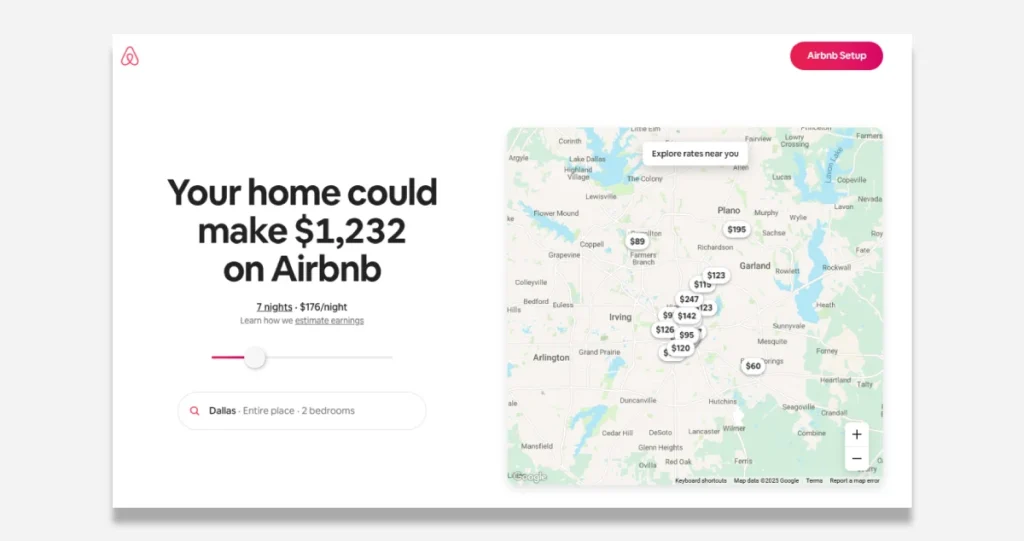
The Result:
- In the following years, Airbnb reported its most profitable quarters ever.
- They noted that 90% of their traffic became direct or unpaid.
- They stopped renting their customers from Google and started owning them.
This is the ultimate Branding ROI. By investing in the brand (the entity), they removed the "tax" they were paying to search engines. They reached a point of Self-Sustaining Salience.
You may not be Airbnb, but the principle holds for an SMB. If you rely 100% on paid ads, you are vulnerable. If you build a brand, you build an asset that generates returns while you sleep.
Debunking the Myths
Myth 1: "We are B2B, branding doesn't matter."
The Truth: B2B buyers are humans, not robots. The risk in B2B is personal. If a procurement manager buys the wrong software, they could lose their job. They buy the "Safe Brand" (IBM, Salesforce) to mitigate personal risk.
According to B2B Institute data, 95% of B2B buyers are not in the market at any given time. Branding is the only way to ensure that when they do enter the market, you are the first name they recall.
Myth 2: "A Logo is a Brand."
The Truth: A logo is a symbol. A brand is a reputation. Investing £500 in a logo from a contest site is not "branding"; it is decoration.
You cannot calculate ROI on a £500 logo because it has no strategic weight. Real ROI comes from a comprehensive brand identity system that unifies your messaging, visuals, and customer experience.
Myth 3: "ROI must be positive in Month 1."
The Truth: If you plant an apple tree and dig it up after a month to check for apples, you have killed the tree.
Brand building has a "Time Lag." The Ehrenberg-Bass Institute suggests that the effects of brand building are often not fully visible for 6 to 12 months. Adjust your expectations or fail.
How to Calculate Your ROI (Step-by-Step)
If you are ready to stop guessing, here is the roadmap:
- Establish the Baseline: Before you spend a penny on a rebrand or campaign, record your current Price Premium, CAC, and Direct Traffic volume.
- Define the Investment: Tally up the agency costs, media spend, and internal time.
- Execute the Strategy: Roll out the identity, the messaging, and the campaigns. Ensure consistency.
- Wait and Measure:
- 3 Months: Check "Share of Search" and "Direct Traffic." (Leading Indicators).
- 6 Months: Check CAC and Conversion Rates. (Efficiency Indicators).
- 12 Months: Check Price Elasticity and Revenue Growth. (Financial Indicators).
- Apply the Formula: Take the extra revenue generated (or costs saved) minus the investment, divided by the investment.
If you are struggling to define the initial strategy or need a partner who understands the difference between "pretty pictures" and "commercial strategy," you might want to request a quote from us. We don't just draw logos; we build assets.
The Verdict
Branding ROI is not a myth, and it is not magic. It is simple arithmetic obscured by lazy marketers who prefer vanity metrics to hard data.
You have two choices:
- Continue treating marketing as an expense, fighting for scraps in the "Generic" pit, competing solely on price.
- Invest in your brand equity, charge a premium, lower your acquisition costs, and build a moat that competitors cannot cross.
The maths is clear. The only variable left is your willingness to play the long game.
Next Step: Are you unsure if your current brand is an asset or a liability? Conduct a "Price Premium Test" this week. Compare your pricing to the cheapest competitor in your market. If you cannot justify a 20% premium, your brand is not working hard enough. If you need help fixing that, get in touch.
Frequently Asked Questions
What is the formula for branding ROI?
The basic formula is: (Brand Earnings - Brand Investment) / Brand Investment * 100. However, "Brand Earnings" must be isolated using metrics such as Price Premium (the amount customers pay above the market price for your brand) or Volume Premium (the increased market share resulting from brand preference).
How long does it take to see ROI from branding?
True branding ROI is a long-term play. While leading indicators, such as "Share of Search," may rise within 3-6 months, financial impacts, including reduced Customer Acquisition Cost (CAC) and increased Lifetime Value (LTV), typically mature between 12 and 24 months.
Can small businesses calculate branding ROI?
Yes. SMBs should focus on the "Price Premium" method. Compare your price to a generic competitor. The difference, multiplied by your sales volume, is a rough estimate of the revenue generated specifically by your brand's reputation.
What is the difference between brand awareness and branding ROI?
Brand awareness is a measure of visibility (do people know you exist?). Branding ROI is a measure of financial efficiency (did that visibility make money?). Awareness is a leading indicator; ROI is the financial result.
How does branding reduce Customer Acquisition Cost (CAC)?
Strong brands have higher "salience." When customers recognise a brand, they are more likely to click ads (higher CTR) and convert (higher CR). This efficiency lowers the cost required to acquire each new customer compared to unknown brands.
Why is Share of Search important for ROI?
Data from the IPA shows that Share of Search acts as a proxy for Market Share. If your brand is being searched for more frequently than competitors organically, it predicts future market share growth, serving as an early indicator of positive ROI.
Is brand equity considered an intangible asset?
Yes. In accounting terms, brand equity is an intangible asset often recorded as "Goodwill" on a balance sheet during an acquisition. It represents the value of the brand beyond its physical assets (inventory, equipment).
What is the 'Royalty Relief' method?
This is a valuation method used to calculate brand value. It estimates how much a company would have to pay in licensing fees to use its own brand name if it did not own it. This hypothetical cost saving is considered the brand's value.
Does employer branding have an ROI?
Absolutely. A strong employer brand reduces recruitment costs and improves retention. If you spend less on recruiters and keep staff longer, those savings are directly attributable to the ROI of your brand reputation.
Why do B2B companies need to measure branding ROI?
B2B sales cycles are long and rely on trust. Measuring ROI helps B2B companies understand how brand reputation influences "shortlisting." A strong brand ensures you are on the list before the sales team even makes a call.
Can I measure ROI if I don't sell online?
Yes. For offline businesses, track "Footfall attributable to Brand" (customers asking for you by name) vs. "Pass-by traffic." Also, monitor price elasticity—the ability to raise prices without losing offline sales volume is a key ROI metric.
What is the biggest mistake in calculating branding ROI?
The biggest mistake is "Short-termism." Attempting to measure the ROI of a rebrand within 30 days using "Last Click Attribution" will always show a negative result. You must use a longer time horizon (12+ months) and look at blended attribution.