Brand Evaluation: Guide to ISO 20671 Implementation
Implementing ISO 20671 is not a bureaucratic exercise for multinational corporations; it is the only way for small and medium businesses to stop burning cash on “brand-building” that fails to generate equity.
If you cannot measure your brand against this global standard, you are not building a market asset—you are simply subsidising your ad platform of choice.
Ignoring this framework leads to “equity erosion,” in which marketing spend fails to increase the business’s actual value.
McKinsey & Company’s research indicates that brands with high “Brand Power” scores deliver total shareholder returns that are 2.5x higher than those of their competitors.
Without a rigorous Brand value audit, you are flying blind in a 2026 market that demands radical transparency and data-backed proof of worth.
- ISO 20671 makes a brand a measurable financial asset; continuous evaluation prevents equity erosion and links marketing to the balance sheet.
- Use verifiable data, audited financial reports and consumer indicators; avoid vanity metrics to produce defensible valuations for M&A.
- ESG is a measurable Green Premium; verified sustainability and Scope 3 transparency increase brand value and reduce investor risk.
- SMBs must adopt continuous ISO 20671 compliance to protect trust equity, raise mental availability and justify marketing spend.
What Is Brand Evaluation?
Brand Evaluation is the formal process of measuring a brand’s value using a range of indicators, including financial performance, consumer behaviour, and brand strength, as defined by ISO 20671.
Key Components:
- Brand Strength: A measure of the brand’s ability to influence consumer preference and maintain market share over time.
- Brand Equity: The commercial value that derives from consumer perception of the brand name of a particular product or service, rather than from the product or service itself.
- Financial Indicators: Measurable data points such as price premiums, market share growth, and customer lifetime value that correlate with brand health.
ISO 20671 is the international standard for brand evaluation, providing a framework for measuring brand strength and equity using financial, behavioural, and consumer-based indicators.
Glossary of 2026 Brand Valuation Terms
- Asset Erosion: The loss of brand recognition due to inconsistent marketing or poor asset management.
- Category Entry Point (CEP): The situational trigger that leads a consumer to think of a brand.
- Equity Leakage: When marketing spend fails to build long-term memory structures, benefiting competitors instead.
- Linguistic Audit: Using AI to analyse the semantic relationship between a brand and its attributes in digital discourse.
- Mental Availability: The ease with which a brand comes to mind in a purchase situation.
- Synthetic Respondent: An AI-simulated consumer used to predict reactions to brand strategy changes.
The Financial Necessity of ISO 20671

ISO 20671 creates a bridge between marketing activity and the balance sheet. Before this standard existed, brand “value” was often a matter of guesswork.
Now, the International Organisation for Standardisation (ISO) provides a technical blueprint that forces businesses to account for their reputation as a tangible asset.
Adidas’s 2019 pivot serves as a warning.
Their Global Marketing VP, Simon Peel, documented that the company had over-invested in digital performance marketing, which drove short-term sales but neglected long-term brand equity.
By shifting back to a brand-centric evaluation model, they corrected a trajectory that was eroding their long-term market position.
Brand evaluation under ISO 20671 transforms a brand from a subjective marketing concept into a measurable financial asset. By integrating consumer behaviour with financial performance, businesses can identify specifically where their reputation is generating revenue and where marketing spend is being wasted on invisible assets that provide no long-term equity growth.
2024–2026 Benchmark Data & Industry Statistics
To understand why Brand Evaluation has become a non-negotiable in 2026, one needs only look at recent performance data across global markets.
We are no longer in an era where “branding” is an expense; it is the primary engine of margin protection.
- Trust as a Currency: 88% of consumers in 2025 stated that trust is as important as price and quality (Edelman Trust Barometer). For brands with a documented ISO strength score, this trust translates into a 28% reduction in bounce rate on digital platforms.
- The Cost of Inconsistency: 68% of businesses report that maintaining Brand Consistency across all channels contributes between 10% and 20% to their total revenue growth (Marketing LTB 2025).
- The Experience Gap: 52% of consumers will abandon a brand after just one negative experience (PwC 2025). This highlights why the ISO 20671 requirement for “annual review” is actually too slow—real-time monitoring of brand experience (BX) is now essential to protect equity.
37% of UK advertisers are shifting their budgets away from performance marketing (which hit a ceiling in 2024) and back into long-term brand building. This is a 164% increase compared to those sticking with a performance-only model (14%). The data indicates a “Great Correction” where businesses are reinvesting in the intangible assets that provide sustainable competitive advantage.
Brand Equity in Mergers and Acquisitions (M&A)
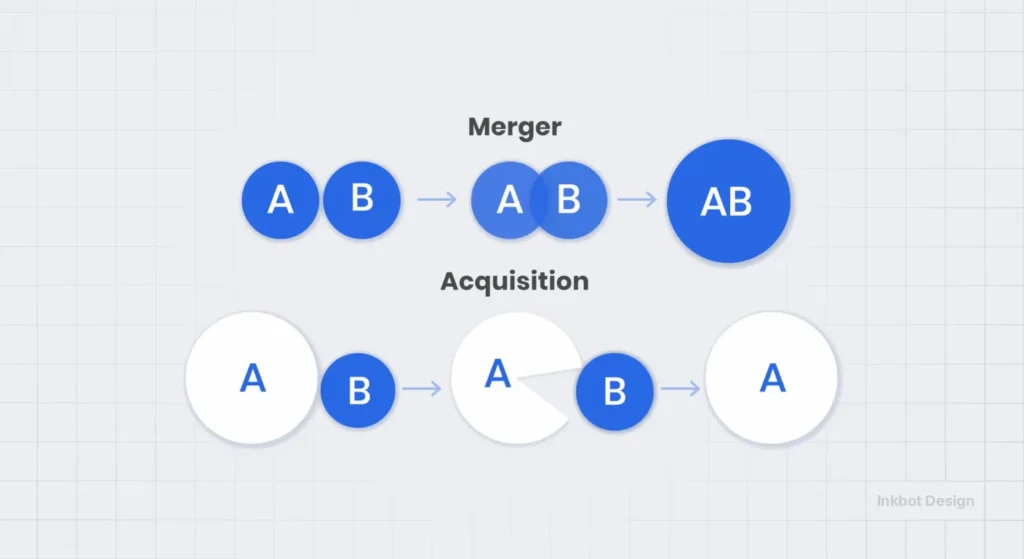
In the rebounding M&A market of 2026, which saw global deal values hit $4.7 trillion in 2025,
Brand Evaluation has moved from the footnotes to the front page of the due diligence report. Acquirers are no longer satisfied with “Goodwill” as a catch-all for intangible assets. They demand an ISO 10668 monetary valuation backed by an ISO 20671 strength analysis.
Why? Because in a “K-shaped” recovery, the gap between a brand that owns a category and a brand that merely exists in one has widened.
McKinsey & Company reports that “transformative” deals—those representing over 50% of the acquirer’s market cap—now account for 40% of megadeals. In these scenarios, the brand is often the primary asset being purchased.
If you are preparing a business for exit, a formal evaluation provides a “defensible valuation.” It proves to the buyer that your revenue is not just a result of temporary performance marketing spend but is anchored in Brand Strength.
Without this, buyers will apply a “Risk Discount,” assuming that your customers will disappear the moment you stop spending on ads.
Key M&A Evaluation Checklist:
- Distinctive Asset Audit: Are the brand’s visual and verbal cues legally protected and easily transferable?
- Mental Availability Score: Does the brand have “top-of-mind” status in its category, or is it reliant on search-term bidding?
- Customer Migration Risk: What percentage of the current value is tied to a specific founder or “key person” versus the brand itself?
- ESG Integrity: Does the target brand have “hidden liabilities” related to unsustainable practices that could damage the acquirer’s reputation?
Global deal values rose by 36% in 2025, yet overall deal volumes remained flat. This “K-shaped” market means megadeals are dominating, and in these high-stakes environments, the premium placed on brand scale and infrastructure has never been higher. Acquirers are increasingly using AI-driven due diligence to verify brand equity before signing a letter of intent.
Why the “Once-a-Year” Checkup is Obsolete
The belief that brand evaluation is a retrospective, annual financial audit is a dangerous relic of 20th-century business.
Waiting twelve months to assess your brand’s health in 2026 is business suicide. Markets move too fast for a post-mortem approach to provide any competitive advantage.
Research from the Ehrenberg-Bass Institute shows that “mental availability”—the likelihood of a brand coming to mind in a buying situation—fluctuates in response to continuous market signals.
ISO 20671 should be used as a continuous operational framework, not a dusty certificate on the wall. Brands must move toward “always-on” evaluation to capture shifts in consumer sentiment and competitor movements as they happen.
The “Green Premium”: ESG as a Brand Asset in 2026

The most significant shift in Brand Equity over the last 24 months is the formalisation of Environmental, Social, and Governance (ESG) metrics within the ISO 20671 framework.
In 2026, a brand’s sustainability reputation is not just a PR talking point; it is a measurable “price premium” driver.
Recent data from Morgan Stanley’s Institute for Sustainable Investing (2025) reveals that 88% of companies now view sustainability as a primary driver of long-term value.
This isn’t just about ethics—it’s about the “sustainable existence of the brand-owning entity,” a core goal of the ISO standard.
When performing a Brand value audit, you must now account for the “Green Premium”—the additional amount a consumer is willing to pay because of a brand’s documented ESG performance.
However, 2026 has also brought the era of “Radical Honesty.”
As greenwashing penalties have intensified across the UK and EU, the ISO 20671 standard provides a shield. By using the standard’s technical criteria, brands can move from “vague purpose” to “verified performance.”
Evaluation now includes “Scope 3 Decarbonisation” transparency as a brand strength indicator. If your supply chain is opaque, your brand strength score—and therefore your enterprise value—will be discounted by institutional investors.
ESG Indicators in ISO 20671 Brand Evaluation
| Indicator | Old Metric (Before 2024) | Modern Metric (2026) | Why It Matters for Brands |
| Environmental | Vague “eco-friendly” claims | Verified carbon footprint per product | Brands can charge higher prices if sustainability is proven. |
| Social | Occasional charity donations | Workforce diversity and equity index | Improves customer loyalty and helps retain employees. |
| Governance | Generic annual report statements | Real-time transparency score | Reduces perceived business risk for investors and partners. |
| Consumer | Basic sentiment surveys | Ethical alignment gap analysis | Shows the risk of backlash or values-driven boycotts. |
80% of companies can now directly measure the ROI of sustainability projects. In Europe, the perceived value creation of ESG has risen by 10 points in the last year alone.
This confirms that sustainability is now a core “pecuniary factor” (financial factor) that fiduciaries must consider when evaluating a brand’s health.
Implementing the 5-Step Evaluation Framework

1. Data Quality and Input Selection
ISO 20671 demands high-quality, transparent data. You cannot evaluate a brand using “vanity metrics” like social media likes or impressions.
You must use verifiable inputs, such as measuring brand value through audited financial reports and independent consumer panels.
Nielsen Norman Group (NN/g), the UX research consultancy, emphasises that data must be representative of the actual target audience to avoid skewed valuation.
Digital Clutter & The “Visual Pollution” Index
A new metric, the Visual Pollution Index (VPI), is introduced in the 2026 ISO 20671 standard. This measures the “noise” surrounding your brand in the digital environment.
With today’s infinite content, your Distinctive Assets are under constant attack from digital clutter.
High VPI occurs when your brand cues (colours, fonts, tone) are too similar to a thousand other AI-generated brands. This “Sea of Sameness” erodes brand strength by making it harder for consumers’ brains to “anchor” to your brand.
Evaluation now includes a “Distinctiveness Audit”: how much of your visual identity is actually unique versus “statistically average” AI-style design?
2. Analysis of Brand Strength
Brand strength is the “engine” of your valuation. It looks at internal factors (leadership, consistency) and external factors (loyalty, differentiation).
A study by Brand Finance, the brand valuation consultancy, shows that brand strength is a leading indicator of future financial performance. If your strength score drops, your financial value will inevitably follow.
3. Financial Impact Assessment
This step attaches a currency value to the brand’s influence. It calculates the “brand contribution”—the portion of revenue directly attributable to the brand name.
Statista’s 2025 market reports show that for leading global brands, this contribution can exceed 30% of total enterprise value.
4. Output and Reporting
The final report must be useful for stakeholders, not just designers. It needs to speak the language of the boardroom.
Use £ (GBP) and DD/MM/YYYY formatting to ensure clarity for UK-based financial directors. The goal is to provide a clear roadmap for where to invest next.
5. Review and Strategy Integration
Evaluation is useless if it doesn’t change behaviour.
Use the findings to refine your brand strategy and ensure your brand identity is actually performing the work the evaluation suggests it should.
Continuous brand evaluation allows for real-time strategic pivots that protect a company’s market share from aggressive competitors. ISO 20671 provides the technical criteria to ensure these evaluations are consistent, transparent, and legally defensible during business acquisitions or audits.
Implementing ISO 20671 for UK Small Businesses
A common misconception among UK entrepreneurs is that ISO 20671 is only for the FTSE 100.
The standard is arguably more important for Small and Medium Enterprises (SMBs), where marketing budgets are finite, and every pound must work twice as hard.
For a UK SMB, brand evaluation is the antidote to “marketing by intuition.” Instead of wondering if your £2,000-a-month social media retainer is actually building anything, the ISO framework forces you to measure Brand Performance against actual business outcomes.
How to Start on a Budget:
- Baseline Your Strength: Use a simple quarterly survey to measure your “Net Promoter Score” (NPS) and “Brand Recall” among your existing customer base. This fulfils the “Consumer-based indicators” requirement.
- Audit Your Assets: List your Distinctive Brand Assets (logo, specific hex codes, your “tone of voice”). Are they used consistently across your website, email signatures, and packaging? Consistency alone can lift revenue by 10-20%.
- Link to Finance: Calculate your “Price Premium.” If your closest competitor sells for £10 and you sell for £12, that £2 difference is the “Brand Contribution” per unit.
By documenting these metrics, an SMB transforms from a “risky small business” into a “valuable market asset.” This is critical when seeking bank loans or private investment.
British consumers currently trust businesses (63%) more than they trust influencers or politicians, according to SME Today. Tapping into this “Trust Equity” requires the structured approach that ISO 20671 provides.
The State of Brand Evaluation in 2026
The biggest shift in 2026 is the integration of Generative AI into brand sentiment analysis. Large-scale linguistic audits are replacing traditional surveys.
Tools like Canva’s Magic Studio and Adobe Firefly 3 have democratised design, but they have also created a “sea of sameness.”
In this environment, ISO 20671 helps brands determine whether their distinctive assets remain distinctive.
According to a 2025 Gartner report, 60% of CMOs now use AI-driven “Synthetic Respondents” to simulate brand evaluation scenarios before launching campaigns.
This allows for rapid testing of ISO 20671 indicators without the 6-month lead time of traditional research.
If your brand doesn’t have a structured evaluation framework, you cannot feed these AI systems the correct parameters to get accurate predictions.
AI-Driven Sentiment: The New Frontier of ISO 20671
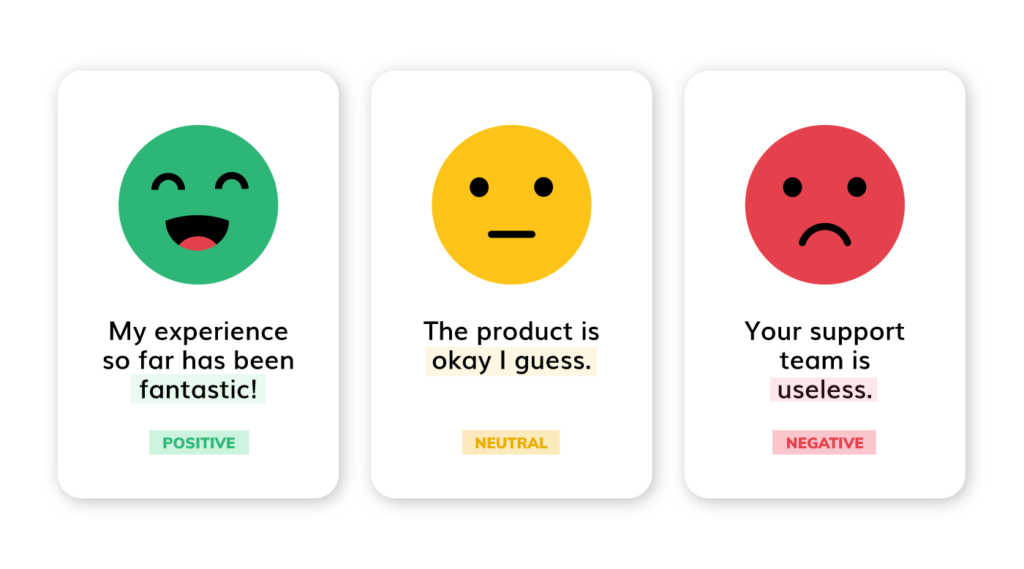
In 2026, the bedrock of ISO 20671 implementation has shifted from retrospective surveys to real-time linguistic audits. The International Standard requires “behavioural indicators,” but the method for capturing them has evolved.
We no longer rely solely on what consumers say in a controlled focus group; we analyse the semantic structures of their unprompted digital interactions.
Linguistic auditing uses Large Language Models (LLMs) to perform a “deep tissue” scan of a brand’s digital presence. This isn’t just counting “positive” or “negative” keywords.
Instead, AI-driven sentiment analysis measures brand salience and associative strength by analysing the proximity of your brand name to specific attributes across millions of data points.
If your brand is mentioned alongside “innovation” but within a context of “frustration” or “latency,” the AI identifies the cognitive dissonance that a human auditor might miss.
According to the AI in Branding Market Report 2026, this technology sector is expected to reach $6.45 billion by 2030, driven by the adoption of real-time brand analytics.
For a brand manager, this means the “Analysis of Brand Strength” (Step 2 of the framework) is now an always-on dashboard. By monitoring the “semantic distance” between your brand and its competitors, you can identify “equity leakage” as it happens.
For example, if a competitor’s new campaign starts to co-opt your brand’s primary colour or tone of voice, linguistic audits will flag the resulting consumer confusion before it shows up in your quarterly sales data.
Furthermore, these tools allow for “predictive sentiment” modelling.
By feeding current market signals into a Synthetic Respondent environment, companies can simulate how a potential product launch or PR statement will affect their ISO 20671 indicators.
This reduces the risk of “Equity Erosion” by allowing for strategic pivots in a sandbox environment before any real-world capital is deployed.
The AI market in branding has grown to $3.77 billion in 2026, with a 14.7% CAGR. The shift is driven by a 62% increase in CMOs tracking real-time brand awareness metrics, up from 42% in 2024. This data proves that brand evaluation is no longer a luxury but a standard operational requirement for survival in a data-saturated market.
The £50k Logo Mistake
In my work at Inkbot Design, I once audited a client who had spent £50,000 on a complete rebrand.
They had a beautiful new logo, a “bespoke” colour palette, and a high-end website. But six months later, their market share was dropping.
The problem? They had done zero brand evaluation.
They mistook “brand identity” for “brand value.” We ran an audit against ISO 20671 standards. We found that while the visuals were “edgy,” the brand’s “mental availability” had plummeted because the new identity had stripped away all the distinctive assets their long-term customers actually recognised.
They had literally paid £50,000 to become invisible.
The lesson is simple: never change your face until you’ve measured the value of your current one. If you aren’t auditing, you’re just guessing.
From Brand Vision to Brand Evaluation is the advanced sequel to his introductory work, designed to move beyond “marketing basics” and into the high-level implementation of branding strategy.
As an Amazon Partner, when you buy through our links, we may earn a commission.
Pro vs Amateur Brand Evaluation
| Technical Aspect | The Wrong Way (Amateur) | The Right Way (Pro) | Why It Matters |
| Data Source | Unverified social media metrics. | Audited financial and consumer data. | Prevents basing strategy on bot traffic or vanity. |
| Frequency | Once every 3–5 years or at sale. | Continuous or quarterly cycles. | Allows for rapid response to market shifts. |
| Standard | “Our own internal process.” | ISO 20671 Global Standard. | Ensures the valuation is defensible to banks/investors. |
| Focus | Visual aesthetics only. | Strength, Equity, and Finance. | Visuals are only a small part of the total brand value. |
| Reporting | A PDF of pretty pictures. | A data-backed financial report. | Directors need numbers, not just mood boards. |
The Verdict
Brand evaluation is the difference between a business that owns an asset and a business that owns a job.
ISO 20671 provides the only internationally recognised framework for ensuring your marketing spend is actually building something of value.
In 2026, the brands that win aren’t the ones with the biggest budgets; they are the ones with the most accurate data.
Stop treating your brand as a “feeling” and start treating it as a financial instrument. Use the ISO 20671 framework to audit your current position, identify your equity gaps, and move your marketing from a cost centre to a value driver.
Would you like to explore how Inkbot Design can audit your current brand strength?
Visit our Brand Strategy services to book a consultation or read our latest research on measuring brand value to see where you stand.
FAQ Section
What is the main purpose of ISO 20671?
ISO 20671 provides a standardised framework for the technical and consistent evaluation of brands. It ensures that brand valuation is based on transparent, verifiable data rather than subjective opinion, allowing businesses to measure brand strength and equity as tangible financial assets.
How does ISO 20671 differ from ISO 10668?
ISO 10668 focuses specifically on the monetary valuation of a brand for financial reporting or M&A. ISO 20671 is a broader standard for brand evaluation, focusing on the ongoing management, strength, and health of the brand to drive long-term value creation.
Why should an SMB care about brand evaluation?
Small businesses often waste significant portions of their budget on marketing that does not build long-term equity. Implementing ISO 20671 allows SMBs to quantify their reputation, making the business more attractive to investors and ensuring that every pound spent on branding increases the company’s total market value.
What are the three dimensions of brand evaluation?
The ISO 20671 standard evaluates brands across financial, behavioural, and consumer-based indicators. This holistic approach ensures that a brand’s value is not just a reflection of past sales, but also a predictor of future consumer loyalty and market resilience.
Can I perform a brand evaluation myself?
Internal teams can perform preliminary evaluations, but ISO 20671 recommends using independent, third-party auditors to ensure objectivity. Independent evaluations provide greater credibility to stakeholders, such as banks, investors, and potential buyers, during a business sale or merger.
How often should a brand be evaluated?
Modern market conditions in 2026 require at least an annual comprehensive evaluation, with quarterly “pulse” checks of brand-strength indicators. Continuous monitoring enables brands to respond to shifts in digital sentiment and competitor moves before they cause permanent damage to brand equity.
What is a “distinctive brand asset”?
Distinctive brand assets are non-brand-name elements—such as logos, colours, fonts, or jingles—that trigger immediate consumer recognition. ISO 20671 evaluation helps identify which of these assets are working and which should be protected during a rebranding process.
Is brand evaluation the same as a brand audit?
A brand audit is a checkup of your current assets and messaging, whereas brand evaluation is a formal measurement of value against a specific standard, such as ISO 20671. Evaluation provides the “score,” while an audit provides the “status report.”
How does brand evaluation affect business exit value?
Buyers pay a premium for brands with documented, measurable equity. Using ISO 20671 provides a defensible valuation that proves the brand name itself generates revenue, often allowing founders to command a much higher sale price than a business with no brand strength.
Is there a difference between being ISO 20671 “Certified” and “Compliant”?
Yes. In 2026, “Compliance” means you follow the standard’s framework and use its indicators to manage your brand. “Certification” involves a formal audit by an accredited body to prove you are doing so. For most SMBs, Compliance is the goal to drive value; Certification is a “badge of honour” used primarily for global procurement and investor confidence.