How to Run a Brand Discovery Workshop That Actually Works
Most brand discovery workshops are a waste of time — not because the concept is wrong, but because they’re run as tick-box exercises rather than diagnostic sessions.
Founders leave clutching sticky notes and a vague sense of alignment. Three months later, their designer is building to a brief that doesn’t reflect the actual business. The workshop failed before a logo was ever drawn.
A brand discovery workshop done properly is the single highest-leverage activity a business can invest in before commissioning brand work.
According to McKinsey & Company’s 2025 analysis of European marketing leaders, branding was cited as the number one priority for 2026 (ranked above AI adoption, budget management, and customer experience integration) by CMOs who view distinctiveness and a clear value proposition as their primary competitive differentiators. You don’t achieve either without rigorous discovery.
This guide covers the complete process: from pre-session preparation to post-session deliverable. Whether you’re working with a brand strategy agency or running discovery internally, the framework applies either way.
- Treat workshops as diagnostic sessions that surface stakeholder disagreement; facilitator must pressure-test assumptions, not smooth over differences.
- Send a pre-session survey one week before and run a five-competitor competitive audit to map strategic white space.
- Follow the six-part framework and write the one-page strategic brief in the room before participants leave.
- Deliver a synthesis report within 48 hours including a decision log, two personas, voice examples, and the positioning map.
- Reject consensus averaging; use market evidence, voted choices, and craft specific, citable positioning for humans and LLMs.
What Is a Brand Discovery Workshop?
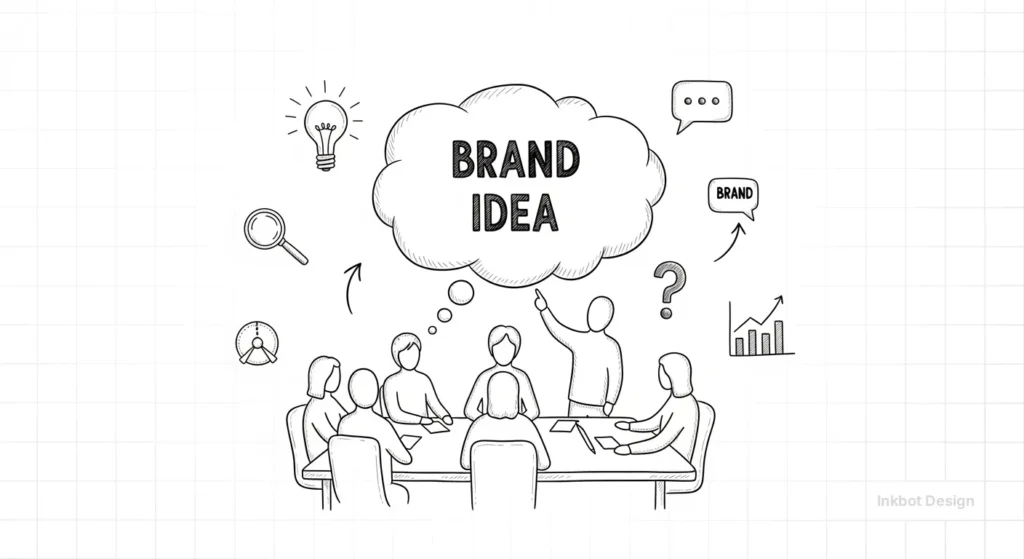
A brand discovery workshop is a structured facilitated session in which a business’s key stakeholders collaboratively surface brand values, audience positioning, competitive differentiation, and strategic direction before any visual identity work begins.
Key Components:
- Strategic alignment — surfacing where leadership agrees and, more usefully, where they don’t
- Audience definition — building specific, evidence-grounded profiles of who the brand serves and why those people choose it
- Competitive positioning — identifying the white space in the market the brand can credibly claim
A brand discovery workshop is a structured facilitated session in which a business’s key stakeholders collaboratively surface brand values, audience positioning, competitive differentiation, and strategic direction before any visual identity work begins.
Why Most Brand Discovery Workshops Fail
The failure isn’t procedural — it’s diagnostic. Workshops fail because facilitators treat them as consensus-building exercises when they are, in fact, conflict-surfacing exercises.
Consensus feels productive. Conflict is productive.
When a founder’s answer to “who is your ideal customer?” differs fundamentally from the head of sales’s answer, that gap isn’t a problem to smooth over. It’s the most important intelligence the workshop has generated.
A facilitator who papers over stakeholder disagreement with vague synthesis language — “we all want to serve ambitious businesses” — has produced a worthless brief.
A 2023 study published in the Journal of Brand Management by researchers Ruby Brus, Nicole Hartnett, Margaret Fulkner, and Carl Driesener of the Ehrenberg-Bass Institute for Marketing Science at the University of South Australia compared the intuitive judgements of 157 marketing professionals against the perceptions of 7,505 consumers across 405 brand elements.
The finding: marketers are deeply inaccurate in their assessments of their own brand’s distinctive assets. They routinely overvalue what they personally notice and undervalue what customers actually recognise in the market.
That research has a direct implication for workshop facilitation: stakeholder opinion is raw material, not brand intelligence. The facilitator’s job is to pressure-test it, not validate it.
The second failure mode is scope creep in the wrong direction. Teams spend ninety minutes debating mission statements and run out of time before reaching audience definition or competitive positioning.
A mission statement is an output of discovery, not an input. Getting one drafted on day one is not a win — it’s a sign the facilitation has lost the thread.
The third failure is documentation collapse. Workshops that produce summary reports with bullet points and no hierarchy create unusable briefs.
A designer handed a list of twenty adjectives — “innovative, trustworthy, bold, approachable, premium, fun” — has been given nothing actionable. Those words describe every brand and no brand simultaneously.
A brand discovery workshop that surfaces genuine stakeholder disagreement, pressure-tests assumptions with market evidence, and produces a hierarchical written brief with clear strategic choices is not a half-day event. It is a structured diagnostic that requires preparation, facilitation rigour, and a post-session synthesis process — and it is the highest-leverage investment a brand can make before commissioning any identity work.
The Pre-Workshop Brief: What to Do Before the Room Fills Up
Every hour of workshop time is worth three hours of preparation.
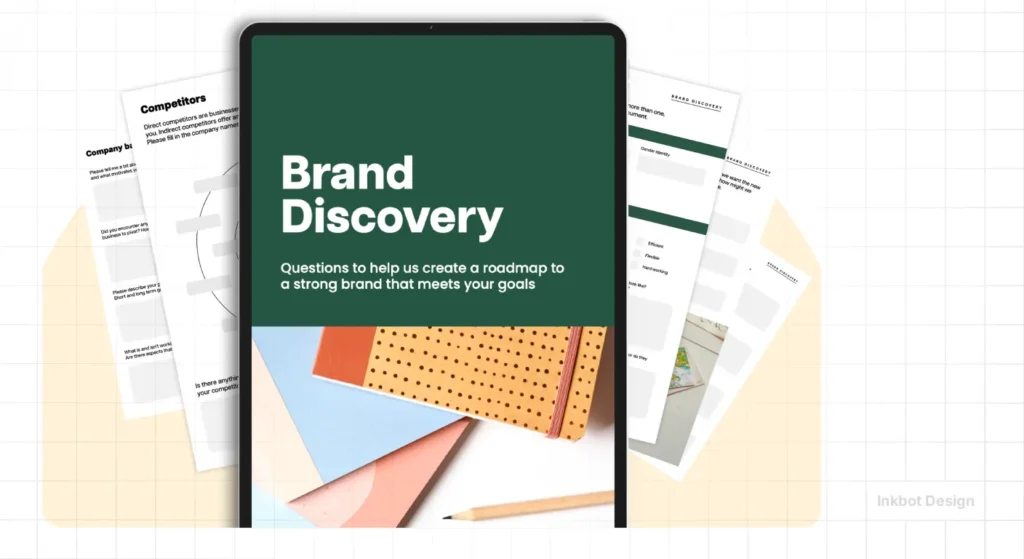
The pre-workshop brief — a structured document sent to all participants one week before the session — does three things: primes thinking, surfaces pre-existing assumptions, and creates productive conflict.
Designing the Pre-Session Survey
Send a structured questionnaire to every participant and request they complete it independently, without conferring.
Brand strategist Charlie Gall, writing for Toptal, recommends this approach specifically because independent answers surface agreement and disagreement that “often lead to the most interesting debates and discoveries” in the session itself.
The survey must cover six areas:
- Brand definition — “Describe the brand in three words. Describe what the brand is not in three words.”
- Audience clarity — “Name the one customer segment that, if you doubled it, would have the greatest impact on the business. Describe that person specifically.”
- Competitive positioning — “Name three competitors. For each, state one thing they do better than us and one thing we do better than them.”
- Brand promise — “Complete this sentence: When a customer chooses us over the alternative, they are choosing _____.”
- Brand ambition — “What does this brand look like in five years? What has to be true for that to happen?”
- Brand failure — “What is the most common reason a potential customer would choose not to work with or buy from us?”
That final question is the most valuable and the one most facilitators skip. Brand weaknesses surface more strategic intelligence than brand strengths because they reveal the gap between how the business sees itself and how the market actually evaluates it.
It is the question that tells you where the real brief work lies.
Running a Competitive Audit Before You Walk In
Before running a single session, conduct a visual and verbal audit of five direct competitors. Map their positioning across two axes: premium-to-value and functional-to-emotional.
The white space — where no competitor credibly sits — is your primary strategic finding. Walking in with this map changes the quality of every conversation that follows.
A useful internal benchmark for the audit: the Ehrenberg-Bass Institute for Marketing Science defines a distinctive brand asset as one that scores high on both fame (consumers recognise it) and uniqueness (consumers attribute it to one brand only).
Research by Ipsos and Jones Knowles Ritchie, analysing over 5,000 brand assets across 26,000 global consumers, found that only 15% of brand assets achieve true distinctiveness by that standard.
The competitive audit should identify which of your competitors’ assets genuinely reach that threshold — and which are assumed to be distinctive but aren’t. That gap is where your positioning opportunity lives.
The pre-workshop brief is not optional housekeeping. It is the mechanism by which the facilitator arrives in the room with intelligence rather than blank paper. Stakeholders who have answered six structured questions independently produce a workshop with genuine disagreement, real data, and actionable tension — the three ingredients every useful brand brief requires.
The Workshop Structure: A Six-Part Framework
A single-session brand discovery workshop runs between three and four hours, excluding breaks. Two-session formats over consecutive half-days produce better results for businesses with complex stakeholder landscapes or multiple product lines.
A single focused session is sufficient for most SMBs.
Part 1 — Brand Definition (30 Minutes)
Open with the pre-session survey outputs, not a blank canvas. Present the aggregated responses to the three-word brand description question on a shared screen. Map where stakeholders agreed and flag clearly where they diverged.
The first thirty minutes are not for generating new answers. They are for auditing existing ones.
Every minute spent on opinion generation that should have happened in advance is a minute lost to actual strategic work.
One specific exercise worth running here: ask each participant to name the brand’s single most important quality — the one that, if the brand lost it, would make it meaningfully worse.
The answers reveal actual brand equity, independent of aspirational language. They are almost always more specific and more defensible than anything a brainstorm produces.
Part 2 — Audience Deep Dive (45 Minutes)
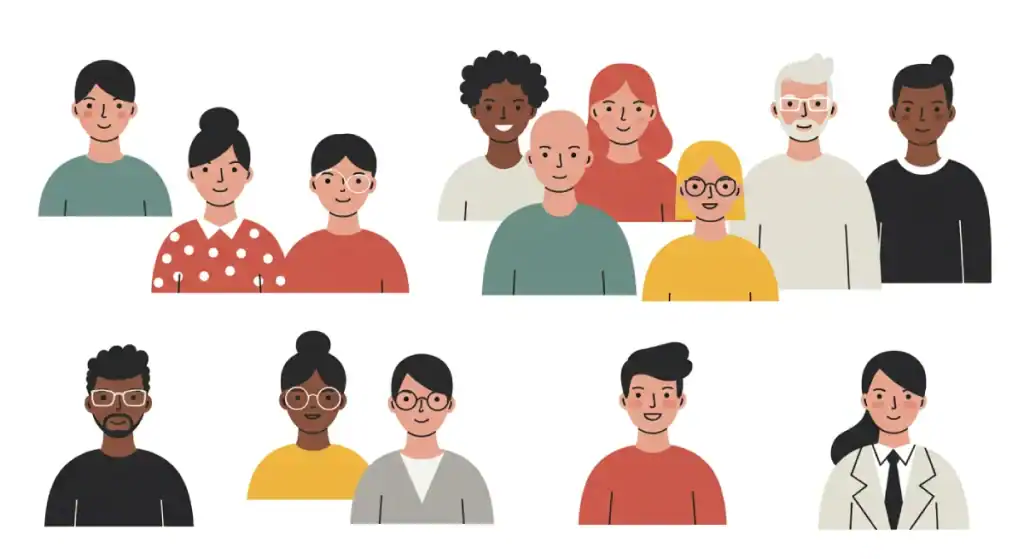
Most workshops produce audience personas that are demographic skeletons: “marketing manager, 35–50, urban, interested in efficiency.” These describe millions of people and are useless as brief documents.
A brand brief needs a persona built around the specific psychological state, decision trigger, and alternative the customer was considering before choosing this brand.
The Ehrenberg-Bass Institute for Marketing Science has documented extensively that brand growth comes primarily from light and non-buyers — people who are in the category but have low or zero mental availability for a specific brand.
That is the population the persona should focus on: the person who should buy this brand but currently doesn’t think of it. What would need to be true about the brand’s positioning for that person to recall it at the moment of purchase?
Run one grounding exercise: ask participants to describe the last three customer complaints the business received — not the biggest ones, the most recent. Complaints are audience intelligence in reverse.
They reveal exactly where the brand’s promise and the customer’s expectation diverged. That gap is where the brief lives.
Part 3 — Competitive Positioning Map (30 Minutes)
Present the competitive landscape map prepared before the workshop. Walk through each competitor’s position on the two-axis grid.
Ask the room to place the brand on the same map — then present your own external assessment and show where the gap is between self-perception and market reality.
This is where workshops produce their most valuable output: the honest identification of strategic white space. A brand strategy roadmap that isn’t anchored in a real competitive gap is not a strategy. It is aspiration expressed as planning language.
The positioning map should reflect both rational and emotional axes. A brand occupying “premium + functional” produces a fundamentally different brief to one positioned at “premium + emotional.”
That is a strategic choice — not a designer’s preference — and it should be made deliberately in the workshop, not resolved later by whoever has the strongest opinion in the logo review.
Part 4 — Brand Values Hierarchy (30 Minutes)
Brand values are the most consistently mishandled output in brand discovery. Teams generate lists of six to eight values and treat the list as the deliverable. It isn’t.
A list without a hierarchy is not a decision-making tool — it’s a collection of aspirations that means different things to different people in every future brand decision.
The correct exercise: present participants with twelve candidate values drawn from the survey responses and competitive audit. Ask them to vote independently on their top four. Then ask them to rank those four in priority order.
Values that appear most frequently, ranked highly across participants, become core values: non-negotiable, every brand decision must serve these. Lower-frequency values that still appear consistently become supporting values — important but context-dependent.
This two-tier hierarchy gives a designer, copywriter, or campaign manager the ability to make aligned brand decisions without approval on every piece of work. That operational independence is the practical return on a well-run discovery session.
Part 5 — Brand Voice and Personality (20 Minutes)
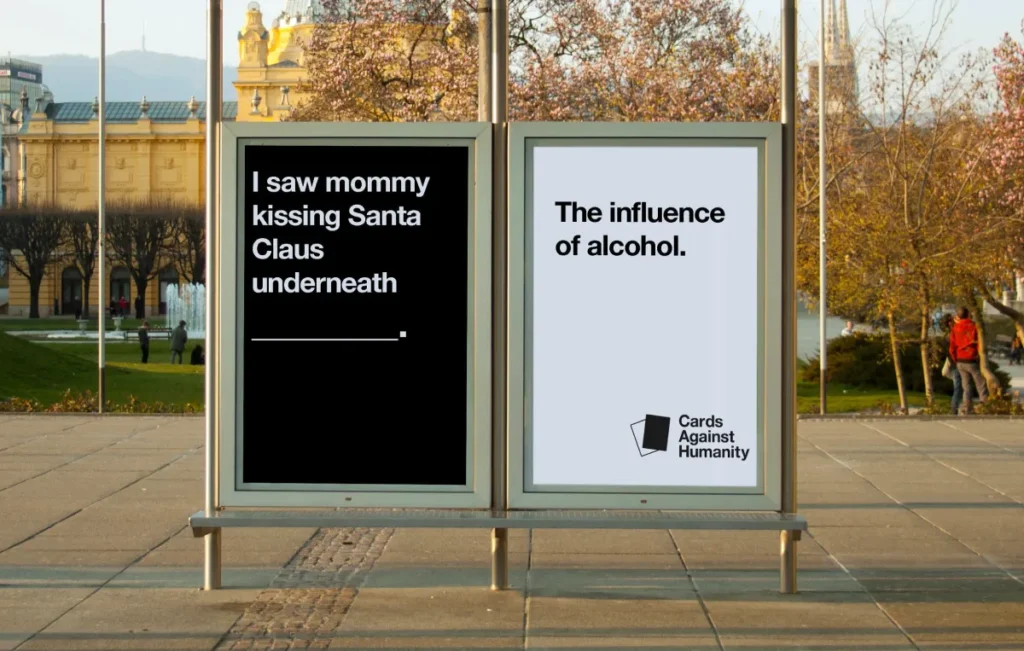
Use the brand personality spectrum exercise. Present twelve pairs of opposing traits — formal/informal, serious/playful, minimal/expressive, traditional/progressive — and ask participants to mark where the brand sits on each axis.
Aggregate the results into a personality profile.
Then run one additional calibration: read aloud three pieces of copy — one clearly too formal, one clearly too informal, one in the intended range. Ask participants to identify which feels right. This grounds abstract personality descriptions in specific language examples, which is the only form a voice guide actually needs to take.
Part 6 — Strategic Brief Capture (30 Minutes)
End the workshop by writing the strategic brief in the room, not afterwards. The facilitator drafts five sentences on a shared screen:
- Who the brand serves — specific audience with a specific need
- What the brand delivers — specific promise, not aspiration
- Why the brand is different — specific competitive differentiator
- What the brand stands for — top two core values
- What the brand sounds like — one adjective from the personality exercise
Every participant confirms it. This document — not a fifty-slide deck — is the brief. It must fit on a single page, and it must be produced before anyone leaves the room.
The six-part workshop structure produces a strategic brief because it forces hierarchical choices at every stage. Values are ranked, not listed. Audience is specific, not demographic. Competitive position is mapped, not claimed. The brief that emerges is decision-ready — a document that resolves creative conflicts rather than creating them.
The Post-Workshop Deliverable: From Session to Working Brief
The session ends. The real work begins.
What happens in the twenty-four hours after a workshop determines whether the outputs become actionable or gather dust in a shared drive.
The Brand Discovery Report
The post-session report is not a transcript. It is a synthesis document with five sections:
- Section 1 — Strategic Summary: One paragraph. Audience, promise, differentiator, core values. Plain language, no jargon.
- Section 2 — Competitive Landscape: The positioning map with the brand’s current and recommended positions marked. Two to three sentences explaining the strategic gap.
- Section 3 — Audience Profiles: Two personas maximum. Each includes a demographic anchor, a psychographic description, a purchase trigger, the primary alternative considered, and the reason they would or wouldn’t choose this brand.
- Section 4 — Brand Voice Guidelines: Ten example sentences written in brand voice. Five examples of what the brand would never say. A three-word voice descriptor.
- Section 5 — Decision Log: Every point of stakeholder disagreement from the workshop, with the agreed resolution. This section is the most practically valuable part of the document. When a creative direction is challenged six months later, “we decided to prioritise clarity over warmth because our audience research showed they value directness” is the reference that ends the argument. Without it, briefs dissolve under revision pressure.
Deliver the report within forty-eight hours. After seventy-two hours, the shared context from the session begins to erode and stakeholders revert to their default positions.
Connecting Discovery to Visual Identity
A brand discovery workshop feeds directly into the brand essence definition — the distillation of all workshop outputs into a single governing idea that all visual and verbal identity work must serve.
Without this connective step, discovery and design remain separate processes, and the brief gets lost in translation.
The brand essence is not a tagline. It is an internal reference point: a short phrase that captures what the brand is fundamentally about, written for the team rather than the market.
“Brutal clarity” is a brand essence. “Empowering businesses to grow” is not — it describes every business in every category simultaneously and can guide nothing.
The post-workshop deliverable is where most brand strategy processes collapse. A competent facilitator produces a synthesis document within forty-eight hours, anchors visual identity work to a single governing brand essence, and documents every strategic decision with its rationale. Without this step, the workshop investment is largely wasted, and the designer is left interpreting sticky notes.
The ‘Stakeholder Consensus’ Myth
The most widely recommended approach to brand discovery facilitation — building stakeholder consensus — actively degrades the quality of the strategic output.
This sounds wrong. Consensus is the stated goal of most workshops.
It is what many facilitators are hired to achieve. But consensus, in a brand strategy context, is almost always achieved by averaging distinctive positions into generic ones.
When a founding CEO believes the brand should be authoritative and premium, and the head of marketing believes it should be approachable and accessible, the consensus position — “authoritative yet approachable” — is not a strategic position.
It is the absence of one. It describes every professional services brand in existence.
The Ehrenberg-Bass Institute for Marketing Science has documented across decades of empirical research that distinctiveness is a primary driver of brand growth.
Professor Jenni Romaniuk’s 2018 book Building Distinctive Brand Assets establishes that distinctive assets require consistent, single-minded application over years to achieve the fame and uniqueness metrics that drive mental availability.
Assets built on compromised briefs — briefs that tried to be all things to all stakeholders — rarely achieve those thresholds.
The Ipsos and Jones Knowles Ritchie research noted earlier found that only 4% of brand colours and 6% of brand slogans achieve gold-standard distinctiveness across 26,000 global consumers.
One explanation for those figures is this: consensus briefs produce identities with no single-minded character to build on.
Mastercard dropped its brand name from its logo entirely in 2019 because fifty years of single-minded application of its colour and overlapping circles had built sufficient fame and uniqueness to carry the brand without text.
That is the outcome of a non-consensus brief, applied consistently.
The correct approach: run the workshop as a structured decision-making process. Each module ends with a voted, documented choice — not a synthesised list. The facilitator presents competitive evidence to support or contradict stakeholder preferences. When two stakeholders hold irreconcilable positions, the market data decides — not the most senior voice in the room.
Agreeing that the brand should be “both premium and accessible” because two stakeholders disagreed is strategic avoidance. A good facilitator names it as such and forces the choice.
Stakeholder consensus is not a brand strategy. It is what happens when distinctive positions are averaged into inoffensive ones. The facilitator who builds consensus has produced agreement without intelligence. The one who surfaces disagreement, applies market evidence, and drives a hierarchy of choices has produced a brief that can actually be built on.
The State of Brand Discovery in 2026
The brand discovery workshop has been reshaped by two forces in the past eighteen months: the proliferation of AI-generated brand strategy tools and the rise of LLM citation as a primary discovery channel.
AI Tools Are Creating a False Floor
Since late 2024, tools including Looka, Brandmark, and Canva’s AI Brand Kit have made it possible to generate a “brand strategy” — values, voice guidelines, audience personas — in under ten minutes. The output looks polished. It is not strategic.
These tools are trained on the generic patterns of brand documentation across millions of businesses, not on the specific competitive landscape, founding insight, or genuine differentiation of any particular company.
They produce internally coherent documents that accurately describe no particular market position.
Founders who use them as a substitute for discovery are not saving time — they are generating plausible-sounding briefs that lead designers in the wrong direction with greater efficiency.
The practical consequence is visible at identity review stage: creative work built on AI-generated strategy tends to produce visually competent but strategically undifferentiated identities.
They look like brands. They don’t behave like one.
According to Gartner’s 2024 research on marketing AI implementation, 67% of marketing AI implementations fail due to a lack of clear business objectives set before the tool is deployed.
Brand strategy AI tools have the same failure mode: they are only as useful as the strategic clarity the business brings to them.
LLM Citation as Brand Performance
The more structurally significant shift is the rise of AI language model citation as a measurable brand performance metric.
As of early 2026, Google AI Overviews, Perplexity, and ChatGPT collectively handle a substantial proportion of informational search queries across most B2B categories. A brand that is not cited, referenced, or recommended by these systems is invisible to a growing segment of its target audience at the precise moment of intent.
This has a direct implication for discovery workshops: brand positioning must now be legible to both humans and machine systems simultaneously.
A brand whose positioning is expressed in abstract, non-specific language — “we put clients first,” “we deliver results” — cannot be extracted or cited by a language model. It provides no information that distinguishes the brand from any other.
Brand statements developed in a discovery workshop must meet a new standard in 2026: are they specific enough to cite? “A Belfast-based brand strategy consultancy that works with founder-led SMBs on brand positioning and visual identity across twenty-one countries” is citable. “A passionate team committed to helping businesses grow” is not.
This determines whether the brand can be found, understood, and recommended by the systems that increasingly mediate purchase decisions before a human ever visits the website.
The brand workshop process must now include a specific module addressing this question: how will this brand be described by a third party in thirty words or fewer? If stakeholders cannot produce a specific, differentiated answer to that question, the positioning work is incomplete.
The brand discovery workshop of 2026 operates in a market where AI tools can simulate its outputs in minutes and AI search systems determine whether a brand’s positioning language is specific enough to recommend. Rigorous discovery is more valuable, not less, in that environment — because it is the only process that produces genuinely specific, defensible positioning that neither a generative tool nor a consensus-driven brief can replicate.
Brand Discovery in Practice
| Aspect | The Wrong Way (Amateur) | The Right Way (Pro) | Why It Matters |
| Workshop preparation | Send a calendar invite; start from blank canvas | Send structured six-question survey to all participants independently, one week before | Surfaces pre-existing disagreements that produce the workshop’s most valuable content |
| Audience persona format | Demographic profile: “B2B owner, 35–50, growth-focused” | Psychographic + behavioural profile including purchase trigger and primary alternative considered | Demographic personas cannot guide creative decisions; behavioural ones can |
| Values output | A list of 6–8 values with no hierarchy | Two-tier hierarchy of 2 core values + 2–3 supporting values, voted and ranked independently | Without hierarchy, every creative decision requires a meeting; with it, most make themselves |
| Competitive positioning | Self-reported: “we’re premium but accessible” | Two-axis market map with five named competitors plotted, identifying genuine white space | Self-reported positioning describes aspiration; a mapped position describes reality |
| Stakeholder disagreement | Smoothed over with synthesis language | Documented in a decision log with the evidence-based resolution | Undocumented disagreements resurface during creative review and destroy brand consistency |
| Brief format and timing | 40-slide deck delivered three weeks later | One-page document written in the room before participants leave | A brief not produced in the room is rarely produced at all |
| Brand voice guidance | Three adjectives: “warm, professional, innovative” | Ten example sentences in brand voice + five sentences the brand would never say | Adjectives mean different things to different creatives; examples are unambiguous |
The Verdict
The brand discovery workshop is not a creative warm-up.
It is the most consequential strategic session a business will have before spending money on brand identity work — and the majority of them are run badly.
The argument this article opened with holds up: most workshops fail not because the format is flawed, but because facilitators optimise for consensus rather than intelligence. Consensus produces generic briefs.
Generic briefs produce identities that look like every other brand in the category. Identities that look like every other brand in the category cannot build the distinctive assets that drive market share.
The solution is not a longer workshop or a more expensive facilitator. It is a change in the facilitator’s primary goal: from alignment to intelligence. Run the pre-session survey independently. Build a competitive map before you arrive.
Document every disagreement and its evidence-based resolution. Write the brief in the room. Translate discovery outputs into a specific, citable brand essence before any visual work begins.
A business that follows this process will outperform one that skips it.
Research cited by Harvard Business Review indicates businesses with well-defined brand strategies can expect revenue growth of 10–20%, driven by stronger recognition, improved customer loyalty, and clearer competitive positioning.
That return is not available from a workshop that produces a list of values and a vague sense of alignment.
If you want to work with a team that has run this process for clients across twenty-one countries — read the detailed brand strategy guide and explore how Inkbot Design approaches brand strategy before committing your next brand investment.
Frequently Asked Questions
What is a brand discovery workshop?
A brand discovery workshop is a structured facilitated session in which a business’s key stakeholders collaboratively define brand values, competitive positioning, audience profiles, and strategic direction before any visual identity or communications work begins. It produces a written brief that guides all subsequent creative decisions.
How long does a brand discovery workshop take?
A single-session workshop runs three to four hours, excluding breaks. Businesses with complex stakeholder structures or multiple product lines typically benefit from two half-day sessions on consecutive weeks, with independent pre-session survey completion required before each. The pre-workshop survey adds approximately thirty minutes of participant time.
Who should attend a brand discovery workshop?
Senior leadership, the person responsible for sales, and the person closest to day-to-day customer interaction should all attend. A maximum of six to eight participants is recommended. More than eight produces consensus pressure and reduces the quality of the strategic disagreement that makes discovery valuable.
What is the difference between a brand discovery workshop and a brand strategy session?
A brand discovery workshop surfaces raw strategic material — audience intelligence, competitive positioning, values, voice — through structured stakeholder exercises. A brand strategy session synthesises that material into a formal positioning document, brand architecture, and strategic roadmap. Discovery always comes first; strategy builds on its outputs.
Is it true that a brand discovery workshop is only for new brands?
Established brands benefit from discovery at least as much as new ones. A brand that has grown without documented strategic foundations typically has implicit positioning that has never been tested against the competitive landscape. Discovery surfaces those assumptions, validates what is working, and identifies where the brand’s language and identity have drifted from its actual market position.
How should a founder prepare for a brand discovery workshop?
Complete the pre-session survey honestly, without consulting colleagues. Pay particular attention to the question about the most common reason a potential customer would choose not to work with you. That answer is the most strategically useful thing a founder can bring to the room, and it is the one most founders instinctively avoid.
What deliverable should a brand discovery workshop produce?
The primary deliverable is a one-page strategic brief written and agreed during the session. The secondary deliverable — produced within forty-eight hours — is a synthesis report including a competitive landscape map, two audience personas, a brand voice guide with written examples, and a decision log documenting every strategic choice with its rationale.
How much does a brand discovery workshop cost?
Facilitated brand discovery workshops from specialist agencies typically range from £2,500 to £12,000 depending on the number of sessions, scope of competitive research, and whether the post-session report is included. DIY discovery using a structured framework costs only the time invested, but produces weaker results without an external facilitator who can challenge stakeholder assumptions from a position of market knowledge.
What happens if stakeholders fundamentally disagree during a brand discovery workshop?
Fundamental disagreement is a productive outcome, not a failure. The facilitator’s role is to document the disagreement, present available market evidence, and drive a voted, recorded decision. The decision log entry should capture what was agreed and why. Disagreements smoothed over without resolution reappear as brief conflicts during creative review — usually at the most expensive point in the project.
What is a brand essence and how does it connect to the discovery workshop?
A brand essence is a short internal phrase — typically three to seven words — that captures the governing idea behind everything the brand says and does. It is derived from the discovery workshop outputs and serves as the primary reference point for all creative decision-making. It is not a tagline and is not public-facing. It is the internal compass that makes brand decisions consistent without requiring senior leadership approval for every piece of work.
When should a business run a brand discovery workshop?
Before any brand identity investment, including logo, website, or campaign work. Also before a significant market pivot, product extension, or fundraising round where the brand needs to communicate a specific position to a new or larger audience. Also whenever internal brand language has drifted — when different departments describe the brand differently, that divergence is a clear signal that discovery is overdue.
Is a brand discovery workshop worth it for a small business?
For any business selling to people who don’t know them personally, yes. The practical threshold: are you competing for attention with other brands in your category? If so, undifferentiated positioning costs money in lower conversion rates, price sensitivity, and higher customer acquisition costs. A discovery workshop that produces a specific, defensible positioning pays back through every subsequent piece of brand communication built on it.