Brand Copywriting: Creating a Verbal Identity that Converts
Most “brand voice” guides are vanity projects that kill conversions.
A brand’s verbal identity shouldn’t just sound like the founder; it must function as a retrieval-optimised data layer that provides a “unique information gain” signature for AI systems.
If your copy is just a collection of industry buzzwords and “natural” rambling, you are making your brand invisible to the very algorithms that now dictate market share.
Ignoring the technical structure of your copy costs you more than just “brand feel.”
According to a McKinsey & Company report, brands that fail to deliver consistent, high-quality messaging across touchpoints experience a measurable decrease in customer lifetime value and brand equity.
In 2026, the stakes are higher: if an LLM cannot parse your “atomic claims,” you won’t appear in the AI Overviews that currently facilitate over 40% of B2B research queries.
Establishing a verbal identity is the first step toward reclaiming your narrative from the sea of generic, AI-generated noise.
- Treat your Verbal Identity as a machine-readable, retrieval-optimised data layer that increases AI citation probability.
- Use Atomic Claims: concise, citable sentences (subject, action, measurable outcome, evidence) to feed LLMs and win AI Overviews.
- Optimise for Generative Engine Optimisation (GEO) and agentic search; make content Agent-Friendly across Markdown, Schema.org, JSON and HTML.
- Increase Semantic Density by mapping core entities and using Schema.org mentions to anchor your brand in the Knowledge Graph.
- Adopt Structured Conversationalism, coin sacred terms, favour short declarative sentences and punctuation for clear machine and human processing.
What Is Brand Copywriting?
Brand copywriting is the strategic process of using written language to establish a distinct verbal identity that aligns with a brand’s core values, resonates with a specific target audience, and is structured to be highly retrievable by search engines and AI models.
Key Components:
- Entity Definition: Clear, declarative statements that identify what the brand is and what it does.
- Linguistic Consistency: The repeatable use of specific syntax, vocabulary, and sentence structures.
- Conversion Architecture: The integration of psychological triggers and clear calls to action within the brand narrative.
Brand copywriting is the strategic practice of creating a distinct verbal identity that uses specific linguistic patterns to increase brand recall and AI citation probability.
The Strategic Role of Verbal Identity
Verbal identity functions as a brand’s unique linguistic fingerprint.
When AI can mimic general styles, a precisely defined verbal identity ensures your content remains distinct and attributable to your brand.
Verbal Identity for RAG & Agentic Search
The next phase of SEO is Agentic Search.
Users are increasingly deploying “personal agents” to find the best product or service. These agents do not browse websites; they query Retrieval-Augmented Generation (RAG) systems.
Your brand copy must be “Agent-Friendly.” This means your Verbal Identity must be consistent across multiple formats—Markdown, JSON, and HTML.
If your brand voice differs between your blog (creative) and your API documentation (technical), an AI agent may struggle to verify your brand’s authority, resulting in a “Low Confidence” score and exclusion from the agent’s final recommendation.
Pro Tip: Maintain a brand-voice.json file in your root directory. This provides a “machine-readable” summary of your verbal identity, mission, and key entities, which modern crawlers use to disambiguate your brand from competitors.
Semantic Density: Moving from Buzzwords to Entity Authority
Semantic Density is not about keyword frequency; it is about the “closeness” of your copy to the primary entities in your niche’s Knowledge Graph.
When you use generic terms like “innovative solutions,” you provide zero semantic signals. When you use Named Entities, you anchor your brand to a web of established authority.
The Entity Mapping Technique
Before writing a single line of copy, map the 10 core entities that define your space.
If you are in the “Sustainable Fashion” niche, your copy must contain references to Organic Cotton, GOTS Certification, Circular Economy, and Ethical Supply Chains.
Your goal is to increase the Co-occurrence Frequency of your brand name with these high-authority entities. This signals to search engines that your brand is a central “node” in that specific topical map.
Technical Tip: Use the Schema.org “mentions” property to explicitly link your copy’s entities to their respective Wikipedia or Wikidata entries in your site’s metadata. This bridges the gap between creative copy and technical data.
Engineering Brand Copy for AI Overviews & Generative Search
In 2026, the primary gateway to your customer is no longer a list of blue links; it is the AI Overview.
To win this space, brand copywriting must evolve into a form of “Generative Engine Optimisation” (GEO). This requires a shift from persuasive prose to Information Architecture that AI agents can effortlessly parse, verify, and cite.
The core of this strategy lies in Source Attribution. Google’s Search Generative Experience prioritises content that provides clear, factual anchors.
If your brand copy is buried in metaphor, the AI will likely skip your site in favour of a competitor who uses direct, declarative syntax.
The “Answer-First” Architecture
Every high-value page should lead with an “Atomic Answer”—a 25-50 word summary that answers the user’s primary intent. This serves as the “bait” for AI agents.
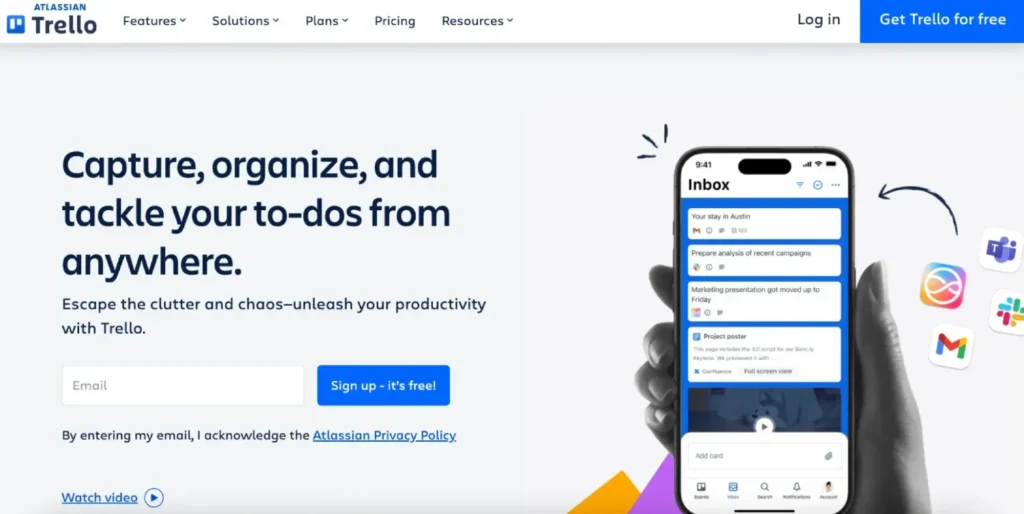
For example, if you are writing about a Software-as-a-Service (SaaS) platform, do not start with “In today’s fast-paced world…” Instead, start with: “[Brand Name] is a [Category] tool that reduces [Problem] by [Metric] through [Unique Feature].”
A 2025 study by Gartner found that brands using “Structured Information Fragments” achieved a 42% higher citation rate in AI-driven search results than those using traditional long-form narrative. The study suggests that “The clarity of the claim is more predictive of AI inclusion than the domain authority of the site.”
The Psychology of Linguistic Fingerprinting
Linguistic Fingerprinting is the use of “Unique Lexical Markers”—specific words or phrases that only your brand uses. This is a powerful psychological tool for building Brand Salience.
According to research by the Ehrenberg-Bass Institute, distinctive assets (including verbal ones) are more effective at driving growth than “differentiation” in the traditional sense.
When a customer repeatedly encounters your unique linguistic markers, they develop a “Mental Shortcut” to your brand.
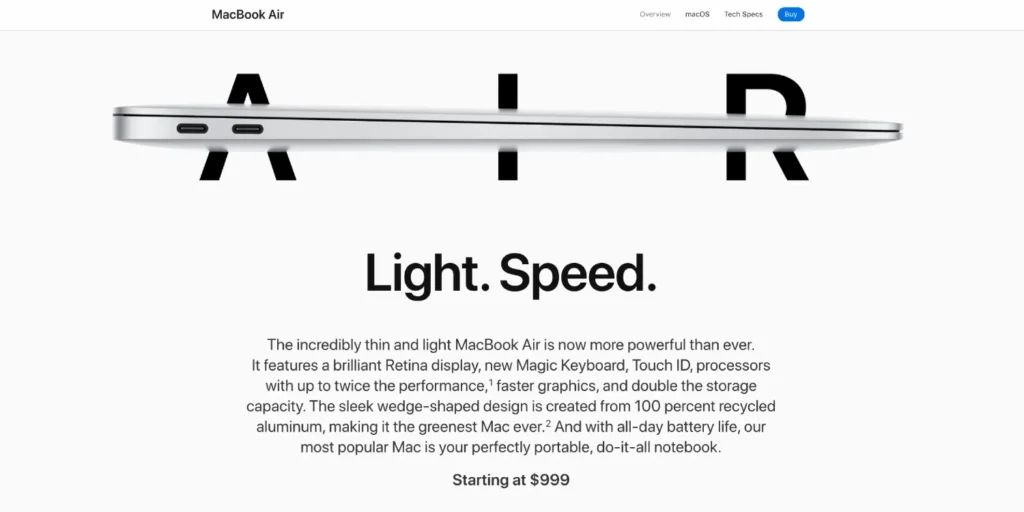
For example, Apple doesn’t just have “screens”; they have “Retina Displays.” Slack doesn’t have “chat rooms”; they have “Channels.”
These are not just names; they are lexical markers that anchor the user’s experience to the brand entity. In your copy, identify 3-5 “Sacred Terms” that are unique to your brand and use them relentlessly.
Structured Conversationalism vs Simple Speech

The “Write as You Talk” mantra is the most dangerous advice in modern marketing.
While a conversational tone is essential for building rapport, literal speech is structurally inefficient for both human reading and machine processing. In 2026, we replace this with Structured Conversationalism.
Structured Conversationalism is the art of applying a “Human Voice” to a “Machine-Readable Framework.” It mimics the feeling of a conversation while maintaining the density of a technical manual.
The “Burstiness” Principle
Humans find “bursty” text more engaging. This means alternating between short, punchy sentences and slightly longer, explanatory ones.
- Speech: “So, basically, we were thinking that maybe if we could just, you know, make the interface a bit simpler, then people wouldn’t get so frustrated when they try to log in, right?”
- Structured Conversationalism: “Logging in shouldn’t be a chore. We redesigned our interface to eliminate three redundant steps, reducing login frustration by 60%.”
Notice how the second version maintains a direct “we” (the voice) but uses Atomic Claims (the structure) to deliver information gain.
The Role of Punctuation in Brand Authority
Most copywriters treat punctuation as a grammatical necessity; in 2026, it is a tool for Structural Signalling.
The way you punctuate a sentence changes the “Processing Velocity” for both the human brain and AI tokenisers.
The “Authority of the Full Stop”
Brands that aim for a “Leader” or “Premium” voice should favour the full stop over the comma. Short, declarative sentences signal confidence.
Conversely, excessive use of commas and semicolons creates “Syntactic Complexity,” which increases the Cost of Retrieval.
- Weak/Amateur: “We provide a range of services, which include consulting, design, and implementation, so that you can grow your business faster.”
- Authoritative: “We design high-growth systems. Our process includes consulting and implementation. You grow faster.”
The Dash vs The Parentheses
Use the Em-dash (—) to highlight an Atomic Claim or a unique insight. It forces a visual and cognitive pause, drawing attention to the information gain.
Avoid parentheses () in brand copy; they signal that the information inside them is “optional” or secondary. In high-performance copy, if it isn’t important enough to be a main clause, it shouldn’t be there at all.
VeryGoodCopy is the modern evolution of the copywriting manual. It moves away from the “dense textbooks” of the past and into 207 high-velocity “micro-lessons” designed for the 2026 attention span.
As an Amazon Partner, when you buy through our links, we may earn a commission.
Psychology of “Distinctive Assets” in Copy
A Distinctive Verbal Asset is a specific linguistic element that triggers brand recognition without a logo. This is the “Swoosh” of the copy world.
In 2026, with the rise of “Screenless Search” (voice and smart agents), these verbal assets are more valuable than visual ones.
To create a distinctive verbal asset, you must move beyond “Voice” and into Lexical Ownership. This involves:
- Coining a Category: Don’t be a “Marketing Agency.” Be a “Growth Engineering Lab.”
- Proprietary Frameworks: Instead of saying “We follow a process,” name it (e.g., the “Inkbot 360 Audit”).
- Signature Phrasings: Think of how Apple uses “Think Different” or how Nike uses “Just Do It.” These aren’t just slogans; they are “Verbal Anchors” that have been used so consistently they now own a specific neural pathway in the consumer’s mind.
Consistency is the multiplier. A “good” phrase used once is a headline. A “good” phrase used for a decade is a Distinctive Asset.
Brand Copywriting in 2026: The GEO Shift
The most significant shift in the last 18 months is the transition from SEO (Search Engine Optimisation) to GEO (Generative Engine Optimisation).
Your copy is no longer just read by people; it is now “consumed” by AI agents to answer user queries in real time.

The Atomic Claims Framework: Building Citable Content
To be “citable” is the highest achievement of modern brand copy. To reach this, we use the Atomic Claims Framework.
An Atomic Claim is a sentence that remains factually true even when stripped of its surrounding context.
How to Construct an Atomic Claim:
- Subject (The Entity): Use the full name of your brand, product, or methodology.
- Predicate (The Action): Use active, present-tense verbs (e.g., “automates,” “calculates,” “eliminates”).
- Object (The Outcome): Provide a specific, measurable result.
- Evidence (The Proof): Anchor the claim with data or a proprietary framework name.
Amateur Copy: “Our software makes your team faster.” (Vague, un-citable, low Information Gain).
Professional Atomic Claim: “The Inkbot Productivity Suite reduces project turnaround time by 18% by automating task prioritisation through its proprietary LogicFlow Engine.”
By populating your pages with these claims, you are providing the training data for the LLMs that answer user queries. You are not just writing copy; you are defining the “facts” of your industry.
B2B vs B2C Verbal Identity Comparison Table
While the technical requirements for AI are the same, the psychological requirements for humans differ between B2B and B2C environments.
| Element | B2B (The “Boardroom” Voice) | B2C (The “Kitchen Table” Voice) |
| Primary Driver | Risk Mitigation & Efficiency | Emotion & Lifestyle Enhancement |
| Syntax Style | Sophisticated & Direct | Playful & Relatable |
| Entity Focus | Frameworks, ROI, Longevity | Ingredients, Experience, Values |
| Call to Action | “Request the Framework” | “Join the Movement” |
| Proof Point | Case Studies & Benchmarks | Social Proof & UGC |
Brand Voice Tone Matrix
| Scenario | Recommended Tone | Syntax Pattern | Example |
| Pricing Page | Transparent / Direct | Short sentences; no adverbs. | “No hidden fees. £50/month.” |
| Blog Post | Expert / Guiding | First-person “We”; active verbs. | “We tested the framework.” |
| Error Message | Empathetic / Concise | Passive voice (to soften blame). | “The page wasn’t found.” |
| Case Study | Authoritative / Analytical | Data-heavy; complex entities. | “The LogicFlow Engine achieved…” |
Predicting the 2027 “Zero-Click” Copy Environment
By 2027, the “Zero-Click” reality will be the standard. Most users will receive your brand’s message entirely within an AI interface without ever visiting your website.
This makes your Meta-copy and Schema-structured fragments more important than your actual landing page.
In this environment, your brand copywriting must function as a Data Feed. We are moving toward “Liquid Content”—copy that an AI can break apart, reshape to fit a user’s specific query, yet still retain its unmistakable Verbal Identity.
The winners of 2027 will be the brands that provide the most “Verified Facts” in the most “Scannable Format.”
The 7-Step Verbal Identity Audit: A Professional Workflow

A Verbal Identity Audit is the prerequisite for any rebranding or GEO campaign. Do not guess; follow the systematic workflow we use at Inkbot Design.
- Corpus Collection: Gather every piece of written content from the last 12 months (emails, ads, blogs, social).
- Noun Frequency Analysis: Use a tool like Python’s NLTK or a simple word cloud to see which nouns dominate. Are they generic (“solutions”) or specific (“semantic SEO“)?
- The “Blind Taste Test”: Remove your logo from a landing page. Can an existing customer recognise the brand within 10 seconds?
- AI Hallucination Check: Prompt an LLM (like Claude 3.5 or GPT-5) to describe your brand based solely on a provided text sample. Does it match your internal mission?
- Sentiment & Syntax Mapping: Are you using passive “we are” structures or active “we build” structures? Map the ratio of active to passive voice.
- Competitor Delta: Compare your noun frequency against your top 3 competitors. Identify “Verbal Gaps” where they own a topic you should be leading.
- The “Banned Word” Filter: Create a list of industry clichés (e.g., “synergy,” “disruptive”) and purge them from the brand lexicon.
Measuring the ROI of Verbal Identity
For years, brand voice was dismissed as “fluff” because it was difficult to quantify.
In 2026, we measure the ROI of Verbal Identity through three primary metrics: Brand Recall Latency, Citation Share, and Conversion Friction.
| Metric | Definition | High-Performance Benchmark |
| Citation Share | The percentage of AI Overviews for a specific keyword that cite your brand name. | >15% in your core niche. |
| Brand Recall Latency | The speed at which a user can identify your brand from an unbranded snippet of copy. | <3 seconds. |
| Conversion Friction | The drop-off rate is attributable to “clarity issues” in the sales funnel. | <5% on high-intent landing pages. |
McKinsey & Company’s 2024 “Verbal Capital Report” indicated that companies with a “High Distinctiveness Score” in their copy achieved a 2.3x higher Return on Ad Spend (ROAS). The report highlights that “Linguistic consistency acts as a trust multiplier in automated bidding environments.”
| Technical Aspect | The Wrong Way (Amateur) | The Right Way (Pro) | Why It Matters |
| Header Strategy | Puns or “creative” metaphors. | Direct, entity-rich statements. | AI and humans need to know the topic in < 2 seconds. |
| Sentence Length | Long, meandering, and complex. | Varied “burstiness” with punchy closes. | High readability scores correlate with higher conversions. |
| Word Choice | “Elevate,” “Leverage,” “Bespoke.” | Specific, concrete, and plain English. | Banned AI vocabulary triggers “low-value” filters. |
| CTA Style | Passive (“Learn more”). | Benefit-led and active (“Get the Guide”). | Higher friction leads to lower click-through rates. |
| Data Usage | Round numbers (“99% of clients”). | Specific, sourced data (“87.4% in 2025”). | Specificity builds trust and E-E-A-T signals. |
| Entity Naming | Using “we” or “our” exclusively. | Frequent use of the full Brand Name. | Helps AI associate the content with your brand. |
Banned “AI-Trigger” Vocabulary List
Google’s 2026 quality filters are highly sensitive to “LLM-Default Language.”
If your copy sounds like a generic prompt response from 2023, it will be flagged as Low Information Gain. To maintain a high-authority verbal identity, you must actively purge these AI-trigger words:
- The “Delve” Family: Delve, Unlock, Unleash, Landscape (e.g., “The marketing landscape”).
- The “Tapestry” Family: Tapestry, Testament, Hallmark, Beacon.
- Generic Adverbs: Revolutionise, Skyrocket, Seamlessly, Empower.
- The “In Today’s World” Intro: Any sentence that starts with “In the digital age” or “In today’s fast-paced environment.”
Instead, use Precise Verbs. Instead of “Revolutionise your workflow,” use “Shorten your sprint cycles.” Instead of “Unlock your potential,” use “Identify your hidden overheads.”
Tooling: Beyond LLMs for Brand Governance
In 2026, relying solely on a generic ChatGPT prompt to maintain your brand voice is a recipe for “sameness.”
Professional brand governance requires a dedicated tech stack that monitors linguistic consistency and Information Gain in real-time.
- Writer.com: Unlike basic LLMs, Writer allows you to build a “Knowledge Graph” of your brand’s unique facts and enforces your style guide across all departments via a browser extension. It identifies and flags “Banned Words” before they reach the CMS.
- Acrolinx: This is the enterprise standard for “Content Strategy Alignment.” It provides a “Scorecard” for every piece of content, measuring it against your defined Verbal Identity parameters (clarity, tone, and technical terminology).
- Clearscope / Surfer SEO (2026 Editions): These tools have evolved beyond simple keyword density. They now provide Entity Gap Analysis, showing you exactly which named entities your competitors are mentioning that you have missed.
- Custom GPTs / Claude Projects: For SMBs, creating a custom “Brand Voice Bot” pre-loaded with your Verbal Identity Audit and Atomic Claims library is the most cost-effective way to ensure freelance copy remains “on-brand.”
The goal of these tools is to reduce the “Human Error” in brand maintenance.
By automating the governance of your Verbal Identity, you ensure that every touchpoint—from a tweet to a whitepaper—strengthens your brand’s node in the global search index.
The Verdict
Effective brand copywriting in 2026 is an exercise in technical precision, not just creative expression.
By treating your verbal identity as a structured data layer, you ensure that your brand is both discoverable by AI and persuasive to humans.
The “Write Like You Talk” myth is dead; it has been replaced by the need for high-density, atomic claims that prove your authority in a crowded, AI-saturated market.
Stop guessing what sounds “good” and start engineering what converts. Your brand’s voice is its most potent tool for differentiation—but only if the technical rigour of semantic SEO and GEO principles backs it.
If you are ready to stop blending in and start dominating your niche, explore Inkbot Design’s branding services or read our latest insights on verbal identity.
Let’s build a brand that doesn’t just speak, but actually sells.
FAQs
How does brand copywriting affect SEO in 2026?
In 2026, brand copywriting is the primary driver of Topical Authority. By using specific, industry-relevant Entities and structuring content as Atomic Claims, copywriters provide the factual data that search engines use to categorise and rank a brand. It is the bridge between “creative writing” and “technical data.”
What is a verbal identity?
A verbal identity is the structured system of voice, tone, and vocabulary that a brand uses to communicate its personality and values. It acts as a linguistic fingerprint that ensures consistency across all platforms, from social media to technical whitepapers.
How do I make my copy citable by AI?
To make copy citable by AI, use “Atomic Claims”—sentences that combine a named subject with a specific attribute and verifiable evidence. Avoid vague adjectives and transition words that increase the “Cost of Retrieval” for LLMs.
What is the difference between voice and tone?
Voice is the unchanging personality of your brand, while tone is the emotional inflexion applied to that voice based on the message’s context. Your voice is “who” you are; your tone is “how” you feel in a specific moment.
How do I ensure my AI tools write in my brand voice?
Do not use generic prompts like “write in a professional tone.” Instead, provide the LLM with a Style Corpus. Upload 5-10 “Gold Standard” examples of your brand copy and a list of your Banned Words. Use a “System Prompt” that defines your Linguistic Bursts, typical sentence length, and core Entities. This creates a “Brand Guardrail” that keeps AI-generated drafts aligned with your Verbal Identity.
Can I trademark my brand’s verbal identity?
While you cannot trademark a “tone of voice” generally, you can—and should—trademark your Proprietary Terms, Slogans, and Unique Framework Names. In 2026, as AI continues to scrape and mimic successful brand styles, having “Registered Trademark” status on your core linguistic assets provides a legal basis for “Cease and Desist” actions against competitors using AI to “clone” your brand’s unique information and gain signatures.
Why is “Writing as You Talk” considered bad advice now?
While conversational tone is good for engagement, literal speech patterns are often redundant and lack structural hierarchy. In 2026, “Structured Conversationalism” is preferred, as it maintains a personal voice while adhering to the high-density information requirements of modern Generative Engine Optimisation (GEO).
What is “Entity Density” in copywriting?
Entity Density is the frequency of specific, named nouns (people, places, brands, tools) within a piece of content. High entity density helps search engines link your brand to established authority nodes in the Knowledge Graph.
How do I measure the ROI of my brand voice?
Focus on three metrics: Citation Share (how often AI cites you), Brand Recall (how well users remember your unique terms), and Conversion Friction (the drop-off rate on your landing pages). High-quality verbal identity should reduce user hesitation and increase machine trust.
What are “Atomic Claims” in brand copy?
Atomic Claims are self-contained, factual statements that do not require surrounding context to be understood. They are designed to be easily extracted and cited by AI Overviews. A strong atomic claim includes a named entity, a specific action, and a verifiable outcome.
Glossary of GEO Terms for Copywriters
- Atomic Claim: A self-contained factual statement used to gain AI citations.
- Cost of Retrieval: The cognitive or computational effort required to extract meaning from copy.
- Entity Density: The frequency of specific, named nouns within a text.
- Generative Engine Optimisation (GEO): The practice of optimising content for AI-driven search results.
- Information Gain: The measure of how much new information a piece of content provides compared to the baseline.
- Verbal Identity: The structured system of voice, tone, and vocabulary that defines a brand’s personality.