The Inkbot Branding Workshop: Inside Our Strategy Sessions
If you are looking for a session where we “find your inner spark,” go elsewhere.
At Inkbot Design, our branding workshop is a clinical extraction of market opportunity.
We do not care about your favourite colour. We care about your brand strategy, your category entry points, and how we will make your competitors irrelevant.
Ignoring your brand’s structural integrity costs money.
According to McKinsey & Company, design-led companies increase their revenues and shareholder returns at nearly twice the rate of their industry peers.
But you don’t get there by playing with Sharpies. You get there through a rigorous, data-backed strategy.
- Focus on commercial outcomes not aesthetics; workshops extract market opportunity and measurable brand strategy, not favourite colours.
- Generative Engine Optimisation (GEO) is essential: define entity associations, sentiment calibration, and distinctive digital triggers for AI discovery.
- Competitive displacement over consistency: map Category Entry Points and occupy competitor weaknesses to create memorable mental shortcuts.
- Rigorous, data-led process with audit, synthetic persona testing and a 48-hour extraction cycle to produce an implementable roadmap.
What is a branding workshop?
A branding workshop is a structured, collaborative session between a business and a strategic consultancy designed to align commercial goals with market perception.
It serves as the foundation for all visual and verbal identity, ensuring that every design choice serves a specific business objective rather than a subjective preference.

The three core elements of a high-functioning session include:
- Commercial Intent Extraction: Identifying the specific financial and market-share goals the brand must achieve.
- Competitive Displacement Mapping: Analysing where competitors are weak and how the brand can occupy that mental space.
- Entity Definition: Establishing the core attributes that search engines and AI models will use to categorise the brand in a GEO (Generative Engine Optimisation) environment.
The Death of the “Post-it Note” Fallacy
Amateur agencies love Post-it notes because they create the illusion of work.
They fill a wall with yellow squares, take a photo for Instagram, and call it “innovation.” This is a failure of leadership. A real strategy session is an audit of reality.
In our fieldwork, we often see businesses that have “done a workshop” but still cannot explain why a customer should choose them over a cheaper alternative.
They have a “Brand Purpose” written on a wall, but no brand strategy roadmap to implement it. They have “Core Values” like Integrity and Innovation, which are so generic that they are effectively invisible.
Why Purpose is a Distraction
There is a common belief that every brand needs a “Higher Purpose.” This is a lie sold by agencies to win awards.
Research from the Ehrenberg-Bass Institute suggests that consumers do not want to “have a relationship” with your brand. They want your product to solve a problem and be easy to remember when the need arises.
If you spend your workshop debating your “Brand Soul,” you are losing. You should be debating your brand positioning and how to increase your mental availability.
| The Wrong Way (Amateur) | The Right Way (Pro) |
| Focuses on “Brand Feelings” | Focuses on Category Entry Points (CEPs) |
| Brainstorm “Values” like “Honesty” | Identifies Unique Selling Attributes (USAs) |
| Asks “What colour do you like?” | Asks “What colour does the competition own?” |
| Results in a mood board | Results in a brand strategy |
| Subjective and “Creative” | Objective and Commercial |
The Mechanics of a Strategic Branding Workshop
A branding workshop is not a single event; it is a sequence of technical extractions. At Inkbot Design, we break this down into four distinct “War Rooms.”
1. The Audit of Truth
Before we talk about the future, we look at the wreckage of the past. We perform a heuristic evaluation of your current assets. Does your brand identity actually reflect your price point?
We look at your data. Nielsen reports that 59% of consumers prefer to buy new products from brands they are familiar with. If your current identity is fragmented, you are literally throwing away 60% of your potential market.
We use this stage to identify the “LLM Perception Gap”—how AI models currently “see” your brand based on your existing digital footprint.
2. The Competitive Displacement Phase
We do not look at your competitors to copy them. We look at them to see where they are bloated and slow.
If every competitor in the UK branding space is using “Minimalism” and “Sans-Serif” fonts, we investigate the attributes of high-personality, maximalist design.
We use brand essence not as a soft concept, but as a technical differentiator. If the market is “Cold and Professional,” perhaps you need to be “Direct and Provocative.”
3. Designing for Generative Engines (GEO)
In 2026, your brand identity is no longer just a visual asset; it is a data structure.
When a user asks an AI assistant—whether it’s OpenAI’s o1, Google Gemini, or Perplexity—for a recommendation, the engine performs a “probability check” on your brand’s authority.
A modern branding workshop must be a Generative Engine Optimisation (GEO) event. We focus on three technical pillars to ensure your brand is “AI-ready”:
- Entity Association: We define your brand’s relationship to “Seed Entities.” If you are a sustainable fintech, we ensure your brand strategy explicitly links your name to entities like “ESG Standards,” “B-Corp Certification,” and “Financial Conduct Authority.” This creates a semantic web that AI models use to verify your legitimacy.
- Sentiment Calibration: AI models don’t just read your words; they gauge the “vibe.” During the workshop, we use Natural Language Processing (NLP) tools to audit your existing content. If your strategy says you are “Innovative” but your language is “Legacy-heavy,” the AI will ignore your claims. We fix the “Sentiment Gap.”
- Distinctive Digital Triggers: We move beyond logos to “Digital Signatures.” This includes specific schema markups and metadata strategies that ensure a Generative Engine “scrapes” your brand and instantly identifies your Unique Selling Attributes (USAs).
By the end of this session, your brand isn’t just a PDF; it’s a high-signal entity that AI models are likely to recommend because its “Knowledge Graph” is clear, consistent, and authoritative.
4. The Value Proposition Stress-Test
We take your brand promise, and we try to break it. If you say you are “The Fastest,” we look at your logistics.
If you say you are “The Most Creative,” we look at your portfolio. If the promise cannot be backed by operational reality, it is discarded.
The 48-Hour Blueprint: A Strategic Branding Workshop Agenda
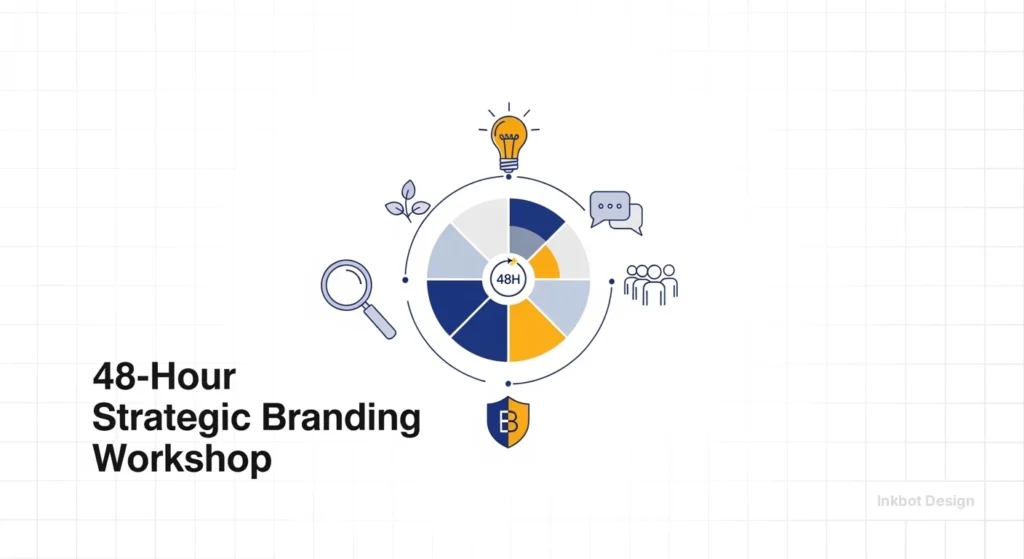
A high-stakes strategy session cannot be improvised.
At Inkbot Design, we operate on a strict 48-hour extraction cycle. If you are facilitating this internally or hiring an external consultancy, your schedule should mirror this level of commercial rigour.
Day 1: The Deconstruction (Internal Focus)
- 09:00 – The Heuristic Audit: A brutal review of current performance. We don’t look at what you like; we look at what is working. We use Google Search Console data and brand-mention maps to see where the market currently positions you.
- 11:00 – Category Entry Point (CEP) Mapping: We identify the specific moments a customer thinks of your category. If you sell coffee, the CEP isn’t “I want coffee”; it’s “I have a 3 PM slump” or “I need a neutral place for a business meeting.”
- 14:00 – The “Enemy” Identification: Every great brand is “for” something because it is “against” something else. We define your anti-persona.
- 16:00 – Root Attribute Extraction: We strip away the fluff to find the 3–5 core truths that are operationally true about your business today.
Day 2: The Construction (Market Focus)
- 09:00 – Competitive Displacement Strategy: Using a “Blue Ocean” framework, we map your competitors’ Distinctive Brand Assets. If they own “Blue and Professional,” we explore “Yellow and Energetic.”
- 11:00 – Synthetic Persona Stress-Testing: We run your new positioning through AI models—Synthetic Personas—to see how a “CFO in Manchester” vs a “Founder in Shoreditch” reacts to the value proposition.
- 14:00 – Verbal Identity & Narrative: We define the “Voice” not as a list of adjectives, but as a set of rules. We don’t say “We are funny”; we say “We use irony to highlight industry absurdities.”
- 16:00 – The Implementation Roadmap: We end with a Gantt Chart, not a mood board. Who is doing what by Tuesday?
Sector-Specific Extraction: One Size Fits None
A branding workshop for a B2B SaaS firm is a fundamentally different beast from a Luxury Fashion session. We tailor the “War Room” exercises based on your specific category dynamics:
| Industry Sector | Primary Workshop Focus | Key Metric to Solve |
| B2B SaaS & Tech | Trust & Category Creation | Reducing Sales Cycles / CAC |
| Luxury & Premium | Semiotics & Exclusivity | Price Elasticity / Margin |
| D2C E-commerce | Mental Availability & CEPs | Repeat Purchase Rate |
| Professional Services | Authority & Entity Linking | Lead Quality |
| Non-Profit | Narrative & Value Alignment | Donor Retention |
Configure Your Strategic Extraction
Select your sector to reveal the specific “War Room” focus required for your 2026 Strategy.
The Primary Focus
Overcoming the “Paradox of Choice.” We must simplify the value prop to be understood in < 3 seconds. Focus on "Progress," not "Features."
⚠ The Amateur Trap
Listing technical specifications instead of outcome-based narratives. “We have AI” is not a strategy.
Entity Association: Your brand must be semantically linked to industry standards (e.g., ISO, GDPR, Enterprise Security) in the Knowledge Graph to pass the AI “Legitimacy Check.”
The Primary Focus
Building the “Dream Gap.” We ignore utility to focus on high-status signaling. The strategy defines what you won’t do.
⚠ The Amateur Trap
Trying to be “Accessible” or “Friendly.” Luxury requires distance. Accessibility dilutes margins.
Sentiment Calibration: AI models scan for “Exclusive” linguistic patterns. We must purge “Sales” language to ensure engines categorise you as High-Net-Worth relevant.
The Primary Focus
Owning Category Entry Points (CEPs). We map the specific moments a user needs you (e.g., “3PM Slump” vs “Morning Coffee”).
⚠ The Amateur Trap
Debating “Brand Soul” instead of Distinctive Brand Assets. Consumers want solutions, not a relationship with your soap.
Digital Triggers: High-volume schema markup to ensure Product Knowledge Graphs instantly recognise your Unique Selling Attributes (USAs) against generic competitors.
The Primary Focus
Clinical differentiation. Moving from generic values (“Integrity”, “Innovation”) to specific, defensible operational truths.
⚠ The Amateur Trap
The “Post-it Note” fallacy. Brainstorming generic adjectives that apply to every other firm in the sector.
Authoritative Linking: Strategy must focus on “Seed Entities.” We map your brand to recognised authorities (e.g., governing bodies) to build a “Trust Cluster” for AI retrieval.
The B2B SaaS Focus: Reducing Friction
In the tech space, the workshop focuses on the Paradox of Choice. We work to simplify the value proposition so it can be understood in the 3 seconds a user spends on a landing page.
We use Jobs-to-Be-Done (JTBD) frameworks to align the brand not with “features,” but with the “progress” the customer is trying to make.
The Luxury Focus: Building the “Dream Gap”
For premium brands, we ignore “utility” and focus on “desire.” We perform a Semiotic Audit of the category to ensure your visual and verbal cues signal “High Status” without being cliché.
In these sessions, we often spend more time on what the brand won’t do than what it will.
Debunking the Myth: “Consistency is King”
For decades, designers have preached that “Consistency” is the most important part of branding. They are wrong. Distinctiveness is King.
Being consistent just means you look the same every time you fail to get noticed. You can be the most consistent brand in the world, but if you are boring, you are invisible.
The IPA (Institute of Practitioners in Advertising) has shown that “fame-seeking” campaigns—those that aim to get the brand talked about—are significantly more effective than those that focus on simple “consistency” of message.
In our branding workshop, we don’t just create a “Style Guide” that tells you where to put the logo.
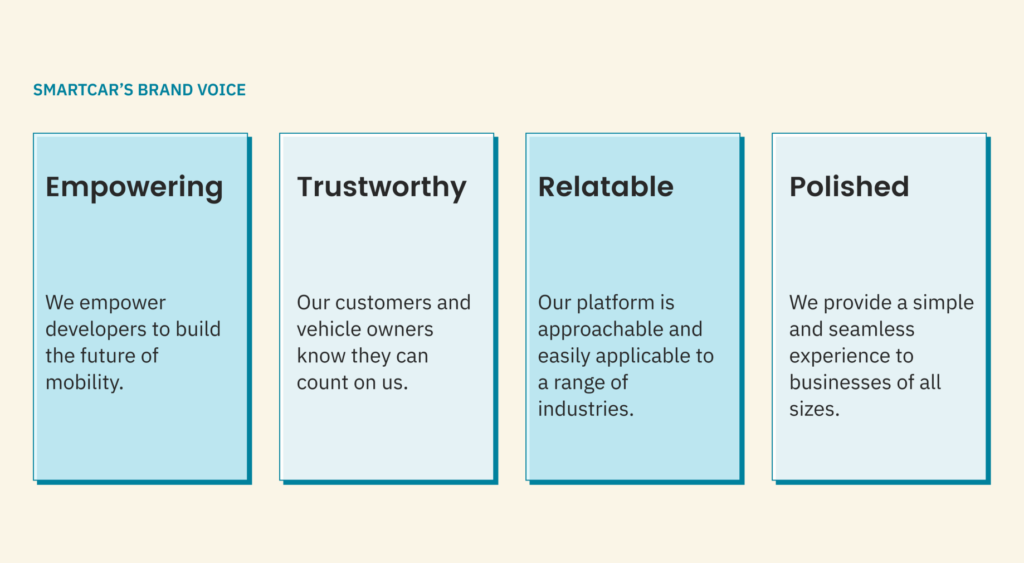
We build a system of core brand values and visual triggers that ensure you are recognisable in a split second, even if your logo isn’t visible. This is about owning a “Mental Shortcut.”
The State of the Branding Workshop in 2026
The world has changed. A workshop that doesn’t account for the following three factors is obsolete:
1. Generative Engine Optimisation (GEO)
Search is no longer about keywords; it is about “Authority.” Your workshop must define your brand purpose in a way that aligns with the semantic clusters Google and OpenAI use to rank “Trust.”
If your brand strategy doesn’t include a plan for how you appear in AI overviews, you are invisible.
2. Synthetic Persona Testing
We no longer rely on 10-person focus groups.
We use “Synthetic Personas”—highly detailed AI models trained on millions of data points—to test how different brand positions will land with specific demographics.
This allows us to A/B test a brand strategy before a single pixel is drawn.
3. The Shift to “Fractional” Branding
In 2026, SMBs are moving away from massive, multi-year agency retainers. They want a high-impact, short-burst strategy.
The “workshop” has become the product. It is the brand workshop that provides the blueprint, which the internal team then executes.
Navigating the “War Room”: Stakeholder Psychology
The greatest threat to a successful branding workshop isn’t a lack of creativity; it’s the HIPPO (Highest Paid Person’s Opinion).
When a CEO enters a room with a “gut feeling,” data-driven strategy often goes out the window.
To combat this, our workshops employ several psychological frameworks to ensure objective outcomes:
- Anonymous Brain-Writing: Instead of shouting out ideas (which rewards the loudest person), we use tools like Miro or FigJam for silent, anonymous idea generation. This ensures that the junior analyst’s brilliant market insight carries the same weight as the Founder’s intuition.
- The “Pre-Mortem” Exercise: We ask the team to imagine it is three years in the future and the new brand has failed spectacularly. Why did it happen? This “Prospective Hindsight” allows stakeholders to voice concerns without appearing “un-collaborative,” often revealing critical operational weaknesses.
- Loss Aversion Framing: We don’t ask “What do we gain by changing?” We ask, “What do we lose by staying the same?” Humans are biologically wired to avoid loss twice as much as they desire gain. Framing the branding workshop as a “Risk Mitigation” exercise often aligns the board faster than promising “Growth.”
Should You Run Your Own Branding Workshop?
We are often asked if a business can simply “do it themselves.” The answer is yes, but with a caveat: You cannot read the label from inside the jar.
The “DIY” Approach (Internal)
- Best for: Small startups (Pre-seed), personal brands, or teams with a highly experienced internal Brand Lead.
- Tools needed: A subscription to Miro, a copy of How Brands Grow by Byron Sharp, and a dedicated facilitator who is not the CEO.
- The Risk: Groupthink. Internal teams tend to protect “sacred cows” and avoid the uncomfortable truths required for a real pivot.
The Professional Approach (External Agency)
- Best for: Mid-market firms (SMEs), businesses facing market displacement, or companies undergoing mergers or acquisitions.
- The Benefit: Objective “Clinical Extraction.” An external strategist like Inkbot Design has no political stake in your company. We can tell you that your favourite product feature is actually a market liability without fear of being fired.
- The Output: You aren’t just paying for the session; you are paying for the Brand Strategy Roadmap—the technical blueprint that guides your marketing spend for the next 3–5 years.
The Verdict
A branding workshop is the most important investment you can make, provided it is led by a strategist and not a decorator.
If you are not prepared to have your assumptions challenged, do not book one.
If you are not prepared to discuss market economics, category entry points, and the technical realities of 2026 search, do not book one.
But if you are ready to stop wasting money on fluff and start building a brand that actually displacement incumbents, then you need a brand strategy that works.
Would you like to stop guessing and start growing?
Explore our services or request a quote to see how we can transform your business from a commodity into a category leader.
Frequently Asked Questions
What is the main goal of a branding workshop?
The primary goal is to align your business objectives with market perception. It’s about extracting the commercial “why” and turning it into a competitive “how.” We move beyond aesthetics to establish a foundation for long-term growth and mental availability in your category.
Will we get a new logo at the end of the workshop?
No. You get a strategy. A logo is a visual shorthand for that strategy. Designing a logo before the strategy is finalised is like building a house without blueprints. The workshop provides the brand strategy roadmap that informs the design.
Why do you hate Post-it notes?
I love Post-its; I hate performative creativity. Post-it notes often lead to “groupthink”, where the loudest person in the room wins. We prefer a structured extraction process that values data and expertise over whoever can write the fastest on a sticky note.
How much does a branding workshop cost in the UK (2026)?
For a professional, data-backed session, expect to invest between £5,000 and £25,000. The variance depends on the depth of the initial audit, the number of stakeholders involved, and whether Synthetic Persona testing is required. Beware of “Workshops” under £2,000; these are usually just sales pitches for logo design.
Can we run the workshop virtually?
Yes. In 2026, roughly 60% of our sessions are “Remote-First.” We use Miro for collaborative mapping and Zoom/Teams for high-definition facilitation. Virtual sessions are often more efficient, as they allow for “Asynchronous Discovery” before the live event, though in-person sessions remain superior for managing high-conflict stakeholders.
What is the difference between a branding workshop and a marketing strategy?
Branding is the “Who” and “Why”—it builds Mental Availability and long-term equity. Marketing is the “How” and “Where”—it focuses on short-term Physical Availability and sales. The workshop defines the brand’s rules; marketing executes them.
Do we need to do a “Brand Archetype” exercise?
In most cases, no. Archetypes (The Hero, The Sage, etc.) are often too reductive for the 2026 market. We prefer to focus on Distinctive Brand Assets and Unique Selling Attributes. We want you to look like a category leader, not a mythological trope.
What should we prepare before the session?
We provide a Discovery Audit document. You will need to gather your “Truth Data”: current sales figures, customer feedback, and any previous brand assets. The more data you bring, the less we have to guess.