How to Nurture a Creative Culture in Your Company
You know the sound. It is the deafening silence that follows the question, “Does anyone have any other ideas?”
In boardrooms across the UK, from Shoreditch startups to established Manchester manufacturing firms, this silence is the sound of money burning. It is not that your staff lack ideas.
They likely have dozens. But they have calculated the social and professional risk of voicing a half-baked thought and decided it is safer to stay quiet.
Most entrepreneurs confuse “creative culture” with “startup aesthetics.” They buy a foosball table, paint a wall neon orange, and remove the dress code, expecting innovation to magically manifest.
It won’t.
Creativity is not a mood; it is a discipline. It requires friction, specific operational frameworks, and a leadership team that not only tolerates failure but also budgets for it.
To build a productive workplace that generates intellectual property rather than just processing tasks, you need to dismantle the industrial-era management structures that currently hinder your team’s productivity.
This is not about making people feel “inspired.” It is about removing the fear that stops them from solving expensive problems,” notes Brian Lim, CEO of INTO THE AM.
- Build psychological safety so staff can voice ideas without fear; treat failure as systemic learning, not personal blame.
- Remove HiPPO decision-making: use data, braintrust reviews, blind voting and hypothesis-driven discussions.
- Design environments and processes for deep work and diverse thinking: zone offices, embrace neurodiversity, and adopt brainwriting.
What is Creative Culture?
A creative culture is an organisational environment where the friction of innovation is lower than the friction of the status quo.
It is a system where divergent thinking is incentivised, psychological safety is the baseline, and failure is treated as a data point rather than a disciplinary offence.

The Three Core Components
- Psychological Safety: The shared belief that the team is safe for interpersonal risk-taking. No one is punished for admitting a mistake or asking a “stupid” question.
- Cognitive Diversity: A mix of problem-solving styles (analytical, intuitive, structural) rather than just demographic diversity.
- Autonomy: The authority for individuals to determine how they work, provided they meet the agreed-upon outcomes.
The Inkbot Reality Check: If your “creative culture” relies on the CEO approving every colour choice, you don’t have a creative culture. You have a dictatorship with nice furniture.
The ROI of Creativity: Why This Matters
Before we look at the how, we must address the why. Creativity is often dismissed as a “soft skill” by CFOs who prefer spreadsheets. This is a strategic error.
McKinsey’s Design Index tracked 300 publicly listed companies over five years. They found that companies with top-quartile design and creative scores outperformed industry benchmarks by as much as 2:1.
Similarly, a Forrester report found that “creativity-led” companies grew their market share 1.5 times faster than their peers.
The maths is simple: In a commoditised market, your process, product, or brand voice is the only differentiator. If you cannot out-spend your competition, you must out-think them.
The “Toxic Culture” Self-Assessment
Be honest. Give yourself 1 point for every “Yes.”
- The Silence: In meetings, does everyone wait for the boss to speak first?
- The Blame: When a project fails, the first question is “Who did this?”
- The Filter: Do junior staff show you “safe” work because they know what you like?
- The Meeting Count: Do your creatives spend more than 15 hours a week in meetings?
- The HiPPO: Has a project ever been cancelled solely because a senior executive “didn’t get it”?
Score:
- 0: Healthy.
- 1-2: Stagnant.
- 3+: Toxic. Your talent is likely looking for a new job right now.
Neurodiversity as a Creative Engine
Modern Organisational Psychology identifies Neurodiversity as the secret weapon of high-growth creative firms.
A truly Creative Culture is one designed for multiple brain types, including those with ADHD, Autism, and Dyslexia.
These neurotypes often possess a higher capacity for Hyperfocus, Pattern Recognition, and Lateral Thinking—the three pillars of innovation.
However, traditional corporate environments act as a “sensory tax” on these individuals. To nurture this talent, your culture must evolve beyond the “standardised employee” model.
Implementing a Neuro-Inclusive Creative Strategy:
- Sensory Audits: Provide “low-stimulus” zones and noise-cancelling equipment as standard.
- Communication Flexibility: Some of your best creative thinkers may struggle with “verbal” brainstorming but excel in Asynchronous Communication via Notion or Slack.
- Task-Switching Awareness: Recognise that for a neurodivergent creative, an “emergency meeting” can derail an entire day of Deep Work.
By explicitly stating that your company values “different ways of thinking,” you build a Psychological Safety net that attracts elite talent.
This isn’t just a “DEI” initiative; it is a Topical Authority play in human capital management.
When your team feels they don’t have to “mask” their neurodivergence, they can dedicate 100% of their cognitive energy to solving your business’s most expensive problems.
Pillar 1: Killing the “HiPPO” (Highest Paid Person’s Opinion)
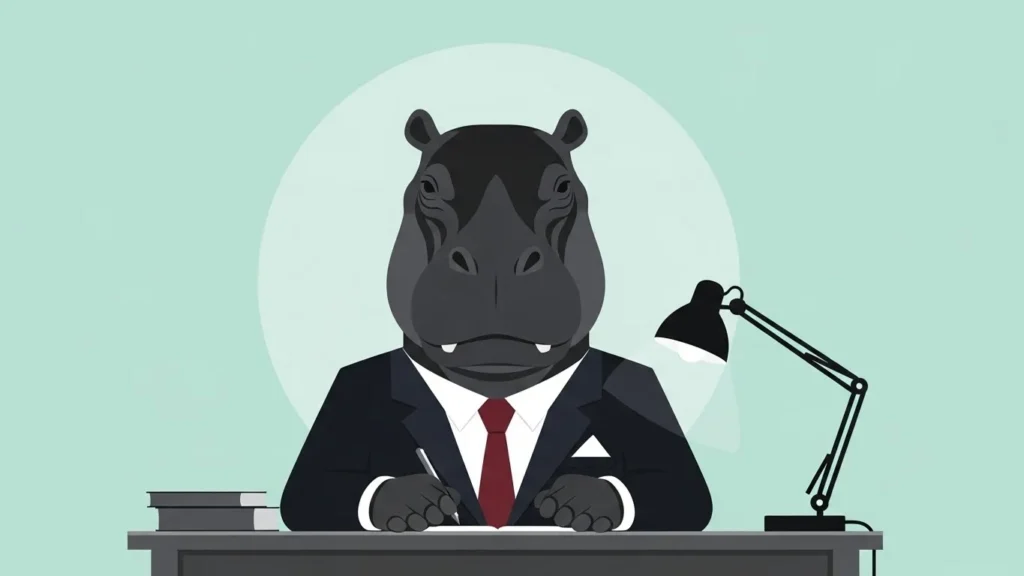
The single biggest barrier to nurturing a creative culture is the HiPPO.
When a decision needs to be made, and no data is available, the decision defaults to the person with the highest salary. This is fatal. The HiPPO is usually the furthest person from the actual work or the customer.
How to Neutralise the HiPPO
You must move from a culture of “Opinion” to a culture of “Hypothesis.”
- Ban “I think”: Replace it with “The data suggests” or “Our test showed.”
- The Braintrust Model: Borrowed from Pixar, a Braintrust is a group of peers who review a project. They have zero authority to mandate changes; they can only give candid feedback. The project owner (the creative) retains the right to ignore them. This removes the “boss says so” dynamic.
- Blind Voting: When reviewing concepts or strategies, anonymise the submissions. If the intern’s idea is better than the Creative Director’s, the intern wins.
Pillar 2: Psychological Safety and the “No-Blame” Autopsy
Google conducted a massive internal study called Project Aristotle to determine what made their ideal team. They looked at PhDs, personality types, and skill mixes.
The result? The number one predictor of team success was Psychological Safety.
If a junior designer feels their job is at risk if they pitch a bold campaign that flops, they will pitch a safe, boring campaign every time. Safe campaigns do not go viral. Safe campaigns do not win awards. Safe campaigns are invisible.
The Post-Mortem Protocol
When a project fails—and if you are creative, they will fail—you must hold a “Blameless Post-Mortem.”
The Wrong Way (Amateur):
- “Who messed up?”
- “Why didn’t you check this?”
- “Don’t let it happen again.”
- Result: Staff hide future mistakes.
The Right Way (Pro):
- “What part of the process allowed this error to happen?”
- “Did we lack the tools or the time?”
- “How do we alter the system so this is impossible next time?”
- Result: The system improves.
We apply this at Inkbot Design. If a client isn’t happy with a draft, we don’t berate the designer. We look at the brief. Was the creative brief ambiguous? Did we fail to ask the right questions during the onboarding process? The system takes the blame, not the person.
Pillar 3: The Myth of the “Open Plan” Office
Silicon Valley sold the world a lie: that putting 50 people in a warehouse with noise-cancelling headphones fosters “collaboration.”
It doesn’t. It fosters distraction and anxiety.
Deep creative work requires a State of Flow—a period of intense focus where the brain connects disparate ideas. It takes approximately 23 minutes to return to a state of flow after an interruption. In an open-plan office, the average interruption occurs every 11 minutes. You do the maths.
The “Eudaimonia Machine” Layout

You don’t need to rebuild your office, but you should zone it. Architect David Dewane proposes a linear structure, but you can adapt the principles:
| Zone | Purpose | Rules |
| The Gallery | Socialising & Inspiration | Loud talking permitted. Coffee machine here. |
| The Salon | Collaboration | Meeting rooms. Whiteboards. Active debate. |
| The Library | Deep Work | Strict silence. No phones. No tapping colleagues on the shoulder. |
| The Burrow | Isolation | Private pods for total disconnect. |
If you are a remote company, you can replicate this digitally. Create a “Library” channel on Slack where chatting is not allowed—it serves as a status indicator that you are in deep work mode.
Spatial Design & Digital Twin Workplaces
In 2026, your “office” is no longer just a physical location in London or Manchester; it is a Hybrid Ecosystem.
Nurturing a Creative Culture now requires Spatial Design that bridges the gap between physical presence and digital immersion.
With the rise of Spatial Computing (Apple Vision Pro, Meta Quest 4), the “Digital Twin” of your office must be as inspiring as the physical one.
Designing for “Spontaneous Collision”: The greatest ideas often happen in the “liminal spaces”—the walk to the coffee machine or the 5 minutes before a meeting starts.
In a remote or hybrid world, these collisions vanish. You must replace them with Digital Liminal Spaces.
- Virtual Co-working Rooms: Permanent Zoom or Gather.town links where people “sit” together in silence, replicating the feeling of a studio.
- The Digital “Whiteboard Wall”: A persistent digital space (like a 24/7 Miro board) where anyone can add an image, a quote, or a link at any time.
- VR Design Sprints: Using 3D environments to walk through product prototypes or store layouts, allowing for a level of Empathy that a 2D screen cannot provide.
The Eudaimonia Machine of the future isn’t just about desks and chairs; it’s about the Digital Architecture that allows a team in Tokyo and a team in Bristol to feel the same creative “vibe.”
Pillar 4: Abolish “Brainstorming”
Traditional brainstorming is broken. It usually involves a group of people shouting out ideas while one person writes them on a whiteboard.
Why it fails:
- Production Blocking: Only one person can speak at a time.
- Evaluation Apprehension: People self-censor out of fear of appearing foolish.
- Social Loafing: Passive participants let the loud ones do the work.
The Solution: “Brainwriting”
Switch to asynchronous ideation.
- The Prompt: The lead defines the problem clearly on a shared document (e.g., Notion or Miro) on a Monday.
- The Solitary Work: The team has 24 hours to add their ideas anonymously. No discussion. Just input.
- The Review: On Tuesday, the team gathers to review the ideas, not the authors.
- The Critique: Now you discuss and vote.
The “6-3-5” Protocol (A Meeting Template)
Stop shouting over each other. Use this method to generate 108 ideas in 30 minutes.
- Setup: 6 people. Clean sheets of paper (or a Miro board).
- Round 1 (5 Mins): Everyone writes 3 ideas on their sheet.
- The Pass: Pass the sheet to the person on your right.
- Round 2 (5 Mins): Read the 3 ideas on the sheet you just received. Add 3 new ideas below them (you can improve their ideas or start fresh).
- Repeat this process until the sheet is returned to the owner.
- Result: You now have 6 sheets full of ideas, with zero social anxiety or interruption.
This method gives introverts a voice and ensures you get the best ideas, not just the loudest ones. It is a technique we often use when developing digital marketing services strategies, where data and creativity must merge.
Creative Operations (CreativeOps) & Tooling
Creativity without a system is merely a hobby. To scale innovation, you need Creative Operations (CreativeOps).
This is the discipline of managing the people, processes, and tools that power the creative engine. In 2026, the friction between an “idea” and its “execution” is the primary metric of a healthy culture.
If your designers spend 30% of their time looking for files or waiting for feedback, your culture is leaking Intellectual Property. You must invest in a Creative Tech Stack that automates the mundane, leaving more room for the State of Flow.
| Tool Category | Recommended 2026 Stack | Impact on Creative Culture |
| Project Orchestration | Monday.com / Asana | Eliminates “Status Update” meetings; provides transparency. |
| Visual Collaboration | Miro / Figma | Enables real-time, global Brainwriting and prototyping. |
| Asset Management | Brandfolder / Adobe Experience Manager | Reduces “search friction”; ensures brand consistency. |
| Feedback Loops | Frame.io / Filestage | Centralises critique; removes the “email thread” nightmare. |
The “Standard Operating Procedure” (SOP) for Innovation:
A robust CreativeOps framework includes an immutable Creative Brief. Incomplete briefs are the number one killer of morale.
By enforcing a high standard of “Input Quality,” you show your team that you respect their time and their talent. This structure doesn’t stifle creativity; it provides the Guardrails that allow it to run at full speed.
Pillar 5: Feeding the Machine (Input = Output)
You cannot expect your team to output high-quality creative work if they are consuming low-quality inputs. If they stare at the same four walls and look at the same competitors every day, their work will become derivative.
The “Artist’s Date” for Business
Julia Cameron, author of The Artist’s Way, suggests a weekly solitary expedition to explore something interesting. In a corporate setting, we call this Inspiration Time.
- Policy: allocate 2-4 hours a week where staff must leave their desk.
- Activity: Go to a museum, read a book irrelevant to their job, walk in a park, or visit a high-end retail store to look at packaging.
- The Catch: They must share one thing they learned during the weekly stand-up.
This prevents the echo chamber effect. You want your web designer to look at architecture for inspiration, not at other websites. You want your copywriter reading fiction, not other SEO blogs.
The Artist’s Way
You’re stuck, and your creative genius is locked away by self-doubt and pressure. This is the fix. The Artist’s Way is the multi-million-copy program that transformed the careers of Elizabeth Gilbert and Tim Ferriss. Julia Cameron provides revolutionary techniques to uncover the blocks that restrict your creative flow and rediscover your passion and purpose.
As an Amazon Partner, when you buy through our links, we may earn a commission.
Consultant’s Note: I once audited a London agency where the creative director banned headphones and mandated everyone be at their desks by 8:30 AM. Their turnover rate was 40%. Creativity requires freedom, not factory conditions.
The State of Creative Culture in 2026
The landscape has shifted. The post-pandemic “hybrid” model is no longer a novelty; it is the standard. However, 2025/2026 has introduced a new player: Generative AI.
Nurturing a creative culture now means teaching your team to collaborate with machines, not fear them.
The AI-Human Creative Co-Pilot
To nurture a Creative Culture in 2026, you must pivot from viewing Artificial Intelligence as a threat to viewing it as a Cognitive Augment.
The companies winning the innovation race are those that have decentralised AI usage, moving away from a single “AI Department” toward a Prompt Engineering Culture.
This is where every employee—from HR to Product—is empowered to use Large Language Models (LLMs) like Gemini 2.5 and GPT-5 to bypass the “blank page syndrome.”
A creative culture now requires AI Psychological Safety. If staff fear that using AI will make them redundant, they will hide its use or underutilise the technology.
You must establish a “Centaur” workflow—where the human provides the Empathy, Ethics, and Strategic Intent, while the AI provides the Iterative Velocity.
At Inkbot Design, we’ve seen that teams that openly share their “AI prompts” innovate 40% faster than those that keep them secret.
The AI-Human Framework:
- Ideation (Divergence): Use AI to generate 100 “bad” ideas in 60 seconds.
- Curation (Convergence): Human experts use Critical Thinking to select the 3 ideas with the highest Market Viability.
- Refinement: Use AI for Rapid Prototyping, reducing the cost of failure to near zero.
By incentivising “Prompt Sharing” sessions, you turn AI from a solitary tool into a collaborative social asset.
This removes the gatekeeping of creativity and ensures that the Highest Paid Person’s Opinion (HiPPO) is challenged by data-backed AI insights.
Practical Steps: How to Start Tomorrow
You cannot change culture overnight, but you can change behaviour. Start here.
1. The “Bad Idea” Trophy
Introduce a monthly award for the “Best Bad Idea.” This is an idea that was tried, failed, but was grounded in solid logic and ambition. Celebrate the attempt. This signals to the team that inaction is worse than failure.
2. Diversify Your Hiring
Stop hiring people who look and sound like you. If you are a team of extroverted data analysts, hire an introverted artist. Cognitive friction causes sparks; sparks start fires. Read our guide on freelance survival to understand the mindset of independent thinkers—sometimes hiring a freelancer is the fresh blood a stagnant team needs.
3 Questions to Spot a Divergent Thinker
Don’t ask “What are your strengths?” Ask these to find the innovators.
- The “Anti-Portfolio” Question:
- “Tell me about a project that failed spectacularly. What did you love about the idea before it crashed?”
- (Looking for: Resilience and the ability to separate ego from outcome).
- The “Unpopular Opinion” Question:
- “What is a commonly held belief in our industry that you disagree with?”
- (Looking for: Critical thinking and courage).
- The “Constraint” Question:
- “If I gave you this project but removed 50% of the budget and timeline, how would you hack it?”
- (Looking for: Lateral thinking over linear complaining).
3. Kill the Meetings
Meetings are where creativity goes to die. Harvard Business Review research suggests that 71% of meetings are unproductive.
- Implement “No-Meeting Wednesdays.”
- If a meeting doesn’t have an agenda, decline it.
- If a decision can be made via email, cancel the meeting.
Giving your team back 4 hours a week is the cheapest raise you can give them, and it pays dividends in creative output.
4. Invest in Tooling
Nothing kills momentum like a slow computer or crashing software. If you are paying a designer £40,000 a year but won’t spend £20 a month on the right plugins or stock assets, you are tripping over pennies to lose pounds. Ensure they have access to premium resources. Even things like a high-quality design portfolio host or project management tool reduce friction.
Innovation Accounting – Measuring Cultural ROI
The “CFO Objection” is the most common barrier to nurturing a Creative Culture.
To overcome it, you must implement Innovation Accounting. This is a way of evaluating progress when traditional metrics like ROI or Net Profit are not yet applicable—particularly in the early stages of a cultural shift.
Key Performance Indicators (KPIs) for Creativity:
- The Experiment Velocity: How many new ideas did the team test this month? (Target: Increase by 20% YoY).
- The Failure Rate: If your failure rate is 0%, you aren’t being creative; you’re being safe. A healthy “Innovation Pipeline” should see a 30-50% failure rate at the prototype stage.
- Time-to-Market for “Wildcard” Ideas: The duration between an intern’s suggestion and a live market test.
- Employee Net Promoter Score (eNPS) in Creative Teams: Specifically measuring “Autonomy” and “Safety” scores.
By presenting these metrics in board meetings, you change the narrative from “Creativity is a cost centre” to “Creativity is a Risk Mitigation strategy.”
In 2026, the biggest risk is not failing on an idea—it is being too slow to adapt to a shifting market.
Innovation Accounting provides the data-backed evidence needed to sustain long-term cultural investment.
Conclusion
Building a creative culture is not about being “nice.” It is about being effective.
It is about constructing a framework where truth is valued over hierarchy, where silence is reserved for deep work rather than fear, and where the coffee is arguably the least important perk you offer.
It is messy. It requires you, the leader, to suppress your ego and accept that the best idea might come from the quietest person in the room. But if you can build this machine, you stop competing on price and start competing on value.
If you are struggling to define your brand’s visual identity or need a team that already embodies this culture to jump-start your project, we can help.
Request a Quote for Inkbot Design Services
Frequently Asked Questions
What is the biggest killer of creative culture in small businesses?
Fear. Specifically, the fear of criticism or retribution from leadership. When staff feel they must self-censor to protect their job security, innovation comes to a halt, and the company reverts to “safe” but ineffective work.
Can a traditional manufacturing firm really have a “Creative Culture”?
Absolutely. Creativity in manufacturing often manifests as Process Innovation or Waste Reduction. By applying Psychological Safety to the factory floor, you empower workers to suggest “hacks” that can save thousands in operational costs.
How do I measure the ROI of a creative culture?
Measure output quality, speed of problem-solving, and employee retention. Financial metrics include the “Design Index” (revenue growth relative to competitors) and the reduction in wasted time spent on doomed projects due to a lack of honest feedback.
Is “Design Thinking” just a buzzword?
No. It is a structured methodology for solving problems by prioritising consumer needs above business assumptions. It involves empathy, problem definition, ideation, prototyping, and testing. It reduces the risk of launching products nobody wants.
How do I encourage introverts to share ideas?
Stop using vocal brainstorming sessions. Use “Brainwriting” or anonymous digital suggestion boxes. Give people time to prepare their thoughts before a meeting rather than putting them on the spot.
What is the “15% Rule” and does it still work in 2026?
Originally made famous by 3M and Google, the 15% rule allows employees to spend a portion of their time on passion projects. In 2026, this is more vital than ever to prevent Creative Burnout and encourage “bottom-up” innovation that AI cannot predict.
What is the difference between “Cognitive Diversity” and “Demographic Diversity”?
Demographic diversity refers to background and identity; Cognitive Diversity refers to how people process information (e.g., analytical vs. intuitive). Both are essential, but cognitive diversity is the direct engine of Divergent Thinking.
Does an open-plan office help creativity?
Generally, no. Studies show open offices reduce face-to-face interaction and increase digital messaging as people try to regain privacy. They also destroy “flow state” due to constant interruptions. A zoned office with quiet areas is superior.
How do I nurture creativity in a remote team without “Zoom fatigue”?
Prioritise Asynchronous Ideation. Use platforms like Notion or Slack for “Brainwriting” sessions that last 48 hours, allowing people to contribute when they are in their own State of Flow rather than forcing it during a 60-minute video call.
How do I handle a “Brilliant Jerk” who is creative but toxic to the culture?
You must prioritise the Systemic Health over the individual output. A “Brilliant Jerk” destroys Psychological Safety, meaning for every 1 good idea they produce, they are likely suppressing 10 others from the rest of the team.