Project Time Management: An Essential Guide
Project time management is a crucial knowledge area that helps ensure projects are delivered on time.
It involves processes for defining project activities, sequencing them, estimating activity durations, developing schedules, and controlling schedule changes.
Mastering project time management leads to more accurate delivery time predictions, improved resource allocation, risk reduction, and greater stakeholder satisfaction.
This comprehensive guide covers everything you need to know.
- Define activities: Create a detailed WBS and activity list to enable accurate estimates and clear ownership.
- Sequence activities: Map dependencies with PDM to build logical, optimised workflow and identify the critical path.
- Estimate durations: Use expert judgement, parametric and three-point (PERT) estimating to quantify uncertainty and set realistic timelines.
- Control the schedule: Monitor progress, manage changes via integrated change control, and apply crashing or fast-tracking when recovery is needed.
Defining Project Time Management

Project time management refers to the processes required to manage the timely completion of projects. It helps answer critical questions like:
- What activities need to happen?
- In what order should activities occur?
- How long will each activity take?
- When will the project finish?
The key benefit of good project time management is predictability. By defining the project schedule upfront, the project manager can accurately forecast delivery dates and manage stakeholder expectations.
The core processes of project time management include:
- Defining activities
- Sequencing activities
- Estimating activity durations
- Developing the schedule
- Controlling changes to the schedule
These processes help build an understanding of the project’s structure, workflow, and timeline.
Why Project Time Management Matters
Effective project time management provides many advantages:
- Reduced uncertainty – A detailed schedule allows more precise tracking and forecasting.
- Better resource planning – By sequencing tasks appropriately, resources can be allocated more efficiently.
- Risk management – Identifying the critical path highlights project vulnerabilities.
- Stakeholder management – Accurate schedules and timely communication prevent surprises.
- Optimisation – Monitoring activity durations allows refinement of estimates.
The costs of poor time management include blown budgets, missed deadlines, and dissatisfied stakeholders.
Project Time Management Process Groups
There are four main process groups in project time management:
1. Define Activities
This involves breaking down the project scope and objectives into individual activities. The project manager identifies all the work needed to complete the project.
- Activities should be definable, measurable, and executable
- The work breakdown structure (WBS) is used to define activities
Techniques used:
- Work breakdown structures
- Rolling wave planning
- Expert judgement
2. Sequence Activities
This focuses on identifying activity dependencies and sequencing project work in the correct order so that the project can move logically from start to finish.
Tools used include:
- The precedence diagramming method (PDM)
- Dependency determinations
Key outputs = project schedule, network diagrams
3. Estimate Activity Durations
The duration of each activity must be estimated to develop the project schedule. Estimating involves approximating how long each activity will take.
Key estimation approaches:
- Expert judgement: Consult subject matter experts
- Analogous estimating: Base estimates on similar projects
- Parametric estimating: Quantitatively model activity durations
- Three-point estimates: Estimate optimistic, most likely, and pessimistic durations
4. Develop Schedule
This combines defined activities, activity sequencing, and duration estimates to create the project schedule. The schedule should have a logical flow and timing that aligns with project objectives.
Techniques used include:
- Critical path method
- Critical chain scheduling
- Resource optimisation
- Modelling tools (e.g. project management software)
Key outputs = project schedule + supporting schedule management plans
Key Aspects of Project Time Management

There are four main aspects of comprehensive project time management:
1. Activity Definition
Defining project activities involves:
- Identifying the deliverables
- Breaking down the work into manageable components
- Describing the activities in sufficient detail
- Documenting the attributes of each activity
The activity list is foundational – the schedule will be inaccurate without properly defined activities.
Best practices in activity definition:
- Involve the project team in brainstorming activities
- Leverage a Work Breakdown Structure (WBS)
- Specify measurable outcomes for each activity
- Outline critical inputs, tools, and outputs
- Define activity ownership and responsibilities
2. Activity Sequencing
Once all activities are defined, they must be sequenced in the correct order based on:
- Mandatory dependencies – activities constrained by physical laws or project requirements
- Discretionary dependencies – preferred sequencing choices made by the project manager and team
Standard sequencing techniques include:
- Precedence Diagramming Method (PDM)
- Dependency Determination
- Lead and Lag Analysis
Proper sequencing sets the logic for activity ordering and parallelisation.
3. Resource Analysis
The resource analysis step involves:
- Identifying types and quantities of resources required, including:
- People
- Equipment
- Materials
- Services
- Facilities
- Outlining availability and constraints
- Allocating resources to activities over time
This information serves as an input for estimating durations.
4. Advanced Duration Estimating: Beyond Guesswork
Estimating is not a “best guess”; it is a statistical exercise. To achieve accuracy that satisfies stakeholders, you must move beyond Analogous Estimating (comparing to the past) and use Three-Point Estimating based on the Beta Distribution (PERT).
To calculate the PERT expected duration (E), use the formula:
E = (O + 4M + P) / 6
Where:
- O (Optimistic): The best-case scenario.
- M (Most Likely): The most realistic duration.
- P (Pessimistic): The worst-case scenario.
Standard Deviation for Risk:
To understand the volatility of your estimate, calculate the standard deviation:
σ (sigma) = (P – O) / 6
A high σ indicates high uncertainty, signalling that you need a larger Contingency Reserve.
Comparison of Estimation Methods
| Method | Best For | Precision |
| Analogous | Early stages with little data | Low |
| Parametric | Repetitive tasks (e.g., coding per line, laying bricks) | High |
| Bottom-Up | Complex work packages in a mature WBS | Very High |
| Three-Point | High-risk, unique activities | Medium-High |
Developing the Project Schedule
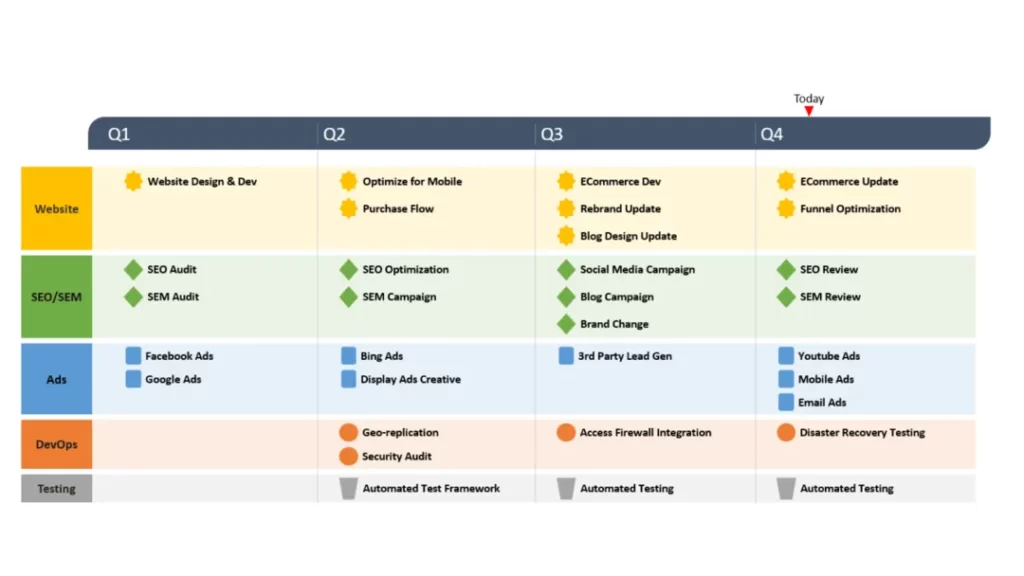
Project managers use several scheduling techniques:
Critical Path Method
The critical path method (CPM) is a popular scheduling technique. It includes:
- Identifying the critical path (the sequence of activities that directly impact the project completion date)
- Calculating total float and free float
- Monitoring schedule performance
CPM enables project managers to focus on the activities that impact delivery timelines. For example, a two-week delay in a critical path activity leads to a two-week project delay.
Critical Chain Project Management
Critical chain scheduling focuses on resource availability as the primary constraint rather than the critical path. It includes buffer management strategies. Benefits include:
- Create realistic resource-optimised schedules
- Protect against uncertainty
- Improve due date performance
- Reduce multitasking
However, implementing it can be complex when resources need to be shared across multiple projects.
These principles are particularly useful in project management in engineering, where managing shared resources, complex dependencies, and strict deadlines is critical for project success.
Agile Scheduling
Agile methodologies take an iterative approach to scheduling:
- The schedule is defined progressively in a rolling-wave fashion
- Short timeframes (sprints) are planned in detail
- Future sprints are scheduled at a high level
Key benefits of agile scheduling include responding to emerging requirements and improving timeline accuracy. However, the overall project duration risk may be higher.
The Future of Scheduling: AI and Predictive Analytics in 2026
By 2026, project time management will have shifted from manual entry to Augmented Intelligence. Modern project managers no longer spend hours moving bars on a Gantt chart; instead, they oversee AI engines that predict delays before they occur.
Systems like Oracle Primavera Cloud and LiquidPlanner now use machine learning to analyse thousands of historical data points from your past projects. If your team historically underestimates “Testing” phases by 15%, the AI automatically adjusts your current duration estimates to reflect reality.
Key 2026 Automation Features:
- Auto-rebalancing: If a developer marks a task as “at risk” in Jira, the engine automatically recalculates the Critical Path and suggests resource reallocations.
- Sentiment Analysis: AI scans team communication in Slack or Microsoft Teams to detect burnout or confusion that might lead to upcoming schedule slips.
Scenario: A marketing agency in London uses predictive scheduling to manage a product launch. The AI detects a trend of late approvals from the legal department and automatically adds a 3-day “buffer” to all future legal review tasks, preventing a total project delay.
Controlling the Schedule
While the schedule sets the plan, the path rarely follows it precisely. Controlling the schedule is, therefore, essential.
Schedule control involves:
- Measuring activity progress – Monitoring starts, finishes, and percentage complete
- Comparing progress to plans – Assessing actual performance against schedule forecasts
- Analysing variances – Identifying causes for overruns or accelerated work
- Taking corrective action – Resolving issues driving variances, including:
- Adjusting resource allocation or utilisation
- Changing activity sequencing
- Modifying the critical path
- Altering activity durations
- Updating risk plans
- Managing changes – Handling inevitable change requests, defects, and other adjustments via Integrated Change Control without allowing scope creep
- Updating schedules – Maintaining schedule accuracy and relevance.
Continuous control minimises variances and adherence to the schedule baseline. Measurements drive informed decisions.
Critical tools for schedule control include
- Progress reports,
- Schedule change requests
- Variance analysis,
- Earned Value Management,
- What-if scenario planning,
- Schedule management software.
With vigilant monitoring and action, the project has the best chance of finishing on time.
Schedule Compression: How to Get Back on Track
When your Schedule Performance Index (SPI) falls below 1.0, you are behind. You have two primary levers to pull to recover time: Crashing and Fast-Tracking.
1. Crashing (Adding Resources)
Crashing involves adding resources to the Critical Path to shorten durations.
- Example: Hiring two extra freelance designers to finish a website UI in 3 days instead of 7.
- The Catch: This increases costs and can lead to the “Law of Diminishing Returns” (too many cooks in the kitchen).
2. Fast-Tracking (Parallel Processing)
Fast-tracking involves performing activities in parallel that were originally planned in sequence.
- Example: Starting the “Drafting” of a manual while the software is still in “Beta Testing,” rather than waiting for testing to finish.
- The Catch: This significantly increases Project Risk and the potential for rework if the testing phase reveals major changes to the manual.
When to use which?
- Use Crashing if you have extra budget but a hard deadline.
- Use Fast-Tracking if you have no extra budget but can tolerate a higher risk.
Top Causes of Poor Project Time Management

Despite best efforts, project delays occur. Common reasons include:
1. Unrealistic Deadlines
Aggressive, unrealistic, imposed deadlines are often overrun due to a lack of allocation flexibility or unplanned risks.
2. Scope Creep
Scope changes drive cost/schedule overruns. A recent study found that
- 67% of projects experience added scope.
- Scope creep causes >70% of timeline delays.
Careful change control processes are essential and managed by the company’s CFO.
3. Inaccurate Estimates
Bad estimates cause incorrect schedules and resource plans, leading to delays:
| Reason for Bad Estimate | % Projects Impacted |
| Unexpected risks | 83% |
| Incomplete data | 74% |
| Lack of experience | 63% |
Estimating is difficult, but iterative estimation with safety buffers can help.
4. Communication Breakdown
Insufficient status reporting causes activity misalignments. Over 50% of project managers indicate communication issues are the main driver for timeline slips.
5. Resource Issues
Resource conflicts and unplanned changes are culprits behind >72% of late projects:
| Resource Delays | Rate |
| Staff turnover | 41% |
| Insufficient team skills | 38% |
| Unexpected team member availability | 33% |
Getting resources aligned is essential to completing work as planned.
The Psychology of Delay: Parkinson’s Law and Student Syndrome
Even with perfect software, human nature can derail a schedule. Understanding two core concepts is vital for any project leader:
- Parkinson’s Law: “Work expands to fill the time available for its completion.” If you give a team two weeks for a task that takes three days, they will likely take the full two weeks.
- Student Syndrome: The tendency to wait until the last possible moment to start a task. This removes any “safety margin” for unexpected issues.
The Solution: Buffer Management. In Critical Chain Project Management (CCPM), you remove individual task buffers and move them to the end of the project (the Project Buffer). This encourages teams to finish tasks as quickly as possible, knowing there is a collective safety net at the end of the project.
Project Scheduling Methods and Tools
Project managers have various methods and tools available to plan and control schedules:
1. Critical Path Analysis
Critical Path Analysis models task dependencies to calculate start/finish dates and float. This identifies the critical path – the mandatory sequence of items driving due dates.
2. Critical Chain Project Management (CCPM)
CCPM inserts buffers to protect due dates and manage resources to prioritise critical tasks. This accounts for limited availability and uncertainty.
Fundamental techniques include:
- Resource levelling
- Buffer sizing
- Buffer management
CCPM mitigates classic project weaknesses like student syndrome and Parkinson’s law.
3. Agile Scrum
Scrum splits projects into short sprints with flexible planning. Daily standups enable transparency into progress and blockers. New priorities are collaboratively defined at the start of each sprint.
This allows for rapid adaptation in complex projects.
4. Lean Scheduling
Lean project scheduling focuses on optimising flow and eliminating waste using techniques like
- Push vs pull scheduling,
- Workload levelling,
- Planning workflow,
- Managing queues,
- Responding to variability.
The goal is to maximise value-adding work.
5. Schedule Simulation
Project simulation models use Monte Carlo analysis to estimate durations and test scenarios. This evaluates schedule performance probabilistically across a range of assumptions.
Simulation enables contingency planning and risk mitigation.
Standard scheduling tools include:
- Microsoft Project
- Schedule Planner
- Oracle Primavera
- SAP Project System
- Celoxis
- LiquidPlanner
- TeamGantt
- Smartsheet.
Robust tools facilitate adherence to best scheduling practices for optimal results.
Best Practices for Project Time Management

Now, let’s drill down into the top 10 best practices to apply throughout the project time management processes.
1. Define a Work Breakdown Structure
The foundation for the entire time management effort begins with clearly defining project deliverables and decomposing significant work elements into smaller, more manageable pieces.
A work breakdown structure (WBS) outlines all key deliverables, related “child” components, and specific activities needed to produce project outcomes. The level of detail should allow for a realistic estimate of each activity’s duration.
A well-defined WBS clarifies scope components and prevents scope creep for all stakeholders. It also serves as the basis for sequencing activities.
Here are tips for developing a practical project WBS:
- Organise deliverables, components, and activities within a numbered hierarchical structure
- Decompose work packages to the activity level, where durations can be realistically estimated
- Validate the completeness of the WBS with subject matter experts
- Establish a WBS dictionary clearly defining elements
- Align the WBS to how work will be executed
Investing effort upfront in the WBS pays dividends later in achieving project time management excellence.
2. Sequence Activities Logically
With the project scope fully decomposed into activities, the next best practice is to determine the logical relationships between them. Documenting interdependencies helps develop an achievable schedule.
To sequence work packages and activities:
- Identify predecessor and successor relationships – Note activities that must finish before other activities can start, highlighting enforced sequencing
- Map dependencies – Connect related and contingent activities with finish-to-start, start-to-start, finish-to-finish, and start-to-finish links as needed
- Confirm sequence logic: review activity relationships; validate aligned sequencing with subject matter experts.
- Define milestones – Pinpoint significant intermediate completion points requiring specific dates/times.
Well-defined activity sequences provide schedulers with vital information for the following process.
3. Estimate Activity Durations Accurately
Project time estimators must predict realistic activity durations using an activity list and logic sequences. This serves as the third critical practice.
Careful attention should be paid to evaluating the duration of effort-driven and time-constrained activities. Consider several inputs for estimating:
- Resource assignments – Required staffing skill sets, numbers needed, and availability influence timeframes
- Scope detail – Precise specifications set boundaries the scope duration
- Historic data – Reference previous similar projects for estimates based on actual data points
- Subject matter expertise – Experienced professionals provide guidance tied directly to the required work effort
Estimate at the appropriate detail level, tailoring techniques to project size, budget, and other variables. Expected duration estimating approaches include:
- Analogous estimating – Comparing to actual durations from previous similar activities
- Parametric estimating – Applying quantitative modelling, simulation, or statistical analysis to predict durations
- Three-point estimates – Determining optimistic, pessimistic, and most likely durations
Document assumptions, ranges, and confidence factors associated with estimates.
Accurate activity duration estimates allow the creation of a realistic schedule.
4. Develop a Practical Schedule
With defined activities, sequences, and duration estimates in place, schedulers can assemble an end-to-end project timeline. This comprehensive schedule constitutes the fourth best practice area.
Effective scheduling entails:
- Sequencing all activities according to predecessors and successors
- Assigning durations per estimates or resource constraints
- Mapping dates to each activity based on sequence logic and durations
- Presenting the schedule in a suitable format with a timeline and milestones noted
- Confirming achievability by reviewing with the project manager and team
The master schedule provides a time-based awareness and expectation of when project work will occur. It guides timely completion according to priorities, constraints, risks, and resources.
Use capable scheduling software for complex projects. However, simple hand-drawn Gantt charts work for smaller efforts, too. Set the schedule baseline to measure against going forward.
Updating the schedule as changes occur remains vital throughout the project lifecycle.
5. Define a Time Management Plan
Every project needs an effective time management plan spelling out roles, processes, tools and management approaches. Treat this as the fifth best practice area.
Elements to cover within the time management plan include:
- Work definition approach – Work breakdown process for deliverables, decomposition, and activity identification
- Activity sequencing method – Process for linking activities and establishing precedence relationships
- Duration estimating techniques – Details on methods, assumptions, ranges, and accuracy criteria for estimating
- Schedule development process – How the scheduling tool will be used; steps for assembling, reviewing, and confirming the schedule
- Schedule baseline & revisions – How and when schedule baseline gets set; change control process.
- Timeline reporting – Frequency, content, and formatting for presenting schedule status updates
- Project calendar & constraints – Details on project calendars guiding schedule; activity constraints
- Monitoring & controlling process – Approach for tracking progress, handling delays, and change control process
Defining these time management elements in writing improves consistency in application across projects while offering a process-tailoring mechanism for future efforts.
6. Track Progress Against Schedule
As project execution begins, carefully monitoring progress versus the schedule constitutes the next vital best practice.
This oversight facilitates the identification of early activity delays before they disrupt downstream work. It also yields critical data for improving estimating and scheduling practices.
Several valuable techniques help track execution status:
- Progress reports – Regular status reporting from the project team referencing schedule activity completion
- Milestone tracking – Closely monitoring milestone achievement against a timeline
- Earned value tracking – Applying earned schedule metrics to diagnose schedule problems
- Project software updates – Maintaining per cent or actual completions by activity in scheduling software
- Work performance data – Gathering statistics on completion estimates versus actuals by activity
Analyse any emerging schedule disconnects to pinpoint root causes. Proactively communicate schedule threats to stakeholders along with risk mitigation tactics.
Continuously updating the master schedule to reflect actual status is critical to keeping projects on track. Use schedule performance data to estimate likely completion dates for remaining work.
7. Manage Changes to the Schedule
Project schedules rarely proceed precisely as planned. The seventh best practice for managing ongoing changes constitutes integrated change control. This accommodates needed schedule adjustments while minimising unnecessary disruption.
Project change management processes for the schedule involve:
- Documenting change requests that affect the project schedule
- Analysing change impact on activity sequences, resource needs, and time estimates
- Updating schedule to reflect approved changes
- Managing deviations outside of change control when unplanned events force activity delays
Look to shorten certain activities, crash the schedule, or fast-track changes to minimise delays in the timeline from approved changes.
Notify all stakeholders of schedule revisions. Seek ways to offset shifts in completion dates if compelled by changes.
8. Optimise Time Utilisation
Careful monitoring may reveal inefficiencies in the utilisation of time on project activities. This opens the door for process optimisations, constituting the eighth best practice area.
Tactics to improve time efficiency include:
- Resource levelling – Smoothing out peaks and valleys in staff workloads
- Schedule compression – Shortening timeframes by crashing activities or fast-tracking changes
- Dependency changes – Modifying predecessor and successor relationships to support concurrent work
- Automating processes – Implementing tools, templates, and workflows to speed up administrative tasks
Process analysis using lean principles can drive time efficiencies—review activity duration discrepancies between estimates and actuals to update estimation assumptions.
Continuous improvement applies to enhancing schedule development, maintenance, and reporting processes. Mastering time utilisation best practices helps complete projects sooner.
9. Use Milestones Effectively
Defining interim schedule milestones offers a powerful time utilisation technique tied to the ninth best practice opportunity.
Well-placed milestones:
- Mark major completions – Highlight critical component deliveries for stakeholders
- Support phased work – Facilitate review before subsequent phase launch
- Segment schedules – Provide intermediate goals for lengthy timelines
- Pinpoint slippage – Surface delays in achieving milestone dates
- Show progress – Indicate cumulative plan completion as milestones are finalised
Set milestones judiciously at logical breakpoints in project work packages or phases. Associate them directly with the completion of significant deliverables per the WBS.
Review upcoming milestone commitments at status meetings. Evaluate the causes of missed milestones and their impact on downstream activities and final project completion.
10. Continuously Refine Time Management Processes
The final overarching best practice involves continuous process improvement to enhance project time management.
Identify lessons learned regarding schedule development, maintenance, reporting, and performance. Quantify areas for improvement tied to time estimate accuracy, milestone attainment, activity durations, and resource management.
Implementing time management process refinements better positions organisations for scheduling excellence as lessons carry forward to subsequent projects.
2026 Project Time Management FAQs
Still have questions about managing project time? These FAQs provide helpful answers:
How do I calculate the ‘Critical Path’ in 2026?
Most modern tools like Asana or Miro calculate this automatically using a “Forward Pass” and “Backwards Pass” algorithm. Manually, you identify the longest sequence of dependent activities with zero Total Float.
What is the difference between ‘Lead Time’ and ‘Lag Time’?
Lead Time allows accelerating a successor task (e.g., starting the paint job 2 days before the flooring is finished). Lag Time is a mandatory delay (e.g., waiting 3 days for concrete to dry before building on it).
How does remote work impact project schedules?
It often introduces “Asynchronous Lags.” You must account for time-zone offsets in your Resource Calendar. Tools like Timezone.io are essential for sequencing hand-offs between global teams.
Is ‘Scope Creep’ the same as a schedule delay?
No, but it is the primary cause. When the Work Breakdown Structure (WBS) expands without adjusting the schedule baseline, the project inevitably slips.
What is a ‘Baseline’ and why shouldn’t I change it?
The baseline is your original approved schedule. You should only change it via a formal Change Request process. Constant re-baselining hides poor performance and prevents honest “Lessons Learned” sessions.
Robust time management is crucial to enabling success in every major project. Follow the recommendations to effectively plan, sequence, resource, track, and adapt your project schedule. With consistent oversight and control, your initiative will be well-positioned to finish on time.