Email Marketing ROI: SMB Guide & Free Calculator
Most marketing managers are lying to themselves. They stare at a “4000% ROI” figure and pat themselves on the back while their brand equity erodes.
If you are calculating your email marketing ROI based solely on the last-click revenue of a single campaign, you are not doing marketing; you are doing accounting—and doing it badly.
The obsession with vanity metrics—such as opens, clicks, and total list size—is a distraction from the only figure that truly matters: the net profit generated per subscriber over their entire lifecycle.
Every unread email you send is a tiny withdrawal from your brand’s “reputation bank.” Eventually, that account goes into overdraft, your deliverability tanks, and your ROI evaporates.
- Measure net profit per subscriber over their lifecycle, not last-click revenue or vanity metrics.
- Prioritise list quality: prune inactive subscribers to cut costs, improve deliverability, and boost engagement.
- Include full costs and assisted conversions in ROI calculations; use GA4, LTV, and AI-driven segmentation for accuracy.
What is Email Marketing ROI?
Email marketing ROI is the measure of the total profit generated from email campaigns relative to the total costs incurred to execute them. It is not merely a percentage; it is a diagnostic tool that reveals the effectiveness of your communication strategy, digital marketing services, and technical infrastructure.
- Total Revenue: All sales directly or indirectly attributed to email touchpoints.
- Total Investment: The sum of ESP fees, staff hours, creative design, and data acquisition costs.
- Net Profit: The remaining value after all operational and marketing expenses are deducted.
2026 Email Profit Predictor
Are you hitting the projected 2026 benchmark of $42 return for every $1 spent? Enter your metrics below to see your current ROI vs. your potential.
(2026 Benchmark: 36x – 42x)
The Mathematics of Profit: Beyond the Basic Formula
Standard ROI calculations are often too simplistic for a complex B2B or high-ticket B2C environment. To understand the true health of your programme, you must dissect the components of the investment.

1. The Cost of Acquisition (CAC)
Many entrepreneurs overlook the cost of acquiring a subscriber for their list. If you spent £1,000 on Meta ads to gain 100 subscribers, each subscriber starts with a -£10 “debt.” Your email ROI must pay off this debt before it can be considered profitable.
2. Technical Debt and Deliverability Costs
A low-cost ESP might seem like a win for ROI, but if your emails land in the “Promotions” tab or, worse, the “Spam” folder, your “Investment” is effectively wasted. High-performance email requires investment in newsletter design that is accessible and technically sound.
3. The Lifecycle Value (LTV)
Email is a long game. A subscriber might not make a purchase for six months. A forensic ROI analysis tracks the cumulative revenue from a cohort of subscribers over time, rather than a 24-hour window following the send.
The Excel-Ready Formula
Don’t trust the dashboard. Run these numbers yourself.
- Direct Revenue: Total sales from Last-Click Email Attribution.
- Assisted Revenue: Total sales where email was a touchpoint (use GA4 “Assisted Conversions”).
- Total Cost: (ESP Monthly Fee + Agency Fees + Staff Hours x Hourly Rate).
- The Calculation: ((Direct + Assisted Revenue) – Total Cost) / Total Cost * 100
Example: (£10k Revenue – £2k Cost) / £2k = 4.0. Multiplied by 100 = 400% ROI.
The “List Size Fallacy”: Why Your 50k List is Killing Your ROI
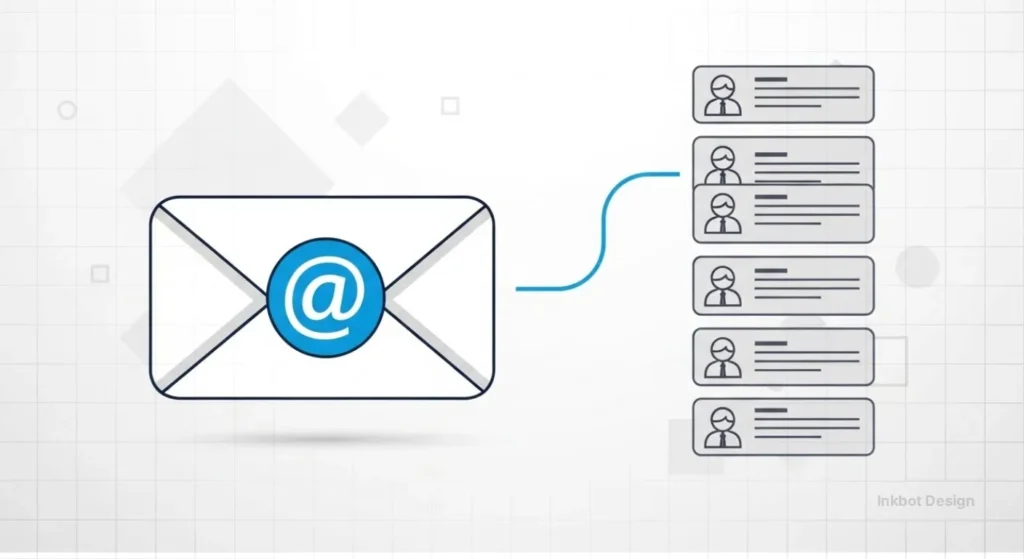
I once audited a client who boasted about their 50,000-subscriber list. They were paying hundreds of pounds a month for their ESP and spending 20 hours a week on content. Their open rates were a dismal 3%.
When we ran the numbers, they were actually losing money on every send. They were paying to talk to people who weren’t listening. This is the “Zombie Subscriber” effect.
Debunking the Myth: More is Better
The marketing industry has a dangerous obsession with scale. They tell you to “grow your list at all costs.” This is outdated, pre-GDPR nonsense. In 2026, the quality of your list is the primary driver of ROI.
The Data-Driven Reality:
Data from a 2024 study by the DMA indicates that 68% of consumers feel overwhelmed by the volume of marketing emails they receive. When you send to unengaged users, Gmail and Outlook notice.
They see the lack of engagement as a signal that your content is unwanted. Consequently, they start diverting your emails away from the primary inbox for everyone, including your most loyal customers.
How to Fix It: Aggressive Pruning
To improve ROI, you must delete people. It sounds counterintuitive, but removing subscribers who haven’t opened an email in six months will:
- Lower your ESP costs immediately.
- Improve your sender reputation.
- Increase your open and click rates (improving the “signals” sent to ISPs).
- Focus your audience segmentation efforts on individuals who are genuinely interested in making a purchase.
Template: The “Are We Over?” Email
Before you delete inactive subscribers, send this one-shot campaign.
Subject: Is this goodbye?
Hi [Name],
I noticed you haven’t opened our last few emails. I get it—inboxes are crowded.
I don’t want to clutter your day if you’re no longer interested.
- If you wish to stay, click here [Link] to confirm.
- If you want to leave: No action needed. We will automatically unsubscribe you within 48 hours.
No hard feelings either way.
[Your Name]
The Wrong Way vs. The Pro Way
| Feature | Amateur (ROI Killer) | Pro (ROI Maximiser) |
| List Growth | Buying lists or using “shady” pop-ups. | Double opt-in and zero-party data. |
| Segmentation | Sending the same “Blast” to everyone. | Behavioural triggers and drip marketing. |
| Testing | Testing subject lines once a year. | Continuous A/B testing of offers and timing. |
| Data Focus | Total list size and open rates. | Revenue per subscriber and LTV. |
| Technical | Ignoring SPF, DKIM, and DMARC. | Full BIMI and deliverability monitoring. |
Advanced Attribution: Who Actually Gets the Credit?
Attribution is where ROI calculations usually fall apart. If a customer sees a Facebook ad, reads three blog posts, and then clicks on an email to make a purchase, who gets the credit?
Last-Click Attribution (The Flawed Standard)
Most ESPs use last-click attribution. If the user clicks the email and makes a purchase within 24 hours, the email receives 100% of the credit. This overestimates email’s value and ignores the “top of funnel” work done by other channels.
Assisted Conversions
Smart SMB owners look at “Assisted Conversions.” Email is often the “closer.” It reminds the user of the value they saw elsewhere. By using Google Analytics 4 (GA4) to track the entire path to purchase, you can see how email supports other channels, providing a more nuanced—and honest—ROI figure.
The State of Email Marketing ROI in 2026
We are entering the era of “Predictive ROI.” In the last 18 months, AI integration within ESPs has moved from “novelty” to “necessity.”
The Shift to Zero-Party Data
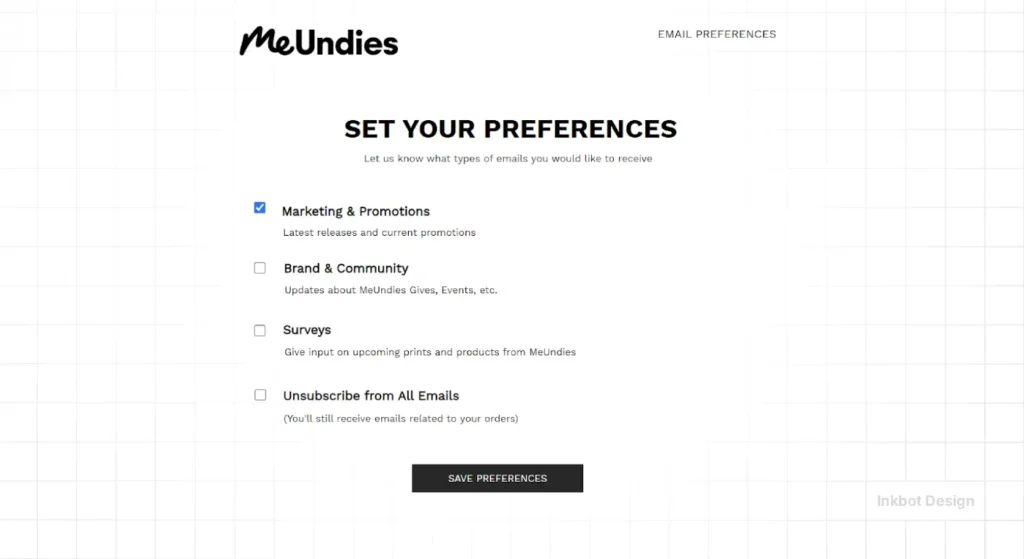
With the death of third-party cookies and the tightening of privacy laws, email has become the primary vault for first-party and zero-party data. ROI in 2026 isn’t just about the sale; it’s about the data point that drives it. Knowing that a customer prefers “Blue over Red” is a valuable asset that can be leveraged across all marketing channels.
AI-Driven Predictive Churn
Modern systems now predict when a subscriber is about to disengage before they stop opening emails. By triggering a specific re-engagement sequence at the exact moment of predicted fatigue, brands are seeing a 15-20% increase in subscriber retention, which directly impacts their long-term ROI.
Benchmark: What is “Good” ROI in 2026?
Don’t compare apples to oranges.
| Industry | Average ROI ($ returned per $1 spent) |
| Retail / E-commerce | $45 : $1 (High volume, low margin). |
| Software / SaaS | $36 : $1 (High LTV, higher CAC). |
| Media / Publishing | $50 : $1 (Low cost, high engagement). |
| Agency / B2B | $20 : $1 (Long sales cycle, huge deal value). |
Real-World Case: The Adidas “Digital Over-Correction”
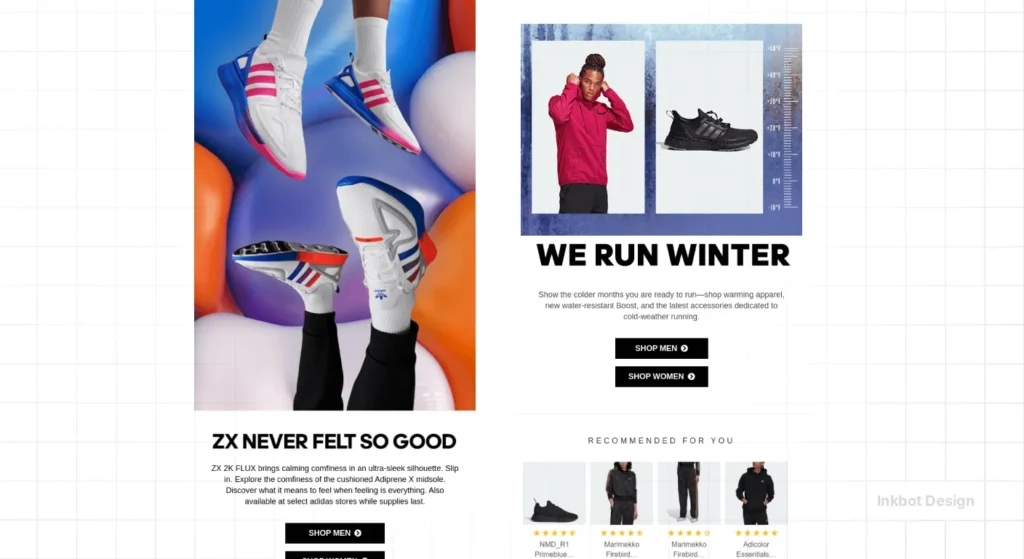
In 2017, Adidas famously shifted its focus heavily toward digital and email, believing it was more “efficient” and offered a clearer ROI than brand-building TV ads.
While their short-term ROI looked fantastic on a spreadsheet, their long-term brand health suffered. They realised that “efficiency” does not always equate to “effectiveness.”
This serves as a warning: do not pursue email ROI so aggressively that you become a “discount brand.” If every email is a “20% OFF” coupon, you are training your customers never to pay full price. That is a race to the bottom that no ROI calculator can save you from.
The Cost of “Bland”
I often see companies spend £5,000 on a strategy but refuse to spend £500 on professional newsletter design. They send out plain-text emails that appear to have been written in 1998.
Your ROI is tethered to your brand’s perceived value. If your emails appear unprofessional, your product is likely perceived as cheap. High ROI comes from the intersection of technical precision and creative excellence. You cannot automate your way out of a boring brand.
If you are struggling to see these results, it might be time to request a quote for a professional audit. We don’t just look at your clicks; we look at your bottom line.
The Verdict
Email marketing ROI remains the highest of any digital channel, but only for those who respect the medium. If you treat your subscribers as a “resource” to be mined, they will eventually dry up. If you treat them as a community to be cultivated, the ROI will follow naturally.
Stop obsessing over the size of your list and start obsessing over the value you provide to the people on it. Clean your data, invest in professional design, and use the calculator below to find out where your money is actually going.
Ready to stop guessing? Explore our digital marketing services or contact us today to see how Inkbot Design can transform your email performance.
Frequently Asked Questions
What is a good ROI for email marketing in the UK?
While the global average is often cited as £35-£42 for every £1 spent, a “good” ROI depends on your industry. For high-ticket B2B services, an ROI of 10:1 may be exceptional, whereas high-volume e-commerce brands should aim for an ROI of 40:1 or higher.
How do I calculate the ROI of email marketing?
Subtract your total email marketing costs from your total revenue generated by email, then divide that number by your total costs. Multiply by 100 to get the percentage. Formula: $((Revenue – Cost) / Cost) * 100$.
Does list cleaning improve ROI?
Yes. By removing inactive subscribers, you reduce ESP costs and improve deliverability. This means your emails are more likely to reach active buyers, increasing the revenue generated per email sent and boosting overall ROI.
How does Apple’s Mail Privacy Protection (MPP) affect ROI?
MPP “inflates” open rates by pre-loading images on Apple devices. This makes open rates an unreliable metric for ROI. You should focus on deeper metrics, such as “Click-to-Conversion” and “Revenue per Subscriber,” instead.
Is email marketing still relevant in 2026?
It is more relevant than ever. As social media algorithms become more “pay-to-play” and privacy laws restrict tracking, owning your audience via an email list is the only way to ensure long-term marketing stability.
What are the hidden costs of email marketing?
Beyond the ESP subscription, costs include copywriting, graphic design, strategy development, list acquisition (ads), and the “opportunity cost” of staff time spent managing the campaigns.
Can I automate my email ROI?
You can automate the reporting of ROI using integrated tools, such as GA4 and your ESP. You can also automate the improvement of ROI through behavioural triggers that send the right message at the right time.
What is the difference between ROI and ROAS?
ROAS (Return on Ad Spend) only looks at the revenue generated versus the money spent on ads. ROI (Return on Investment) is broader, encompassing all costs, including software, salaries, and overhead.
How often should I prune my email list?
At a minimum, you should run a re-engagement campaign every 90 days. If subscribers don’t respond, they should be moved to an “inactive” segment or deleted entirely to maintain list health.
Why is my email ROI decreasing?
Common causes include “content fatigue” (sending too much), poor list hygiene, lack of mobile optimisation, or technical issues like failing SPF/DKIM checks, which send your emails to spam.
Does personalisation really increase ROI?
Statistically, yes. Dynamic content and personalised offers can increase transaction rates by up to 6x compared to generic “blast” emails, significantly improving the return on your investment.
How do I track offline sales in email ROI?
Use unique discount codes or “click-and-collect” links that are specific to your email campaigns. This allows you to attribute in-store purchases back to the specific email that triggered the visit.