3 Elements to a Successful Digital Transformation
Digital transformation is not an evolution; it is a systematic decommissioning of your current, inefficient operating model.
Most UK businesses are failing because they attempt to “optimise” legacy chaos with expensive software, rather than replacing the underlying logic of their firm.
If your leadership team is still talking about “digital culture” as the primary goal, you are already behind. Strategic digital marketing and operational survival in 2026 depend on your ability to remove human bottlenecks, not just train people to use better spreadsheets.
According to Factrocloud, companies that failed to decouple their data from legacy ERP systems incurred 40% higher operational costs than digital-native competitors.
This is the price of hesitation.
- Technical Decoupling: decouple data from monoliths; adopt modular stacks, API middleware and Strangler Fig migrations to avoid vendor lock-in.
- Semantic Data Layering: build a unified semantic layer and knowledge graph; use Schema.org metadata so AI reads relationships and slashes retrieval costs.
- Agentic Automation: deploy micro-agents with agency, memory and tools to execute multi-step workflows via APIs, removing human bottlenecks.
- Lead with infrastructure: audit technical debt, designate a Single Source of Truth, and hire Systems Architects instead of culture consultants.
What Are Digital Transformations?
Digital transformation is the wholesale replacement of legacy business processes with a technology-first architecture designed for automated decision-making and data fluidity.
It involves moving from human-mediated workflows to system-orchestrated environments.
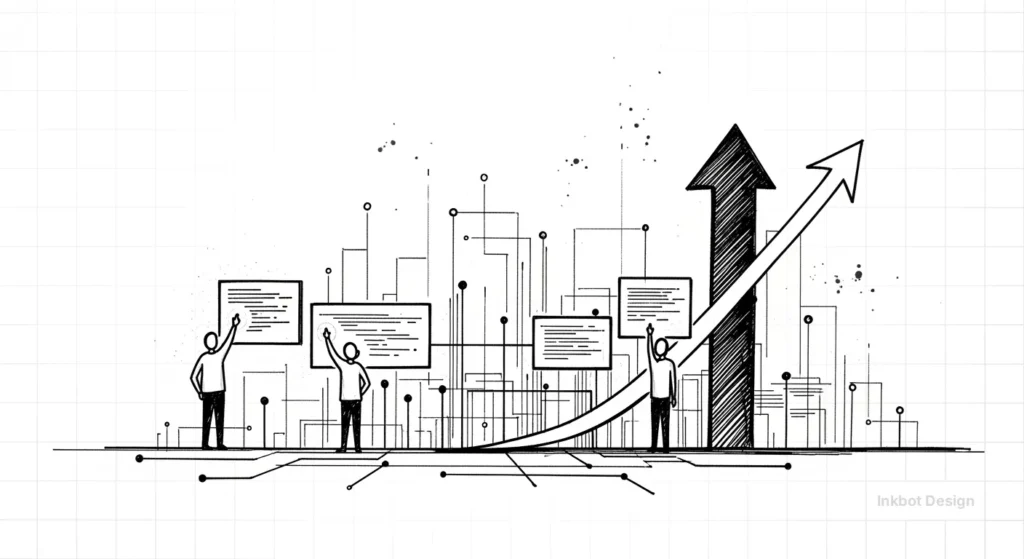
Key Components:
- Technical Decoupling: Separating the data layer from the application layer to prevent vendor lock-in.
- Semantic Data Layering: Organising internal information so it is readable by both humans and AI agents.
- Agentic Automation: Deploying AI systems that can execute multi-step tasks without constant human oversight.
Successful digital transformation in 2026 requires technical decoupling of legacy systems, a unified semantic data layer, and the implementation of agentic AI workflows.
1. Technical Decoupling (Step-by-Step Workflow)
Decoupling is the architectural equivalent of heart surgery for your business.
To stop your legacy systems from strangling your growth, you must move from a Monolithic Architecture to a Modular Tech Stack.
This is not a weekend project; it is a systematic extraction of value.

Step 1: The Data Audit & Identification of the ‘Single Source of Truth’
You cannot decouple what you do not understand. Begin by mapping every piece of data in your firm. Most SMBs find that their “customer data” exists in three places: their CRM, their accounting software, and a rogue spreadsheet managed by the sales lead.
You must designate a Single Source of Truth (SSOT). In a decoupled environment, this is usually a standalone database or a “Headless” CRM that does nothing but store data, leaving the “display” to other tools.
Step 2: Identifying Integration Bottlenecks
Look for “tightly coupled” systems. If updating your website requires a manual export from your inventory system, you are tightly coupled to it.
These bottlenecks are where your transformation will fail. Highlight every process that requires a human to “copy and paste” or “export and import.” These are your first targets for decommissioning.
Step 3: Implementing the API Middleware Layer
Instead of connecting App A directly to App B, you introduce a middle layer. This is often called an Integration Platform as a Service (iPaaS).
By using a middle layer, you ensure that if you decide to replace your CRM in 2027, you only have to change one connection (CRM to Middleware) rather than twenty individual connections to your other apps. This is how you achieve “vendor independence.”
Step 4: The ‘Strangler Fig’ Migration Pattern
Do not attempt a “Big Bang” migration by turning off the old system and turning on the new one overnight. This is the fastest way to bankrupt a mid-sized firm.
Instead, use the Strangler Fig Pattern: identify one small functional area of your legacy monolith (e.g., “Invoicing”) and move only that function to a new, API-first tool.
Slowly, piece by piece, you “strangle” the old system until it no longer does anything of value and can be safely switched off.
Step 5: Protocol Standardisation
Ensure every new tool speaks the same language. In 2026, this means adhering to RESTful API standards and using JSON for data exchange.
If a vendor tries to sell you a proprietary integration that only works with their software, walk away. You are simply building a new, more expensive cage.
2. Semantic Data Layering: Making Your Business Machine-Readable
Why does your AI struggle to find internal information?
Your data lacks a semantic layer that provides context, making it invisible to the very LLMs (Large Language Models) you are trying to use.
Digital transformation fails when you have “data lakes” that are actually “data swamps”—vast amounts of unlabelled, unsearchable information.
In 2026, the goal is “Information Gain.” According to a Gartner report, companies that use a “Semantic Knowledge Graph” to organise their internal documentation reduce their “Cost of Retrieval” by 60% compared to those using standard folder structures.
If an AI agent cannot understand the relationship between a “Client” and an “Invoice,” it cannot automate your billing.
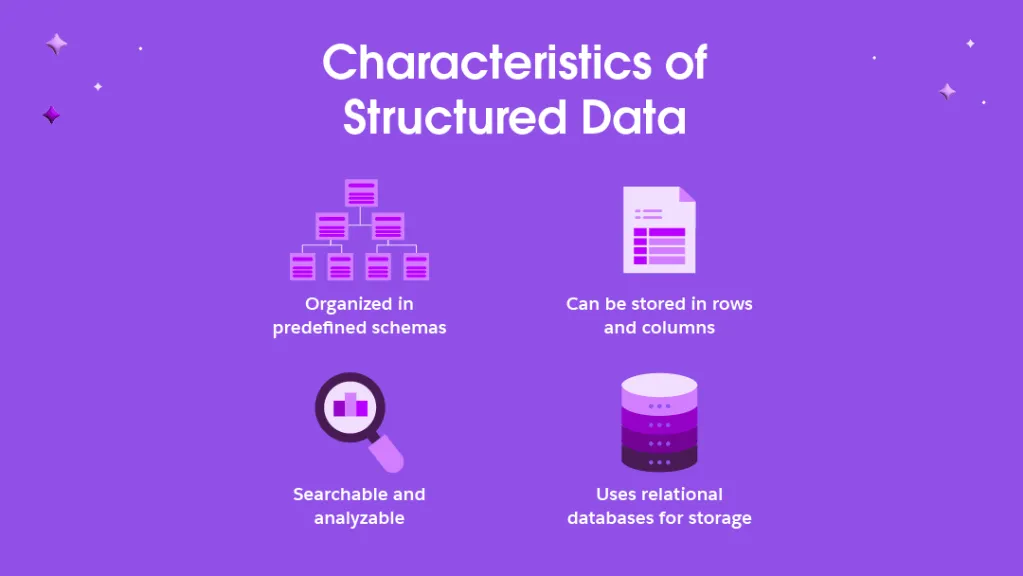
You must move beyond simple digitisation (turning paper into PDFs) to structured data. This involves using metadata, tags, and standardised schemas (like Schema.org) even for internal documents.
When your data is semantically layered, your internal AI can answer complex questions like “Which UK clients are at risk of churning due to shipping delays?” in seconds.
Without it, you are back to paying a human to spend four hours in a spreadsheet.
“A business without a semantic data layer is a library without a catalogue. You might have the information, but for all practical purposes, it is lost. In 2026, if your data isn’t machine-readable, your business isn’t AI-ready, and therefore, it isn’t competitive.”
The Semantic Layer: Internal Data Mapping
A semantic layer is the bridge between your raw data and an AI’s ability to reason about it. Without this layer, your business data is just a collection of “strings” (text) and “integers” (numbers) with no relationship to one another.
Phase 1: Knowledge Graph Construction
You must move beyond the folder. A folder structure says, “This document is in the ‘Finance’ folder.” A Semantic Knowledge Graph says, “This document is an ‘Invoice’ for ‘Client X’, related to ‘Project Y’, and was approved by ‘Manager Z’.” This web of relationships enables an AI agent to perform complex tasks.
Phase 2: Metadata Tagging with Schema.org
To make your internal data “machine-readable,” you should adopt the same Schema.org standards used by search engines. Even for internal documents, using tags such as Organisation, PostalAddress, and Review helps your internal AI understand the information’s context.
For example, a PDF of a contract should include metadata that identifies the start date, the end date, and the total contract value.
Phase 3: The Unified Semantic Model
Your goal is to create a “translation layer” that sits on top of your decoupled databases. This layer ensures that when your sales team refers to a “Lead” and your marketing team to a “Prospect,” the system knows they are referring to the same entity.
This eliminates the “data silo” problem that plagues 70% of UK businesses.
The Semantic Audit Checklist:
- Is the data structured? (CSV/JSON vs Image/PDF)
- Is the data uniquely identified? (Does every client have a UUID?)
- Are the relationships defined? (Does the system know that ‘Order 123’ belongs to ‘Client 456’?)
- Is the terminology consistent? (Do all departments use the same definitions?)
“The 2026 ‘Cost of Retrieval’ (CoR) is the most overlooked metric in business operations. Our research suggests that the average UK employee spends 1.8 hours per day simply searching for information trapped in ‘dark data’ silos. By implementing a semantic layer, firms reduce this to under 12 minutes. This isn’t just a tech upgrade; it’s a 20% increase in effective headcount without hiring a single person.”
3. Agentic AI Deployment: Moving Beyond the Chatbot
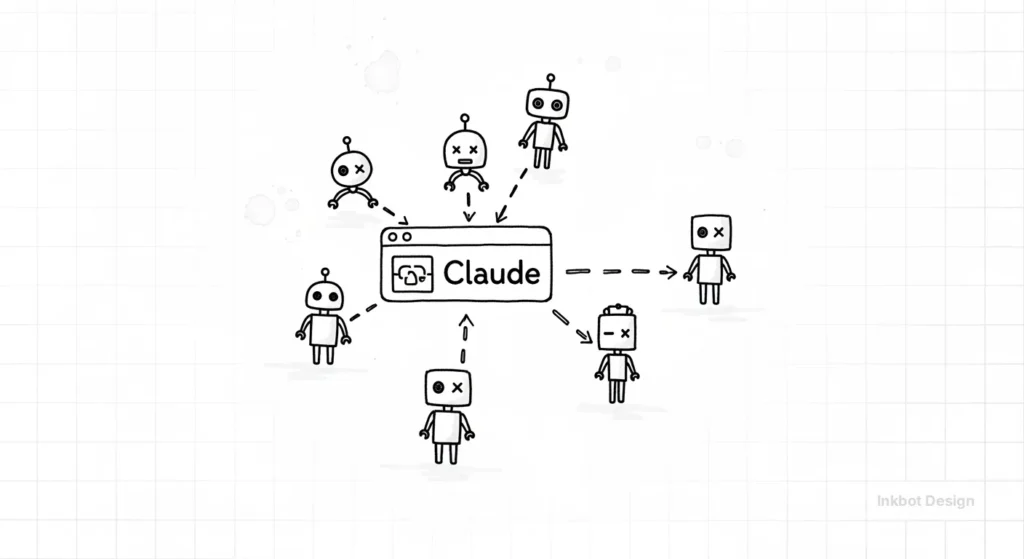
In 2024, businesses used AI to write emails. In 2026, businesses will use AI to run processes.
The shift from “Generative” to “Agentic” AI is the most significant change in business logic since the invention of the internet.
The Architecture of an AI Agent
An agent is more than just an LLM; it is a system with Agency, Memory, and Tools.
- Agency: The ability to plan multi-step sequences to reach a goal.
- Memory: The ability to remember past interactions and learn from errors (using a Vector Database).
- Tools: The ability to interact with your business software via APIs (e.g., an agent that can log into your Xero, check an invoice status, and then email the client).
Deploying Your First Agentic Workflow
Don’t build a “general purpose” business bot. Instead, build “Micro-Agents” for specific, high-friction tasks.
- The Inbound Agent: Reads incoming emails, identifies the intent (Sales, Support, Billing), queries the Semantic Layer for the necessary data, and either drafts a response or executes a task (like resetting a password).
- The Supply Chain Agent: Monitors inventory levels, predicts shortages based on seasonal trends, and automatically requests quotes from approved suppliers when stock hits a certain threshold.
The ‘Agentic Loop’ vs ‘Human-in-the-Loop’
The biggest barrier to scaling is the human bottleneck. Traditional automation stops whenever a decision is required. Agentic AI uses “Reasoning Loops” to handle exceptions.
For example, if a supplier is out of stock, the agent doesn’t just fail; it searches for the next-best supplier in your database and requests their lead times.
Selection Criteria for 2026 Agents:
- Model Agnostic: Can the agent switch between OpenAI, Anthropic, and local models like Llama 3?
- Action-Oriented: Can the agent actually do things, or just talk about them?
- Traceable: Does the agent leave a clear audit trail of every decision it makes?
Why Your “Mindset” Workshop is a Waste of Money
Is culture really the biggest barrier to digital success?
No. The idea that you must “change the culture” before you can transform is a convenient excuse for technical incompetence.
Culture is a trailing indicator; it is the result of how people are forced to work by the systems they use daily.
For decades, consultants have peddled “change management” and “digital mindset” training as a prerequisite for transformation.
However, evidence from the Ehrenberg-Bass Institute suggests that physical and digital environments shape human behaviour more effectively than abstract “values.”
If you give an employee a modern, automated system that makes their job easier, they will use it. Their “culture” changes because their reality changed.
The “Culture First” approach is actually harmful because it delays the implementation of necessary technical changes while leadership waits for a consensus that will never come.
In 2026, the most successful UK firms are those that lead with infrastructure. They build the digital road, and the “culture” (the drivers) follows the path of least resistance.
Stop hiring “Culture Consultants.” Hire systems architects. Replace the broken tool that requires five manual workarounds, and you will find your “resistance to change” vanishes overnight.
Digital Transformation in 2026
The landscape of digital transformation shifted violently in late 2025 with the release of “Agentic Operating Systems.”
Tools like Anthropic’s “Computer Use” capability and OpenAI’s “Operator” agent have moved the conversation from “How do I use this app?” to “How do I tell my computer to run my business?”
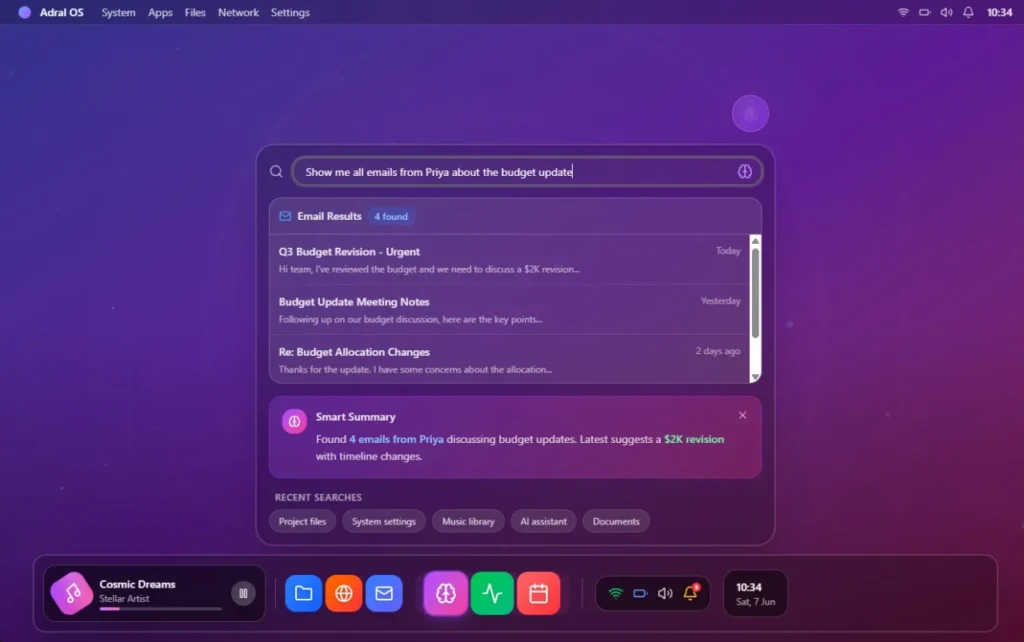
In the UK, the “SaaS Sprawl” of the early 2020s—where the average SMB was paying for 40+ different subscriptions—is being replaced by “Agentic Consolidation.” Business owners are ditching fragmented tools in favour of unified platforms that can house an LLM-driven “Central Brain.”
According to a 2025 Mintel report on Business Technology, 55% of UK small businesses have consolidated their tech stack by at least 30% in the last 12 months to prepare for AI integration.
Furthermore, the rise of “Sovereign Data Clouds” in Europe has changed how we think about privacy and transformation.
You can no longer just “dump everything in the cloud.” Strategic digital transformation now requires a “Hybrid Data Strategy”—keeping your sensitive IP on local, sovereign servers while using global AI models to process it via secure, encrypted “blind” APIs.
The “Digital Marketing” aspect of this transformation is equally stark. With the dominance of AI Overviews in search, “ranking” is no longer about keywords; it is about “Entity Authority.”
If your business isn’t cited by name in the major AI training sets, you don’t exist. This is why semantic data layering isn’t just an internal operational need; it’s a marketing requirement.
Your website must be a structured data source that Gemini, ChatGPT, and Perplexity can ingest with zero friction.
The SaaS Sprawl Audit: Consolidation for 2026
The average UK firm with 50 employees now pays for over 60 different SaaS subscriptions.
This is not “digital maturity”; it is SaaS Sprawl, and it is the enemy of agentic automation. Every additional app is a new silo that your AI agent must navigate.
The 3-Step Audit for SaaS Consolidation:
- The Overlap Audit: Do you have three different project management tools because the marketing team likes one and the devs like another? In 2026, “preference” is less important than “interoperability.” Pick the one with the best API and force a migration.
- The API Connectivity Test: Any tool that does not offer a free, robust API should be cut. If you have to pay for an “Enterprise Tier” just to get API access, that vendor is tax-collecting on your data. Find a more modern alternative.
- The Agentic Displacement Test: Can a single AI agent replace five of your existing “task” apps? For example, instead of a separate tool for social media scheduling, email marketing, and lead tracking, a single agentic workflow can handle all three by interacting directly with your core data.
Goal: Reduce your total subscription count by 30% while increasing your data liquidity. The savings from “seat licences” should be reinvested in your semantic data infrastructure.
Navigating Data Clouds in the UK
The era of “just put it in the cloud” is over. In 2026, UK businesses face a “Trilemma” of data management: Privacy, Performance, and AI Capability.
The Rise of Sovereign Data Clouds
Due to evolving UK data protection standards and the need for low-latency AI processing, we are seeing a shift toward Sovereign Data Clouds.
Unlike global public clouds, where your data might be processed in a different jurisdiction, sovereign clouds ensure that your data—and the AI models training on it—never leave UK soil. This is critical for firms in legal, financial, or medical sectors.
Hybrid Cloud Strategy: The 2026 Standard
Most successful UK SMBs are adopting a hybrid approach:
- Local “Core” Layer: Sensitive client data and proprietary IP stay on local, encrypted servers or sovereign UK clouds.
- Global “Compute” Layer: You use global models (like GPT-5 or Claude 4) to process data via Blind APIs. These APIs allow the model to perform calculations or reasoning on your data without the data ever being stored or “learned” by the provider.
This strategy protects you from “Model Collapse” (where an AI provider changes their terms) and ensures you remain compliant with UK regulators while still benefiting from world-class AI power.
How to Measure Success in 2026
How do you know if your transformation is actually working? In 2026, we move away from “soft” metrics like “engagement” toward “hard” agentic metrics.
Key Performance Indicators (KPIs) for 2026:
- Autonomous Task Completion Rate (ATCR): What percentage of core business processes are now completed without human intervention? A successful transformation should see this trend from 5% to 60% over 18 months.
- System-Mediated Revenue: How much revenue is generated by workflows that are entirely orchestrated by your tech stack? (e.g., automated upsells, renewals, or lead qualification).
- The Architecture-to-Employee Ratio: In 2020, you scaled by hiring people. In 2026, you scale by increasing the complexity of your architecture. If your revenue is growing but your headcount is flat, your transformation is succeeding.
“The ‘Middle-Management Trap’ is the primary killer of 2026 transformations. Our data show that for every 10% increase in agentic automation, firms experience a 15% ‘friction spike’ from middle managers whose roles primarily involve information routing. Successful CEOs anticipate this by retraining these managers as ‘System Architects’ before the automation goes live. If you don’t redefine the role, the human will subconsciously sabotage the system to maintain their relevance.”
The Verdict
Digital transformation is a survival mechanism, not a luxury. By 2026, the gap between “agentic” businesses and “human-mediated” businesses will be unbridgeable.
As we have seen, the three elements of success—Technical Decoupling, Semantic Data Layering, and Agentic Automation—are not optional.
They are the structural requirements for any SMB that intends to remain profitable in an AI-driven economy.
Restating my opening thesis: you cannot “transform” a mess. You must be willing to decommission your legacy habits and rebuild on a machine-readable foundation.
Most of your competitors will fail because they are too attached to the “way we’ve always done things” or too focused on useless “culture” metrics.
Your next step is to audit your technical debt. Identify the monolithic system holding your data hostage and begin decoupling.
Strategic digital marketing and operational efficiency start with a clean architecture.
Explore Inkbot Design’s services today to see how we can help you structure your brand and digital presence for the 2026 landscape.
FAQ
What is the first step in a digital transformation for an SMB?
The first step is a comprehensive audit of your technical debt. You must identify which legacy systems are “monolithic” and prevent data from flowing freely between departments. Before buying new software, you must understand how to decouple your existing data from your current applications.
How much does a digital transformation cost in 2026?
Costs vary based on the scale of your legacy mess, but most UK SMBs should budget between 5% and 10% of annual revenue for ongoing digital rationalisation. This is no longer a one-time capital expenditure; it is an ongoing operational cost required to maintain market competitiveness.
Is digital transformation only for large corporations?
No, digital transformation is actually more critical for SMBs who lack the “human capital” to compete with larger firms. By using agentic automation and semantic data layering, a small team of five can achieve the same operational output as a traditional firm of fifty.
What is the difference between digitisation and digital transformation?
Digitisation is the process of converting analogue information into digital formats, like scanning a paper invoice into a PDF. Digital transformation is the wholesale redesign of business processes to generate, send, pay, and reconcile invoices without human intervention.
Why do most digital transformations fail?
Most transformations fail because they prioritise “front-end” tools like fancy websites or CRMs while ignoring “back-end” issues like technical debt and unorganised data. Without a clean, decoupled architecture, new software just adds another layer of complexity to an already broken system.
Can AI replace my need for digital transformation?
AI is not a replacement for transformation; it is the engine of it. However, AI cannot function effectively in a business with siloed data and monolithic legacy software. You must transform your architecture to make it “AI-ready” before you can see a return on investment.
What is an API-first business model?
An API-first model ensures that every software tool used by the company has a robust Application Programming Interface. This allows different systems to communicate automatically, enabling the “Agentic Automation” required to remove humans from the middle of repeatable business processes.
How long does a successful digital transformation take?
Transformation is an ongoing state, but a significant architectural shift usually takes 12 to 18 months. This includes the time needed to decouple legacy data, implement a semantic layer, and begin deploying autonomous agents to handle core workflows.
What is the role of the CEO in digital transformation?
The CEO’s role is to provide the mandate for decommissioning legacy systems. Transformation often meets internal resistance from middle management; the CEO must ensure that technical rationalisation is prioritised over short-term “comfort” or departmental preferences.
Should I hire a CDO (Chief Digital Officer)?
For most UK SMBs, a dedicated CDO is unnecessary if the CEO and COO understand the importance of infrastructure. Instead, hire a “Systems Architect” or a consultant who focuses on data liquidity and API integration rather than “digital culture.”