
Olfactory Branding: The Neuroscience of Retail Marketing
Walk into most retail spaces, and you’ll encounter a sensory vacuum. Or worse—the sharp, clinical sting of industrial floor cleaner. In both scenarios, the business is failing a fundamental neurological test.
While you invest heavily in visual systems and acoustic environments, you are likely neglecting the only sense with a direct, unmediated bypass to the hippocampus and amygdala—the brain’s command centres for memory and emotion.
Olfactory branding isn’t about “making a room smell nice.” That’s decor. This is a strategy. It is the deliberate application of scent to trigger specific neural responses, extend dwell time, and forge an indelible brand recall that a logo alone simply cannot achieve.
In 2026, if you haven’t defined your brand’s molecular signature, you aren’t just missing a trick—you are marketing with one hand tied behind your back.
You’re inviting your customers to see your brand, but you’re not allowing them to feel it.
- Olfactory branding strategically applies a bespoke scent to directly engage the limbic system, enhancing memory and emotion.
- Scent signature plus nebulisation technology and neurological alignment create a consistent, brand-congruent "scent logo".
- Research shows scent increases recall and perceived value: scented environments boost dwell time, purchase intent, and product valuation.
- Use professional cold-air nebulisation and dynamic scent synthesis for consistency, pulse diffusion, and context-sensitive intensity control.
- Ethics and compliance matter: IFRA/REACH adherence, zonal scenting, and accessibility reduce health risks and legal exposure.
What is Olfactory Branding?
Olfactory Branding is the strategic integration of a custom-engineered scent into a brand’s identity to influence consumer behaviour, enhance memory retention, and trigger emotional associations.
Unlike ambient scenting, it requires a unique “scent logo” that is consistently deployed across all physical touchpoints to establish a distinct sensory profile.
The three core elements of olfactory branding include:
- The Scent Signature: A bespoke molecular composition unique to the brand.
- Nebulisation Technology: The technical delivery system (usually dry-air diffusion) that ensures consistent scent density.
- Neurological Alignment: Ensuring the scent profile matches the brand’s visual and sensory branding cues to avoid cognitive dissonance.
The Neuroscience of the Nose: Why Scent Bypasses Logic
To understand why scent works, you have to look at the plumbing. When you see a logo or hear a jingle, the data travels to the thalamus—the brain’s switchboard—before being processed. Scent is different.
Volatile organic compounds enter the nasal cavity and hit the olfactory bulb. This bulb is part of the limbic system, which includes the amygdala (emotion) and the hippocampus (memory). There is no “logic gate.”
This is why a specific smell can instantly transport you back to a primary school classroom or a particular holiday.
The Proustian Effect in Retail
Named after Marcel Proust’s description of a tea-soaked madeleine, the “Proustian Effect” is the biological phenomenon where a scent triggers a vivid, emotional memory.
In a retail context, this is your most potent weapon. Rockefeller University research suggests that humans remember 35% of what they smell, compared to just 5% of what they see and 2% of what they hear.
If your brand has a visual identity but no scent identity, your “recall potential” is operating at a fraction of its capacity. You are effectively asking customers to remember you with the weakest parts of their brains.
Real-World Evidence: Nike’s Valuation Hack
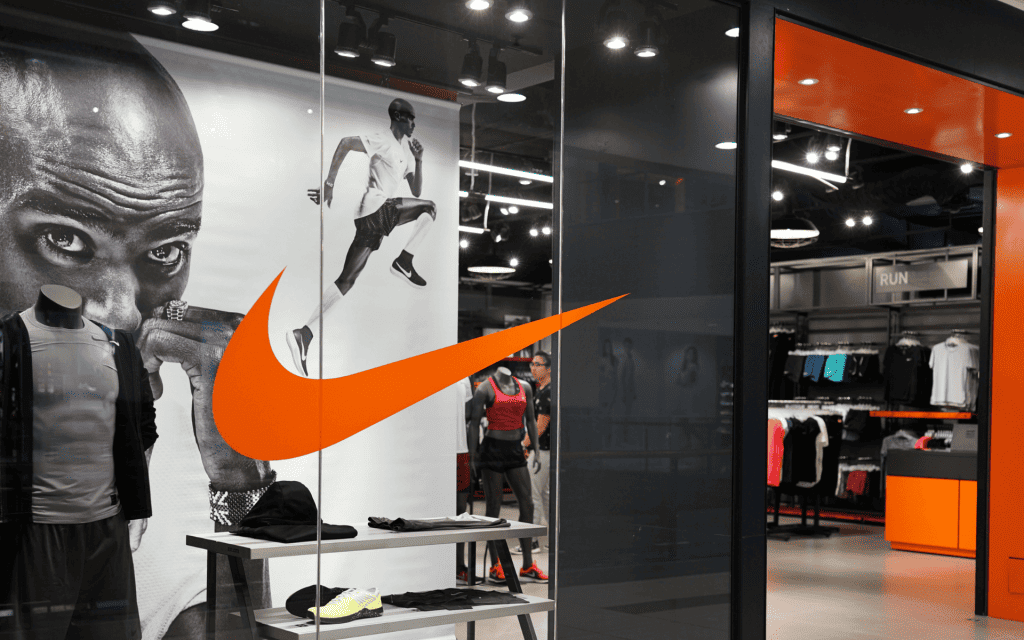
A famous study conducted in the 1990s (and replicated multiple times since) showed that consumers were 84% more likely to purchase a pair of Nike shoes in a scented room than in an unscented one.
Furthermore, participants in the scented room valued the shoes on average $10.33 higher than those in the unscented room.
The scent wasn’t even “shoe-related.” It was a generic floral fragrance. The smell increased the perceived value of the product by stimulating the brain’s pleasure centres, making the environment feel more premium.
The Business Case: Calculating the ROI of the Invisible
To move olfactory branding from a “nice-to-have” creative expense to a core line item in the marketing budget, you must measure the Scent-Lift.
This refers to the measurable increase in performance metrics—such as sales volume, dwell time, or customer satisfaction scores—directly attributable to the presence of a signature scent.
In 2026, we categorise the ROI of scent into three primary buckets:
- Transactional Lift: The immediate increase in basket size or purchase likelihood. Research in the hospitality sector shows that a brand-congruent scent can increase bar sales by up to 15% simply by making the environment more “linger-worthy”.
- Temporal Lift: Measured via footfall sensors, this tracks the increase in “dwell time”. A 1% increase in dwell time typically correlates to a 1.3% increase in sales in retail environments.
- Attitudinal Lift: Measured through post-purchase surveys. Customers in scented environments consistently rate staff as “more helpful” and the environment as “cleaner”, even when those variables remain constant.
The ROI Calculation Framework
| Metric | Measurement Method | Expected Impact |
| Dwell Time | Wi-Fi tracking / Heatmaps | +15% to +40% |
| Purchase Intent | A/B testing scented vs unscented days | +20% average |
| Brand Recall | 48-hour follow-up surveys | +300% vs visual-only |
| Staff Productivity | Error rates / Absenteeism data | -10% stress indicators |
When pitching this to a CFO, focus on the “cost of silence”. If your competitor is using a scent that increases their dwell time by 20%, and you are not, you are effectively operating with a 20% handicap in customer engagement.
Beyond Retail: Industry-Specific Scent Strategies
Olfactory branding is no longer a tool reserved for high-end fashion boutiques. In 2026, diverse sectors are leveraging scent to solve specific business problems.
1. Healthcare and Wellness: The “Anxiety Neutraliser”
In dental clinics and private hospitals, the goal isn’t to sell; it’s to soothe.
The “smell of the dentist”—a combination of eugenol (clove oil) and high-level disinfectants—is a powerful trigger for dental anxiety. Leading clinics now use “anxiolytic” scents.
A blend of Lavender and Orange has been clinically proven to reduce pulse rates in waiting rooms.
By neutralising the clinical odour and replacing it with a calming profile, clinics see fewer cancellations and higher patient satisfaction scores.
2. The Multi-Family Residential & Real Estate Sector
For luxury property developers, the “scent of home” is a powerful closing tool. “Open house” scenting has evolved beyond baking cookies.
Modern developers use White Tea or Fig accords to create an atmosphere of “refined domesticity”.
In high-rise residential lobbies, a signature scent ensures that the transition from the busy street to the private residence is marked by a clear sensory shift, justifying higher service charges.
3. Financial Institutions and Corporate Offices
Banks use scent to convey “solidity” and “trust”. This often involves “grounding” notes like Cedarwood, Leather, and Amber.
In the workplace, scent is used to boost cognitive performance.
The Japanese company Shimizu Corporation famously found that diffusing Lemon scent through the HVAC system reduced data entry errors by 54%, while Peppermint increased alertness during the “afternoon slump”.
Beyond the Candle and the Spray
Amateurs use candles. Small business owners use “plug-in” air fresheners. Pros use Cold-Air Nebulisation.
To implement scent marketing correctly, you must understand the physics of diffusion. Heat-based systems (such as candles and oil burners) alter the fragrance’s molecular structure.
Aerosol sprays create “wet” droplets that fall to the floor and create inconsistent scent pockets.
Cold-Air Nebulisation (Dry Air Technology)
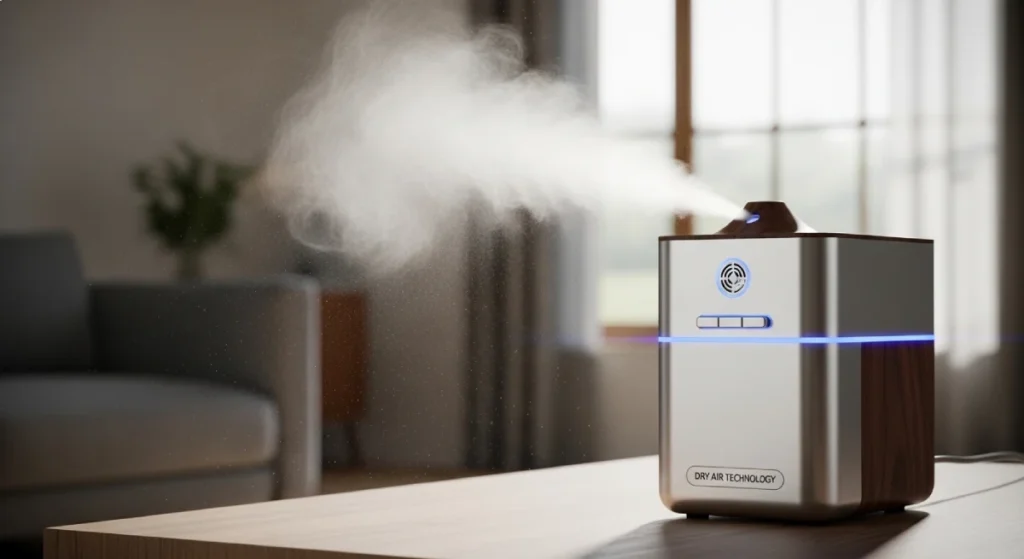
This is the gold standard for 2026. This technology uses high-pressure filtered air to break down fragrance oils into a dry mist of nanoparticles.
These particles are so small (less than 1 micron) that they remain suspended in the air indefinitely and move with the building’s natural airflow.
| Feature | Amateur (Candles/Sprays) | Professional (Cold-Air Nebulisation) |
| Scent Consistency | High at source, low elsewhere | Uniform throughout the space |
| Molecular Integrity | Damaged by heat | Preserved |
| Residue | Leaves oily film on surfaces | Zero residue |
| Control | Manual and erratic | Digital timers and intensity settings |
| Cost | Cheap upfront, high waste | Higher investment, efficient oil use |
Why Lavender Might Be Killing Your Sales
There is a dangerous piece of “best practice” advice floating around: “Use Lavender to relax customers so they spend more.”
This is rubbish.
Scent is context-dependent. If you run a high-energy tech shop or a brand identity agency, lavender is a disaster. It creates a “sensory mismatch.”
If your visual branding says “innovation and speed” but your olfactory branding says “sleepy grandmother’s cottage,” the brain registers a lie.
This cognitive dissonance creates subtle anxiety, which actually shortens dwell time.
The Semantic Scent Alignment
A study published in the Journal of Marketing found that when a scent is “congruent” with the product, sales increase. When it is “incongruent,” sales can actually drop below the baseline of an unscented room.
Don’t choose a scent because you like it. Choose it because it reinforces your brand’s “entity” in consumers’ minds.
A high-end leather goods brand shouldn’t smell like vanilla; it should smell like tanned hide, cedarwood, and aged paper.
This is how you build haptic branding and tactile maximalism into the very air of your establishment.
The State of Olfactory Branding in 2026
We have moved past the era of “set and forget.” In 2026, the industry has shifted toward Dynamic Scent Synthesis.
Modern systems now integrate with store foot-traffic sensors. When the store is crowded, the system increases the intensity of “fresh” or “ozonic” notes to combat the natural increase in CO2 and body heat. During quiet periods, it shifts to deeper, warmer base notes to encourage lingering.
Furthermore, AI-driven scent creation is now the norm. We no longer rely on a perfumer’s “hunch.”
We use datasets that map molecular structures to specific physiological responses (e.g., heart rate and skin conductance).
We can now “dial in” a scent that has been mathematically proven to increase “approach behaviour” among a specific demographic.
Case Study: Singapore Airlines and “The Scent of the Sky”
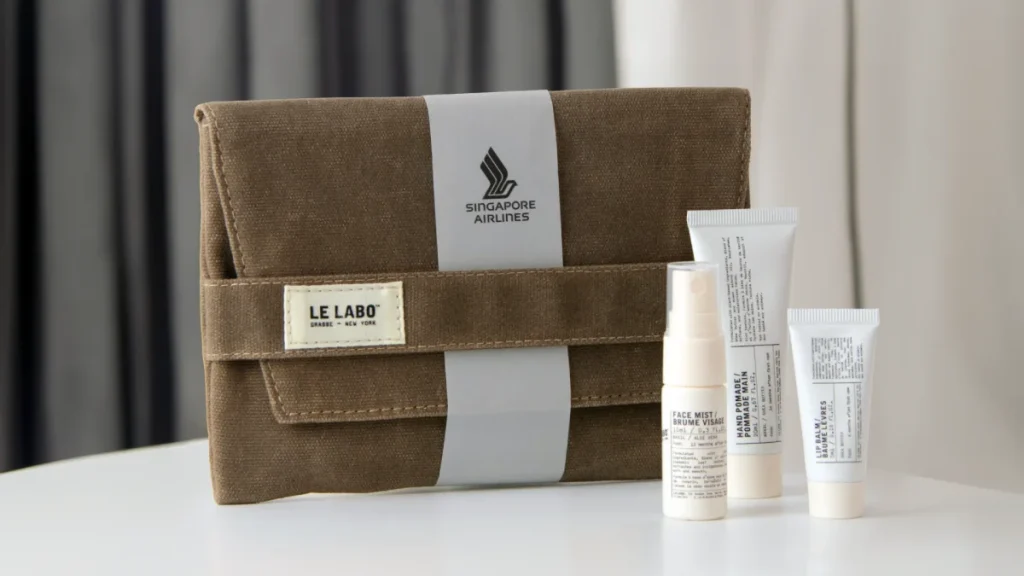
Singapore Airlines is the master of this. They don’t just have a logo; they have Stefan Floridian Waters. This bespoke scent is worn by flight attendants, infused into hot towels, and diffused throughout the cabin.
Why does it work?
Because the scent is tied to the airline’s “premium” experience. When a frequent flyer smells that specific blend of rose, lavender, and citrus in a completely different context, their brain instantly recalls the comfort and service of the flight.
It is a permanent neurological bridge to the brand. This is a far more sophisticated approach than a simple audio branding or sonic branding strategy—it is invasive in the best possible way.
Designing Your Scent Strategy: The Step-by-Step
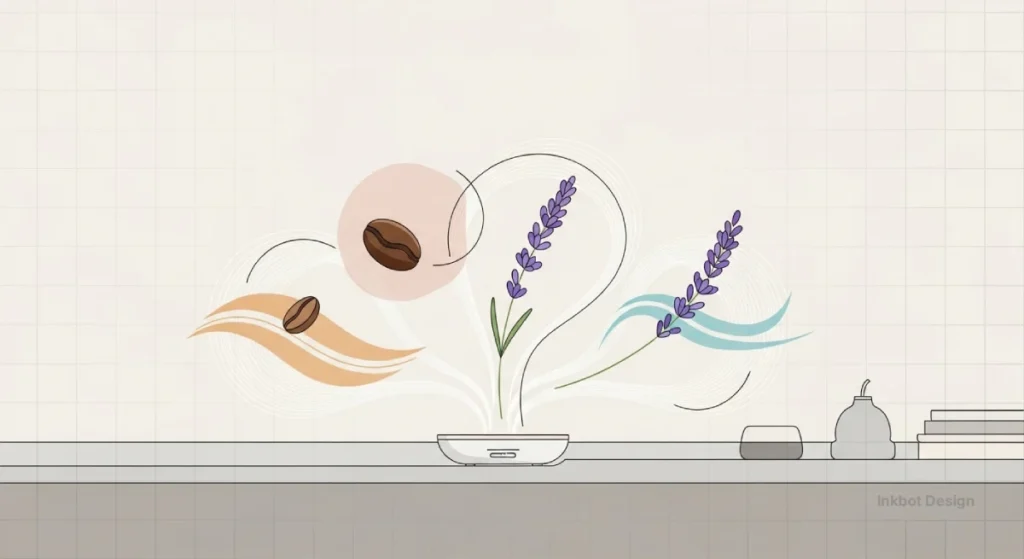
If you’re ready to stop being “scent-blind,” follow this framework:
1. Identify Your Core Emotion
What is the one thing a customer should feel? If it’s “trust,” look for “grounding” scents like Vetiver or Oakmoss. If it’s “innovation,” look for “sharp” scents like Mint, Eucalyptus, or Metallic accords.
2. Map the Customer Journey
Scent shouldn’t be uniform.
- The Entrance: A “Hook” scent to reset the customer’s palate.
- The Browsing Area: A “Settling” scent to encourage dwell time.
- The Point of Sale: A “High-Energy” scent to reduce buyer’s remorse.
3. Check for Olfactory Fatigue
The human nose “shuts off” a scent after about 15-20 minutes of exposure. This is why you can’t smell your own perfume after a while. In a retail environment, you need “pulsed diffusion.”
The system should breathe in for 60 seconds, then breathe out for 120. This keeps the scent “new” to the brain.
4. Integrate with Tech
Your scent system should be as manageable as your voice user interface design. If you can’t control it from your phone, it’s obsolete.
The Ethics, Safety, and Law of Scenting
As olfactory branding becomes ubiquitous, brands must navigate the legal and ethical landscape of “involuntary consumption”. You are, after all, putting molecules into people’s lungs.
Compliance and Safety Standards
Any fragrance oil used in a commercial environment must be compliant with IFRA (International Fragrance Association) standards.
In the UK and the EU, you must also comply with REACH regulations, which govern the registration and evaluation of chemicals.
Always demand a Safety Data Sheet (SDS) from your provider. This document outlines any potential allergens and ensures the scent is safe for continuous inhalation.
The “Scent-Free” Movement and Accessibility
Under the Equality Act 2010, brands have a duty to ensure their spaces are accessible. For individuals with Multiple Chemical Sensitivity (MCS) or severe asthma, a scent marketing system could be a barrier to entry.
- Solution: Use “Zonal Scenting”. Keep the entrance or specific “quiet zones” scent-free.
- Intensity Control: Never aim for a “wall of scent”. The ideal branding scent should sit just at the edge of conscious perception—a “ghost” in the room rather than a physical presence.
Can You Trademark a Scent?
While difficult, it is possible.
In the UK, a scent can be registered as a trademark if it is “capable of being represented graphically” and is not a functional attribute of the product (e.g., you can’t trademark the smell of a perfume as a trademark for that perfume).
However, you can trademark a scent as a brand identifier for a service, such as a “scented hotel chain”.
The Verdict
Olfactory branding is not a “marketing gimmick.” It is a biological exploit.
By bypassing the logical brain and heading straight for the limbic system, you create a brand connection that is literally impossible to ignore.
The “Direct Answer” is simple: If your brand doesn’t have a scent, it doesn’t have a soul. In 2026, the marketplace is too crowded for you to rely on eyes and ears alone. You need to own the air.
Ready to stop being invisible? Request a quote to see how we can align your sensory strategy, or explore our brand identity services to build a foundation that actually makes sense (and scents).
Frequently Asked Questions (FAQ)
What is olfactory branding?
It is the use of a signature scent to build brand identity and influence customer behaviour. Unlike simple air freshening, it uses neuroscience to link specific smells to brand values, increasing memory recall and emotional connection in retail and corporate environments.
How does scent marketing increase sales?
Scent triggers the limbic system, which controls emotions and memory. Studies show that pleasant, brand-congruent scents can increase dwell time by up to 40% and boost purchase intent by stimulating the brain’s pleasure centres and perceived product value.
What is a “scent logo”?
A scent logo is a bespoke fragrance created exclusively for a brand. Much like a visual logo, it is used consistently across all physical locations to ensure that customers instantly recognise the brand through their sense of smell.
Is scent marketing “subconscious manipulation”?
It is sensory enhancement. Much like playing up-tempo music to increase shopping speed or using warm lighting to create a premium feel, scent influences the mood. It cannot “force” a purchase, but it can create an emotional state that makes a customer more open to the brand’s message.
Can scent marketing trigger asthma or migraines?
If using low-quality “wet” sprays or candles, yes. However, Cold-Air Nebulisation produces particles so small that they do not settle in the respiratory tract as readily. Always ensure your system is calibrated to a “sub-threshold” level (0.5% to 1% fragrance concentration in the air) to protect sensitive individuals.
What is the “Scent-Free Zone” policy?
In 2026, it is best practice to have at least one area of an ample retail or office space where no active scenting occurs. This accommodates staff or customers with sensitivities and prevents sensory overload.
How much does a bespoke scent cost to develop?
A bespoke “scent logo” developed by a master perfumer can cost between £5,000 and £50,000 for the initial creation and rights. For smaller businesses, “curated” scents—exclusive to your industry but not your brand alone—are available for a fraction of that cost.
Can any scent work for any brand?
No. Scent must be congruent with the brand’s visual identity. Using a “relaxing” scent in a high-energy retail environment creates cognitive dissonance, which can actually drive customers away. The smell must align with the brand’s “semantic” meaning.
How long does it take for a scent to work?
The neurological impact is near-instant. However, building a “brand-scent association” typically takes 3 to 4 exposures. Once established, the recall is permanent and can be triggered years later by the same scent.
Does scent marketing work online?
Currently, olfactory branding is limited to physical spaces. However, with the rise of “haptic” technology and “scent-output” peripherals, some brands are experimenting with digital scent delivery for VR and high-end gaming setups.
What are the most common scents used in retail?
Common choices include citrus for energy, vanilla for comfort, and sandalwood for luxury. However, “off-the-shelf” scents are less effective than bespoke blends designed to hit specific neurological triggers unique to your target demographic.
Can I trademark a scent?
Yes, though it is difficult. You must prove that the scent serves no functional purpose (e.g., it’s not just “smelling like perfume”) and that it is a distinct identifier of the brand. Hasbro famously trademarked the scent of Play-Doh.
What is olfactory fatigue?
This is a temporary, usual inability to distinguish a particular odour after prolonged exposure. In branding, this is managed through “intermittent diffusion” to ensure the scent remains noticeable to customers without becoming overwhelming.
