Custom Illustrations: The Last Moat in an AI-Generated World
Most branding is currently sinking into a state of “Grey-Goo”—a term I use for the sludge of generic, AI-generated visuals that look professional but say absolutely nothing.
If your brand’s visual identity can be replicated by a competitor using a 30-second Midjourney prompt, you do not have a brand. You have a temporary aesthetic lease.
Custom illustrations are not just decorative flair; they are functional infrastructure for survival.
Ignoring custom visuals costs you mental availability. According to the Ehrenberg-Bass Institute, brands that fail to develop distinctive brand assets require significantly higher ad spend to achieve the same level of consumer recall.
If you want to stop being invisible, you need to invest in a brand identity that is fundamentally uncopyable.
- Custom illustrations are the last moat against the Grey-Goo of generic AI visuals; they make your brand uncopyable.
- Bespoke art creates a unique neural signature, boosting recall and lowering Cost of Retrieval per Ehrenberg-Bass Institute insights.
- Consumers favour the Human-Premium; backlash to Midjourney and Adobe Firefly makes handcrafted illustration a trust signal.
- Invest in proprietary style, full IP and optimised SVG assets via AI-assisted, human-finished workflows to convert and own visual memory.
What Are Custom Illustrations?
Custom illustrations are bespoke visual assets designed specifically for a brand’s unique requirements.
Unlike stock photography or generic icons, these graphics are tailored to align with a specific brand voice, technical requirement, and audience psychology, ensuring that every visual touchpoint reinforces a proprietary identity.

Key Components:
- Proprietary Style: A unique visual language (line weight, colour palette, texture) that belongs solely to the brand.
- Strategic Intent: Graphics designed to solve specific communication problems or explain proprietary workflows.
- Scalable Ownership: Full IP rights to assets, preventing competitors from using the same visual metaphors or styles.
Custom illustrations are unique visual assets created specifically for a brand to enhance cognitive recall, establish a distinctive brand identity, and reduce reliance on generic stock media.
The Neuro-Branding Case: Why Custom Visuals Bypass Logic
The human brain is fundamentally a visual processor.
Recent data from G2 confirms that 90% of the information transmitted to the brain is visual, and it takes just 50 milliseconds for a user to form a judgment about your brand’s visual appeal.
Your brand isn’t competing with other companies; it is competing with the human brain’s desire to conserve energy.
Custom illustrations function as “cognitive shortcuts”. When a user encounters a generic stock photo, the brain identifies it as a familiar, low-value pattern and essentially switches off—a phenomenon known as “pre-attentive filtering”.

However, bespoke visuals that utilise unique Visual Metaphors force the brain into an “active decoding” state. This micro-moment of engagement is the difference between being remembered and being filtered out.
Research in Neuromarketing (2025) indicates that custom imagery can increase brand recall by up to 80% compared to stock-heavy environments. This is because bespoke art creates a unique “neural signature” in the customer’s mind.
While a photo of a “smiling team” might trigger a generic “business” association, a custom-drawn scene featuring your proprietary Visual Grammar—unique line weights, specific colour ratios, and brand-exclusive characters—anchors the memory to your specific brand entity.
A 2025 study on human perception found that visual appeal is processed faster than the conscious thought required to read a headline. Brands that rely on generic visuals suffer from “Visual Parity”, where the brain fails to differentiate the brand from its competitors. Conversely, custom illustrations allow for “Visual Saliency”, making the brand physically easier to find in a crowded digital or physical environment.
To win in 2026, you must reduce the “Cost of Retrieval”. If a customer has to think to remember who you are, you have already lost.
Custom illustrations ensure that your brand lives in the “fast-thinking” part of the brain—the system that drives 95% of all purchase decisions.
The Death of the Stock Photo
Stock photography is failing.
The Nielsen Norman Group (NN/g), a leading UX research consultancy, has documented for years that users possess “banner blindness” toward generic imagery.
When a user sees a “smiling team in a boardroom,” their brain filters it out as filler.
In 2026, this effect is magnified by the “AI Uncanny Valley”—the growing public fatigue toward overly polished, soulless generative art.
Custom illustrations bypass this filter because they don’t pretend to be reality. They are an abstraction of your brand’s personality.
When Mailchimp, the marketing automation platform, underwent its 2018 rebrand, it leaned into “sketchy,” imperfect illustrations. This wasn’t an accident. It was a deliberate move to distance the brand from the “Corporate Memphis” style that had become the default for every Silicon Valley startup.

By choosing imperfection, you signal authenticity. In a world where “perfect” images are free and infinite, the “imperfect” hand of a human designer becomes a premium trust signal.
Custom illustrations act as a cognitive shortcut, allowing consumers to identify a brand in less than 400 milliseconds without reading a single word of copy. By moving away from generic stock imagery, brands eliminate the ‘Visual Parity’ that allows competitors to blend into the same market space, effectively de-risking their long-term marketing investment.
Why Distinctive Brand Assets (DBAs) Rule 2026
Your brand is a collection of memories in your customer’s head. If those memories are tied to generic icons, those memories are fragile.
The Ehrenberg-Bass Institute’s research on “mental availability” highlights that the most successful brands are those with the most “Distinctive Brand Assets.”
A DBA is anything—a colour, a sound, or a specific illustration style—that triggers the thought of your brand.
Think of the famous brand mascots like the Michelin Man or the Compare the Market meerkats. These aren’t just “cartoons”; they are multi-billion-pound assets that competitors cannot legally or visually replicate.
If you use a stock “lightbulb” icon for “ideas,” you are sharing that asset with 10,000 other companies. You are building a brand on rented land.
Custom illustrations allow you to own the “lightbulb” metaphor in a way that is unique to you.
The Economic Cost of Visual Genericisms
McKinsey & Company’s “Business Value of Design” report demonstrated that companies in the top quartile of design performance outperformed industry benchmarks by 2:1.
This isn’t because they had “prettier” websites.
It’s because their visual systems were more coherent and distinctive, thereby reducing the “Cost of Retrieval” for consumers. When the visual is unique, the brain spends less energy processing it and more energy remembering it.
“Illustrations are Just Decoration”

There is a persistent, damaging belief that illustrations are the “cherry on top”—something you add once the “real” work of copywriting and web development is done.
This is fundamentally wrong.
In reality, illustrations are functional communication tools that reduce cognitive load.
The “Decoration Myth” persists because people confuse art with design. Art is about expression; design is about utility.
A custom illustration on a service page isn’t there to look pretty; it’s there to guide the eye, explain a three-step process, or anchor a complex emotional benefit that words can’t quite capture.
Why this myth is dead in 2026
In 2026, the cost of attention is at an all-time high. If a user has to read 300 words to understand what you do, you’ve already lost them. A custom illustration can convey a workflow, culture, or USP in a fraction of a second.
Following the outdated advice that “minimalism equals space” is a recipe for being forgotten.
2026 demands “Functional Maximalism”—where every visual element, especially custom ones, earns its place by delivering information gain.
The belief that custom illustrations are merely decorative is a legacy of the print era that ignores modern cognitive load theory. In a high-velocity digital environment, bespoke visuals serve as essential navigational infrastructure, reducing time-to-comprehension for complex value propositions and anchoring brand recall in ways text alone cannot.
The AI Backlash
The last 18 months have seen a massive shift in consumer behaviour. Following the release of advanced generative models like Adobe Firefly 3 and Midjourney v7, the internet has been flooded with “instant brands.”
These are businesses that look professional on day one but have zero substance.
The result is a documented “Human-Premium” shift.
A 2025 report from Mintel showed that 64% of UK consumers now feel more sceptical of brands that rely heavily on AI-generated humans in their advertising.
This has created a massive opportunity for brands that use custom, human-directed illustration.
The “Human-Premium”: Surviving the AI Content Flood
We have entered the era of the “Human-Premium”.
As generative tools like Midjourney v7 and Adobe Firefly 3 flood the market with “perfect” but soulless visuals, consumers have developed a sophisticated “AI Radar” to distinguish them.
A 2026 report by Syntactics Inc. revealed a startling shift: 52% of consumers now report feeling “negative” or “sceptical” when they encounter clearly AI-generated marketing content.
This fatigue has turned the “imperfect” hand of a human illustrator into a massive trust signal. When a brand invests in custom illustration, it is sending a subconscious signal of stability and resources.
It says: “We are not a fly-by-night operation using a prompt; we are a legacy-building entity with a unique point of view.”
This shift is particularly evident in the “Tactile Design” trend of 2026.
Brands are increasingly moving away from the ultra-smooth, plasticky look of early AI art in favour of Handcrafted Lettering and Organic Forms.
These styles incorporate intentional “flaws”—varying line weights, subtle grain overlays, and brush-stroke textures—that indicate human craftsmanship.
In a consumer survey conducted in late 2025, over half of respondents felt that brands using “raw” AI visuals appeared less authentic. This has led to the rise of “AI-Assisted Design with Human Direction”, where the final output is demonstrably human-finished. Brands that highlight the “craft” behind their visuals see higher engagement rates on social platforms.
By choosing bespoke illustration, you are essentially “AI-proofing” your brand.
You are building a Distinctive Brand Asset that cannot be replicated by a competitor simply typing “Illustration in the style of [Your Brand]” into a generative tool.
If your visual language is based on a proprietary logic developed by a human artist, it remains a unique, un-scrapeable moat.
The Rise of “Entity-Validated” Visuals
Google’s 2026 search algorithms have become increasingly adept at identifying unique visual entities. When you use a stock photo, Google’s Vision AI knows exactly where that photo came from and how many other sites use it.
It assigns zero “Information Gain” to that asset.
However, when you upload a custom SVG with unique path data and a style that matches your brand’s unique entity signature, you are providing “Visual Evidence” of your authority.
The SaaS “Grey-Goo” Audit
I recently audited a B2B SaaS firm based in London. They were spending £15,000 a month on LinkedIn ads and wondered why their conversion rate was hovering at 0.5%.
Their website was “perfect” by 2022 standards: clean, minimalist, and filled with the same stock illustrations of “people standing next to giant UI elements” as every one of their competitors.
I told the founder, “If I swapped your logo with your biggest competitor’s logo, would I notice?”
He went quiet. The answer was no.
They were effectively paying to advertise their entire category, not their specific brand. We scrapped the stock assets and developed a series of “technical-noir” illustrations that looked like blueprints from a futurist’s sketchbook.
The result? Their “Brand Search” volume increased by 22% within three months.
Why? Because people finally had a visual hook to hang the brand name on. The most expensive mistake you can make is being indistinguishable.
If you look like everyone else, you are forced to compete on price. If you look like yourself, you can compete on value.
The Industry Playbook: Tailoring Illustration to Sector
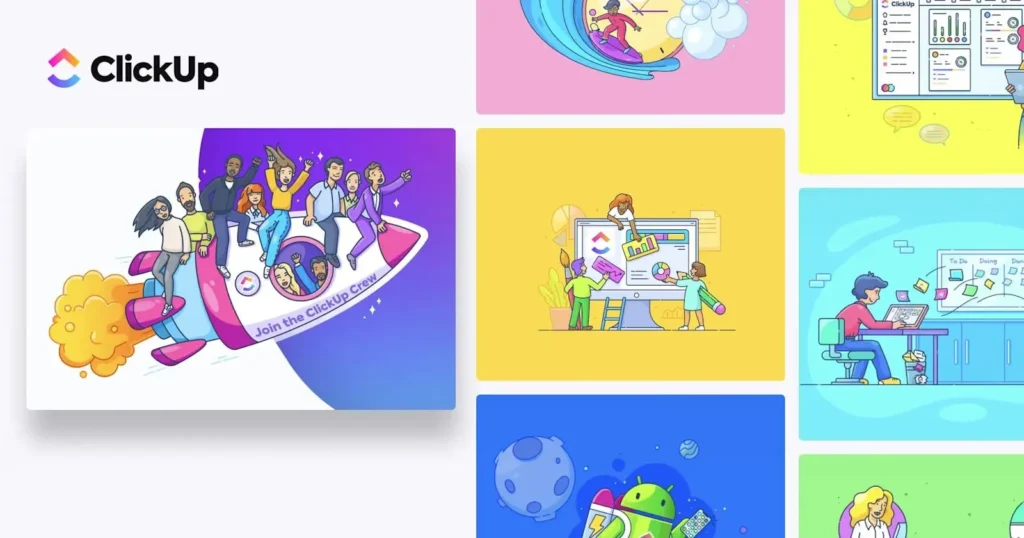
“One-size-fits-all” illustration is a relic of the stock photo era.
In 2026, the style of your illustration must align with the Conversion Benchmarks and psychological expectations of your specific industry.
1. Legal and Professional Services (The Trust Moat)
- The Data: Legal services lead industry benchmarks with a 7.4% average conversion rate (First Page Sage, 2026).
- The Style: Use Neo-Brutalism or High-Contrast Modern Serifs. Illustrations should be “blueprint-style” or geometric, conveying precision and authority. Avoid “cute” characters; instead, focus on abstract visualisations of complex workflows.
2. B2B SaaS and Software (The Clarity Moat)
- The Data: SaaS often struggles with a low 1.1% conversion rate due to complexity.
- The Style: Use Bento Grid Layouts combined with Mixed Media Mashups. Pair technical screenshots with hand-drawn annotations. This “Human-Assisted Tech” look helps bridge the gap between abstract software and real-world utility.
3. Healthcare and Wellness (The Empathy Moat)
- The Data: Authenticity is the #1 driver in healthcare.
- The Style: Organic Forms and Neo-Neutral Earth Tones (eucalyptus green, clay). Illustrations should feel “soft” and fluid, using “Tactile Textures” such as watercolour washes to signal human care.
A 2026 report on B2B performance highlights that industries with high transaction values, like Legal and Industrial IoT, rely heavily on “Trust Signals”. While SaaS has lower conversion rates, using custom, data-rich illustrations can boost them by explaining proprietary technology more clearly than text alone.
Choosing the right industry-aligned style isn’t about following a trend; it’s about matching the “mental model” your customer already has of your sector.
If you are a high-stakes law firm using “whimsical” startup illustrations, you are creating Cognitive Dissonance that will kill your conversion rate.
Cost-Benefit Analysis: Bespoke vs AI-Hybrid Workflows
A common objection to custom illustration is the cost. However, in 2026, the “cost” of stock is no longer just the subscription fee—it is the Opportunity Cost of Invisibility.
| Factor | Stock Asset | AI-Hybrid (Human-Led) | 100% Bespoke Art |
| Initial Cost | £10 – £50 | £200 – £600 | £500 – £2,000+ |
| IP Ownership | None (Rented) | Partial / Questionable | Full (Owned Asset) |
| Recall Rate | Low (Filtered out) | Medium | High (Proprietary) |
| 2026 Trust Score | 2/10 | 6/10 | 9/10 |
| Technical ROI | Zero | Variable | High (Path Optimised) |
In 2026, “Smart Money” uses a Hybrid Workflow.
We use AI for rapid prototyping and “mood-boarding”, then hand the concepts to a human illustrator to build the final, “Clean-IP” vector assets.
This provides the speed of AI with the legal security and “Human-Premium” finish of bespoke art.
| Technical Aspect | The Wrong Way (Amateur) | The Right Way (Pro) | Why It Matters |
| File Format | Large, unoptimised PNG/JPG files. | Hand-coded, minified SVGs. | Page speed and crispness on 4K/8K displays. |
| Style Consistency | Mixing styles from different artists. | A proprietary “Visual Grammar” guide. | Prevents brand fragmentation and “visual noise.” |
| IP Rights | Standard stock licenses (anyone can use). | Full “Work for Hire” IP assignment. | You can’t sue a competitor for copying your “vibe” if you don’t own it. |
| Accessibility | Missing or generic ALT text. | Descriptive, entity-rich ARIA labels. | Ensures SEO value and inclusive UX. |
| Responsive Design | Simple scaling (gets tiny on mobile). | “Art Direction” (different levels of detail). | Keeps the message clear on a smartwatch or a 32-inch monitor. |
The Verdict
The era of “good enough” branding is over.
In 2026, you either own your visual identity or you are part of the background noise. Custom illustrations provide the only reliable way to build a distinctive brand identity that is both AI-proof and human-centric.
They are the tactical application of your brand’s soul, rendered in a way that makes you uncopyable.
Don’t wait until your competitors have out-branded you. It is time to audit your visual assets and decide if you are building a legacy or just filling space.
Next Steps:
- Explore Inkbot Design’s branding services to see how we build uncopyable identities.
- Read our deep dive into famous brand mascots to understand the power of character design.
- Contact us today for a visual audit of your current marketing materials.
FAQ Section
Why are custom illustrations better than stock photos for SEO?
Custom illustrations provide higher “Information Gain” scores in Google’s ranking algorithms. Vision AI recognises stock photos as duplicate content. Bespoke visuals represent unique entity data, which helps a page rank as a primary source of information rather than a derivative one.
How much do custom illustrations cost for a small business?
Costs vary by complexity but typically range from £500 to £5,000 for a core set of brand assets. While more expensive than stock, the long-term ROI is higher due to increased brand recall and the elimination of recurring licensing fees or the risk of visual parity.
Can I use AI to create my custom illustrations?
You can use AI as a starting point, but “raw” AI output lacks the legal IP protections of human-created work in many jurisdictions. Professional illustrators use AI for ideation but hand-finish the work to ensure it aligns with brand guidelines and technical SVG standards.
What is the best file format for web illustrations in 2026?
SVG (Scalable Vector Graphics) is the gold standard. SVGs are resolution-independent, meaning they remain sharp across all screen sizes. They also have smaller file sizes than PNGs and can be animated or manipulated via CSS for advanced UX effects.
Do illustrations work for “serious” B2B brands?
Yes. Brands like IBM, McKinsey, and Salesforce use custom illustration to humanise complex data. A “serious” brand isn’t a “boring” one. Strategic illustration can communicate sophistication and technical depth more effectively than a generic photo of a server room.
How long does the custom illustration process take?
A standard branding project, including a custom illustration library, usually takes 4 to 8 weeks. This includes style exploration, sketching, feedback loops, and final vectorisation. Rushing the process often leads to “generic-looking” bespoke work, defeating the purpose.
How do I ensure my illustrations stay consistent?
Consistency is maintained through a “Visual Grammar” guide. This document specifies line weights, corner radii, colour ratios, and “Don’ts” for your illustration style. It ensures that whether you hire one artist or ten, the work looks like it came from a single brand voice.
What is the “Grey-Goo” effect in marketing?
“Grey-Goo” refers to the sea of indistinguishable, AI-generated marketing content that lacks a unique point of view or visual identity. Brands that fall into this trap become “invisible” because they offer no unique visual or intellectual hooks for the consumer to remember.
Should I use mascots in my brand illustrations?
Mascots are highly effective for building long-term “Distinctive Brand Assets.” They are easier for the human brain to remember than abstract logos. However, they must be integrated into your overall strategy rather than used as a standalone gimmick to be effective.
Can illustrations improve website conversion rates?
Yes. By reducing cognitive load and directing the user’s gaze toward Call-to-Action (CTA) buttons, custom illustrations can significantly improve the path to purchase. They help users “visualise” the benefit of a service, which is a key psychological driver of conversion.