B2B LinkedIn Marketing for Professional Services Firms
LinkedIn marketing for professional services firms is not a posting habit. It is a positioning system that decides whether a buying group already prefers you before the first call. This guide explains the upstream work — the belief to own, the proof to build — that posting frequency can never replace for advisory firms.


On this page8 min left
- What B2B LinkedIn Marketing Is For When You Sell Judgement
- Why Consistent Posting Stopped Being Enough
- The Work That Happens Before You Post
- Hidden Buyers and Paid Thought Leadership — What Changed in 2025
- “Isn't This Just Personal Branding for the Partners?”
- Preference Is Built Upstream, Not Posted Downstream
- Frequently asked questions
More than 40% of B2B deals collapse before anyone signs — not because the losing firm was worse, but because the buying group behind the decision never agreed on who to trust.
That figure is from the 2025 Edelman–LinkedIn B2B Thought Leadership Impact Report, and it should change how any managing partner reads their own LinkedIn feed.
If you are preparing to rebrand ahead of a growth phase or an acquisition, the instinct is to treat LinkedIn as a distribution channel: post more, post better, keep the firm in view. That instinct is where most professional services firms quietly lose ground.
The visible firm and the preferred firm are rarely the same, and LinkedIn is where the gap between them is decided.
Treated properly, it is one instrument inside a wider content marketing strategy, not a standalone posting habit.
What B2B LinkedIn Marketing Is For When You Sell Judgement

B2B LinkedIn marketing is a positioning system. Its job is to make a professional services firm the obvious, low-risk choice before a buying process begins — by repeatedly proving one commercial point of view, not by making executives look like thought leaders.
- According to CMI and MarketingProfs, 85% of B2B content marketers rate LinkedIn as the social platform delivering the best value to their organisation.
- Professional services firms sell judgement, which a buyer cannot inspect in advance, so LinkedIn becomes the place where judgement is assessed before any contact.
- Category-level preference — being recognised as the credible answer to a specific problem — beats visibility, because it shapes the shortlist before an enquiry is ever made.
It is one facet of a firm's broader digital marketing services, and it earns its place only once the positioning beneath it is determined.
B2B LinkedIn marketing for professional services is a positioning system that builds category preference, making a firm the low-risk default before buyers evaluate suppliers.
Why Consistent Posting Stopped Being Enough
The advice to post consistently is not wrong. Intelligent operators follow it for good reasons: staying top-of-mind matters, the 95-5 rule is real, and the platform does reward firms that show up every week rather than in quarterly bursts.
Anyone telling you to post regularly is telling you something true.
It is just no longer sufficient. According to Edelman and LinkedIn, 56% of target buyers and 55% of hidden buyers use thought leadership specifically during vendor evaluation — the moment a shortlist forms.
The mechanism that decides the deal is a belief that forms within a group of people, most of whom you will never meet. Volume-posting doesn't reach that mechanism.
A feed full of well-formatted posts with no consistent argument gives a buying group nothing to align around. So the group stalls, and Edelman and LinkedIn put the cost of that stall at more than 40% of B2B deals.
Here is the difference between what most firms do and what actually shifts a buyer.
The Default Approach | What It Costs | The Better Approach | Why It Works |
|---|---|---|---|
Post 3× a week to stay visible | Visibility without preference; forgotten at the shortlist | Publish repeated proof of one commercial belief | Buyers recall a position, not a posting schedule |
Optimise every partner's profile | Twelve polished profiles, no shared view | Align partners behind one firm-level argument | One signal is assessable; twelve are noise |
Chase engagement metrics | Vanity numbers that never enter a pitch room | Track whether the buying group repeats your view | 40%+ of deals stall on group misalignment, not reach |
Mix formats for the algorithm | Format variety, message drift | Fix the message, vary only the delivery | Consistency of belief compounds; format does not |
Run LinkedIn as lead generation | Cold outreach into an unconvinced group | Run it as pre-decision positioning | 56% of buyers consult thought leadership before evaluating |
Posting is the delivery mechanism. It was never the strategy.
A firm that gets this backwards spends two years building an audience that likes its content and still hires someone else. If you want the adjacent discipline, this connects directly to the authority gap most advisory firms carry without naming it.
The Work That Happens Before You Post

Three decisions sit upstream of your first post, and no amount of cadence can substitute for them.
Decide the commercial belief your firm must own.
Not a tagline. A specific, arguable position about how work in your sector should be done or bought, one that a competitor could genuinely disagree with.
A tax practice that believes “most mid-market firms are structured for last year's growth, not next year's exit” has something to prove repeatedly.
A firm that believes “we deliver excellent client service” has nothing to say because no one argues otherwise.
Vague positioning is why partners describe the same firm three different ways in the same pitch, and the prospect notices before they do.
Engineer repeated proof for it.
A belief stated once is an opinion. The same belief demonstrated fifteen times, through client outcomes, contrarian takes on sector news, and worked examples, becomes a market signal.
Turn real expertise into a recognisable signal.
Make the expertise visible through specific people, not the logo.
Buyers can't assess a firm; they assess the person in front of them, so a named partner staking a repeated position is worth more than a polished page saying nothing.
This is not a founder vanity posting. It is putting your best judgement where a hidden buyer can weigh it.
This is the work a rebrand exists to formalise, and it is exactly what a firm skips when it jumps straight to a posting calendar.
It also feeds every other channel, from sales enablement branding to the proposals themselves.
“The firms that dominate LinkedIn in professional services are not the ones producing the most content. They are the ones that a buying group already agrees about before a single meeting is booked. Preference is manufactured upstream, in the decision about what to stand for, and only distributed downstream in the posts.”
Hidden Buyers and Paid Thought Leadership — What Changed in 2025
The most important recent shift is a reframe, not a tactic.
The 2025 Edelman–LinkedIn B2B Thought Leadership Impact Report recasts the B2B decision as a buying-group influence problem rather than a single sales-contact problem. Your named prospect is rarely the only person making the decision.
The “hidden buyers” — people you never speak to who still shape the outcome — now matter as much as the contact in your CRM.
The consumption data explains why. According to Edelman and LinkedIn, 64% of target buyers and 63% of hidden buyers spend more than an hour each week consuming thought leadership.
Content is now doing part of the introduction a partner's network used to make on its own — 41% of target buyers say a C-suite peer nudged them toward a supplier after reading that supplier's thinking.
There is also a platform change worth knowing.
LinkedIn now supports Thought Leader Ads, which allow a company to sponsor a qualifying post from an employee or executive, rather than only from the brand page.
LinkedIn describes them as a way to “build brand equity by sponsoring your thought leaders' posts,” and they run under the Brand Awareness, Engagement and Video View campaign objectives.
An expert's genuine post can now be paid media. For a firm with real expertise and a small audience, that is a way to buy reach for credibility rather than for a lead form — and it sits naturally alongside a broader paid media strategy.
“Isn't This Just Personal Branding for the Partners?”
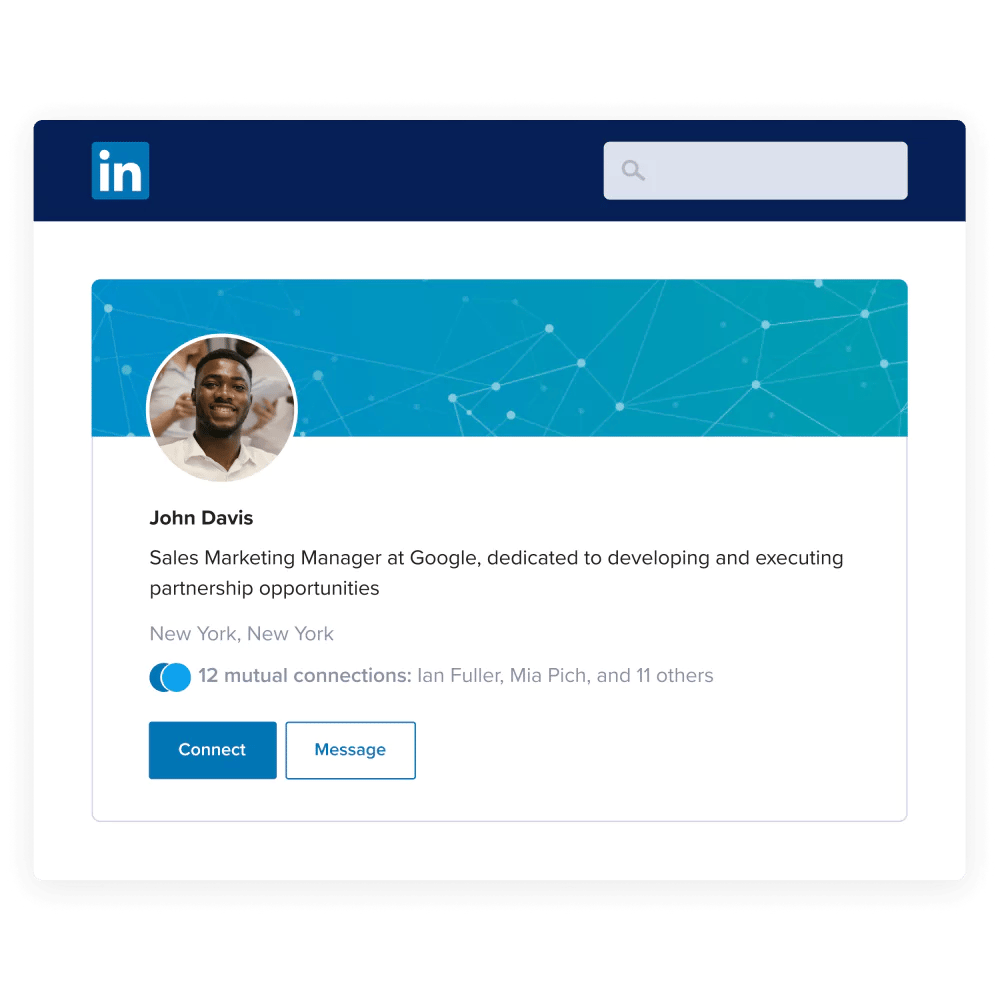
No. Personal branding optimises the individual — their following, their profile, their next move. This optimises the firm's position and uses individuals only as the assessable proof of it.
The test is simple: if a partner left tomorrow and took their audience with them, would your firm's market position survive? Under personal branding, it wouldn't.
Under a positioning system, the belief and the proof belong to the firm, and any credible partner can carry them.
The second objection is more honest: partners are fee-earners who won't write, and the ROI feels vague. Fair.
The answer is that a positioning system needs a small number of people saying the same thing consistently, not everyone posting daily. One partner proving one belief well beats a firm-wide content rota nobody sustains past March.
Measured properly — does the buying group start repeating your language back to you — the return shows up in warmer, shorter pitches, which is the outcome a Managing Partner actually cares about.
Preference Is Built Upstream, Not Posted Downstream
The firms that win the next three years on LinkedIn will not be the ones posting the most.
They will be the ones a buying group already agrees about before the first call — and that agreement is engineered upstream, from a decided belief, proof built around it, and real expertise made visible through people a buyer can trust.
Posting is only how it travels. If your firm is heading into a rebrand, a raise, or a repositioning, the first question is not “what should we post?”
It is “what do we want the market to believe about us, and can we prove it?” Start there.
A free Brand Equity Audit™ from Inkbot Design shows exactly where your brand is losing that argument today, and what to do about it — request a Brand Equity Audit.
Frequently asked questions
How often should a professional services firm post on LinkedIn?
Consistency of message matters more than frequency of posts. A firm proving one clear commercial belief twice a week outperforms a firm posting daily with no argument. Decide what you want to be known for first; cadence is a delivery decision, not a strategy.
Is LinkedIn thought leadership the same as personal branding?
No — personal branding optimises an individual's profile and following, while thought leadership as positioning optimises the firm's market belief and uses individuals as proof of it. If a partner's departure would erase your position, you built personal brands, not a firm asset.
What are LinkedIn Thought Leader Ads?
Thought Leader Ads allow a company to sponsor a qualifying post from an employee or executive, rather than only from the brand page. LinkedIn positions them as a way to build brand equity by sponsoring your experts' posts, and they run under Brand Awareness, Engagement and Video View objectives.
Why do our LinkedIn posts get engagement but win no clients?
Because engagement and preference are distinct outcomes, according to Edelman and LinkedIn, more than 40% of B2B deals stall due to misalignment in the buying group. Posts that entertain without proving a consistent belief give that group nothing to align around, so the deal stalls despite the likes.
Should the partners or the company page post?
Both have different jobs. The company page holds the firm's position; named partners provide the human proof that buyers can assess. Edelman and LinkedIn data show trusted individual voices carry disproportionate weight, so a firm relying on the page alone leaves its most persuasive asset unused.
How do you measure LinkedIn marketing for a professional services firm?
Track whether the buying group adopts your language and whether pitches arrive warmer and shorter, not follower counts. The commercial signal is a prospect repeating your point of view back to you before you have pitched it. That indicates preference formed upstream, which is the entire aim.